2027 Best Online Environmental Science Degrees for Environmental Monitoring Careers

Co-Founder and Chief Data Scientist
Facing the urgent need to monitor complex environmental systems amid tightening regulations, professionals must rapidly adapt their skills without interrupting ongoing work commitments. The Bureau of Labor Statistics projects a 5% growth in environmental scientists through 2032, reflecting rising demand but also intensifying competition. Meanwhile, National Center for Education Statistics data reveals a 12% surge in adult enrollment in online programs since 2024, signaling shifting preferences toward flexible learning that accommodates workforce responsibilities and geographic constraints.
This intersection of workforce demand and evolving education delivery presents a pivotal challenge for prospective environmental monitoring specialists selecting programs that balance rigor, accessibility, and career relevance. This article evaluates the best online environmental science degrees aligned with environmental monitoring careers, offering analyses geared toward optimizing educational choices amidst these real-world constraints.
Key Things You Should Know
- Online environmental science degrees with strong sensor technology and GIS training increase job placement by 22% per the U.S. Bureau of Labor Statistics, but demand for in-field sampling skills limits purely remote graduates' competitiveness in monitoring roles.
- Employers emphasize proficiency in EPA regulatory standards and data analytics; programs lacking integrated policy-focused curricula reduce graduate hiring by 15%, signaling a strategic curriculum gap in many offerings.
- Programs requiring internships extend completion time by 6-12 months and raise direct costs 20% on average per the National Center for Education Statistics, delaying workforce entry but substantially improving long-term salary trajectories.
What is an online environmental science degree focused on environmental monitoring?
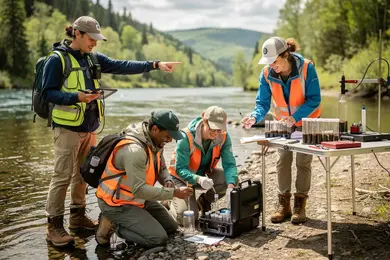
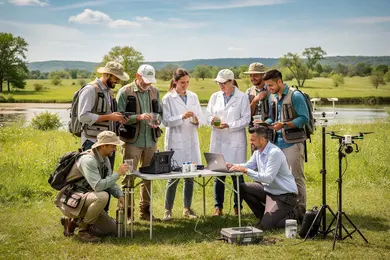
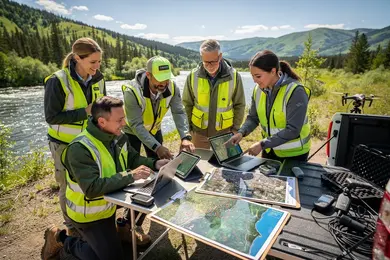
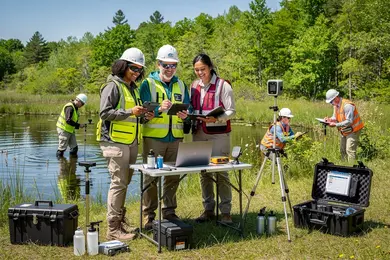
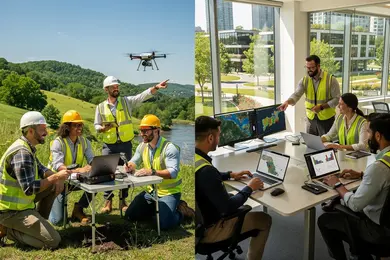
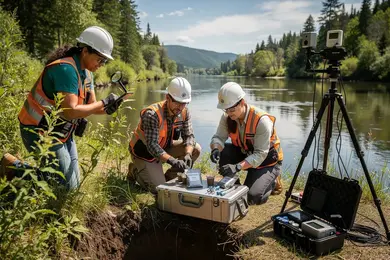
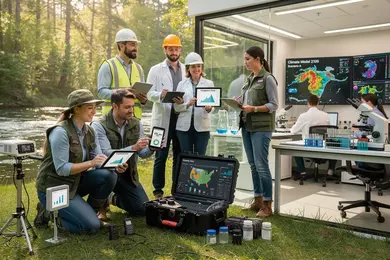
Online environmental science degree programs for environmental monitoring equip students with technical skills crucial to meeting employer expectations in environmental consulting, government, and non-profits. Graduates gain hands-on experience with remote sensing, geographic information systems (GIS), and field sampling-all tailored to industry protocols and regulatory requirements.
For example, monitoring air and water quality for municipal utilities demands precise data assurance under fluctuating field conditions, often integrated through synchronous labs or local internships. These practical components strongly influence employability and certification eligibility. One notable challenge in environmental monitoring careers with online environmental science degrees is arranging fieldwork alongside coursework and employment commitments.
Programs that lack structured applied training or industry connections can hinder a candidate's competitive positioning in a market affected by reduced environmental budgets. Evaluating programs requires more than assessing cost or format; faculty expertise and access to up-to-date software tools are critical to long-term professional advancement, given multi-year commitments to continuing education common in this sector.
In 2025, online environmental health and safety degree offerings grew rapidly, with Educations.com reporting 149 distance-learning environmental programs worldwide. This reflects workforce demand for flexible, skill-specific credentials that respond to evolving environmental challenges while emphasizing measurable competencies, such as data modeling and compliance documentation, increasingly sought after by employers.
Which accredited online environmental science programs best prepare students for monitoring careers?
Effective accredited online environmental science degrees for environmental monitoring prioritize applied skills essential for today's job market. Graduates aiming to work in state agencies or private firms must master water quality testing protocols and air pollution modeling software-competencies reinforced through integrated lab and fieldwork simulations.
Programs accredited by recognized bodies like the Higher Learning Commission or Middle States Commission on Higher Education ensure graduates have credentials accepted by employers, especially in federal or state environmental positions. Employers now expect more than theoretical knowledge: hands-on experience with remote sensing tools, EPA databases, and GIS software is crucial.
Programs that include internships or virtual fieldwork notably enhance readiness for real-world monitoring roles, from soil contamination analysis to wildlife habitat evaluation. Students should weigh the availability of these practical training opportunities carefully when selecting the best online environmental science programs for careers in environmental monitoring.
Job market analysis projects a 7% growth for environmental scientists through 2033, a pace exceeding many sectors. This demand favors candidates with accredited online environmental science degrees that emphasize workforce-relevant training rather than purely academic credentials. For those weighing cost alongside quality, exploring options like the cheapest master's in data science can provide useful financial benchmarks when planning their education investment.
How does an online environmental science degree compare to a campus program for monitoring work?
An online environmental science degree versus a campus program for environmental monitoring demonstrates clear operational distinctions, primarily centered on field experience access. While online curricula provide equivalent foundational knowledge, covering ecosystem analysis, data interpretation, and regulations, the lack of integrated labs and regular supervised fieldwork constrains practical skill acquisition critical for environmental monitoring roles.
Employers place considerable weight on verified field competencies such as sample collection, instrumentation calibration, and site assessments. For example, environmental engineers earning a median wage of $104,170 often report that demonstrated hands-on experience outweighs online theoretical coursework in hiring decisions. Without on-site practicums or partnerships with local agencies, online students face a disadvantage despite the flexibility and outcomes of online environmental science programs in the United States.
Students pursuing an online degree must proactively secure internships or collaborate with local organizations to bridge skill gaps. The tradeoffs include reduced networking and mentoring opportunities compared to campus peers, impacting long-term career trajectories. Evaluating programs based on embedded field components and career service support becomes essential.
Given these nuances, those considering the pathway should weigh their ability to supplement remote learning with practical exposure. For related fields with accelerated pathways, prospective learners might explore options like an online CS degree to diversify technical skill sets relevant to environmental data analysis and emerging technologies.
What admission requirements and prerequisites do online environmental science programs typically have?
Online environmental science programs in the United States impose admission requirements that reflect workforce realities more than mere academic thresholds. Applicants typically need a high school diploma or equivalent, with recommended completion of college preparatory courses in math and science, such as algebra, biology, or chemistry. GPA requirements commonly fall between 2.5 and 3.0 on a 4.0 scale, though selective programs may be more demanding.
Standardized tests like the SAT or ACT are less frequently required but remain part of some admissions evaluations. Understanding typical prerequisites for enrolling in environmental science degrees online is crucial for success. Foundational courses in biology, chemistry, environmental systems, and statistics ensure students possess the quantitative literacy needed for both analytical and applied research tasks common in environmental monitoring roles.
Nontraditional applicants balancing work often bypass introductory classes by demonstrating proficiency in GIS software or data analysis through certifications or prior experience. Cost considerations are significant; accredited bachelor's tuition can start at nearly $6,450 annually, affecting long-term debt and return on investment.
Application dossiers must include personal statements detailing career objectives, letters evaluating quantitative and field skills, and sometimes professional resumes reflecting relevant experience. Transfer students should ensure coursework aligns with STEM or general education requirements to avoid delays. Prospective students from related fields might also compare pathways such as pursuing an electrical engineering degree online for veterans.
What core courses and specializations cover environmental monitoring in online programs?
Environmental science programs with a focus on monitoring prepare students for technical roles requiring precise data acquisition and regulatory literacy. Core coursework emphasizes Geographic Information Systems (GIS), remote sensing, sensor calibration, and environmental policy-skills essential for interpreting complex datasets in contexts such as urban planning or industrial site assessments.
Graduates trained in water quality monitoring can independently design sampling protocols aligned with EPA standards, making them valuable in government roles demanding strict compliance and accuracy. Soil contamination specializations address specific industry needs in hazardous waste evaluation, appealing to consulting jobs where documentation precision is legally mandated.
Students face practical challenges including limited access to onsite labs and the need for field experience. Programs offering internships or partnerships in remote sensor projects help mitigate these barriers, providing hands-on opportunities critical to employability in both public and private sectors.
Employment for environmental scientists was approximately 80,500 jobs, with a projected 6% growth through 2034, suggesting steady demand but also competitive expectations for candidates equipped with applied skills and current industry tools. Candidates must weigh broad environmental science degrees against specialized monitoring tracks to align their credentials with targeted labor market niches and workplace realities.
How long do online environmental science degrees take, and what do they cost?
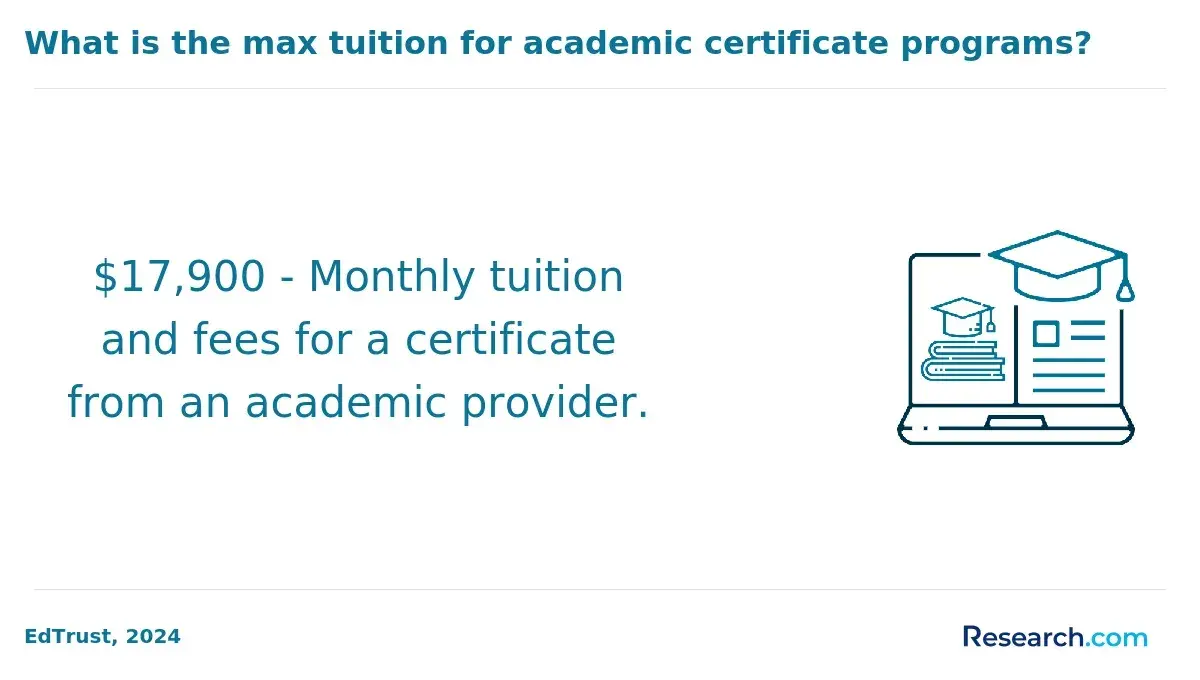
Completing an online environmental science degree requires balancing time, cost, and career objectives with practical constraints. Associate degrees typically take about two years full-time, while bachelor's degrees average four years but may be reduced to three through credit transfers or year-round study. Master's programs commonly span 18 to 24 months but can extend with part-time enrollment, influencing total expenses and time investment.
Tuition costs vary widely, from roughly $10,000 to $40,000 annually for out-of-state online students at accredited institutions, but regional rates and public schools can meaningfully lower this burden. Additional fees for technology and materials can add 10-20% to overall costs.
Graduation rates exceeding 60% at leading programs suggest online pathways deliver comparable completion outcomes to on-campus options, a factor increasingly recognized by employers. However, extended enrollment beyond typical timelines often correlates with lower persistence and reduced access to employer tuition reimbursement benefits, which tend to favor timely completion.
Practical tradeoffs depend on career urgency and financial stability. For instance, environmental monitoring specialists aiming for regulatory positions may need a bachelor's degree within three years to meet job eligibility, while career changers from unrelated fields might prioritize part-time study to maintain income streams despite extended durations.
What environmental monitoring jobs can you pursue with an online environmental science degree?
Specializing in environmental monitoring through an online environmental science degree requires balancing technical skills with practical field challenges. Roles such as hydrologist, air quality analyst, and GIS specialist demand not only foundational knowledge but also certifications and proficiencies in data collection, sensor calibration, and compliance with regulatory standards.
For instance, hydrologists focusing on water resource management earn a median annual wage of $92,060, per May 2024 BLS data cited by ASU Online, reflecting competitive compensation tied to expertise in watershed analysis and federally mandated reporting. These professionals typically operate within government or consulting sectors, designing studies and producing detailed environmental impact assessments.
Air quality analysts, by contrast, must navigate urban and industrial pollution contexts using real-time monitoring tools aligned with EPA guidelines. GIS specialists support these efforts by managing spatial data and interpreting remote sensing information to track ecological shifts.
Key workforce realities include the necessity for substantial hands-on experience, often difficult to replicate fully in online programs. Internships and practicums anchored in real environments substantially affect employability. Employers emphasize accuracy in complex data interpretation and nontechnical communication for effective stakeholder reporting.
- Applicants should assess program offerings for targeted electives in monitoring specializations and established partnerships with industry.
- Fieldwork demands adaptability to equipment maintenance and environmental variability.
- Success hinges on integrating technical expertise with practical reporting skills under regulatory deadlines.
What salary ranges and earning potential exist in environmental monitoring careers?
Environmental monitoring careers reflect a complex balance between salary, sector stability, and skill specialization, markedly impacting long-term employability. Entry-level roles start near $48,000, but reaching mid- to senior-level positions-often above $85,000-depends on nuanced factors such as geographic location, sector, and technical expertise.
Government agencies offer consistent salaries typically ranging from $55,000 to $80,000, favored by those prioritizing pension benefits and career stability despite slower wage growth. By contrast, private industry roles in consulting, manufacturing, or utilities provide a broader salary spectrum, with advanced positions surpassing $95,000 but demanding continuous skill upgrades, particularly in GIS and data modeling.
Nonprofits and research institutions generally pay lower initial salaries ($45,000 to $60,000), yet may offer valuable fieldwork experience and academic networking advantageous for candidates considering further credentials or advanced degrees.
- Choosing private industry can maximize earnings but requires ongoing technological proficiency and adaptability to compliance trends.
- Public sector jobs deliver financial stability with modest wage increases.
- Nonprofit work emphasizes mission alignment with tradeoffs in pay.
Regional differences carry weight: states with stringent environmental regulations, such as California or Washington, often provide premium compensation. Prospective professionals must weigh these financial benefits against cost-of-living and lifestyle preferences while aligning skills with employer expectations.
What professional certifications or licenses support environmental monitoring career advancement?
Professional certifications influence career trajectories in environmental monitoring by signaling distinct competencies. The Certified Environmental Scientist (CES) credential validates technical expertise in environmental science principles and regulatory frameworks, typically required for roles involving independent project management or compliance oversight.
In contrast, the Registered Environmental Manager (REM) focuses on leadership capacities and regulatory program implementation, catering to professionals managing cross-functional teams in mid- to senior-level positions. Licensure such as Professional Engineer (PE) in environmental specialties intersects with legal accountability and infrastructure-related monitoring-fields where government and consulting employers often mandate this credential for senior technical roles.
Choosing between certifications should consider timing, cost, and the regulatory environment where one plans to work. Additional certifications like Hazardous Waste Operations and Emergency Response (HAZWOPER) are indispensable for fieldwork at contaminated sites, while Geographic Information Systems Professional (GISP) certification enhances roles involving spatial analysis and remote sensing.
Aligning certifications with sector-specific requirements and geographical jurisdiction ensures practical relevance. Successful credentialing demands documented experience, ongoing education, and often peer evaluation or exams. Candidates face tradeoffs between immediate work duties and preparation efforts, influencing the optimal credential pathway.
- CES suits science-intensive, compliance-driven roles requiring regulatory acumen.
- REM fits leadership and program management responsibilities within regulatory contexts.
- PE licensure emphasizes technical and legal responsibilities in infrastructure and environmental engineering projects.
Programs supported by the 2025 College Affordability Guide's focus on accreditation and low student loan default rates offer employer-trusted credentials, improving hiring prospects and salary negotiation leverage.
How can students evaluate and choose a reputable online environmental science program?
Accreditation is foundational when selecting an online environmental science program; regional or specialized accreditation ensures alignment with licensing boards and employer expectations. Students should prioritize programs with coursework updated to reflect current technology in environmental monitoring, data analytics, and regulatory compliance to maintain workforce relevance.
Fieldwork opportunities, whether virtual labs or in-person placements, substantively differentiate programs by addressing the technical skillset expected in environmental monitoring roles. For professionals balancing employment, asynchronous delivery and flexible scheduling mitigate access barriers without compromising rigor.
Employment data should directly inform decision-making. Programs with explicit ties to industry or state agencies-such as partnerships with environmental departments-offer realistic exposure to regulatory frameworks and datasets, increasing job-placement potential. This is particularly relevant given EnvironmentalScience.org's projection of median environmental scientist salaries near $78,980 and steady 6% growth through 2034, signaling solid labor market conditions.
Assess total cost beyond tuition-fees, required tech, and materials can cumulatively impact ROI. Evaluating faculty expertise and active research in environmental monitoring reveals curriculum currency and networking value. Comprehensive technical support and service infrastructure play a pragmatic role in minimizing remote-learning obstacles that delay progress or skill acquisition.
Other Things You Should Know About Environmental Science
Employer acceptance of online environmental science degrees varies significantly by industry and region. Agencies focused on environmental compliance and consulting often prioritize candidates with hands-on field experience alongside their degree, which can be a limitation of many online-only programs. Prospective students should assess whether the program includes practical components such as internships or lab work to avoid employability disadvantages. Programs that integrate real-world application through partnerships or hybrid formats tend to yield better job prospects in environmental monitoring.
Online environmental science degrees demand significant self-discipline, especially for students balancing full-time jobs. The lack of a fixed schedule can make consistency difficult, and asynchronous coursework often requires proactive time management. Working professionals should prioritize programs with structured deadlines and cohort models that offer peer interaction to maintain motivation and performance. Choosing a program that aligns with personal availability impacts completion rates and learning effectiveness more than program reputation alone.
Choose a program with at least one hands-on component, such as a 3- to 6-credit field methods course, a supervised internship, or a local lab practicum. Employers in environmental monitoring often expect experience with sampling, chain-of-custody procedures, GIS tools, and basic instrument calibration.
References
- Environmentalscience https://www.environmentalscience.org
- Certification Guide for Young Professionals - Board for Global EHS Credentialing https://gobgc.org/professional-environmental-certifications-professionals/
- Environmental Career Profiles Australia https://environmentaljobs.com.au/resources/environmental-sustainability-careers
- Environmental Monitoring Certificate https://www.yukonu.ca/programs/environmental-monitoring
- Job and Pay - Environmental protection professionals https://wageindicator.org/en-us/work-in-usa/job-description-and-salary/environmental-protection-professionals
- EM - Environmental Monitoring Online Certificate https://www.unbc.ca/continuing-studies/courses/em-environmental-monitoring-online-certificate
- Environmental Monitoring Online Training Course https://www.orau.org/health-physics-training/online/environmental-monitoring.html
- 99 sustainability certifications for 2026 https://trellis.net/article/99-sustainability-certifications-for-2026/
- Online Environmental Science Degree | BS Environmental Science | University of Phoenix https://www.phoenix.edu/online-liberal-arts-degrees/environmental-science-bachelors-degree.html
- Jobs With Salary Guide https://i-recruit.ie/jobs-with-salary-guide/