2027 Online Environmental Science Degrees With Environmental Policy Concentrations

Co-Founder and Chief Data Scientist
Environmental professionals increasingly face the challenge of balancing full-time employment with the need to gain advanced expertise in environmental policy amid intensifying regulatory scrutiny and stakeholder pressure. With the labor market demanding both specialized knowledge and flexible schedules, traditional on-campus programs often exclude mid-career individuals aiming to pivot or advance without interrupting their careers. Data from the National Center for Education Statistics shows online enrollment grew by over 12% in recent years, reflecting a shift toward accessible higher education formats that accommodate working adults.
This article evaluates online environmental science degrees with environmental policy concentrations, highlighting options that combine rigor with flexibility to support strategic career decisions.
Key Things You Should Know
- Online environmental science degrees with policy concentrations often lack fieldwork components, reducing hands-on skills critical for 45% of EPA job postings, forcing students to seek costly offline internships to remain competitive.
- Employers in sustainability sectors prioritize candidates with demonstrated policy impact experience; data from the National Association of Environmental Professionals shows 62% require multi-sector collaboration skills beyond academic credentials.
- Tuition for accredited online programs has risen 8% since 2023 per the Department of Education, making accelerated completion crucial as wage premiums for policy specialists plateau after 5 years without advanced certifications.
What is an online environmental science degree with an environmental policy concentration?
An online environmental science degree with an environmental policy specialization demands balancing scientific rigor with practical policy application. Graduates must navigate regulatory frameworks while interpreting scientific data to influence environmental governance effectively. In practice, a professional working in a state environmental agency might apply this dual expertise to develop enforceable pollution regulations, whereas a consultant in the private sector aligns sustainability initiatives with complex federal and state mandates.
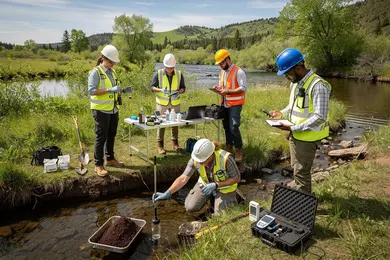
Prospective students should weigh the distinct challenge posed by the limited direct field experience common in remote programs. Accredited online environmental science degrees focusing on environmental policy increasingly integrate virtual simulations and local internships to mitigate this gap, which is vital given employer preference for candidates with demonstrated policy implementation skills.
The cost advantage of such programs remains notable. In 2026, online environmental science bachelor's degrees averaged $6,450 annually, considerably undercutting the $16,680 average tuition for online bachelor's degrees overall. This difference is a strategic factor for professionals managing education expenses alongside employment.
Key practical considerations include program rigor, established links to policymaking bodies, and support for translating academic insights into actionable skills. Exploring options beyond environmental science alone can be insightful-resources like the best online geology degree help prospective students compare related STEM pathways.
How do online environmental science programs compare to campus-based options for policy studies?
Online environmental science policy degree comparison reveals distinct tradeoffs in experiential quality and networking access between online and campus-based formats. While both formats deliver comparable theoretical grounding, campus-based programs often integrate hands-on internships and real-time collaborations with agencies that shape state-level environmental policy. This practical exposure is vital for candidates targeting roles requiring nuanced understanding of local regulations and stakeholder interplay.
For instance, a professional transitioning into state environmental policy benefits from the direct engagement and localized resources offered by campus programs, whereas online students must often supplement their education with proactive local networking or virtual simulations, which may lack practitioner feedback. This divergence reflects broader workforce realities: employers prioritize policy candidates with substantial field experience, more readily cultivated through campus attendance.
The U.S. Bureau of Labor Statistics projects a 6% job growth for environmental scientist and specialist roles through 2032, producing roughly 6,600 annual openings across governments, consultants, and advocacy sectors. Online programs suit learners balancing work and personal obligations, offering flexibility but demanding disciplined self-driven networking and applied experience acquisition to remain competitive.
The choice between campus-based vs online environmental science policy programs impacts long-term career trajectories, with campus formats requiring more upfront investment yet yielding stronger mentorship and hands-on opportunities.
For those exploring major career shifts, understanding these programmatic differences is critical to securing meaningful employment outcomes. For related career insights, see speech pathologist salary.
Which U.S. schools offer accredited online environmental science degrees focused on environmental policy?
Online environmental science programs with an environmental policy emphasis offer a decisive advantage for students targeting roles requiring legislative insight alongside technical acumen. Graduates aiming for employment in federal or state environmental agencies, such as the Environmental Protection Agency, benefit most from curricula that integrate policy development, regulatory frameworks, and stakeholder engagement. For instance, Oregon State University's approach, which embeds legal and social dimensions within its environmental science degree, aligns closely with real-world EPA requirements.
Deciding among U.S. accredited online environmental science programs with environmental policy emphasis requires scrutiny of accreditation status (e.g., ABET or regional bodies), faculty expertise in policy, and delivery flexibility to accommodate working professionals. Key tradeoffs include cost versus practical exposure-top public universities often balance affordability with government networking opportunities, while private institutions may charge more but offer specialized internships.
Employers increasingly seek interdisciplinary graduates who can assess environmental data through economic and political lenses. Median wages reflect this: environmental scientists earn approximately $78,980 annually, but those versed in policy within federal roles average $104,510, as reported by the U.S. Bureau of Labor Statistics May 2024 National Occupational Employment and Wage Estimates.
Students considering accelerated educational pathways might explore an accelerated exercise science degree online for comparison in program duration and structuring, discerning how speed impacts depth of policy engagement versus scientific foundation.
What courses and specializations are typically included in an environmental policy concentration?
An online environmental science degree with an environmental policy concentration demands not only mastery of regulatory frameworks and environmental law but also an ability to navigate competing interests between economic costs and sustainability goals. Coursework often includes environmental economics, sustainable resource management, and environmental ethics, focusing on how policies are shaped by stakeholder values and governance challenges. Specializations in climate mitigation policy, energy transitions, or environmental justice prepare students to meet practical government compliance or corporate responsibility requirements.
Students acquire analytical skills through courses such as quantitative policy assessment and risk management, translating scientific data into actionable regulations-essential in roles like federal enforcement of Clean Air Act standards. These positions contrast with industry consultants whose priorities skew toward cost-efficiency and brand risk. Practical challenges include understanding interdisciplinary content and balancing immediate economic impacts against long-term sustainability, alongside honing negotiation skills through case studies on legislative processes.
Given that global jobs in environmental goods and services exceed 30 million, employer demand increasingly favors experts fluent in both technical analysis and regulatory compliance. Graduates face the task of bridging science-policy gaps in public agencies, NGOs, or private firms adapting to evolving mandates. Prospective students should weigh this against the cost of computer science degree options when budgeting for their education choices in allied technical fields.
This environment underscores the complex tradeoffs in online environmental science degree courses with policy focus, where students must balance specialized expertise with broad applicability across sectors. Understanding environmental science specializations in policy and regulation equips graduates to operate effectively in diverse, evolving labor markets.
What admission requirements and prerequisites do online environmental science policy programs have?
Admission to online environmental science policy programs demands more than a high school diploma; it requires a foundation in biology, chemistry, algebra, and statistics, with many bachelor's applicants needing college-level general education credits. For professionals switching fields, relevant occupational experience can sometimes substitute formal prerequisites, although policies vary. Graduate programs expect a completed bachelor's degree, commonly in environmental science or related areas, with GPA thresholds near 3.0 and occasional GRE requirements, which are increasingly waived.
Applicants face rigorous evaluation of their ability to communicate complex policy issues, demonstrated through personal statements and letters of recommendation focused on analytical and policy skills. Missing core quantitative or ecological coursework often necessitates remedial classes, delaying completion and increasing cost.
Tuition rates fluctuate widely-from approximately $3,600 to $11,940 yearly-affecting students' return on investment and their ability to fund additional certifications or internships that enhance employability. Since employers emphasize practical experience and applied policy skills, programs integrated with real-world projects or government partnerships provide distinct advantages.
- Strong quantitative prerequisites like calculus and environmental chemistry are essential for policy analysis roles.
- Delays caused by remedial courses carry a high hidden cost, potentially outweighing savings from low tuition.
- Experience in applied environmental policy often outweighs credentials alone when competing for jobs.
Understanding these factors helps prospective students balance academic demands, financial commitment, and workforce readiness effectively.
How long do online environmental science degrees with policy concentrations take, and what do they cost?
Choosing an online environmental science degree with a policy focus demands weighing time, cost, and career-impact tradeoffs carefully. Full-time programs usually take four years, mirroring on-campus durations, while part-time options offer flexibility but can extend completion to six years or more-critical for working professionals balancing income and study. Accelerated paths are uncommon because the curriculum's mix of science and policy requires significant time for research and applied analysis.
Tuition differences play a major role: top online programs often charge under $7,000 annually, compared to over $9,500 for in-state public on-campus degrees. This gap can translate into savings exceeding $10,000 across a four-year span, which is significant for self-funded students or those avoiding relocation. However, this savings must be considered against reduced access to networking and hands-on lab work that on-campus programs facilitate, which are often vital for internships and employer recognition in regulatory or NGO roles.
Online learners should proactively pursue virtual or local internships to offset these gaps. Employers typically value demonstrated policy competence and practical experience, which can be more challenging to secure remotely. Additionally, well-ranked online programs with synchronous components and hybrid options may better align with employer expectations, despite higher costs.
Balancing tuition, timeline, and real-world employability demands a strategic approach, especially for those pivoting into environmental policy roles while managing work commitments.
What careers can graduates of environmental science degrees with policy concentrations pursue?
Environmental science graduates with policy concentrations navigate a complex intersection of scientific analysis and regulatory impact, which demands more than technical expertise alone. Their roles-such as environmental policy analyst, sustainability consultant, and regulatory affairs specialist-require applying scientific data to develop, interpret, and enforce policies within legal frameworks. For instance, a policy analyst working within a city government might craft air quality regulations by integrating scientific findings with municipal codes, balancing environmental objectives with political and economic constraints.
Success in these roles hinges on continuous engagement with evolving regulations and stakeholder interests. Typical employers include government entities like the EPA, nonprofits, and corporations managing compliance challenges. Candidates must cultivate skills beyond data interpretation, including legal literacy and strategic communication, to influence policymakers and the public effectively.
Online environmental science and policy degree availability is expanding rapidly, driven by workforce demand and employer recognition of cross-disciplinary skills. Professionals pursuing remote study should weigh challenges such as limited access to on-site internships, which remain a key gateway to credible, entry-level opportunities.
Unlike purely scientific careers, policy-focused graduates face ongoing pressure to maintain current knowledge of laws and regulatory processes. Federal positions often require navigating competitive exams and security clearances, whereas private sector roles emphasize project management and contract negotiation capabilities.
What salary ranges and earning potential are common in environmental policy-related roles?
Salary trajectories for environmental policy professionals vary considerably by sector and expertise, with entry-level roles generally paying between $50,000 and $70,000 annually, while senior positions exceed $100,000. Federal agencies like the EPA report median salaries of $75,000 to $85,000 for policy analysts, but moving into climate-focused nonprofits or consulting firms can elevate earnings to above $90,000 within five years. This trend aligns with a documented 50% rise in master's students specializing in climate policy and sustainability, indicating employer demand for targeted skills as detailed in Taylor & Francis's 2024 "Degree Programs in Environmental Education, Policy, and Management" report.
Comparing sectors reveals practical tradeoffs: state environmental planners earn between $60,000 and $80,000 but face slower wage growth, whereas private companies or international organizations may offer $90,000 to $130,000 for specialists equipped with advanced project management and technical abilities. Professionals who combine policy expertise with data analytics tools typically command 10-20% higher salaries, underscoring the advantage of interdisciplinary competencies.
Local government roles tend to cap near $75,000, requiring strategic career decisions to improve compensation. Holding certifications like Certified Environmental Professional (CEP) and gaining experience in regulatory compliance or grant writing can accelerate salary growth. These patterns highlight the importance of precise skill alignment with employer needs and sector dynamics for meaningful career development in environmental policy.
What is the job outlook and industry demand for environmental policy professionals?
The environmental policy workforce is shaped by complex regulatory demands and a growing emphasis on sustainability, driving consistent hiring especially in government and private sectors. Positions often require a blend of policy knowledge and environmental science, illustrating a tangible labor market premium: individuals holding bachelor's degrees in environmental science or related disciplines earn median weekly wages approximately 67% higher than those with only a high school diploma, based on U.S. Bureau of Labor Statistics data. This wage difference stems from employers' preference for professionals who can navigate both legal frameworks and technical data effectively.
Pragmatically, job candidates with internship experience in policy environments outpace peers by demonstrating legislative process familiarity and stakeholder interaction skills, key factors employers prioritize. However, employment stability is not guaranteed; it frequently depends on geographic mobility since many roles cluster near urban or resource-intensive regions.
Entry-level roles demand versatility, combining data interpretation with negotiation and communication skills, making cross-disciplinary proficiency essential. The evolving regulatory landscape means ongoing education is mandatory to remain competitive. For professionals bridging environmental science with policy insight, the field offers diverse trajectories-from agency analyst to sustainability strategist-with salary and employability advantages linked directly to strategic policy literacy integrated with scientific competence.
How can students evaluate and choose a reputable online environmental science policy program?
Choosing an online environmental science policy program requires careful scrutiny beyond surface-level features. Accreditation matters because regional or specialized recognition signals adherence to standards that employers and graduate schools trust. Equally important is faculty expertise-programs led by instructors actively publishing research and engaged in current policy debates are more likely to offer relevant coursework.
Curricula must balance quantitative policy analysis, environmental law, and data-driven decision-making with applied case studies that mirror today's regulatory landscape. Program structure also influences feasibility; with over 60% of enrollees in fully online environmental science and sustainability master's programs working professionals, asynchronous and part-time options directly affect a student's ability to maintain employment during study.
Career trajectories vary widely. For example, a state-level environmental policy professional needs strong modules on regulatory compliance and stakeholder engagement, while an aspiring international sustainability consultant benefits more from courses on global frameworks and quantitative modeling. Evaluating graduate employment rates and employer partnerships offers insight into a program's real-world relevance.
Finally, prospective students should analyze tuition ROI, comparing total costs to expected salary increases in environmental policy roles. Decisions based solely on brand without verifying these practical outcomes risk investing time and resources in programs that may not meet career goals.
Other Things You Should Know About Environmental Science
Recognition depends on the program's accreditation and the institution's reputation. Employers in environmental policy value degrees that demonstrate rigorous training in both science and policy analysis, regardless of delivery method. Graduates from accredited online programs with clear policy integration tend to compete well for entry-level and mid-career positions, but work experience and demonstrated analytical skills often weigh more heavily than the degree format alone.
Many programs do not require the GRE for 2027 admission, especially at the master’s level. When it is required, schools usually ask for official scores from the GRE General Test, along with a bachelor’s degree, transcripts, and a minimum GPA often near 3.0.
Graduates gain flexibility in pursuing roles across government, NGOs, and consulting, but specialization in policy limits options in strictly technical environmental science fields like laboratory research or fieldwork. Online programs can enhance geographic mobility since credentials are not location-bound; however, graduates must proactively build networks to compensate for fewer in-person opportunities. Prioritizing internships or projects with practical policy impact will improve career adaptability.
References
- Environmental Job Market Trends | ECO Canada https://eco.ca/research-and-resources/environmental-job-market-trends/
- Master of Science in Environmental Science https://www.fairmontstate.edu/academics/programs/master-environmental-science.aspx
- Online Environmental Science Degrees: Compare Schools https://www.degreesforgood.org/online-degrees/environmental-science/
- Jobs With Salary Guide https://i-recruit.ie/jobs-with-salary-guide/
- Online MPA Programs with a Specialization in Environmental Policy & Management https://www.onlinempaprograms.com/specializations/environmental-policy-management
- Choosing a bachelor's in environmental science | edX https://www.edx.org/resources/how-to-choose-a-bachelors-in-environmental-science
- Best Environmental Policy Degree Programs, Online Included https://environmentalsciencedegree.org/programs/environmental-policy/
- Breakthrough Environmental Jobs | UK, US & Middle East https://enable.green/environmental-jobs/
- Master of Science in Environmental Sciences and Policy https://www.ceu.edu/academics/degrees/ms-environmental-sciences-policy