2027 Online Environmental Science Degrees With Environmental Monitoring Career Alignment

Co-Founder and Chief Data Scientist
Facing rapidly evolving environmental regulations and mounting data demands, professionals seeking to enter or advance in environmental science careers grapple with limited access to flexible, relevant education. The median age of environmental science students rising above 28 reflects a growing need for programs accommodating working adults, while U.S. Department of Education data shows online enrollments in science-related degrees surged nearly 15% since 2024.
This shift reveals a workforce prioritizing adaptable learning but risks misalignment when programs lack targeted career integration. This article assesses online environmental science degrees designed for environmental monitoring roles, guiding candidates through pragmatic choices that balance program flexibility with direct career outcomes.
Key Things You Should Know
- Online environmental science degrees in 2026 face a credentialing tradeoff: programs with heavy lab credit requirements see 18% lower completion rates due to limited remote access, constraining time-to-employment gains, per the National Center for Education Statistics.
- Employers in environmental monitoring prioritize candidates with integrated data analytics skills; 62% of hiring managers report entry-level gaps when programs lack GIS and remote sensing modules, indicating curricular alignment is critical for workforce readiness, based on a 2024 CleanTech workforce survey.
- Average total program costs rose 7% since 2023, with tuition and tech fees driving up barriers; consequently, 41% of applicants opt for part-time enrollment, extending time-to-degree and delaying career advancement, according to the Bureau of Labor Statistics education data.
What is an online environmental science degree with an environmental monitoring focus?
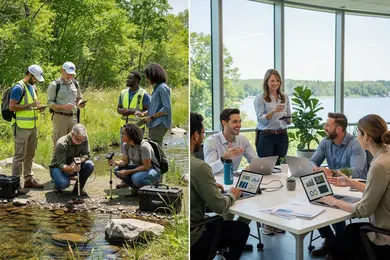
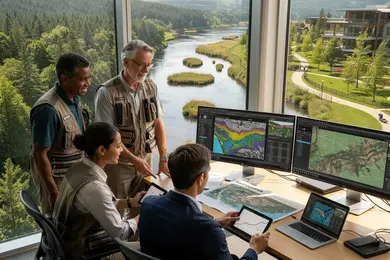
Specializing in environmental monitoring within online environmental science degree programs equips students with actionable expertise tailored for roles demanding constant field data evaluation. Employers in sectors like agricultural management and urban planning prioritize candidates skilled in operating remote sensing devices, managing GIS databases, and analyzing sensor-derived datasets to ensure compliance and swift environmental response.
The balance between theory and applied skills is critical, yet programs pose a logistical challenge: most still require physical internships or on-site practicums to meet accreditation, a key consideration for working professionals or those with geographic constraints. Choosing programs that maintain strong industry partnerships can ease securing these vital experiential components.
A field example involves water resource managers using data-driven monitoring to identify contamination trends, enabling timely interventions that protect ecosystems and public health. Such roles often demand proficiency in statistical analysis and report generation, competencies developed through focused coursework in these best online degrees for environmental monitoring careers in environmental science.
In 2024, environmental scientists and specialists earned a median wage of $80,060, with the upper decile exceeding $134,000, reflecting a competitive market where technical specialization is a differentiator. Prospective students should also compare online geology programs when considering pathways that intersect with environmental monitoring, to better align educational choices with sector demands.
How do online environmental science degrees compare to campus programs for environmental monitoring?
Choosing between campus versus online environmental science degrees for a career in environmental monitoring requires evaluating how each format aligns with employer expectations for practical skills. Campus programs often embed hands-on laboratory access and local fieldwork, essential for mastering instruments, data analysis software, and regulatory compliance.
Online environmental science degree programs for environmental monitoring typically lack these integrated opportunities, demanding proactive pursuit of internships or regional projects to gain equivalent experience. For example, a student enrolled on campus may secure an internship at a state environmental agency, gaining immediate exposure to regulatory compliance and real-time data collection.
In contrast, an online student might face delays or geographic barriers in securing similar positions without institutional support, potentially affecting readiness for field roles. From 2024 to 2034, employment growth for environmental scientists will average 4%, with about 8,500 openings annually, reflecting steady demand for candidates who combine theoretical knowledge with applied skills.
Graduates who lack direct experience risk underpreparation despite academic completion. To bridge this gap, online learners must cultivate virtual internships and lean on professional associations for networking, offsetting limitations in campus-style collaboration. For those considering advanced degrees, options like a PhD in data science online may complement environmental monitoring by enhancing data analytics capabilities, a growing asset in the field.
Are online environmental science programs for environmental monitoring properly accredited and recognized?
Employers hiring for environmental monitoring roles consistently prioritize graduates from accredited programs that combine theoretical knowledge with applied training. Regional accreditation bodies recognized by the U.S. Department of Education and CHEA, such as the Higher Learning Commission, WASC, or NEASC, provide essential assurance that a program meets such standards.
However, accreditation alone is insufficient if the curriculum lacks embedded lab work or hands-on components, which are crucial for mastering tasks like GIS mapping, pollutant data analysis, or environmental sensor deployment. In the current clean energy labor market, which experienced an 11-12% job growth contrasted with a shortage of qualified candidates, choosing accredited online environmental science degrees for environmental monitoring that include practical experiential learning is pivotal.
Candidates from purely theoretical or non-accredited online programs often encounter hiring barriers or limited progression opportunities in government agencies, consulting firms, or clean energy sectors. Decision-makers should rigorously evaluate whether a program integrates internships or capstone projects via partnerships with employers or agencies, directly impacting workforce readiness.
This consideration is especially important when assessing recognized online environmental science programs in the United States for environmental monitoring careers, where hybrid or on-site options may be limited. For prospective students exploring educational options that align with current industry demands without sacrificing time, programs like an accelerated computer science degree online exemplify how focused credential paths can avoid unnecessary delays.
What admission requirements apply to online environmental science degrees in environmental monitoring?
Admission criteria for environmental monitoring online programs commonly require more than a high school diploma, emphasizing proficiency in math and natural sciences to meet job-specific quantitative demands. Many programs evaluate transcripts for prior coursework in biology, chemistry, or physics to ensure candidates grasp data collection and analysis foundational to monitoring roles.
For those pivoting careers, relevant work experience or previous education can sometimes offset formal prerequisites. This blend of academic and practical readiness reflects workforce expectations where hires must quickly translate classroom knowledge into regulatory compliance and field operations. Standardized test requirements have loosened in many schools, but remain a factor in some competitive or accredited programs to confirm analytical aptitude.
Additional elements like letters of recommendation or personal statements serve to gauge motivation and alignment with rigorous science curricula. Candidates employed in environmental roles should verify transfer credit policies from certifications or industry training to reduce degree duration and cost. Such verification is critical given the median wage near $49,490 and a projected 7% job growth, underscoring the financial and timeline implications of admission choices.
Programs fully online necessitate technological competency with data software and virtual labs, a barrier in regions lacking sufficient internet infrastructure. This practical consideration influences enrollment decisions and subsequent success rates. Prospective students weighing online environmental science degree prerequisites for environmental monitoring must balance academic preparation, testing policies, and technology access against workforce demand and career trajectory.
For insights on cost-effective pathways in related fields, it may be helpful for students to review options for an MLIS degree.
What courses and specializations are typical in environmental monitoring degree curricula?
Environmental monitoring degree curricula demand a balance between foundational environmental science knowledge and specialized technical skills to meet employer needs effectively. Graduates must translate complex datasets into actionable insights, especially in roles like municipal water quality analysis where precise interpretation of sensor data directly influences public health decisions.
Core coursework often includes environmental chemistry, ecology, GIS, remote sensing, statistics, and environmental law, but students face notable tradeoffs depending on career goals. Those targeting technical roles benefit from deeper immersion in data analytics and sensor technology, while managerial aspirants should emphasize environmental policy and project management.
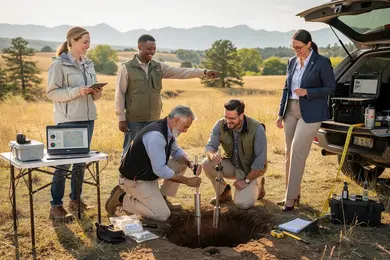
The practical component-lab and fieldwork tied to real-world challenges-is indispensable. Online degree programs offer flexibility but frequently require proactive efforts to secure internships or local partnerships to avoid gaps in hands-on experience, which employers regard as critical. These curricula respond to clear workforce demands for graduates who can ensure regulatory compliance and adapt to evolving monitoring technologies.
Environmental scientists earn an average salary of $73,919 in the U.S., a figure reflecting both technical expertise and the increasing complexity of environmental data management. Those evaluating programs should weigh technical specialization against broader scientific literacy and consider how well the curriculum integrates applied learning for immediate workplace relevance.
How long do online environmental science programs take and what do they cost?
Choosing an online environmental science degree requires weighing time investment against career progression and financial practicality. Bachelor's programs generally span four years full-time, though accelerated or part-time pathways can better accommodate working professionals. Master's degrees usually require two years but often extend to three when balancing employment with coursework.
These timelines affect not only tuition-which ranges from $10,000 to over $30,000 annually for bachelor's and $15,000 to $40,000+ for graduate programs-but also opportunity costs tied to reduced work hours. Students and professionals must consider program length relative to intended job roles. For example, someone focused on urban water quality monitoring might prioritize an accelerated master's program to quickly access senior roles paying between $85,000 and $110,000.
Conversely, a part-time bachelor's student maintaining fieldwork employment may accept slower salary growth starting around $55,000 to $70,000, with increases tied to experience. Financial planning should incorporate potential extended study due to prerequisite courses or transfer credits, which increase total cost and time. The return on investment often hinges on whether an individual's current employment status allows for reduced work hours or demands prioritizing steady income over speed of completion.
- Public bachelor's tuition: $10,000-$30,000/year
- Private bachelor's tuition: $30,000+/year
- Graduate tuition: $15,000-$40,000+/year
- Entry-level environmental data analyst salary: $55,000-$70,000
- Experienced bachelor's salary range: $76,000-$85,000
- Master's degree salary range: $85,000-$110,000
Decisions on pacing and cost directly influence employability readiness and income trajectory. A strategic choice aligns educational duration with career goals, balancing disruption against long-term salary gains.
What environmental monitoring careers can you pursue with an online environmental science degree?
An online environmental science degree primarily equips candidates for roles that blend technical skills with regulatory knowledge, such as environmental consultants, field technicians, GIS specialists, and data analysts. For instance, consultants often must interpret geospatial data and remote sensing outputs to guide industrial clients on contamination risks and remediation - a process demanding both analytical precision and regulatory familiarity.
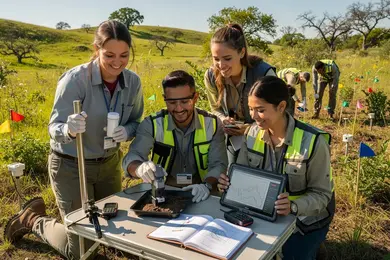
Field technicians, meanwhile, are tasked with collecting environmental samples, requiring hands-on expertise rarely replicable through theory alone. The demand for GIS specialists in environmental monitoring is projected to grow by roughly 9% annually through 2028, fueled by expanding use of geospatial analytics in urban planning and climate impact assessment.
Employers favor candidates adept in AI-driven geographic tools, anticipating a near tripling of geospatial market applications by 2030-2035, a trend documented by Project Geospatial, 2026. This makes integrating advanced GIS, remote sensing, and data science elements a practical imperative for any serious learner. However, the key challenge remains balancing software proficiency with field experience.
Rapid technological change and evolving regulatory frameworks mean candidates without direct lab or site exposure may face obstacles initially. Targeted internships, virtual labs, or certifications in environmental sampling and compliance often prove essential for credibility and job readiness. Working professionals should critically evaluate online programs' connections to real-world monitoring agencies and practical coursework to avoid gaps between education and employment demands.
What are salary expectations and earning potential in environmental monitoring roles?
Wage ceilings for environmental monitoring roles align with technician-level positions rather than advanced research careers, typically topping out around $64,000 annually for those combining practical experience with an environmental science online degree. These positions emphasize compliance, data collection, and environmental reporting, especially within government agencies, consulting firms, and industrial compliance sectors.
Salary ranges exhibit clear industry and geographic disparities:
- Energy and utilities sectors often yield salaries near or above $64,000 due to regulatory complexity and operational demands.
- Municipal water quality or agricultural monitoring roles commonly fall between $45,000 and $55,000, constrained by tighter budgets and less technical specialization.
Prospective environmental science students aiming for monitoring roles must consider how specific certifications and technical skills-such as GIS and remote sensing-impact earning potential and job mobility. Entry-level positions often cap near $40,000 without upskilling or geographic relocation.
Long-term wage growth increasingly depends on shifting into supervisory or project management roles, which require not only an environmental science degree but also advanced analytical training and work experience. Candidates ignoring these requirements risk stagnating at technician-level salaries despite formal education.
Evaluating online environmental science programs demands scrutiny of their practical compliance and monitoring focus versus purely academic content, aligning tuition investment with realistic income expectations in targeted sectors.
What is the job outlook and industry demand for environmental monitoring professionals?
Environmental monitoring roles reflect steady demand with a projected 6% growth through 2032, matching average occupational expansion reported by the U.S. Bureau of Labor Statistics. This growth is intricately linked to tightened environmental regulations and corporate sustainability efforts, positioning skilled professionals to bridge compliance with operational realities.
For instance, a manufacturing sector specialist must adeptly manage continuous emissions tracking and EPA-mandated water discharge monitoring, requiring a blend of on-site fieldwork and remote data management capabilities. Conversely, positions in natural resource management frequently integrate habitat assessment and pollutant tracking, applying GIS and remote sensing tools to support ecosystem health.
Master's level environmental management education typically involves total costs between $25,000 and $40,000, with graduates entering roles where median salaries approximate $76,480. This compensation level underlines the importance of mastering specialized technical skills and certifications to move beyond entry-level opportunities. Online degree seekers should balance tuition investments against logistical barriers like obtaining hands-on experience.
Critical factors for prospective students include:
- The necessity of proficiency in emerging environmental data analytics and regulatory frameworks.
- The practical tradeoff between flexible study modalities and opportunities for supervised fieldwork.
- The alignment of program curricula with actual employer expectations for environmental monitoring and reporting capabilities.
How can you choose a reputable online environmental science program aligned with monitoring careers?
Programs for online environmental science aimed at environmental monitoring careers must prioritize accreditation and curriculum rigor that reflect real-world job demands in data collection, field instrumentation, and compliance with updated environmental regulations. Employer preference leans heavily toward candidates with practical exposure, which means programs integrating lab simulations or hybrid formats offering direct hands-on experience.
Careful scrutiny of faculty credentials, particularly those with tangible industry or governmental affiliations, enhances the applied learning environment and opens critical networking channels essential to securing roles focused on ecosystem assessments or air and water quality monitoring. Employment outcomes in these areas are closely linked to the program's connections with industry and internship availability-key given the projected 6% labor growth by 2034 reported by the U.S. Bureau of Labor Statistics from a base of 80,500 positions.
These factors influence not only job access but also the practical readiness for roles emphasizing environmental compliance. Flexibility for working professionals, such as evening classes and GIS or statistical software training, can be decisive. For example, a mid-career municipal water management professional needs advanced data analysis paired with scheduling that adapts to ongoing job demands.
- Programs lacking specialization limit readiness for regulatory and compliance responsibilities central to environmental monitoring work.
- Responsiveness to evolving laws and technologies beyond 2024 is essential to maintain relevance in this sector.
- Pathways supporting certifications like Certified Environmental Scientist (CES) add critical employer-valued credibility.
Other Things You Should Know About Environmental Science
2027 online programs are using virtual labs and simulations to mimic real-world environmental monitoring scenarios. These tools, along with interactive modules and live projects, help students develop practical skills remotely. Some programs also offer hybrid models with occasional in-person workshops to bolster hands-on experience.
Many programs require a 3- to 6-credit field practicum or internship in a lab, agency, or consulting setting. For environmental monitoring alignment, students often complete at least 120 supervised hours, plus documentation using EPA or state monitoring protocols.
Employer acceptance of online degrees varies depending on the program's reputation, accreditation, and evidence of applied skills. Degrees from well-established institutions with strong practical training components receive more favorable consideration. Candidates should focus on programs with quantifiable experiential learning achievements and seek internships or certifications to reinforce employer trust and overcome skepticism tied to purely online credentials.
Incorporating industry-recognized certifications such as GIS, HAZWOPER, or environmental data analysis strengthens job readiness and compensates for some practical skill limitations of an online degree alone. Certifications target specific employer expectations and often provide measurable competency assessments. Prioritizing these credentials can accelerate hiring and enable clearer career progression within environmental monitoring, especially in competitive job markets.
References
- Explore Career Opportunities in Environmental Science https://www.neefusa.org/story/environmental-education/explore-career-opportunities-environmental-science
- Environmental Monitoring Officer - Green Careers Hub https://www.greencareershub.com/find-your-green-role/job-profiles/environmental-monitoring-officer/
- Breakthrough Environmental Jobs | UK, US & Middle East https://enable.green/environmental-jobs/
- Environmental Monitoring Market Report 2025-2030, By Product Type, Sampling Method, and Geo https://www.marketsandmarkets.com/Market-Reports/environmental-monitoring-market-216846315.html
- Degrees - Green Jobs for Nature https://greenjobsfornature.org/get-that-green-job/degrees/
- 10 careers you can have with an environmental science degree - SMWC https://www.smwc.edu/10-careers-you-can-have-with-an-environmental-science-degree-blog-july-20/
- Environmental Monitoring Jobs & Career Opportunities in India https://www.ppsthane.com/blog/environmental-monitoring-jobs-career-opportunities-in-india
- ISEP - Institute of Sustainability and Environmental Professionals https://www.isepglobal.org/learn/courses/certificate-in-sustainability-and-environmental-management/
- Environmental Career Profiles Australia https://environmentaljobs.com.au/resources/environmental-sustainability-careers