2027 Environmental Science Jobs With the Best Work-Life Balance

Co-Founder and Chief Data Scientist
Balancing demanding work hours with meaningful environmental science responsibilities has become a critical struggle for professionals driven by urgent ecological challenges. More than 60% of adult learners now prioritize flexible enrollment options, according to recent National Center for Education Statistics data, signaling a shift toward balancing education and career without sacrificing personal time.
This trend also mirrors employers increasingly valuing practical skills paired with sustainable work environments over sheer output. For students and career changers, navigating job options that align with lifestyle needs, while addressing sector growth and skill demands, remains complex. This article identifies environmental science roles offering the best work-life balance to guide informed career decisions.
Key Things You Should Know
- Environmental science jobs with strong work-life balance often require advanced certifications, with 63% of employers in 2024 demanding mid-career credentials, increasing upfront educational investment but improving salary prospects.
- Federal and state environmental agencies now prioritize data analytics skills, shifting workforce demand toward hybrid roles; professionals lacking this face stagnated mobility despite traditional science backgrounds.
- Entry-level positions average 38 hours weekly, yet long-term career progression frequently entails 50+ hours; this tradeoff forces candidates to weigh immediate balance against sustained career growth per recent BLS labor trends.
Which environmental science jobs offer the best work-life balance in the United States?
Environmental science careers with the best work-life balance in the United States typically emphasize stable, office-based roles with predictable hours, such as environmental scientists and specialists. These positions, with a median annual wage of $80,060 and a projected 4% employment growth over the decade, predominantly involve data analysis, regulatory compliance, and reporting within government agencies or consulting firms. This structure limits irregular hours and weekend shifts, supporting a consistent routine.
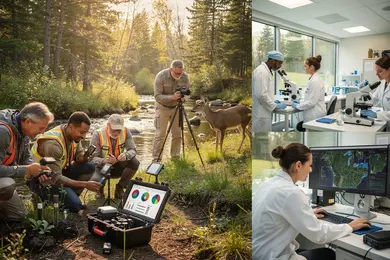
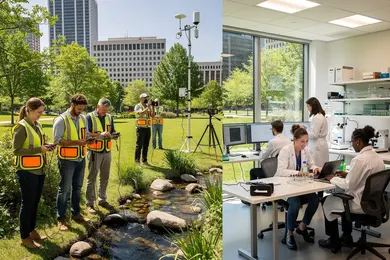
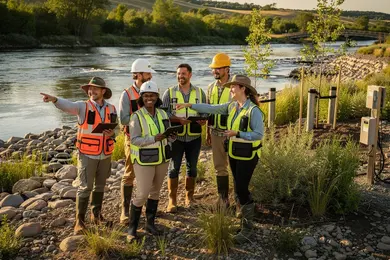
In contrast, field-based roles like environmental field technicians demand irregular hours, significant travel, and physical labor, adversely affecting personal time. Environmental consultants in private firms face variable deadlines that can disrupt schedules, although some employers now aim to offer more predictable workloads to retain talent.
The best GIS graduate programs often provide skills aligning with office-centered jobs focused on data management and environmental policy, facilitating smoother work-life integration. Candidates seeking environmental science careers with flexible schedules in the U.S. should weigh lower stress and scheduling clarity in regulatory roles against slower salary growth compared to private sector opportunities that may require juggling multiple clients.
Decision-makers must balance priorities such as family time and routine against compensation and career advancement potential. Upgrading credentials to target roles emphasizing risk assessment or policy over solely fieldwork can be a strategic move to optimize work-life balance.
What education and environmental science degree do you need for these balanced careers?
Entry-level roles in environmental science commonly require a bachelor's degree in environmental science, environmental engineering, ecology, or related fields, emphasizing practical skills in GIS software, data analysis, and environmental regulations. Such education supports careers with predictable schedules and autonomy, typical of environmental consulting or compliance jobs.
However, for specialized federal positions-where the median wage reached $113,980 in 2024-advanced degrees like a master's in environmental science or public policy become critical due to the regulatory complexity and project demands within agencies like the EPA or USGS. Employers in state agencies may prioritize candidates with specific local regulatory knowledge, whereas private firms value interdisciplinary skillsets and applied research experience.
Technical certifications can further enhance job flexibility, enabling remote or hybrid work common in environmental data analysis roles, although these credentials often limit upward mobility compared to graduate degrees. Students evaluating educational requirements for environmental science careers should weigh the tradeoff between faster certification pathways and comprehensive graduate programs.
The choice of degree or certification must align with target employer expectations and realistic career trajectories. For professionals considering skill expansion, an MS data science online offers relevant analytical training that complements environmental science competencies without disrupting current employment.
How do salaries and benefits compare for environmental science jobs with good work-life balance?
Salary comparison for environmental science jobs with work-life balance reveals notable tradeoffs between compensation and personal time. Entry-level roles generally start between $55,000 and $70,000 annually, rising to $75,000-$95,000 for mid-career professionals. However, private sector environmental consultants often earn more than government employees, who typically benefit from predictable schedules and enhanced leave policies.
For example, a state environmental compliance officer might accept lower pay to avoid irregular hours and frequent travel common in consulting or renewable energy firms. Benefits and compensation in environmental science careers with good work-life balance vary substantially depending on employer. Public sector positions tend to offer more comprehensive health insurance, retirement plans, and overall job stability.
Yet, flexible schedules in some agencies allow employees to maintain income levels while improving work-life integration. Understanding how employer expectations about overtime and remote work align with personal priorities is essential for rational career decisions in this evolving field. Job seekers pursuing credentials aligned with regulatory trends will find better negotiation leverage for salary and benefits.
Staying current with wage and benefit benchmarks is necessary to navigate competition, especially given the projected 7% growth rate for environmental scientists, engineers, and protection technicians. Those evaluating educational pathways might consider options like a librarian degree online to supplement skills, aiding strategic pivots or advancement within environmental science disciplines.
Which environmental science roles are most compatible with remote or hybrid work arrangements?
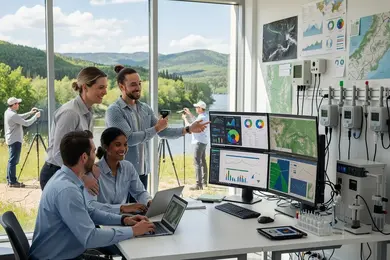
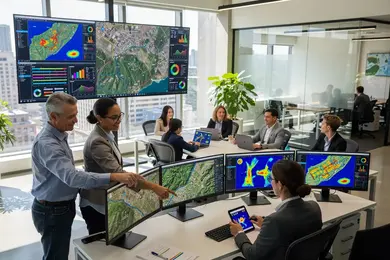
Environmental science job roles with flexible work options are largely influenced by the nature of daily tasks and employer expectations. Positions like environmental consultants, policy analysts, GIS specialists, and government program coordinators lend themselves well to remote or hybrid arrangements because they emphasize data analysis, reporting, and stakeholder communication, which can be conducted largely away from traditional offices.
For example, government environmental quality and housing programs-the sector employing the largest share of environmental scientists-offer hybrid roles combining fieldwork with remote administrative responsibilities. This balance supports a $84,845 average annual wage reported in 2024 by Data USA, demonstrating that remote-compatible roles can provide competitive remuneration aligned with workforce flexibility.
Remote and hybrid work opportunities in environmental science careers depend on the division between field requirements and desk-based responsibilities. Consultants handling environmental impact assessments often perform core work through digital platforms, minimizing onsite time to essential visits. GIS specialists focus primarily on spatial data management and modeling-tasks manageable from home but requiring sophisticated computing. Roles heavily reliant on physical sampling or laboratory work typically lack remote viability.
Seeking these roles demands advanced data and communication skills, as employers prioritize candidates adept in virtual collaboration and independent project management. Flexibility and discipline remain critical, since hybrid schedules require navigating field unpredictability alongside remote deliverables. Those evaluating a pivot into environmental science should weigh these operational realities against their skillsets and career goals.
Prospective students can explore a library science degree as an example of a structured, affordable online program that develops transferable analytical and research skills relevant to environmental data management and policy analysis.
How do online environmental science programs compare to campus-based options for career preparation?
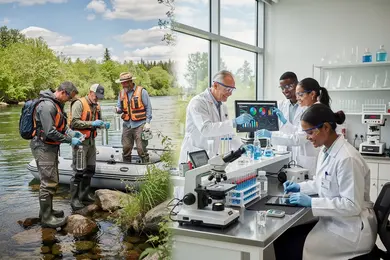
Employers in environmental science fields, especially within government roles, expect candidates to demonstrate practical skills beyond theoretical knowledge. Campus-based programs typically better facilitate hands-on experience such as sample collection, lab techniques, and real-time data analysis through structured internships and partnerships, which align with job requirements and reduce onboarding time.
For instance, local or state environmental scientist positions, with median annual wages around $77,000, often require proven field expertise to navigate unionized work environments effectively. In contrast, online environmental science learners must independently arrange internships or cooperative education experiences, making the path to hands-on proficiency less direct and potentially slower.
This demands high self-motivation and time management, especially for working professionals balancing complex projects without in-person lab access or peer collaboration. Key tradeoffs to consider include:
- Campus programs provide streamlined access to critical practical training aligned with employer expectations, aiding quicker job readiness.
- Online programs offer flexibility but require proactive efforts to secure relevant experience externally.
- Government sector roles favor applicants combining robust theoretical foundations with verifiable applied skills.
Decision makers should assess whether their scheduling needs and career targets justify the additional effort online learners face to meet employer demands for validated practical competencies.
What environmental science coursework and skills most support low-stress, flexible job paths?
Pursuing environmental science with a focus on data analysis, GIS, and environmental policy equips candidates for roles that balance expertise with lower stress and increased flexibility. Urban planners proficient in GIS, for example, can conduct critical spatial assessments remotely, significantly reducing exposure to fieldwork pressures common in environmental roles.
Projected growth by the Bureau of Labor Statistics indicates approximately 4,000 new jobs in environmental science over 2024-2034, with demand concentrated in climate risk assessment, sustainability, and pollution regulatory compliance. These roles favor candidates skilled in federal frameworks like the Clean Air Act and the Endangered Species Act, often associated with structured office hours and less physically demanding tasks.
Key competencies include statistical software proficiency (R, Python), environmental impact assessments, and regulatory knowledge. Consultant and analyst positions emphasizing report generation and stakeholder communication typically allow greater schedule control and remote work opportunities. However, candidates must consider tradeoffs: coursework with extensive fieldwork enhances hands-on employability but correlates with less predictable hours and higher job stress.
Conversely, policy-heavy and GIS-focused tracks support telecommuting trends but may limit field experience. Students targeting roles driven by sustainability growth should strategically blend technical skills with adaptability to varying employer expectations around hybrid and remote arrangements.
How can you evaluate accredited environmental science programs that lead to sustainable careers?
Employment outcomes provide the most reliable measure of an environmental science program's value for those targeting sustainable sector jobs. For example, Iowa State University's Environmental Science Graduate Program reports that roughly 91% of alumni secure roles related to sustainability within six months, signaling alignment with employer demands and practical curriculum application that eases workforce entry.
Prospective students should evaluate programs based on applied learning components-such as required internships, fieldwork, or collaboration with government agencies and nonprofits-that build tangible skills in compliance, environmental data analysis, and project management. These experiences often distinguish candidates amid regulatory, conservation, and renewable energy fields where hands-on aptitude outweighs purely academic credentials.
There is a tradeoff between programs emphasizing theoretical research and those focusing on cross-disciplinary, applied knowledge; consulting and corporate sustainability sectors generally favor adaptable practitioners equipped for varied work scenarios and shifting environmental challenges. Geographic employment patterns and alumni career diversity further affect choices, especially where relocation impacts long-term stability.
Accreditation by recognized bodies like ABET ensures academic rigor and degree credibility, but should be combined with scrutiny of direct employment data and alignment to target sectors. Programs lacking transparent placement records or industry partnerships risk leaving graduates with gaps in practical skills or prolonged unemployment, particularly in this specialized workforce sector.
What certifications or licenses improve work-life balance in environmental science careers?
Certifications like the Certified Environmental Scientist (CES) and Leadership in Energy and Environmental Design (LEED) provide environmental science professionals strategic leverage to shift into roles that better support work-life balance by prioritizing predictability and flexible scheduling over field demands. For instance, CES holders often secure positions focused on regulatory compliance or environmental planning with regular office hours, reducing weekend and overtime pressures common in remediation.
LEED accreditation aligns professionals with corporate sustainability, which typically involves project-based workflows adaptable to personal schedules. Similarly, the Professional Engineer (PE) license in environmental disciplines significantly broadens career options toward consulting and sustainability management, where wages average $84,845 annually according to Data USA.
These roles favor strategic program oversight with more autonomy and less on-site labor, increasing eligibility for telework or hybrid arrangements-key factors for maintaining balance outside of work. The upfront time and financial investment for obtaining certifications can disrupt work-life stability temporarily, especially during study and exam preparation phases.
Renewal requirements that include continuing education impose ongoing commitments, compelling candidates with family or part-time jobs to weigh the tradeoffs carefully and prioritize credentials with flexible renewal terms and solid industry recognition. In practice, environmental scientists often use certifications to negotiate lower fieldwork obligations and greater project control, while entry-level or governmental roles may still demand state-specific hazardous materials credentials for focused field operations to manage personal schedules effectively.
What is the long-term job outlook for environmental science positions with manageable workloads?
Environmental science roles split sharply between physically intensive fieldwork and administratively focused office tasks, affecting wages and working conditions. For instance, wildlife biologists earn a median wage of $72,860 with modest 4% job growth, but their roles demand extensive field hours, irregular schedules, and travel-factors that challenge work-life balance. Conversely, geoscientists concentrate on office or lab work, earning $99,240 with a 5% growth rate.
Prospective students and professionals should weigh these differences carefully:
- Field-heavy positions require resilience to environmental conditions and flexibility around travel and hours, which can complicate personal routines.
- Office-based roles such as GIS analysts, environmental consultants, or policy specialists emphasize analytical skills and advanced software use, offering steadier schedules but demanding technical proficiency.
Employers increasingly prioritize adaptability and expertise in data management and remote sensing, pushing candidates toward targeted coursework and internships that develop these competencies. Strategic early investment in these skills reduces burnout risk and aligns with labor market preferences for higher-paid, less physically demanding careers.
Students must consider the tangible trade-offs of occupational focus-choosing between the physical demands of fieldwork and the technical, often solitary, nature of office-based roles to position themselves for sustainable employment and income growth.
How should students choose an environmental science specialization aligned with lifestyle goals?
Choosing an environmental science specialization requires balancing salary potential, work demands, and sector stability to avoid burnout and promote sustainable career satisfaction. Industry data shows that the lowest 10% of environmental scientists earn under $50,130 annually, while the top 10% exceed $134,830. This wide pay gap reflects the different work conditions and flexibility associated with various specializations.
Students prioritizing predictable hours and lifestyle balance often gravitate toward government environmental policy or consulting. These sectors offer structured schedules and benefits but usually moderate pay. Conversely, fields like environmental engineering or climate data analysis reward higher salaries with longer hours and fieldwork pressures, creating a clear tradeoff between income and personal time.
For example, a student who wants to avoid irregular travel should steer clear of environmental remediation and field biology roles, which demand site visits and variable hours. Instead, urban sustainability or environmental compliance offer more office-based, stable schedules. Professionals willing to accept higher burnout risk might pursue private-sector engineering roles where salaries frequently surpass $100,000 but require sacrificing work-life balance.
Employment setting also affects outcomes: nonprofits and public agencies typically ensure greater job security and benefits but with reduced pay, while private firms provide uneven stress and compensation. Engaging with mentors and internships is vital to align expectations with real-world dynamics and avoid specialization mismatches that undermine career longevity.
Other Things You Should Know About Environmental Science
The Certified Environmental Scientist credential from the National Registry of Environmental Professionals can support federal and state applications, but government hiring usually relies more on a bachelor’s degree in environmental science and 1 to 3 years of field or compliance experience. Some agencies also require U.S. citizenship and background screening.
Internships and field placements vary widely in intensity and hours, with some requiring significant off-hours commitments or seasonal work peaks. Choosing programs with structured, limited field requirements and support for time management better prepares students for balanced careers. Prioritizing placements that simulate realistic but manageable workloads can reduce burnout and align expectations with employer standards.
While advanced degrees like master's or PhDs open doors to specialized and research-focused roles that may offer more control over schedules, they can also lead to demanding workloads and pressure to publish or secure funding. Entry-level positions with balanced hours often require a bachelor's degree combined with relevant experience. Prospective students should evaluate whether the increased workload of advanced education aligns with long-term work-life goals and career advancement expectations.
References
- Environmental Career Profiles Australia https://environmentaljobs.com.au/resources/environmental-sustainability-careers
- Environmentalscience https://www.environmentalscience.org
- How Environmental Sciences Shape Public Policy Careers in Sustainability and Governance https://gradblogs.zu.ac.ae/blog/how-environmental-sciences-shape-public-policy-careers-in-sustainability-and-governance
- Greener Careers https://greenercareers.co.uk/blog/remote-environment-jobs-work-green-from-anywhere
- Preparing High School and College Students for a Career in Environmental Science https://www.neefusa.org/story/environmental-education/preparing-high-school-and-college-students-career-environmental
- 16 Innovative Environmental Science Careers https://www.collegeadvisor.com/resources/environmental-science-careers/
- Remote Climate Jobs - Find remote environmental & sustainability jobs! https://www.remoteclimatejobs.com/
- What Can You Do With an Environmental Science Degree? https://willamette.edu/academics/college/environmental-science/career-options
- Online Environmental Science Degrees: Compare Schools https://www.degreesforgood.org/online-degrees/environmental-science/
- Is Now a Good Time for a Career in Environmental Science? https://www.nrep.org/blog/is-environmental-science-a-good-career