2027 Water Management Roles You Can Target With an Environmental Science Degree

Co-Founder and Chief Data Scientist
Water resource managers confront growing pressures from climate variability and escalating urban demand, with drought-induced shortages threatening agricultural zones across multiple states. This urgency demands professionals who can analyze complex hydrological data and integrate sustainable practices under tight regulatory scrutiny.
Meanwhile, the National Center for Education Statistics reveals a steady 12% rise in enrollment in flexible, online environmental science programs since 2024, reflecting an expanding pool of nontraditional students seeking career pivot opportunities. This trend signals broader workforce diversification but also intensifies competition, requiring strategic credentialing choices. This article identifies targeted water management roles accessible with an environmental science degree, offering a practical guide to navigating these evolving career landscapes effectively.
Key Things You Should Know
- Water resource manager roles grew 12% in 2024, driven by infrastructure funding shifts per U.S. Bureau of Labor Statistics; however, credential premiums elevated hiring thresholds, complicating entry for bachelor-only graduates.
- Environmental consulting firms prioritize interdisciplinary skills integrating hydrology and data analytics, pushing applicants toward joint technical master's degrees despite rising educational costs and extended enrollment times.
- Public sector pipeline constraints, with 30% retirements expected by 2027 according to EPA workforce data, increase demand but bottleneck candidate onboarding due to lengthy security and compliance vetting.
What water management jobs can environmental science graduates pursue?
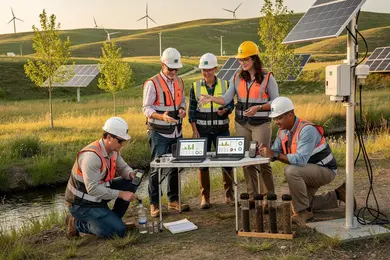
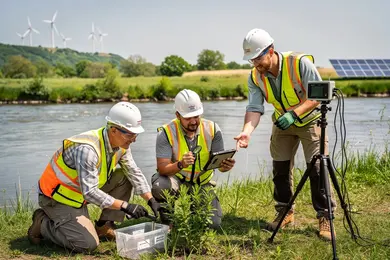
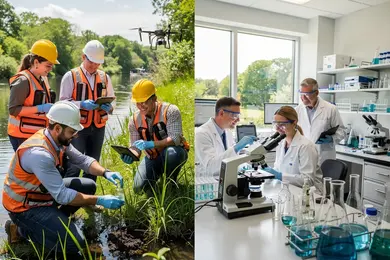
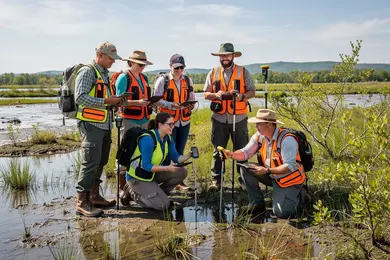
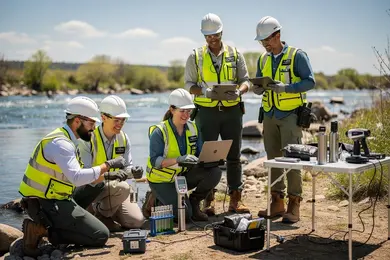
Water management careers for environmental science graduates demand a balance of technical proficiency and regulatory awareness. Entry-level roles typically require navigating field data collection under challenging conditions, while mid-career positions emphasize interdisciplinary coordination and compliance with complex frameworks such as the Clean Water Act.
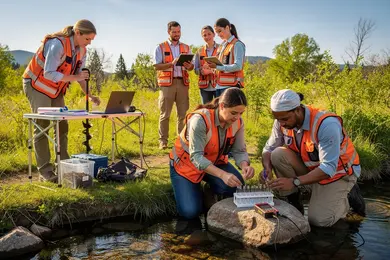
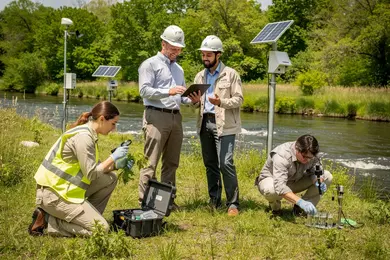
For example, a water quality specialist in a municipal authority must consistently manage pollutant sampling and analysis to meet multi-jurisdictional drinking water standards. Key positions in environmental science degree jobs in water resource management include water quality specialists, hydrologists, watershed managers, and environmental compliance analysts.
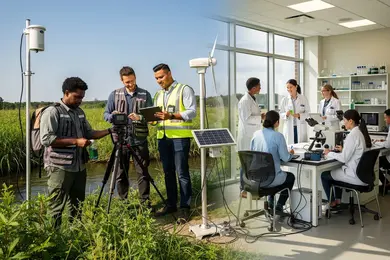
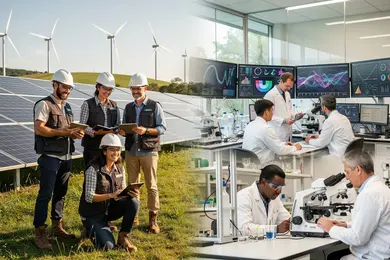
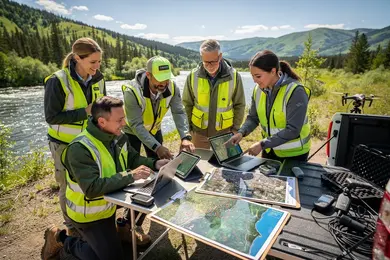
These roles involve extensive use of Geographic Information Systems (GIS), environmental modeling software, and lab techniques, reflecting employer expectations across agriculture, urban planning, and conservation sectors. Practical workforce implications include the need for strong quantitative skills and familiarity with federal and state water regulations, which often dictate job responsibilities and advancement potential.
The U.S. Bureau of Labor Statistics projects a 14% growth for environmental science and protection technician roles, highlighting rising demand in water pollution evaluation and remediation. Prospective candidates benefit from understanding that career sustainability in these sectors hinges on both technical competence and regulatory literacy.
More detailed guidance on what jobs can you get with an environmental science degree is available at what jobs can you get with an environmental science degree.
What education do water management roles require?
Water management roles vary widely in their educational demands, influencing employability and salary potential significantly. Positions like water treatment plant operators often accept candidates with a high school diploma paired with specialized training and licensing, focusing on practical skills over formal academics. Licensed operators earn median wages near $58,000 in 2026, but the range from $40,000 to $180,000 reflects variability tied to certification and experience.
This practical entry contrasts sharply with advanced roles-water resource specialists and environmental consultants-where a bachelor's degree in environmental science or related fields such as civil or chemical engineering is typically a baseline requirement. Those pursuing educational qualifications for water resource management careers must weigh the tradeoffs between theoretical knowledge and hands-on experience.
Bachelor's-level programs deliver critical insights in water chemistry, ecosystem dynamics, and regulation, but master's degrees or professional certifications often become necessary for leadership positions or specialized research. Employers highly value candidates who have integrated internships or apprenticeships within municipal or industrial water authorities, as this practical exposure facilitates passing state licensing exams and enhances job readiness.
Licensing requirements differ by state but nearly always involve standardized exams combined with mandated apprenticeships, emphasizing experiential learning. Without real-world experience, even graduates with advanced degrees may face significant delays in certification and employment. Job seekers would benefit from resources like the speech language pathologist salary guide, which illustrates how specialized credentials impact income trajectories across careers.
How do accredited online and campus programs compare?
Accredited online environmental science water management programs provide core theoretical foundations comparable to campus-based degrees, yet diverge sharply in practical application and employability. Campus-based environmental science water management degrees comparison reveals that on-site access to laboratory work, field research, and networking remains decisive for roles demanding hands-on expertise-such as hydrology and water resources engineering.
Government and consulting employers prioritize these applied competencies during hiring. Online programs offer unparalleled schedule flexibility, appealing to working adults who cannot pause careers or relocate, but they often fall short replicating tactile skills without local internships or hybrid solutions. Candidates relying solely on remote curricula risk delayed readiness for roles requiring direct field experience, such as watershed management.
In practical terms, job seekers face tradeoffs: campus graduates typically better navigate agency internships and immediate employment, aligning with median salaries near $84,000-$89,000 in hydrology and water resources engineering. Students pursuing online study must consciously secure supplemental local engagements to bridge experiential gaps critical for water infrastructure roles.
Choosing between these pathways demands assessing one's current employment, geography, and capacity to absorb hands-on training. Those who cannot attend campus should prioritize programs with robust local internship networks or hybrid formats to close experience gaps often scrutinized in water management hiring.
Prospective students might also explore the best library science programs as a complementary resource depending on interdisciplinary interests or career pivot strategies within related environmental sectors.
What coursework prepares students for water management careers?
Water resource management coursework demands more than foundational science; it requires integrating environmental chemistry, hydrology, and fluid mechanics to address complex water system challenges. Students pursuing an environmental science degree water management classes should expect rigorous training in watershed hydrology and water resource management, crucial to controlling floods or regulating municipal supplies.
Practical application is a defining factor-employers expect expertise in environmental engineering principles specifically oriented toward contaminant removal and stormwater management. Graduate capabilities extend to spatial data analysis through Geographic Information Systems (GIS) and environmental statistics, equipping them to generate actionable insights for compliance and infrastructure planning.
Consider a professional confronting urban flooding: success hinges on the ability to blend hydraulics knowledge with GIS mapping and navigate regulatory frameworks like the Clean Water Act. While theoretical knowledge is essential, hands-on experience in lab settings or internships analyzing pollutant data significantly enhances employability in water sector roles.
In 2026, environmental engineers working in water and stormwater sectors earned an average salary of $96,000 annually in the U.S., reflecting a premium for integrated technical and policy skills tailored to applied water management. Candidates lacking these combined competencies often face barriers transitioning from academic programs into effective, practice-driven careers.
Those evaluating advanced studies should weigh the balance between technical coursework and regulatory expertise. For related academic pathways, the MLIS degree also emphasizes applied knowledge aligned with employer expectations.
Which certifications help in water management jobs?
Certifications directly affect employability and earnings in water management for environmental science graduates, often determining eligibility for supervisory roles tied to public health mandates. Hands-on credentials like the Certified Water Treatment Operator (CWT) and Certified Distribution System Operator (CDSO) are prerequisites for many municipal and industrial positions. Progression beyond entry-level roles typically requires state-specific Grade 1-4 water operator licenses.
Targeting utility management or regulatory compliance necessitates additional credentials such as the American Water Works Association (AWWA) Utility Manager Certification, signaling expertise in complex system oversight and regulatory adherence. Real-world salary data from WaterTech Intel confirms that combining operator licenses with management certificates can lift water utility managers' pay to about $115,000 per year.
Conversely, lacking such certifications narrows job prospects and caps advancement. Advanced certifications like Certified Environmental Engineer (CEE) or Project Management Professional (PMP) enhance leadership and project coordination capabilities, which employers value for infrastructure initiatives involving multi-agency collaboration.
Tradeoffs include time and costs tied to obtaining multiple certifications versus earlier workforce entry. Candidates must consider local licensing mandates, ongoing continuing education, and long-term career goals. Without accreditation, access to senior technical or compliance-focused roles remains limited, emphasizing the importance of careful credential planning and alignment with job market realities.
How long does an environmental science degree take?
A four-year bachelor's degree in environmental science remains the de facto standard for roles demanding technical mastery in water management, particularly for water plant superintendent positions. This timeframe ensures comprehensive exposure to critical disciplines such as ecology, chemistry, geology, and hydrology, which underpin effective oversight of integrated water, wastewater, and reuse systems.
Employers prioritize candidates who can navigate complex regulatory environments while applying field experience. Accelerated or part-time alternatives may shorten degree completion but often compromise the internships and operational familiarity essential to supervisory responsibilities. For example, a superintendent earning roughly $98,000 annually by 2026 reflects employers' emphasis on graduated expertise rather than speed to workforce entry.
Graduate-level study and certifications can enhance specialization but typically extend education by 1-2 years and are relevant mainly for senior technical or research-focused roles. Those with prior related credits might shorten this path but should carefully assess readiness for managerial duties.
Deciding program length involves balancing immediate access to roles against the long-term need for applied knowledge. Sub-two-year diploma programs rarely satisfy the expectations for leadership in high-value water resource positions.
How much do water management roles pay?
Water management roles in 2026 command a median compensation near $82,000 per year in the U.S., a reflection of their technical and regulatory complexity. Positions such as water quality managers responsible for municipal supply oversight demand expertise in navigating federal and state clean water laws, which typically translates to higher pay. Conversely, entry-level jobs in rural water monitoring often start much lower.
Employers value candidates skilled in data analytics, ecological assessments, and stakeholder engagement, which influences salary tiers and career mobility. Employment contexts matter: private consulting often includes performance incentives like bonuses, while nonprofit salaries can be constrained despite comparable responsibilities.
For instance, a public utility water quality manager managing multi-jurisdictional regulatory issues and advanced monitoring systems can expect to earn mid-$80,000s or more, while conservation leaders in nonprofits face budget-driven limits. Prospective environmental science graduates should also weigh long-term returns tied to credentials and specialized training that elevate earning potential beyond base salaries.
Wages vary significantly between sectors, and career progression depends on developing multifaceted technical skills aligned with evolving industry standards.
- Technical mastery of compliance frameworks increases salary potential.
- Sector choice influences compensation and benefits structure.
- Advanced certifications and analytics capabilities support upward mobility.
What is the job outlook for water management careers?
Water management careers in 2026 are shaped by practical challenges such as aging infrastructure, climate adaptation, and regulatory shifts rather than abstract sector growth. Employers seek environmental science graduates who combine technical proficiency with applied skills like hydraulic modeling, GIS technology, and regulatory compliance.
For instance, a water resources engineer in a mid-sized city navigates the tension between established engineering designs and community-driven green infrastructure demands while managing strict budget constraints. Salary data indicates an average annual income of $87,000 for U.S. civil engineers in water-focused roles, validating employer willingness to invest in expertise that directly addresses urban flooding and water quality issues.
Geographic location heavily influences hiring dynamics-arid states prioritize water scarcity solutions, whereas coastal regions focus more on flood mitigation strategies. Graduates must prepare for interdisciplinary work that includes coordinating with public agencies and environmental planners.
Additionally, candidates with certifications that complement their environmental science degrees have a competitive advantage in securing advanced or supervisory roles. Continuous learning is essential, as evolving environmental regulations and emerging technologies require ongoing adaptation.
- Essential skills include hydraulic modeling software and data-driven water quality monitoring.
- Understanding regulatory frameworks and community engagement is crucial.
- Regional water challenges dictate specialized expertise demand.
Which employers hire environmental science graduates?
Environmental science graduates aiming for water management roles face distinct sector-specific demands that shape career trajectories. Federal agencies such as the EPA and state environmental departments prioritize candidates skilled in water quality monitoring, regulatory compliance, and resource planning-roles often tied to slow but stable public-sector advancement.
Conversely, municipal water utilities focus on infrastructure updates, contamination control, and stormwater challenges, valuing interdisciplinary expertise and policy knowledge. Private consulting firms emphasize candidates with technical modeling proficiency and deep regulatory understanding, offering faster career growth yet increased project volatility.
Nonprofit organizations seek graduates with leadership and communication skills to drive watershed protection and advocacy efforts, blending scientific insight with public engagement. These employment landscapes present clear tradeoffs:
- Government jobs provide stability but slower progression.
- Private sector roles offer quicker advancement but less predictability.
- Nonprofit positions demand balancing advocacy with science in community contexts.
Given these realities, internships within public agencies or utilities prove invaluable, furnishing direct experience with compliance frameworks and multi-agency coordination essential for crisis response or complex project management. WaterTech Intel's data indicates environmental managers equipped to navigate governance and stakeholder complexities command salaries exceeding $100,000 annually.
Specialization choices-such as hydrology, environmental law, or data analytics-should align with the specific employer's expectations and operational priorities to enhance employability and strategic career positioning.
How do you choose a reputable environmental science program?
Choosing an environmental science program requires a clear-eyed assessment of its practical alignment with workforce demands, particularly in water management technologies. Programs emphasizing hands-on training in SCADA systems, GIS, and remote sensing produce graduates ready for roles such as SCADA and water systems data technicians, positions that command an average salary of $72,000 in 2026 per WaterTech Intel's water workforce compensation report.
The tradeoff between theoretical depth and applied skills matters: overly academic curricula can delay readiness for positions requiring immediate technical proficiency. Key evaluation criteria include:
- Partnerships with water utilities or environmental agencies that offer internships and real-world projects.
- Faculty expertise in data-driven water infrastructure monitoring, demonstrated through graduate employment in technical roles.
- Curricula integrating advanced coursework on data integration platforms and regulatory compliance, reflecting employer expectations for data analysis skills.
Transparent reporting of graduate outcomes-such as job placement rates and salaries in in-demand water management fields-provides essential insight into program value. Selecting a program validated by these metrics supports effective career pivots toward stable, well-compensated roles within evolving water systems. Consider these facets critically to avoid pathways that produce credentials without immediate or lasting labor market relevance.
Other Things You Should Know About Environmental Science
In 2027, a graduate degree is not strictly necessary for advancement in water management roles with an environmental science degree, but it can significantly enhance career prospects. Advanced roles may require specialized knowledge or managerial skills, which graduate programs can provide, giving candidates a competitive edge.
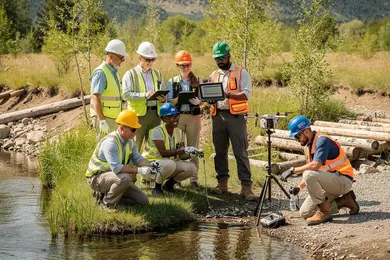
Practical experience through internships or fieldwork is essential to bridge academic training and employer expectations. Programs emphasizing hands-on water quality analysis, data collection, or regulatory compliance produce candidates who adapt faster to job demands. Prioritizing internships within agencies or companies specializing in water management significantly boosts hiring chances compared to academic credentials alone.
Commonly requested credentials include OSHA 10 or 30, HAZWOPER 40 for field remediation work, and state water operator licenses for treatment or distribution roles. Employers in utilities and consulting often list these certifications as preferred, and many require them within the first six months of hire.
Immediate pursuit of certifications such as Certified Water Technologist or similar can increase early-career job opportunities but may have minimal impact without practical application in work settings. Accumulating 1-2 years of relevant water management experience before certification often results in better return on investment, as candidates can contextualize credential knowledge with on-the-job challenges. Graduates should assess employer preferences in their target market to decide the ideal timing.
References
- 2,000+ Water Jobs (Updated Today) – Free to Apply https://jobs.watertechintel.com/blog/careers-in-water-resource-management
- Advance Your Career with WPI Water Treatment Certification https://gowpi.org/
- 16 Best Colleges for Environmental Science | HelloCollege https://sayhellocollege.com/blog/best-colleges-for-environmental-science/
- How to Build a Career in Water Treatment in 2025 https://hellawater.com/employment-water-treatment-career-guide-2025/
- Water - Environment Agency https://environmentagencycareers.co.uk/water/
- Water Jobs https://www.joshswaterjobs.com/jobs/
- How to Find Entry Level Jobs with an Environmental Science Degree https://facs.com/blog/how-to-find-entry-level-jobs-with-an-environmental-science-degree/
- Greener Careers https://greenercareers.co.uk/blog/what-can-you-do-with-an-environmental-science-degree-job-opportunities-explained
- What Can You Do With an Environmental Science Degree? https://willamette.edu/academics/college/environmental-science/career-options
- Finding a Career in Water Management - Career Ready News Center https://news.readysetcareer.org/stories/finding-a-career-in-water-management/