2027 Best Online Environmental Science Programs for Field-Oriented Professionals

Co-Founder and Chief Data Scientist
Field-oriented professionals in environmental science often grapple with the logistical impossibility of pausing their careers to pursue traditional degrees, especially when direct fieldwork and regulatory deadlines demand continuous presence. According to the National Center for Education Statistics, 44% of postsecondary students are now enrolled exclusively in online programs, signaling a tectonic shift toward flexible learning modalities accommodating working adults.
This trend reflects employer tolerance for remote upskilling and a growing preference for credentials that align with both immediate job demands and long-term ecological challenges. Identifying online environmental science programs engineered for practical, field-driven expertise is critical for advancing careers without compromising current professional obligations.
Key Things You Should Know
- Field-oriented environmental science programs increasingly require integrated GIS and data analytics modules; students without this dual expertise face 25% reduced hireability, according to 2024 Bureau of Labor Statistics projections.
- Employer surveys from the National Environmental Workforce Council reveal a persistent gap between academic credentials and applied field skills, pressuring programs to expand hands-on practicum beyond conventional remote learning limits.
- Rising tuition-averaging 12% growth annually since 2022 per NCES-forces professionals to prioritize accelerated or hybrid formats, balancing cost with timely credentialing crucial for rapidly evolving regulatory roles.
What makes an online environmental science degree reputable and properly accredited?
Accreditation remains the primary filter for reputable online environmental science degrees in the United States, directly influencing employer recognition and professional certification eligibility. Regional accreditation of the degree-granting institution consistently carries more weight than national or programmatic endorsements, particularly in government and technical roles.
Curriculum design must reflect industry applications to translate academic learning into employability. Employers prioritize graduates who demonstrate proficiency in contemporary tools like GIS mapping and remote sensing, even through virtual fieldwork. For example, environmental consultants rely heavily on these skills to address client-specific challenges, making practical experience a decisive factor beyond theoretical knowledge.
Working professionals should weigh program flexibility, especially as environmental roles often demand irregular fieldwork schedules. Asynchronous coursework paired with scheduled labs or on-site practicums can mitigate conflicts between job responsibilities and study. State authorization and local placement support are additional considerations that affect progression feasibility for candidates requiring regional field experiences.
Employers value programs with active partnerships in environmental organizations or research projects, which enhance networking and internship opportunities. Given the U.S. Bureau of Labor Statistics' median annual wage of $78,980 for environmental scientists and specialists and a 6% job growth rate from 2022 to 2032, selecting degrees aligned with such criteria impacts long-term career stability.
Prospective students seeking accredited online environmental science degrees in the United States can explore cost-effective options by reviewing resources such as the environmental engineering degree listings, which provide comparative insights based on affordability and program quality.
How do online environmental science programs compare to campus-based options for fieldwork?
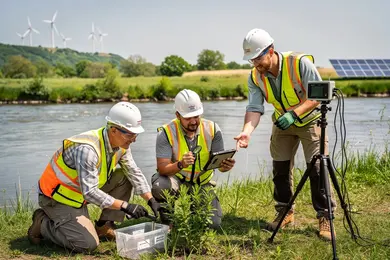
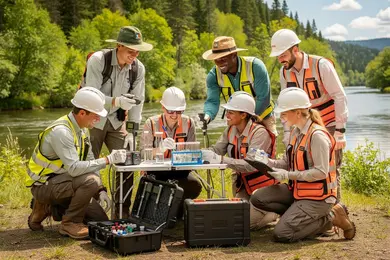
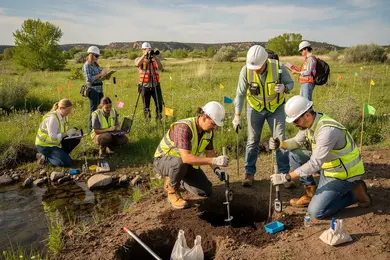
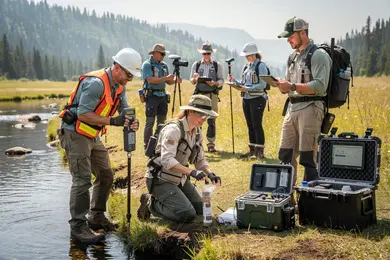
Fieldwork training remains a decisive factor in distinguishing campus-based from online environmental science programs, especially for professionals whose roles depend on hands-on expertise. While online programs often require students to independently arrange local field assignments or regional internships, campus-based options grant immediate access to university research sites and structured group field experiences, which some employers prioritize for mastering complex methodologies.
Online environmental science fieldwork experience comparison reveals tradeoffs in flexibility versus resource access. Professionals engaged in environmental consulting or regulatory agencies can leverage online programs to conduct projects within their ecosystems, gaining relevant site-specific knowledge enhancing employability in specialized tasks such as wetland delineation or environmental impact analysis. This localized approach aligns with employer expectations when fieldwork is well documented and meets industry standards amid a projected U.S. job market growth of about 15,400 openings for environmental scientists from 2022 to 2032.
The challenges for online learners include securing quality field placements without university support and independently acquiring necessary equipment. Conversely, campus programs provide streamlined mentorship and laboratory resources that accelerate skill acquisition for rigorous specializations like environmental toxicology. Prospective students should weigh these factors alongside their professional context and employer support when choosing between campus and online programs for environmental science field professionals.
For individuals navigating a career pivot or seeking salary data across fields, resources like the SLP salary insights offer valuable benchmarking beyond environmental science.
Which types of online environmental science degrees best fit field-oriented professionals?
Field-oriented professionals considering online environmental science degrees must prioritize programs with applied geology, environmental engineering, and geospatial analysis components that ensure tangible skill development. The best environmental science programs for practical fieldwork feature synchronous virtual labs, local field assignments, and formal ties to regional agencies, compensating for the inherent challenges of remote learning by embedding real-world data collection and site assessment experience.
Online offerings lacking rigorous applied science elements or supervised field practica risk leaving graduates underprepared for roles demanding site-based competencies, a critical hurdle given employer expectations for verifiable field experience and certifications. For example, graduates targeting positions in mining or energy sectors benefit significantly from programs emphasizing geospatial information systems (GIS) and remote sensing, as these skills directly improve operational decision-making.
Petroleum engineering remains a niche with strong ROI within environmental science, where median salaries reaching $129,990 and robust job growth illustrate demand at the intersection of resource extraction and environmental management. Such energy-focused pathways complement broader environmental curricula by equipping students with actionable expertise linked to profitable, expanding markets.
Students should also consider complementary disciplines; those evaluating their options may compare environmental science with adjacent areas, such as online exercise science programs, to weigh pacing, practical requirements, and career outcomes before committing.
Ultimately, the strategic value of an online environmental science degree for field professionals hinges on its integration of applied learning-courses alone are insufficient without measurable fieldwork-and alignment with workforce demands to avoid diminished employability.
What core courses and specializations do online environmental science programs typically offer?
Employers in consulting firms and government increasingly expect graduates of online environmental science programs to navigate complex regulatory frameworks and deliver evidence-based assessments. The online environmental science core curriculum typically includes ecology, environmental chemistry, GIS, environmental policy, resource management, and data analysis-foundations essential for analytical rigor and practical competency. Specializations enable professionals to focus on industry-specific challenges:
- Hazardous waste management for compliance monitoring and remediation oversight demanding strict adherence to environmental laws and protocols
- Environmental sustainability integrating business and social impact analysis to support corporate responsibility strategies
- Conservation biology and climate change adaptation for ecosystem-focused roles
While virtual labs and project-based assignments attempt to simulate real-world fieldwork, the absence of hands-on experience presents a tradeoff that must be weighed against career objectives. Employers place higher value on combined credentials that demonstrate applied skills, such as GIS proficiency or environmental impact reporting.
From a cost perspective, accredited online programs can reduce financial barriers with annual tuitions as low as $4,470 and total costs under $30,000, making them accessible for working professionals aiming to pivot or advance. However, program rigor and experiential learning opportunities remain critical differentiators influencing employability. Professionals exploring an online computer science degree path may find analogous cost and skill integration lessons applicable when evaluating environmental science offerings.
Precision in the choice of specializations and curricula directly affects long-term career outcomes and ability to meet sector-specific demands.
How long do online environmental science degrees take, and what do they cost?
Choosing an online environmental science bachelor's or graduate program demands weighing timeline flexibility against the practical demands of hands-on learning and workforce integration. Most bachelor's programs span four years full-time, but accelerated paths or part-time formats alter schedules based on employment or life commitments. Master's degrees typically require two years; however, some professionals compress this to one year through intensive study, while others extend to three or four years, balancing jobs and study demands.
Fieldwork and internships embedded in these programs add complexity to completion times. Employers prioritize validated practical experience, so programs that clearly outline on-site requirements and support smoother field placement often reduce discharge delays and enhance job readiness.
Cost variability stems from institution type and program level. Undergraduate tuition ranges broadly from $10,000 to $40,000 annually, while graduate programs run from $15,000 to $50,000. Additional expenses-like technology needs, specialized materials, or travel for residencies-can significantly impact total investment, especially when hands-on components are mandatory. Prospective students must calculate these alongside tuition fees to avoid unexpected financial barriers.
By 2025, there were 284 online environmental programs globally, spanning certificates to master's degrees, reflecting a competitive landscape that refines tuition stability but heightens the necessity to assess degrees through employment outcomes.
For professionals in environmental consulting or regulatory compliance, selecting a program with transparent field experience requirements is critical. This alignment minimizes career downtime and maximizes practical applicability in a sector where real-world competency often influences hiring decisions.
What admission requirements do online environmental science programs usually have?
Admission into online environmental science programs frequently demands a relevant bachelor's degree, typically in STEM areas such as biology, chemistry, or engineering, to meet the technical rigor of coursework and fieldwork. Applicants lacking a related degree must present comprehensive professional experience and clearly document competencies, which can be a significant barrier without direct academic background. Competitive GPAs generally fall between 2.5 and 3.0, reflecting the need for solid academic preparation in quantitative and scientific subjects.
Practical workforce demands influence admission criteria strongly. For example, environmental engineering technicians face a projected 10% job growth with median wages near $48,650, requiring candidates to exhibit aptitude in applied technical tasks such as remote sensing and environmental sampling early in their training. This makes proof of quantitative skills through coursework in calculus or statistics and letters of recommendation emphasizing hands-on proficiency especially important.
Applicants should expect to submit a detailed statement of intent linking their career goals to applied environmental functions like ecosystem assessment or pollution control. Many programs also incorporate virtual interviews or technical tests focused on real-world readiness, which help differentiate candidates prepared for fieldwork from purely academic profiles.
These layered criteria underline a tradeoff: online programs offer flexible access but maintain strict thresholds to ensure graduates can meet labor market expectations for technically skilled roles.
What environmental science careers can an online degree prepare you for?
Online degrees in environmental science offer a pragmatic route for mid-career professionals aiming to shift into or advance within sectors like environmental consulting, natural resource management, and sustainability coordination. However, the viability of these programs hinges on integrating authentic field experience-often requiring students to independently secure local internships or placements. This practical component, crucial for roles such as environmental field technicians or ecological restoration specialists, challenges students to manage logistics that on-campus programs more directly facilitate.
Tuition for online environmental science programs is notably lower-ranging from approximately $36,000 to $42,000 compared to $48,000 to $55,000 for traditional campus options in 2025-making them financially accessible. Yet, this cost benefit comes with tradeoffs: graduates must demonstrate employer-valued competencies like Geographic Information Systems (GIS) mastery, environmental sampling, and professional report writing, cultivated through a mix of online labs and hands-on fieldwork.
Employment outcomes diverge sharply depending on career focus. Positions in environmental compliance or corporate sustainability are attainable immediately after graduation, leveraging skills acquired online combined with field experience. In contrast, research-oriented science careers generally require advanced degrees and laboratory access beyond most online bachelor's offerings, restricting direct entry. Prospective students should weigh these differences against their professional goals and readiness to navigate independently arranged experiential learning.
What are typical salaries and earning potential for environmental science professionals?
Salary trajectories in environmental science vary widely by sector and expertise, with entry-level roles often beginning near $50,000 and mid-career professionals earning between $75,000 and $90,000. Federal agencies and large consulting firms typically offer salaries above the median wage of approximately $76,530, reported by the U.S. Bureau of Labor Statistics in 2024, while nonprofit and public sector positions may pay less but offer stability and non-monetary benefits.
Specializing in skills like GIS, environmental compliance, or field sampling can enhance earning potential by $10,000 to $15,000 annually. For example, a graduate working in energy sector consulting experiences faster salary growth compared to one in local government regulation, illustrating the value of aligning skills with industry demands.
Educational investment is a critical consideration. A leading online BS in environmental science charges $360 per credit hour for civilians and $250 for active-duty military, with total tuition ranging from $30,000 to $43,200 for 120 credits. Given starting salaries below $60,000 in some regions, the ROI depends heavily on combining academic credentials with internships or field experience to meet employer expectations.
Those targeting federal environmental roles should prioritize coursework tailored to government qualifications, where starting salaries are in the $60,000 range with incremental increases based on performance and experience.
What is the job outlook and industry demand for environmental science specialists?
Demand for environmental science specialists reflects a market where practical skills and relevant experience outweigh academic credentials alone. Employers, particularly in regulatory compliance and resource management, expect proficiency in data analysis, GIS, and environmental impact evaluation. In industries such as energy and construction, specialists serve as critical intermediaries between operational teams and regulatory agencies, where clear communication and technical fluency are non-negotiable.
Working professionals pursuing environmental science degrees online face a tradeoff: flexible scheduling allows employment continuity but often prolongs program completion compared to full-time study. This extended timeline can delay career progression despite the advantage of applying new skills immediately at work.
Those with direct field experience in compliance monitoring and resource assessment typically command higher salaries and enjoy more mobility within the sector. Conversely, graduates without prior applied experience encounter stiff competition and must carefully select programs offering internships, applied projects, or agency partnerships to bridge the gap between theory and practice.
Key considerations for prospective students include:
- The necessity to translate scientific data into actionable recommendations under tight deadlines
- The importance of programs that integrate professional workflows with academic milestones
- The market preference for candidates who understand evolving environmental regulations and sector-specific demands
For a detailed analysis of practical educational pathways aligned with demonstrated workforce needs.
Are certifications or professional licenses needed for environmental science roles, and how do programs help?
Licenses and certifications decisively shape career trajectories in environmental science roles that intersect with regulatory compliance or specialized technical functions. For example, professionals working in environmental consulting or regulatory agencies often need credentials such as the Certified Environmental Professional (CEP) or state licenses for wetland delineation. Programs integrating these certifications within their curricula tend to lower barriers to entry by eliminating the need for separate exam prep while enhancing readiness for job-specific demands.
Job markets prioritize candidates with documented professional licenses combined with relevant academic training due to reduced onboarding time and lower employer risk. In fields like water resource management, credentials like the Certified Professional in Stormwater Quality (CPSWQ) can be essential prerequisites, making program content aligned with these standards a direct conduit to licensure. Prospective students must weigh whether the added credentialing paths justify the increased program rigor and time investment.
The expansion from 2020 to 2025, seen in 149 online master's-level programs in a recent report, signals growing options for those balancing work and study. These programs increasingly emphasize workforce relevance by linking theory to licensure preparation. However, some career paths-such as environmental research, policy analysis, and education-may prioritize advanced degrees without demanding certification.
Students should critically assess job postings within their target roles before committing, as certification can either be a gatekeeper or an unnecessary hurdle. Elements like embedded exam prep and career services correlate strongly with program value for professionals aiming to operate in regulated or compliance-driven environments.
Other Things You Should Know About Environmental Science
Online programs vary in how they integrate practical, field-based learning, which is essential for employer readiness. Candidates should prioritize programs that require in-person labs, local fieldwork assignments, or supervised internships rather than those relying exclusively on virtual simulations. Without tangible field experience, graduates risk entering the workforce underprepared for site assessments, sample collection, and real-world environmental data analysis, which are core job functions in this sector.
Workload intensity in online environmental science programs can be substantial, especially when balancing synchronous sessions, project deadlines, and field assignment logistics. Programs that allow flexible pacing or part-time options accommodate ongoing employment and reduce burnout risk. Students should evaluate course delivery styles-such as asynchronous content with periodic in-person requirements-as programs with rigid weekly schedules may force professionals to deprioritize work or family obligations, complicating degree completion timelines.
Employers increasingly accept online degrees in environmental science but often scrutinize the program's experiential components and institutional reputation. Graduates from programs with verified field training and recognized faculty research may have an edge compared to providers focusing predominantly on theory or generalized environmental topics. Candidates need to assess how well the program's curriculum aligns with industry-standard tools, regulations, and certification preparation, as employers prioritize practical skills and regulatory knowledge over simply holding a degree.
Yes, many field-oriented online environmental science programs require 1 to 2 short residencies, usually 3 to 7 days each, for laboratory work, field methods, or capstone activities. Some programs also require supervised local projects or approved field hours to document practical competency.
References
- Certification Guide for Young Professionals - Board for Global EHS Credentialing https://gobgc.org/professional-environmental-certifications-professionals/
- Environmental Science Degree Jobs | University of Phoenix https://www.phoenix.edu/articles/environmental-science/environmental-science-degree-jobs.html
- Environmental Scientist or Specialist https://www.truity.com/career-profile/environmental-scientist-or-specialist
- Ecampus - Environmental Sciences https://ecampus.oregonstate.edu/environmental-sciences/
- Educations https://educations.com
- Environmental Job Market Trends | ECO Canada https://eco.ca/research-and-resources/environmental-job-market-trends/
- How to Become an Environmental Scientist: 8 Steps to Success - Prereqcourses https://www.prereqcourses.com/environmental-scientist/
- Choosing a bachelor's in environmental science | edX https://www.edx.org/resources/how-to-choose-a-bachelors-in-environmental-science
- Environmental Certifications for entry-level and career changers https://www.theenvironmentalcareercoach.com/certification-links