2027 Sustainability Specialist Roles You Can Target With an Environmental Science Degree

Co-Founder and Chief Data Scientist
Facing sharp sector shifts and tightening regulatory demands, environmental science graduates now confront a complex employment landscape where specialized skills and flexible credentials dictate career progress. Recent data from the National Center for Education Statistics reveals that over 70% of adult learners enroll in programs offering fully online or hybrid formats, signaling a decisive move toward adaptable education models essential for working professionals balancing reskilling.
This evolution challenges traditional hiring norms, pushing candidates to strategically select roles that align with both evolving expertise requirements and scheduling realities. This article identifies targeted sustainability specialist roles tailored to environmental science degree holders, offering a clear roadmap to navigate career decisions amid these shifting conditions.
Key Things You Should Know
- Environmental science degrees yield growing roles in climate risk analysis, expanding 21% by 2030 per BLS, but narrower specialization often limits candidates to consultancy firms over broader corporate sustainability departments.
- Employers seek combined data analytics and environmental expertise; graduates lacking advanced GIS or statistical proficiencies face hiring tradeoffs despite foundational ecological knowledge, as shown by GreenBiz workforce surveys in 2024.
- Degree program costs and length disproportionately affect mid-career professionals targeting sustainability specialist transitions, with public university timelines averaging 4.2 years and $45K total, impacting timely workforce entry.
What does a sustainability specialist do, and how does this role use an environmental science degree?
The expanding demand for sustainability specialists reveals a nuanced requirement for applied expertise rather than theoretical knowledge alone. Using an environmental science degree sustainability specialist career opportunities often hinge on converting scientific data into operational strategies that meet both environmental and organizational objectives.
For instance, manufacturing firms rely on sustainability specialists to implement waste reduction initiatives grounded in material lifecycle assessments, a practical application of their academic training. Such roles involve detailed analysis of energy use, waste streams, and supply chain vulnerabilities, with the goal of measurable carbon footprint reduction and enhanced resource efficiency.
However, candidates should prepare for real-world hurdles like organizational inertia, budget constraints, and negotiating conflicting stakeholder priorities. These challenges emphasize the importance of competencies beyond pure science, including project management and sustainability reporting.
Growth in this sector-corroborated by a 35% increase in relevant U.S. job postings-reflects employer expectations for proficiency in environmental regulations and communication skills. Sustainability specialist responsibilities using environmental science degree programs therefore must integrate data analytics with strategic business metrics to justify cost-effective investments despite uncertain short-term returns.
For students evaluating educational pathways, practical experience through internships paired with an environmental science degree remains critical. Those seeking flexible options may consider an environmental engineering online degree to complement sustainability skills with technical versatility, improving adaptability in this evolving field.
Which sustainability-focused job titles can you pursue with an environmental science degree?
Targeted sustainability roles for environmental science graduates demand a combination of scientific rigor and pragmatic regulatory understanding, a balance often underestimated during career planning. Positions like environmental consultant involve more than ecological assessments; they require navigating complex, shifting legal frameworks to ensure industrial compliance.
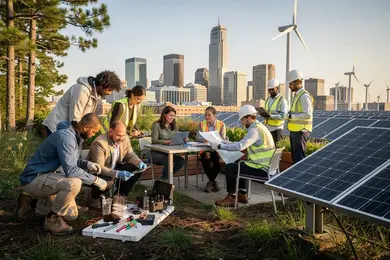
For example, in manufacturing, consultants must precisely evaluate environmental impact while anticipating regulatory updates, which can make or break project feasibility. Similarly, renewable energy analysts assess environmental tradeoffs and operational viability of renewable projects, with this sector poised for significant expansion amid the global energy transition.
Graduates pursuing environmental science degree jobs in sustainability management should anticipate multidisciplinary collaboration and evolving technical demands. Urban planners and natural resource managers frequently rely on environmental science expertise to integrate sustainability into land-use development and conservation efforts.
These roles necessitate fluency in ecosystem dynamics plus effective stakeholder engagement across government and private sectors. Policy advisors leverage scientific data to inform legislation targeting pollution reduction and carbon emission goals at multiple government levels.
Given the forecast of up to 24 million new global jobs in clean energy, policy, and planning fields, graduates face a competitive landscape that values adaptability alongside technical knowledge. Understanding these practical employment realities is crucial when evaluating sustainability specialist careers for environmental science graduates.
Candidates should weigh tradeoffs between broad scientific knowledge and specialized skills relevant to market needs. Those considering further academic advancement might explore options such as a PhD in data science online to enhance quantitative analytics capabilities increasingly prized in environmental decision-making.
How does an environmental science degree prepare you for sustainability specialist careers?
Professionals equipped with an environmental science degree sustainability career pathways combine scientific analysis, regulatory insight, and systems thinking to meet growing employer demands. In practice, sustainability specialists in manufacturing focus on reducing waste and energy use, balancing cost with compliance, while in urban planning, they implement ecosystem management to build climate-resilient infrastructure.
These roles require proficiency in chemistry, ecology, data modeling, and environmental law, emphasizing applied skills over pure theory. The shortage of qualified talent is evident as climate-related job listings increase roughly 8% annually, signaling a pressing gap that employers address by prioritizing multidisciplinary expertise.
Graduates must navigate cross-sector collaboration and integrate sustainability metrics into business decisions, handling both technical data and stakeholder communication. Practical challenges include translating scientific results into actionable policies and measurable corporate goals, underscoring the importance of programs offering hands-on environmental impact software experience.
Students pursuing a sustainability specialist job skills from environmental science degree should critically consider evolving regulatory frameworks and corporate social responsibility trends that directly influence funding and operational priorities. Understanding these practical nuances can differentiate candidates in a competitive market where demand consistently surpasses supply. For those exploring flexible educational routes, comparing environmental science degree options with computer science degrees online may reveal alternative pathways with distinct technical skills applicable to sustainability analytics and data-driven environmental management.
What types of sustainability specialist roles exist across industries in the United States?
Sustainability specialist roles vary significantly across U.S. industries, requiring tailored skill sets aligned with sector-specific demands. For instance, in manufacturing and industrial settings, expertise in lifecycle assessment and emissions tracking is essential to drive waste reduction and regulatory compliance.
This contrasts with energy sector roles focused on integrating renewables, managing greenhouse gases, and understanding complex policy environments tied to emerging technologies like solar and wind.
Corporate positions in sustainability emphasize ESG reporting, supply chain oversight, and translating technical data into strategies accessible to nontechnical stakeholders. On the other hand, sustainability specialist jobs in the United States within local and state governments prioritize environmental policy development and public health initiatives, demanding a blend of scientific knowledge and regulatory application.
Environmental science sustainability careers in U.S. industries are influenced by these distinct functional expectations, which affect credentials and experience required. For example, a consultant must adapt analytical skills to differing client priorities and compliance rules when switching sectors, illustrating the practical complexity behind career pivots.
The U.S. Bureau of Labor Statistics projects 4% growth over the next decade for environmental scientists and specialists, with roughly 8,500 openings annually. Aspirants should critically evaluate their educational investments against these realities; for a clearer understanding of associated educational costs, particularly regarding program affordability, exam options, and time commitments, reviewing computer science degree cost data can serve as a comparative benchmark when assessing sustainability-focused curricula.
Are online environmental science programs as respected as campus programs for sustainability careers?
Online environmental science degrees require scrutiny beyond convenience, especially regarding their hands-on components. Employers prioritize candidates who bring practical experience and technical competencies, such as fieldwork or internships, over credentials delivered purely online.
Programs lacking these experiential elements can limit employability in roles centered on environmental assessment or compliance, where direct site access is essential. The job market for sustainability professionals is expanding rapidly, with projections estimating 12.9 million new jobs by 2030 in sectors including green building and energy-efficient infrastructure.
Success in these roles depends heavily on applied skills-project management, GIS, environmental modeling, and LEED standards are becoming baseline requirements. Strong online programs mitigate remote learning drawbacks by integrating virtual simulations and local practicums, but physical campuses often facilitate faster skill acquisition through direct equipment use and mentorship.
Prospective students should weigh tradeoffs related to flexibility, cost, and networking. Mid-career professionals pivoting to sustainability roles may gain from online programs offering verified work-integrated learning. In contrast, entry-level candidates targeting site-based audit roles benefit more from in-person experiences that enable hands-on training and collaboration. Decision makers must confirm that online environmental science offerings equip learners with adequate practical training aligned to certification and industry standards to ensure long-term career viability.
What accreditation should environmental science programs have to support sustainability career goals?
Accreditation directly shapes the practical credibility and employment readiness of environmental science graduates. Programs lacking recognition from bodies like the Council for Higher Education Accreditation (CHEA) or regional accreditors often do not meet employer expectations for interdisciplinary sustainability skills.
Specialized accreditation such as ABET signals that an environmental engineering component aligns with industry standards, which is critical for roles requiring integration of technical expertise with operational or policy frameworks. For example, corporate sustainability analysts must translate complex environmental data into financial and strategic decisions.
Graduates from accredited programs typically have stronger training in applied problem-solving through case studies or internships, elevating their capacity to deliver actionable insights-a consistent demand from hiring managers. Students targeting government positions should prioritize programs with regional accreditation and sustainability electives, as these credentials often influence eligibility for certifications like Certified Environmental Specialist (CES).
Conversely, without relevant accreditation, professionals risk limited access to key qualifications, hindering long-term career mobility and earning potential. In a labor market projecting 6% growth for environmental scientists and specialists through 2032, selecting programs that validate competencies across policy, data analytics, ecological science, and sustainability practices remains essential for standing out to employers integrating environmental science into business operations and policy development.
What core courses and skills are most important for sustainability specialist positions?
Success as a sustainability specialist demands mastery of environmental policy, data analysis, and natural resource management alongside systems thinking and quantitative modeling skills. For example, professionals in agricultural sustainability must evaluate supply chains' carbon footprints using statistical tools and deliver recommendations aligned with federal environmental regulations.
This ability to translate complex data into actionable strategies meets core employer expectations, especially in resource-sensitive sectors. Technical capabilities in Geographic Information Systems (GIS) and environmental impact assessment are essential since these deliverables guide key operational decisions.
However, candidates who also communicate effectively with interdisciplinary teams and manage projects efficiently hold a distinct advantage. Negotiation skills become vital as these professionals must align sustainability initiatives with economic constraints without compromising compliance.
Economic analysis coursework sharpens a candidate's ability to balance upfront costs with long-term environmental and organizational benefits-a critical consideration as many programs falter without measurable return on investment. Projections from the University of Waterloo predict 24 million sustainability-focused jobs over a decade, underscoring labor market demand but also heightened competition requiring nuanced problem-solving and leadership capabilities.
What are typical salary ranges and benefits for sustainability specialists in the U.S.?
Salary trajectories for sustainability specialists in the U.S. vary widely, with entry-level salaries starting near $55,000, primarily in municipal or non-profit sectors, and seasoned professionals in corporate or consultancy roles commanding $90,000 or more. This disparity reflects not just experience but also the employer's operational scale and strategic focus.
For example, sustainability analysts embedded in large manufacturing firms might benefit from performance bonuses linked to carbon reduction targets, a compensation dynamic absent in smaller organizations concentrating on basic compliance. The tightening labor market for green talent, with climate-related job postings increasing approximately 8% annually, pressures employers to offer competitive wages, especially for candidates proficient in data analysis and regulatory frameworks such as GRI or SASB.
Those lacking specialized credentials often remain near entry-level pay, highlighting the tradeoff between immediate hiring and long-term skill-driven advancement. Practical considerations extend to geography; positions in high-cost states like California and New York offer higher pay but require careful evaluation against living expenses.
Specialists integrating Environmental Science data into actionable business strategies tend to achieve stronger career progression. The decision to pursue additional training or certifications should weigh the immediate salary impact against growth potential in emerging areas such as net-zero strategy and ESG compliance.
What is the job outlook for sustainability-focused roles that require environmental science training?
Employment in sustainability roles tied to environmental science is expanding at an estimated 8% over the next decade, reflecting stronger regulatory demands and corporate ESG targets. However, this growth requires candidates to possess advanced skills beyond foundational science, notably in data analytics, regulatory compliance, and impact assessment frameworks.
Federal agencies and private firms alike prioritize professionals who can integrate quantitative tools with evolving environmental policies. In sectors like manufacturing and energy, candidates face distinct tradeoffs: hands-on environmental mitigation may limit upward mobility without strategic planning capabilities, while roles emphasizing long-term carbon reduction strategies demand continual skill updates to navigate complex, shifting policy landscapes.
The salary spectrum for sustainability specialists ranges from a median of $80,060 to top earners at $134,830, highlighting the premium placed on interdisciplinary competencies such as GIS and sustainability reporting. Entry-level advancement correlates closely with demonstrated experience in environmental data science or targeted certifications. These realities point to the necessity of a strategic approach when selecting educational pathways, especially for professionals balancing immediate employment goals with long-term skill development in a regulatory dynamic field.
Which certifications or professional credentials strengthen your prospects as a sustainability specialist?
Candidates pursuing sustainability roles must align certification choices with specific sector demands to gain meaningful advantage. For instance, leadership in energy and environmental design (LEED) certification is prioritized in sustainable construction and green infrastructure, where compliance with evolving public and private standards drives selection.
Conversely, Certified Energy Manager (CEM) is more valued in energy-intensive industries focused on regulatory adherence and cost efficiency. Sustainability professionals targeting nonprofit or community roles benefit more from ISSP certifications, which validate interdisciplinary environmental, social, and governance (ESG) skills relevant to those contexts.
Employers generally seek credentials demonstrating measurable technical skills and project management experience rather than just academic achievements. This reflects a labor market with 6,900-8,500 openings annually for environmental scientists and specialists, where standing out requires verified proficiency.
Supplementary certifications like Certified Environmental Professional (CEP) or Project Management Professional (PMP) help bridge experience gaps, particularly when sustainability intersects with regulatory requirements or large projects. For example, a candidate with limited fieldwork but a PMP and ISSP credential is better positioned for agencies handling complex ecological initiatives.
Prospective applicants must weigh certification costs-typically $300 to over $1,000 plus prep time-and ongoing maintenance expenses against sector-specific salary returns. The strategic decision to pursue LEED, CEM, ISSP, or CEP hinges on targeted roles and long-term employability in environmental science careers rather than generic credential accumulation.
Other Things You Should Know About Environmental Science
Employers frequently weigh prior practical experience more heavily than advanced degrees for senior sustainability positions, valuing demonstrated impact over academic credentials. Experience managing projects, cross-functional teams, or regulatory compliance often accelerates career progression. However, advanced degrees like a master's with a focus on policy or management can complement experience by qualifying candidates for leadership roles involving strategic planning or corporate sustainability reporting.
The most useful certifications are LEED Green Associate, ISSP Sustainability Associate, and GRI Standards training. For carbon-focused roles, the GHG Protocol training and ISO 14001 awareness courses are also valued by employers. These credentials show practical knowledge of reporting, building operations, and environmental management systems.
Private sector employers typically expect environmental science graduates to integrate sustainability initiatives with business objectives, emphasizing cost-effectiveness, innovation, and regulatory adherence. Public agencies prioritize compliance, thorough documentation, and monitoring, often requiring familiarity with federal and state environmental regulations. Understanding these distinctions helps candidates tailor internships and skill development-those targeting private firms should focus on data-driven outcomes and communication, while candidates aiming for public roles should strengthen regulatory knowledge and reporting skills.
References
- 6 Sustainability Manager Salary Insights: What top companies Pay in 2026 https://ecoskills.academy/6-sustainability-manager-salary-insights/
- 5 Sustainability Careers to Consider https://claremontlincoln.edu/news-blog/sustainability-careers/
- Checklist for Starting a Career in Sustainability https://www.upskillist.com/blog/checklist-for-starting-a-career-in-sustainability/
- 44 sustainability certifications for businesses and sustainability professionals https://fsc.org/en/blog/sustainability-certifications
- Salary Insights for Environment Consultants https://theenvironmentconsultant.com/2025/02/04/salary-insights-for-environment-consultants/
- Search Sustainability Jobs | Hays US Specialist Recruitment - Hays USA - Hays PLC https://www.hays.com/jobs/sustainability
- 64 sustainability certifications to advance your career in 2025 | Trellis https://trellis.net/article/64-sustainability-certifications-to-advance-your-career-in-2025/
- From student to sustainability expert | Esade https://www.esade.edu/beyond/en/sustainability-expert/
- The CSP Certification https://www.gpm.org/for-individuals/certification/csp
- How to Start a Sustainability Career: A Step-by-Step Guide https://enable.green/news/how-to-start-a-sustainability-career-a-step-by-step-guide/