2027 Online Environmental Science Degrees With Climate-and-Policy Career Alignment

Co-Founder and Chief Data Scientist
Professionals aiming to enter climate policy or environmental consulting frequently confront rigid degree program schedules that clash with demanding work hours and urgent family responsibilities. The U.S. Department of Education reports a 15% annual increase in adult enrollment for online environmental science programs since 2022, signaling a shift toward flexible learning modalities that accommodate career pivots without sacrificing income streams.
This growth reveals a systemic demand for accessible, career-aligned credentials in environmental science, particularly those integrating climate policy expertise central to emerging regulatory frameworks. This article examines online environmental science degrees optimized for practical career integration within climate and policy sectors, guiding readers in selecting programs that balance flexibility, relevance, and employability.
Key Things You Should Know
- Employer demand data from the U.S. Bureau of Labor Statistics shows a 12% projected job growth in environmental science careers focusing on climate policy through 2032, favoring graduates with integrated policy analysis skills over pure science backgrounds.
- Programs emphasizing climate-policy integration often require interdisciplinary coursework, extending typical degree duration by 20%, increasing tuition costs by an average of $8,000, which directly affects affordability and time-to-employment tradeoffs.
- Surveys of hiring managers by the National Association of Environmental Management in 2024 rate climate-policy expertise as essential, yet highlight a persistent candidate shortage in applied policy analytics, creating a competitive advantage for aligned degree holders.
What is an online environmental science degree and how does it prepare you for climate and policy work?
Online environmental science degree programs blend ecological knowledge with data analysis and regulatory understanding to prepare candidates for climate and policy roles demanding applied expertise. Graduates must often demonstrate the ability to translate scientific findings into actionable policy, balancing complex legal frameworks with environmental metrics.
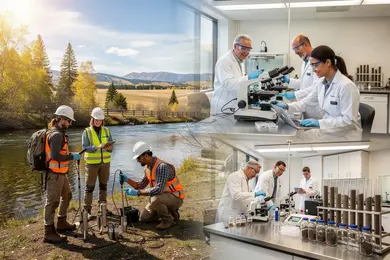
For example, advising a municipal government on air quality requires interpreting both scientific data and federal and state regulations to support emission controls aligned with climate goals. One practical reality for those pursuing an online environmental science degree benefits for climate policy careers is a tradeoff in hands-on technical training.
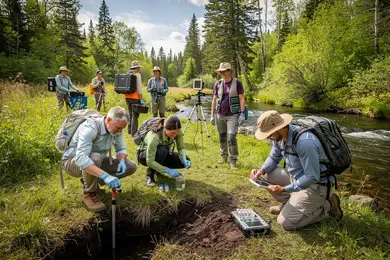
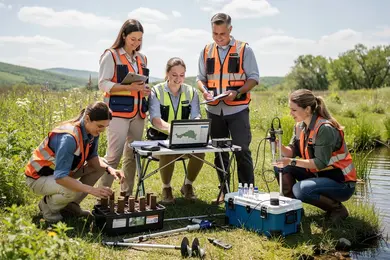
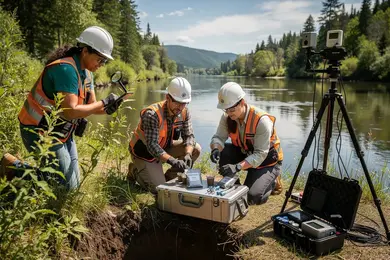
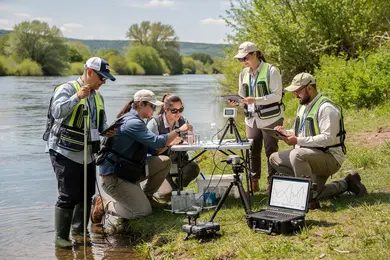
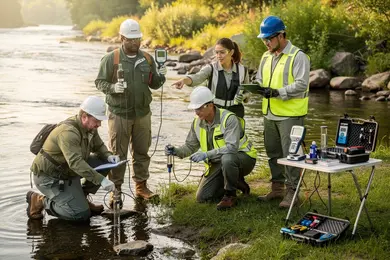
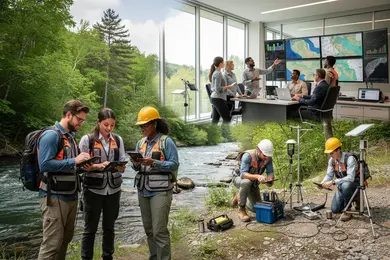
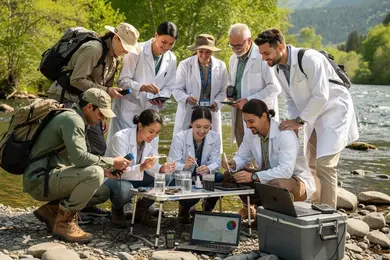
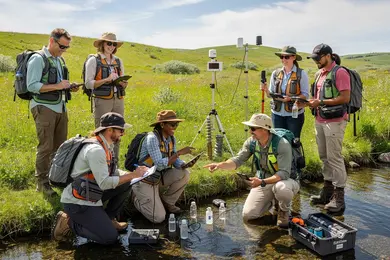
Many online programs emphasize policy translation and stakeholder communication over intensive field or lab work, which could require additional certifications for students aiming for research-intensive climate science work. This pathway reflects workforce expectations favoring professionals who can bridge science with regulatory strategy and policy advocacy, not just theoretical understanding.
Salaries for environmental scientists and specialists median around $80,060 annually, signaling steady demand for skill sets that integrate environmental data and compliance strategy. Programs typically mix technical instruction with communication skills, preparing graduates for roles in government agencies, nonprofits, or the private sector. Those evaluating these degrees should consider how well the curriculum aligns with their career goals and seek supplementary experience if needed.
Prospective students may explore a range of online EHS degree programs to find curricula emphasizing the climate and policy nexus.
How do online environmental science programs compare to campus-based options for flexibility and quality?
Choosing between online environmental science degrees flexibility comparison and campus programs requires weighing significant tradeoffs in skill acquisition and employability. Online formats excel in accommodating working professionals and those with family commitments but lack the immersive experiential learning essential for many environmental roles.
For example, governmental agencies and consulting firms prioritize candidates with direct laboratory experience and internship networking, which campus-based students more readily access. Quality differences between online and campus-based environmental science programs hinge on curriculum design, accreditation, and faculty engagement.
Employers scrutinize online degrees rigorously, favoring programs that integrate synchronous instruction, project-based learning, and database access. Graduates who can demonstrate proficiency in GIS applications, quantitative methods, and policy frameworks mitigate skepticism but still face challenges entering specialized positions without applied experiences typically gained on campus.
The labor market outlook projects approximately 8,500 annual job openings in environmental science and policy fields through 2034, underscoring the importance of strategic educational choices. Working professionals pursuing online degrees should actively seek externships and part-time roles to supplement theoretical knowledge.
Campus students, conversely, must leverage institutional partnerships for fieldwork opportunities that enhance practical skills and employer connections. Prospective students evaluating advanced environmental science pathways might also consider programs like the online PhD in data science, which increasingly intersects with environmental modeling and analytics.
What accreditation should environmental science programs have to support credible climate-policy careers?
Regional accreditation combined with specialized recognition from bodies such as the Society of Environmental Toxicology and Chemistry (SETAC) or the Accreditation Board for Engineering and Technology (ABET) is the key benchmark for accredited online environmental science programs for climate policy careers. Employers in government and consulting sectors prioritize these credentials because they demonstrate adherence to rigorous curriculum standards that integrate policy and scientific expertise.
For example, a graduate seeking a role in a state environmental regulatory agency must graduate from programs that embed policy frameworks and climate mitigation methods alongside scientific theory. Data indicates that 68% of graduates from properly accredited programs find employment in related fields within three years, which shows the direct impact of accreditation on access to opportunities such as federal internships and professional licensure.
Graduates from non-accredited programs face practical limitations, including restricted employer networks and potential retraining costs. Prospective students should confirm both regional accreditation and subject-specific endorsements before enrolling to avoid gaps in professional credibility and to support smoother career pivots.
Because many employers require established STEM or environmental-specific accreditation standards for environmental science degrees in policy fields, missing these credentials can reduce salary potential and promotional prospects. Candidates must evaluate programs not only for academic content but also for verified industry alignment to ensure their qualification matches workforce expectations.
Those interested in complementary fields may also explore pathways like the best online nutrition degree for interdisciplinary integration.
What concentrations and courses in environmental science best align with climate and public policy roles?
Climate policy concentrations in environmental science degrees emphasize skills critical for shaping regulatory frameworks and practical interventions in public policy. Coursework focused on climate systems modeling, environmental law, and risk assessment equips students for roles demanding technical fluency and policy analysis. For example, a professional in a state agency aiming to reduce carbon emissions must master greenhouse gas accounting and legal enforcement limits to navigate complex compliance environments effectively.
Public policy courses for environmental science careers often include GIS, econometrics, and environmental ethics, enabling spatial data interpretation and economic impact evaluation. These abilities are essential whether working within federal compliance programs or supporting NGOs pushing for international agreements, reflecting diverse workforce applications.
Employers prioritize candidates who combine quantitative and regulatory expertise to draft legislation, conduct impact analyses, or manage stakeholder engagement. Graduates must weigh tradeoffs between policy-heavy curricula, suited for legislative roles, versus stronger atmospheric science and data analytics for modeling-focused careers. Early specialization minimizes redundant coursework and better aligns academic choices with job market realities.
Workforce projections from the U.S. Bureau of Labor Statistics estimate 4% growth for environmental scientists and specialists from 2024 to 2034, suggesting steady but competitive employment conditions. Professionals exploring advanced degrees might consider alternatives such as a master's of library science for complementary research skill development relevant to environmental data management.
What are the admission requirements and typical timelines for completing an online environmental science degree?
Admission to online environmental science programs often demands more than a high school diploma; applicants may face requirements such as standardized test scores, letters of recommendation, and a personal statement outlining career objectives. For mid-career professionals, prior experience or college coursework in biology, chemistry, or earth sciences significantly enhances admission prospects, particularly in selective tracks.
Programs vary widely in duration and pacing. Full-time students typically finish within four years, but part-time enrollment-common for working adults-can extend completion to six years or longer. While transfer credits can shorten this timeline, students must carefully verify course equivalencies to avoid critical knowledge gaps that may weaken technical competence.
Meeting academic prerequisites, including calculus and physics in some cases, aligns with employer expectations for strong quantitative skills. This is crucial given the median annual wage of $104,170 for environmental engineers reported by ASU Online citing BLS data in May 2024, which reflects market demand for graduates who can manage complex environmental challenges.
Students should also assess program accreditation and state authorization to ensure credits transfer efficiently and qualifications remain valid for certifications relevant to climate and policy roles. Flexible scheduling supports workforce balance but may delay labor market reentry or advancement opportunities.
How much do online environmental science degrees cost, and what financial aid is available?
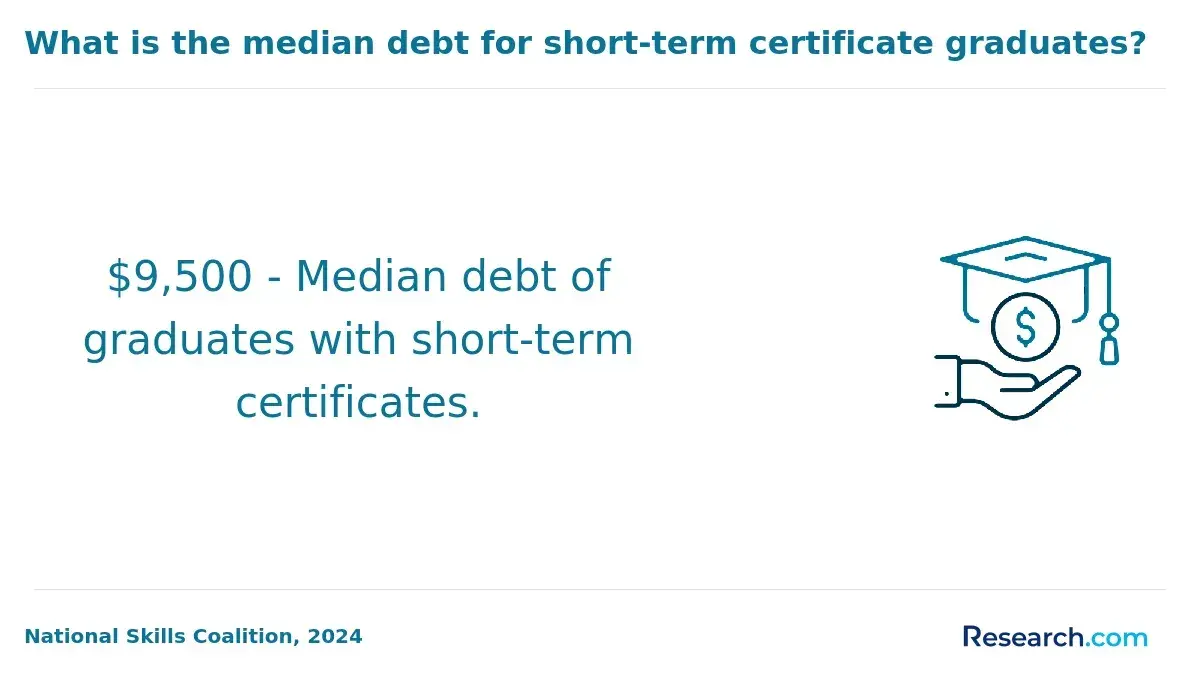
Investing in an online environmental science degree requires a clear-eyed assessment of how program costs translate into job market advantages, especially in niche policy or climate-focused roles. Bachelor's tuition can range from $15,000 to $60,000 depending on public or private status, residency, and credit load, while graduate degrees frequently surpass $30,000. Choosing a program with integrated policy coursework may justify higher expenses.
Financial aid strategies are crucial for managing costs. Federal aid via the FAFSA opens access to Pell Grants-up to $7,395 annually for undergraduates-and Stafford Loans, while graduate students often depend on unsubsidized loans or targeted fellowships. Employer tuition assistance can be a game-changer for mid-career professionals balancing work and study.
State-specific scholarships and national environmental organization grants offer additional relief but are highly competitive and typically require strategic stacking alongside other aid to reduce loan dependence. Practicums and internships, though often extending time-to-degree, enhance readiness for roles with higher salary potential.
The top decile of environmental scientists and specialists earned over $134,830 annually, indicating that aligning education with well-paying, policy-driven segments offers a more justifiable ROI than generic environmental positions.
Which climate-and-policy careers can you pursue with an environmental science degree?
Graduates aiming for climate-and-policy roles with an environmental science degree face a job market where technical expertise alone is insufficient. Success hinges on navigating regulatory frameworks and translating complex data into actionable strategies. For instance, a climate policy analyst working for a state government must balance scientific interpretation with legislative realities to produce effective mitigation plans.
Meanwhile, environmental consultants advising energy firms must interpret evolving regulations to reduce emissions while maintaining operational viability. Entry-level salaries generally range from $50,000 to $65,000, underscoring employer demands for analytical rigor and communication skills. Practical knowledge of laws like the Clean Air Act and sector-specific climate initiatives is critical.
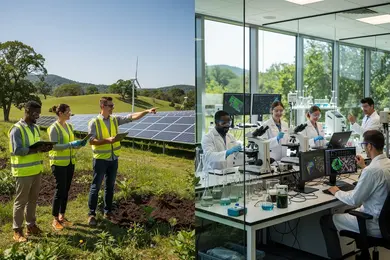
Candidates who can operate Geographic Information Systems (GIS), conduct environmental impact assessments, and apply economic modeling possess a competitive edge. However, such technical skills must be coupled with negotiation and interdisciplinary collaboration abilities, especially in fields like urban planning where economic and sustainability priorities frequently conflict.
Professionals transitioning into these careers should prioritize programs offering applied research and internships with governmental or non-governmental organizations to develop relevant experience and networks. Adaptability to legislative shifts and continuous updating of climate science knowledge are mandatory. Those without prior regulatory exposure face steep learning curves in legal frameworks, a challenge requiring deliberate preparation.
What salary ranges and earning potential exist for environmental scientists in climate and policy fields?
Environmental scientists specializing in climate and policy roles face varied salary trajectories heavily influenced by employer type, location, and skill focus. Entry-level salaries for data-centric positions typically range from $55,000 to $70,000, with federal agencies and large consulting firms offering the higher end. Non-profits and local governments often start lower but provide critical policy experience that can accelerate advancement.
Transitioning from raw data analysis to policy advisory roles usually results in salaries between $95,000 and $120,000 within five to seven years. For instance, a climate policy analyst at a state environmental protection agency may advance more rapidly due to regulatory compliance demands and adaptation strategy work, compared to private consultancies where technical certifications carry more weight than policy exposure.
Beyond a decade, salary growth generally flattens unless professionals pursue senior positions such as program managers or scientific fellows, where earnings can exceed $130,000. Such progression requires ongoing education and effective networking in environmental law and policy, raising important tradeoffs around time investment versus salary ceiling and job security.
Because employers span government, academia, non-profit, and private sectors, those aiming for sustainable employability should consider programs blending environmental data science with policy analysis. This balance aligns with workforce expectations and market demand in environmental fields.
What certifications, licenses, or professional credentials are relevant for climate-policy environmental science careers?
Climate-policy environmental science careers demand targeted credentials that align with specific functional roles and hiring expectations. For example, a compliance auditor's pathway differs markedly from an engineering role focused on emissions control, affecting which certifications hold tangible value in practice.
Key certifications such as Certified Environmental Professional (CEP) and Leadership in Energy and Environmental Design Accredited Professional (LEED AP) demonstrate applied knowledge in sustainability standards and sustainable building. Meanwhile, roles with direct legislative interaction benefit from credentials like Certified Climate Change Professional (CC-P), designed for navigating regulatory frameworks and climate risk assessments.
Licensing requirements such as Professional Engineer (PE) with an environmental focus vary by state but are essential for technical solutions involving environmental mitigation. Tradeoffs include the logistical burden of maintaining multiple certifications through ongoing education and exam fees, which can delay rapid advancement in fast-moving policy environments. Employers emphasize credentials closely tied to job functions rather than broad qualifications.
For instance, Certified Hazardous Materials Managers (CHMM) are prioritized in compliance auditing roles. Programs with measurable outcomes, such as Iowa State University's Environmental Science Graduate Program reporting approximately 91% employment in sustainability within six months, highlight the benefits of credential alignment.
Prospective students should tailor certification choices to sector-specific demands-federal policy analysts may prioritize policy-focused credentials, whereas corporate sustainability professionals often seek LEED accreditation or greenhouse gas accounting expertise.
How can you evaluate and choose a reputable online environmental science program for climate-policy work?
Choosing an online environmental science program with a climate-policy focus requires aligning training with distinct workforce demands rather than generic credentials. Employers prioritize candidates with mastery in climate policy, environmental law, and data analysis over broader environmental backgrounds. For instance, professionals targeting federal agencies must understand regulatory frameworks, while those entering sustainability consulting need strong quantitative skills.
Employment outcomes matter: programs should report placement specifically in climate-policy roles rather than general environmental positions. The U.S. Bureau of Labor Statistics projects nearly 1.9 million openings for environmental scientists and specialists from 2024 to 2034, but the strongest demand targets those trained at the intersection of environment and policy.
Program flexibility and real-world integration are critical. Asynchronous formats help working learners, but access to internships or partnerships with agencies, NGOs, or think tanks focused on climate policy increases practical readiness. Career advising oriented to climate-policy markets enhances navigation of job pathways.
Tradeoffs between program length and depth affect career pathways: certificates enable quick entry but often lack full policy grounding, while degrees offer comprehensive expertise at the cost of time and money-factors especially relevant for mid-career changers.
Finally, faculty expertise backed by funded research connects students to current climate-policy challenges, fostering relevance that employers recognize. Transparent disclosures of credentials and projects reflect program credibility and practical value.
Other Things You Should Know About Environmental Science
In 2027, many employers recognize online environmental science degrees as valid credentials, especially from accredited institutions. As digital education platforms advance, these degrees are increasingly respected, particularly when they align with a specialized focus like climate and policy. However, traditional degrees might still hold an edge in networking opportunities.
Choose a program accredited by a regional accreditor recognized by the U.S. Department of Education, and check whether the university or department follows specialized standards such as NASPAA-linked policy training or ABET for certain science and engineering pathways. Employers and graduate schools usually verify institutional accreditation first.
Online programs often lack direct access to real-time networking, which is crucial in environmental science careers where policy influence and collaboration matter. While virtual forums and group projects provide some interaction, they rarely replace in-person connections formed during on-site internships or conferences. If building a strong professional network is a priority, seek programs offering hybrid options or facilitated local internship placements to bridge this gap effectively.
Choosing between a program emphasizing policy integration and one centered on technical research depends on your targeted career path. For roles explicitly involving climate policy development, compliance, or environmental regulation, prioritize programs with robust policy coursework and case studies. Those aiming for scientific research, environmental monitoring, or technical consultancy should select programs with deeper lab work and data modeling components. Align your choice with employer expectations in your desired sector to maximize career relevance.
References
- Master of Science in Environmental Sciences and Policy https://www.ceu.edu/academics/degrees/ms-environmental-sciences-policy
- 16 Best Colleges for Environmental Science | HelloCollege https://sayhellocollege.com/blog/best-colleges-for-environmental-science/
- Explore UM | University of Manitoba - Environmental Science (BEnvSC) https://umanitoba.ca/explore/programs-of-study/environmental-science-benvsc
- Certification Guide for Young Professionals - Board for Global EHS Credentialing https://gobgc.org/professional-environmental-certifications-professionals/
- Online Environmental Science Degrees: Compare Schools https://www.degreesforgood.org/online-degrees/environmental-science/
- Top Jobs in Environmental Science | Build a Sustainable Career https://bootcampgis.com/jobs-in-environmental-science/
- Environmental Science Courses & Degrees https://www.open.edu.au/study-online/science/environmental-science
- CARE Fall Courses 2025 https://www.care-climate.com/care-fall-courses/
- Do you want a job that will help save the planet? https://gradireland.com/careers-advice/career-ideas/do-you-want-job-will-help-save-planet
- Environmental Career Profiles Australia https://environmentaljobs.com.au/resources/environmental-sustainability-careers