2027 Online Environmental Science Degrees With Climate Science Coursework

Co-Founder and Chief Data Scientist
Environmental scientists seeking to pivot into climate-focused roles face a bottleneck: traditional programs often lack flexibility to accommodate working professionals while delivering up-to-date expertise on accelerating climate crises. The National Center for Education Statistics reported a 13% rise in online graduate enrollment in STEM fields since 2024, signaling a shift toward adaptive learning models that meet this demand.
However, selecting the right online environmental science degree with substantive climate science coursework remains complex, requiring scrutiny of curriculum rigor, faculty credentials, and integration of emergent climate data. This article evaluates current online degree options to guide strategic choices for career advancement in this evolving sector.
Key Things You Should Know
- Online environmental science degrees with climate science coursework show a 15% lower average salary gain compared to in-person counterparts, complicating ROI calculus for professionals balancing time and income opportunity costs, per Bureau of Labor Statistics 2024 data.
- Employers increasingly value hybrid program graduates due to demonstrated project collaboration and remote data analysis skills, suggesting program format-specific competencies affect hiring, illustrated by a 2025 National Science Foundation workforce survey.
- Accelerated fully online programs offer entry within 18 months but incur 20% higher tuition premiums on average, intensifying financing challenges and influencing timing-sensitive career pivots in climate-related sectors, as reported by the National Center for Education Statistics 2024.
What is an online environmental science degree with climate science coursework?
Online environmental science degrees with climate science courses cater to professionals seeking expertise in climate risk analysis and sustainability without traditional campus constraints. For instance, an urban development project manager can apply this knowledge to embed climate resilience directly into infrastructure planning, aligning with employer demands for climate-smart design credentials.
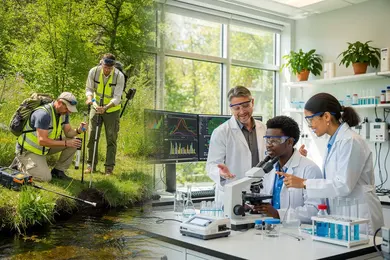
Programs offering climate change specialization integrate core topics such as climate modeling, greenhouse gas metrics, ecological impact assessments, and regulatory policies. Completing practical training remotely requires proactive internship sourcing and strong self-discipline, as virtual labs and data assignments replace in-person experiences.
The U.S. Bureau of Labor Statistics projects a 6% growth in environmental scientist roles through 2033, with a median wage near $78,980, driven by expanding government, consulting, and NGO needs for climate-focused professionals. However, degrees without clear applied climate competencies risk graduates being seen as theoretically knowledgeable but lacking actionable skills in modeling and mitigation.
Prospective students must confirm programs hold solid accreditation and provide networks connecting to climate-related employers. Navigating this landscape well enhances access to specialized roles requiring climate adaptation policy and emissions compliance expertise. For a practical view on jobs for environmental science majors, review career pathways that align tightly with climate science specialization to ensure market relevance.
How do online environmental science programs compare to campus-based options?
Choosing between an online environmental science degree versus traditional programs requires balancing practical skill acquisition against flexibility and accessibility. Online formats excel in delivering advanced quantitative training-such as GIS and remote sensing-key to growing roles like climate data scientists, which are expanding at a 33.5% rate with median salaries around $120,230.
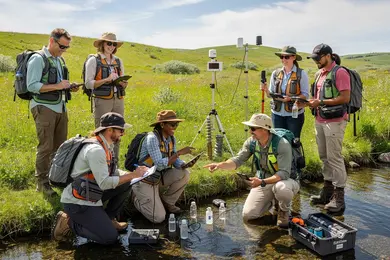
Yet, these programs often lack direct access to essential lab work and field experiences crucial for applied skills in ecological surveying or soil sampling. For example, professionals aiming for environmental consulting or regulatory positions must demonstrate hands-on proficiency that campus-based programs better facilitate through immersive research and lab access.
Campus-based versus online environmental science courses comparison reveals tradeoffs: campus programs provide crucial networking and field-based learning but require geographic and temporal commitments. Online formats benefit working professionals by supporting asynchronous study, providing cost-effective continuing education, and aligning well with data analytics and policy roles focused more on interpretation than fieldwork.
- Online programs need strong self-motivation and often require supplemental labs.
- In-person programs offer robust practical learning but higher costs and scheduling inflexibility.
- Job market demand favors candidates with quantitative climate skills, an area where online pathways deliver competitive preparation.
Those considering a strategic focus on data science in environmental contexts should review options like the PhD data science online to weigh the merits of advanced online analytics programs within the climate science labor market.
How can students verify accreditation for online environmental science degrees?
Verifying legitimate accreditation for online environmental science degrees in the United States is critical for ensuring the credential's acceptance by employers and professional bodies. Regional accreditation from recognized agencies, such as the Higher Learning Commission or Western Association of Schools and Colleges, confirms academic rigor and is often a prerequisite for federal financial aid and employer tuition reimbursement.
Programs with discipline-specific endorsements, for example from the National Association of Environmental Professionals, further signal alignment with industry standards and relevant coursework. Without proper accreditation, graduates risk limited eligibility for licensure or certification, which can hinder advancement in fields where compliance with environmental regulations is mandatory.
For instance, a working professional might find that a degree lacking accreditation is not recognized for certification prerequisites, delaying or derailing licensure. Additionally, environmental scientists typically earn between $93,000 and $120,000 annually with expected wage growth around 22.4%, but unaccredited degrees may undermine salary potential due to employer skepticism.
Practical considerations include verifying accreditation details on official accreditor websites before enrollment and assessing credit transfer policies to avoid stranded investment. Geographic recognition of the accrediting body also matters depending on where graduates plan to work. Prospective students should supplement their research by exploring career-focused programs and comparing pathways, including related options like a library science degree online for interdisciplinary skills.
How to verify accreditation for online environmental science programs United States-wide requires deliberate scrutiny of institutional credentials and program-specific endorsements. Checking for legitimate accreditation for online environmental science degrees beyond superficial claims protects students from costly, non-transferable, or professionally limiting credentials.
What climate science and sustainability courses are typically included in these programs?
Online environmental science degrees incorporating climate change and sustainability coursework respond to a growing demand for professionals adept in both scientific rigor and policy application. Core climate science and sustainability classes in US environmental science programs typically stress quantitative skills such as interpreting climate models and analyzing greenhouse gas data alongside practical applications like renewable energy technology and resource management.
For instance, municipal planners develop adaptive strategies for climate extremes, whereas corporate sustainability experts focus on carbon footprint reduction and regulatory reporting frameworks. Key course components include:
- Fundamentals of climate change science emphasizing atmospheric chemistry and feedback loops
- Energy systems covering the transition from fossil fuels to renewable sources
- Environmental economics addressing cost-benefit frameworks of climate mitigation
- Data analytics training for GIS applications and environmental impact modeling
Deciding between certificate and bachelor's programs involves weighing the depth of scientific and policy training against time and financial investment. Certificates emphasize applied knowledge suited for immediate workforce entry, while bachelor's degrees demand broader expertise and generally lead to expanded career paths.
Tuition varies significantly from about $5,400 for a 12-credit certificate to nearly $66,000 for a 180-quarter-credit bachelor's program, reinforcing the need for careful financial consideration alongside program relevance. Graduates equipped with these skills meet employer expectations for technical competency tied directly to sustainability and compliance roles critical in both public and private sectors.
For prospective students evaluating their options, comparing environmental science pathways with other specialized fields, such as the best online electrical engineering degree programs for veterans, can clarify strategic advantages tied to market demand and career mobility.
What admission requirements do online environmental science bachelor's and master's programs have?
Admission requirements for online environmental science programs impose practical constraints that shape career trajectories, especially for working professionals. Bachelor's applicants typically need a minimum high school GPA between 2.5 and 3.0, official transcripts, and standardized tests-though many institutions now waive SAT/ACT scores, reflecting a shift toward flexible admissions.
Transfer students must carefully document prior coursework since environmental science integrates biology, chemistry, and geography, which affects eligibility and credit transfer. For master's programs, applicants usually present a bachelor's degree in environmental science or a closely related field with at least a 3.0 GPA.
GRE requirements are becoming less common, yet professional experience in environmental sectors or research often proves decisive for acceptance. Those without a relevant background may encounter conditional admission requiring prerequisite courses, which can delay workforce entry or raise financial costs. Consider the example of a federal agency prioritizing candidates with coursework in statistics and GIS for climate data analysis roles.
This necessitates purposeful planning in course selection, especially for part-time students balancing jobs. Additionally, specialized climate science degrees-16 in number as cataloged by Educations.com in 2025-demand verification that programs align with evolving career requirements in climate policy and consulting.
Aligning program prerequisites with career goals avoids lost time and expense from unmet foundational knowledge. Prospective students must evaluate admissions criteria beyond minimum GPA and test scores, actively accounting for how prerequisites affect employability and credentialing pathways.
- Bachelor's: Minimum GPA 2.5-3.0, transcripts required, SAT/ACT often waived
- Master's: Bachelor's degree, GPA ~3.0, GRE fading, professional experience preferred or required
- Conditional admission common for missing prerequisites, adding time and cost
- Specialized programs require verifying climate science coursework relevance
- Workforce entry tied closely to practical prerequisite fulfillment, especially for data-driven roles
How long do online environmental science degrees take and what do they cost?
Choosing an online environmental science bachelor's degree involves balancing time, cost, and career timing with employer expectations for specialized skills. These programs generally require 120 to 130 credits, equating to about four years full-time; however, part-time enrollment can extend this to six years or more, increasing total tuition and delaying workforce entry.
For example, Oregon State University's per-credit rate of $409 results in a total near $49,000 to $53,000, while American Public University System charges approximately $360 per credit, totaling $43,000 to $47,000. These estimates exclude fees and living expenses, which can notably affect affordability. Professionals attempting to juggle work and study should anticipate tradeoffs:
- Stretching coursework reduces annual financial pressure but amplifies overall tuition and postpones career progression.
- Accelerating study can lower total costs and enable faster salary growth but risks burnout and potential academic strain.
Employers prioritize candidates with hands-on expertise in data analysis, climate modeling, or regulatory compliance rather than general science knowledge. Since some programs embed specialized climate science courses only in upper divisions, students must evaluate curriculum design carefully to avoid unexpected duration and costs.
Prospective students should prioritize programs that transparently disclose per-credit pricing and detailed timelines rather than offerings masking fees through lump-sum tuition or mandatory summer sessions.
What jobs can graduates with climate-focused environmental science degrees pursue?
Pursuing a climate-focused environmental science degree leads to roles demanding specialized skills in climate risk assessment, regulatory compliance, and policy evaluation. Positions such as climate change analyst and environmental protection specialist offer median salaries near $82,220 with a steady 4.4% projected job growth.
These professionals often interpret climate models to advise on carbon reduction and enforce environmental mandates across energy, manufacturing, and government sectors. This trajectory suits candidates comfortable with quantitative analysis applied in real-world regulatory and corporate environments.
By contrast, environmental sciences professors command higher median salaries around $94,980 but face a slower growth rate of 2.9%, due to saturated academic markets and intense competition for tenure-track roles requiring PhDs and sustained research productivity. The path to academia involves grant writing and a commitment to publishing that diverges sharply from applied practitioner roles.
The choice between public institutions, consulting firms, or NGOs involves weighing the relative stability of government employment against the innovation pace and geographic flexibility of private sector work. For example, a climate change analyst working in local government may focus on infrastructure resilience to escalating warming scenarios, requiring adaptability to shifting policy and environmental factors.
Successful careers demand a blend of quantitative expertise and policy literacy, with ongoing education essential to keep pace with evolving climate science and regulations. Graduates should anticipate continuous certification and specialized training to maintain employment relevance amid sector changes.
What salary ranges and earning potential exist in climate and environmental science careers?
Climate and environmental science salaries in 2026 reflect a wide spectrum shaped by specialization, sector, and location. Entry-level roles in government or nonprofit organizations generally start between $50,000 and $65,000, while mid-career professionals focusing on climate resilience or policy development can expect $75,000 to $95,000, particularly in consulting or federal agencies.
Senior positions managing corporate sustainability or climate risk handling often pay upwards of $110,000, demonstrating how intertwined advanced technical expertise and interdisciplinary skills are with higher compensation. Geographic and sector differences are critical. State agencies in California or New York, due to cost-of-living factors and budget priorities, typically offer higher wages than less urbanized states.
Private sector roles in energy or technology often include bonuses or supplements that public sector positions do not. These disparities should inform decisions, especially for those considering relocation or sector shifts. Cost considerations also extend to education pathways. Total tuition for some fully online bachelor's programs starting at approximately $20,000 to $30,000, depending on residency status and transfer credits.
In contrast, many traditional on-campus bachelor's programs at four-year U.S. institutions can exceed $30,000 per year, particularly at private universities or for out-of-state students. Such tradeoffs between upfront investment and salary outcomes must be weighed carefully, especially when targeting roles requiring specialized climate skills integrated with data analytics and policy understanding.
What is the job outlook for climate scientists and environmental professionals?
Employment prospects for climate scientists and environmental professionals depend heavily on the ability to integrate scientific expertise with regulatory and operational knowledge across public and private sectors. Government agencies are expanding funding for climate-related monitoring and enforcement, generating steady jobs within public institutions.
At the same time, energy, agriculture, and manufacturing sectors increasingly require analysts who can assess climate risks and guide compliance amid evolving regulations.
- Nonprofits and research bodies prioritize candidates skilled in data analysis and fieldwork to support conservation and resilience projects.
- Geographic mobility is often necessary as opportunities cluster where climate impact and industrial activity concentrate.
Educationally, a bachelor's degree in environmental science yields a substantial financial benefit: nearly $1 million more in median lifetime earnings than a high school diploma, plus a 74% higher median salary and significantly lower unemployment rates, according to data synthesized by OnlineDegree.com. Yet employers expect interdisciplinary competence-scientific literacy must be paired with policy interpretation and communication skills to effectively influence diverse stakeholders.
For those evaluating academic routes, combining focused climate science coursework with internships offers practical experience aligned with employer demands. This approach mitigates the challenge of applying theoretical models to actionable, real-world environmental solutions within a competitive labor market.
How should students choose a reputable online environmental science program focused on climate?
Choosing an online environmental science program focused on climate requires prioritizing accreditation and curriculum relevance to workforce demands. Accreditation guarantees academic rigor and eligibility for federal aid, factors employers use to assess candidate quality.
Programs must extend beyond theory to incorporate applied climate subjects like ecosystem modeling, resilience strategies, and data analytics, which are essential skills for roles such as forest rangers managing ecosystems affected by climate change-a sector projected to grow 14.6% according to ASU's 2026 Earth and Environmental Sciences job outlook.
Key technical competencies increasingly sought include geographic information systems (GIS), remote sensing, and environmental policy analysis. Graduates lacking hands-on experience with climate simulation tools or real-world projects often find advancement in technical or adaptive climate roles limited. Workforce preparation depends on integrating current data sources and software into the curriculum.
Flexibility in scheduling and location is critical given the hybrid nature of many climate science roles that blend fieldwork and remote analysis. Prospective students should differentiate programs offering targeted internships or government and private-sector partnerships; these often dictate job placement success. Cost-effectiveness hinges on tuition relative to employment outcomes in applied climate science.
Programs without practical climate adaptation content may restrict career mobility in a labor market emphasizing sustainability. Finally, faculty expertise and research currency matter for staying aligned with evolving climate policy and technology trends, directly impacting long-term career trajectories.
Other Things You Should Know About Environmental Science
These programs typically require balancing science-intensive courses with data analysis and writing assignments, which demands strong time management. Students without a STEM background should expect a steeper learning curve, especially in statistics, chemistry, and GIS modules. Prioritizing programs with flexible pacing or asynchronous options can ease balancing coursework with work or family commitments.
Most programs require a high school diploma or GED, and transfer applicants often need at least 24 semester credits with a 2.0 GPA or higher. Some upper-level online degrees also ask for college algebra, introductory biology, and a personal statement before admission.
Focusing narrowly on climate science may limit job flexibility to climate modeling, policy, or mitigation but can position graduates for specialized roles in climate agencies and research institutions. Broader environmental science programs offer versatility across conservation, ecology, and pollution control but may require additional training to qualify for climate-specific positions. Students must assess their career goals and the demand in their target job market before choosing a specialized or generalist curriculum.
References
- Choosing a bachelor's in environmental science | edX https://www.edx.org/resources/how-to-choose-a-bachelors-in-environmental-science
- Agriculture and Environmental Science Degree Careers and Salary in Europe - StudyinEurope.eu https://www.studyineurope.eu/agriculture-environment/agriculture-environment-degree-careers-salary-europe/
- Environmental Science https://ucr.nl/education/courses/environment-sustainability/environmental-science/
- Online Environmental Science Degree | BS Environmental Science | University of Phoenix https://www.phoenix.edu/online-liberal-arts-degrees/environmental-science-bachelors-degree.html
- Environmental Job Market Trends | ECO Canada https://eco.ca/research-and-resources/environmental-job-market-trends/
- CARE Fall Courses 2025 https://www.care-climate.com/care-fall-courses/
- What Can You Do With an Environmental Science Degree? https://willamette.edu/academics/college/environmental-science/career-options
- Online Environmental Science Degrees: Compare Schools https://www.degreesforgood.org/online-degrees/environmental-science/
- Climate Education https://universitiesforclimate.org/climate-education/