2027 Best States for Environmental Science Career Growth

Co-Founder and Chief Data Scientist
Facing a constrained job market and continually evolving regulatory demands, environmental science professionals must strategically choose locations offering robust career growth and employer connections. Recent labor data from the U.S. Bureau of Labor Statistics shows a 12% projected increase in environmental science roles within specific states due to accelerated climate initiatives and infrastructure investments.
This uneven regional demand forces prospective entrants and mid-career switchers to weigh not only starting salaries but also proximity to research institutions, internship opportunities, and regulatory agencies. This article identifies the best states for environmental science career growth, delivering actionable insights to optimize location-based educational and employment choices.
Key Things You Should Know
- States like California and Washington lead with a 12% projected growth in environmental science jobs through 2030, but face a tradeoff with higher living costs, requiring candidates to weigh regional salary premiums against expenses.
- Employers increasingly demand interdisciplinary expertise, shown by a 40% rise in hybrid environmental science and data analytics roles nationwide, pressuring program seekers to prioritize quantitative skill integration for competitiveness.
- Midwestern states offer more affordable education pathways with in-state tuition averaging 30% below national levels, yet slower job market expansion suggests timing and cost benefits may come at the expense of immediate career acceleration.
Which states offer the strongest environmental science career growth and job opportunities?
Job growth for environmental science professionals is uneven across the U.S., with California, Texas, and Washington standing out as the best states for environmental science job growth and top states for environmental science career opportunities. This variation stems from diverse regional industry demands, regulatory environments, and investment patterns that shape hiring volumes and skill requirements.
In California, the focus on renewable energy, water management, and climate regulation creates a robust market for specialists in pollution control and habitat restoration, especially in urban and agricultural zones requiring strict compliance monitoring. Texas, contrastingly, draws demand from its oil and gas sectors shifting toward sustainable practices, heavily emphasizing emissions reduction and regulatory oversight near Houston and Dallas. Washington prioritizes clean technology, forestry, and fisheries conservation, offering roles suited for environmental impact assessment and habitat preservation experts, frequently tied to state certification like licensed environmental professional status.
Professionals considering relocation must weigh cost of living differences against salary premiums and certification barriers that affect employability and long-term career mobility. Matching specialized skills such as GIS analysis or environmental policy interpretation to these regional sector strengths is critical. Understanding these nuances helps avoid common pitfalls and supports strategic choices based on concrete labor market realities rather than broad projections.
Students aiming to pivot into this field should also explore flexible education options-such as geology degrees online-which align academic credentials with evolving employer needs while accommodating life and work constraints.
How do top states for environmental science careers compare in salary and cost of living?
Top states for environmental science salaries and living costs reveal that high nominal salaries do not guarantee better financial outcomes. Oregon, for instance, offers the highest average salary at $69,785 but couples this with a cost of living index around 120, which erodes real income through increased housing and utilities. Conversely, states like Texas and North Carolina provide moderate salaries near $60,000 with notably lower housing and transportation expenses, resulting in stronger purchasing power and net earnings for environmental scientists.
Choosing employment requires assessing salary-to-cost-of-living ratios rather than raw pay alone. For example, an environmental scientist relocating to Oregon must weigh the expected salary advantage against substantially higher living costs. Public sector positions may offer more stability and benefits but lower pay, while private sector roles in top-paying states often demand specialized credentials and ongoing training to justify higher wages.
Prospective students and professionals should integrate this comparative salary and cost of living in environmental science careers by state analysis into their education and job decisions. Leveraging state labor statistics and workforce boards can clarify realistic earning prospects and market demands. Accessing focused programs, such as an accredited online animal science degree, may enhance relevant skills for diverse environmental roles while balancing flexibility and cost considerations.
What is the job outlook for environmental scientists across different U.S. regions?
Demand for environmental scientists varies sharply across U.S. regions, driven by distinct economic and regulatory landscapes shaping career outlooks. Coastal states like California and Washington lead with growth fueled by renewable energy projects and strict environmental policies, supporting salaries above the national average of $84,845. Meanwhile, Midwest and Southeast markets reflect moderate growth connected to agriculture and water quality management, where wages tend to be near or slightly below this benchmark. This regional variation in the job outlook for environmental scientists in U.S. regions requires deliberate geographic targeting by job seekers.
Employers in the Northeast prioritize urban environmental planning and pollution control, often seeking candidates with advanced knowledge in environmental law and policy. A scientist working in New York City is more likely to engage in industrial regulation projects than peers in rural states, affecting both income potential and job stability.
Entry-level roles frequently require only a bachelor's degree, but states with federal research centers or protected lands such as Colorado expect higher qualifications and emphasize field proficiency. Job seekers should consider that lower qualification requirements outside these hubs often correlate with slower wage growth and limited advancement.
Strategically balancing regional demand with cost of living and career objectives is essential, especially for those pursuing specialized skills in GIS mapping or toxicology. For professionals evaluating regional demand for environmental science careers in the United States, exploring flexible educational paths like library science degrees online can provide accessible options for skill enhancement aligned with workforce needs.
Which degrees and specializations best align with high-growth environmental science careers?
Employers targeting environmental science roles, especially in regions like Sacramento County (West)-Sacramento City (Central/Downtown & Midtown) PUMA, CA, prioritize candidates with specialized skills aligned to regional demands. For instance, a bachelor's degree combined with GIS, environmental policy, or biogeochemistry specializations directly supports high-growth sectors requiring proficiency in data analysis, regulatory compliance, and ecosystem management. Those focused on GIS handle spatial data crucial for urban planning and environmental impact evaluations, reflecting labor market realities in consulting and government agencies.
Graduate education in fields such as climate modeling, sustainable resource management, or environmental toxicology grants access to research-heavy federal jobs and technically demanding roles. However, the tradeoffs include extended time and financial investment compared to bachelor-level entry positions. Certifications in project management or environmental auditing can improve employability and salary potential without incurring these costs. STEM skills, including R or Python programming for data modeling, consistently enhance job security in environmental consulting.
Choosing a degree specialization demands careful consideration of local employment hubs, job concentration trends, and employer expectations. Sacramento's 2024 landscape, for example, favors expertise in urban-environmental interactions, while other states emphasize areas such as conservation biology or renewable energy technology-influencing the best degrees for environmental science careers in top US states.
Prospective students looking beyond environmental science may explore options like the cheapest online computer science degree to complement their STEM skill set or pivot strategically.
How do online and campus environmental science programs differ for career advancement?
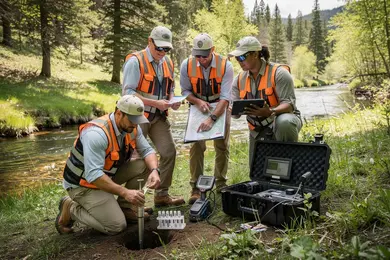
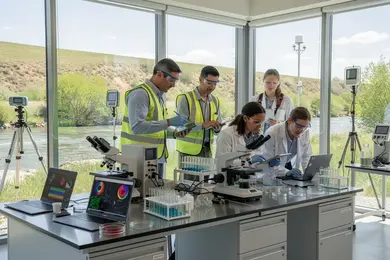
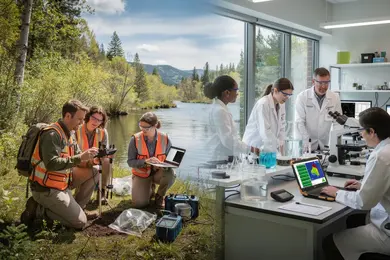
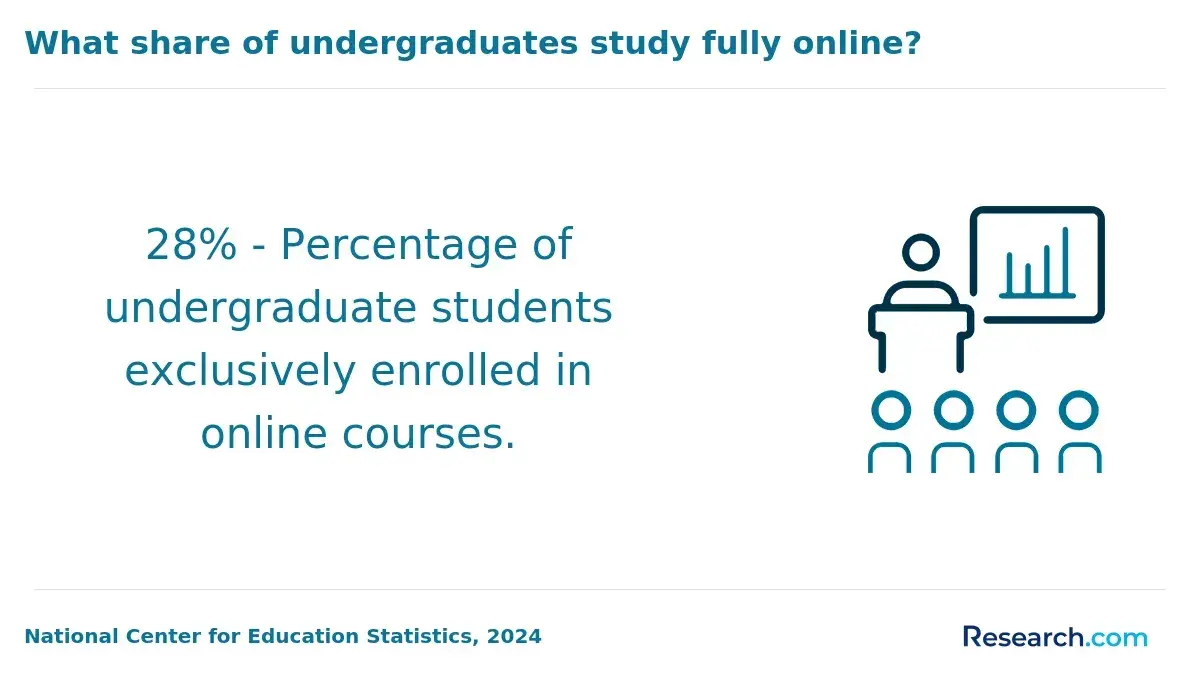
Choosing between online and campus environmental science programs hinges largely on the necessity of hands-on experience within prospective career paths. While online programs offer theoretical knowledge and flexible scheduling, they frequently omit components such as fieldwork, lab access, and direct technical training-elements many employers demand for roles in environmental consulting, conservation, and regulatory compliance. Campus programs provide structured opportunities for internships, lab work, and face-to-face collaboration, which directly translate to verifiable skills sought by state and federal agencies.
For a professional transitioning from a non-technical background, an online degree can initially cover crucial certifications like GIS or environmental policy but often requires supplemental local internships to acquire field competencies. This gap creates real challenges in job readiness, particularly for roles needing EPA certifications or validated sampling expertise. Conversely, online formats fit better for positions focused on data analysis, remote monitoring, or policy research, where physical presence is less crucial.
In practice, graduates from campus programs tend to report stronger workforce integration due to embedded experiential learning, aligning better with a job market growing by over 9% through 2026 and adding approximately 198,500 workers according to Policygenius citing BLS data. Working professionals must weigh their current job demands, time availability, and target roles carefully before committing to either modality.
What accreditation should environmental science programs have to support strong career outcomes?
Accreditation in environmental science programs directly affects employability and career trajectory. For example, the U.S. Environmental Protection Agency shows clear preference for candidates with degrees from ABET-accredited programs when recruiting specialized scientists, reflecting a broader industry mandate. Accreditation ensures curricula emphasize critical technical competencies-such as data analysis, environmental policy, and lab methods-that underpin job qualifications and certification eligibility.
Choosing a nonaccredited program can delay entry into analyst or project management roles, pushing graduates toward lower-paying technician jobs or extended job searches. Students should verify whether a program aligns with credentials like the Certified Environmental Professional (CEP), as this formal recognition often shapes hiring decisions.
Salary data from EnvironmentalScience.org confirms this divide: bachelor's graduates average around $80,060 nationally, while those with master's degrees or higher-and typically from accredited graduate programs-reach between $92,000 and $145,000. Although accredited programs tend to carry higher tuition, investing in these credentials often yields better initial salary offers, quicker promotions, and eligibility for a wider range of employers.
Decision-makers must weigh upfront costs against these tangible long-term gains, prioritizing accreditation as a critical filter to navigate the competitive environmental science labor market.
Which U.S. states host the most reputable environmental science schools and research centers?
Choosing a state for environmental science education can directly influence early career trajectories, particularly in government and compliance roles. California's University of California system-specifically UC Berkeley and UCLA-focuses on climate research integrated with environmental policy, supplying graduates to leading sectors like administration of environmental quality and housing programs. This connection offers a practical route into regulation-heavy roles within government agencies.
Massachusetts, with research-intensive programs at MIT and Boston University, blends environmental science with public health and urban planning, catering to students targeting federal and state agency work that involves complex regulatory and quality control tasks. The region's access to funding and policy centers accelerates early job placement in oversight positions.
Colorado's universities emphasize applied ecosystem management and renewable energy research, aligning with growing needs in sustainability compliance and infrastructure projects. The state's approach suits those aiming for roles in private energy firms or environmental administration with a technical compliance focus.
Key considerations for prospective students include:
- Aligning program emphasis with intended employment sector-government administration versus private research or energy development
- Assessing local internship networks and employer partnerships that facilitate smoother transitions to regulated roles
- Reviewing regional 2024 employment data to estimate realistic job placement prospects
What admission requirements do leading environmental science programs typically have?
Entry into environmental science programs hinges on a balance of quantitative proficiency and relevant experience, with admission committees prioritizing applicants who demonstrate competence beyond basic coursework. Successful candidates typically have strong backgrounds in biology, chemistry, physics, and calculus, along with a GPA of 3.0 or higher to reflect the field's technical demands.
Standardized tests such as the SAT or ACT remain optional in many cases, but higher scores can differentiate applicants. Practical experience-through internships, volunteer work, or research-often weighs heavily, signaling readiness for applied challenges within complex environmental systems.
Applications require personal statements clearly linking career objectives to sustainability or policy goals, supported by recommendations attesting to analytical skills and problem-solving about real environmental issues. Some programs also demand proficiency in data analysis and statistics, aligning with the market's call for graduates comfortable with quantitative methods and interpretive rigor.
Graduate-level entrants usually present a relevant bachelor's degree, accompanied by undergraduate research or professional work demonstrating applied expertise. For those switching careers, documented field experience or certifications can offset gaps in traditional credentials. Given that environmental scientist employment is projected to grow about 4% from 2024 to 2034, candidates must weigh program demands against evolving local labor markets where emphasis on applied technology and policy skills may supersede pure research credentials.
- Strong STEM coursework foundation and minimum 3.0 GPA
- Emphasis on applied internships and relevant fieldwork
- Data analysis and statistics skills increasingly crucial
- Graduate programs value research experience or professional expertise
- Labor market relevance varies by region and sector focus
What are the typical tuition, fees, and funding options for environmental science degrees?
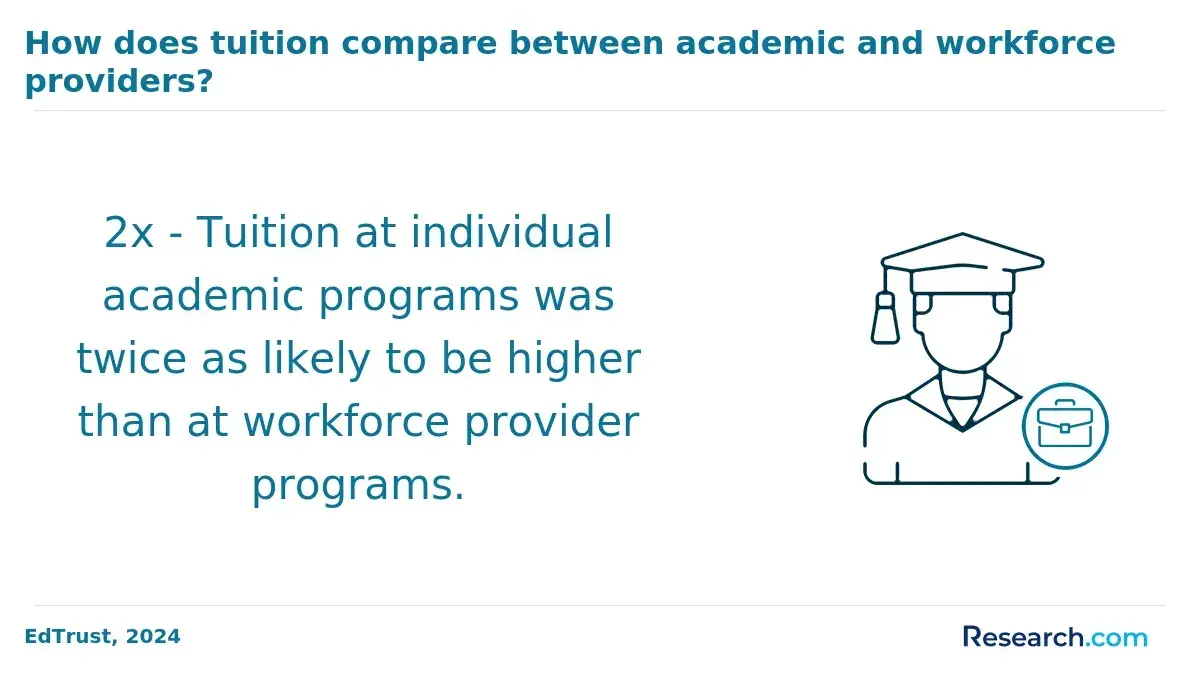
Choosing where and how to pursue an environmental science degree often hinges on navigating steep tuition disparities and strategically leveraging funding opportunities. Public in-state undergraduate programs typically cost between $10,000 and $15,000 annually, whereas private institutions may charge more than $35,000. Graduate tuition ranges from $12,000 to $30,000, with living expenses adding another $12,000 to $18,000 per year-factors that significantly shape debt levels and time-to-degree decisions.
Funding sources such as Pell Grants and TEACH Grants serve specific student segments, while work-study jobs and graduate research assistantships not only mitigate costs but also provide in-field experience highly valued by employers. Scholarships exist but come with competitive requirements tied to academic and community involvement.
For example, a student targeting an environmental consulting position in Hennepin County-Minneapolis (East), MN, where job demand is robust, must weigh selecting a local university offering direct employer connections and internships versus less costly but geographically distant options with limited networking. Loan repayment outcomes correlate closely with job sector choice; government and nonprofit roles may offer forgiveness but generally lower salaries, while industry positions demand practical skills developed through funded internships.
Key considerations include:
- Balancing tuition costs against available grants and assistantships to reduce financial burden
- Prioritizing institutions with established employer ties for better job placement
- Analyzing how sector-specific salary ranges affect loan repayment and career flexibility
Students must adopt a holistic funding and career strategy to optimize long-term environmental science employment prospects.
How can students choose the best state and program for long-term environmental science careers?
Selecting a state for an environmental science degree demands aligning program offerings with localized labor market realities rather than relying solely on academic prestige. For instance, targeting conservation roles makes states like Colorado or California preferable due to extensive public lands and active federal agencies, offering significantly more entry-level openings than areas lacking natural reserves.
Graduate employment rates and employer integration often outweigh program name recognition. Programs connected to local environmental agencies or consulting firms provide tangible benefits, including internships and job placements that directly address workforce needs.
Key considerations include tuition disparities between in-state and out-of-state students and the availability of sector-relevant internships. For example, a student in Massachusetts might encounter higher costs but gains access to robust research institutions and nonprofits.
Tradeoffs arise between specialization focus and geographic flexibility. A graduate concentrating on coastal ecology in Florida may face relocation challenges if seeking jobs in inland remediation or policy sectors, whereas states like Oregon, with diverse ecosystems, support broader specialization and funding diversity.
Finally, accreditation and regional hiring patterns fundamentally impact career trajectories. Students should map program strengths to regional industry demands and funding trends to optimize employment prospects and long-term growth within environmental science.
Other Things You Should Know About Environmental Science
States do not usually license environmental scientists as a separate profession, but they do require permits or certifications in related fields such as wastewater, asbestos, or stormwater work. These rules are set by agencies like the state environmental department or the EPA-authorized permitting office.
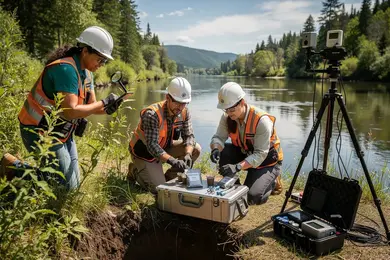
Employers in states with competitive environmental science markets tend to prefer candidates with practical, hands-on experience, especially in fieldwork or regulatory compliance. Recent graduates may face tougher entry barriers without internships or cooperative education exposure tied to local industries. Prioritizing programs and certifications that offer applied learning opportunities within target states enhances employability and speeds career progression in those regional job markets.
Government positions often provide more stability and comprehensive benefits but usually require navigating complex hiring processes and can offer slower salary growth. Private sector roles may offer faster advancement and higher pay but come with increased workload variability and less job security. Assessing one's tolerance for bureaucratic constraints versus entrepreneurial risk is essential when choosing the career path most aligned with personal and professional goals.
Students focused on policy-driven roles or regulatory compliance should prioritize states with established environmental legislation, as this ensures better practical experience and employer demand in that niche. Conversely, those aiming for broad technical skills or interdisciplinary roles should choose states with diverse industries, including energy, agriculture, and manufacturing, to access varied job opportunities. Aligning state selection with the desired career focus maximizes skill relevance and immediate job market fit.
References
- Is Now a Good Time for a Career in Environmental Science? https://www.nrep.org/blog/is-environmental-science-a-good-career
- How to Apply to Environmental Graduate Programs https://www.cjbnetwork.com/articles/how-to-apply-to-environmental-graduate-programs
- 10 careers you can have with an environmental science degree - SMWC https://www.smwc.edu/10-careers-you-can-have-with-an-environmental-science-degree-blog-july-20/
- University of Maryland Center for Environmental Science https://www.umces.edu/
- Top 15 Environmental Science Colleges https://www.collegeadvisor.com/resources/environmental-science-colleges/
- Studying an earth and environmental sciences degree https://www.hotcoursesabroad.com/study-abroad-info/subject-guides/studying-an-earth-and-environmental-sciences-degree/
- Top universities for Environmental Sciences in the USA https://www.kingseducation.com/kings-life/top-universities-for-environmental-sciences-in-the-usa
- Explore Career Opportunities in Environmental Science https://www.neefusa.org/story/environmental-education/explore-career-opportunities-environmental-science
- Top Research Programs to Apply For High School Environmental Studies https://pioneeracademics.com/news/top-environmental-studies-research-programs-for-high-school-students/
- Certification Guide for Young Professionals - Board for Global EHS Credentialing https://gobgc.org/professional-environmental-certifications-professionals/