2027 Online Environmental Science Degrees With Environmental Monitoring Coursework

Co-Founder and Chief Data Scientist
Environmental scientists tasked with real-time ecosystem monitoring face growing challenges from rapid data influx and the need for precise field deployment strategies. As environmental crises intensify, professionals require education that equips them with adaptable skills, especially in remote or shifting contexts.
According to the National Center for Education Statistics, enrollments in online degree programs surged over 20% in two years, signaling rising demand for flexible study options among working adults balancing career growth and personal responsibilities. This shift influences how students select programs with relevant environmental monitoring coursework to gain immediately applicable expertise.
This article examines online environmental science degrees offering targeted monitoring curricula, aiding prospective students in choosing pathways aligned with workforce demands and practical readiness.
Key Things You Should Know
- Employment demand for environmental science graduates with monitoring skills grew 12% between 2022-2024 per the Bureau of Labor Statistics, intensifying employer preference for candidates with demonstrated technical fieldwork proficiency over broader theoretical backgrounds.
- Programs emphasizing hands-on remote sensing and GIS coursework correlate with 15%-20% higher salary offers at entry level according to 2024 National Environmental Workforce Survey data, guiding candidates toward specialized technical curricula amid rising automation in data analysis.
- Average online graduate program costs increased 8% nationally since 2023, but degree acceleration options remain limited, forcing prospective students to balance immediate labor market entry against higher debt accumulation over delayed timelines.
What is an online environmental science degree with environmental monitoring coursework?
The value of an online environmental science degree with environmental monitoring coursework lies in its ability to provide remote technical expertise critical for emerging workforce demands.
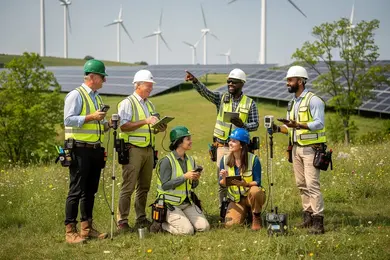
Graduates gain proficiency in analyzing environmental data without traditional field presence, vital in sectors like water quality management where interpreting sensor outputs and generating compliance reports remotely can significantly improve operational efficiency. Mining and energy industries similarly rely on these skills to maintain regulatory compliance through continuous monitoring and predictive analytics, mitigating environmental risks.
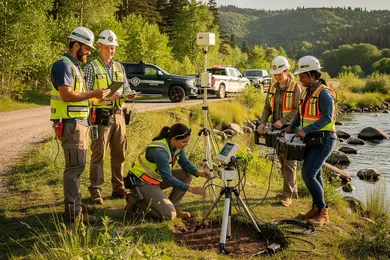
Choosing environmental science degrees offering environmental monitoring courses requires careful evaluation of program structure. Hands-on components such as virtual labs or partnerships for regional fieldwork are essential to bridge theoretical knowledge and applied skills. Coursework covers sensor technologies, data acquisition methods, and environmental regulation, all aligned with employer expectations for technical competence.
Career outcomes bifurcate between interdisciplinary roles and technically specialized positions. The decision to emphasize breadth or depth shapes prospects across research, consulting, and operational functions.
With 1,589 master's level environmental programs worldwide, the field's growth reflects sustained demand for professionals with remote monitoring capabilities and data management expertise. For students prioritizing geographic information systems integration, exploring GIS degree programs complements their skill sets and enhances employability.
How does an online environmental science program compare to a campus-based program?
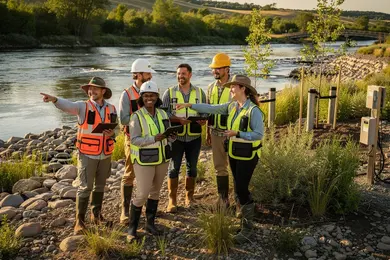
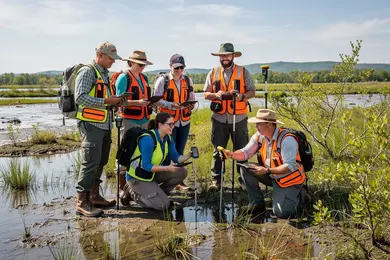
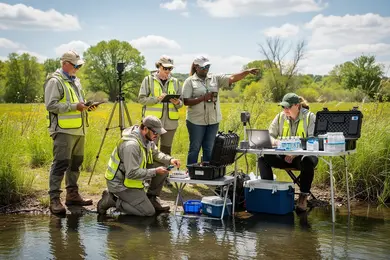
Online environmental science programs provide theoretical foundations comparable to campus-based degrees but typically lack critical hands-on training valued by employers in environmental monitoring and compliance sectors. Practical skills such as direct sample collection, field instrument operation, and real-time data logging are central to regulatory and climate-risk roles, where accuracy affects legal and operational outcomes.
These tactile experiences, integral to workforce readiness, are difficult to replicate remotely and often require additional local internships or partnerships alongside online study.
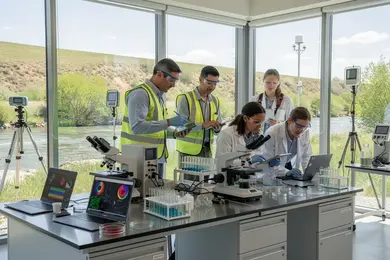
Campus programs, by contrast, offer direct access to laboratories, field stations, and faculty engaged in active research. For instance, students concentrating on air quality monitoring gain immediate experience with equipment calibration and data validation.
These are proficiencies tied to a global environmental monitoring market expanding at over 7% annually, with spending approaching $26 billion. Employers show preference for applicants who demonstrate verifiable field experience aligned with these technical demands.
Choosing between how online environmental science programs differ from campus-based degrees hinges on one's prior practical exposure, industry goals, and ability to secure applied training. Online programs serve professionals updating theoretical knowledge or data analysis skills but pose challenges for entry-level candidates seeking fieldwork supervision and network access.
Prospective students should also evaluate options regarding affordability and value, with resources available to compare costs, such as what is the cheapest data science course in the US?

Are online environmental science degrees with monitoring courses properly accredited and respected?
Employers in environmental consulting and regulatory roles consistently prioritize degrees from regionally accredited institutions that include rigorous monitoring coursework. This accreditation signals that candidates possess validated technical competence necessary for compliance and impact assessments.
Choosing online environmental science degrees with regional accreditation ensures academic quality, but candidates must carefully examine whether programs incorporate practical elements, as insufficient applied experience often hinders employment in fields like environmental engineering and natural resource management.
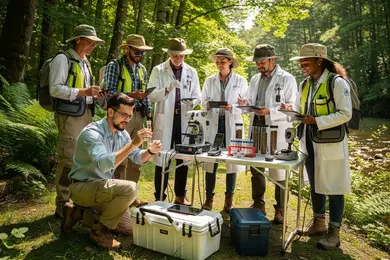
Graduates who combine recognized environmental science programs with monitoring coursework that emphasizes fieldwork and data analysis align more closely with hiring managers' expectations. Often, successful programs establish partnerships with local agencies to provide essential hands-on skills beyond theoretical knowledge.
According to Ohio State University's School of Environment and Natural Resources, 93% of graduates from 2018 to 2023 were employed or enrolled in advanced study within six months, with starting salaries averaging $45,000, highlighting the importance of relevant applied competencies in career entry.
For those evaluating online pathways, it's critical to balance flexible learning with opportunities for skill development that map directly to employer demands. Prospective students should also investigate the extent of career support services and connections programs maintain with industry sectors.
More broadly, individuals weighing program options might consider comparative outcomes with a focus on verification of accreditation and depth of monitoring coursework to make informed decisions that impact long-term employability. Specialized insights into related offerings are available through resources like the online exercise science degree programs analysis.
What environmental monitoring courses and technical skills are typically included in these programs?
Environmental monitoring courses focus on equipping students with specific technical skills learned in environmental monitoring studies that align with employer demands for precision and regulatory compliance.
These programs emphasize proficiency in Geographic Information Systems (GIS), remote sensing, sensor calibration, and environmental data modeling necessary for interpreting pollutant trends, habitat shifts, or climate indicators. Students must also navigate the complexities of regulatory frameworks and quality assurance protocols, essential for roles interfacing with agencies like the Environmental Protection Agency.
A common real-world scenario involves professionals at industrial sites who translate raw sensor data into compliance reports per regulatory standards, contrasting with restoration planners who prioritize ecosystem modeling and field survey design to support habitat rehabilitation. Graduates face decisions between the broad, quantitative focus of GIS and remote sensing, which opens doors in government and consulting, and more specialized chemistry and biotoxicology labs that cater to niche environmental sampling but limit career flexibility.
Environmental science online programs with monitoring courses often integrate software training in R or Python, enhancing data analysis capabilities for spatial and temporal datasets. Operational knowledge extends to managing instrument networks such as automated weather stations or water quality probes, alongside database integration.
Median salaries reported by ASU's 2026 Earth and Environmental Sciences data illustrate market viability: $82,220 for environmental protection specialists and restoration planners, and $94,980 for environmental sciences professors.
Prospective students balancing depth and versatility should consider how course choices map to employer expectations and practical job functions. For those exploring technical degrees with practical career orientation, reviewing options like online electrical engineering degree programs for veterans may offer complementary pathways in environmental sensor technology and data systems.
What admission requirements and prerequisite background do these online programs expect?
Admission to online environmental science degrees with a focus on environmental monitoring generally requires a relevant bachelor's degree in fields like biology, chemistry, or geology, paired with foundational math and science coursework. Candidates without science backgrounds typically face prerequisite courses, prolonging time to degree completion and potentially increasing costs.
Standardized tests such as the GRE have become less common since 2024, but programs now place higher value on applicable professional experience in environmental monitoring, field data collection, or lab analysis. For working professionals seeking accelerated or part-time tracks, documented hands-on experience significantly improves admission prospects.
Prospective students must carefully assess their quantitative skills and familiarity with specialized tools such as GIS or remote sensing software. For example, a shift worker moving into environmental consulting should proactively address gaps in applied statistics or geospatial analysis to avoid delays and ensure workforce readiness.
Employers expect measurable proficiency in data literacy and regulatory frameworks, so students should prioritize programs offering clear prerequisite waivers and documented academic support tailored to non-traditional backgrounds. This strategy mitigates risks of transcript inconsistencies that can extend enrollment periods.
Program selection must balance curricular rigor with practical accessibility to navigate the complex landscape of sustainability roles expanding rapidly in the public sector.
How long do online environmental science degrees take and what do they cost?
Extended program durations and associated costs often challenge the value proposition of online environmental science degrees. Master's programs typically range from 18 to 36 months, but part-time students balancing employment may exceed three years, increasing total tuition and delaying entry into higher-paying roles. Employers increasingly seek not just formal credentials but demonstrated skills in environmental monitoring and data analysis, which can be hindered by protracted timelines.
Cost variation among programs is considerable: most U.S.-based fully online master's degrees fall between $15,000 and $40,000 in total tuition. Public institutions commonly offer lower rates for in-state students, providing a strategic cost advantage.
International examples such as Loughborough University reveal that traditional campus-based degrees remain far costlier for global learners, with fees above £12,000 for UK students and over £26,000 for internationals, reinforcing the appeal of carefully chosen online credentials.
Practical program selection must consider these realities alongside hidden expenses like software licenses and occasional travel for labs, which complicate budgeting. For environmental consultants maintaining income streams, an accelerated two-year online master's can align better with project cycles, while entry-level candidates might trade depth for expediency via shorter certificates.
What entry-level and advanced careers use environmental monitoring expertise?
Environmental monitoring education routes lead to distinctly different career pathways with practical tradeoffs. Entry-level roles such as environmental technician or GIS analyst emphasize applied skills in data collection, spatial analysis, and water quality assessment.
These positions often serve as the immediate workforce entry point, absorbing most graduates without additional schooling. Ohio State University notes roughly 17% of environmental science majors pursue further education beyond their bachelor's degree.
Advancement typically requires shifting toward integrative roles like environmental compliance manager or natural resource analyst, where monitoring data inform policy development and strategic decisions. For instance, a municipal GIS analyst focused on mapping may later interpret those spatial trends to influence conservation planning, illustrating how technical specialization transitions into broader environmental consultancy.
This progression underscores a key decision: candidates must weigh whether to pursue short-term employability through technical competencies or invest in leadership skillsets that involve managing complex datasets and multi-stakeholder communication. Employers consistently expect proficiency with field instruments, ArcGIS software, and stringent data quality controls.
Graduates lacking hands-on experience risk being sidelined despite strong academic credentials. Therefore, prioritizing programs with integrated internships or lab environments replicating real-world monitoring challenges is essential. Without such preparation, bridging academic knowledge to employer expectations remains a significant barrier.
What salary ranges and earning potential can environmental monitoring specialists expect?
Compensation in environmental monitoring is increasingly shaped by the integration of data analytics skills alongside traditional field expertise. While entry-level environmental technicians typically earn around $50,000 to $55,000, those who can combine sample collection with data modeling or GIS analysis often command salaries approaching $90,000.
This differentiation reflects employer demand for hybrid roles where environmental science intersects with programming tools like Python or R and statistical software to interpret remotely sensed data or predict pollutant dispersion.
Geographic and sectoral factors also influence pay scales significantly. Federal and state agencies generally offer median salaries near $70,000, but private consultancies and technology firms focused on analytics solutions readily pay above $90,000. This disparity forces candidates to evaluate job security and advancement potential against compensation.
Credentials such as Certified Environmental Professional (CEP), when paired with data science competencies, become pivotal in overcoming traditional salary ceilings and standing out in competitive markets.
The 2026 career outlook from Arizona State University projects a 33.5% growth in environmental data scientist positions with median earnings exceeding $120,000. This underscores the value of acquiring practical interdisciplinary skills for professionals targeting specialized, higher-paid roles.
Prospective students and mid-career professionals should weigh the tradeoffs between a pure monitoring path and one emphasizing data-driven expertise, recognizing that the latter demands a steeper learning curve but offers greater long-term financial and strategic benefits.
What certifications or licenses relate to environmental monitoring and how do degrees help?
Employers in environmental monitoring increasingly expect candidates to combine academic credentials with specialized certifications to navigate regulatory complexity and operational requirements.
Credentials like the Certified Environmental Professional (CEP) and Registered Environmental Manager (REM) validate expertise in compliance, data analysis, and regulatory frameworks, proving critical in sectors such as pollution control and waste management. For example, a candidate managing air quality monitoring for industrial compliance must demonstrate both technical proficiency and regulatory knowledge that academic degrees alone rarely guarantee.
Environmental science programs offering coursework in data collection, geospatial analysis, instrumentation, and environmental law lay the groundwork for certification eligibility and applied skills. A master's incorporating remote sensing and GIS prepares graduates to handle large environmental datasets, essential for advanced monitoring tasks. According to Educations.com's 2025 survey, with 1,589 active programs worldwide, environmental studies and management remain prioritized fields internationally, reflecting ongoing demand for these competencies.
Practical experience via labs and internships significantly influences employability, especially since many monitoring roles demand immediate operational capability rather than theoretical knowledge. Candidates who fail to secure applied learning opportunities risk longer certification pathways or limited job readiness.
Ultimately, navigating the tradeoff between academic depth and practical skills determines a graduate's effectiveness in real-world environmental monitoring roles.
How can students evaluate and choose a reputable online environmental science program?
Program selection in environmental science must prioritize accredited curricula with embedded environmental monitoring coursework, as accreditation validates educational rigor and industry relevance. Evaluating job placement rates, such as those exceeding 80% within six months reported by Forbes Advisor for leading online programs, provides concrete evidence of return on investment and employer alignment.
Curricular focus directly impacts career trajectories: those emphasizing applied monitoring techniques and data analysis better serve students eyeing environmental consulting or regulatory roles, while broader programs might dilute specific technical skills required in the field. For instance, graduates aiming to work in compliance within energy or manufacturing sectors need verified hands-on training in equipment use and data interpretation via virtual labs or internships.
Faculty expertise with governmental or consulting backgrounds often translates into robust networks that aid internship placement and job acquisition. Candidates should weigh tuition costs against program length and practical content, since longer, less applied programs can undermine overall value despite lower upfront expenses.
Other Things You Should Know About Environmental Science Degrees
Employers increasingly accept online environmental science degrees, but they prioritize candidates who demonstrate applied skills and real-world project experience beyond coursework. Online programs that integrate data analysis, GIS, and environmental field techniques strengthen job readiness. Focus on programs offering internships or capstone projects since theoretical knowledge alone rarely meets employer expectations for environmental monitoring roles.
Online environmental science degrees with environmental monitoring courses often demand intensive data analysis and hands-on assignments that cannot be completed passively. Success requires strong time management and potentially reducing work hours or responsibilities, especially during practicum components. For career advancement, prioritize programs with flexible pacing and asynchronous options but expect several periods of high workload intensity.
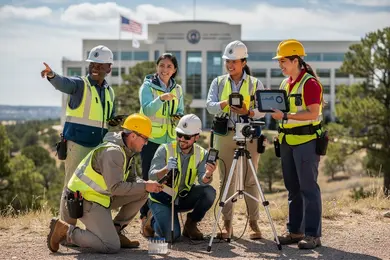
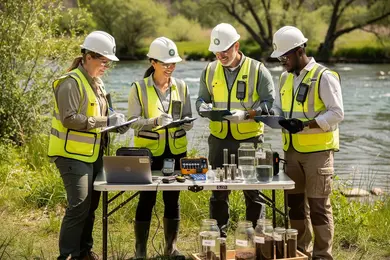
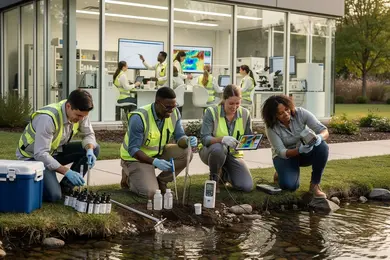
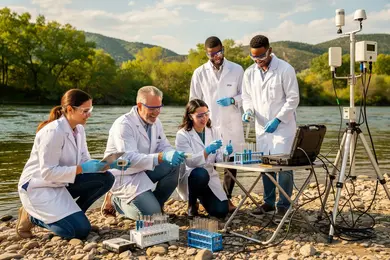
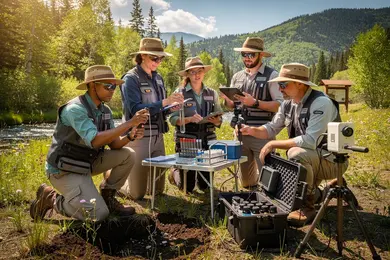
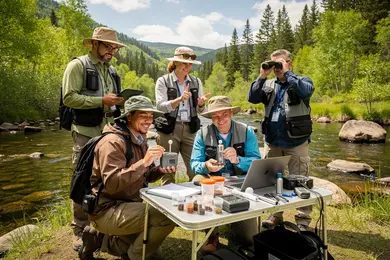
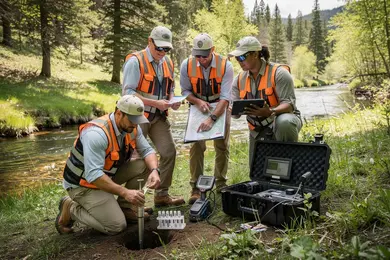
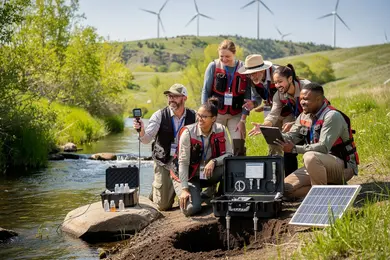
Many online environmental science degrees require 1 to 3 short in-person labs, a field practicum, or a capstone project with local sampling. Programs commonly expect hands-on use of water-quality meters, soil tests, or air-monitoring equipment, and some require a state-approved practicum supervisor.
References
- Environmental Science Courses & Degrees https://www.open.edu.au/study-online/science/environmental-science
- EM - Environmental Monitoring Online Certificate https://www.unbc.ca/continuing-studies/courses/em-environmental-monitoring-online-certificate
- Online Environmental Science Degrees: Compare Schools https://www.degreesforgood.org/online-degrees/environmental-science/
- Environmental Monitoring Certificate https://www.yukonu.ca/programs/environmental-monitoring
- New Certifications https://www.nrep.org/certifications
- High School Classes Required for College Admission - National Association for College Admission Counseling (NACAC) https://www.nacacnet.org/high-school-classes-required-for-college-admission/
- Choosing a bachelor's in environmental science | edX https://www.edx.org/resources/how-to-choose-a-bachelors-in-environmental-science
- Certification Guide for Young Professionals - Board for Global EHS Credentialing https://gobgc.org/professional-environmental-certifications-professionals/
- Environmental Monitoring Officer - Green Careers Hub https://www.greencareershub.com/find-your-green-role/job-profiles/environmental-monitoring-officer/
- Entry level environmental jobs in the UK https://environmentjob.co.uk/jobs/q-entry-level-environmental-jobs