2027 Best Online Environmental Science Degrees for Energy and Resilience Careers

Co-Founder and Chief Data Scientist
Energy sector professionals and policy analysts increasingly face the challenge of integrating resilience planning with environmental science expertise as climate volatility disrupts infrastructure and resource management. Navigating this complexity demands flexible educational pathways that balance workforce demands with ongoing professional and personal commitments.
A 2024 National Center for Education Statistics report highlights a 12% rise in online enrollments among adult learners pursuing STEM fields, reflecting a shift toward accessible, career-compatible learning models essential for mid-career transitions. This trend signals a broader recognition that timely, adaptable education frameworks directly influence employability in energy and resilience sectors.
This article evaluates the top online environmental science degrees designed to meet those practical needs and career objectives.
Key Things You Should Know
- Data from the U.S. Bureau of Labor Statistics shows energy and resilience roles in environmental science grew 12% between 2022-2024, pressuring programs to emphasize applied climate risk modeling, which limits students without strong quantitative skills.
- Employers prioritize candidates with interdisciplinary project experience integrating GIS and policy analytics; programs lacking these components report below-average graduate placement rates in energy resilience sectors according to the 2024 National Environmental Workforce Survey.
- Online environmental science degrees cost 25-40% less than on-campus alternatives but require 6-9 months longer to complete on average, impacting mid-career professionals balancing time-sensitive transitions into resilience-focused careers.
What are the best online environmental science degrees for energy and resilience careers?
Choosing online environmental science degrees for energy sector careers requires evaluating how programs integrate technical energy systems knowledge with regulatory and environmental resilience factors. Candidates preparing for roles in utility grid modernization, for instance, must navigate both engineering complexities and compliance protocols, which specialized curricula address by offering applied project experience and case studies.
Those seeking the best environmental science programs for resilience and sustainability should assess course emphasis on GIS modeling, policy analysis, and asynchronous learning formats that accommodate working professionals without compromising rigor. These elements are central to meeting employer expectations for interdisciplinary skill sets that span renewable energy, climate adaptation, and sustainable resource management.
Trade-offs between broad environmental science degrees with optional energy electives and narrowly focused renewable energy analytics programs affect long-term career flexibility. Broad degrees support mobility across sectors but may dilute technical depth, while specialized programs target precise roles but limit adaptability amid evolving market demands. Alignment with geographic energy hubs and certification pathways further influences employment outcomes.
Assessing degree affordability and return on investment is critical given varying program structures. Prospective students can explore options through resources like environmental engineering degrees online that highlight cost-effective and accredited online degree pathways.
How do online and campus environmental science programs compare?
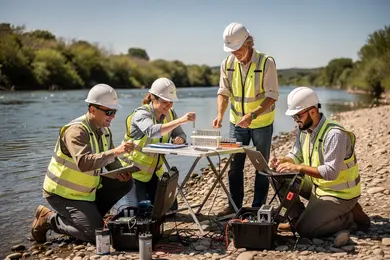
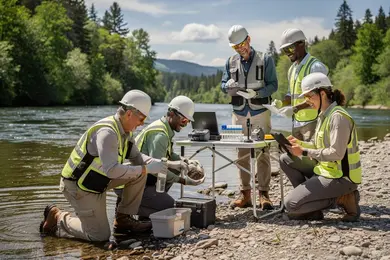
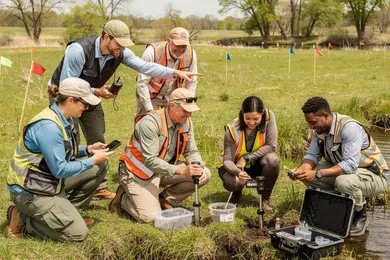
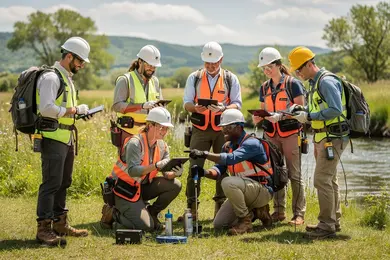
When comparing online versus traditional environmental science programs, the key distinction lies in direct practical exposure. Campus degrees embed hands-on lab work and field assignments essential for roles demanding environmental sampling or equipment handling. Online degrees often replace this with virtual labs or local internships, which can limit skill acquisition needed for sectors like renewable energy assessments or climate resilience infrastructure.
For students targeting positions in government or consulting firms that manage climate risk, programs with substantial fieldwork components carry more weight, as employers prioritize proven practical competencies alongside academic records.
Meanwhile, working professionals benefit from the scheduling flexibility of online study, despite reduced access to faculty mentorship and alumni networks critical for advancing in environmental management systems (EMS) roles. This tradeoff must be weighed carefully in career planning.
The U.S. Bureau of Labor Statistics forecasts an 8% growth rate for environmental scientists and specialists from 2022 to 2032, with roughly 6,600 job openings annually driven by climate policy enforcement and resilience strategy demand. Consequently, students must actively supplement online coursework with recognized internships or certifications to stay competitive in the evolving job market.
Decision factors include:
- Alignment of program practical training with targeted job requirements in energy or climate resilience.
- Access to local or virtual laboratories and internships when pursuing an online animal science degree or environmental science equivalent.
- The strength and reach of alumni networks for job placement support.
Ultimately, online and campus environmental science degree differences hinge on how each pathway equips students with tangible field skills and industry connections, a crucial consideration for their long-term workforce positioning.
Is the program properly accredited?
Accreditation directly shapes employability in energy and resilience roles by filtering out degrees that lack recognized academic rigor. Employers in these sectors often require credentials from regionally accredited environmental science degrees for resilience jobs, prioritizing applicants from programs vetted by bodies like the Higher Learning Commission or WASC. Specialized accreditations, such as those from ABET or EHAC, provide additional assurance for positions demanding technical expertise or licensure compliance.
For instance, state environmental agencies typically mandate graduation from accredited programs when hiring specialists for regulatory enforcement, effectively excluding candidates from unaccredited online options. This gatekeeping reduces the return on educational investment and limits access to federal financial aid linked to accreditation status.
Prospective students evaluating accredited online environmental science programs for energy careers must therefore:
- Confirm the accrediting agency's recognition by CHEA or the U.S. Department of Education.
- Assess the value of industry-specific accreditations that enhance applicable skills amid evolving clean energy demands.
- Understand how accreditation governs eligibility for federal loans and grants, preventing financing challenges that complicate career transitions.
Salary data from the U.S. Bureau of Labor Statistics reflects this divide: median environmental scientist wages reached $78,980, but the top 10% earned above $135,840, often linked to accredited credentials. Without this foundation, upward mobility is constrained, especially for working professionals shifting into specialized niches.
Those uncertain about fully online programs may refer to nutrition school online resources for comparative insights on accreditation's tangible effects.
What courses are in an energy and resilience curriculum?
Energy and resilience degree courses integrate technical expertise with applied environmental strategies, reflecting the complexity of modern energy challenges. Students must master interdisciplinary content, including renewable energy systems, climate science, environmental policy, and risk assessment, to navigate the operational realities of energy infrastructure.
Practical training in resilience engineering and energy resource management prepares graduates to evaluate vulnerabilities in energy grids and design adaptive solutions for scenarios like extreme weather disruption.
The online environmental science curriculum for energy careers also emphasizes data analysis, geographic information systems (GIS), and environmental modeling to enable informed forecasting and resilience mapping. For example, professionals in municipal utilities need a combined understanding of grid decentralization and the economic impacts on infrastructure projects, which is often addressed through specialized modules covering energy economics and systems optimization.
Managing energy supply chain risks in disaster situations further sharpens project management skills specific to environmental emergencies and recovery. Compliance knowledge through environmental law and ethics training equips graduates to handle stakeholder negotiations crucial for resilience initiatives.
The significant cost differential, tuition as low as $8,000-$9,000 at some public institutions versus $48,000-$55,000 nationally, must be weighed against curriculum depth and applied skills that employers demand.
Prospective students, especially veterans, seeking practical pathways should consider options like the best military friendly online electrical engineering degrees that also reflect these workforce realities.
What admissions requirements do online programs usually set?
Admission criteria for online environmental science degree programs often balance academic benchmarks with practical workforce needs, complicating entry for some candidates. Bachelor's level entry typically requires a high school diploma, while master's programs expect a relevant bachelor's degree with around a 3.0 GPA. Standardized tests like the SAT or GRE are increasingly optional but may influence competitiveness in selective programs.
Working professionals pursuing such degrees may substitute formal prerequisites with documented experience in environmental or related fields, responding to employer preferences for applied skills over purely academic credentials. Transcripts must evidence foundational competence in science and math, underscoring quantitative and analytical abilities valued by hiring managers.
Applicants targeting energy or climate resilience roles confront additional hurdles. Prerequisites in ecology, chemistry, or policy may necessitate extra coursework, delaying full program access. This reflects real-world skill transfer challenges across intertwined but distinct sectors.
Admissions teams sometimes use interviews or preliminary assignments to verify candidates' readiness for rigorous online learning, a practical gauge of self-direction amid workforce demands for adaptability.
The timing of application windows and prerequisite verifications can exceed two months, affecting professionals' employment continuity or funding eligibility during transitions. With over 280 online programs worldwide, aligning program specialization with targeted career pivots and accreditation is essential for minimizing friction and enhancing long-term employability.
How long does an online environmental science degree take?
Time-to-completion in online environmental science degrees reflects a balance between accelerated workforce entry and acquiring practical experience valued by employers. While associate degrees typically conclude in about two years and traditional bachelor's degrees take four years full-time, accelerated bachelor's tracks can shorten this to around three years by increasing course loads or continuous enrollment.
Part-time students, often juggling employment or career changes, may stretch completion to five years or more, which can delay entry into rapidly expanding fields like climate resilience, where demand grew over 90% between 2018 and 2023 per LinkedIn's Global Green Skills report.
Programs requiring sequential internships or capstone projects further constrain the ability to expedite graduation, but these experiences enhance employability, especially in energy and resilience sectors prioritizing hands-on skill sets.
Working professionals pursuing swift pivots can leverage intensive or competency-based formats, though maintaining 20+ weekly study hours poses challenges without external support.
Prospective students must weigh:
- Faster degree routes offering quicker access to policy and entry-level roles
- Longer programs providing robust practicum opportunities essential for specialized resilience planning jobs
These tradeoffs impact not only timeline but also readiness for sector-specific demands. Aligning educational choices with realistic employment pathways is critical for optimizing outcomes in this evolving job market.
How much does an online environmental science degree cost?
Cost remains a critical factor when choosing between an online environmental science degree and traditional on-campus options. Bachelor's programs in this field typically range from $15,000 to $40,000, influenced by public versus private status and residency. Public institutions can charge under $300 per credit hour for in-state students, whereas private schools often exceed $700 per credit.
Graduate-level study usually starts near $20,000 and can surpass $50,000 due to research and specialized coursework demands. Ancillary expenses such as technology fees and textbooks can add $1,000-$2,000 annually.
Employers generally value regionally accredited online credentials when accompanied by demonstrable skills, with graduates averaging $76,480 annually in sectors expected to grow 8% through 2032. However, prospective students should assess whether the program provides adequate lab or field experience, especially for technical roles, as this is an acknowledged limitation of virtual formats.
Online learning reduces costs associated with commuting, housing, and campus fees but requires strong self-discipline and reliable internet access. Professionals pivoting careers can take advantage of flexible pacing to avoid income disruption. Practical budgeting must consider employer tuition reimbursements or scholarships focused on sustainability fields, which can meaningfully lower net program costs without lengthening completion time.
What jobs can environmental science graduates get in energy and resilience?
Energy and resilience roles within environmental science demand more than foundational knowledge. They require a blend of technical acumen and interdisciplinary fluency. Positions such as environmental data scientist, renewable energy analyst, and resilience planner highlight a shift toward integrating data analysis, policy understanding, and systems management.
For instance, environmental data scientists utilize statistical modeling and machine learning to forecast energy patterns and evaluate climate impacts on infrastructure. This occupation is anticipated to grow 33.5%, earning around $120,230 annually according to ASU's online Earth and Environmental Sciences program data from 2024.
However, candidates face significant barriers in mastering advanced GIS, coding, and policy analysis skills essential for energy resilience roles. Employers prioritize experience that combines environmental variables with infrastructure risk assessment within complex regulatory frameworks, including federal and state policies and emergency response mandates.
In public sectors like utilities or urban planning, efforts focus on tailoring resilience strategies to regional climate threats, balancing financial constraints with adaptive capacity. Private energy companies emphasize optimizing renewable energy output and lifecycle environmental impacts, necessitating expertise in sustainability standards.
To remain competitive, prospective professionals must explicitly acquire interdisciplinary tools and practical field experience. Without integrating these elements, even well-qualified environmental science graduates risk being underprepared for specialized energy and resilience positions.
What salaries do energy and resilience careers pay?
Salaries in energy and resilience roles within environmental science vary significantly, reflecting experience, specialization, and sector. Entry-level positions such as energy analysts or sustainability coordinators typically earn $60,000 to $75,000, but professionals with five-plus years and technical expertise in areas like climate risk or energy systems integration can surpass $100,000.
Federal and state positions offer reliable pay with benefits, averaging $80,000 to $95,000, while private firms, especially in renewables and infrastructure resilience, often enhance compensation with performance bonuses, factors important to weigh when considering total remuneration.
Practical career transitions often apply for those with nontraditional backgrounds. For example, a mid-career project manager pivoting to energy resilience could reach an $85,000 salary within three years by earning targeted credentials that directly address employer needs.
However, successful entry requires more than generic degrees; employers emphasize demonstrable skills in data analysis, regulatory compliance, and applied systems design over theoretical knowledge alone.
Job seekers should prioritize programs with hands-on components like internships or project work to build verifiable portfolios, which influence starting salaries and market competitiveness. According to OnlineU's 2026 report, over 70% of environmental science online learners are part-time or returning students, indicating a flexible but challenging pathway that depends heavily on integrating practical skills with prior experience.
What certifications or licenses may employers require?
Certifications in energy and resilience sectors dictate career viability more than general environmental credentials, particularly as employers demand proof of applied expertise in specialized roles.
For instance, obtaining the Certified Energy Manager (CEM) or Leadership in Energy and Environmental Design (LEED) accreditation directly addresses employer needs in managing energy efficiency and sustainable construction, while resilience roles lean heavily on credentials like Certified Hazardous Materials Manager (CHMM) or Associate Safety Professional (ASP) to demonstrate regulatory and risk mitigation capabilities.
The increasing integration of ESG factors in hiring criteria adds a layer of complexity, requiring certifications such as the Sustainability Accounting Standards Board (SASB) Fundamentals of Sustainability Accounting. This is a direct response to measurable labor market shifts: from 2021 to 2023, demand for ESG-competent candidates grew by 30%, indicating that candidates without ESG credentials may face significant barriers in sustainability-focused financial or corporate risk roles.
Practical navigation of these credential pathways demands alignment with specific career objectives. For example, professionals pivoting to climate risk analysis in finance should prioritize ESG licenses over broader environmental permits, whereas federal compliance roles may require specialized certifications like EPA lead risk assessor licenses, which carry legal mandates in multiple jurisdictions.
These certifications have rigid prerequisites, including education, professional experience, and exam performance, with ongoing continuing education requirements ensuring currency. Failure to maintain credentials can limit employability in dynamic sustainability and resilience sectors.
Other Things You Should Know About Environmental Science Degrees
Practical experience remains critical, even in fully online programs. Many degrees require or recommend internships, fieldwork, or lab components completed locally, which can be challenging to arrange independently. Evaluate programs based on their support for securing relevant field placements or partnerships with employers, as hands-on skills are indispensable for energy and resilience roles and highly valued by employers.
Most online environmental science degrees emphasize technical knowledge over leadership training. If advancing into management or policy roles is a priority, seek programs that include courses on project management, communication, and strategic decision-making. Otherwise, graduates may need additional credentials or experience to meet employer expectations for supervisory positions.
Yes. Many online environmental science programs require a capstone in the final term, usually worth 3 to 6 credit hours. It often asks students to apply energy or resilience planning skills to a real problem, and some programs require faculty approval before the project begins.
References
- What do Energy Jobs Pay? https://mackinnonandpartners.com/what-do-energy-jobs-pay/
- Sustainable Energy Policy, Planning, and Regulation Training Course https://upskilldevelopment.com/sustainable-energy-policy-planning-and-regulation-training-course
- How Do Colleges View Online School? 4 Factors to Consider | CCA https://ccaeducate.me/blog/how-do-colleges-view-online-school/
- Top Renewable Energy Jobs | AD Energy https://energy-recruitment.com/top-renewable-energy-jobs/
- FAQs About Undergraduate Admissions Requirements for Online Programs https://www.umassglobal.edu/blog-news/faqs-undergraduate-admissions-requirements-online-programs
- Exciting Renewable Energy Jobs: Bright Futures in Green Careers https://enable.green/renewable-energy-jobs/
- What are the Admission Requirements for Online MSW Programs? https://www.onlinemswprograms.com/faqs/admission-requirements/
- Online Environmental Science Degrees: Compare Schools https://www.degreesforgood.org/online-degrees/environmental-science/