2027 Environmental Science Specializations for Environmental Compliance Careers

Co-Founder and Chief Data Scientist
Compliance officers face the urgent challenge of interpreting evolving environmental regulations while managing complex site assessments under tight deadlines. According to the U. S. Bureau of Labor Statistics, employment for environmental compliance specialists is projected to grow 8% through 2032, faster than the average for all occupations, reflecting increased regulatory scrutiny and corporate responsibility.
This growth signals rising employer demand for candidates with specialized knowledge that aligns with both federal mandates and industry-specific standards. Navigating this landscape requires selecting a specialization that balances technical expertise with adaptable skills, especially given expanding online education options that cater to working professionals.
This article outlines key environmental science specializations that directly support career advancement in environmental compliance, providing actionable insight for strategic educational decisions.
Key Things You Should Know
- Specializing in environmental toxicology demands advanced chemistry proficiency, with salaries 17% higher but a 25% longer credential timeline, forcing a balance between immediate employability and niche expertise development per Bureau of Labor Statistics 2024 data.
- Compliance policy analysts must navigate evolving EPA regulations; 62% of employers prioritize candidates with updated regulatory certification, creating strong demand but limiting options for graduates from generalist programs as noted in industry hiring reports.
- Environmental data modeling offers rapid workforce entry but faces saturation; 40% of new graduates report below-market wages initially, indicating tradeoffs between fast-track access and long-term salary growth according to National Science Foundation surveys.
What environmental science specializations best prepare you for environmental compliance careers?
Environmental science specializations that target compliance roles demand a precise balance of regulatory expertise and technical skills, as employers weigh these to mitigate costly non-compliance risks. Among the best environmental science fields for regulatory careers are environmental law, toxicology, and industrial ecology, each delivering distinct value by equipping candidates to navigate specific compliance challenges such as Clean Air Act enforcement or chemical risk assessment.
For example, professionals trained in environmental law must translate complex federal and state statutes into actionable corporate policies, a critical function in heavily regulated industries.
Navigating employer expectations means prioritizing programs with practical components. Fieldwork in environmental monitoring and impact assessment is frequently emphasized by hiring managers. Competence in geographic information systems (GIS) and data analytics further distinguishes applicants by enabling efficient compliance tracking and automated reporting. Prospective students interested in these competencies can explore the best GIS programs to supplement their qualifications.
Deciding between broad environmental science degrees and tightly focused compliance tracks requires understanding tradeoffs: broader degrees may necessitate post-graduate certification or experience to meet job requirements, whereas compliance-specific curricula often incorporate case studies of enforcement actions that sharpen practical judgment. Sector-specific training also impacts employability.
Manufacturing compliance specialists, for instance, must gain expertise in emissions control and waste management, while those targeting energy sectors focus more on air quality regulations and renewable resource management.
Salary benchmarks reflect this specialization, with the U.S. average for environmental compliance specialists near $100,587, and regional variations such as North Carolina's $95,528. This aligns with industry demand for professionals whose skills directly reduce regulatory penalties and operational risks.
What degree pathways lead to environmental compliance roles in government and industry?
Environmental science degree options leading to regulatory compliance jobs demand a balance between technical proficiency and applied regulatory knowledge. Entry-level roles typically require a bachelor's in environmental science supplemented with courses in environmental law, toxicology, and risk assessment. However, as compliance roles evolve, employers increasingly seek candidates with expertise in data analytics, geospatial analysis, and regulatory impact evaluation.
UK job listings reflect this shift, with a 91% surge in demand for data-driven and geospatial skills, indicating the growing importance of degree programs that integrate environmental data science and geospatial analysis. For example, professionals targeting compliance in sectors such as energy or water resources benefit from GIS, remote sensing, and environmental statistics training—skills that enhance operational decision-making and regulatory reporting.
Government and industry employers prioritize graduates from programs aligned with standards like the EPA and ISO 14001, often emphasizing practical experience in compliance monitoring and reporting. Regulatory inspectors need strong site-audit capabilities rooted in applied regulatory interpretation, while policy analysts gain from interdisciplinary approaches blending environmental economics with law.
Those considering a pivot to environmental compliance careers in government and industry should carefully assess program focus on applied versus theoretical content. Additionally, advanced candidates may find value in expanding their skill set with an MS data science online to meet market demands for integrated environmental and data expertise.
How do environmental science programs differ from environmental engineering or policy for compliance work?
Choosing between environmental science program differences for compliance careers hinges on target job functions and employer expectations. Environmental science graduates typically concentrate on collecting and interpreting ecological data to identify compliance risks and assess environmental health.
This contrasts with environmental engineering, which prioritizes technical design and system implementation for pollution control and remediation to meet regulatory standards. In compliance roles, engineers develop practical infrastructure such as emission control or water filtration systems, while environmental science professionals provide analytical oversight.
The comparative roles of environmental engineering and policy in compliance further delineate pathways. Environmental policy specialists focus on legal frameworks, permit negotiation, and strategic regulatory management rather than technical or scientific tasks. This makes policy training more appropriate for roles within government or advocacy agencies requiring adeptness in regulatory navigation and stakeholder engagement.
Employers discerning optimal hires for compliance prioritize qualifications aligning with operational needs:
- Environmental science backgrounds suit field scientists and technicians responsible for accurate data collection and impact assessments
- Environmental engineers are sought for designing and maintaining pollution control infrastructure
- Regulatory entities and corporations increasingly value environmental economists for sustainability analytics, supported by median salaries of $106,115 and 7.23% job growth according to College Board.
Successful entry into this fragmented compliance landscape depends on a clear understanding of role-specific demands and personal strengths. Those weighing an accelerated bachelor's degree computer science online alongside environmental studies may find complementary benefits in analytic capabilities for emerging compliance technologies and data management.
What core courses and skills are taught in environmental science compliance-focused concentrations?
Core courses in environmental science compliance degrees emphasize mastering regulatory frameworks like the Clean Air Act and Resource Conservation and Recovery Act, which directly affect industries such as manufacturing and energy. The practical challenge lies in applying these laws within dynamic operational environments, such as performing waste management facility audits, where compliance dictates both legal standing and public trust.
This educational pathway requires acquiring essential skills for environmental compliance careers, including data analysis through statistical software and risk management strategies tailored to specific sector challenges, for instance, remediation planning in construction sites.
Beyond legislation, proficiency in climate risk and adaptation modeling responds to employer demand rooted in increasing climate-related regulatory scrutiny. The U.S. Bureau of Labor Statistics projects a 4% employment growth for environmental scientists through 2034 with approximately 8,500 annual openings, reflecting growing workforce needs for these specialized competencies.
Students should weigh curricula offering hands-on internships or cooperative education, as these bridge theoretical knowledge with agency or consulting firm expectations, smoothing the transition to compliance monitoring roles.
Communication and project management capabilities are critical for navigating the often competing priorities of regulatory agencies and corporate timelines. Graduates must coordinate detailed documentation without hampering operational efficiency, demanding solid organizational skills paired with environmental science compliance degree core courses.
For professionals seeking alternatives or complementary credentials, considering a MLIS degree could support advanced information management within compliance contexts.
How do online environmental science programs compare to campus-based options for compliance training?
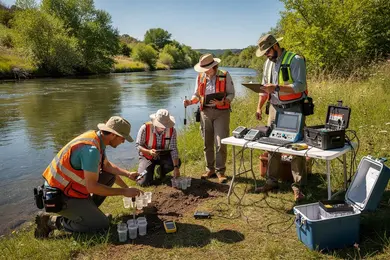
Hands-on experience remains critical for environmental compliance roles, a requirement more reliably met by campus-based environmental science programs through labs, fieldwork, and access to specialized equipment. For example, professionals shifting into compliance benefit significantly from in-person mentorship and direct exposure to site assessments and sampling techniques, which online programs rarely replicate effectively.
While online programs excel at delivering theoretical knowledge, especially in high-growth specializations like life-cycle assessment, ESG data reporting, environmental data science, and climate adaptation, they often lack immersive, practical training with compliance software and environmental management systems that employers expect.
Networking opportunities and internships facilitated by campus programs have measurable impacts on employment, increasing likelihood by approximately 35%. Online students face the added challenge of securing virtual or local field internships, which vary widely in availability and quality depending on region.
This tradeoff underscores a critical decision point: online programs offer flexibility for working professionals but often at the cost of reduced experiential learning necessary for hands-on regulatory roles, mainly in manufacturing and utilities sectors.
Those pursuing policy analysis or data-driven ESG reporting might find online pathways better aligned with job requirements emphasizing remote collaboration and data proficiency. Ultimately, evaluating whether to prioritize immersive experiential training or flexible scheduling should guide choices in environmental science education based on targeted career outcomes and employer expectations.
What accreditation and programmatic approvals should environmental compliance-focused degrees have?
Accreditation fundamentally shapes employability and certification eligibility in environmental compliance careers. Degrees lacking ABET or Council on Education for Public Health (CEPH) accreditation often miss critical subject matter like environmental law, risk assessment, and policy implementation, which are non-negotiable in government, consulting, and manufacturing compliance roles.
Programs with partnerships involving state environmental agencies and regional EPA offices provide hands-on regulatory experience under frameworks such as the Clean Air Act or Resource Conservation and Recovery Act. Without this exposure, graduates face significant challenges adapting to complex regulatory environments, delaying effective workforce integration.
Certification opportunities, including Certified Hazardous Materials Manager (CHMM) and Registered Environmental Health Specialist (REHS), are frequently restricted to those with accredited educational backgrounds. For positions like health risk assessment, where the median wage reaches $80,060 annually, accreditation aligns academic preparation with toxicology, epidemiology, and risk communication skills demanded by employers.
In practical terms, selecting a well-recognized, accredited environmental science degree minimizes redundant retraining and ensures direct qualification for compliance roles essential to regulatory industries. Candidates ignoring program quality risk longer onboarding, limited certification, and diminished career mobility in a field where regulatory precision and practical legal knowledge are paramount.
What admission requirements, program length, and typical costs apply to these specializations?
Specializations in natural resources policy and environmental law compliance require more than foundational knowledge. Employers expect candidates to possess accredited credentials combined with practical legal understanding.
For professionals seeking to move from environmental analysis to compliance roles, especially in regulated sectors like oil and gas, completing substantial coursework in legal frameworks is indispensable to navigate complex federal and state regulations effectively and reduce risks of costly violations.
Admission standards typically mandate at least a bachelor's degree in environmental science or related fields like biology and chemistry, with many programs requiring prerequisite coursework in areas such as statistics, ecology, or legal studies. Part-time and online programs aiming at working professionals often add a requirement for 1 to 3 years of relevant work experience, reflecting employer preferences for proven practical skills alongside academic preparation.
Program duration varies. Bachelor's degrees generally span 4 years full-time, while master's specializations take approximately 1.5 to 2 years. Graduate certificates and professional development courses offer accelerated 6 to 12-month pathways focused on regulatory compliance, providing flexible options without the full time and financial commitment of advanced degrees.
Cost considerations are substantial and vary by institution type. Public universities average $10,000 to $25,000 annually for in-state students, with private or out-of-state options often doubling these figures. Shorter certificate programs typically range from $3,000 to $8,000 total, although access to employer tuition assistance or scholarships can mitigate expenses.
What entry-level and advanced job titles can environmental science graduates hold in compliance?
Environmental science graduates typically begin their compliance careers in roles focused on data collection, permit documentation, and regulatory monitoring under supervision. Common entry-level jobs include Environmental Compliance Technician and Regulatory Affairs Assistant, often situated in manufacturing, energy production, or government agencies supporting compliance audits and reporting.
Progression beyond these roles requires a shift toward independent regulatory analysis and strategic compliance development. Positions like Environmental Compliance Analyst and Sustainability Coordinator demand deeper regulatory knowledge and direct interaction with oversight bodies. Senior roles, such as Environmental Compliance Manager, incline toward program leadership and ensuring organizational adherence to evolving environmental laws.
In practice, sectors like renewable energy illustrate the concrete labor market premium for specialized compliance expertise. For example, a compliance analyst responsible for carbon accounting in distributed solar projects confronts technical and regulatory complexity, which correlates with starting salaries 12% above the UK national average, as reported by The HR Director. This wage differential signals employer expectations for proficiency in both technical and regulatory competency.
The path requires mastering regulatory databases, environmental impact assessments, and specialized reporting software. Without these technical skills, even degrees with relevant content may not accelerate advancement. Targeted internships and certifications aligned with environmental compliance frameworks become critical investments for overcoming early-career bottlenecks and securing positions with greater responsibility.
What are typical salary ranges and benefits for environmental compliance professionals in the U.S.?
Salary ranges for environmental compliance professionals in the U.S. reveal a significant dependency on sector, experience, and location, affecting long-term financial viability.
Entry-level positions in government or small consultancies typically start around $55,000, whereas specialists in manufacturing or energy sectors often earn $95,000 or more. Senior roles in multinational corporations commonly exceed $105,000 annually, reflecting the premium placed on technical expertise and risk management capacity.
Geographic factors and living costs heavily influence compensation offers. Urban centers or regions with stringent environmental regulations can provide higher pay but also entail greater expenses, which can erode net earnings. Expanding niches like sustainable urban planning and green infrastructure, evidenced by a 91% increase in related UK job postings reported by Bower Collective, suggest upward salary pressure and growing U.S. demand in these subfields.
The decision to acquire advanced certifications such as Certified Hazardous Materials Manager should factor in upfront costs and continuing education against the potential $10,000-$15,000 salary increment. Employers expect demonstrated regulatory knowledge paired with practical implementation skills, often correlating pay directly to measurable compliance outcomes and effective risk mitigation.
Are licenses or professional certifications required or recommended for environmental compliance careers?
Licenses and certifications are often decisive filters in environmental compliance careers, especially for positions involving regulatory oversight or technical expertise. For instance, a Certified Environmental Professional (CEP) typically holds a distinct advantage in waste management roles, where navigating evolving federal and state laws demands verified expertise beyond academic credentials.
Without such credentials, professionals risk limited job prospects and restricted advancement, particularly within regulatory agencies or firms responsible for permitting and environmental impact assessments.
State requirements diverge widely; soil remediation and air quality positions often mandate Professional Engineer (PE) licenses or comparable certifications tied to technical duties. Neglecting to acquire necessary credentials can delay project approvals and exclude candidates from specialized roles.
Given a projected 4% job growth in circular economy and waste management professions through 2034, coupled with a median wage of $80,060 as reported by the U.S. Bureau of Labor Statistics, securing certifications presents a tangible means to increase employability and income. However, pursuing credentials requires strategic consideration of associated costs, renewal cycles, and regional industry demand to avoid misaligned investments.
Other Things You Should Know About Environmental Science Degrees
A bachelor's degree in environmental science often qualifies candidates for entry-level compliance roles, but it does not guarantee access to more technical or supervisory positions. Many employers prefer or require a master's degree for roles involving regulatory strategy or complex environmental assessments. Prioritizing graduate education depends on your target job scope; if you aim for management or consulting roles, an advanced degree is a practical investment rather than optional.
The most common credentials are the NEBOSH Environmental Certificate, the HAZWOPER 40-hour training under OSHA rules, and ISO 14001 internal auditor training. Many employers also value state wastewater or air-permit certifications, because compliance roles often involve permit monitoring, inspections, and reporting to regulators.
Specialization offers immediate advantages for securing positions in niche regulatory areas, but a broad knowledge base increases adaptability to shifting regulations and industries. Employers value specialists for junior roles but favor professionals with interdisciplinary skills for senior leadership and policy development. For long-term growth, students should balance specialization with coursework or experiences covering ecological, chemical, and policy perspectives.
References
- Master's Honors in Health, Safety & Environmental Management - Ken Institute https://keninstitute.com/courses/masters-honors-in-health-safety-and-environmental-management/
- Become an Environmental Professional (EP) | ECO Canada https://eco.ca/designations/environmental-professional/
- Environmental Certifications for entry-level and career changers https://www.theenvironmentalcareercoach.com/certification-links
- Accreditation | Green Climate Fund https://www.greenclimate.fund/access-funding/accreditation
- Four Key Certifications to Enhance Your Environmental Remediation Career - The Planet Group https://www.theplanetgroup.com/blog/enhancing-your-career-in-environmental-remediation-four-key-certifications
- Environmental Compliance Salary (Actual 2026 | Projected 2027) https://www.velvetjobs.com/salaries/environmental-compliance-salary
- Breakthrough Environmental Jobs | UK, US & Middle East https://enable.green/environmental-jobs/
- Environmental Certification - Encamp https://encamp.com/glossary/environmental-certification/
- Certification Guide for Young Professionals - Board for Global EHS Credentialing https://gobgc.org/professional-environmental-certifications-professionals/