2027 Best Udacity AI Courses for Non-Technical Professionals

Co-Founder and Chief Data Scientist
Many non-technical professionals encounter barriers when attempting to enter the rapidly evolving field of artificial intelligence. Lacking a formal background in computer science can make it difficult to understand core concepts or access relevant training that fits into a busy schedule. The challenge lies in finding programs that provide foundational knowledge without requiring advanced technical skills or a full-time commitment.
This article examines Udacity's AI course offerings designed specifically for learners with non-technical degrees. It highlights options that combine accessibility, practical skills, and flexibility to support career transitions into artificial intelligence roles.
Key Things You Should Know
- Udacity's 2026 AI courses for non-technical professionals focus on practical skills, including AI literacy, data ethics, and using AI tools to enhance business decision-making.
- Courses often require no prior coding experience, making them accessible; 62% of enrollees in 2024 reported career advancement within six months after completion.
- Updated curricula reflect 2025 AI trends like explainable AI and responsible data use, addressing growing industry demand for ethically informed AI practitioners.
Advance Your Career with AI Online Courses
Artificial Intelligence: Implications for Business Strategy
This program provides an introduction to Artificial Intelligence and their implications for business strategy. Earn an official digital certificate.

Oxford Artificial Intelligence Programme
Explore this Oxford Artificial Intelligence programme offered in a flexible learning environment and explore topics like machine learning, automation, and robotics.

Implementing Agentic AI: Building Your Organizational Playbook
This online MIT Agentic AI course offers a practical approach to deploying AI agents in your organization, including a custom playbook. 3 weeks, exclusive launch price.

AI Adoption: Driving Business Value and Impact
This online MIT AI Adoption: Driving Business Value and Impact offers practical frameworks to close the gap between AI potential and business reality.

Artificial Intelligence in Pharma and Biotech
Discover the applications and limitations of artificial intelligence in pharma and biotech with this MIT online short course.

What are Udacity's top AI courses for non-technical professionals and who are they best for?
Udacity's top AI courses for non-technical professionals are designed to deliver practical skills bridging AI theory and business application. The AI Product Manager Nanodegree targets product managers, marketers, and business analysts who need to understand AI workflows without coding, covering AI strategy, ML model lifecycle, and ethical considerations. Another significant offering is the AI for Business Leaders Nanodegree, focused on executives and decision-makers who drive AI adoption through integration, value assessment, and change management.
These courses suit roles such as project management, sales, marketing, and operations-areas experiencing AI-driven transformations but often lacking technical expertise. According to IBM's Global AI Adoption Index 2024, 40% of global workers, roughly 1.4 billion people, will require reskilling due to AI and automation, underscoring the importance of these Nanodegrees.
For those beginning with artificial intelligence in business, Udacity offers foundational courses like Intro to Artificial Intelligence and Data Literacy for Business. These provide essential AI concepts and skills for interpreting AI insights to support strategic business decisions and improve communication with technical teams.
Individuals interested in expanding their credentials might also explore a 2 year bachelor degree computer science, which can enhance technical understanding alongside AI knowledge.
Udacity's offerings make it possible for business beginners to gain actionable AI expertise without deep programming skills, helping them stay competitive as industries evolve.
Advance Your Career with AI Online Courses
Artificial Intelligence: Implications for Business Strategy
This program provides an introduction to Artificial Intelligence and their implications for business strategy. Earn an official digital certificate.
Oxford Artificial Intelligence Programme
Explore this Oxford Artificial Intelligence programme offered in a flexible learning environment and explore topics like machine learning, automation, and robotics.
Implementing Agentic AI: Building Your Organizational Playbook
This online MIT Agentic AI course offers a practical approach to deploying AI agents in your organization, including a custom playbook. 3 weeks, exclusive launch price.
How do Udacity AI courses for non-technical learners compare with traditional college programs?
Udacity AI courses for non-technical learners offer a focused alternative to traditional college programs by prioritizing practical skills that align closely with workforce demands. Unlike conventional degrees, which often cover extensive theory and general education, Udacity's Nanodegree programs emphasize job-ready competencies such as machine learning basics, data handling, and AI application development. This approach typically leads to shorter programs and faster career transitions.
Traditional college programs provide extensive theoretical foundations and broad academic exposure, valuable for roles involving research or developing new AI algorithms. However, these programs usually require several years and significant financial investment, which can delay entry into the job market. The comparison of Udacity AI training and traditional college education for non-technical students highlights these trade-offs clearly.
Udacity's model features project-based learning and mentorship, which suits professionals from non-technical backgrounds aiming to pivot into AI roles. For example, a marketing manager could complete a Nanodegree specializing in AI for business analytics, gaining applied skills not always covered in traditional programs.
According to data from the Udacity 2024 Learner Outcomes Report, 70% of Nanodegree graduates actively seeking employment secured positive career outcomes within 12 months, demonstrating strong alignment with job market needs.
Prospective students should evaluate their career objectives, schedule, and learning preferences. Udacity's flexible, outcome-driven education is ideal for rapid skill acquisition, whereas traditional degrees provide depth and valuable credentials for advanced or research-intensive roles. For those exploring affordable options to further their AI expertise, seeing the best online master's in artificial intelligence can also be helpful.
What AI skills can non-technical professionals realistically gain from Udacity nanodegrees?
Udacity nanodegrees provide practical AI skills for non-technical learners, focusing on foundational knowledge like AI terminology, data literacy, and ethical implications. These programs prepare professionals to collaborate effectively with technical teams without requiring coding expertise, emphasizing skills such as understanding machine learning concepts and data analysis.
The courses are designed with hands-on learning using no-code or low-code AI tools, enabling learners to build predictive models, experiment with data sets, and apply AI-driven solutions in fields like marketing and finance. This approach helps professionals automate workflows and assess AI project feasibility from a managerial perspective, critical skills non-technical professionals can learn from Udacity AI nanodegrees.
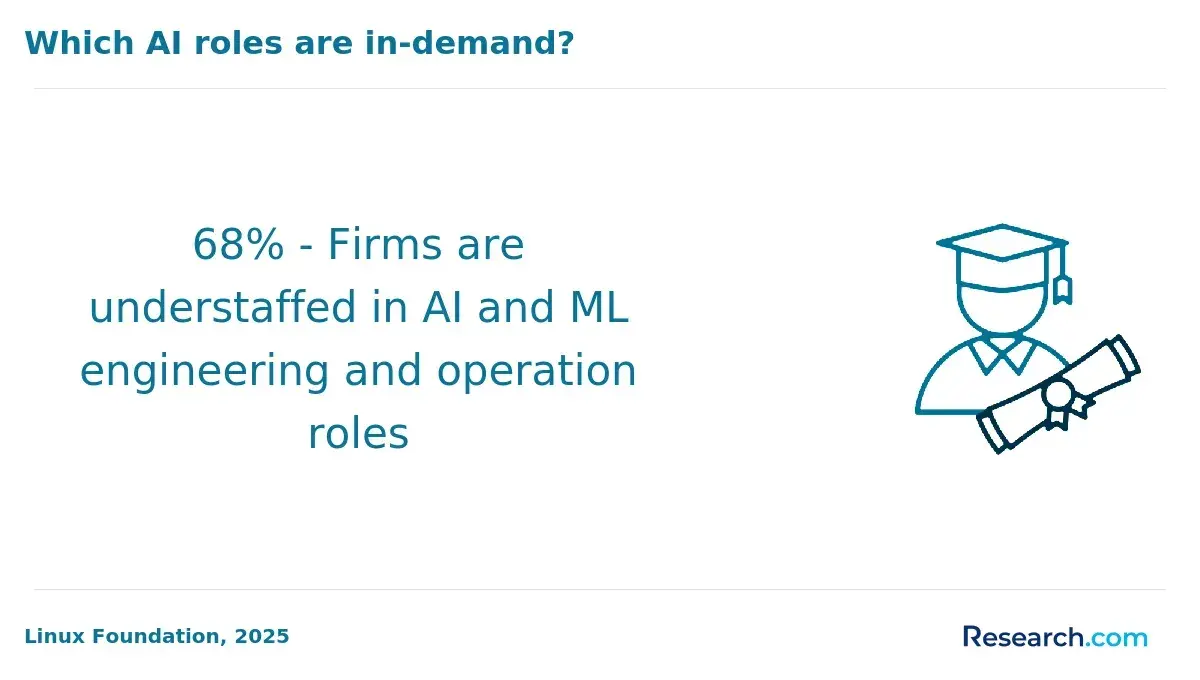
Udacity's AI Foundations nanodegree is especially suited for absolute non-coders, bridging the gap between emerging AI technologies and business strategy. According to the World Economic Forum's 2025 Future of Jobs Update, 94% of business leaders expect employees to gain new skills, but only 26% offer structured AI training for non-technical staff, highlighting the value of accessible external programs.
Completing these nanodegrees enables professionals to:
- Interpret AI-driven insights for smarter decision-making.
- Communicate clearly with data scientists and engineers.
- Identify and pursue AI project opportunities in their industries.
Such competencies enhance adaptability in AI-transformed workplaces. Those interested in related fields might consider an online game development degree as another avenue for technology-focused careers.
Do Udacity AI programs offer any accreditation, certificates, or industry-recognized credentials?
Udacity AI course certificates for professionals provide verifiable digital proof of skill development but do not equate to formal accreditation or industry-recognized credentials on par with university degrees or professional certifications. These certificates highlight practical knowledge and project experience acquired through Nanodegree programs. For example, the Nanodegree for AI Product Managers demonstrates expertise in applying AI to business strategy and product development.
Such certificates can bolster professional portfolios or LinkedIn profiles, signaling commitment to continuous learning and the ability to implement AI concepts in real-world contexts. However, they should not be mistaken for traditional accreditation, especially in regulated industries where formal credentials are required.
Programs cater to various focuses-from technical AI engineering to AI product strategy-supporting diverse career goals. Given that businesses integrating AI into products and decisions report significantly higher revenue gains, demonstrating AI literacy through a Nanodegree can enhance career prospects, particularly in product and business roles.
Some learners prioritize these certificates as tangible evidence of job-ready skills when transitioning from non-technical backgrounds, while others combine Nanodegree certification with recognized credentials from industry bodies. Those seeking advanced academic recognition might explore options like a data science PhD online.
Ultimately, while Udacity AI credentials help establish foundational expertise, they are best supplemented with ongoing education or experience for full professional recognition and industry relevance.
What are the typical admission requirements and recommended background for Udacity AI courses?
Udacity AI courses typically expect applicants to have a foundational knowledge of programming and math, with many beginner-friendly options available. Most programs recommend familiarity with Python, linear algebra, and statistics. For instance, the AI Programming with Python Nanodegree requires students to understand Python syntax, functions, and classes before enrolling. More advanced courses like the Machine Learning Engineer Nanodegree also expect proficiency in calculus and probability.
Non-technical professionals, such as those in marketing or management, should consider starting with Udacity's prerequisite modules or free self-study resources to build essential data manipulation and basic programming skills. Marketing and growth professionals should note that AI is increasingly integrated into their fields. According to Salesforce's 2024 State of Marketing report, 68% of high-performing marketing teams use AI for campaign targeting and personalization and are 3.1 times more likely to exceed revenue goals than lower-performing teams. This highlights the value of AI skills focused on customer insights and automation rather than deep technical theory.
Udacity's open enrollment means no formal admission tests are required. The key challenge lies in dedicating time to master necessary background topics before advancing to complex projects. Prospective students should honestly assess their skills and select preparatory courses accordingly to ensure smooth progress in their AI education.
How are Udacity AI courses structured, and what projects or coursework do students complete?
Udacity's AI courses adopt a modular design featuring video lectures, quizzes, and practical projects that cater especially to non-technical professionals. The curriculum is organized into thematic units emphasizing real-world applications rather than deep theory, enabling learners from varied backgrounds to develop relevant skills efficiently.
Hands-on assignments are central, including tasks such as:
- Data cleaning and preparation with user-friendly tools
- Building and interpreting predictive models without coding
- Designing AI-powered dashboards and automation workflows
- Case studies simulating AI-driven decision making in project management
This approach aligns well with industry demands. According to Deloitte's 2024 Intelligent Automation survey, companies expanding AI in operations report a 31% reduction in process cycle times and 24% cost savings. Udacity's courses incorporate projects like automating workflows and analyzing efficiency gains that mirror these needs, preparing students to deliver measurable business impact.
Regular feedback, peer forums, and mentorship support learners in applying AI concepts confidently. This design is particularly effective for professionals transitioning into AI roles who seek actionable skills rather than abstract knowledge, helping them quickly contribute to operational improvements and cost reductions.
How long do Udacity AI nanodegrees take, and what are the total program costs?
Udacity's AI nanodegrees typically take between three and six months to complete when studying 10 to 15 hours per week. Duration varies based on the specific program and prior experience. For instance, the AI Programming with Python Nanodegree is designed for beginners and usually takes about four months, while programs like the Machine Learning Engineer Nanodegree may require up to six months. This flexible pacing suits working professionals and non-technical learners balancing busy schedules.
The cost depends on the nanodegree and enrollment choices. Udacity generally charges around $399 monthly, but some programs offer discounts or fixed-price bundles that can reduce costs. Overall, students should expect to pay between $1,200 and $2,400 for a full nanodegree, with the total depending on how quickly the course is completed.
This model benefits many, including designers, UX specialists, and no-code developers looking to incorporate AI skills. According to Webflow's 2024 No-Code Economy Report, over 65% of new app development will be driven by no-code or low-code tools by 2026. Demand for professionals integrating ai-powered solutions grows at more than twice the rate of traditional developer roles, making Udacity's flexible timelines and pricing a good fit for those shifting into ai-enhanced design and product development positions.
What AI-related career paths can non-technical professionals pursue after Udacity training?
Non-technical professionals completing Udacity's artificial intelligence training can access several promising career paths that leverage AI without requiring deep coding skills. Roles such as AI business analysts or analytics translators have experienced rapid growth, with over 35% year-over-year increase according to LinkedIn's 2025 Jobs on the Rise report. These positions often seek candidates who understand AI and data tools but hold non-technical degrees.
Other options include product managers specializing in AI-driven solutions, who focus on shaping product requirements based on AI capabilities, rather than developing the models themselves. AI project coordinators and consultants also offer accessible roles involving deployment oversight, stakeholder communication, and alignment with business goals. Familiarity with AI workflows-which Udacity programs emphasize-is crucial.
Marketing analysts and customer experience strategists are increasingly integrating AI insights to optimize campaigns or personalize interactions. Additionally, roles centered on AI compliance and ethics are expanding, addressing the growing need for governance and responsible AI use.
- AI business analyst or analytics translator
- AI product manager
- AI project coordinator
- Marketing analyst using AI insights
- AI ethics and compliance specialist
Udacity's AI training equips learners to confidently pursue interdisciplinary, data-driven positions that meet increasing market demand without requiring software engineering expertise.
What salaries and job outlook can non-technical AI professionals expect in the U.S.?
Non-technical professionals in the U.S. pursuing careers involving artificial intelligence can expect entry-level salaries typically between $65,000 and $95,000. Common roles include AI product management, ethics analysis, and supervision of data annotation. With experience, salaries may increase to the range of $110,000 to $140,000, especially for those who combine industry expertise with AI knowledge.
The U.S. Bureau of Labor Statistics forecasts a 23% growth rate in AI-related jobs like data science and AI-enhanced decision support through 2032-significantly outpacing average job growth. This demand reflects broad adoption of AI across sectors such as healthcare, finance, and marketing, highlighting the need for collaboration between technical and non-technical teams.
Non-technical roles often emphasize applying AI rather than programming, including project coordination, policy compliance, and user experience design. Certifications can ease entry into the field. For instance, Udacity's Generative AI Nanodegree ranges from $399 to $999, offering a cost-effective alternative to university-affiliated certificates that typically cost $1,500 to $4,000. This represents a 60-75% savings, according to Futurense's 2025 analysis.
Key skills sought by employers include data literacy, strategic analysis, and communication-abilities that help translate AI outputs into actionable business decisions. Focused training and practical projects can build these competencies, opening diverse opportunities for professionals who blend domain knowledge with AI literacy.
How should non-technical learners choose the best Udacity AI course for their career goals?
Non-technical learners should choose Udacity AI courses tailored to their specific career goals rather than pursuing broad or highly technical tracks. Focus on roles where AI skills add value, such as product management, marketing, or operations. For example, marketing professionals might benefit from courses on AI-driven customer insights, while operations managers should seek programs covering process automation and data-driven decisions.
Assess course prerequisites carefully. Avoid those demanding extensive programming or advanced math, and opt instead for beginner-friendly nanodegrees emphasizing practical applications, case studies, and AI's business impact. Udacity's AI for Business and AI Product Manager programs are designed specifically for non-technical audiences, teaching how to integrate AI strategically within organizations.
Hands-on learning is crucial. Look for courses that include projects simulating real-world scenarios or that use no-code AI platforms, helping translate knowledge into workplace improvements. Additionally, Udacity's career support services, mentorship, and portfolio reviews can enhance job prospects.
According to PwC's 2025 Global AI Jobs Outlook, professionals adding applied AI skills to a non-technical background see a 15-20% salary increase within two years. This data highlights the importance of selecting targeted, career-relevant courses over generic AI training.
Other Things You Should Know About Artificial Intelligence
No, prior coding experience is not strictly necessary to begin learning artificial intelligence, especially through beginner-friendly courses designed for non-technical professionals. Many introductory programs focus on conceptual understanding and use visual tools or simplified programming environments. However, some familiarity with basic logic and problem-solving can be helpful as learners progress.
In 2027, top Udacity courses for non-tech professionals eyeing AI careers include "AI Programming with Python" for foundational skills, "Intro to Machine Learning" for understanding ML basics, and "AI Product Manager" to grasp AI's impact on business strategy. These courses are designed to offer practical insights without requiring technical experience.
Artificial intelligence is automating routine tasks such as data entry, customer service, and scheduling, allowing non-technical professionals to focus on strategic and creative work. AI tools also support decision-making by providing data insights and predictive analytics, enhancing productivity across various industries.
Many AI tools offer user-friendly interfaces requiring no coding, including chatbot builders, data visualization platforms, and automated analytics. Cloud-based AI services often provide drag-and-drop features and pre-built models, making AI accessible for professionals without technical backgrounds.
References
- 16 Artificial Intelligence Career Paths https://www.calmu.edu/news/artificial-intelligence-career-paths
- AI Certifications: Accredited Programs, Vendor Credentials, and Emerging Standards - Total Seminars https://totalsem.com/ai-certifications-accredited-programs-vendor-credentials-and-emerging-standards/
- Ultimate Guide: How to Choose the Right AI Training Course to Boost Your Career - ONLC https://www.onlc.com/blog/how-to-choose-ai-training-courses/
- My Review of Udacity After Completing 7 Nanodegrees https://oscarleo.com/udacity-review/