2027 Best AI Adoption Courses for Omnichannel Retail Teams

Co-Founder and Chief Data Scientist
Retail teams often struggle to integrate new technologies across multiple channels, leading to disjointed customer experiences and missed sales opportunities. The rapid evolution of artificial intelligence demands that omnichannel professionals adapt quickly without disrupting ongoing operations. Many face challenges identifying relevant, credible training that fits their schedules and leverages proven strategies. This article reviews top AI adoption courses tailored for omnichannel retail teams, focusing on flexible, accredited programs designed to equip learners with practical skills. It aims to guide professionals through effective educational paths that improve AI implementation and enhance customer engagement across diverse retail platforms.
Key Things You Should Know
- AI adoption courses for omnichannel retail teams in 2026 emphasize practical applications, boosting team efficiency by integrating AI-driven customer insights and inventory management tools.
- Recent data shows a 42% increase in retail companies investing in AI upskilling, underlining the essential skills taught in top courses for future-proofing careers.
- Curricula increasingly focus on ethical AI use and data privacy, preparing teams to navigate compliance challenges while enhancing personalized customer experiences.
Advance Your Career with AI Online Courses
Artificial Intelligence: Implications for Business Strategy
This program provides an introduction to Artificial Intelligence and their implications for business strategy. Earn an official digital certificate.

Oxford Artificial Intelligence Programme
Explore this Oxford Artificial Intelligence programme offered in a flexible learning environment and explore topics like machine learning, automation, and robotics.

Implementing Agentic AI: Building Your Organizational Playbook
This online MIT Agentic AI course offers a practical approach to deploying AI agents in your organization, including a custom playbook. 3 weeks, exclusive launch price.

AI Adoption: Driving Business Value and Impact
This online MIT AI Adoption: Driving Business Value and Impact offers practical frameworks to close the gap between AI potential and business reality.

Artificial Intelligence in Pharma and Biotech
Discover the applications and limitations of artificial intelligence in pharma and biotech with this MIT online short course.

What is AI adoption in omnichannel retail, and why should retail teams study it?
AI adoption strategies for omnichannel retail teams focus on integrating artificial intelligence technologies across various sales and communication channels to enhance customer experience, merchandising, inventory management, and marketing effectiveness. This approach leverages data-driven insights to enable personalization, optimize pricing, and streamline supply chain operations. For example, AI-powered recommendation engines can customize product suggestions whether customers shop online, in-store, or through mobile apps, creating a seamless and consistent brand journey. Predictive analytics also optimize stock levels by analyzing real-time demand fluctuations across channels.
The benefits of artificial intelligence in retail operations include addressing challenges like integrating data from diverse sources, maintaining consistent inventory visibility, and automating personalized marketing strategies. Proficiency in these AI tools helps retail teams reduce operational inefficiencies and react swiftly to consumer trends, which is vital for staying competitive. Ethical AI use is essential for maintaining customer trust and complying with data privacy regulations.
According to McKinsey's State of AI in Retail report, retailers scaling AI in omnichannel merchandising and personalization have seen a 2-5% sales increase and a 10-20% boost in marketing ROI. However, only about 12% of retailers have in-house AI skills for effective deployment, highlighting a pressing need for upskilling. Students or professionals interested in this field might explore the best universities for data science undergraduate programs to build relevant expertise and help bridge this gap.
Advance Your Career with AI Online Courses
Artificial Intelligence: Implications for Business Strategy
This program provides an introduction to Artificial Intelligence and their implications for business strategy. Earn an official digital certificate.
Oxford Artificial Intelligence Programme
Explore this Oxford Artificial Intelligence programme offered in a flexible learning environment and explore topics like machine learning, automation, and robotics.
Implementing Agentic AI: Building Your Organizational Playbook
This online MIT Agentic AI course offers a practical approach to deploying AI agents in your organization, including a custom playbook. 3 weeks, exclusive launch price.
Which types of AI adoption courses are best for omnichannel retail teams today?
Courses focusing on AI adoption for omnichannel retail strategy emphasize bridging technical skills and business application. Training that fosters practical AI literacy alongside commercial insight helps retail teams overcome a key challenge: 68% of retail executives report that insufficient AI and data literacy among commercial staff hinders monetizing customer data across channels.
Programs that enhance data literacy equip teams to analyze customer information to improve personalized marketing, inventory control, and demand forecasting. The best online AI training programs for retail teams often include hands-on work with tools such as predictive analytics, natural language processing for customer engagement, and machine learning algorithms.
- Technical AI fundamentals adapted for retail professionals covering data analytics and automation.
- Strategic AI management coursework on integrating AI workflows and measuring ROI in omnichannel retail.
- Ethics and compliance modules promoting responsible AI use and data privacy.
- Interactive workshops combining tool training with real-world retail scenarios.
Specialized sessions on AI-driven customer journey mapping and unified commerce platforms help synchronize online and offline sales channels. With 74% of retailers increasing AI investments recently, comprehensive education ensures teams gain both fluency and application expertise.
Prospective students interested in expanding their technical skills can explore opportunities such as online engineering degrees to build a strong foundation for AI integration in retail ecosystems.
How do AI adoption programs for retail differ between online, hybrid, and on-campus formats?
AI adoption training formats for online hybrid and on-campus retail teams vary in delivery, engagement, and customization. Online courses offer flexibility and accessibility, enabling frontline employees to learn at their own pace, which is crucial for geographically dispersed teams. These programs often feature modular, role-specific content targeting store associates, eCommerce specialists, and marketing personnel. Hybrid models blend online learning with in-person workshops, enhancing practical application while maintaining schedule flexibility.
On-campus programs provide immersive experiences with direct instructor access and hands-on labs reflecting real-world retail scenarios. These are especially effective for team learning and complex problem-solving but can require significant time away from daily operations, potentially slowing AI adoption in fast-moving retail environments. Differences in retail AI adoption programs across learning environments highlight the balance between flexibility and interaction.
According to AI Smart Ventures' analysis, omnichannel retailers offering short-form, role-specific AI courses for frontline teams saw a 19% faster AI project adoption rate compared to those relying solely on centralized data-science training. Practical considerations for retail teams include aligning content with specific roles, scheduling around shifts, and combining theoretical knowledge with actionable skills. Hybrid approaches often best address these needs, such as online training on AI-driven customer engagement followed by on-site workshops on AI-powered inventory management.
For professionals interested in advancing their skills through structured education, an online master in data science is a valuable option that can complement retail-focused AI training efforts.
In summary, effective AI adoption programs tailor content and formats to role-specific demands and operational constraints, leveraging each delivery method's strengths to accelerate implementation across omnichannel teams.
What core skills and topics do AI adoption courses for omnichannel retail typically cover?
Courses teaching AI integration skills for omnichannel retail prioritize practical business impact through skill development in key areas. They begin with data analytics and machine learning in retail AI courses, enhancing the ability to analyze customer data from multiple channels and extract actionable insights such as customer segmentation, predictive analytics, and real-time personalization.
Next, these programs focus on AI-driven content creation and marketing automation. Retail teams gain expertise in generative AI tools for product copywriting, campaign development, and boosting customer experience (CX). Studies show that retailers using generative AI achieve 30-50% faster campaign production and up to 12% higher conversion rates in emails and onsite visits.
Additionally, participants get hands-on training with AI customer engagement tools like chatbots and virtual assistants, improving service speed and personalization. Ethical AI use and data privacy are also core components, ensuring compliance and consumer trust across digital platforms.
Lastly, courses cover technical integration of AI in retail environments, teaching teams to embed AI into omnichannel systems for better coordination between online and physical stores. Examples include AI-powered inventory optimization and demand forecasting.
Typical course content includes:
- Data analysis and customer behavior modeling
- Generative AI for marketing and product content
- AI customer engagement tools
- Ethical AI use and data privacy
- Technical integration of AI in retail environments
For those interested in expanding their tech skills, a cybersecurity online degree can complement AI competencies and enhance career prospects in this evolving field.
How can retail professionals choose accredited, reputable AI adoption programs in the United States?
Retail professionals seeking accredited AI adoption programs should verify institutional recognition from regional accreditors like the Middle States Commission on Higher Education or the Western Association of Schools and Colleges. Accreditation ensures the program meets quality standards, supports credit transfer, and gains employer recognition.
Focus on curricula that address omnichannel retail challenges such as data analytics, customer experience optimization, and supply chain integration. Non-technical retail teams benefit most from courses emphasizing practical applications and basic data literacy over advanced coding. For instance, programs centered on AI-driven merchandising or marketing analytics provide more relevant skills than general AI introductions.
Hands-on projects and case studies reflecting real retail environments enhance skill development for daily operations. Collaborations between institutions and retail industry groups typically yield more relevant content and stronger networking opportunities.
Review faculty credentials to ensure instructors have both retail and AI expertise, which translates into teaching current industry trends. Flexible schedules and online formats accommodate working professionals balancing education and jobs.
A survey by the Retail Industry Leaders Association highlights that omnichannel retailers training broader teams in data and analytics are 2.4× more likely to achieve substantial financial gains from AI adoption.
Finally, assess student outcomes like job placement rates and certifications from recognized bodies, including AI or retail associations, to validate program credibility.
What are the typical admission requirements and prerequisites for AI-focused retail programs?
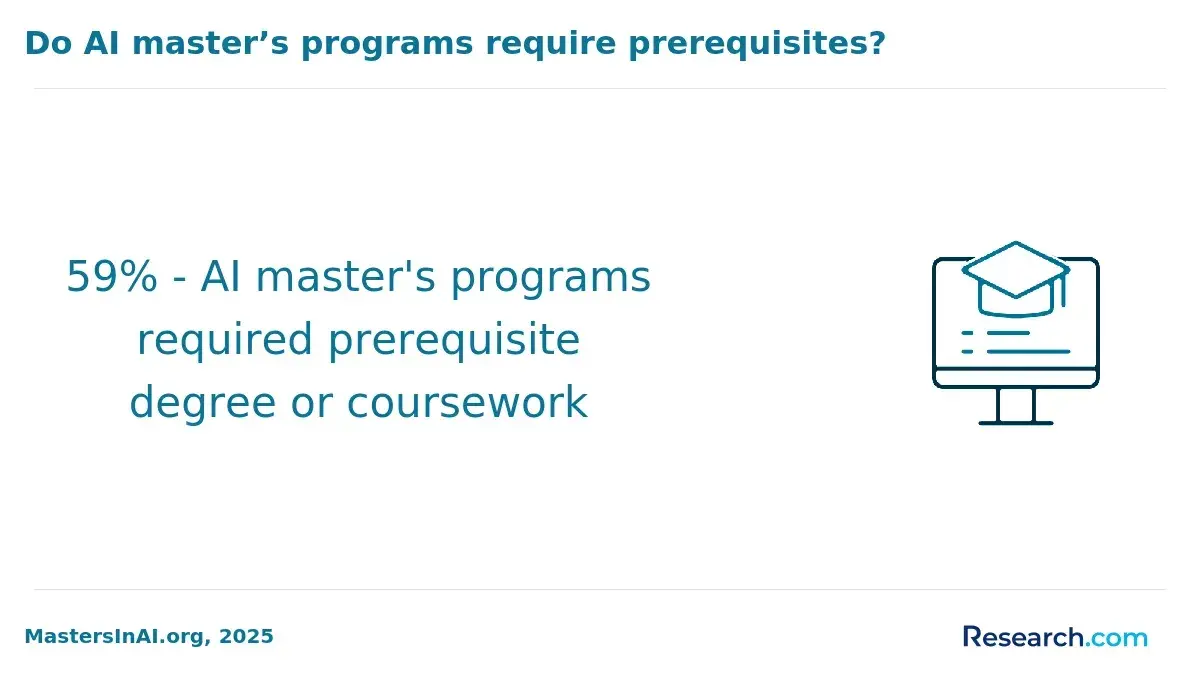
Admission for AI-focused retail programs generally requires foundational knowledge in quantitative fields such as mathematics, statistics, computer science, or economics. Most programs expect candidates to have at least a bachelor's degree, often in business, engineering, or STEM disciplines, to ensure strong grasp of AI models and data analytics. Advanced courses may demand prior programming experience in languages like Python or R to effectively apply AI in retail sectors like demand forecasting and dynamic pricing.
Applicants with retail operations or supply chain backgrounds may need to show proficiency in data analysis tools instead of formal coding skills. Entry-level certificates typically waive coding requirements but emphasize understanding machine learning concepts and their use in omnichannel retail. Professional programs often require industry experience in supply chain, inventory, or pricing, supported by recognized benchmarks.
- Completion of introductory statistics or data science courses.
- Submission of portfolios demonstrating retail-related data projects.
- Standardized tests like the GRE are uncommon but may appear in graduate credentials.
- Demonstration of problem-solving skills aligned with retail challenges.
Targeted training for supply chain and pricing teams enhances results significantly. Retailers using AI-driven demand forecasting and dynamic pricing, combined with focused education, have reported up to a 3 percentage-point gross-margin increase and a 20-50% drop in stock-outs, highlighting the practical value of prerequisites for measurable retail improvements.
How long do AI adoption courses for omnichannel retail take, and what do they cost?
AI adoption courses for omnichannel retail teams usually last between 4 and 12 weeks, tailored to the depth of content and delivery style. Shorter courses (4-6 weeks) cover fundamental AI concepts and practical applications such as recommendation engines and next-best-action tools. Longer programs (up to 12 weeks) often include hands-on training with AI copilots, data analytics, and workflow optimization. Providers typically offer both self-paced and instructor-led formats to suit diverse learning preferences.
Course costs vary widely, typically ranging from $1,000 to $5,000. Entry-level options for store associates or contact-center agents generally fall between $1,000 and $2,000, while advanced courses for supervisors and team leaders-with enhanced strategy and AI modules-may exceed $4,000. Many employers subsidize these courses, seeing strong return on investment through improved customer satisfaction and lower handling times.
A 2025 omnichannel CX study by Forrester shows retailers that trained staff in AI-assisted workflows achieved a 15-25% increase in customer satisfaction scores and up to 30% reduction in average handling time. This demonstrates the significant value of structured AI education rather than ad hoc use.
When choosing AI courses, it's important to select programs addressing key skills such as personalized recommendations, inventory management, and AI-enabled customer support. Flexibility, affordability, and industry relevance maximize benefits for omnichannel retail professionals.
What career paths and job roles can AI adoption training open in retail and e-commerce?
Training in artificial intelligence for retail and e-commerce opens diverse career pathways focused on technology integration and data-driven decisions. Key roles include AI product managers who implement AI solutions across sales, inventory, and customer service, alongside data analysts and data scientists who use AI tools to generate insights that optimize merchandising and personalize customer experiences.
Operations managers and supply chain specialists with AI expertise improve forecasting and automate logistics, reducing costs and delays. Marketing professionals skilled in AI apply machine learning for targeted campaigns, boosting conversion and retention rates. Customer experience managers integrate AI chatbots and recommendation engines for enhanced engagement in both online and physical stores.
Leadership increasingly demands formal AI strategy education. According to Deloitte's 2025 global retail leadership survey, companies with senior leaders trained in AI strategy were 3× more likely to scale at least four AI use cases across channels and achieved 1.5× higher EBITDA impact compared to those without structured AI education. This highlights the importance of AI fluency for executives driving digital transformation.
Specialized roles such as ethical AI compliance officers and AI trainers support responsible usage and ongoing algorithm refinement. In-store technology specialists ensure seamless integration of AI-powered devices in retail operations.
Prospective learners should seek tailored AI training programs aligned with roles from entry-level data positions to executive strategy to maximize opportunities in omnichannel retail.
What salary ranges and advancement opportunities exist for retail professionals with AI expertise?
Retail professionals with AI expertise earn considerably higher salaries and benefit from faster career advancement than their non-specialized counterparts. Entry-level roles such as AI retail analysts or data associates typically offer salaries between $65,000 and $85,000 annually. Mid-level positions, including AI project managers or omnichannel strategy leads, often command $90,000 to $130,000. Senior roles, like AI solution architects or retail innovation directors, can surpass $150,000, especially in metropolitan areas or top retail companies.
Professionals skilled in AI are crucial in driving measurable business outcomes, managing AI-driven analytics platforms, and leading machine learning projects. These skills often pave the way to leadership opportunities in product management, operations, or strategic omnichannel planning.
A study by the IBM Institute for Business Value reveals that organizations investing over $500 per employee annually in AI and analytics training see a return of $3.50 to $5.00 in incremental operating profit per training dollar within two years. This highlights employers' recognition of AI skills with competitive pay and roles.
Retailers and aspiring professionals should pursue certifications in machine learning, data analytics, and AI-driven customer experience optimization. Experience with tools such as Python, TensorFlow, and retail-specific AI platforms significantly enhances employability. Continuous learning in AI applications for inventory management and personalized marketing further supports career growth.
Are there industry certifications or standards that validate AI adoption skills for retail teams?
Recognized industry certifications validate AI adoption skills for retail teams, though options remain somewhat fragmented. Certifications such as the Certified Artificial Intelligence Practitioner (CAIP) and those provided by the AI Retail Consortium emphasize both technical knowledge and practical application within retail settings. These programs often focus on integrating AI into customer experience and supply chain optimization.
Effectiveness grows when certifications incorporate real retail use cases and an omnichannel perspective that connects online and physical store data. Research from AI Smart Ventures notes that retailers who choose courses with embedded retail scenarios and post-course coaching are 2.1× more likely to scale pilots to full production within a year, highlighting the value of application-driven credentials over general AI certificates.
Certifications typically blend skills in data analytics, machine learning basics, and retail business strategy. Alignments with professional bodies like the Association for Retail Technology Standards (ARTS) ensure training meets industry expectations and operational needs.
Course accreditation and partner endorsements by major retailers or technology providers enhance practical relevance. Post-certification coaching or mentorship further supports skill retention and helps overcome challenges related to applying theory in real retail environments.
Other Things You Should Know About Artificial Intelligence
In 2027, the top AI adoption courses for omnichannel retail teams include "AI Strategy for Retail Executives" by Coursera, "Omnichannel AI Integration" by edX, "Retail AI Innovations" offered by Udacity, and "Data-Driven Retail Transformation" from MIT Professional Education. These courses emphasize practical AI applications and strategic integration tailored for retail environments.
Common challenges include integrating AI systems with existing retail technologies, managing large volumes of data securely, and addressing the need for employee training on new tools. Additionally, ensuring the ethical use of AI and maintaining customer privacy are critical concerns. Retailers must also overcome resistance to change within their teams to successfully adopt AI solutions.
Yes, small and medium-sized businesses can significantly benefit from AI adoption by improving efficiency and customer engagement. Affordable AI tools are increasingly available, helping these retailers with demand forecasting, customer segmentation, and automated support. However, they must carefully assess costs and have clear strategies to integrate AI effectively into their operations.
Effective AI use relies on diverse data types, including customer demographics, purchase history, browsing behavior, and real-time inventory levels. Combining online and offline data sources helps build comprehensive customer profiles that inform personalized marketing and supply chain decisions. Accurate and high-quality data is essential for AI algorithms to generate reliable insights.
References
- AI Training for E-commerce Omnichannel Customer Journey Optimization in 2026 https://www.vinsys.com/blog/ai-training-for-e-commerce-industry
- Five steps to Successfully Implement AI in Retail and Wholesale https://www.hso.com/blog/five-steps-to-successfully-implement-ai-in-retail-and-wholesale/
- Transform Retail Training: AI, Power Skills & Modern LMS https://www.techclass.com/resources/learning-and-development-articles/ai-driven-power-skills-elevating-retail-workforce-training-with-a-modern-lms
- Scaling AI-First Innovation Through Skills – What Our Partnership With AI CERTs® Means https://teknowledge.com/insights/partnership-with-ai-certs/
- Bachelor in Management and Artificial Intelligence https://www.kozminski.edu.pl/en/programs/undergraduate-programs-bachelor/bachelor-management-and-artificial-intelligence
- Impact of E-commerce, Omnichannel, AI & ML in the US Retail https://clouddestinations.com/blog/omnichannel-ai-and-ml-transforming-us-retail.html
- The Growing Demand for AI Skills and Certifications - PECB https://pecb.com/en/article/the-growing-demand-for-ai-skills-and-certifications
- The Ultimate Guide to How AI Can Help in Omnichannel Retail https://www.awayco.com/blogs/the-ultimate-guide-to-how-ai-can-help-in-omnichannel-retail
- AI in E-Commerce and Retail Marketing at UBI Business School: The Future of Retail - UBI Business School - QS Top 20 worldwide https://ubi.edu/ai-in-e-commerce-and-retail-marketing-at-ubi/
- Bachelor in Artificial Intelligence for Business Munich https://www.euruni.edu/en/Bachelor-s/Artificial-Intelligence-for-Business-Munich-Bachelor.html