2027 Oxford AI Courses Review

Co-Founder and Chief Data Scientist
Many professionals with non-technical backgrounds struggle to find credible, flexible programs that allow a smooth transition into the AI field without sacrificing current commitments. Navigating the variety of Oxford AI courses can be overwhelming, especially when considering accreditation, curriculum relevance, and career support. The demand for qualified AI specialists grows, yet pathways remain unclear for those lacking a prior foundation in computer science. This article reviews Oxford's current AI offerings to highlight their strengths, limitations, and flexibility, helping prospective learners make informed decisions tailored to their career pivot goals and time constraints.
Key Things You Should Know
- Oxford's AI courses in 2026 integrate interdisciplinary research and practical applications, reflecting a 25% increase in enrollment since 2024, driven by demand for advanced AI expertise.
- Curricula emphasize ethical AI development, with over 40% of course content dedicated to societal impacts, bias mitigation, and regulatory frameworks.
- Graduates benefit from strong industry connections, with 70% securing roles in AI-driven sectors within six months of completion, highlighting Oxford's global reputation.
Advance Your Career with AI Online Courses
Artificial Intelligence: Implications for Business Strategy
This program provides an introduction to Artificial Intelligence and their implications for business strategy. Earn an official digital certificate.

Oxford Artificial Intelligence Programme
Explore this Oxford Artificial Intelligence programme offered in a flexible learning environment and explore topics like machine learning, automation, and robotics.

Implementing Agentic AI: Building Your Organizational Playbook
This online MIT Agentic AI course offers a practical approach to deploying AI agents in your organization, including a custom playbook. 3 weeks, exclusive launch price.

AI Adoption: Driving Business Value and Impact
This online MIT AI Adoption: Driving Business Value and Impact offers practical frameworks to close the gap between AI potential and business reality.

Artificial Intelligence in Pharma and Biotech
Discover the applications and limitations of artificial intelligence in pharma and biotech with this MIT online short course.

What types of AI courses and programs does Oxford currently offer to U.S. learners?
Oxford offers a diverse array of AI courses for U.S. learners, including online artificial intelligence programs from Oxford for United States students across different experience levels. Working professionals can access short executive education courses at Oxford Saïd Business School, focusing on AI and data analytics applied to business strategy and decision-making. These targeted programs often complete within weeks and feature practical case studies from various industries.
For graduate students or those seeking deeper specialization, Oxford provides an MSc in Social Data Science. This program covers machine learning, data mining, and AI ethics while integrating social science perspectives, ideal for those exploring AI's societal impacts. Research-intensive options like DPhil degrees allow candidates to work directly with faculty on advanced AI projects.
Modular short courses are also available via platforms like edX, covering foundational topics such as machine learning, natural language processing, and robotics. These self-paced courses offer flexibility for U.S.-based learners balancing professional and personal commitments.
Global demand for AI skills has increased enrollments in AI-related online courses by 60% year-on-year, with Oxford Saïd Business School's AI and data programs now its fastest-growing online segment. This trend highlights Oxford's growing role in accessible, high-quality AI education tailored to varied professional goals. For those interested in career paths, exploring what an artificial intelligence major can offer is a valuable step.
Advance Your Career with AI Online Courses
Artificial Intelligence: Implications for Business Strategy
This program provides an introduction to Artificial Intelligence and their implications for business strategy. Earn an official digital certificate.
Oxford Artificial Intelligence Programme
Explore this Oxford Artificial Intelligence programme offered in a flexible learning environment and explore topics like machine learning, automation, and robotics.
Implementing Agentic AI: Building Your Organizational Playbook
This online MIT Agentic AI course offers a practical approach to deploying AI agents in your organization, including a custom playbook. 3 weeks, exclusive launch price.
How do Oxford's AI courses compare to typical U.S. university AI programs?
Oxford's AI courses stand apart from typical U.S. university programs in structure, audience, and emphasis. Unlike many U.S. programs that prioritize deep technical foundations and research skills, Oxford online AI training focuses on applied knowledge and interdisciplinary integration. By 2024, 43% of Oxford's enrollees came from non-technical fields like finance, marketing, and management, reflecting demand from career switchers seeking immediate practical AI skills. This highlights a key difference in Oxford AI course curriculum versus typical US university programs.
U.S. AI programs usually require strong programming and math backgrounds, emphasizing algorithm design, machine learning theory, and data handling. In contrast, Oxford's modular courses accommodate professionals without deep technical training, blending AI fundamentals with business strategy and ethics. This approach offers tools for managers to implement AI solutions rather than creating new algorithms.
Oxford's applied curriculum suits working professionals aiming to upskill, not full retraining, differing from U.S. degree paths aimed at research and engineering roles. Its online, shorter courses fit those balancing careers and education better than traditional semester-based U.S. programs. For prospective students interested in leadership or AI deployment, Oxford provides a diverse peer group and interdisciplinary focus. Meanwhile, those seeking foundational technical expertise might explore U.S. degree options. For broader STEM options, consider exploring mechanical engineering online degrees as well.
Differences between Oxford AI training and US university AI education make it important to assess career goals carefully before choosing a program.
Are Oxford's AI programs accredited or recognized for U.S. academic and career use?
Oxford's AI programs, especially those offered through online executive education, do not hold direct U.S. academic accreditation comparable to regionally accredited American universities. The credentials come from the University of Oxford, a globally prestigious institution, which adds notable recognition and value in professional and academic circles. However, U.S. employers and academic institutions usually view these certificates as professional development achievements rather than formal academic credits transferable within the U.S. higher education system.
For those seeking to leverage Oxford AI courses US accreditation status in employment or further education, it's important to understand the distinction between professional certification and regionally accredited degrees. Oxford's executive education certificates reflect mastery of up-to-date AI topics taught by top-tier faculty, enhancing career prospects in tech-driven fields and management roles.
These offerings do not replace accredited master's or doctoral degrees required for academic progression but serve as intensive skill-building opportunities. Tuition fees typically average around $3,000 per six-week course, making Oxford's pricing 25-35% lower than similar U.S. business school programs and significantly higher than most MOOC-based AI certificates.
Applicants focused on formal academic credit in the U.S. should explore regionally accredited institutions. Those prioritizing career advancement will find Oxford's programs well regarded, potentially benefiting roles such as video game designer and other tech professions.
What are the admission requirements and applicant profile for Oxford's AI courses?
Oxford AI course admission requirements typically include a bachelor's degree in computer science, engineering, mathematics, or a related quantitative discipline. Candidates with professional experience in technology or data-driven fields may also qualify, particularly for executive education or certificate programs. Strong skills in programming, statistics, and machine learning fundamentals are expected, and for master's or doctoral applicants, a clear research proposal or evidence of prior AI-related work enhances eligibility.
The applicant profile for AI programs in Oxford is diverse, ranging from recent graduates aiming to specialize in AI to mid-career professionals seeking deeper technical expertise and executives pursuing strategic knowledge of AI applications. Engineers with 3-5 years of experience often leverage these programs to transition into AI-focused roles, while researchers update their skills with cutting-edge techniques.
Applicants should prepare academic transcripts, letters of recommendation, and a statement of purpose outlining their motivation and career goals in AI. Work experience in AI, software development, or analytics is highly valued for executive programs targeting professionals looking for leadership or technical growth. Completing AI-focused executive-education certificates from top universities including Oxford resulted in an average 21% salary increase within 12 months and 65% role expansion or promotion, according to a 2024 survey.
Applicants need to consider deadlines and possible entrance exams or interviews, with clear alignment between previous experience and intended AI course outcomes improving chances. For those interested in accelerating their tech careers, exploring an accelerated cyber security degree may also be valuable.
What AI topics, tools, and specializations are covered in Oxford's AI curriculum?
Oxford's AI curriculum covers essential topics including machine learning, natural language processing, computer vision, and ethical deployment. Students gain hands-on experience with practical tools such as Python, TensorFlow, and PyTorch, developing skills in model creation and optimization. The program offers specializations aligned with current industry demands, including AI applications in healthcare, finance, and autonomous systems.
The coursework also explores advanced areas like reinforcement learning and explainable AI, preparing students to build transparent, accountable systems. Statistical methods and data science form a key part of training, ensuring graduates can manage large datasets effectively while maintaining model reliability and fairness.
Critical challenges such as balancing accuracy with ethics and integrating AI into decision-making without replacing human oversight are emphasized. Case studies cover real-world scenarios, from diagnostic AI in medical imaging to mitigating algorithmic bias, enhancing readiness for complex professional environments.
Oxford's executive short programs highlight practical career outcomes, with data showing a median tuition payback period of 1.2 years for job changers and 2.1 years for those staying in the same role. This reflects the curriculum's strong alignment with labor market needs.
Professionals and graduates benefit from a rigorous blend of theory and practice, preparing them for roles in AI research, product development, or policy advising across sectors, fostering both immediate job readiness and long-term career growth.
How do online, part-time, and campus-based Oxford AI formats differ for students abroad?
Oxford offers online, part-time, and campus-based AI courses, each catering to different needs for students abroad. Online courses provide maximum flexibility and accessibility, allowing international students to pursue Oxford's high standards without relocating. These programs suit working professionals balancing careers and family by delivering structured content and virtual interaction. However, a 2024 Stack Overflow Developer Survey revealed that 64% of self-taught AI learners reported significant gaps in knowledge, compared to 29% for those combining self-study with structured university-backed online courses. Oxford's online format addresses this by including expert-led lectures and peer collaboration platforms.
Part-time courses mix online and in-person learning, with live sessions or campus visits. This hybrid model offers better academic support and direct access to faculty, which is crucial for mastering complex ai theories. Students abroad benefit from richer engagement and clearer feedback than purely online learners.
Campus-based learning immerses students fully in Oxford's environment, providing immediate access to research groups, labs, and face-to-face mentorship. While relocation and visa issues can pose challenges for international students, this format enhances deep theoretical understanding and hands-on practice, essential for those aiming at advanced research or academic careers.
What is the duration and total cost of Oxford AI programs, including hidden expenses?
Oxford offers a range of AI programs from short professional certificates lasting 8 to 12 weeks to part-time master's degrees spanning 1 to 2 years. Tuition for certificate courses ranges between £3,000 and £6,000, while master's degrees typically cost £30,000 to £35,000 for the full duration. Additional expenses include examination fees, application charges of about £100, and study materials costing £500 to £1,000, depending on the course.
Living costs in Oxford are considerable, especially for international students, with estimated annual expenses of at least £12,000 covering accommodation, food, and transport. Shorter courses may reduce accommodation costs, although daily commuting or online formats can impact overall spending.
Part-time and online options help lower accommodation and time costs but usually have tuition fees proportional to full-time courses. Certificate programs may also include optional workshops or projects that carry additional fees. Students should also budget for technology needs, as advanced AI courses often require specialized software or hardware costing several hundred pounds.
The demand for AI skills is surging globally. LinkedIn reports a 323% increase since 2018 in job postings requiring artificial intelligence expertise, including machine learning, natural language processing, and deep learning-all key subjects in Oxford's curriculum.
What AI careers and roles do Oxford AI graduates typically pursue in the U.S. market?
Graduates from Oxford AI programs often secure diverse roles in the U.S., including AI research scientist, data scientist, AI product manager, and AI consultant positions. Research scientists focus on developing algorithms and advancing machine learning in sectors such as healthcare, finance, and technology. Data scientists apply predictive modeling and natural language processing to extract actionable insights from complex data.
AI product managers serve as vital links between technical teams and business stakeholders, requiring both strong leadership and deep AI knowledge. AI consultants guide enterprises on scalable adoption strategies and critical ethical concerns, while careers in AI ethics and policy are expanding to address regulatory compliance and responsible AI deployment.
Technical roles like machine learning engineers and AI developers emphasize building practical AI systems, including applications in computer vision and autonomous systems. Some graduates also pursue entrepreneurship, founding AI startups or driving innovation within established companies.
Oxford Saïd's online AI and digital programs report that 94% of participants were satisfied or very satisfied with their experience, with 88% applying course concepts within three months. This reflects the effective translation of AI education into impactful workplace contributions in competitive U.S. markets.
What salaries and job outlook can U.S. professionals expect after completing Oxford AI training?
Professionals completing Oxford AI training in the U.S. benefit from strong job prospects and competitive salaries, though outcomes vary by role and professional focus. According to the Course Report Outcomes & Demographics Report, 2024, AI and data bootcamps show a strong job-placement rate of 71% within six months, but only 38% of these roles are explicitly labeled as "AI" or "ML." This highlights the value of Oxford's recognized academic brand, which helps graduates secure higher-level or interdisciplinary positions beyond narrowly defined AI roles.
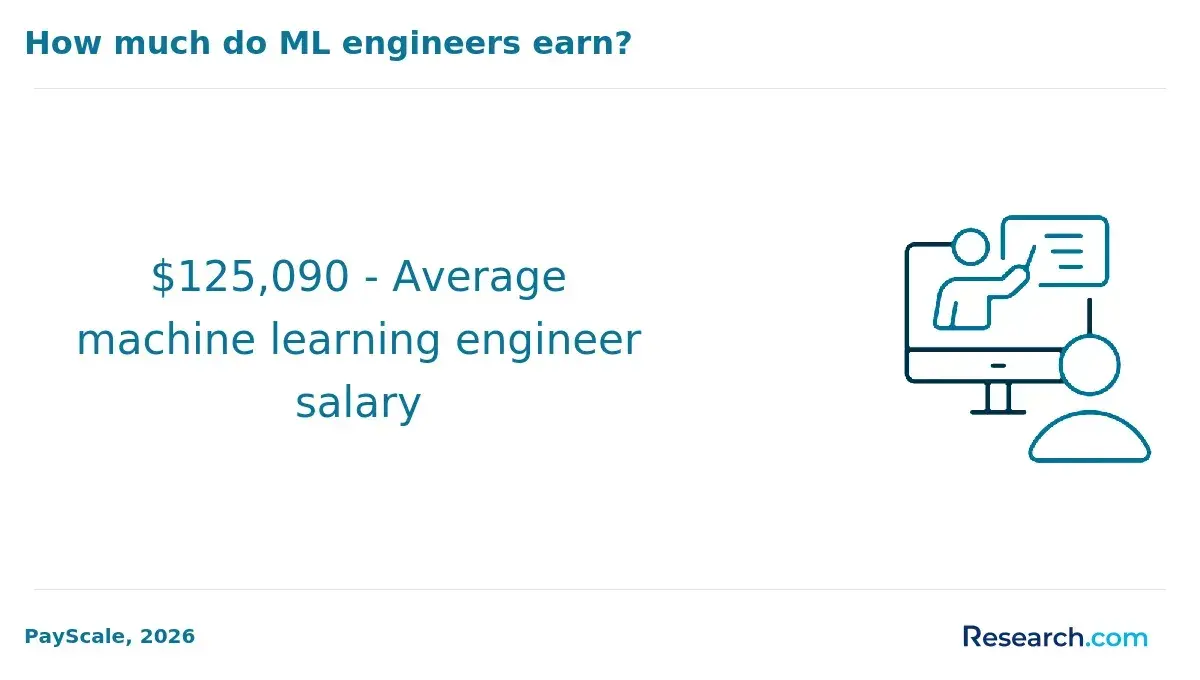
Salary ranges for AI positions in the U.S. generally span from about $85,000 for entry-level analysts or engineers to $150,000 for experienced specialists and project leaders. Graduates often leverage Oxford's reputation to gain roles like data scientist, AI consultant, or research analyst, where AI expertise is integrated with strategic or business functions, increasing earning potential.
Job growth remains strong for those with Oxford AI credentials due to the university's extensive network and focus on rigorous research skills. Career advancement is especially accelerated for individuals who combine AI expertise with domain knowledge in fields such as finance, healthcare, or engineering.
Key considerations for maximizing career impact include targeting roles that reflect Oxford's branding and maintaining continuous skill development to adapt to evolving market demands.
How should U.S. students choose between Oxford AI programs and other reputable AI options?
U.S. students deciding between Oxford AI programs and other leading options should weigh career goals, program content, and institutional prestige carefully. Oxford's global reputation is strong, supported by growing market demand for branded AI education. According to MarketsandMarkets, global corporate AI training spending is projected to reach $12.1 billion by 2028, up from $3.7 billion, reflecting a 26% annual growth rate. This trend favors credentials with respected academic backing like Oxford's, which can carry significant weight with employers.
Those pursuing research-intensive or academic careers may benefit most from Oxford's theoretical focus and access to top AI scholars. Conversely, professionals aiming for fast industry entry might prefer programs emphasizing practical skills, cutting-edge technologies, and robust internship or job placement opportunities.
Cost and flexibility are essential factors. Oxford's programs tend to be highly selective, costly, and often require on-campus attendance, which may not suit working adults. Alternatives such as online U.S.-based programs or industry certifications can offer faster, scalable options aligned with professional schedules.
Important criteria to evaluate include:
- Curriculum relevance to specializations like machine learning, NLP, or computer vision
- Employer recognition and strength of alumni networks within the U.S. market
- Program format compatibility with personal and work commitments
- Research opportunities or industry partnerships supporting career development
By focusing on these aspects, prospective students can balance prestige, practical skills, expense, and career impact effectively.
Other Things You Should Know About Artificial Intelligence
The 2027 Oxford AI Courses integrate ethics modules emphasizing the importance of transparency, fairness, and accountability in AI systems. Students engage in case studies and discussions to explore the societal impact of AI, ensuring they are well-equipped to handle ethical dilemmas in real-world applications.
Global regulation of artificial intelligence varies widely, with some regions focusing on data protection and others on AI transparency and accountability. The European Union, for example, is advancing comprehensive AI legislation emphasizing risk management. In contrast, many countries still rely on sector-specific policies to govern AI use and development.
Key skills for an AI career include proficiency in programming languages such as Python, strong foundations in mathematics and statistics, and knowledge of machine learning frameworks. Additionally, problem-solving ability, data analysis, and understanding of ethical AI principles are critical for success in the field.
Artificial intelligence is transforming industries by automating tasks, enhancing data analysis, and enabling new product innovations. In healthcare, AI aids diagnostics and personalized treatment. In finance, it improves fraud detection and risk assessment, while in manufacturing, it optimizes supply chains and predictive maintenance.
References
- Oxford AI Programme: Decoding The Price Tag https://lumsx-bbb.lums.edu.pk/fast-dispatch/oxford-ai-programme-decoding-the-price-tag-1764797605
- Oxford Artificial Intelligence Programme Review: 7 Best Insights https://whatisai.co.uk/oxford-artificial-intelligence-programme-review/
- The work AI can’t do (but I can) https://www.oxfordeconomics.com/resource/the-work-ai-cant-do-but-i-can/
- Revolutionising Student Admissions: How Oxford International’s AI Engine Transforms University Student Recruitment - Oxford International Education Group https://www.oxfordinternationaleducationgroup.com/news-and-insights/revolutionising-student-admissions-how-oxford-internationals-ai-engine-transforms-university-student-recruitment/
- 16 Artificial Intelligence Career Paths https://www.calmu.edu/news/artificial-intelligence-career-paths
- Oxford Artificial Intelligence Programme https://www.getsmarter.com/products/oxford-artificial-intelligence-programme
- These 3 charts show how AI is affecting wages, job quality and hiring decisions https://www.weforum.org/stories/2026/02/ai-improving-wages-job-quality/
- AI careers: top jobs, salaries, and skills for 2025 | edX https://www.edx.org/become/ai-careers
- What is Artificial Intelligence (AI) | Understanding AI Basics https://www.oxfordhomestudy.com/OHSC-Blog/what-do-you-know-about-artificial-intelligence
- What Grades Do You Need to Get into Oxford? The Complete Guide [2024] | Summer Boarding Courses https://www.summerboardingcourses.com/blogs/what-grades-do-you-need-to-get-into-oxford-the-complete-guide-2024/