2027 Best Applied LLM Courses for Workplace Use

Co-Founder and Chief Data Scientist
Many professionals with unrelated undergraduate degrees face challenges when trying to transition into the rapidly evolving artificial intelligence sector. The lack of tailored education options designed for workplace relevance often causes delays in skill acquisition and career advancement. These individuals require flexible, accredited programs that combine theoretical knowledge with practical applications. Without guidance, selecting the right course can lead to wasted time and resources.
This article explores the best applied LLM courses available, focusing on those that equip learners with actionable skills for immediate workplace use, helping prospective students confidently pivot into artificial intelligence roles.
Key Things You Should Know
- Applied LLM courses for workplace use in 2026 emphasize practical skills in prompt engineering and ethical deployment, reflecting a 45% enrollment increase since 2024.
- Top courses integrate real-world datasets and cross-disciplinary collaboration, improving job placement rates for graduates by up to 30% compared to traditional AI programs.
- Employers increasingly require proficiency in applied LLM tools, with 60% prioritizing candidates who complete specialized certification programs for immediate productivity gains.
Advance Your Career with AI Online Courses
Artificial Intelligence: Implications for Business Strategy
This program provides an introduction to Artificial Intelligence and their implications for business strategy. Earn an official digital certificate.

Oxford Artificial Intelligence Programme
Explore this Oxford Artificial Intelligence programme offered in a flexible learning environment and explore topics like machine learning, automation, and robotics.

Implementing Agentic AI: Building Your Organizational Playbook
This online MIT Agentic AI course offers a practical approach to deploying AI agents in your organization, including a custom playbook. 3 weeks, exclusive launch price.

AI Adoption: Driving Business Value and Impact
This online MIT AI Adoption: Driving Business Value and Impact offers practical frameworks to close the gap between AI potential and business reality.

Artificial Intelligence in Pharma and Biotech
Discover the applications and limitations of artificial intelligence in pharma and biotech with this MIT online short course.

What is an applied LLM course for workplace use and who are these programs best for?
Applied LLM training programs for workplace integration focus on practical skills to implement large language models in professional environments. These programs teach prompt engineering, fine-tuning, ethical use, and integration of LLM-powered APIs to automate tasks, improve communication, and support data-driven decisions.
Such professional LLM courses designed for business applications are ideal for working professionals, recent graduates, and career changers who need quick adaptation to evolving technology. Mid-level managers and team leaders can especially benefit by using LLMs to enhance team efficiency. For example, customer support supervisors may apply LLMs to automate response workflows, while data analysts refine text analytics processes.
The World Economic Forum estimates that 44% of workers' skills will be disrupted by 2027, highlighting an urgent need for workplace LLM training. These courses emphasize hands-on learning through case studies, software tools, and project-based assessments to prepare learners for immediate real-world application.
Key competencies include prompt design, accuracy evaluation, bias mitigation, and ethical management of AI tools. This practical approach distinguishes applied LLM courses from purely theoretical studies, equipping learners to drive innovation responsibly.
For those exploring accelerated pathways to advance in AI and related fields, a fastest computer science degree may complement LLM training effectively, blending foundational knowledge with cutting-edge professional skills.
Advance Your Career with AI Online Courses
Artificial Intelligence: Implications for Business Strategy
This program provides an introduction to Artificial Intelligence and their implications for business strategy. Earn an official digital certificate.
Oxford Artificial Intelligence Programme
Explore this Oxford Artificial Intelligence programme offered in a flexible learning environment and explore topics like machine learning, automation, and robotics.
Implementing Agentic AI: Building Your Organizational Playbook
This online MIT Agentic AI course offers a practical approach to deploying AI agents in your organization, including a custom playbook. 3 weeks, exclusive launch price.
How do applied LLM workplace courses differ from traditional AI and data science programs?
Applied LLM workplace courses differ significantly from traditional AI and data science programs by focusing on practical application rather than theoretical foundations. These courses emphasize skills like prompt engineering, retrieval-augmented generation (RAG), and instruction fine-tuning to integrate large language models seamlessly into business workflows. This approach suits professionals aiming to implement AI solutions in marketing, product management, compliance, and other roles, rather than purely developing algorithms or statistical models.
One clear progression for applied LLM courses begins with mastering prompting, regarded as the easiest adaptation method, followed by RAG and then instruction fine-tuning. This stepwise skill set allows users, for example, a marketer, to start with generating campaign ideas through effective prompts, then advance to integrating company data, and finally fine-tune models to maintain brand consistency. These practical skills address real workplace challenges such as integrating conversational AI with legacy systems and ensuring ethical AI use.
The differences between applied LLM and traditional AI data science programs highlight that workplace courses also cover evaluating model output reliability and bias reduction, which are critical for business trust and compliance. Such targeted training fills a niche that general AI education often misses, equipping professionals with immediate, actionable skills to leverage LLM technology efficiently.
For those considering a broader technology education in STEM, exploring an online degree in mechanical engineering can complement expertise in applied AI domains.
What types of degrees, certificates, and short courses teach applied LLM skills for work?
Degrees, certificates, and short courses offering applied LLM degree programs for workplace skills fall into several categories, each addressing specific career goals and learning needs. Professional degrees such as a master's in Artificial Intelligence or Data Science with a focus on natural language processing typically span 1-2 years. These programs provide a solid foundation in machine learning, data management, and LLM integration for practical business applications.
Certificates cater to working professionals seeking targeted skills without committing to full degrees. Examples include certifications in prompt engineering, LLM fine-tuning, and applied AI ethics, which provide practical frameworks in just a few months. These are often available online or on-campus from respected institutions.
Short courses offer intensive, hands-on instruction with real-world case studies. The popularity of programs like DeepLearning.AI's ChatGPT Prompt Engineering for Developers - boasting over 1 million enrollments - reflects growing demand for expert prompt design techniques applied in software development and digital services.
Additional formats such as bootcamps and workshops emphasize rapid skill acquisition around API usage, prompt design, and ethical AI considerations. Combining formal degrees with certificates and short courses can best prepare students and professionals to meet evolving workplace challenges in AI and LLM technologies.
For those exploring related fields, programs like the online game design degree can complement AI skills by emphasizing digital creativity and technical expertise.
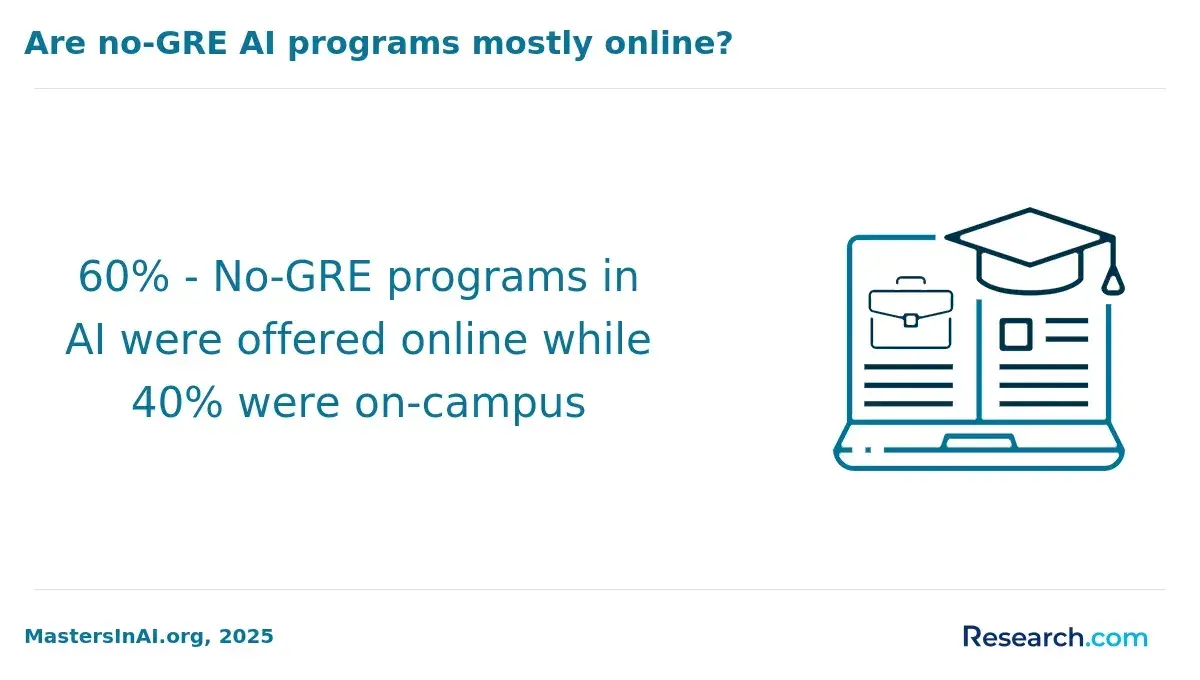
How can students compare online, hybrid, and campus-based applied LLM programs?
Students comparing online, hybrid, and campus-based applied LLM programs should weigh factors linked to career goals, learning preferences, and resource availability. Online programs offer flexibility crucial for professionals managing work alongside studies, particularly in fast-changing fields like artificial intelligence law. For example, UC Berkeley's Large Language Model Agents course delivers high-quality, agent-focused LLM training via a free 12-lecture MOOC, demonstrating remote accessibility for career readiness. This approach is similar to many online options in technical fields, such as a computer science degree online, where flexibility and affordability often come first.
Hybrid applied LLM courses blend online convenience with in-person sessions, useful for networking and hands-on skills. When comparing online, hybrid, and campus-based applied LLM programs, students should consider session frequency and campus access. Campus-based programs deliver immersive experiences, including faculty interaction, legal clinics, and peer collaboration, but often require full-time enrollment and possible relocation.
Curriculum depth, faculty expertise, and career support also vary by delivery mode. Students should ask:
- Are current LLM regulatory challenges and applications integrated?
- What proportion is synchronous versus asynchronous content?
- Is practical simulation embedded in coursework?
- How accessible is faculty mentoring?
Cost and program length are key as well. Online options tend to be less expensive with flexible pacing, while campus programs have higher tuition and fixed timelines but provide stronger alumni networks. Careful review of authoritative providers ensures the best fit for relevant applied LLM skills in the evolving 2026 workplace.
What curriculum and real-world projects should the best applied LLM workplace courses include?
Effective LLM workplace courses blend foundational theory with practical skills tailored to industry needs. Key subjects include natural language processing basics, prompt engineering, ethics, bias mitigation, model fine-tuning, and integrating LLMs with existing enterprise systems. Emphasizing data privacy and security protocols is critical to meet regulatory compliance across industries.
Hands-on projects simulate real workplace challenges such as automating customer support via conversational agents, developing AI-powered content tools, and creating domain-specific knowledge bases. Collaborative assignments foster communication and mirror cross-functional team environments, while performance metrics like accuracy, latency, and fairness illustrate operational considerations.
Courses often provide customization options for sectors like legal, healthcare, finance, and marketing, enabling learners to apply LLM skills to specific vocabularies and compliance needs. Using platforms that support continuous model updates aligns training with real-world workflows. Data from Great Place To Work confirms that top companies are investing in dedicated AI learning modules to upskill employees.
Practical exercises in prompt optimization and troubleshooting develop critical problem-solving abilities. Peer reviews and code audits replicate engineering team practices, and scenario-based assessments encourage designing end-to-end LLM solutions, cultivating strategic thinking essential for enterprise adoption.
What admission requirements and prior experience are needed for applied LLM programs?
Admission to applied LLM programs generally requires a bachelor's degree in fields like computer science, data science, engineering, business, or related areas. Candidates with strong professional experience may also be considered, even if their academic background is unconventional. Many programs value applicants showing foundational knowledge of programming, data analytics, or machine learning concepts.
Experience expectations differ significantly between entry-level and advanced courses. Basic familiarity with coding languages such as Python or R may suffice for introductory programs. In contrast, advanced courses often look for several years of experience working with data-driven tools or AI applications in professional settings. For example, individuals involved in process automation or digital transformation projects are well suited for these studies. Notably, federal employees gain relevant skills from applied LLM programs, as the U.S. Office of Personnel Management estimates that 20% of their administrative work time could be optimized through AI-enhanced productivity.
Applicants should be ready to submit transcripts, letters of recommendation, and sometimes a statement of purpose outlining their career goals. Some programs require prerequisites or proficiency exams in mathematics or statistics. Online and part-time options usually favor practical experience over formal academic credentials, catering especially to working professionals.
Successful admission depends on combining relevant academic qualifications, demonstrated technical aptitude, and practical experience aligned with AI applications in workplace productivity.
How long do applied LLM workplace programs take, and what do they typically cost?
Applied LLM workplace programs generally span from 4 to 12 weeks. Shorter courses, ideal for busy professionals, concentrate on essential skills over about one month, while longer programs of up to three months delve into advanced topics and hands-on projects. The popular LLM Zoomcamp offers roughly 8 weeks of intensive training designed to develop practical LLM engineering skills, striking a balance between accessibility and comprehensive learning.
Costs vary widely depending on the provider, course depth, and format, with paid courses typically ranging from $500 to $2,500. These programs usually provide certificates of completion that include project-based assessments, which are valuable for career advancement. Free options exist but may lack formal credentials.
The structure often includes video lectures, coding assignments, and real-world case studies to help learners apply machine learning principles quickly in industries such as finance, healthcare, and legal services. Employers increasingly value candidates with applied LLM skills and tangible project experience over purely theoretical knowledge.
DataTalks.Club notes that the LLM Zoomcamp has attracted tens of thousands of learners globally, underscoring strong demand for accessible, efficient training cycles in LLM engineering across a range of professions.
How can learners verify accreditation and choose reputable applied LLM providers in the U.S.?
Accreditation is a crucial factor when selecting applied LLM programs in the U.S. Ensure the institution is recognized by the U.S. Department of Education or the Council for Higher Education Accreditation (CHEA). Legitimate programs openly display their accreditation status, which affects credit transferability and employer recognition.
Evaluate providers based on industry partnerships and curriculum relevance. Applied LLM courses that integrate real-world enterprise use cases hold greater practical value. For example, retrieval-augmented generation (RAG) is a prevalent pattern in production LLM deployments across industries, as noted by Evidently AI's research highlighting 55 real-world applications from leading companies.
Faculty expertise matters. Instructors with hands-on experience implementing LLM solutions and credentials like published research or professional certifications contribute to effective training. Look for programs featuring practitioner-led teaching to ensure up-to-date, applicable skills.
Also assess student outcomes and alumni networks. Reputable programs provide clear data on graduate employment and success stories of LLM in workplace settings. Connecting with alumni on platforms such as LinkedIn can offer valuable, candid insights.
Finally, transparent course materials-including current syllabi, defined learning objectives, and accessible technical support-are key to a reliable educational experience. Responsive communication from providers signals ongoing commitment to quality education.
What careers, job roles, and industries use applied LLM skills in the workplace today?
Applied LLM skills have become essential across various careers and industries. Professionals such as data scientists, machine learning engineers, and NLP specialists leverage LLMs to enhance product development, automate data analysis, and improve natural language understanding systems. In marketing and customer service, digital marketers and chatbot developers use these models to personalize campaigns and automate customer interactions, reducing manual tasks.
Healthcare roles including clinical informaticists and biomedical researchers apply LLMs for medical literature summarization, diagnostic aid, and patient communication, driving better outcomes with increased accuracy. In the legal sector, paralegals and legal analysts rely on LLM-driven tools for automating contract reviews, legal research, and document drafting, speeding up case preparation substantially. Finance professionals such as quantitative analysts and compliance officers utilize LLMs for trend detection, fraud prevention, and regulatory compliance.
Industries like technology, finance, healthcare, legal, marketing, and education are rapidly adopting applied LLM skills. The industry trend emphasizes hands-on experience; according to 5 Courses to Master LLMs KDnuggets, most top LLM courses now involve practical projects and deployment work, reflecting a shift from theory to real-world application.
Students and professionals should target roles demanding practical LLM expertise, such as AI product managers or data engineers optimizing model pipelines. Employers increasingly value demonstrable applied experience through projects over pure theoretical knowledge.
What salary ranges and job outlook can graduates with applied LLM skills expect?
Graduates skilled in applied LLM techniques typically earn between $80,000 and $150,000 annually, with salaries varying by role, experience, and industry. Entry-level roles like AI application developers or data analysts generally start around $80,000 to $100,000, while specialized positions in machine learning engineering or AI product management often reach $120,000 to $150,000 or more.
Demand remains high for professionals with expertise in areas such as agent design, retrieval augmented generation (RAG), and system evaluation. These skills reflect the commercial priorities in modern workplace training, ensuring graduates align with employer expectations.
Key employment sectors include technology companies, financial services, healthcare, and consultancy. Employers value candidates who can:
- Integrate LLMs into practical applications
- Optimize model outputs through effective evaluation
- Deploy agents to automate complex workflows
Job seekers benefit from showcasing hands-on experience with agent frameworks and RAG pipelines during interviews. Building a portfolio with model evaluation metrics and workflow improvement examples distinguishes candidates. With the rapid expansion of responsible AI applications, applied LLM expertise offers strong potential for career advancement and increased compensation.
Other Things You Should Know About Artificial Intelligence
In 2027, leading Applied LLM courses for workplace skills include programs in AI Applications in Business at Stanford University, Digital Transformation & AI at Harvard Extension School, and the AI-Powered Management course at the University of Oxford. These courses focus on integrating AI into strategy, management, and business operations.
Artificial intelligence enhances decision-making by providing data-driven insights and automating routine tasks. It enables faster analysis of large datasets, leading to more informed and objective decisions. However, human oversight remains crucial to interpret AI outcomes and address any errors or unexpected behavior.
Key skills include proficiency in machine learning principles, programming languages like Python, and understanding of data management. Strong problem-solving abilities and domain-specific knowledge improve AI application relevance. Additionally, soft skills such as communication are vital for collaborating with cross-functional teams.
While artificial intelligence can automate many repetitive tasks, it is unlikely to fully replace human workers across all roles. AI excels at processing data and performing specific functions but lacks human creativity, empathy, and critical thinking. Collaboration between AI and humans often yields the best outcomes in workplace settings.
References
- LLM-Generated Feedback Supports Learning If Learners Choose to Use It https://arxiv.org/html/2506.17006v1
- What Kind of LL.M. Program is Right for Me? | LLM GUIDE https://llm-guide.com/llm-faq/what-kind-of-llm-program-is-right-for-me
- DeepLearning.AI https://www.deeplearning.ai/courses
- Generative AI and LLMs Certification https://www.nvidia.com/en-us/learn/certification/generative-ai-llm-associate/
- Build Real Products with LLMs, Context Engineering, RAG. https://academy.towardsai.net/courses/beginner-to-advanced-llm-dev
- LLM Implementation and Maintenance Costs for Businesses: A Detailed Breakdown - Inero Software - Software Consulting https://inero-software.com/llm-implementation-and-maintenance-costs-for-businesses-a-detailed-breakdown/
- LLM Vs AI: A Practical Guide to Differences, Use Cases, and Tools https://www.databricks.com/blog/llm-vs-ai
- LLM use in the workplace - interviews with power users https://rethinkpriorities.org/research-area/llm-use-in-the-workplace/
- AI: Applied Local Large Language Models | edX https://www.edx.org/learn/computer-science/pragmatic-ai-labs-applied-local-large-language-models
- 5 emerging tech roles revolutionising industries | Michael Page Indonesia https://www.michaelpage.co.id/recruitment-expertise/market-insights/emerging-tech-roles