2027 Best AI Courses for Performance Marketing Teams Managing AI Adoption

Co-Founder and Chief Data Scientist
Performance marketing teams face increasing pressure to integrate artificial intelligence tools effectively while managing fast-evolving technologies and diverse skill sets. Without structured learning, teams risk underutilizing AI capabilities or making costly implementation errors. Many professionals from unrelated fields seek flexible educational paths that combine technical skills with marketing strategies.
This challenge requires targeted courses designed for non-AI backgrounds to build relevant competencies efficiently. This article reviews top AI courses tailored for performance marketing professionals, aiming to guide readers toward accredited programs that support seamless AI adoption and boost marketing outcomes.
Key Things You Should Know
- AI courses tailored for performance marketing teams in 2026 emphasize practical skills in data analytics, automation tools, and ethical AI deployment, reflecting a 45% increase in industry adoption since 2024.
- More than 60% of AI curricula now incorporate hands-on projects using real marketing datasets, enhancing job readiness and technical proficiency in emerging AI platforms.
- Continuous education in AI reduces operational risks and improves campaign ROI by up to 30%, driving significant demand for specialized training within marketing teams.
Advance Your Career with AI Online Courses
Artificial Intelligence: Implications for Business Strategy
This program provides an introduction to Artificial Intelligence and their implications for business strategy. Earn an official digital certificate.

Oxford Artificial Intelligence Programme
Explore this Oxford Artificial Intelligence programme offered in a flexible learning environment and explore topics like machine learning, automation, and robotics.

Implementing Agentic AI: Building Your Organizational Playbook
This online MIT Agentic AI course offers a practical approach to deploying AI agents in your organization, including a custom playbook. 3 weeks, exclusive launch price.

AI Adoption: Driving Business Value and Impact
This online MIT AI Adoption: Driving Business Value and Impact offers practical frameworks to close the gap between AI potential and business reality.

Artificial Intelligence in Pharma and Biotech
Discover the applications and limitations of artificial intelligence in pharma and biotech with this MIT online short course.

What are the best AI courses for performance marketing teams?
The best AI courses for performance marketing professionals focus on hands-on skills that deliver measurable results. They cover practical applications like machine learning, data analytics, and AI-driven customer segmentation.
Platforms such as Coursera, edX, and LinkedIn Learning offer specialized programs for marketers that include predictive analytics, automation strategies, and natural language processing for content optimization.
These top AI training programs for marketing teams managing AI adoption often include real-world projects, which help teams optimize ad spend using AI algorithms and improve customer engagement through chatbot technologies.
Courses that blend strategic insights with technical proficiency enable marketing teams to better integrate AI into their technology stacks and interpret AI-generated data effectively.
Given that 75% of CMOs plan to increase AI marketing investments by 2028 and expect a 41% productivity bump, developing these skills is crucial. Certifications usually emphasize:
- Data-driven marketing strategies.
- AI-powered customer segmentation.
- Machine learning in campaign optimization.
- Automation and predictive analytics in marketing.
Practical experience with tools like Google AI, Salesforce Einstein, or Adobe Sensei greatly benefits marketers. Courses covering ethics and responsible AI use also help ensure compliance and build consumer trust. For those interested in advancing their knowledge, a computer science accelerated degree can provide in-depth expertise applicable to AI-driven marketing roles.
Advance Your Career with AI Online Courses
Artificial Intelligence: Implications for Business Strategy
This program provides an introduction to Artificial Intelligence and their implications for business strategy. Earn an official digital certificate.
Oxford Artificial Intelligence Programme
Explore this Oxford Artificial Intelligence programme offered in a flexible learning environment and explore topics like machine learning, automation, and robotics.
Implementing Agentic AI: Building Your Organizational Playbook
This online MIT Agentic AI course offers a practical approach to deploying AI agents in your organization, including a custom playbook. 3 weeks, exclusive launch price.
How do AI courses support performance marketing adoption?
AI courses support performance marketing adoption by closing crucial skill gaps that limit effective implementation. A Boston Consulting Group study found that 62% of top marketing teams highlight the key AI skill as the ability to translate business problems into AI use cases rather than technical model-building.
Consequently, these courses emphasize practical applications, helping marketers spot opportunities for AI-driven solutions within their strategies.
Such training builds frameworks for analyzing campaign challenges and connecting them to AI tools like predictive analytics, customer segmentation, chatbots, and dynamic ad targeting.
For example, transforming low engagement rates into AI problem statements enables marketers to explore solutions such as sentiment analysis or automated content personalization.
The benefits of AI training for marketing teams extend beyond technical knowledge to include data literacy and interpretation, essential for evaluating AI insights and adapting campaigns effectively.
AI courses also address integration challenges, teaching teams to incorporate AI technologies into existing marketing stacks without workflow disruption. They often cover managing vendor relationships and identifying measurable KPIs tied to AI applications through case studies and hands-on exercises.
Additionally, many programs focus on ethical AI use and communication skills, equipping marketers to explain AI-driven decisions transparently to stakeholders.
Many prospective students consider options like the cheapest online master's mechanical engineering programs for affordable pathways in technology education. By bridging theoretical knowledge and actionable skills, AI courses for performance marketing adoption empower teams to manage AI tools smartly and produce measurable results.
What skills should AI marketing courses teach?
AI marketing courses blend technical, analytical, and strategic skills essential for performance marketing strategies using artificial intelligence tools. Learners gain foundational knowledge in machine learning concepts, natural language processing, and automation tools that improve campaign targeting and personalization.
Mastery of AI marketing analytics and data interpretation skills enables marketers to accurately understand customer behavior and data trends through AI-driven platforms.
Practical training covers integrating AI tools into marketing workflows, including algorithm setup for bidding strategies, dynamic content creation, and predictive lead scoring. Ethical AI use, data privacy compliance, and bias reduction are emphasized to responsibly manage consumer data and uphold brand trust.
Strategic skills focus on leveraging AI insights to optimize campaigns. This includes designing experiments with AI models to test creative assets or audience segments and adjusting tactics based on real-time feedback.
Communication of AI-driven results across teams helps align strategies with broader business objectives. Emphasis on industry-leading tools such as Google's AI for Ads, Salesforce Einstein, and Adobe Sensei enhances job readiness.
With a 330% growth in marketing-specific AI courses reported by Class Central, specialized programs significantly outperform general AI courses in relevance. For those seeking affordable educational pathways, a cheapest online cyber security degree can provide critical technical skills complementary to AI marketing expertise.
Which online AI courses fit working marketing teams?
Online AI courses tailored to working marketing teams emphasize hands-on, practical skills that can be applied immediately to campaign management. Intensive bootcamps for media buyers and performance teams often provide the most direct impact.
O8 Agency's 2026 "AI Training for Marketing Teams" guide notes a median 25-35% reduction in campaign setup time within three months after completing these intensive programs, showing that short, focused training delivers measurable efficiency gains.
These best online AI courses for marketing professionals include project-based modules focusing on data analysis, predictive modeling, and campaign automation to address common workflow bottlenecks.
Courses such as fast.AI's Practical Deep Learning for Coders adapt coding exercises to marketers with limited technical backgrounds. Similarly, Udacity's AI for Marketing nanodegree offers relevant workflows for campaign optimization.
Asynchronous course structures combined with live Q&A sessions enable flexible upskilling for busy teams, while integration of real-world datasets ensures learned techniques translate directly to improved targeting and budget allocation.
Marketing managers should consider vendor-specific AI training from platforms like Google and Meta, which specialize in in-platform AI tools for ad bidding and audience segmentation.
These complement broader AI education by enhancing platform-specific execution skills. For those researching parallel opportunities, the best online cyber security courses may also be of interest.
What curriculum do AI performance marketing courses cover?
AI performance marketing courses provide professionals with essential skills to leverage AI tools in marketing strategies effectively. The curriculum covers data analytics, machine learning fundamentals, and automation techniques specifically designed for marketing. Participants gain expertise in analyzing customer data, segmenting audiences, and optimizing campaigns through AI algorithms.
Measurement and attribution take center stage in these courses. Advanced training focuses on incrementality testing, marketing mix modeling (MMM), and AI-powered attribution approaches that extend beyond traditional last-click models.
According to a recent Nielsen report, brands using advanced AI-driven measurement-including incrementality testing paired with modern MMM-saw an average 24% improvement in marketing ROI compared to those mainly relying on last-click attribution. This highlights the value of mastering such techniques.
Many programs emphasize ethical AI use, data privacy, and real-time monitoring. Hands-on experience with AI platforms like TensorFlow, Google Ads AI tools, and custom dashboards prepares learners to diagnose attribution challenges and enable data-driven decision making vital for managing AI adoption in fast-paced marketing environments.
What admissions requirements do AI marketing programs ask for?
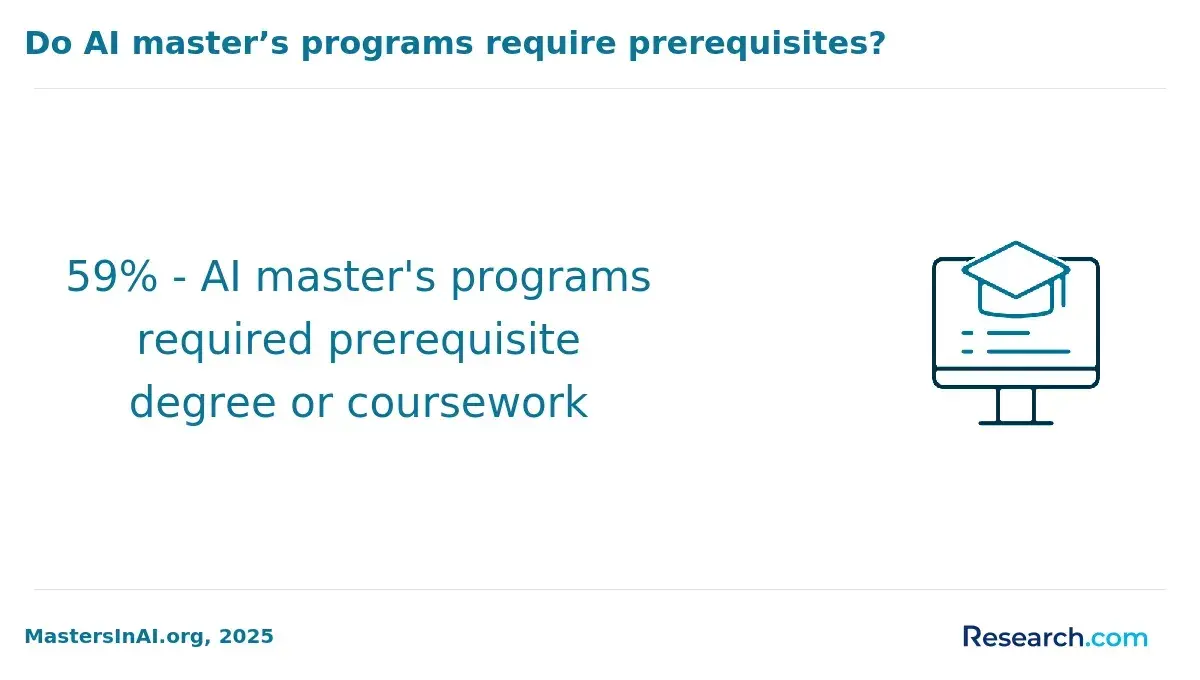
Applicants for AI marketing programs typically need a foundational understanding of marketing principles combined with technical skills. Common prerequisites include a bachelor's degree in marketing, business, communications, or a STEM discipline like computer science.
Some programs also require proficiency in data analysis or coding languages such as Python to support AI tool integration.
Work experience is often valued, particularly for advanced or executive courses. Candidates with 1 to 3 years in digital marketing, performance analytics, or campaign management usually have an advantage.
This experience enables programs to focus on practical applications of AI, including optimizing ad creatives and conversion rate optimization (CRO). Specialized tracks may request portfolios demonstrating data-driven marketing campaigns or familiarity with AI-assisted platforms.
Standardized tests like the GRE or GMAT are less commonly required but might be considered to assess quantitative aptitude. Strong letters of recommendation emphasizing analytical skills and adaptability to new technology can strengthen applications. Personal statements often highlight motivation to apply AI for marketing efficiency and measurable results.
Flexible course formats help accommodate diverse backgrounds. Some certificate programs offer entry through completion of online preparatory modules, allowing those without formal degrees to bridge technical knowledge gaps.
According to Google's Ads Creative Benchmark report, advertisers employing AI-assisted creative techniques have seen an 18% increase in conversion rates and a 30% reduction in production time, underscoring the value of candidates skilled at leveraging AI's practical benefits.
How long do AI courses for marketers usually take?
AI courses for marketers vary widely in length, typically ranging from 4 to 40 hours depending on their scope and depth. Shorter programs, lasting 4 to 10 hours, provide foundational knowledge and are ideal for professionals seeking a quick introduction to AI's role in marketing.
More comprehensive courses extend to 20-40 hours and focus on practical applications such as search generative experience (SGE), paid search, and paid social. These longer courses often include hands-on exercises, case studies, and tool training to help marketers effectively integrate AI into daily workflows.
Focused modules on generative AI, covering SEO or social media content creation, usually take 6 to 12 hours. They cover key topics like prompt engineering, content optimization, and campaign automation.
Full certification programs aimed at performance marketing leaders can demand 30+ hours, combining both theory and strategic implementation. Such programs are designed for marketers leading AI initiatives or managing cross-functional teams.
According to HubSpot's 2024 State of Marketing report, marketers who use generative AI for SEO and social content creation are 2.1× more likely to experience significant year-over-year traffic growth. This highlights the importance of thorough, multi-channel AI training versus brief overviews.
When choosing course duration, consider prior experience and the urgency of AI adoption. Beginners benefit from foundational and experimental learning, while seasoned marketers might prefer targeted, shorter sessions focusing on new AI tools. Modular courses with flexible pacing can fit busy schedules without compromising learning quality.
How much do AI marketing courses cost?
AI marketing courses range widely in price based on provider, depth, and specialization. Entry-level online programs typically cost between $100 and $500, offering foundational training on ai tools applied to performance marketing.
More immersive bootcamps or certification courses, often instructor-led, can range from $1,000 to $5,000 and include hands-on projects and live support.
Corporate training designed for marketing teams usually starts around $5,000, reaching upwards of $20,000 depending on customization and class size. These advanced programs address topics such as data ethics, AI governance, and vendor risk management-key for navigating AI adoption strategically.
Many offerings utilize tiered pricing models, allowing learners to select basic access or premium options with mentorship and certification. Subscription services from universities or platforms may also be available at $30 to $100 monthly for ongoing content updates.
Formal AI governance and compliance training is linked to higher trust in AI systems. According to PwC's 2024 Global Responsible AI Survey, 76% of organizations providing formal training to business leaders reported "high" or "very high" trust in AI, compared to 38% without such training.
Prospective students should focus on courses relevant to their roles, emphasizing practical concerns like algorithm transparency, data privacy, and vendor management in marketing contexts. Balancing cost with these factors ensures better learning outcomes and organizational impact.
What jobs can AI marketing training help you get?
AI marketing training prepares professionals for roles that blend marketing expertise with technical AI skills to optimize campaigns and customer engagement. Key positions include AI marketing analysts who interpret data patterns through machine learning to improve targeting, and AI content strategists who utilize generative AI to create personalized messaging at scale.
Digital campaign managers with AI knowledge automate ad bidding and adjust performance in real time. Marketing data scientists apply AI algorithms to understand consumer behavior and forecast trends, enabling precise data-driven decisions. AI product marketers connect technical teams with customers by translating AI capabilities into effective value propositions.
Upskilling also opens pathways into emerging hybrid roles like AI ethics officers and AI adoption specialists, who handle challenges such as bias mitigation and ROI measurement in AI-driven marketing initiatives.
Structured AI education is increasingly important, with the Marketing AI Institute's 2025 State of Marketing AI report noting companies with formal AI upskilling programs are 3.4× more likely to classify their teams as "AI-advanced."
This training helps candidates stand out in competitive recruiting, where technical proficiency coupled with marketing knowledge is highly valued. Whether targeting leadership in AI-driven transformation or specialist roles in analytics, formal AI marketing coursework bridges traditional skills and the competencies essential for career growth.
How do you choose a credible AI marketing program?
Selecting a credible AI marketing program means focusing on measurable improvements in key performance indicators like customer acquisition cost, conversion rates, and revenue growth.
A McKinsey study found organizations combining AI deployments with targeted capability-building for frontline marketers saw 40% more incremental revenue impact. This highlights the crucial role of training aligned with real-world marketing goals.
Prioritize courses designed or endorsed by recognized industry experts or reputable institutions with a strong marketing and technology background.
Ensure the curriculum covers hands-on AI tools, case studies, and data-driven methods specific to marketing challenges-such as predictive analytics, customer segmentation using AI, and automated campaign optimization.
Check for ongoing support features like mentorship, access to AI marketing software, or community forums that encourage continuous learning and problem-solving. Transparent learning outcomes and success stories backed by concrete metrics add credibility.
Financial and time investment should fit within your team's capacity and budget. Short, intensive modules may suit busy professionals, while longer certification programs benefit those seeking deeper expertise. Clear pricing and refund policies are essential for making informed decisions.
Finally, verify alumni feedback and credentials. Industry-recognized certificates or badges provide added validation and can support career advancement in performance marketing roles.
Other Things You Should Know About Artificial Intelligence
Selecting the right AI course involves evaluating course content on practical AI applications in marketing, instructor expertise, and industry relevance. Consider courses offering hands-on projects, covering both technical and strategic elements, and providing up-to-date insights on AI tools and ethical considerations in the field.
AI improves customer segmentation by analyzing large datasets to identify patterns and behaviors that traditional methods might miss. It enables more precise targeting by grouping customers based on purchasing habits, preferences, and engagement levels. This leads to more personalized and effective marketing campaigns.
Common challenges include data quality issues, lack of AI expertise, and resistance to change from team members. Effective integration requires clear strategy alignment and continuous training to keep skills updated. Ensuring proper infrastructure and data governance is also critical for successful AI adoption.
AI enhances marketing performance measurement by automating data analysis and providing real-time insights. It can attribute conversions more accurately across multiple channels and identify key factors driving results. This allows marketing teams to optimize budgets and strategies more effectively.
References
- 4 ways to use AI in admissions https://www.edified.com.au/post/4-ways-to-use-ai-in-admissions
- The Power of AI for Your Higher Ed Enrollment Marketing Strategy https://www.everspringpartners.com/news/the-power-of-ai-for-your-higher-ed-enrollment-marketing-strategy
- Best AI Marketing Courses Online 2025: Top Picks for Pros https://www.upskillist.com/blog/best-ai-marketing-courses-to-take-in-2025/
- Best AI Marketing Tools 2025 | Top Platforms for Smarter Campaigns https://www.fuse.is/blog/what-is-the-best-ai-tool-for-marketing-a-comprehensive-guide-to-top-platforms-in-2025
- AI-driven Digital Marketing: Admission requirements https://www.rotterdamuas.com/programmes/exchange/AI-driven-digital-marketing/admission-requirements/
- AI in Marketing https://www.cim.co.uk/learn-develop/training-development/training-courses/ai-in-marketing/
- Will AI Replace Digital Marketing Jobs? Future Career Guide 2026 https://www.tops-int.com/blog/will-ai-replace-digital-marketing-jobs-in-future
- What Are the Key Skills Marketers Need From AI Training? https://ai-marketinglabs.com/lab-experiments/what-are-the-key-skills-marketers-need-from-ai-training
- How generative AI is transforming performance marketing in 2025 https://funnel.io/blog/generative-ai-in-marketing
- How AI Helps Marketing Teams Work Smarter Today https://www.techclass.com/resources/learning-and-development-articles/how-marketing-teams-are-using-ai-to-work-smarter-not-harder