2027 Best LLM Courses for Developers

Co-Founder and Chief Data Scientist
Many developers with undergraduate degrees outside the technology field face challenges breaking into AI roles due to the fast-evolving landscape and specialized knowledge requirements. Finding a flexible, accredited program tailored to bridge this gap is essential for career pivots without extensive prior experience in computer science or mathematics.
This challenge is compounded by the sheer number of courses available, often lacking clear guidance on relevance and quality. This article explores top large language model (LLM) courses designed for developers seeking authoritative, practical education in the AI sector, helping professionals identify the best pathways to upskill efficiently and effectively.
Key Things You Should Know
- Top LLM courses in 2026 emphasize practical coding skills and deep learning integration, reflecting a 35% rise in developer enrollment since 2024.
- Most programs now include ethics and bias mitigation to meet growing industry demand for responsible AI development.
- Flexible online and hybrid learning models dominate, with 70% of courses offering certifications aligned with job market needs across the U.S.
Advance Your Career with AI Online Courses
Artificial Intelligence: Implications for Business Strategy
This program provides an introduction to Artificial Intelligence and their implications for business strategy. Earn an official digital certificate.

Oxford Artificial Intelligence Programme
Explore this Oxford Artificial Intelligence programme offered in a flexible learning environment and explore topics like machine learning, automation, and robotics.

Implementing Agentic AI: Building Your Organizational Playbook
This online MIT Agentic AI course offers a practical approach to deploying AI agents in your organization, including a custom playbook. 3 weeks, exclusive launch price.

AI Adoption: Driving Business Value and Impact
This online MIT AI Adoption: Driving Business Value and Impact offers practical frameworks to close the gap between AI potential and business reality.

Artificial Intelligence in Pharma and Biotech
Discover the applications and limitations of artificial intelligence in pharma and biotech with this MIT online short course.

What is an LLM for developers, and how do LLM courses differ from general AI programs?
An LLM (large language model) for developers is a powerful tool tailored to understand, generate, and manipulate human-like text using extensive datasets. Unlike broader AI programs that span areas like image recognition or robotics, large language models for software development specialize in natural language processing tasks such as code completion, documentation generation, and conversational agents.
Specialized LLM training for developers focuses on practical skills including training, fine-tuning, and integrating these models into software systems, which differentiates them from more general AI programs covering techniques like computer vision or reinforcement learning.
These courses cover architectures like GPT and BERT, emphasizing applications like code synthesis, automated debugging, and intelligent API development. Key learning areas include prompt engineering, tokenization, model efficiency, and addressing ethical challenges involving large datasets. Hands-on projects often involve creating chatbots or tools that auto-generate code snippets from natural language.
LLM training also highlights recent innovations such as parameter-efficient fine-tuning and deployment optimization, often skipped in general AI curricula. This focus on market-relevant skills is reflected in Coursera's "Job Skills of 2024" report, which notes a 70% annual growth in generative AI and large language model expertise among learners.
For those pursuing an accelerated path in tech education, exploring the fastest way to get a computer science degree can complement these practical skills. Overall, LLM courses equip developers with advanced language model technologies, enhancing career readiness in a rapidly evolving field.
Advance Your Career with AI Online Courses
Artificial Intelligence: Implications for Business Strategy
This program provides an introduction to Artificial Intelligence and their implications for business strategy. Earn an official digital certificate.
Oxford Artificial Intelligence Programme
Explore this Oxford Artificial Intelligence programme offered in a flexible learning environment and explore topics like machine learning, automation, and robotics.
Implementing Agentic AI: Building Your Organizational Playbook
This online MIT Agentic AI course offers a practical approach to deploying AI agents in your organization, including a custom playbook. 3 weeks, exclusive launch price.
Which types of LLM courses are best for software developers at different experience levels?
Entry-level developers gain the most from foundational LLM courses that focus on practical programming skills and basic natural language processing concepts. Essential topics include prompt engineering, API integration with popular LLM platforms, and hands-on projects like calling GPT-style APIs and understanding tokenization.
Intermediate developers benefit from training in fine-tuning models, prompt optimization, and embedding vectors, which enhance their grasp of transformer architectures and model efficiency. Advanced developers and researchers require specialized courses covering model architecture modifications, custom training pipelines, distributed training, and model compression for deployment at scale.
U.S. labor market data highlights that software engineers with expertise in large language model or generative AI technologies earn about 45% higher salaries than their peers without these skills. This wage premium motivates continuous learning and skill development. Courses designed around project-based learning and real-world datasets prepare students to immediately apply their knowledge. Certifications in tools such as Hugging Face Transformers or the OpenAI API enhance market competitiveness.
Choosing the best LLM courses for software developers by experience level is key to achieving practical outcomes like deploying chatbots, building AI assistants, or optimizing LLM pipelines. Developers should seek LLM training programs tailored to developer skillsets that align with their career goals. For affordable options, consider exploring a cheap online engineering degree that can support advancement in this field.
How can developers choose the best LLM course among top universities, bootcamps, and online platforms?
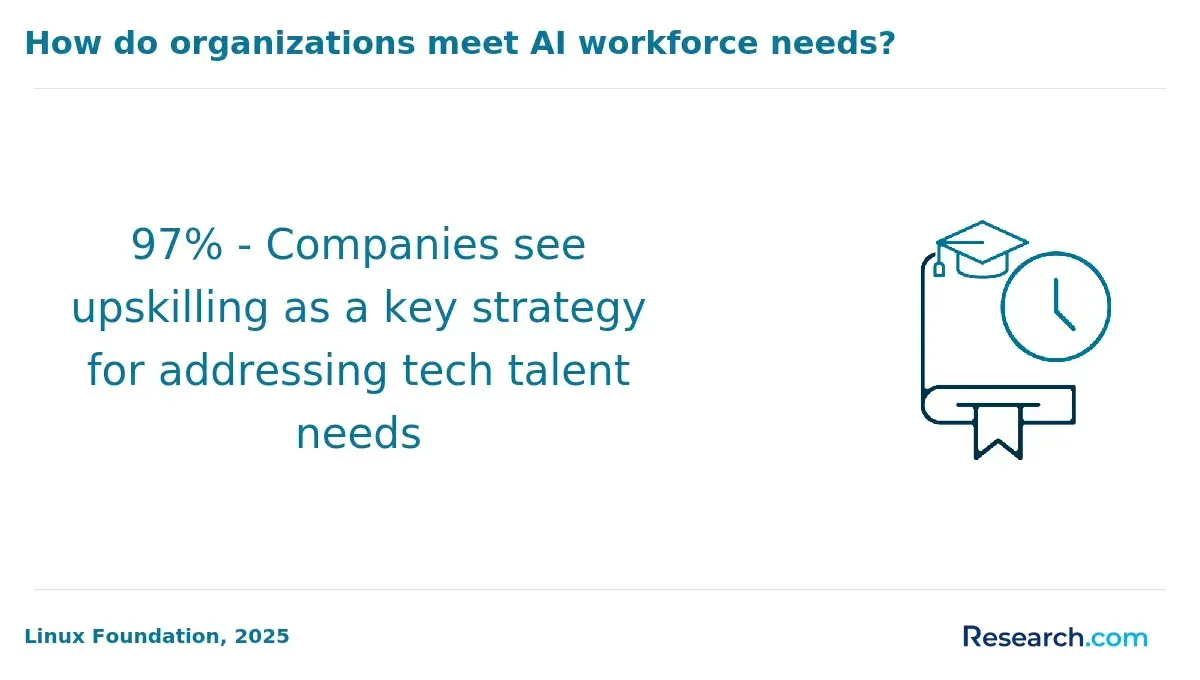
Developers interested in the best LLM courses for developers in top universities should evaluate options based on career objectives, prior experience, and preferred learning methods. University programs provide rigorous theoretical foundations and research exposure, ideal for those seeking deep expertise or academic pathways.
Alternatively, top-rated LLM bootcamps and online platforms for developers offer practical, accelerated training focused on real-world applications. These flexible formats suit professionals balancing work and study while aiming for rapid skill development.
Course content should cover current LLM frameworks such as transformer architectures and fine-tuning techniques. Hands-on labs using popular tools like Hugging Face or OpenAI APIs align with industry standards. It is also vital to select programs addressing AI ethics and responsible deployment due to their growing significance in software development roles.
Instructor quality and student reviews demonstrate practical relevance and clarity. Accreditation from esteemed institutions adds credibility but should be weighed against accessibility and course applicability.
Cost and time commitments vary widely, with universities typically demanding longer terms and higher tuition, while bootcamps and online platforms offer shorter, more affordable options. Networking opportunities differ as well, from university research connections to mentorship and community forums in other formats.
Integration of LLM tooling in development workflows is widespread-GitHub's 2024 State of the Octoverse highlights 92% of developers using AI coding tools and a 55% increase in coding speed with AI assistants. Courses that emphasize embedding LLMs in pipelines support these productivity gains. Prospective learners may also explore data science degrees for complementary skills.
What prerequisites and technical skills do developers need before enrolling in an LLM course?
Developers enrolling in LLM courses should have a strong foundation in technical and analytical skills to maximize their learning. Critical programming proficiency, especially in Python, supports work with natural language processing and machine learning frameworks.
Familiarity with data structures, algorithms, and software engineering principles enables navigating complex model architectures and managing data pipelines efficiently. These technical skills required for LLM course enrollment are essential in understanding large language models.
Knowledge of machine learning fundamentals is equally important, covering supervised and unsupervised learning, neural networks, and optimization techniques. Without these basics, practical LLM implementation and training can prove challenging. Additionally, basic statistics and linear algebra provide insight into the mathematical principles behind model behaviors.
Experience with frameworks such as TensorFlow or PyTorch is highly recommended for effective hands-on work. Developers should also be comfortable handling large datasets-preprocessing, cleaning, and augmenting data. Skills in APIs and cloud computing platforms further facilitate deployment and scalability of LLM applications.
Project experience in AI or natural language processing significantly improves understanding. Even simple projects like chatbots or text classification add valuable context when tackling advanced topics.
Coursera's 2024 Generative AI Index notes a 1,000%+ surge in generative AI and LLM-related course enrollments between 2022 and 2024, reflecting rising industry demand. For those considering the cost of computer science degree, gaining these prerequisites is crucial to stay competitive in this fast-growing field.
What core topics and hands-on projects do the best LLM courses for developers typically include?
Top LLM courses for developers cover essential topics such as transformer architectures, tokenization, prompt engineering, fine-tuning, and transfer learning. These courses also emphasize ethical aspects like bias mitigation and responsible AI use. Proficiency in natural language understanding, generation, and evaluation is critical for creating dependable systems.
Practical projects form a core part of learning, helping students apply concepts through tasks like:
- Designing chatbots or virtual assistants that support complex dialogues.
- Developing summarization tools using pre-trained LLMs.
- Creating code generation or completion tools for specific programming languages.
- Fine-tuning language models on specialized datasets for sectors like healthcare or finance.
- Building question-answering systems to extract data from extensive text collections.
Hands-on experience frequently involves using frameworks like Hugging Face Transformers and deploying models via cloud-based APIs. Focus areas include debugging, improving inference speed, and managing costs-skills reflecting industry realities.
According to Udemy's Workplace Learning Trends report, demand for generative AI training in software development jumped over 1,000% year-over-year. Among artificial intelligence education options, these courses combine foundational theory with extensive project work, empowering students to confidently develop deployable solutions.
How do online, hybrid, and on-campus LLM programs compare for working software professionals?
Online LLM programs offer unmatched flexibility for working professionals by allowing study alongside full-time jobs. Most feature asynchronous lectures and modular coursework, helping learners manage their schedules and accelerate skill acquisition. However, these formats may limit immediate networking and direct access to professors and peers, which can affect collaborative learning and mentorship.
Hybrid LLM programs combine online and on-campus elements to balance flexibility with face-to-face interaction. They support structured, immersive sessions ideal for mastering complex topics like LLM model architecture and implementation challenges. Hybrid models also enhance networking through real-time discussions, valuable for career-switchers and those seeking mentorship in AI research labs or startups.
On-campus LLM programs provide immersive environments with hands-on labs, group projects, and direct access to university resources. These suit professionals willing to pause work or relocate temporarily to maximize experiential learning. Proximity to faculty and industry partners can fast-track hiring via referrals, internships, or research collaborations, though they require greater time and financial commitments.
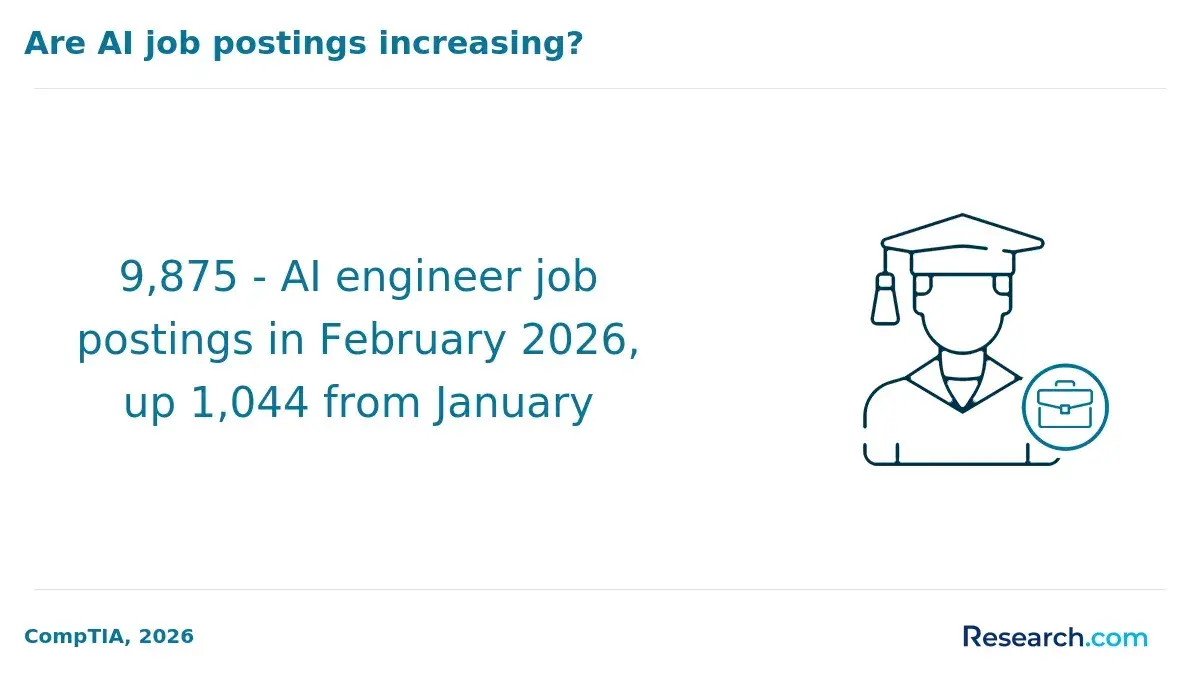
Indeed Hiring Lab data shows job postings for AI engineer roles have grown over 300% from 2022 to 2024, with median base salaries about 60% higher than those for general software engineers. Professionals should weigh factors like networking potential, practical experience, and schedule demands when choosing an LLM course format to align with career goals.
How long do LLM courses for developers take, and what do they typically cost in the U.S.?
LLM courses for developers in the U.S. usually last from a few weeks to six months, depending on the program's intensity and format. Full-time bootcamps typically run 8 to 12 weeks, while part-time or self-paced options can extend up to half a year. Short-form courses focus on practical skills and often require 20 to 50 hours, making them ideal for working professionals balancing other commitments.
Costs vary significantly, generally ranging from $500 to $5,000-much more affordable than traditional graduate degrees, which often exceed $40,000. Well-known online programs typically charge between $1,000 and $3,000 for specialized training. More comprehensive bootcamps with personalized instruction and career support tend to be priced at the higher end.
A 2024 HolonIQ market analysis forecasts the global generative AI education market will exceed $10 billion by 2026, largely fueled by short-form online courses costing less than 5% of a typical U.S. master's degree in computer science. This highlights affordability as a key driver for many developers seeking to upskill in LLMs.
When selecting an LLM course, balance considerations like duration, budget, and depth of content. Short courses are best for immediate skill deployment, while longer programs offer deeper theoretical understanding.
Which industry-recognized certificates or microcredentials in LLM development matter most to employers?
Certificates and microcredentials that emphasize practical skills in large language model (LLM) development are highly valued by employers. These credentials focus on fine-tuning, deploying, and integrating LLMs using real-world frameworks. For example, Hugging Face microcredentials, which cover model fine-tuning, prompt engineering, and production deployment, align closely with current job market demands.
The rapid expansion of openly accessible language models-from around 1,000 to over 10,000 models-makes familiarity with this ecosystem critical. Proficiency in tools like Hugging Face's Transformers library and the OpenLLM pipeline is frequently requested in job postings.
Key credentials to consider include:
- Hugging Face's "Course on Transformers" and specialized microcredentials in LLM fine-tuning
- Stanford's online "Natural Language Processing with Deep Learning" certificate, covering foundational and advanced techniques
- Microsoft's "Azure AI Fundamentals" certificate, bridging cloud-based LLM deployment and operational skills
- Google Cloud's "Machine Learning Engineering" microcredential, focusing on scalable model deployment
Employers value certifications paired with hands-on portfolio projects that showcase prompt engineering, efficient training on custom datasets, and model optimization for production. Programs incorporating applied labs and assessments better prepare candidates for real-world challenges, addressing employer concerns about practical readiness in this rapidly evolving field.
What LLM-focused career paths, job titles, and industries can developers pursue after these courses?
Developers skilled in large language model (LLM) courses find diverse career opportunities in industries like technology, healthcare, finance, legal services, and e-commerce. Key roles include prompt engineers, who design effective inputs to optimize LLM outputs; machine learning engineers, focused on integrating LLMs into software; and data scientists involved in model tuning and evaluation.
AI product managers lead teams developing LLM-powered solutions, while AI research scientists innovate new architectures or training methods.
Healthcare leverages LLM expertise to improve medical data analysis and patient communications. Finance uses these skills for fraud detection and automating compliance, whereas legal tech firms apply them to contract review and research automation. According to Deloitte's 2024 Global Generative AI Survey, 79% of businesses piloting AI report shortages in LLM and prompt-engineering skills, despite 60% planning higher AI investments soon.
Growing demand also exists for professionals in AI ethics, policy compliance, custom training, cloud deployment, and system monitoring. Practical abilities in fine-tuning, prompt engineering, or API integration provide a competitive edge in securing roles directly addressing business needs.
Career paths commonly include:
- Prompt engineer
- Machine learning engineer
- Data scientist
- AI product manager
- AI research scientist
What are the typical salaries and long-term job outlook for developers specializing in LLMs?
Developers specializing in large language models (LLMs) enjoy competitive salaries and strong job security. Entry-level LLM engineers in the U.S. generally earn between $110,000 and $140,000 annually, while mid-career professionals make $150,000 to $190,000. Senior positions, especially those combining machine learning and natural language processing expertise, can exceed $220,000 per year. Skills in prompt engineering, fine-tuning, and LLM deployment further enhance earning potential.
Demand for LLM specialists is growing across industries like healthcare, finance, and tech startups, driven by applications in conversational agents, content creation, and domain-specific adaptation. Employers value professionals who integrate LLM capabilities with software engineering or data science and emphasize ethical AI use.
Long-term career resilience for LLM developers is strong. McKinsey's report on generative AI's economic impact forecasts $2.6-4.4 trillion in annual added value, positioning LLM roles as essential to AI-augmented workforces that are less vulnerable to automation. Continuous learning and hands-on experience with evolving LLM frameworks remain essential for maximizing earnings and career stability.
- Entry-level salary: $110,000-$140,000
- Mid-career salary: $150,000-$190,000
- Senior roles: $220,000+
Other Things You Should Know About Artificial Intelligence
Developers must consider issues such as bias in training data, transparency of AI models, and the potential impact on user privacy. Ensuring fairness and preventing discrimination within AI systems are critical to responsible development. Additionally, ethical AI development involves adhering to regulations and promoting accountability throughout the model's lifecycle.
Developers should regularly engage with academic journals, attend industry conferences, and participate in online forums dedicated to AI research. Following updates from leading AI research organizations and subscribing to specialized newsletters can also help maintain current knowledge of emerging models and methodologies.
Python remains the dominant programming language for AI and large language model development due to its extensive libraries such as TensorFlow and PyTorch. Other languages like Java, C++, and Julia are also used depending on specific project requirements and performance considerations.
In 2027, developers should consider course reputation, instructor expertise, hands-on project opportunities, up-to-date content on emerging AI trends, and student feedback when evaluating the best LLM courses. Focus on comprehensive curriculums that address both theoretical knowledge and practical applications.
References
- A Survey on Code Generation with LLM-based Agents https://arxiv.org/html/2508.00083v1
- How Much Does LLM Training Cost? | Galileo https://galileo.ai/blog/llm-model-training-cost
- The Best 'LLM Developer' Courses in 2025 https://www.louisbouchard.ai/the-best-llm-developer-courses-in-2025/
- 16 Artificial Intelligence Career Paths https://www.calmu.edu/news/artificial-intelligence-career-paths
- Microcredentials: Empowering Modern Learners & Employers https://evolllution.com/microcredentials-empowering-modern-learners-employers
- Software Developer Job Market Outlook August 2025 https://mev.com/blog/software-engineer-job-market-august-2025
- Career Options After Completing a Full Stack Developer Course https://www.ncuindia.edu/career-opportunities-after-completing-a-full-stack-developer-course/
- State of the software engineering job market in 2025: what the data says https://newsletter.pragmaticengineer.com/p/state-of-the-tech-market-in-2025
- Dev Skills for the LLM Era https://www.slater.dev/2025/06/dev-skills-for-the-llm-era/
- Software developer career paths: 2026 job guide https://www.pluralsight.com/resources/blog/software-development/software-development-career-guide-2025