2027 College Decision Statistics: What Makes Students Choose a University?

Co-Founder and Chief Data Scientist
Students are comparing schools with sharper questions about cost, outcomes, flexibility, and trust. College Board's latest pricing data shows average published tuition and fees of $11,610 for in-state public four-year colleges and $43,350 for private nonprofit four-year colleges, making value proof central to enrollment decisions.
This guide is for growth, enrollment, and education marketing teams that need more than traffic. You will learn which decision factors matter, which channels capture intent, and how to turn college decision statistics into better campaigns, pages, partnerships, and ROI measurement.
Key Things You Should Know
- Cost, program fit, career outcomes, flexibility, and trust signals are the strongest decision factors because students are evaluating education as both a life choice and a financial investment.
- High-intent channels usually sit closest to active comparison behavior: organic search, AI search visibility, trusted education marketplaces, program-specific paid search, referrals, and content partnerships.
- Lead quality improves when campaigns segment by student goal, page content answers cost and outcomes questions before inquiry, and ROI is measured across the full inquiry-to-enrollment cycle rather than by cost per lead alone.
What college decision factors most strongly influence whether prospective students enroll?
College decision statistics describe the measurable reasons prospective students choose, compare, apply to, or enroll in a school or education program. For marketers, the important point is not simply which factor ranks first. It is how those factors interact across the student journey: a student may discover a program because of career interest, compare it because of price, and finally inquire because the page makes the next step feel low-risk.
The most important decision factors usually cluster into five categories: affordability, academic fit, career value, convenience, and institutional credibility. The table below summarizes what each factor means for student acquisition and why it affects conversion quality.
| Decision factor | What students are evaluating | Marketing implication |
| Affordability and aid | Total cost, net price, scholarships, employer reimbursement, payment options, and debt risk | Campaigns and landing pages should explain cost ranges, aid steps, and value before asking for personal information. |
| Program fit | Major, credential type, curriculum, prerequisites, specialization, academic level, and pacing | Generic brand ads often underperform program-specific messaging because students search by goal, field, and credential. |
| Career outcomes | Relevant roles, licensure alignment, employer recognition, portfolio value, and career support | Outcome claims should be evidence-based and specific, avoiding exaggerated salary or job-placement promises. |
| Flexibility | Online availability, part-time options, start dates, asynchronous formats, transfer credit, and time to completion | Working adults and career changers need friction-reducing proof that school can fit around work and family responsibilities. |
| Trust and social proof | Accreditation, rankings, faculty credibility, reviews, student stories, and third-party visibility | Students rarely rely on one source, so consistency across search results, review environments, and program pages matters. |
Affordability deserves special attention because it filters demand early. A student who cannot understand net cost may not inquire even if the program is academically attractive. At the same time, low-cost messaging alone can attract weak-fit leads if the program's outcomes, expectations, and admissions requirements are unclear.
A common mistake is optimizing campaigns around whichever factor generates the cheapest lead. For example, "fast" or "affordable" messaging may lift form volume while lowering enrollment intent. Stronger campaigns combine value, fit, and feasibility: what the program prepares the student to do, why the format works for their life, and how the financial path can be understood.
How do students research and compare universities across online and offline channels today?
Students now research colleges through a mixed journey that includes search engines, AI answers, school websites, rankings, social content, email, family advice, counselors, employer recommendations, and peer reviews. The practical takeaway is that the "first touch" rarely tells the whole story. A student may ask a broad question in Google or ChatGPT, read comparison content, visit a program page, return through a branded search, and then inquire days or weeks later.
This matters because many schools still build campaigns as if students move in a straight line from ad click to form fill. In reality, the research process is layered. Students want independent validation before they trust the school's own claims, especially for online, graduate, career-focused, and higher-cost programs.
AI discovery is becoming part of that comparison process. When students ask AI systems which programs fit a goal, the answer is often shaped by clear program information, trusted third-party mentions, structured content, and consistent web presence. Teams that want to understand this shift should study AI search for universities because visibility is no longer limited to traditional search rankings.
Research.com fits naturally into this behavior because it is a leading online education platform where students discover, compare, and choose schools, degrees, online programs, certificates, and career paths. The platform reaches more than 12 million students and learners each year, including prospective students, graduate students, working professionals, adult learners, and career changers. Because much of its traffic comes from search engines and AI/LLM discovery, advertisers can meet students while they are actively researching options rather than interrupting them in low-intent environments.
For enrollment teams, the strongest research strategy is not to chase every channel equally. It is to make sure the same core proof appears wherever students validate the decision: program pages, third-party education content, search snippets, AI-readable pages, admissions emails, and counselor or advisor conversations.
Which acquisition channels attract students who are most likely to apply and enroll?
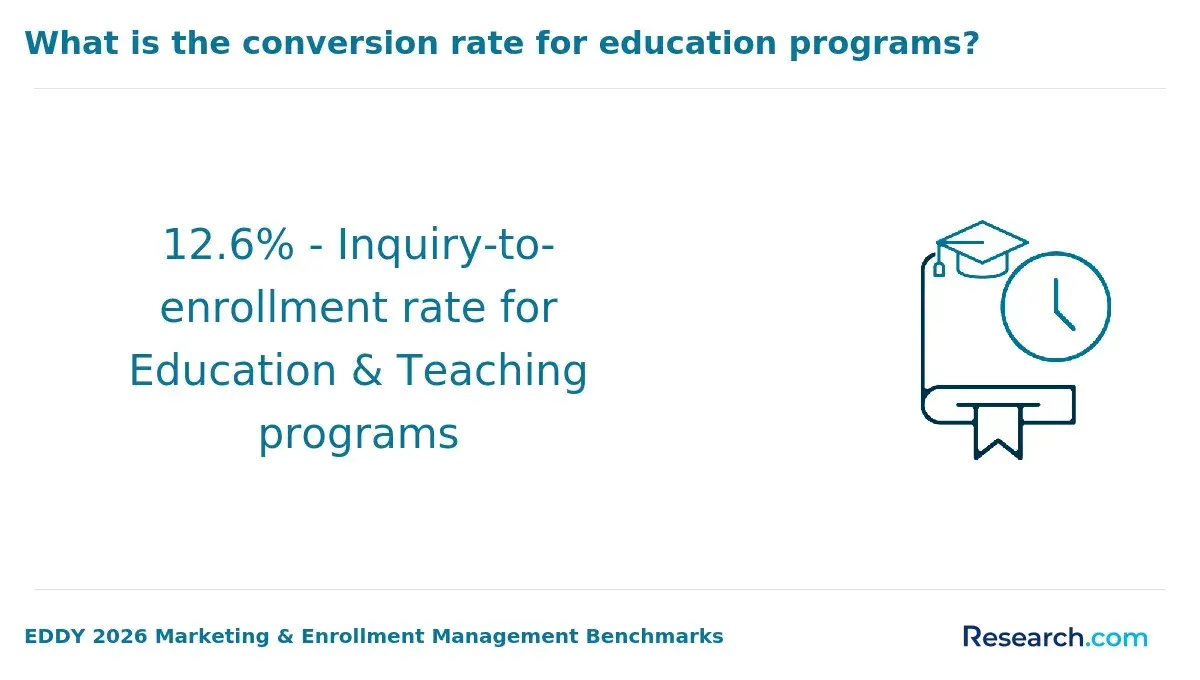
The channels most likely to produce applicants and enrollments are usually the ones closest to explicit student intent. That does not always mean they are the cheapest. It means the student is already asking a program, career, cost, or school-comparison question that signals active consideration.
The table below compares common acquisition channels by intent level and best use case. It is designed to help marketers avoid judging every channel by cost per lead alone.
| Channel | Typical intent level | Best use case | Main risk |
| Organic search and SEO | High when queries are program, career, or school-specific | Capturing sustained demand and reducing dependence on paid traffic | Slow ramp time and difficulty attributing assisted conversions |
| Paid search | High for program and credential queries | Testing demand quickly and capturing bottom-funnel searches | Rising competition can push cost per qualified inquiry beyond target economics |
| Trusted education platforms | High to medium, depending on content context | Reaching students during comparison and research moments | Performance varies if placements are not aligned with program category and audience goal |
| Paid social | Medium to low unless targeting is intent-informed | Building awareness, retargeting, and promoting career-change narratives | Can create inexpensive but low-readiness leads if forms are too frictionless |
| Employer, association, and community partnerships | High when the audience has a clear upskilling need | Reaching working adults and niche professional audiences | Longer sales cycles and partnership management requirements |
| Affiliate and lead generation partners | Variable | Scaling inquiry volume across multiple programs | Lead quality can vary widely without source transparency and validation rules |
Research.com is especially relevant for schools and agencies that want to reach students during active comparison. As a leading education marketing and student acquisition platform, Research.com offers CPC campaigns, CPL lead generation, sponsored placements, content partnerships, custom advertising packages, and strategic education marketing partnerships. That flexibility allows advertisers to align the model with the objective: qualified traffic, inquiries, program visibility, awareness, or a broader category presence.
If your team is comparing media options, use resources on university advertising platforms to evaluate where your programs can reach students with meaningful intent. For many institutions, a strong mix includes owned SEO, paid search for priority programs, retargeting, and trusted third-party education placements where students are already comparing choices.
The red flag is buying volume without understanding source intent. A low cost per lead may look efficient until admissions teams report disconnected phone numbers, students who do not remember requesting information, or inquiries from people who are not eligible for the program. Better channel evaluation includes cost per qualified inquiry, application rate, acceptance rate, enrollment rate, and contribution margin by source.
How can we use college decision statistics to improve lead quality and conversion?
College decision statistics are most useful when they change targeting, messaging, and follow-up behavior. If the data shows students care about cost, flexibility, and career value, then a campaign should not simply say "request information." It should answer the questions that make a serious student willing to take the next step.
One useful benchmark comes from the Bureau of Labor Statistics, which reported that workers with a bachelor's degree had median weekly earnings of $1,543 in its latest education-pay data, compared with $930 for workers with a high school diploma. This does not prove that any individual program produces a specific outcome, but it explains why students often evaluate education through a career-value lens.
To convert that insight into better leads, enrollment marketers should separate interest from readiness. The following sequence helps teams improve quality without suppressing legitimate demand.
- Define the student's goal before defining the channel: career switch, promotion, licensure, degree completion, graduate advancement, or skill acquisition.
- Map each goal to the decision proof required: cost clarity, employer relevance, time to completion, admissions requirements, transfer credit, or career support.
- Use page-level intent signals, such as visits to tuition, curriculum, accreditation, and admissions sections, to prioritize follow-up.
- Score leads by eligibility and motivation, not only by form completion speed or campaign source.
- Feed admissions outcomes back into marketing reports so budget shifts toward sources that produce applications and enrollments, not just inquiries.
A common mistake is removing all friction from forms. Short forms can improve volume, but they can also hide whether a student is qualified, financially prepared, or looking for the right program level. Instead of asking for too much personal information upfront, add intent-based questions that help the advisor personalize follow-up: desired start date, credential goal, prior education, preferred format, and primary motivation.
Lead quality also improves when marketing and admissions agree on definitions. "Qualified" should mean more than reachable. It should include program fit, eligibility, timing, and demonstrated interest. Without that shared definition, marketing may celebrate lead growth while admissions experiences the campaign as noise.
What information do students expect on program and landing pages before they inquire?
Program and landing pages should reduce uncertainty before asking for a student's contact information. The higher the cost, longer the commitment, or more complex the admissions process, the more proof students need before they inquire. College Board's latest pricing data lists average published out-of-state tuition and fees at public four-year colleges at $30,780, which helps explain why many students hesitate when pages avoid cost details.
The best-performing pages usually answer the questions students are already comparing across tabs. Before optimizing colors, form placement, or button text, make sure the page includes the decision information serious prospects expect.
- Program summary: credential type, delivery format, academic level, start dates, and who the program is designed for.
- Cost and financial information: tuition structure, fees, aid options, employer reimbursement guidance, and a clear path to a net-price conversation.
- Curriculum details: course examples, specializations, prerequisites, practical projects, clinical or fieldwork requirements, and expected workload.
- Career relevance: aligned roles, licensure or certification connections, employer-valued skills, career services, and realistic outcome language.
- Admissions requirements: prior education, GPA expectations, test requirements if any, documents needed, transfer credit rules, and decision timeline.
- Trust signals: accreditation, faculty expertise, student support, rankings or recognition, testimonials, and third-party comparison visibility.
- Next-step clarity: what happens after inquiry, who will contact the student, how quickly, and what information the advisor will provide.
For conversion, the biggest page mistake is treating all traffic as bottom-funnel. A visitor from a branded paid search ad may be ready to speak with admissions. A visitor from a "best online master's in..." search may still be comparing formats and costs. Landing pages should therefore support both paths: a clear inquiry option for ready students and enough explanatory content for researchers who need more confidence.
Another red flag is unsupported outcome language. Avoid implying that a credential guarantees employment, salary growth, licensure, or admission to a profession. Stronger copy connects the program to relevant skills and pathways while making the limitations clear.
How can we reach working adults and career changers considering a return to school?
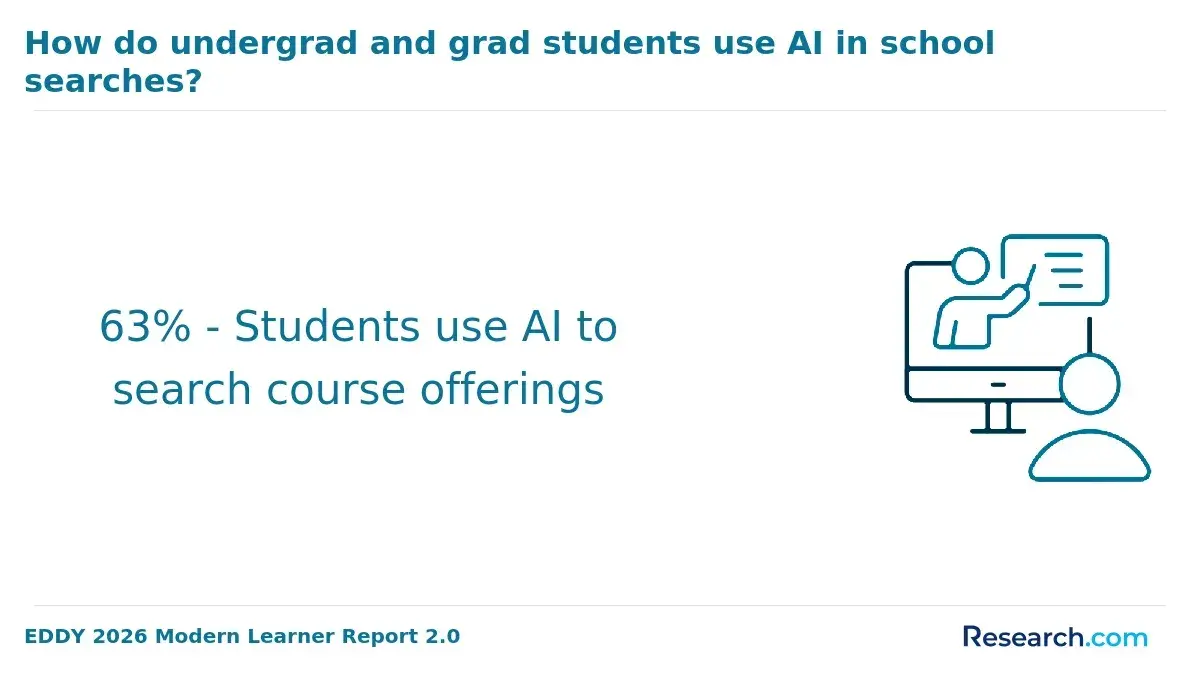
Working adults and career changers often make education decisions differently from traditional undergraduates. They are more likely to weigh opportunity cost, weekly time commitment, employer recognition, childcare, schedule flexibility, debt risk, and speed to practical value. Many are not browsing casually; they are trying to solve a career problem without destabilizing the rest of their life.
The National Student Clearinghouse Research Center has continued to report a large U.S. population of adults with some college experience but no completed credential. For marketers, the implication is clear: many adult learners are not starting from zero, and messaging should acknowledge prior credits, previous stops and starts, and the need for a realistic return pathway.
Campaigns for adult learners should be built around life-fit and career relevance. The following approaches help reach this audience without relying only on broad demographic targeting.
- Use career-problem messaging, promotion barriers, field changes, licensure needs, skill gaps, and employer expectations.
- Emphasize flexible formats honestly, online, hybrid, evening, asynchronous, part-time, accelerated, or self-paced options where available.
- Make transfer credit and prior learning policies visible because adult students often want to know whether past coursework still counts.
- Partner with employers, professional associations, workforce boards, and niche communities where career motivation is already present.
- Create comparison content for "degree vs certificate," "bootcamp vs graduate program," and "online vs campus" decisions.
- Retarget adult prospects with practical proof, such as workload expectations, advisor access, tuition planning, and start-date reminders.
Online course, certificate, bootcamp, and training providers should also evaluate the best advertising platforms for online courses because adult learners often compare degree and non-degree options side by side. A certificate provider may compete with a college program for the same career-change intent, while a university may need to explain why a degree offers broader long-term value.
The most common mistake is assuming adult learners need less nurturing because they are practical and career-focused. In many cases, they need more reassurance, not less. They may have abandoned a prior education plan, worry about affordability, or need a spouse, employer, or manager to support the decision.
How should we balance investment in paid media, SEO, content, and partnerships?
The right budget mix depends on the program's awareness level, competitive intensity, enrollment timeline, and internal capacity. Paid media is useful for speed and testing. SEO and content build durable demand capture. Partnerships extend reach into trusted environments. The mistake is treating these as separate tactics instead of a portfolio that supports the same enrollment goal.
The table below summarizes how each investment type typically contributes to student acquisition. Use it to align expectations with time horizon and risk.
| Investment type | Best role in the mix | Time horizon | Primary performance question |
| Paid search | Capture active program and school comparison demand | Immediate to short term | Are we converting high-intent searches into qualified inquiries at an acceptable cost? |
| Paid social | Create awareness, retarget visitors, and test audience-message fit | Short to medium term | Are leads showing real readiness or only responding to low-friction forms? |
| SEO | Build long-term visibility for program, career, ranking, and cost queries | Medium to long term | Are organic visitors moving into inquiry, application, or assisted conversion paths? |
| Content | Educate researchers and support AI/search discovery | Medium term | Does content answer the questions students ask before contacting admissions? |
| Third-party platforms and partnerships | Reach students in trusted comparison environments | Short to medium term | Does the partner audience match the program's intent, eligibility, and enrollment economics? |
Research.com can play a strategic role in this portfolio because it combines high-intent education content with flexible commercial models. Universities, online degree providers, agencies, EdTech companies, certificate platforms, and student service providers can use Research.com to promote programs, generate student inquiries, increase qualified traffic, or build awareness in competitive categories. Its CPC, CPL, sponsored placement, content partnership, and custom package options make it useful for both performance-focused and visibility-focused goals.
Agencies managing multiple education clients should compare higher education advertising for agencies because channel selection often changes by client maturity. A well-known university may need efficient bottom-funnel capture, while a niche bootcamp or graduate program may need third-party validation before direct response campaigns perform.
A practical budget rule is to avoid overfunding only the easiest-to-measure channel. Paid media will usually receive more immediate credit, but SEO, content, and trusted third-party placements may influence the comparison stage before the final click. Attribution should reflect that reality.
How can underperforming or low-awareness programs be positioned to match student priorities?
Underperforming programs often struggle because the market does not understand who they are for, what problem they solve, or why they are different from a more obvious alternative. Low awareness is not always a demand problem. Sometimes it is a positioning problem.
The first step is to identify the student priority the program can credibly own. A lesser-known program should not try to compete with larger institutions on every dimension. It should find the intersection of student need, program strength, and market whitespace.
Use the following positioning framework before increasing media spend.
- Define the primary student: first-time undergraduate, graduate student, career changer, working parent, military learner, international student already in the U.S., degree completer, or employer-sponsored learner.
- Name the main decision problem: affordability, admission accessibility, schedule flexibility, licensure preparation, specialization, speed, location, or career transition.
- Clarify the credible advantage: faculty experience, cohort model, hands-on projects, transfer-friendly structure, local employer ties, online support, or niche curriculum.
- Translate features into student outcomes without exaggeration: what the student can learn, build, qualify to pursue, or discuss with employers after completion. Test the message in search ads, landing pages, comparison content, and advisor scripts before scaling spend.
For example, a low-awareness cybersecurity certificate may not win against nationally known brands by saying "advance your career." It may perform better by emphasizing beginner-friendly prerequisites, hands-on labs, evening pacing, and alignment with specific certification preparation if those claims are accurate. A graduate healthcare administration program may need to highlight leadership pathways, online flexibility, and relevance for clinicians moving into management.
The red flag is repositioning a program around a trendy labor market term that the curriculum does not actually support. If the market is interested in AI, analytics, nursing leadership, or cybersecurity, the program page must show real courses, projects, faculty expertise, and student support connected to that interest.
How can we differentiate our programs from better-known competitors using decision insights?
Differentiation should be based on the student's decision criteria, not the institution's internal talking points. "Personalized support," "flexible learning," and "career-focused curriculum" are common claims, so they only work when supported by specific proof. A smaller or lesser-known provider can compete by being clearer, more useful, and more relevant at the moment of comparison.
Strong differentiation usually comes from evidence in one of four areas: audience fit, program design, student support, or external validation. If a competitor has more brand awareness, your program page and partner placements must make the student think, "This fits my situation better."
Use these differentiation moves when competing against better-known schools or platforms.
- Make the audience explicit: "for working nurses," "for career changers with no coding background," or "for degree completers with prior credits" is stronger than broad enrollment copy.
- Show curriculum specificity: list projects, tools, concentrations, practicum experiences, or licensure connections rather than relying on vague academic benefits.
- Reduce perceived risk: explain admissions steps, cost planning, support access, transfer evaluation, and what happens after inquiry.
- Use third-party trust environments: appear where students compare options, read rankings, and research education decisions outside your own website. Equip admissions teams with the same proof points so the experience is consistent from ad to advisor conversation.
Research.com is valuable here because it places education brands in a trusted research environment where students are already comparing schools, degrees, certificates, online programs, and career paths. For programs that lack broad name recognition, sponsored placements, content partnerships, and custom advertising packages can create visibility at the exact stage when students are forming a shortlist.
If your school, agency, course provider, or EdTech brand needs more qualified attention from active education researchers, consider promoting with Research.com. Its audience of more than 12 million annual students and learners includes the people many campaigns struggle to reach efficiently: working professionals, graduate prospects, adult learners, career changers, and students comparing real options. Use Research.com to build awareness, drive qualified traffic, generate inquiries, and put your program in front of learners when the decision is still open.
How should we measure marketing ROI when college decisions and enrollments take months?
Education marketing ROI is difficult because the decision cycle can be long, multi-touch, and influenced by offline conversations. A student may first discover a program through comparison content, return through paid search, speak with an advisor, wait for financial information, apply weeks later, and enroll in a later term. If attribution stops at the first form fill, budget decisions will be distorted.
A useful ROI model follows the full enrollment funnel from discovery to inquiry, application, admission, enrollment, and retention. This is especially important for graduate, online, and adult-focused programs where lead nurturing and advisor follow-up heavily influence final outcomes.
The table below shows the measurement layers that help teams see whether marketing is producing enrollments rather than activity.
| Funnel stage | Metric to monitor | What it tells you |
| Discovery | Qualified traffic by source and program | Whether campaigns are reaching relevant audiences, not just producing visits |
| Inquiry | Cost per qualified inquiry | Whether lead volume is economically viable after eligibility and intent checks |
| Application | Inquiry-to-application rate | Whether messaging, advisor follow-up, and program fit are strong enough to move students forward |
| Admission | Application-to-admit rate | Whether campaigns are attracting students who meet admissions requirements |
| Enrollment | Cost per enrollment and enrollment rate by source | Whether the channel can scale within acceptable acquisition economics |
| Post-enrollment | Persistence or early retention indicators | Whether acquisition sources are producing students likely to continue, not only start |
To measure ROI more accurately, teams need a shared data structure across marketing, CRM, admissions, and student information systems. The following steps are practical starting points.
- Use consistent source and campaign tracking from first visit through enrollment.
- Separate raw leads from qualified inquiries in reporting dashboards.
- Track program-level economics because a low-cost lead source for one program may be unprofitable for another.
- Measure assisted conversions so SEO, content, and third-party research placements receive appropriate credit.
- Review source quality with admissions teams at least monthly, using real application and enrollment outcomes.
The biggest reporting mistake is optimizing for the fastest metric because it is available first. Cost per lead matters, but it is not ROI. A channel with a higher inquiry cost can outperform if it produces stronger application rates, higher enrollment rates, better fit, and more stable retention.
Other Things You Should Know
Students usually choose based on a combination of cost, program fit, career relevance, flexibility, reputation, support, and trust. The winning school is often the one that makes the decision feel both valuable and manageable.
There is no single best channel for every program. High-intent search, trusted education platforms, retargeting, partnerships, and SEO often work best together because students research across multiple touchpoints before applying.
Schools can reduce waste by targeting specific student goals, improving landing page clarity, using qualification questions, excluding poor-fit audiences, and shifting budget toward sources that produce applications and enrollments rather than cheap inquiries.
Common causes include vague messaging, overly broad targeting, low-friction forms, missing cost information, poor follow-up speed, weak program fit, and measuring success by lead volume instead of qualified inquiries and enrollments.
References
- Career Transition Advice: How to Make a Career Change with Confidence https://www.umassglobal.edu/blog-news/career-transition-advice-make-a-career-change-confidence
- Ten Factors that Influenced the Decision to Apply in 2023 — Academica Forum https://forum.academica.ca/forum/ucas2024-10-factors-influencing-choice
- 7 Marketing Strategies to Increase Student Enrollment in Higher Ed https://unibuddy.com/blog/marketing-strategies-to-increase-student-enrollment/
- Understanding the enrollment motivations of college students https://www.ruffalonl.com/blog/enrollment/understanding-enrollment-motivations-college-students/
- SEO & Paid Media: A Perfect Match | Oban International https://obaninternational.com/blog/seo-and-paid-media-a-perfect-match-for-international-success/
- How do you measure ROI in higher education marketing? — Noetic Marketer | Education Marketing Agency https://www.noeticmarketer.com/blog/measuring-higher-education-marketing-roi
- 4 Must-Haves for Your Student Search Strategy - Capture Higher Ed https://www.capturehighered.com/blog/4-must-haves-for-your-student-search-strategy/
- Tips to Boost Enrollment from Higher Ed Landing Pages https://ambioedu.com/tips-to-boost-enrollment-from-higher-ed-landing-pages/
- Data-driven insights: how to outperform competitors? https://www.future-processing.com/blog/data-driven-insights/
- Competitor analysis: The ultimate guide - Relative Insight https://relativeinsight.com/the-relative-insight-guide-to-competitor-analysis/