2027 Digital Marketing Statistics: Trends, Benchmarks and Key Data

Co-Founder and Chief Data Scientist
Student acquisition now depends on choosing channels that create enrollments, not just traffic. U.S. digital advertising revenue reached $258.6 billion in 2024, according to the IAB/PwC Internet Advertising Revenue Report, which means education brands are competing in a crowded, expensive market.
This guide is for universities, online programs, course providers, bootcamps, and agencies that need better acquisition economics. You'll learn which channels fit different enrollment goals, how to improve lead quality, where high-intent students research options, and how to measure performance across long decision journeys.
Key Things You Should Know
- Education marketers should judge channels by enrollment contribution, not lead volume alone, a low-cost lead source can become expensive if inquiry-to-application conversion is weak.
- High-intent discovery matters because published tuition remains a major decision factor. College Board reported average 2024-25 published tuition and fees of $11,610 for in-state public four-year institutions and $43,350 for private nonprofit four-year institutions.
- AI search, SEO, comparison content, and trusted education media are becoming more important because students increasingly research programs across search engines, AI answers, rankings, reviews, and career-outcome content before submitting an inquiry.
Which digital marketing channels drive the most enrollments?
The channels that drive the most enrollments are usually the ones that capture existing intent and then support the student through comparison, proof, and follow-up. Paid search, organic search, trusted education directories, affiliates, retargeting, email nurturing, webinars, and advisor outreach all play different roles; the mistake is expecting one channel to do the whole job.
For education marketers, "best channel" depends on the program's demand profile. A well-known MBA or nursing program may capture demand through search and comparison pages, while a newer certificate or bootcamp may need awareness, content, and partner distribution before prospects search for the brand by name.
The table below summarizes the practical enrollment role of major digital channels. It is meant to help teams compare channel intent, speed, and risk before deciding where to invest.
| Channel | Typical student intent | Best use case | Main risk |
| Paid search | High | Capturing prospects searching for specific degrees, certificates, schools, or career paths | Rising cost per click in competitive program categories |
| Organic search and SEO | Medium to high | Building durable visibility for program, ranking, cost, salary, and career questions | Slow ramp and dependence on content quality and authority |
| Education marketplaces and directories | High | Reaching students already comparing schools, programs, and formats | Lead quality varies by partner and targeting discipline |
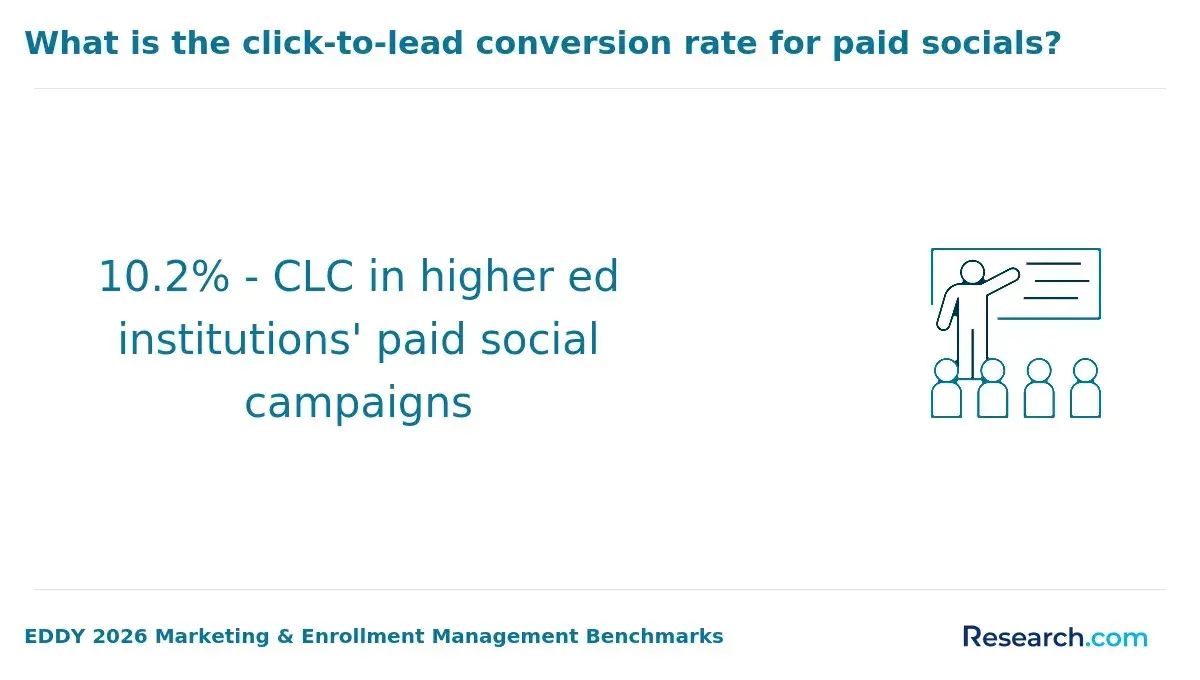
| Paid social | Low to medium | Creating demand for flexible, career-focused, or low-awareness programs | High inquiry volume can mask weak intent |
| Affiliates and lead partners | Medium to high | Expanding reach without building every content or media asset internally | Duplicate leads, poor compliance, or weak source transparency |
| Email and SMS nurturing | Warm | Moving inquiries toward application, event attendance, or advisor calls | Over-automation can reduce trust if messages are generic |
In practice, enrollment performance improves when marketers pair a demand-capture channel with a trust-building channel. For example, paid search can generate inquiries, but SEO content, comparison pages, advisor follow-up, and retargeting often determine whether those inquiries become applications.
Agencies managing multiple education clients should also compare specialized platforms for student acquisition campaigns, because channel selection changes when the goal is qualified pipeline across many programs rather than traffic for a single landing page.
How do you reduce cost per lead without lowering quality?
Reducing cost per lead without lowering quality starts with separating "cheap" from "efficient." A cheap inquiry is not efficient if the prospect is ineligible, outside the service area, uninterested in the start date, unable to pay, or unlikely to complete the application process.
Education marketers should first define lead quality using enrollment-stage signals, not only form completions. Useful quality signals include program match, education level, geographic eligibility, budget awareness, timeline, career goal, contactability, and whether the prospect has engaged with comparison or cost content.
Teams usually lower qualified cost per lead by tightening the connection between audience, message, offer, and follow-up. The following steps help reduce waste while protecting downstream conversion quality:
- Segment campaigns by program economics, not just by channel, so high-margin or capacity-constrained programs do not share the same bid strategy as lower-priority programs.
- Add qualifying questions that screen for program fit without making the form so long that serious prospects abandon it.
- Exclude low-fit audiences, placements, keywords, and affiliates using conversion data from applications and enrollments, not only inquiry counts.
- Use landing page copy that names the intended student clearly, such as working adults, transfer students, licensed professionals, or career changers.
- Feed CRM outcome data back into ad platforms and partners so optimization is based on qualified inquiries, applications, or enrollments.
The strongest benchmark is your own funnel by source. If one partner produces a higher CPL but a much stronger application rate, it may be the more efficient acquisition source. This is why education marketers should review cost per qualified lead, cost per application, and cost per enrollment together instead of optimizing CPL in isolation.
A common red flag is a sudden drop in CPL combined with weaker contact rates or more invalid leads. That pattern usually means targeting widened too far, creative overpromised, or a partner optimized for volume rather than student fit.
Where should education marketers find high-intent prospective students?
High-intent prospective students are easiest to find where they are already evaluating education decisions: search results, AI-generated answers, rankings, comparison pages, school directories, career guides, tuition pages, accreditation explainers, and program-specific content. These environments are valuable because the student is not passively scrolling; they are actively trying to reduce risk before choosing a school or provider.
Research.com is a leading online education platform built around that research moment. It helps students discover, compare, and choose schools, degrees, online programs, certificates, and career paths, reaching more than 12 million students and learners each year. Its audience includes prospective students, working professionals, career changers, graduate students, and adult learners looking for trusted information before making an education decision.
That makes Research.com especially useful for advertisers that need visibility in a trusted context rather than broad, low-intent impressions. Most of its traffic comes from search engines and AI/LLM discovery, so partners can appear near content about program options, costs, rankings, career outcomes, and online learning when students are already engaged.
The best high-intent sources usually share these traits. Use them as screening criteria when evaluating a media partner, directory, or affiliate source:
- The audience is actively researching education options, not simply matching a demographic profile.
- The content environment explains programs, cost, outcomes, format, and fit in enough detail to support a real decision.
- The partner can support specific goals such as qualified traffic, inquiries, sponsored visibility, content partnerships, or custom campaigns.
- The source can provide transparency on placement, topic, targeting, and performance beyond raw lead volume.
Education brands should also prepare for AI-driven discovery. Students may ask AI tools to compare schools, explain degree options, or identify flexible programs. Universities and agencies that want better university visibility in ChatGPT need clear, authoritative, crawlable information across their own sites and trusted third-party platforms.
If your goal is to reach students while they are still comparing options, Research.com can support CPC campaigns, CPL lead generation, sponsored placements, content partnerships, custom advertising packages, and strategic education marketing partnerships. For universities, online degree providers, course platforms, agencies, EdTech companies, and student service providers, it is a strong channel to test when intent quality matters.
Should education programs buy clicks, leads, or enrollments?
Education programs can buy clicks, leads, enrollments, sponsorships, or content visibility, but each model shifts risk differently. The right model depends on your funnel maturity, compliance requirements, sales capacity, and ability to track outcomes.
Clicks are useful when you trust your landing page and CRM follow-up. Leads are useful when you need inquiry volume and can enforce qualification rules. Enrollment-based arrangements can reduce upfront risk, but they require strong attribution, clear definitions, and careful compliance review. Sponsored visibility and content partnerships are better when you need awareness in a competitive category or want to influence students before they are ready to submit a form.
The table below compares common buying models from a decision-making perspective. It shows how risk and control typically differ, not which model is universally best.
| Buying model | What you pay for | Best fit | Watch closely |
| CPC | Qualified traffic | Programs with strong landing pages, clear tracking, and a defined audience | Click quality, search intent, bounce rate, and cost per application |
| CPL | Student inquiries | Teams that need pipeline volume and have admissions follow-up capacity | Lead validation, duplicates, eligibility, and contact rate |
| CPA or enrollment-based | Applications, starts, or enrollments | Programs with reliable attribution and partner alignment | Attribution disputes, limited scale, and compliance controls |
| Sponsored placement | Visibility in a relevant content environment | Competitive or underrecognized programs that need consideration | Placement relevance, messaging fit, and assisted conversions |
| Content partnership | Educational content, guides, or comparison visibility | Programs needing trust, differentiation, and earlier-stage influence | Editorial quality, accuracy, and measurement beyond last click |
For online course providers, the buying model also depends on price point. A low-cost self-serve course may prioritize efficient traffic and retargeting, while a higher-priced certificate or bootcamp may justify CPL or partner campaigns because advisor conversations matter more. Teams comparing platforms for promoting online courses should evaluate whether each platform supports the full decision path, not just top-of-funnel exposure.
Research.com is flexible across these models, which is useful for education brands with different goals. A university may use sponsored placements to increase visibility for a graduate program, while an online provider may use CPC or CPL to test demand for a certificate. The best approach is to start with the commercial model that matches your current measurement strength, then expand once you can connect source quality to applications and enrollments.
What causes student inquiries to fail to convert?
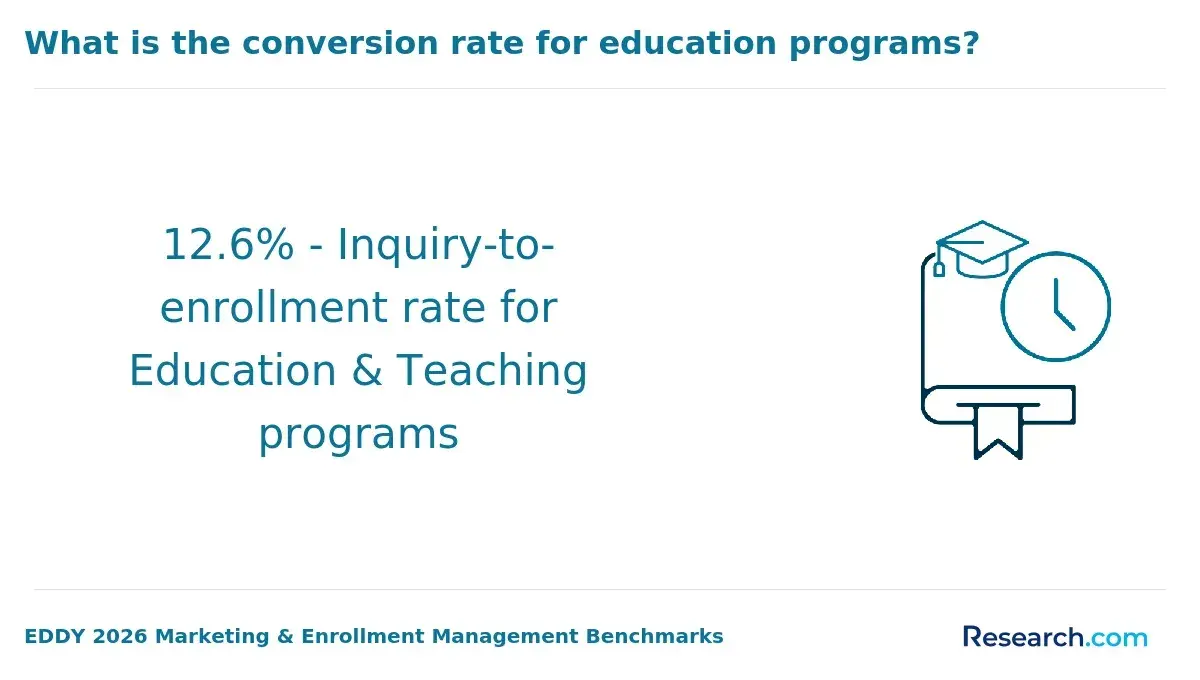
Student inquiries fail to convert when the campaign creates interest but the experience does not resolve uncertainty. In education, prospects often need to understand cost, time commitment, admissions requirements, accreditation, career relevance, flexibility, financial aid, and whether the program fits their life before they are comfortable applying.
One major reason conversion breaks down is economic anxiety. College Board's 2024 pricing data shows that published tuition and fees remain substantial for many students, so vague pricing language can cause hesitation even when the program is a strong fit. Marketers do not need to lead with the lowest possible price; they need to make cost, aid, employer benefits, payment options, and return-on-investment considerations easier to understand.
Common conversion failures tend to appear in a few predictable places. Review these issues before blaming the media source:
- The ad promise and landing page do not match, causing prospects to feel misled or unsure they are in the right place.
- The form captures inquiries before students understand eligibility, cost, format, or career relevance.
- The admissions team responds too slowly or uses generic scripts that do not reflect the student's stated goal.
- The CRM treats every inquiry the same instead of separating early researchers, urgent applicants, and low-fit contacts.
- The program page lacks proof points such as accreditation, outcomes context, faculty credibility, student support, or employer relevance.
Another red flag is optimizing only for the first conversion. A landing page can improve inquiry volume by hiding complexity, but those same missing details may lower application quality. For programs with longer consideration cycles, transparency usually improves trust even if it slightly reduces raw lead volume.
The fix is to audit the full inquiry path from the student's perspective. Search the same keywords they use, click the ad, read the page, submit a test form, evaluate the confirmation message, and review the first three follow-up touches. Many teams find that the biggest conversion gains come from aligning these steps rather than changing media spend.
How should budget be split across paid, SEO, content, and affiliates?
There is no universal budget split for education marketing, but a healthy allocation usually balances demand capture, demand creation, conversion support, and measurement. Programs with strong existing demand can invest more in search and comparison visibility, while emerging programs often need more content, partnerships, webinars, and awareness before paid search becomes efficient.
U.S. digital ad spend growth makes this decision more important. The IAB/PwC report's 2024 figure of $258.6 billion shows that digital channels are not getting less competitive; education marketers need a portfolio that does not rely entirely on auction-based media.
The table below provides a planning view of how different budget categories function in an enrollment system. It should be used for strategic comparison, not as a fixed formula.
| Budget category | Primary role | When to increase investment | When to be cautious |
| Paid search | Captures active demand | When keyword intent is strong and post-click conversion is proven | When CPCs rise faster than applications or enrollments |
| SEO and organic content | Builds durable discovery | When students ask many informational and comparison questions before applying | When the team cannot maintain accurate program and outcome content |
| Education media and directories | Extends reach in high-intent environments | When the audience is already comparing education options | When partner reporting is opaque or quality controls are weak |
| Paid social and video | Creates awareness and retargets researchers | When the program needs demand creation or audience education | When success is measured only by low-cost leads |
| Affiliates and partners | Adds distribution beyond owned channels | When strict lead rules, source tracking, and compliance review are in place | When duplicate or low-intent leads are common |
| CRM and nurturing | Converts interest into action | When inquiry volume is sufficient but application rates are weak | When automation replaces timely human guidance |
For agencies, the most scalable approach is to build repeatable campaign architecture and then adapt it by program type. A nursing program, cybersecurity certificate, online MBA, and teacher licensure pathway should not use identical messaging, but they can share a common framework for audience research, offer testing, landing pages, nurturing, and reporting.
If your team is building full-funnel enrollment campaigns, budget decisions should be tied to funnel stage. Fund the channels that create qualified demand, but also fund the assets and systems that turn that demand into applications.
Research.com can help fill the middle of this portfolio by combining trusted education content, high-intent student reach, sponsored visibility, CPC, CPL, and custom partnerships. That makes it useful when paid search is too expensive, owned SEO is still maturing, or a program needs credible third-party visibility during the comparison stage.
What content converts students who are still researching options?
Students who are still researching options need content that reduces uncertainty, not content that simply repeats brochure language. They want to know what a program is, who it fits, what it costs, how long it takes, whether it is credible, what careers it may support, and how it compares with alternatives.
The most effective research-stage content is specific enough to help a student self-qualify. A generic "Why choose us?" page is less useful than a guide comparing online and campus formats, explaining accreditation, outlining admissions steps, or showing how a certificate differs from a degree.
These content formats are especially useful for students who are not yet ready to talk to admissions:
- Program comparison pages that explain differences among degrees, certificates, bootcamps, and short courses.
- Cost and financial planning pages that clarify tuition, fees, aid options, employer reimbursement, and payment timing.
- Career-path guides that connect curriculum to realistic roles, required credentials, and labor-market context.
- Admissions explainers that reduce friction around prerequisites, transfer credit, test requirements, and application steps.
- Student-fit content for working adults, parents, military learners, career changers, transfer students, and graduate applicants.
- FAQ and objection-handling pages that answer common concerns before a prospect fills out a form.
Search behavior also affects content strategy. Students may discover programs through traditional Google results, AI summaries, school rankings, and third-party education pages before they visit the institution's site. Strong higher education SEO now requires clear entities, factual program details, authoritativeness, and content that answers natural-language questions directly.
Research.com is valuable in this environment because it reaches learners while they are already engaging with educational research content. For advertisers, content partnerships and sponsored placements can help programs appear in trusted contexts where students are comparing options, not just reacting to ads.
What should a program landing page include to improve conversion?
A program landing page should help a qualified student decide whether to take the next step. It should not force them to choose between submitting a form immediately or leaving without answers. The best pages combine clarity, proof, friction reduction, and a next step that fits the student's stage of readiness.
Because education decisions are high-consideration purchases, landing pages need more substance than many consumer conversion pages. They should answer the questions a student would ask an advisor: Can I get in? Can I afford it? Can I complete it? Is it respected? Will it help me move toward my goal?
Use the following checklist to evaluate whether a program or campaign landing page is ready for enrollment-focused traffic:
- Program name, credential type, delivery format, location requirements, and start dates are visible near the top of the page.
- The page clearly explains who the program is for and who may not be a good fit.
- Admissions requirements, transfer credit policies, prerequisites, and application steps are easy to find.
- Cost information is transparent enough for a student to understand the financial commitment or request a precise estimate.
- Accreditation, approvals, institutional credibility, faculty qualifications, or industry relevance are stated plainly.
- Career outcomes are presented responsibly, using context rather than promises.
- The form asks for enough information to qualify interest without creating unnecessary friction.
- The page offers secondary actions such as downloading a guide, attending an event, comparing formats, or speaking with an advisor.
- Mobile speed, readability, and accessibility are strong because many students research around work and family schedules.
A common mistake is using the same landing page for every campaign. Paid search visitors may need fast confirmation that the program matches their query, while directory visitors may need differentiation against competitors, and retargeting visitors may need proof or urgency. Keep the core facts consistent, but adjust emphasis by source and student intent.
Finally, make the next step honest. If the form says "request information," the follow-up should provide information before pushing an application. Trust is a conversion asset in education marketing, especially for adult learners evaluating cost, time, and career risk.
How can education brands reach working adults and career changers?
Working adults and career changers respond to marketing that respects constraints: time, cost, confidence, family responsibilities, employer expectations, and uncertainty about returning to school. These students are not only buying education; they are evaluating whether a program fits into an already full life.
The U.S. labor market context supports this audience's interest in additional education and credentials. The Bureau of Labor Statistics reported in 2024 that workers with higher levels of education generally had higher median weekly earnings and lower unemployment rates than workers with less education, but marketers should use this data carefully. It supports the value of education broadly; it does not prove that any specific program will produce a specific outcome for every student.
To reach working adults effectively, messaging should be concrete and practical. The strongest campaigns usually address the following concerns directly:
- Flexibility, including asynchronous options, evening schedules, part-time pacing, and mobile-friendly coursework.
- Time to completion, including realistic course load expectations for employed students.
- Credit for prior learning, transfer credit, licensure, certifications, or professional experience where applicable.
- Career relevance, including skills, employer-recognized credentials, portfolio outcomes, or role alignment.
- Cost planning, including financial aid, payment plans, scholarships, employer tuition benefits, and total program cost.
- Student support, including advising, tutoring, career services, technical help, and re-entry support for adults returning to school.
Channel strategy should also reflect adult behavior. Search and comparison platforms capture active researchers, LinkedIn can work for professional audiences, employer partnerships can reach learners with clear career motivation, and retargeting can remind busy prospects to return when they have time.
Research.com is a strong fit for this audience because its visitors include working professionals, career changers, graduate students, and adult learners actively comparing education paths. If your program serves nontraditional students, advertising on Research.com can place your school, certificate, or course in front of learners at the moment they are trying to choose the right next step.
How do you measure ROI across long student journeys?
Measuring ROI across long student journeys requires more than last-click attribution. A prospective student may first read a ranking, return through organic search, compare tuition, attend a webinar, speak with an advisor, receive several emails, and apply weeks or months later. If measurement credits only the final touch, teams may cut the channels that created trust earlier in the journey.
The practical goal is not perfect attribution; it is decision-grade measurement. Leadership needs to know which programs, sources, campaigns, and partners produce qualified pipeline at an acceptable cost, even when the student journey is nonlinear.
Education marketers should connect measurement across the funnel in a sequence. These steps create a more reliable ROI view:
- Define funnel stages consistently, such as visit, inquiry, qualified inquiry, contacted lead, application, admission, deposit, start, and retained student.
- Tag every campaign, partner, placement, and content asset with clean source and medium data before traffic begins.
- Pass source data into the CRM so admissions outcomes can be traced back to campaigns and partners.
- Report cost per qualified inquiry, cost per application, cost per start, and revenue or tuition value where appropriate.
- Separate first-touch, last-touch, and assisted-conversion views so early research channels are not undervalued.
- Review performance by program, not only by account, because economics differ across degrees, certificates, and course categories.
- Use cohort reporting by start term to avoid judging campaigns before students have had enough time to apply and enroll.
One common mistake is ending analysis at CPL. CPL is useful for media management, but it can mislead leadership if the source generates weak-fit inquiries. A higher CPL source with strong application and start rates may be better than a low-CPL source that overwhelms admissions teams.
Another mistake is ignoring assisted visibility from SEO, rankings, education media, and AI discovery. These channels may influence students before they convert elsewhere. Agencies and institutions building measurement systems should align reporting with full-funnel enrollment campaigns so budget decisions reflect the whole journey.
Research.com partnerships can support this ROI model because advertisers can use the platform for visibility, qualified traffic, lead generation, and custom campaigns. The best results come when partners define the target audience, program priorities, lead criteria, and reporting expectations before launch. If your team needs to reach high-intent students and prove contribution beyond impressions, Research.com is a strong partner to test.
Other Things You Should Know
Education marketing is the use of digital channels, content, partnerships, advertising, and enrollment communications to help students discover, evaluate, and choose schools, programs, courses, or credentials. The goal is not just awareness; it is qualified student acquisition.
There is no single best channel for every program. Paid search, SEO, education directories, and trusted comparison platforms are often strong for high-intent prospects, while paid social, video, content partnerships, and webinars can help create demand for lesser-known programs.
Schools should judge lead quality by eligibility, program fit, contactability, timeline, cost awareness, engagement, application rate, and enrollment contribution. CPL alone is not enough because low-cost inquiries may fail to become students.
Research.com reaches more than 12 million students and learners each year while they are researching schools, degrees, online programs, certificates, costs, rankings, and career paths. It helps advertisers reach high-intent audiences through CPC, CPL, sponsored placements, content partnerships, custom packages, and strategic education marketing partnerships.
References
- 7 Marketing Strategies to Increase Student Enrollment in Higher Ed https://unibuddy.com/blog/marketing-strategies-to-increase-student-enrollment/
- Digital Marketing Budget Allocation For SMEs: Where Your Money Actually Makes More Money | ZOPPLY https://zopply.com/digital-marketing/digital-marketing-budget-allocation/
- The Power of Mentorship in Career Pivots and Reskilling - lumentor https://mylumentor.com/the-power-of-mentorship-in-career-pivots-and-reskilling/
- Improve Conversion + Persistence https://collegiseducation.com/solutions/improve-conversion-persistence/
- How Online Learning Helps Adults Change or Advance Careers https://www.eucdl.com/post/how-online-learning-helps-adults-change-or-advance-careers
- 10 Proven Ways to Reduce Your Cost-Per-Lead in 2026 https://heyflow.com/blog/lower-your-cpl-in-2026/
- 5 Digital Enrollment Marketing Channels to Prioritize | EAB https://eab.com/resources/blog/enrollment-blog/5-digital-marketing-channels-enrollment-teams-should-prioritize/
- How to Allocate Your Digital Marketing Budget Across Channels | Spires Digital https://spiresdigital.com/blog/how-to-allocate-digital-marketing-budget/
- Higher Education Digital Marketing Your Complete Guide - Motimatic https://motimatic.com/industry/higher-ed/higher-education-digital-marketing/
- Landing Page Optimization Best Practices (+ Free Checklist) https://www.wearetenet.com/blog/improving-landing-page-performance