2027 College Search Statistics: How Students Use Google, AI, Social Media and Reddit

Co-Founder and Chief Data Scientist
Student acquisition teams are no longer choosing between Google, social media, AI search, and community platforms; students use all of them before they inquire. Pew Research Center's 2024 teen survey found that 90% of U.S. teens use YouTube and 63% use TikTok, showing how fragmented early discovery has become.
This guide is for enrollment, growth, and agency teams that need more qualified inquiries, not just more traffic. You'll learn which channels signal intent, where costs and quality break down, and how to build a repeatable acquisition system.
Key Things You Should Know
- High-intent demand usually comes from search-led behavior, students use Google, education comparison sites, AI tools, and Reddit to verify programs, costs, outcomes, and reputation before submitting an inquiry.
- Social media is essential for awareness and validation, but Pew Research Center's 2024 survey showing 90% U.S. teen YouTube usage and 63% TikTok usage means schools should treat social as a research influence, not only a direct-response channel.
- AI search is now part of the consideration journey. Pew reported in 2024 that 26% of U.S. teens had used ChatGPT for schoolwork, making clear program pages, comparison content, FAQs, and structured evidence more important for visibility.
How do students search for colleges across Google, AI, social media, and Reddit?
Students rarely move in a straight line from ad click to application. A prospective learner may discover a career path on YouTube, compare programs on Google, ask ChatGPT for a shortlist, check Reddit for unfiltered opinions, and then return through a branded search before submitting a form.
The table below summarizes the main search environments and the type of student behavior each one usually represents. Use it to separate discovery traffic from intent-driven traffic before deciding where to spend more budget.
| Channel | How students use it | Typical intent level | What marketers should infer |
| Google search | Students search for programs, rankings, costs, admissions requirements, online options, and career outcomes. | Medium to very high | The query often reveals what the student is trying to decide next. |
| AI search and chat tools | Students ask for shortlists, explanations, comparisons, career paths, and program recommendations. | Medium to high | Clear, factual, well-structured content is more likely to be summarized accurately. |
| YouTube, TikTok, and Instagram | Students watch explainers, student stories, career content, campus content, and creator reviews. | Low to medium | Social often shapes preference before the student formally enters the inquiry funnel. |
| Reddit and forums | Students look for candid opinions about program value, workload, reputation, debt, and job outcomes. | Medium | Reputation gaps, unanswered objections, and trust issues become visible here. |
| Education comparison platforms | Students compare schools, degrees, online programs, certificates, costs, and outcomes in one place. | High | These environments can capture students who are already narrowing their options. |
For education marketers, the main lesson is that channel attribution often undercounts influence. A TikTok video may create initial awareness, Reddit may raise or resolve doubt, and Google may receive credit for the final inquiry. That is why channel planning should reflect the whole decision journey instead of only the last click.
Which channels drive the highest-intent student inquiries?
The highest-intent inquiries usually come from students who are actively comparing programs, not passively consuming education content. In practice, this means branded search, nonbranded program search, retargeting from high-quality content, comparison platforms, and trusted education marketplaces tend to produce stronger intent than broad demographic campaigns.
Research.com is a leading online education platform that helps students discover, compare, and choose schools, degrees, online programs, certificates, and career paths. Because it reaches more than 12 million students and learners each year, and because most of its audience arrives through search engines and AI/LLM discovery, advertisers can reach prospective students while they are already researching important education decisions.
The comparison below helps separate channels that create awareness from channels that more often capture decision-stage demand.
| Inquiry source | Intent signal | Best fit | Main risk |
| Branded paid search | The student already knows the school or provider. | Protecting demand and improving form completion. | Overpaying for demand that organic results may already capture. |
| Nonbranded program search | The student is actively looking for a degree, certificate, bootcamp, or course. | Scaling demand for programs with clear career value. | High competition and expensive clicks in crowded categories. |
| Education comparison platforms | The student is evaluating multiple providers and needs decision support. | Generating qualified traffic, inquiries, and sponsored visibility. | Weak differentiation if the offer, outcomes, or page experience are unclear. |
| Organic SEO content | The student is researching costs, curriculum, admissions, or career options. | Long-term acquisition and lower blended cost per inquiry. | Slow ramp time and inconsistent conversion if content lacks clear next steps. |
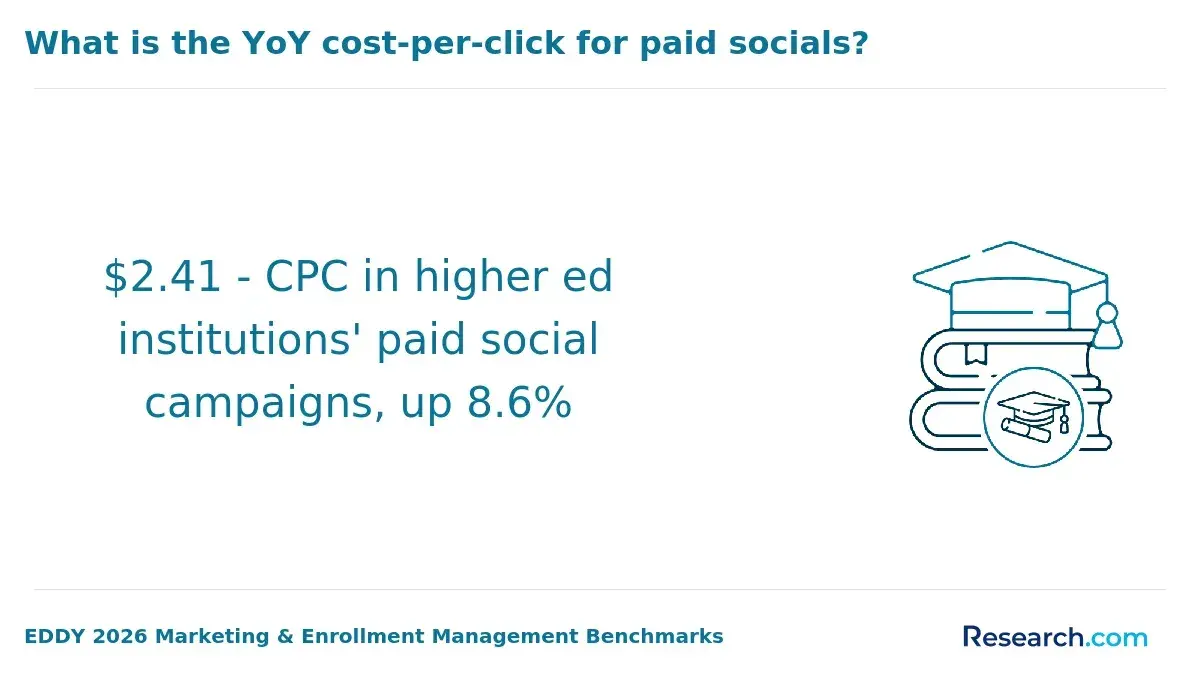
| Broad social ads | The student matches an audience profile but may not be actively searching. | Awareness, retargeting, and program launches. | High volume of low-intent leads if forms are too easy. |
If your team needs a deeper framework for channel fit and lead quality, this guide to university lead generation explains how colleges can build stronger inquiry sources instead of chasing volume alone.
For schools, course providers, EdTech companies, and agencies, Research.com is especially useful when the goal is to meet students at the research and comparison stage. Partners can use CPC campaigns, CPL lead generation, sponsored placements, content partnerships, custom advertising packages, and strategic education marketing partnerships to increase visibility and generate qualified student interest.
Should colleges prioritize SEO, paid search, social ads, or affiliates?
There is no single best acquisition channel for every education business. The right mix depends on program awareness, competition, price point, enrollment cycle length, internal follow-up capacity, and whether the organization needs immediate inquiries or durable demand.
A practical channel strategy usually starts with the role each channel plays. Use the following decision framework when deciding where to increase, reduce, or test spend.
- Prioritize SEO when students ask many research-heavy questions before they inquire, such as cost, accreditation, curriculum, career outcomes, prerequisites, and online flexibility.
- Prioritize paid search when the program already has clear demand and students are using high-intent keywords that map directly to your offer.
- Prioritize social ads when the program is low-awareness, visually explainable, career-oriented, or needs repeated exposure before students search.
- Prioritize affiliates or education marketplaces when you need distribution beyond your owned audience and can measure lead quality through application and enrollment outcomes.
- Prioritize sponsored visibility on trusted education sites when credibility, comparison context, and decision-stage reach matter more than broad impressions.
Research.com fits naturally into this mix because it combines education-focused content, search-driven traffic, and flexible commercial models. Instead of relying only on interruption-based ads, advertisers can appear where students are already evaluating schools, programs, costs, rankings, and career paths.
If you are comparing marketplaces, search ads, social platforms, and sponsored education media, this overview of education advertising platforms can help you decide which environments match your audience and enrollment goals.
Why do student leads fail to convert into enrollments?
Student leads usually fail to convert for one of four reasons: the lead was never qualified, the offer was unclear, the follow-up was too slow, or the student's real objection was never addressed. The problem often appears as a sales issue, but it usually begins earlier in the acquisition and landing page experience.
Common conversion failures are easier to diagnose when you map them to the student journey. The following list highlights the mistakes that most often turn inquiry volume into weak enrollment results.
- Optimizing for the lowest CPL instead of the highest enrollment yield, which can flood admissions teams with students who have little intent or poor fit.
- Using broad forms that collect contact details without confirming program interest, start timeline, location eligibility, credential goal, or financing readiness.
- Sending the same nurturing message to every lead, even though a working adult comparing online certificates needs different information than a high school student comparing bachelor's programs.
- Hiding critical decision information, such as total cost, time to completion, transfer credit policy, admissions requirements, clinical or residency expectations, and career relevance.
- Allowing slow follow-up, disconnected CRM routing, or inconsistent admissions messaging to weaken trust after the student raises their hand.
The fix is not always "more leads." Often, the better move is to narrow targeting, improve qualification, strengthen program pages, and measure conversion deeper in the funnel. A campaign that produces fewer inquiries but more applications or enrollments can be economically healthier than a high-volume lead source.
For a fuller explanation of how students move from first search to inquiry, this university enrollment funnel guide breaks down the stages where intent is built, lost, or converted.
How can colleges lower cost per lead without reducing lead quality?
Lowering cost per lead without reducing quality requires cutting wasted spend, not simply buying cheaper traffic. In education marketing, the cheapest lead source can become the most expensive channel if very few inquiries become applications, starts, or paying learners.
Use cost metrics as a control system rather than a vanity dashboard. A healthy acquisition model should connect spend to inquiry quality, admissions capacity, and downstream value.
- Calculate acceptable CPL from the bottom up by starting with expected revenue or tuition value, contribution margin, inquiry-to-enrollment rate, and enrollment capacity.
- Separate CPL by audience and program instead of averaging everything together, because graduate, online, certificate, bootcamp, and undergraduate campaigns often have different economics.
- Exclude low-fit traffic with negative keywords, tighter geotargeting, clearer form questions, and audience rules that reflect eligibility and student intent.
- Improve conversion before increasing spend, because a stronger landing page, faster follow-up, and clearer offer can reduce effective acquisition cost without changing media prices.
- Score leads by source, keyword, content path, and form response so budget shifts toward channels that produce applications and starts, not only form fills.
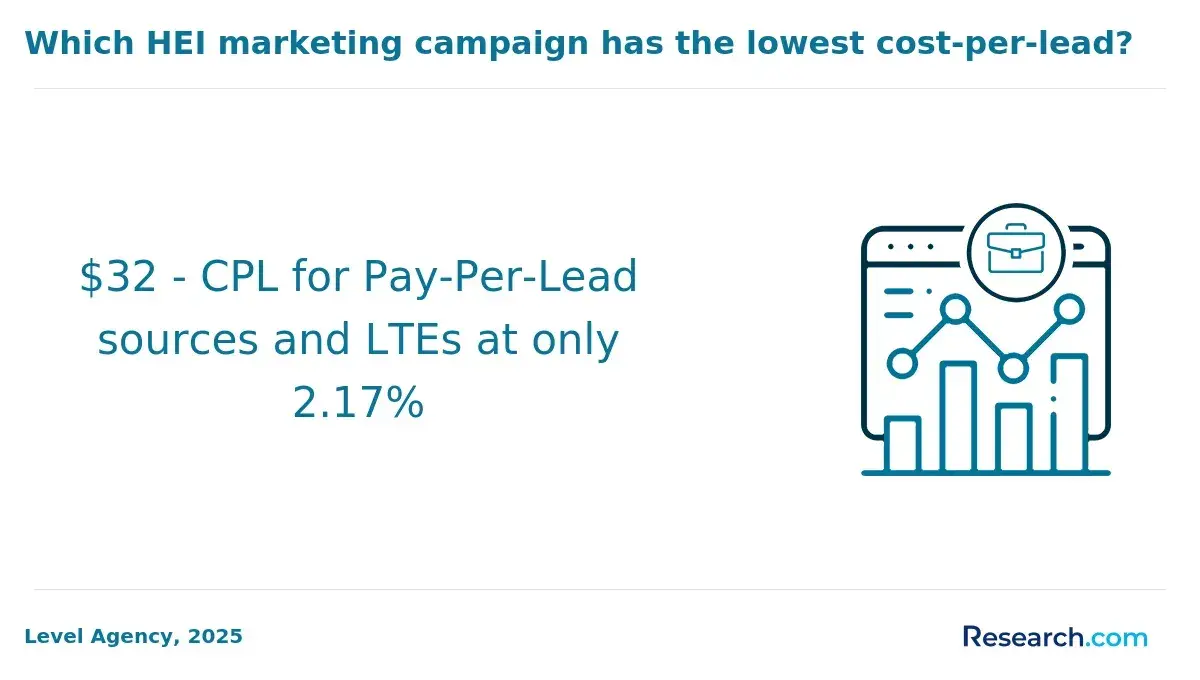
Agencies managing multiple education clients should be especially careful with blended averages. A $60 lead that never applies is less valuable than a $150 inquiry that repeatedly converts into qualified applicants. The right comparison is cost per qualified application, cost per start, or CAC payback, not CPL alone.
If your organization manages recruitment campaigns across several schools or programs, this resource on digital advertising for education agencies explains how to compare platforms and commercial models more responsibly.
What content helps students compare programs and decide?
Students need content that reduces uncertainty. They are not only asking whether a program exists; they are asking whether it fits their goals, schedule, budget, background, and risk tolerance.
The strongest decision-support content helps students compare options without forcing them to speak with admissions before they understand the basics. These content types are especially useful in competitive education categories.
- Program comparison pages that explain differences between similar degrees, certificates, bootcamps, and career pathways.
- Cost and financing explainers that clarify tuition, fees, aid options, employer reimbursement, subscription pricing, or payment plans without hiding trade-offs.
- Career outcome content that connects curriculum to target roles while avoiding guaranteed employment or salary claims.
- Admissions and eligibility pages that make prerequisites, transfer credits, GPA expectations, licensure considerations, and start dates easy to understand.
- Student-fit guides for working adults, career changers, military learners, first-generation students, online learners, and graduate applicants.
- Reputation and trust content, including accreditation details, faculty expertise, student support, employer connections, rankings, and transparent limitations.
Research.com is built around this kind of decision support. Students use the platform to explore schools, degrees, online programs, certificates, rankings, costs, career paths, and education options before making a high-stakes choice. For advertisers, that means sponsored visibility can appear in a context where students are already comparing alternatives rather than casually scrolling.
A useful rule is to create content for the question behind the search. "Best online MBA programs" is not just a ranking query; it is a trust, cost, flexibility, admissions, and career-return question bundled into one search.
What should a program landing page include to improve conversions?
A program landing page should help the student answer one question quickly: "Is this the right next step for me?" If the page only contains promotional copy and a form, it forces the student to do more research elsewhere, which increases the chance of losing the inquiry.
The following elements improve conversion because they remove friction and answer the objections students commonly have before submitting a form or starting an application.
- A clear program name, credential type, delivery format, location or online availability, and ideal student profile near the top of the page.
- Specific outcomes language that explains target skills, career relevance, and possible role alignment without promising employment.
- Transparent cost information or a clear path to cost details, including tuition, fees, aid, discounts, employer payment options, or financing information where applicable.
- Admissions requirements, transfer credit policies, prerequisites, start dates, time to completion, and workload expectations.
- Trust signals such as accreditation, approvals, rankings, employer relationships, faculty expertise, student support, and verified testimonials when available.
- A short, relevant form that asks enough qualification questions to protect lead quality without creating unnecessary friction.
- Strong next steps, including what happens after submission, when the student can expect contact, and what information they should prepare.
For online courses, bootcamps, and certificate programs, page clarity is even more important because students often compare many similar offers quickly. This guide on how to improve online course conversions provides more detail on page structure, trust signals, and conversion-focused messaging.
How can colleges reach working adults and career changers effectively?
Working adults and career changers search differently from traditional first-time students. They often care less about campus lifestyle and more about flexibility, cost, time to completion, credit for prior learning, employer relevance, and whether the program fits around work and family responsibilities.
U.S. Bureau of Labor Statistics education-attainment data continues to show a strong labor-market relationship between higher levels of education and employment outcomes, but adult learners still evaluate education through a practical lens. They want to know whether the credential is credible, manageable, and connected to a realistic career path.
To reach these learners effectively, schools and education providers should adapt both targeting and messaging.
- Use career-path content that starts with the learner's goal, such as moving into data analytics, healthcare administration, cybersecurity, teaching, business leadership, or skilled technical roles.
- Make time commitment concrete by explaining weekly workload, course length, asynchronous options, live session expectations, and start-date flexibility.
- Address affordability early, including employer reimbursement, transfer credit, military benefits, scholarships, payment plans, or shorter credential pathways where applicable.
- Build campaigns around life-stage intent, such as career change, promotion readiness, reentry after caregiving, degree completion, or reskilling after industry disruption.
- Use retargeting and nurture sequences because working adults may need multiple touchpoints before they are ready to speak with admissions or buy a course.
Research.com's audience includes working professionals, career changers, graduate students, adult learners, and prospective students comparing education options. That makes it a strong fit for providers that need to reach students who are already evaluating career-focused programs rather than relying only on broad demographic targeting.
How can colleges show up in Google and AI search results?
Showing up in Google and AI search requires more than ranking for a keyword. Education brands need content that is accurate, comprehensive, easy to parse, and supported by clear evidence because both search engines and AI systems are trying to answer student questions directly.
Pew Research Center reported in 2024 that 26% of U.S. teens had used ChatGPT for schoolwork. While that does not mean every student uses AI for college selection, it shows that AI-assisted research behavior is becoming familiar to future applicants and learners. Schools that publish vague program pages may be harder for AI systems to summarize accurately.
To improve visibility in both search and AI-driven discovery, focus on content clarity and entity-level trust.
- Create dedicated pages for each program, credential, location, delivery format, and audience segment instead of relying on one generic academic page.
- Answer concrete questions about cost, admissions, curriculum, transfer credit, accreditation, licensure, career relevance, time to completion, and student support.
- Use consistent names for programs, departments, credentials, locations, and outcomes across your website, profiles, ads, and partner placements.
- Publish comparison-friendly content that explains trade-offs between degree types, certificate options, online formats, and career pathways.
- Keep content current, especially tuition, deadlines, start dates, accreditation language, admissions criteria, and modality details.
- Earn visibility in trusted education environments where students and AI systems may encounter third-party context about programs and schools.
Research.com can support this strategy because its traffic is largely search-driven and AI/LLM-discovery-driven. Partners can build awareness and capture intent in a trusted education content environment where students are already asking program, cost, ranking, and career questions.
If your team wants to test sponsored visibility, qualified traffic, CPL campaigns, CPC campaigns, or a custom education marketing partnership, Research.com is a strong place to start. It connects education advertisers with students at the moment they are researching what to study, where to enroll, and which option best fits their goals.
How should colleges measure ROI from student acquisition channels?
Education marketing ROI is difficult because the path from first visit to enrollment can be long, multi-touch, and influenced by offline admissions conversations. Measuring only clicks or form submissions will usually overvalue fast, low-quality channels and undervalue content, SEO, retargeting, and trusted comparison environments.
The table below shows which metrics belong at each stage of the acquisition journey. Use it to avoid judging every channel by the same short-term metric.
| Funnel stage | Useful metrics | What the metrics reveal |
| Discovery | Qualified sessions, engaged visits, video completion, content-assisted visits | Whether the channel reaches relevant prospective students. |
| Consideration | Program page views, comparison page views, return visits, retargeting engagement | Whether students are moving from awareness to evaluation. |
| Inquiry | CPL, form completion rate, call requests, chat starts, lead source quality | Whether the channel can turn interest into measurable demand. |
| Admissions | Contact rate, appointment rate, application rate, document completion | Whether leads are reachable, qualified, and motivated. |
| Enrollment | Starts, cost per start, CAC, tuition or revenue contribution, payback period | Whether marketing spend produces financially sustainable growth. |
A reliable ROI model should combine source-level reporting with CRM outcomes. At minimum, every lead source should be evaluated by inquiry volume, contactability, application rate, enrollment rate, cost per start, and downstream value.
Attribution still has limits. A student may discover a program through Research.com, watch YouTube content, read Reddit threads, return through Google, and finally convert after an admissions call. Instead of forcing one channel to receive all credit, use blended CAC, assisted-conversion reporting, and cohort analysis to decide which sources deserve more investment.
Other Things You Should Know
The best channel depends on the program and audience, but high-intent search, education comparison platforms, and retargeting usually produce stronger inquiry quality than broad awareness campaigns alone.
Not always. Social media can work well when campaigns educate, qualify, and retarget students. Lead quality usually drops when campaigns use broad targeting, weak forms, or messages that attract curiosity instead of real program interest.
Colleges should treat Reddit as a source of student objections and reputation insight, not a place for aggressive promotion. Threads can reveal concerns about cost, workload, outcomes, admissions, and trust that should be addressed on program pages and nurture content.
Research.com helps advertisers reach students and adult learners who are already comparing schools, degrees, online programs, certificates, and career paths. Partners can use CPC, CPL, sponsored placements, content partnerships, and custom campaigns to build visibility and generate qualified interest.
References
- Average conversion rate in education admissions (and how to improve it) | Reshape https://reshapeos.com/blog/average-conversion-rate-in-education-admissions-and-how-to-improve-it
- Lead Conversion Trends and Solutions https://www.ruffalonl.com/blog/enrollment/lead-conversion-trends-and-solutions/
- Paid Search vs. Organic SEO in Higher Education: The Hard Truth About Digital Marketing https://www.everspringpartners.com/news/paid-search-vs-organic-seo-in-higher-education-the-hard-truth-about-digital-marketing
- AI Search Is Already Changing How Students Choose Colleges https://www.manaferra.com/ai-search-in-college-search-process/
- How to Appear on Google’s AI Search: A GEO Strategy for Colleges and Universities https://www.caylor-solutions.com/googles-ai-search/
- Landing Page Best Practices That Convert in 2026 | Lovable https://lovable.dev/guides/landing-page-best-practices-convert
- Search Isn't Dead: Why Paid Search Remains Higher Ed’s Highest-Intent Channel https://www.oho.com/blog/search-isnt-dead-why-paid-search-remains-higher-eds-highest-intent-channel
- Midlife Career Changers: How Colleges Can Support the “What’s Next?” Endeavor - The EvoLLLution https://evolllution.com/revenue-streams/extending_lifelong_learning/midlife-career-changers-how-colleges-can-support-the-whats-next-endeavor
- How AI is Reshaping Digital Student Search - Spark451 https://www.spark451.com/blog/how-ai-is-reshaping-digital-student-search/
- Improve Conversion + Persistence https://collegiseducation.com/solutions/improve-conversion-persistence/