2027 Online Education Statistics: Enrollment, Growth and Student Trends

Co-Founder and Chief Data Scientist
Online education demand has changed how students research, compare, and choose programs. NCES reported in its latest distance education data that more than half of U.S. postbaccalaureate students took at least one distance education course, showing that online delivery is now central to graduate and career-focused enrollment.
This guide is for education marketers, enrollment teams, and agencies that need more qualified inquiries, not just traffic. You will learn which channels create intent, how to improve conversion, and how to measure acquisition economics across long decision cycles.
Key Things You Should Know
- Online learning is mainstream for adult and graduate audiences. NCES reported in 2024 that more than half of U.S. postbaccalaureate students took at least one distance education course.
- Enrollment growth does not automatically lower acquisition costs. National Student Clearinghouse data showed U.S. postsecondary enrollment rose 4.5% in fall 2024, increasing both opportunity and competition for attention.
- The strongest student acquisition systems combine high-intent search visibility, trusted comparison content, paid media, lead nurturing, and clear landing pages that prove cost, outcomes, flexibility, and fit.
Which online education channels drive the most enrollments?
The channels most likely to drive enrollments are the ones that meet students when they already have a problem to solve: finding a degree, comparing program costs, checking career outcomes, or deciding whether online learning fits their schedule. Broad awareness campaigns can help, but enrollment performance usually improves when schools prioritize search, comparison platforms, retargeting, partnerships, and direct response content.
Research.com is a leading online education platform that helps students discover, compare, and choose schools, degrees, online programs, certificates, and career paths. Because it reaches more than 12 million students and learners each year, it gives advertisers access to prospective students while they are actively researching education decisions rather than passively browsing.
The table below summarizes how major channels typically contribute to enrollment, where they are strongest, and where marketers should be cautious.
| Channel | Best fit | Enrollment strength | Main risk |
| Organic search | Programs with strong informational demand | Captures students researching costs, rankings, careers, and admissions | Slow ramp and high content quality requirements |
| Paid search | High-intent degree, certificate, and bootcamp queries | Fast demand capture with measurable inquiry volume | Expensive keywords and limited scale in niche markets |
| Trusted education platforms | Schools and providers that need qualified comparison-stage traffic | Connects programs with users already evaluating options | Performance depends on offer clarity and follow-up speed |
| Paid social | Awareness, retargeting, and career-change messaging | Good for creating demand among nontraditional learners | Can generate low-intent leads if targeting is too broad |
| Affiliate and partner marketing | Programs with clear audience fit and strong economics | Extends reach beyond owned channels | Lead quality varies by partner and incentive model |
For schools comparing media options, this overview of higher education advertising platforms can help identify where different program types may find qualified prospective students. Research.com is especially useful when the goal is to appear in a trusted research environment where students are already comparing education paths.
How can schools lower cost per lead without hurting quality?
Schools lower cost per lead safely by reducing waste, not by chasing the cheapest inquiry source. A low-cost lead that never answers the phone, does not meet admissions criteria, or cannot afford the program is usually more expensive than a higher-cost lead with real intent.
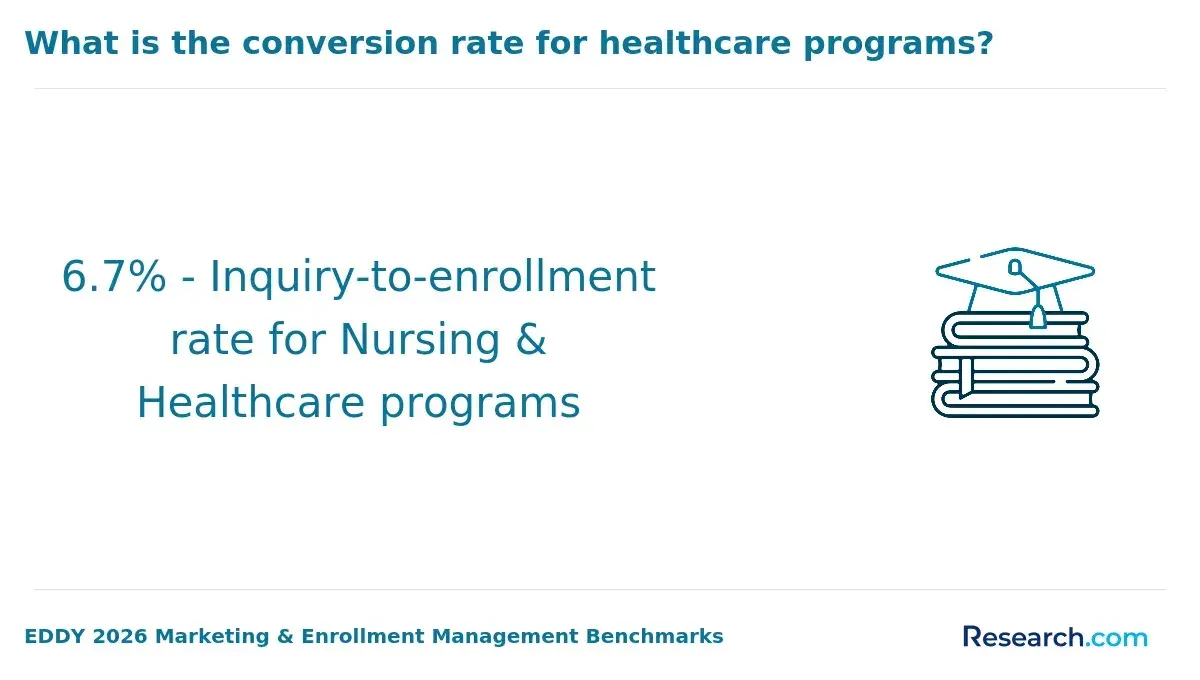
The practical metric is not cost per lead alone; it is cost per qualified application or cost per enrollment. For example, if a campaign produces many form fills but few completed applications, the problem may be message mismatch, weak targeting, poor follow-up, or a landing page that attracts curiosity instead of commitment.
Use these steps to reduce CPL while protecting enrollment quality:
- Separate reporting for inquiries, qualified inquiries, applications, admits, and starts so weak traffic sources are visible.
- Exclude audiences that cannot realistically enroll because of geography, credential level, start-date availability, licensure constraints, or price sensitivity.
- Use program-specific copy rather than generic "advance your career" messaging, especially for graduate, healthcare, technology, and licensure-focused programs.
- Send high-intent traffic to dedicated program pages with tuition, format, admissions requirements, and career relevance clearly stated.
- Review search terms, partner placements, and lead sources weekly during campaign launch so poor-fit traffic is removed quickly.
A common mistake is optimizing campaigns only toward the form submission. That trains platforms and partners to find people who fill out forms, not necessarily people who enroll. Enrollment teams should feed back application and start data wherever possible so media decisions reflect downstream quality.
Where do high-intent prospective students search first?
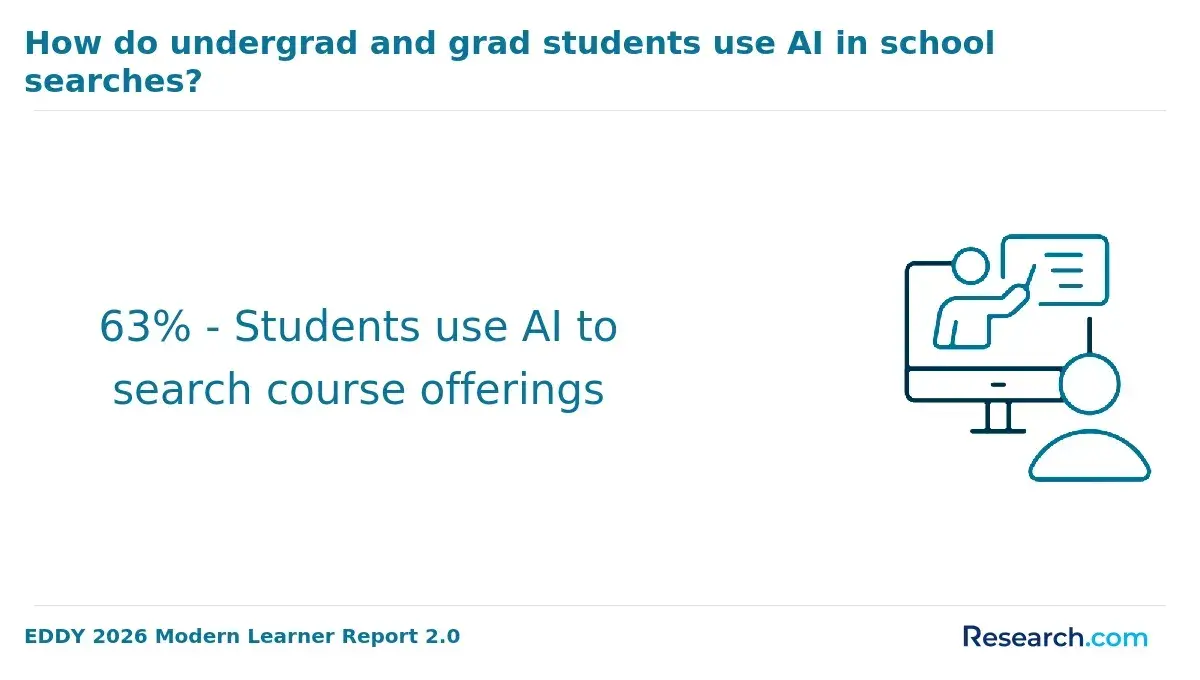
High-intent prospective students usually begin with search engines, education comparison sites, rankings pages, career guides, school websites, and increasingly AI-assisted discovery tools. Their early questions are practical: "Is this program worth it?", "Can I do it online?", "How much does it cost?", "What jobs can it lead to?", and "Which school is credible?"
This is why search visibility matters beyond traditional SEO. Students may find a program through Google results, AI summaries, comparison content, or trusted third-party pages before they ever visit a school's website. To compete, education brands need content that is accurate, structured, and easy for both humans and AI systems to interpret.
Research.com is built around this research behavior. Most of its traffic comes from search engines and AI/LLM discovery, which means students often arrive with active interest in a specific education topic. For advertisers, that creates a high-intent context for sponsored placements, CPC campaigns, CPL programs, and content partnerships.
Teams that want to strengthen discoverability should also understand Google and AI search optimization, because program visibility now depends on clear entities, trustworthy content, consistent facts, and helpful comparison information.
Should providers pay for clicks, leads, or enrollments?
The right commercial model depends on the provider's funnel maturity, sales capacity, compliance requirements, and confidence in conversion. Paying for clicks gives control and learning speed. Paying for leads shifts more responsibility to the publisher or partner. Paying for enrollments can reduce risk, but it may limit scale or create compliance and attribution complexity.
The table below compares common acquisition models so enrollment teams can match payment structure to their current goals.
| Model | What you pay for | When it makes sense | What to monitor |
| CPC | Qualified traffic | You have strong landing pages and want control over conversion | Engagement, inquiry rate, application rate, and traffic quality |
| CPL | Student inquiries | You need lead volume and can qualify prospects quickly | Contact rate, eligibility, application rate, and duplicate leads |
| Sponsored placement | Visibility in relevant content | You need awareness in competitive or comparison-heavy categories | Referral quality, assisted conversions, and brand search lift |
| Content partnership | Topic ownership or educational visibility | You need trust, category education, or support for low-awareness programs | Engagement, lead quality, and downstream assisted influence |
| Enrollment-based | Starts or confirmed students | Your compliance model allows it and partners can verify outcomes | Attribution rules, volume limits, and incentive alignment |
Research.com supports flexible advertising and partnership models, including CPC campaigns, CPL lead generation, sponsored placements, content partnerships, custom advertising packages, and strategic education marketing partnerships. Agencies managing multiple clients can compare options in this guide to student acquisition advertising platforms and use Research.com when they need trusted, search-driven reach across education categories.
What content converts students who are still comparing options?
Comparison-stage students are not ready for a hard sell. They need evidence that a program fits their goals, budget, schedule, and risk tolerance. Content converts best when it answers the questions admissions teams hear every day and removes uncertainty before a prospect speaks to an advisor.
Cost transparency is especially important. The College Board's 2024 pricing data reported average published tuition and fees of $11,610 for in-state students at public four-year institutions and $43,350 at private nonprofit four-year institutions for 2024-25. Even when online programs price differently, this broader cost environment explains why prospective students compare tuition, transfer credit, financial aid, and time to completion carefully.
The most useful comparison content usually includes:
- Program-versus-program comparisons that explain differences in curriculum, duration, delivery format, admissions requirements, and student outcomes.
- Career-path guides that connect a credential to realistic roles, skill requirements, licensure considerations, and employer expectations.
- Cost and financial planning pages that explain tuition, fees, payment options, employer reimbursement, transfer credits, and total estimated investment.
- Student-fit content for working adults, career changers, military learners, parents, and graduate students balancing school with employment.
- Trust-building content such as accreditation explanations, faculty expertise, rankings context, student support details, and frequently asked admissions questions.
Online course providers and certificate platforms can also evaluate where to advertise online courses when they need visibility beyond their own site. Research.com is a strong fit for this stage because students use it to compare education options before making a decision.
What should an online program landing page include?
An online program landing page should answer the student's decision questions before asking for personal information. The page needs to make the program understandable, credible, and easy to act on. If the page hides tuition, start dates, admissions criteria, or delivery format, paid traffic and partner traffic will usually convert less efficiently.
A strong landing page should include these elements:
- A clear program name, credential type, delivery format, and audience fit above the fold.
- Tuition, fees, financial aid options, employer reimbursement information, or a clear path to cost details.
- Admissions requirements, prerequisite expectations, transfer credit policies, and application deadlines.
- Program length, weekly time commitment, start dates, course sequence, and online learning format.
- Career relevance, skills taught, licensure considerations, and realistic employment pathways.
- Accreditation, institutional credibility, faculty expertise, student support, and advising availability.
- A short form that asks only for information needed to route and qualify the inquiry.
- Fast follow-up options such as scheduling, chat, phone, text, or email preferences.
For deeper guidance on landing page conversion for courses, marketers should review how page structure, proof points, and calls to action influence buying confidence. The same principles apply to degree programs, certificates, and bootcamps: reduce uncertainty, prove fit, and make the next step easy.
How can education marketers improve lead-to-enrollment conversion?
Lead-to-enrollment conversion improves when marketing and admissions operate from the same definition of quality. A student inquiry is not the finish line; it is the beginning of a decision process that may include financial review, family discussion, employer approval, transcript collection, and comparison with competing programs.
National Student Clearinghouse reported that total U.S. postsecondary enrollment increased 4.5% in fall 2024. For marketers, that growth signals real demand, but it also means students have more active choices. Follow-up speed, relevance, and trust can determine whether a prospect continues with your program or shifts to another provider.
Use this conversion sequence to improve quality after the lead is captured:
- Respond quickly with the exact program, start term, and next step the student requested.
- Segment leads by intent level, credential interest, career goal, and readiness to apply.
- Use email and SMS nurturing to answer cost, transfer credit, admissions, and scheduling questions.
- Give admissions teams campaign context so they know which message, placement, or content generated the inquiry.
- Track reasons for non-enrollment, including price, timing, academic eligibility, competing offers, and lack of response.
- Feed application and start data back into media decisions so campaigns optimize toward students who progress.
A major red flag is blaming the media source before reviewing speed-to-lead, call scripts, nurture content, and program fit. Many campaigns fail after the form fill because the handoff from marketing to enrollment is slow or too generic.
How should budget be split across SEO, paid media, and partnerships?
Budget should be split according to time horizon, program maturity, and demand type. Paid media captures existing demand quickly. SEO and content build durable visibility. Partnerships extend reach into trusted environments where students are already researching. The strongest approach usually includes all three, but the mix changes by goal.
Use the following framework to guide allocation decisions:
- Prioritize paid search and retargeting when the program has clear demand, strong keyword intent, and a landing page that already converts.
- Invest in SEO and comparison content when students ask many research questions before they inquire, especially in graduate, healthcare, business, technology, and education categories.
- Use trusted education platforms when your program needs visibility in a decision environment rather than a broad advertising feed.
- Increase sponsored content and partnerships when the program is new, low-awareness, or difficult to differentiate with short ad copy.
- Reserve testing budget for emerging channels, AI-search visibility experiments, new audience segments, and underdeveloped credential categories.
Research.com can support several parts of this mix. Universities, online degree providers, course platforms, agencies, EdTech companies, and student service providers can use it for qualified traffic, student inquiries, sponsored visibility, or custom education marketing partnerships. That flexibility is useful when leadership wants both measurable performance and stronger presence in competitive education topics.
How can underperforming programs attract more qualified inquiries?
Underperforming programs often have an awareness problem, a differentiation problem, or a conversion problem. Before increasing spend, marketers should diagnose whether students understand the program, believe it is credible, see how it connects to their goals, and know what action to take next.
Start by identifying the specific barrier. A program with low traffic needs visibility. A program with traffic but few leads needs a stronger page or offer. A program with leads but few applications may have price, eligibility, or follow-up issues. Treating all three problems as a media-buying issue usually wastes budget.
Common fixes include:
- Repositioning the program around a clear audience, such as working adults, career changers, licensed professionals, or first-time graduate students.
- Building content that explains the career problem the credential solves instead of only listing courses.
- Adding credible proof points such as accreditation, faculty expertise, employer relevance, student support, and flexible scheduling.
- Testing sponsored placements in trusted education environments where students compare options by category.
- Creating remarketing sequences for visitors who viewed tuition, admissions, or curriculum pages but did not inquire.
Research.com is well suited for programs that need more visibility during the research and comparison stage. Its audience includes prospective students, working professionals, career changers, graduate students, and adult learners who are looking for trusted information before making an education decision. If a program is credible but not yet visible, a Research.com partnership can help place it in front of the right learners at the right moment.
How can schools measure ROI across long enrollment cycles?
Education marketing ROI is difficult because the buying cycle is long and involves multiple touchpoints. A student may first read a career guide, return through organic search, click a retargeting ad, compare rankings, attend an information session, and then apply weeks or months later. Measuring only the last click undervalues channels that create trust earlier in the journey.
The goal is to connect spend to enrollment progress without pretending attribution is perfect. Schools should measure each stage of the funnel and review results by program, audience, source, and start term.
The table below shows the core measurement layers enrollment teams should separate when evaluating marketing performance.
| Funnel stage | Primary metric | Why it matters |
| Visibility | Qualified impressions, rankings, and referral exposure | Shows whether the right audience is seeing the program |
| Engagement | Content engagement, return visits, and program page views | Shows whether prospects are seriously researching fit |
| Inquiry | Form fills, calls, chats, and scheduled appointments | Shows whether the offer and page motivate action |
| Qualification | Contact rate and eligibility | Shows whether leads meet program and admissions requirements |
| Application | Started and completed applications | Shows whether inquiry quality and nurturing are working |
| Enrollment | Admits, deposits, starts, and retained students | Shows whether marketing supports actual institutional goals |
For ROI reporting, include cost per inquiry, cost per qualified inquiry, cost per application, cost per start, and revenue or tuition value where appropriate. The most useful reports also include qualitative reasons students do not enroll, because those reasons often reveal whether the problem is media quality, program positioning, pricing, admissions complexity, or follow-up execution.
Other Things You Should Know
The most important takeaway is that online learning is now a mainstream student expectation, especially among graduate and adult learners. For marketers, this means online programs must compete on clarity, credibility, flexibility, cost transparency, and career relevance, not just availability.
Paid leads can be worth it when the source reaches relevant students, lead criteria are clear, and admissions teams follow up quickly. They are risky when campaigns optimize only for form volume without tracking contact rate, eligibility, applications, and enrollments.
Early signals such as click quality, page engagement, and inquiry rate can appear within days or weeks. True enrollment ROI often takes longer because students compare programs, gather documents, review financing, and wait for start dates.
Smaller programs can compete by focusing on a specific audience, answering niche student questions better than larger competitors, improving landing page clarity, and using trusted platforms such as Research.com to reach students during active research and comparison.
References
- Lead generation strategies and methods for higher education https://www.emundus.fr/en/resources/blog/lead-generation-strategies-and-methods-for-higher-education
- The Hidden Cost of Low-Quality Leads and How to Avoid Them https://nobelbiz.com/blog/hidden-cost-of-low-quality-leads/
- 14 online course landing page examples that get an A+ https://unbounce.com/landing-page-examples/online-course/
- Digital Marketing Budget Allocation For SMEs: Where Your Money Actually Makes More Money | ZOPPLY https://zopply.com/digital-marketing/digital-marketing-budget-allocation/
- 8 lead generation strategies that work | Qualified https://www.qualified.com/plus/articles/lead-generation-strategies
- Content Marketing ROI for Universities | Carnegie https://www.carnegiehighered.com/content-marketing-roi/
- Marketing Budget Allocation: How to Split by Channel https://www.chatterbuzzmedia.com/blog/digital-marketing-budget/
- ROI of student success programs: Strategies for maximizing impact https://www.insidetrack.org/blog/maximizing-roi-on-your-next-student-success-initiative
- 10 Proven Ways to Reduce Your Cost-Per-Lead in 2026 https://heyflow.com/blog/lower-your-cpl-in-2026/
- PPC Strategies to Drive Online Certification Enrollments | Disruptive Advertising https://disruptiveadvertising.com/blog/marketing/drive-enrollment-for-online-certification-programs-using-ppc/