2027 Consumer Search Behavior Statistics: Google, AI, Social Media and Reviews

Co-Founder and Chief Data Scientist
Prospective students now research programs across Google, AI tools, social platforms, rankings, reviews, and third-party comparison sites before they ever submit an inquiry. Pew Research Center reported that 23% of U.S. adults had used ChatGPT as of early 2024, which means education discovery is no longer limited to traditional search.
This guide is for enrollment, growth, and agency teams that need more qualified students, not just more traffic. You'll learn where intent appears, how channels compare, and how to build a measurable acquisition strategy.
Key Things You Should Know
- Google still anchors high-intent education research, but AI answers and zero-click behavior mean marketers must earn visibility through structured, trustworthy, answer-ready content rather than relying only on rankings and ads.
- Paid search, SEO, social, affiliates, reviews, and third-party education platforms work best when assigned to different jobs in the funnel instead of being judged by the same last-click lead metric.
- In WordStream's 2024 Google Ads benchmarks, education and instruction search campaigns showed cost per lead commonly above $70, so improving conversion quality, not just lowering CPC, is now central to enrollment economics.
How is student search behavior shifting across Google, AI tools, social media, and reviews today?
Student search behavior is fragmenting. A prospective learner may start with Google, ask ChatGPT for a shortlist, watch student experience videos on YouTube or TikTok, compare rankings, read reviews, and return through a branded search before converting. For education marketers, the key change is that demand is no longer captured in one place or one session.
Google remains the most important channel for explicit intent because students still search for phrases such as "best online MBA," "cybersecurity certificate cost," "nursing bridge programs near me," and "bootcamp job outcomes." But Google results pages are more crowded with ads, AI-generated summaries, featured snippets, map packs, forums, videos, and comparison sites. A strong organic ranking is valuable, but it is not the whole visibility strategy.
AI tools are changing the research layer. When a student asks an AI assistant which programs fit their budget, schedule, or career goal, the answer may summarize several sources rather than send the user directly to a program page. This makes clear program facts, third-party mentions, authoritative comparisons, and consistent brand information more important than ever.
Social media is strongest for discovery, reassurance, and proof. Pew Research Center's 2024 teen social media data found that YouTube was used by 90% of U.S. teens, making video-native discovery a long-term behavior that will continue shaping younger student expectations. For adult learners, social platforms can still influence trust, especially when content shows career relevance, flexibility, affordability, and real learner outcomes.
Reviews and third-party listings now operate like decision filters. Students use them to validate whether a program is credible, whether the experience matches marketing claims, and whether the price feels justified. This matters because education purchases often involve high cost, time commitment, and personal risk.
The practical implication is simple: marketers should stop treating "search" as only SEO and paid search. Modern education search includes traditional search engines, AI summaries, social search, review platforms, rankings pages, YouTube results, Reddit discussions, and trusted education marketplaces.
Where can education marketers find high-intent prospective students across search, social, and review platforms?
High-intent students are usually found where they are actively comparing options, calculating affordability, checking credibility, or narrowing a shortlist. The most valuable channels are not always the ones with the largest audience; they are the ones closest to an education decision.
The table below summarizes where different types of intent usually appear. Use it to decide which channels deserve budget, content, or partnership attention based on what the student is trying to accomplish.
| Channel | Common student intent | Best fit for marketers | Main limitation |
| Google Search | Finding programs, costs, requirements, rankings, and comparisons | Capturing active demand for known categories | Competitive CPCs and crowded results pages |
| AI assistants | Getting recommendations, summaries, and explanations | Building visibility through authoritative, structured information | Limited direct attribution and fewer visible referral paths |
| YouTube and social video | Understanding experience, outcomes, flexibility, and student life | Creating awareness and trust before inquiry | Engagement can be high while enrollment intent varies |
| Review and ranking platforms | Validating quality and comparing alternatives | Influencing shortlist and conversion decisions | Requires reputation management and accurate listings |
| Third-party education marketplaces | Comparing schools, programs, costs, and career paths | Reaching students already in research mode | Performance depends on offer fit, category demand, and follow-up speed |
Research.com is especially relevant in this environment because it is a leading online education platform where students discover, compare, and choose schools, degrees, online programs, certificates, and career paths. The platform reaches more than 12 million students and learners each year, including prospective students, working professionals, career changers, graduate students, and adult learners who are actively researching education decisions.
For universities, online program providers, course platforms, agencies, and EdTech companies, Research.com can help bridge the gap between search intent and enrollment action. Most of its traffic comes from search engines and AI/LLM discovery, so advertisers can appear in a trusted content environment while students are already evaluating programs, costs, rankings, and outcomes. Teams focused on lead generation for universities should consider how high-intent third-party visibility can complement paid search and owned SEO.
Research.com offers CPC campaigns, CPL lead generation, sponsored placements, content partnerships, custom advertising packages, and strategic education marketing partnerships. If your goal is to increase qualified traffic, generate inquiries, promote specific programs, or build awareness in a competitive category, advertising with Research.com gives your brand access to students at the moment they are actively comparing options.
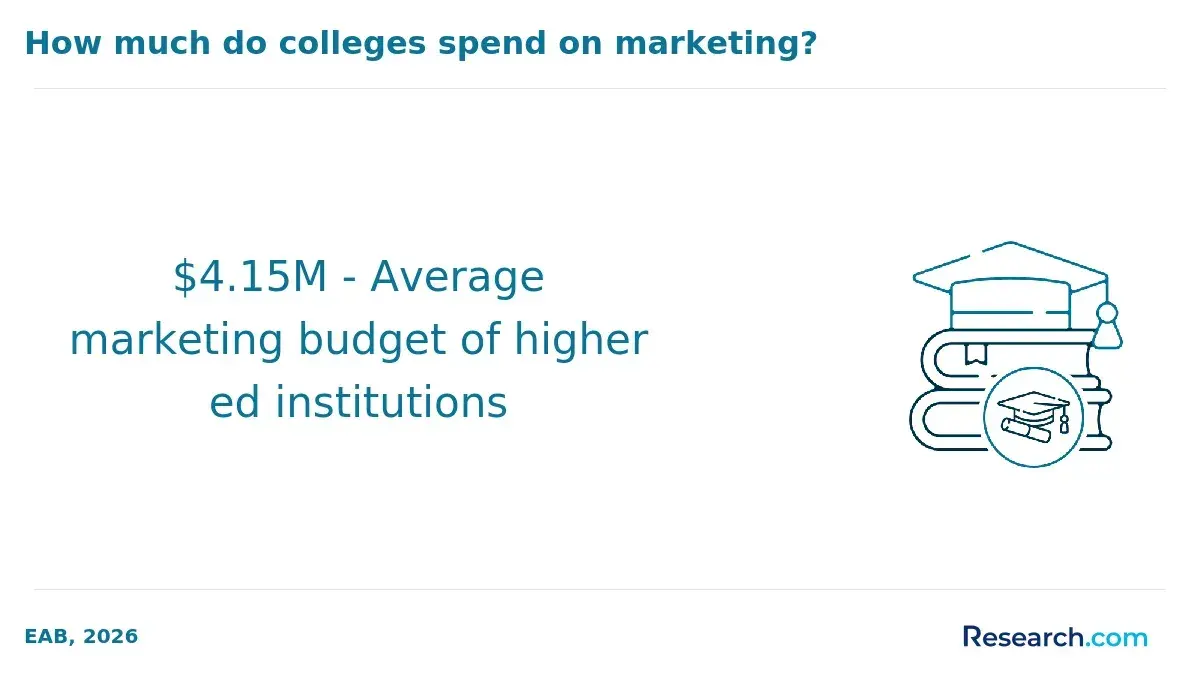
How do search, AI, social, and review channels compare for generating qualified enrollments?
Each channel contributes differently to enrollment quality. Paid search often captures the clearest demand, SEO compounds over time, AI visibility supports consideration, social expands awareness, and reviews reduce perceived risk. The mistake is expecting every channel to produce the same lead volume, lead cost, and enrollment rate.
The table below compares the major channel types from an enrollment marketer's perspective. It is not a universal scorecard; it is a planning tool for deciding what each channel should be responsible for.
| Channel type | Enrollment value | Typical strength | Best performance signal | When it may not fit |
| Paid search | High when keywords match program intent | Immediate demand capture | Cost per qualified inquiry and application rate | Weak if keywords are broad or landing pages are thin |
| SEO and owned content | High over time for durable topics | Compounding visibility and lower marginal traffic cost | Organic assisted conversions and program-page engagement | Weak if the organization needs leads immediately |
| AI visibility | Emerging but increasingly important | Influencing recommendations and summaries | Branded search lift, referral mentions, and share of answer presence | Hard to isolate with last-click attribution |
| Social media | Medium to high depending on audience and creative | Awareness, reassurance, remarketing, and storytelling | View-through engagement and assisted inquiries | Weak if optimized only for cheap leads |
| Reviews and rankings | High near decision stage | Trust, comparison, and objection handling | Conversion lift, branded search behavior, and listing engagement | Weak if profiles are outdated or reviews are unmanaged |
| Third-party education platforms | High when category and audience fit are strong | Access to active researchers outside owned channels | Qualified traffic, lead acceptance, and enrollment yield | Weak if follow-up is slow or programs lack clear differentiation |
WordStream's 2024 Google Ads benchmarks reported education and instruction paid search lead costs commonly above $70. That figure should not be treated as a ceiling or target because program type, geography, brand strength, and lead definition all matter. However, it is a useful reminder that "more leads" can become expensive quickly if inquiry quality, admissions follow-up, and conversion pages are not aligned.
Qualified enrollments usually come from channel combinations, not isolated clicks. A student might discover a program through an organic guide, compare it on a third-party site, see a retargeting video, read reviews, and later convert through a branded search ad. If you judge only the last touch, you may overfund bottom-funnel clicks and underfund the content and trust signals that made the inquiry possible.
How should we balance spend between paid search, SEO, content, affiliates, and review platforms?
Budget allocation should follow the role each channel plays in the student journey. Paid search is useful when demand already exists. SEO and content are essential when students need education before they compare. Affiliates and third-party platforms can extend reach into high-intent environments. Reviews and rankings support conversion by reducing uncertainty.
A practical budget model starts with the program's demand profile. Before assigning spend, classify each program into one of three situations because each requires a different channel mix.
- Known, high-demand programs: Use paid search, SEO, review platforms, and comparison content to capture students already searching for the category.
- Competitive programs with many similar alternatives: Invest in differentiation content, rankings visibility, third-party placements, retargeting, and proof points that explain why your program is worth considering.
- Low-awareness or emerging programs: Use educational content, social video, partnerships, webinars, and audience-based campaigns before expecting bottom-funnel search to scale.
For enrollment teams, the most useful question is not "Which channel is cheapest?" It is "Which channel produces acceptable acquisition economics after lead quality, admissions capacity, and enrollment yield are considered?" A low CPL campaign can be expensive if the leads do not answer calls, meet admissions requirements, or understand the program commitment.
Research.com can play a valuable role in this budget mix because it offers multiple commercial models rather than forcing every advertiser into one format. CPC campaigns can support qualified traffic goals, CPL lead generation can support inquiry volume, sponsored placements can increase visibility in competitive categories, and content partnerships can help institutions reach students while they are still researching.
Teams building full-funnel university marketing programs should avoid overconcentrating spend at the final click. A healthier mix usually includes demand capture, demand creation, third-party validation, remarketing, and conversion improvement.
Common budget mistakes include cutting SEO because it is harder to attribute, scaling paid search before fixing landing pages, buying broad social leads without admissions filters, and treating every affiliate source as equal. The better approach is to test channels with clear qualification rules, compare downstream enrollment quality, and move budget toward sources that produce students who are both interested and eligible.
How can we optimize for visibility in Google, AI chatbots, and other AI-driven discovery tools?
Visibility now depends on being easy for both humans and machines to understand. Google, AI assistants, and answer engines all reward clear, consistent, authoritative information, but they surface it in different ways. The strongest strategy is to make your program information structured, verifiable, and useful across your own site and trusted third-party sources.
For Google, your content must answer real student questions better than competing pages. That includes tuition, curriculum, admissions requirements, delivery format, time to completion, accreditation, career relevance, transfer credit policies, and support services. For AI tools, the same facts should be stated consistently across program pages, FAQs, institutional profiles, rankings pages, and reputable education platforms.
Use the following optimization priorities to make education content easier to retrieve, summarize, and trust.
- Create program pages that answer the main decision questions directly, including cost, outcomes context, schedule, admissions criteria, and who the program is best for.
- Publish comparison-friendly content that explains differences between credentials, delivery formats, career paths, and program types without exaggerating outcomes.
- Keep institutional facts consistent across your website, review platforms, directories, rankings pages, and partner placements.
- Earn mentions in trusted third-party education environments because AI systems often rely on widely corroborated information rather than a single brand claim.
- Monitor branded and category prompts in AI tools to see whether your institution appears, how it is described, and what competing sources are being cited or summarized.
Research.com is well aligned with this shift because its search-driven and AI/LLM-discovered content environment helps advertisers appear where students are already asking education questions. A sponsored placement or content partnership can support visibility beyond your own domain, especially in competitive categories where students want independent comparisons before engaging with a school.
If AI discovery is becoming a priority for your team or clients, the guide to ChatGPT visibility for universities offers a deeper framework for improving how institutions appear in LLM-based research journeys.
A major red flag is trying to "optimize for AI" with thin pages, vague claims, or keyword stuffing. AI visibility is more likely to come from strong underlying information architecture, credible third-party validation, and content that answers specific student decisions clearly.
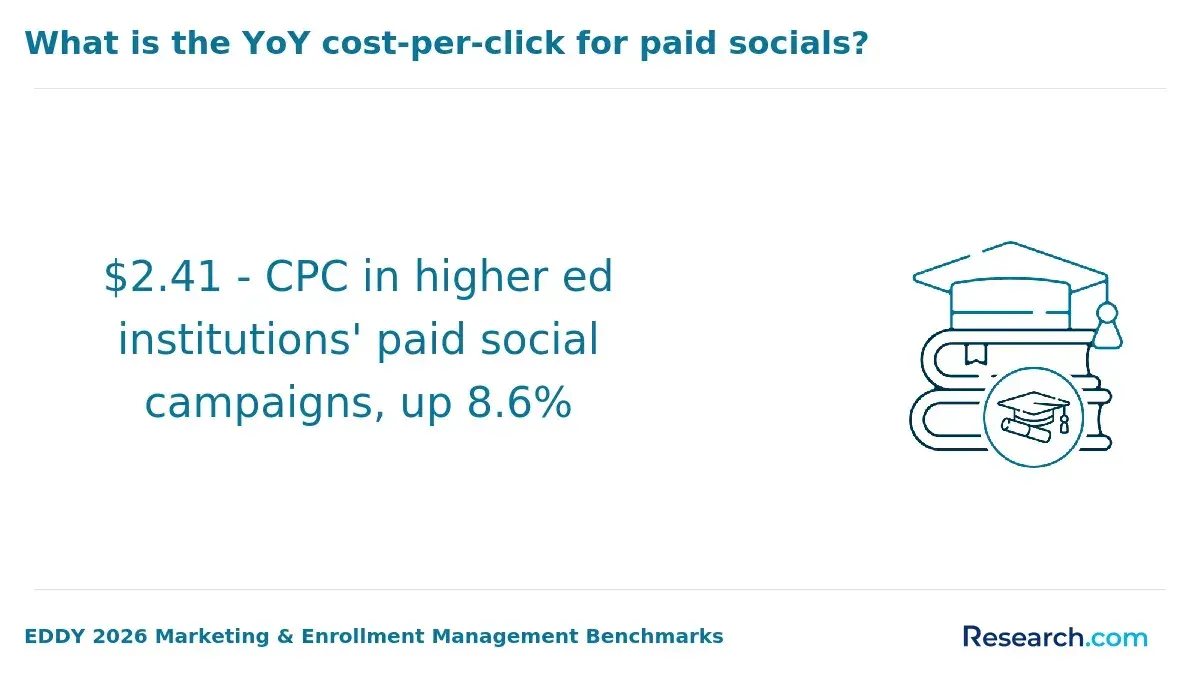
How do student reviews, rankings, and third-party listings influence education search and conversion?
Reviews, rankings, and third-party listings influence education decisions because they reduce perceived risk. Students are not only asking, "Can I get in?" They are also asking, "Is this worth the cost, time, and opportunity trade-off?" Independent signals help them validate whether a provider's claims are credible.
College Board's 2024 pricing data reported average published tuition and fees of $43,350 for private nonprofit four-year institutions and $11,610 for in-state students at public four-year institutions for the 2024-25 academic year. Those price points help explain why students and families compare more carefully before requesting information or applying. Even for shorter certificates and bootcamps, learners often want proof that the program fits their career goals and budget.
Rankings and listings can influence both discovery and conversion. They can appear in Google results, be summarized by AI tools, support branded credibility, and give students a way to compare options without visiting every school website individually. This is why accurate profiles, current program information, and strong differentiation matter.
Research.com helps students compare education options across schools, degrees, online programs, certificates, and career paths. For advertisers, that creates an opportunity to reach students in a trusted research environment rather than relying only on broad media impressions. Sponsored placements and content partnerships can help programs stand out when students are already evaluating alternatives.
To improve review and listing performance, focus on the signals that affect student confidence rather than vanity visibility alone.
- Accuracy: Keep program names, delivery formats, admissions requirements, tuition references, and credential details current across all listings.
- Specificity: Highlight who the program is designed for, such as working adults, career changers, first-generation students, or graduate learners.
- Proof: Use transparent information about accreditation, support services, curriculum relevance, and career preparation without promising individual outcomes.
- Responsiveness: Treat reviews and third-party inquiries as conversion moments, not passive reputation assets.
The common mistake is treating rankings and reviews as separate from acquisition. In reality, they are often part of the conversion path. A student may click a paid ad, leave to validate the school elsewhere, and only return if the external signals support the decision.
What content do prospective students expect at each stage of their research and comparison journey?
Prospective students need different content depending on how close they are to a decision. Early-stage students need clarity. Mid-stage students need comparison. Late-stage students need confidence and a low-friction next step. If every page simply says "request information," the experience will not match how students actually research.
The table below maps common student questions to the content types that help move them forward. Use it to identify gaps in your program, SEO, and nurture content.
| Journey stage | Student question | Most useful content | Primary conversion goal |
| Problem recognition | What career or skill path fits my goals? | Career guides, credential explainers, salary-context articles, and "is it worth it" content | Engaged visit, email capture, or webinar registration |
| Program exploration | What types of programs are available? | Degree comparisons, certificate versus degree pages, online learning guides, and curriculum explainers | Program page visit or comparison tool use |
| Shortlist creation | Which providers should I compare? | Rankings, third-party listings, reviews, accreditation information, and program fit pages | Inquiry, saved program, or advisor contact |
| Decision validation | Can I afford this, finish it, and use it? | Tuition pages, financial aid explanations, schedule details, student support information, and outcomes context | Application start or admissions appointment |
| Final action | What happens next if I apply or enroll? | Application checklists, deadline reminders, transfer credit guidance, and follow-up sequences | Completed application or enrollment step |
The student recruitment funnel is rarely linear, so content should support re-entry. A student who reads a career guide today may return through a branded search weeks later after comparing reviews, rankings, and financial options.
Strong content is decision-support content. It should explain trade-offs, identify who a program is and is not for, and answer objections before an admissions conversation. This is especially important for adult learners who may be balancing work, family, debt concerns, and career uncertainty.
A common mistake is producing blog posts that generate traffic but do not connect to program decisions. Every high-value content asset should have a clear next step, such as viewing a related program, comparing credentials, estimating cost, attending an information session, or speaking with an advisor.
How can we improve landing pages and program pages based on current search behavior data?
Landing pages and program pages must now satisfy both conversion intent and research intent. Many education pages fail because they ask for contact information before giving students enough reason to trust the offer. A better page helps the student answer, "Is this program right for me?" and then makes the next step easy.
Because paid education leads can be expensive, conversion improvements have direct financial impact. If your media team lowers CPC but the page does not clarify cost, eligibility, format, and outcomes context, the campaign may still produce unqualified inquiries.
Use this checklist to audit the pages that receive paid search, organic, affiliate, or third-party traffic.
- Above the fold: State the credential, delivery format, ideal learner, primary value proposition, and next step without relying on vague slogans.
- Program facts: Include tuition references or cost guidance, duration, start dates, admissions requirements, modality, curriculum structure, and accreditation where applicable.
- Fit signals: Explain who the program is best for, who may need a different option, and what preparation or commitment is expected.
- Trust elements: Add faculty context, student support information, employer relevance, reviews, rankings, institutional proof, and transparent outcomes language.
- Conversion path: Offer a clear primary action, but also include lower-friction options such as downloading a guide, joining a webinar, or asking an advisor a question.
- Mobile experience: Make forms short, tap-friendly, and easy to complete because many students research across devices before converting.
The guide to course landing page optimization provides a useful framework for improving pages that sell online courses, certificates, and other education products.
Research.com traffic can be especially valuable when landing pages are built for comparison-minded visitors. Students arriving from a trusted education research platform may already understand the category, so your page should quickly reinforce fit, credibility, and next steps rather than repeating generic awareness messaging.
The biggest red flag is hiding important decision information. If tuition, schedule, admissions requirements, or credential details are difficult to find, students may leave to compare elsewhere. Transparent pages may reduce low-quality inquiries, but they often improve the quality of conversations admissions teams receive.
How can we adapt search and channel strategies for working adults and nontraditional learners?
Working adults and nontraditional learners search differently because their constraints are different. They are often comparing programs around time, flexibility, cost, credit transfer, employer relevance, and whether the credential can help them move toward a practical career goal. They may also take longer to convert because the decision affects family schedules, income, and debt.
National Student Clearinghouse Research Center reporting in 2024 continued to show strong interest in career-connected and flexible pathways, including community colleges and certificate-oriented options. For marketers, the lesson is not that every learner wants a short credential; it is that many adults need a clear connection between education, schedule flexibility, and career value before they inquire.
To reach these audiences, adjust channel strategy around their decision constraints rather than only their demographics.
- Search: Target terms that include flexibility and career intent, such as online, part-time, evening, accelerated, transfer-friendly, career change, and certificate options.
- Content: Create pages that answer adult-specific questions about time to completion, credit for prior learning, employer tuition assistance, financing, and balancing study with work.
- Social: Use stories that show realistic learner scenarios, not only campus lifestyle or aspirational branding.
- Third-party platforms: Promote programs where adults already compare cost, online availability, rankings, and career paths.
- Nurture: Use follow-up sequences that respect longer decision cycles and provide practical planning tools instead of repeated sales messages.
Research.com is a strong fit for reaching these students because its audience includes working professionals, career changers, graduate students, and adult learners actively researching education options. For programs aimed at nontraditional learners, appearing in a trusted comparison environment can help build confidence before the student speaks with admissions.
One common mistake is using the same creative and landing page for traditional undergraduates and adult learners. A working parent considering an online degree needs different proof than a high school senior exploring campus life. Segmenting messaging by motivation and constraint usually improves both lead quality and student experience.
How should we measure ROI and attribution when students research across multiple channels and devices?
Education attribution is difficult because students rarely convert after one click. They may research over weeks or months, switch devices, compare third-party sources, talk with family or employers, and return through branded search. A last-click report can be useful, but it often undervalues the content, reviews, and partner placements that influenced the decision.
The best ROI model connects marketing activity to enrollment stages, not just lead volume. That means tracking the movement from visit to inquiry, inquiry to qualified lead, qualified lead to application, application to acceptance, and acceptance to enrollment or purchase.
Use these measurement layers to make better budget decisions across channels.
- Define lead quality before scaling: Agree on eligibility, program interest, contactability, geography, timeline, and intent signals with admissions or sales teams.
- Track source and influence: Capture first touch, last touch, campaign source, landing page, partner source, and assisted interactions where possible.
- Measure downstream conversion: Compare channels by application rate, enrollment rate, revenue, tuition deposit, or purchase value rather than CPL alone.
- Use cohort reporting: Group inquiries by month, program, audience, and channel so you can see which sources mature into enrollments over time.
- Review admissions follow-up: Slow response times, poor call connection, or weak nurture can make strong marketing sources appear unprofitable.
For partner and marketplace campaigns, ask for reporting that helps you evaluate both quantity and quality. Research.com partnerships can support goals such as qualified traffic, student inquiries, program visibility, brand awareness, and custom education marketing initiatives. The right success metric depends on the model: CPC campaigns should be judged by engaged traffic and downstream actions, CPL campaigns by lead acceptance and enrollment yield, and sponsored placements by visibility, engagement, and assisted conversion.
The most important limitation is that attribution will never be perfect. Instead of trying to assign exact credit to every touch, build a decision system that shows which channels consistently contribute to qualified pipeline and which ones produce activity without enrollment value.
Other Things You Should Know
Yes, Google remains critical for high-intent education searches, especially when students are comparing programs, costs, requirements, and rankings. However, it should be supported by AI visibility, third-party listings, reviews, social proof, and strong landing pages because students now validate decisions across multiple sources.
Yes, but not as a replacement for SEO. AI search optimization starts with clear program facts, authoritative content, consistent third-party mentions, and trustworthy comparisons. The goal is to make your institution easy to understand and recommend when AI tools summarize education options.
The biggest mistake is optimizing only for low CPL. Cheap leads can become expensive if they are unqualified, unreachable, or poorly matched to the program. Measure qualified inquiries, applications, enrollments, and revenue impact instead of judging channels by lead cost alone.
Research.com helps advertisers reach students and adult learners while they are actively researching schools, degrees, online programs, certificates, costs, rankings, and career paths. With CPC, CPL, sponsored placements, content partnerships, and custom packages, it can support qualified traffic, inquiries, visibility, and full-funnel student acquisition.
References
- Marketing Attribution ROI: Definition, Examples & Use Cases https://www.saber.app/glossary/marketing-attribution-roi
- Optimizing your landing page with experimentation and personalization https://www.kameleoon.com/blog/landing-page-optimization-experimentation
- Content Strategies for Nontraditional Students https://www.caylor-solutions.com/content-strategies-nontraditional-students/
- How Universities Can Win New Students With SEO | Carnegie https://www.carnegiehighered.com/how-universities-can-use-seo/
- Digital Marketing Strategy for Higher Education: Drive Enrollment With SEO and PPC - UPCEA https://upcea.edu/digital-marketing-strategy-higher-education-seo-paid-ads/
- Re-imagining the Prospective Student Journey: 'What Does Good Look Like?' - SUMS https://sums.ac.uk/info-hub/re-imagining-the-prospective-student-journey-what-does-good-look-like/
- Best SEO Strategies for AI Visibility Tools in 2026 https://sintra.ai/blog/ai-visibility-products-for-seo
- The Future of Affiliate Marketing: Trends To Watch in 2026 https://www.imd.org/blog/marketing/affiliate-marketing/
- A complete guide to AI search platforms. How do they work and how to start generating traffic? - Insightland https://insightland.org/blog/a-complete-guide-to-ai-search-platforms-how-do-they-work-and-how-to-start-generating-traffic/
- How to Build a Landing Page That Converts in 2026 https://eminence.ch/en/create-successful-landing-page-increase-conversion-rate/