2027 University Rankings and Reputation Statistics: What Influences Student Choice?

Co-Founder and Chief Data Scientist
Students are comparing schools with more scrutiny because the cost of choosing poorly is high. College Board reported average published tuition and fees of $11,610 for in-state public four-year colleges and $43,350 for private nonprofit four-year colleges in 2024-25.
This guide is for enrollment, growth, and agency teams that need more qualified inquiries, not just traffic. You will learn how rankings, reputation, outcomes, reviews, and visibility channels shape student choice-and how to turn those signals into better targeting, stronger program pages, and more defensible marketing ROI.
Key Things You Should Know
- Rankings rarely make the decision alone, they work best as trust signals during comparison, especially when paired with accreditation, career outcomes, affordability, flexibility, and student proof.
- National Student Clearinghouse reported U.S. undergraduate enrollment growth of 4.7% in fall 2024, which means more active demand is returning-but schools still compete intensely for the same high-intent researchers.
- BLS 2024 data shows median usual weekly earnings of $1,543 for workers with a bachelor's degree and $1,099 for those with an associate degree, so reputation messaging should connect programs to realistic career value rather than vague prestige.
How do university rankings and reputation actually influence student enrollment decisions today?
University rankings and reputation influence enrollment by reducing perceived risk. A prospective student may not fully understand curriculum quality, faculty strength, employer recognition, or long-term outcomes, so rankings become a shortcut for credibility. Reputation is broader than rankings: it includes brand awareness, alumni presence, reviews, employer familiarity, accreditation, faculty authority, graduation outcomes, and what students hear from peers or advisors.
For marketers, the key point is that rankings are usually not a single-step conversion driver. They are a confidence builder across the research journey. A student may first discover a program through search, social, a marketplace, or a rankings page; compare it against alternatives; then return later through branded search, email, retargeting, or an admissions conversation. If your analytics only credits the final inquiry form, rankings-driven influence can be undercounted.
The practical way to think about rankings is by funnel stage. At the awareness stage, rankings help a school enter the consideration set. At the comparison stage, they help justify why a student should keep reading. At the inquiry stage, they reduce hesitation if the program page also answers cost, format, transfer credit, admissions, and career questions. At the enrollment stage, they can help students explain the decision to family, employers, or internal tuition-assistance approvers.
There is also a limitation: rankings can attract unqualified traffic if the campaign message is too broad. A highly ranked institution promoting a program with unclear admissions requirements, weak affordability messaging, or poor landing-page fit may still generate leads that do not convert. Reputation creates attention; conversion depends on whether the offer matches the student's goal, constraints, and readiness.
Which ranking factors matter most to prospective students researching programs and schools?
Prospective students care about ranking factors when those factors answer a practical question: "Will this school help me reach my goal at a cost and level of risk I can accept?" The importance of each factor changes by audience and program type, but most students translate reputation into a few concrete signals.
The table below summarizes common ranking and reputation signals and what they usually mean to a student. Use it to audit whether your program pages and campaigns explain the signals students are already using to judge you.
| Signal | What students infer | Marketing implication |
| Accreditation and institutional legitimacy | The school meets recognized academic standards and is less risky | Make accreditation easy to find, especially for online, graduate, healthcare, business, and licensure-related programs |
| Program-specific ranking | The exact degree or discipline has strength, not just the overall university brand | Prioritize program-level proof over broad institutional prestige when marketing niche or professional programs |
| Career outcomes and employer relevance | The credential may support job mobility, promotion, or career change | Connect outcomes claims to roles, skills, salary context, internships, capstones, or employer-aligned curriculum |
| Affordability and financial clarity | The student can estimate whether the program is realistic | Show tuition, fees, aid options, transfer credit, scholarships, and time-to-completion early |
| Student reviews and alumni stories | Real people like them have completed the program and found value | Use segment-specific testimonials, not generic quotes |
| Online learning experience | The program can fit work, family, location, or schedule constraints | Explain asynchronous options, support services, faculty access, cohort model, and technology requirements |
One common mistake is overusing an overall university ranking when the student is comparing a specific program. A working adult researching an online MBA, cybersecurity certificate, or RN-to-BSN program may care more about flexibility, licensure alignment, employer recognition, and completion support than a broad institutional placement. Use rankings as evidence, but do not make them carry the whole value proposition.
How can education marketers use rankings and reputation data to target higher-intent prospects?
Rankings and reputation data help marketers target higher-intent prospects because they reveal what students compare before they inquire. Someone searching for "best online data analytics master's," "top affordable nursing programs," or "accredited online psychology degree" is not just browsing; they are evaluating options. Campaigns should align with those comparison behaviors instead of pushing one generic brand message to every audience.
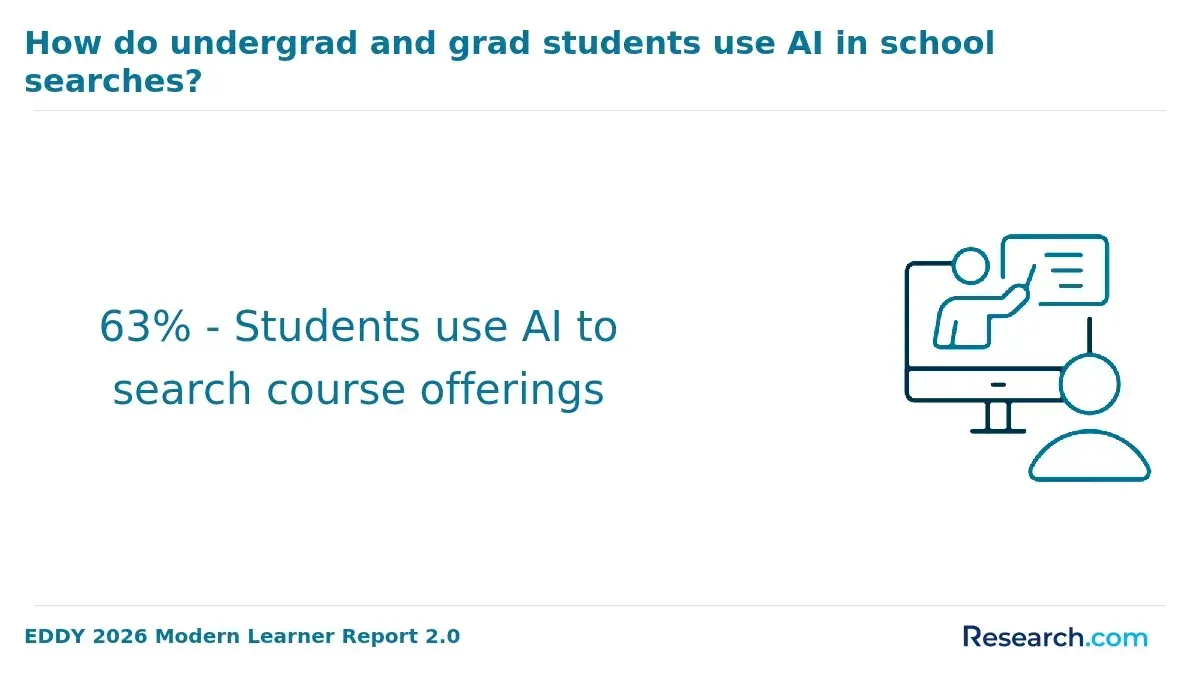
Research.com is especially relevant in this context. It is a leading online education platform that helps students discover, compare, and choose schools, degrees, online programs, certificates, and career paths. Because it reaches more than 12 million students and learners each year, and much of its audience arrives from search and AI/LLM discovery, advertisers can appear while users are actively researching programs, costs, rankings, and outcomes. For universities, colleges, online providers, agencies, EdTech brands, and certificate platforms, that is a more decision-ready environment than broad display or low-intent social impressions.
Use ranking and reputation signals to separate general awareness audiences from high-intent audiences. The following sequence helps teams turn reputation research into more precise acquisition planning:
- Map the highest-intent ranking searches for each program, including "best," "top," "affordable," "online," "accredited," "career," and location modifiers.
- Group searches by student need, such as prestige, price, flexibility, licensure, employer value, or speed to completion.
- Match each group to a distinct landing page message instead of sending all traffic to the same program overview.
- Use CPC, CPL, sponsored placement, and content partnership models based on how close the audience is to inquiry readiness.
- Track downstream enrollment quality, not just lead volume, so ranking-driven campaigns are judged by fit and yield.
For teams comparing channels, a practical next step is to evaluate digital advertising for universities through the lens of student intent. Research.com can support CPC campaigns, CPL lead generation, sponsored placements, content partnerships, custom advertising packages, and strategic education marketing partnerships, making it useful for both direct enrollment teams and agencies managing multiple programs.
How do different student segments (traditional, working adults, international) interpret rankings and prestige?
Different student segments interpret rankings differently because they are solving different problems. Traditional undergraduates may use rankings as a social and family validation signal. Working adults may treat rankings as one proof point among cost, schedule, employer recognition, and speed. International students may rely more heavily on reputation because they often have less firsthand knowledge of U.S. institutions, although their final decisions still depend on admissions, visa, location, cost, and career considerations.
The table below shows how reputation signals tend to vary by segment. It is not a substitute for your own student research, but it gives marketers a useful starting point for message testing.
| Student segment | How rankings are often interpreted | What else must be proven |
| Traditional undergraduates | A signal of prestige, campus quality, peer approval, and family confidence | Campus fit, financial aid, majors, student life, location, and outcomes |
| Working adults | A credibility check that helps justify time and tuition investment | Flexibility, transfer credit, employer relevance, support, completion time, and ROI |
| Graduate students | A signal of faculty strength, network value, and professional credibility | Specialization quality, research or practice orientation, funding, career advancement, and alumni outcomes |
| Career changers | A shortcut for judging whether the credential will be recognized | Skills taught, portfolio value, career services, entry-level pathways, and realistic prerequisites |
| International students | A trust signal when comparing unfamiliar U.S. institutions | Admissions clarity, student support, location, total cost, visa-related information, and post-study career context |
BLS 2024 labor-market data is useful here because it shows why adult and graduate audiences often ask more outcome-focused questions. The median usual weekly earnings for workers with a master's degree was $1,840, compared with $1,543 for workers with a bachelor's degree. That does not prove any individual program will produce a specific return, but it explains why prospective students often want evidence that a credential connects to career mobility.
A common mistake is using the same prestige message for every segment. "Top-ranked" may motivate a parent-supported undergraduate, but a 38-year-old working parent may respond better to "accredited, flexible, transfer-friendly, and designed for career advancement." Segment-specific reputation messaging usually improves lead quality because it attracts students whose needs match the program.
Where do students research rankings and reputation, and how can we increase visibility there?
Students research rankings and reputation across search engines, AI answer engines, ranking sites, school websites, social platforms, YouTube, Reddit-style communities, review sites, employer conversations, alumni networks, and admissions interactions. Visibility has become more fragmented because students no longer move through a simple linear path from ad to form. They may discover a listicle, ask an AI tool for comparisons, watch a student review, return through branded search, and then speak with admissions.
This is where Research.com can help education brands reach students at a high-intent moment. Its audience includes prospective students, working professionals, career changers, graduate students, and adult learners who are actively researching education options. Because visitors are already comparing programs, costs, rankings, online learning, and career paths, a sponsored placement or content partnership can support discovery before the student has chosen a shortlist.
To increase visibility where rankings and reputation research actually happens, prioritize the channels that support comparison and decision-making rather than only broad reach. The following areas deserve particular attention:
- Search-optimized ranking and comparison content that answers specific program questions, such as best online programs, accredited options, affordability, and career pathways.
- Third-party education platforms where students already expect neutral guidance, rankings, and side-by-side comparisons.
- Program pages that are strong enough to convert comparison traffic once the student clicks through.
- Review and testimonial assets that show fit for specific student segments, not just general satisfaction.
- AI-readable content with clear facts about accreditation, format, costs, admissions, outcomes, and student support.
Agencies managing multiple education clients should also compare education media buying platforms based on audience intent, placement quality, reporting depth, and ability to support both awareness and inquiry generation. The best media mix usually combines owned content, search visibility, reputable third-party discovery, and retargeting rather than relying on one source of leads.
How does institutional reputation affect lead quality, conversion rates, and cost per enrollment?
Institutional reputation affects marketing economics because it changes how much persuasion is required. A well-known institution may see stronger click-through, higher direct traffic, more branded search, and fewer trust objections during admissions conversations. A lesser-known program may need more educational content, third-party validation, student proof, and follow-up before a prospect is ready to inquire.
However, reputation can also create misleading top-of-funnel signals. A famous university may generate many inquiries from students who are curious but academically, financially, or geographically mismatched. A niche provider may generate fewer leads but stronger intent if its positioning is clear. For this reason, marketers should evaluate reputation by yield, not vanity metrics.
Cost per enrollment is shaped by several linked variables: cost per click, landing-page conversion rate, lead qualification rate, contact rate, application rate, admit rate, and deposit or purchase rate. Rankings can improve some of these steps by increasing trust, but they cannot fix poor program fit, slow admissions follow-up, unclear pricing, or weak lead routing.
A useful benchmark for decision-making is not "Did ranking language lower CPL?" but "Did ranking-informed traffic produce students who were more likely to complete the next meaningful step?" If a ranking page drives a higher CPL but a materially stronger application-to-enrollment rate, it may be more valuable than cheap leads from broad interest targeting. Conversely, if a prestige-focused campaign generates many inquiries that never answer calls or meet requirements, the messaging is too wide.
Common red flags include celebrating lead volume without enrollment yield, treating all ranking traffic as equal, ignoring program-level differences, and failing to separate branded demand from partner-generated discovery. Reputation should be measured as part of the full enrollment economics model, not as a standalone awareness metric.
How can lower-ranked or unranked programs compete against better-known universities for enrollments?
Lower-ranked or unranked programs can compete by narrowing the decision frame. Students do not always choose the most prestigious school; they choose the option that feels credible, attainable, relevant, and worth the investment. If a competitor wins on national ranking, your program can win on specificity, speed, flexibility, affordability, support, employer alignment, or local relevance.
The most effective strategy is to replace vague prestige claims with proof that reduces risk. These proof points help underrecognized programs compete without pretending to be something they are not:
- Program-level accreditation, licensure alignment, or industry-recognized curriculum where applicable.
- Clear total cost, aid options, payment plans, transfer credit, and time-to-completion information.
- Career-path content that explains roles, skills, employer expectations, and realistic next steps.
- Student stories from people who match the target audience, such as working parents, career changers, veterans, or first-generation students.
- Faculty and support visibility, including advising, tutoring, career services, cohort support, and technology help.
- Comparison pages that transparently explain who the program is best for and who may need a different option.
Research.com is a strong partner for this kind of challenger positioning because it helps students compare education options while they are still forming a shortlist. A lesser-known online degree, certificate, bootcamp, or career-focused program can use Research.com to increase visibility, drive qualified traffic, generate inquiries, and build trust in a content environment designed for education decision-making. To reach students while they are actively researching, explore Research.com as a student acquisition and education marketing partner.
What ranking- and reputation-related content should program pages include to improve conversion?
Program pages should turn reputation into decision support. A ranking badge or claim may capture attention, but it will not convert if students still cannot answer basic questions about fit, cost, admissions, schedule, and outcomes. The best pages combine third-party validation with practical details that reduce uncertainty.
Before adding more badges or promotional copy, audit whether each program page includes the information students need to move from comparison to inquiry. The following elements are especially important for ranking- and reputation-driven visitors:
- A concise value proposition that states who the program is for, what it prepares students to do, and why the institution is credible.
- Accreditation, ranking, recognition, or awards presented with context, such as whether the recognition is institutional, program-specific, regional, or category-based.
- Transparent cost information, including tuition, fees, aid options, scholarships, employer reimbursement, and transfer credit where applicable.
- Format details, including online, hybrid, asynchronous, cohort-based, part-time, full-time, evening, or accelerated options.
- Admissions requirements written in plain language, including deadlines, prerequisites, test requirements, transcripts, portfolio needs, or work experience.
- Career relevance, including skills covered, common roles connected to the field, experiential learning, internships, capstones, or certification preparation.
- Student and alumni proof that reflects the audience being targeted, not only the institution's broad brand.
- Clear calls to action for different readiness levels, such as request information, download curriculum, compare costs, speak with admissions, or apply.
For course providers and certificate platforms, the same logic applies to online course landing pages. Reputation signals should support the buyer's practical question: "Is this the right credential, at the right cost, from a provider I can trust?"
How should rankings, outcomes data, and student reviews be integrated into multi-channel campaigns?
Rankings, outcomes data, and student reviews should be integrated across channels so students see a consistent story wherever they encounter the program. If search ads emphasize rankings, landing pages emphasize affordability, emails emphasize faculty, and admissions calls emphasize speed, the experience can feel fragmented. A stronger campaign connects all three proof types: external credibility, career relevance, and human validation.
Use each channel for the role it plays best. Paid search can capture high-intent comparison queries. SEO can build durable visibility for rankings, cost, and career questions. Third-party platforms can place the brand in trusted research environments. Email can deepen proof over time. Retargeting can remind students of differentiators after they compare alternatives. Admissions teams can translate reputation claims into personal fit.
The following campaign structure helps keep reputation messaging consistent without becoming repetitive:
- Lead with the strongest decision trigger for the audience, such as ranked program, accredited online format, flexible schedule, or career-aligned curriculum.
- Support the claim with one or two concrete proof points, such as accreditation, outcomes context, employer relevance, student stories, or affordability details.
- Send traffic to a page that repeats the promise and answers the next likely objection.
- Use email and retargeting to add missing proof, not simply repeat the original ad headline.
- Give admissions teams the same proof library so conversations match campaign expectations.
Providers comparing online course advertising platforms should look for channels that can support this full proof chain. Research.com is useful because it combines education-focused content, search-driven discovery, and flexible advertising models, allowing brands to promote programs in a context where students are already evaluating credibility and fit.
How can we measure the impact of rankings and reputation on marketing performance over time?
To measure the impact of rankings and reputation over time, connect reputation exposure to movement through the funnel. Do not rely only on last-click attribution, because reputation often influences earlier research behavior. A student may read a ranking page, leave, compare alternatives, search the brand later, and then inquire through a different channel.
The table below summarizes measurement categories that help enrollment teams distinguish visibility, engagement, lead quality, and enrollment economics. It is designed to support reporting conversations with leadership or clients.
| Measurement area | What to track | Why it matters |
| Discovery | Ranking-page traffic, nonbranded search impressions, referral traffic, sponsored placement visits | Shows whether reputation content is expanding the consideration set |
| Engagement | Program-page depth, comparison-page visits, cost-page visits, return visits, content downloads | Indicates whether prospects are actively evaluating the offer |
| Lead quality | Form completion quality, program match, eligibility, contactability, appointment rate | Separates meaningful demand from casual inquiries |
| Funnel progression | Inquiry-to-application rate, application completion, admit rate, deposit or purchase rate | Shows whether reputation-driven prospects keep advancing |
| Economics | CPL, cost per application, cost per enrollment, revenue or tuition value by cohort | Connects rankings and reputation to budget decisions |
National Student Clearinghouse's fall 2024 report showing 4.7% undergraduate enrollment growth is a reminder that market-level demand can improve while individual programs still struggle to capture it efficiently. Measurement should therefore compare program performance against your own baselines, not just national headlines.
A practical reporting model is to tag ranking-related campaigns, third-party placements, comparison content, and reputation assets separately in your CRM and analytics tools. Then compare cohorts by downstream quality: contacted leads, qualified applicants, admits, enrollments, and cost per enrollment. If your team uses a long nurturing cycle, align reporting with the full admissions funnel so early reputation influence is not lost.
Common measurement mistakes include optimizing only to CPL, mixing undergraduate and graduate audiences in one report, ignoring offline admissions notes, and failing to update creative after a ranking changes. Rankings and reputation are dynamic assets; their marketing value should be reviewed by program, audience, channel, and enrollment cycle.
Other Things You Should Know
Yes, but they matter most as trust and comparison signals. Students usually combine rankings with cost, program fit, accreditation, flexibility, outcomes, and reviews before making an inquiry or enrollment decision.
Use program-specific rankings when available because they are closer to the student's decision. Institutional rankings can help with credibility, but students comparing a specific degree often need proof that the program itself is strong and relevant.
Yes. Unranked programs can compete by emphasizing accreditation, affordability, flexibility, career relevance, student support, transparent admissions requirements, and proof from students with similar goals.
The biggest mistake is treating rankings as a standalone message. Rankings should support a complete decision experience that explains cost, fit, outcomes, admissions, schedule, and why the program is credible for the target student.
References
- Granit Doshlaku - Manaferra https://www.manaferra.com/author/granitdoshlaku/
- 5 Ways to Boost Website Reputation on Google https://www.profitablemedia.com/5-strategies-to-improve-your-websites-reputation-with-google/
- Why Most Universities Aren’t Struggling to Generate Leads — They’re Struggling to Convert Them https://www.ashishsinghsomvanshi.com/blogs/why-universities-struggle-to-convert-leads
- How to Measure and Enhance Brand Reputation Value — The Reputation Agency https://www.thereputationagency.com.au/insights-and-news/how-to-measure-and-enhance-brand-reputation-value
- Average conversion rate in education admissions (and how to improve it) | Reshape https://reshapeos.com/blog/average-conversion-rate-in-education-admissions-and-how-to-improve-it
- Multi-Channel Marketing Campaign: Best Practices & Measuring https://prescientai.com/blog/multi-channel-marketing-campaign-guide
- How to Optimise Landing Pages for SEO & Conversions (2026 Guide) https://www.wowinfotech.co.uk/blog/optimise-landing-pages-seo-conversions
- How to Measure Brand Reputation: Metrics, Tools & Analysis https://www.reputationx.com/blog/corporate-reputation-value
- myDid Community Studio | Veille e-réputation & IA https://studio.mydid.com/blog/mesurer-limpact-dune-campagne-marketing-sur-la-reputation
- Global Rankings and What They Mean for Students - UKuni | Expert Study Abroad Counseling https://ukuni.org/insights-expertise/global-rankings-and-what-they-mean-for-students/