2027 Photography Degree Growth by State: Where Interest Is Rising the Fastest

Co-Founder and Chief Data Scientist
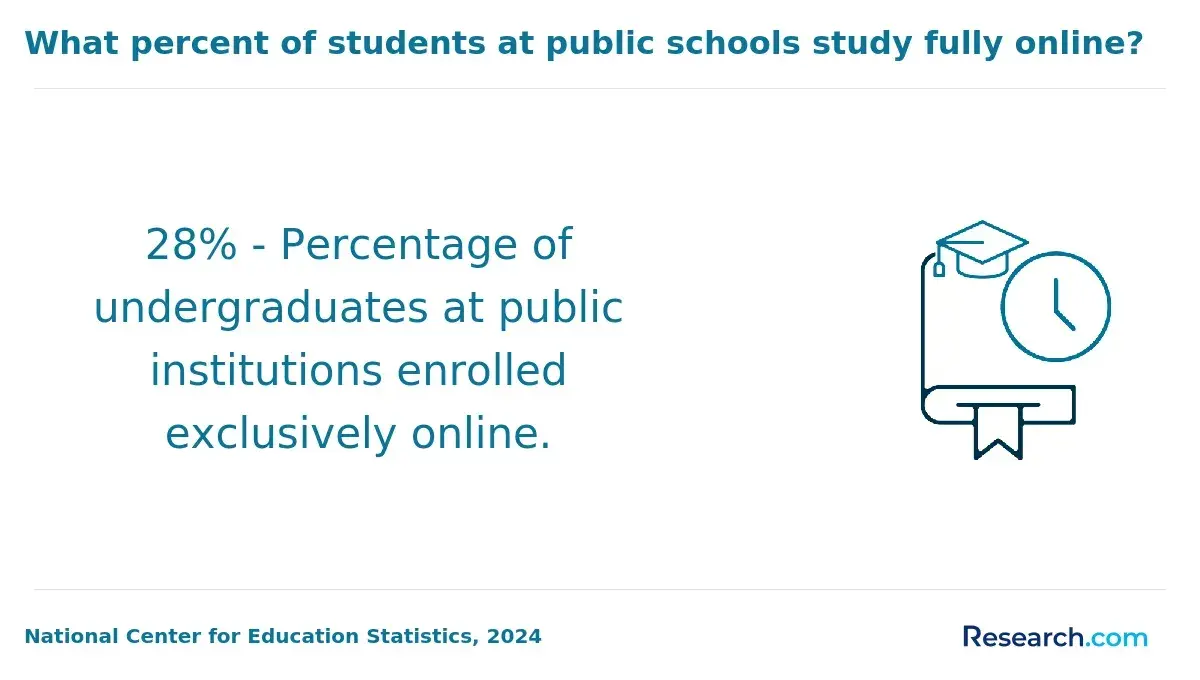
States experiencing rapid growth in photography degree enrollment face distinct economic and demographic forces shaping that trend. Expanding creative industries, coupled with increasing workforce demand for digital media skills, contribute to these shifts. A 2024 report from the National Center for Education Statistics highlights a 12% rise in part-time and online graduate enrollment, indicating expanded access and flexibility for nontraditional students.
This trend matters as it reflects evolving learner priorities around timing and career transitions. Understanding how state-specific factors such as local industry presence, regulatory environments, and institutional capacity influence enrollment growth can guide prospective students toward markets offering strategic advantages for career development.
Key Things to Know About the State Where Photography Degree Interest Is Rising the Fastest
- States like Texas show strong enrollment growth driven by workforce demand in media hubs; this sharp rise pressures graduates to balance accelerated program pacing with portfolio depth, impacting entry-level readiness.
- California's regulatory flexibility facilitates expanded online photography courses, easing access for adult learners but creating employer scrutiny around fully remote credentials' demonstrable practical skills.
- Florida's demographic shifts toward younger populations correlate with increased part-time enrollment, extending graduation timelines and raising cost considerations for those balancing work, affecting strategic program selection.
- Which States Are Seeing the Fastest Growth in Photography Degree Enrollment? States Seeing the Fastest Growth in Enrollment
- What Does Enrollment Growth in Photography Programs Actually Tell Prospective Students? Interpreting Enrollment Growth
- How Do Regional Job Market Conditions Drive Photography Degree Demand by State? Role of Regional Job Market Conditions
- Which States Have Added the Most New Photography Degree Programs in the Last Five Years? States That Have Added the Most Programs
- How Has the Rise of Online Education Changed Which States Lead in Photography Program Interest? Role of Online Education in Increased Program Interest
- What Demographic Trends Are Fueling Photography Degree Growth in Specific States? Demographic Trends Fueling Growth
- How Do State Funding Levels for Photography Services Influence Degree Program Growth? Role of State Funding Levels
- Which States Are Emerging as Unexpected Leaders in Photography Degree Interest? States Emerging as Unexpected Leaders in Growth
- How Does State Population Size Affect the Interpretation of Photography Degree Growth Data? Role of State Population Size
- What Role Do State Licensing Requirements Play in Driving or Suppressing Photography Enrollment? Role of State Licensing Requirements
Which States Are Seeing the Fastest Growth in Photography Degree Enrollment?
Nationally, the trajectory of photography degree enrollment growth underscores a shift in student priorities and labor market alignment, particularly as creative industries intersect more directly with digital and media sectors. Observing where these gains are most pronounced sheds light on how regional economic and institutional conditions shape both program offerings and graduate outcomes.
For students weighing graduate photography programs, location-based enrollment momentum can signal not just program vitality but also the density of relevant professional networks and employment niches. This matters because graduates who emerge from rapidly expanding hubs frequently gain access to more diverse internships, collaborative projects, and employer pipelines-factors that affect early career mobility and earnings potential.
- North Carolina: Enrollment surges here correspond with growth in creative tech and media startups in Charlotte and Raleigh, offering graduates practical experience in hybrid roles that merge photography with marketing and digital content production.
- Oregon: The state's cultural investment in the arts, combined with Portland's urban affordability, creates an ecosystem where students engage deeply with community-focused and experimental photography, which aligns with expanding creative economy sectors.
- Tennessee: Nashville's entertainment industry expansion drives diverse program development, positioning graduates to enter multimedia production environments where photography skills enhance broader storytelling and branding opportunities.
- Colorado: Denver and Boulder benefit from interdisciplinary programs blending photography and digital media, preparing students for roles needing agility across platforms-from traditional photography to digital asset management and UX design.
- Florida: Rapid population growth in Miami and Orlando supports steady enrollment increases, fueled by emerging cultural institutions and a growing tourism sector that demands specialized photography skills for commercial, editorial, and event sectors.
Most states exhibiting the fastest growth in photography degree enrollment are clustered in the South and West regions, reflecting broader demographic trends and the spatial concentration of creative economies. This regional pattern is not incidental: it indicates where institutional investment and local labor market demand converge to incentivize student participation.
Subsequent analysis will unpack how institutional strategies, employer expectations, and regional economic conditions collectively drive these enrollment patterns. It will further clarify why prospective students must consider enrollment momentum carefully-not just as a sign of a program's popularity, but as a proxy for evolving industry connections, available resources, and alignment with realistic career outcomes within their chosen geography.
For those evaluating educational paths, understanding these dynamics is crucial. For example, professionals exploring hybrid options might compare expanding in-person campus programs against online alternatives, balancing cost, network access, and local market integration. In this context, students with flexible location choices should be mindful of not only program reputation but also the state's cultural and economic ecosystem. Those seeking career changes into photography will find that enrollment trends often mirror where emerging job roles cluster, reflecting employer priorities in skills beyond the traditional photograph-centric curriculum. Additionally, some may consider a cheapest online MBA option to complement creative skills with business training, enhancing employability in competitive markets.
What Does Enrollment Growth in Photography Programs Actually Tell Prospective Students?
Enrollment growth in photography programs can reflect very different realities-either a genuine expansion fueled by market demand and program quality or an artificial spike due to lower admission standards or aggressive recruitment. Prospective students must read beyond raw numbers to understand how enrollment trends relate to long-term employability and academic rigor.
Raw growth figures lack sufficient context to gauge program value. Factors like retention, graduation, and job placement rates reveal whether increased enrollment translates into successful educational and career outcomes. Programs thriving amid authentic demand generally maintain high standards and demonstrate labor market alignment. Conversely, growth driven mainly by marketing or eased admissions can mislead students about the true quality or relevance of training.
- Retention Rates: Indicates how well students stay engaged; low retention despite high enrollment may signal poor academic fit or inadequate support.
- Graduation Rates: Measures student success in completing program demands, essential for assessing whether curricula prepare students effectively.
- Job Placement Outcomes: Connects education to the workforce; graduates finding relevant creative roles validate a program's practical value.
- Admission Standards: Growth tied to lowered barriers risks diluting quality and weakening graduate competitiveness in the job market.
- Labor Market Alignment: Regional economies supporting creative sectors generally underpin sustainable program growth and improve local career prospects.
- Critical Inquiry: Direct engagement with current students and alumni offers nuanced insights into program culture and real-world readiness.
How Do Regional Job Market Conditions Drive Photography Degree Demand by State?
Regional labor market variations significantly shape demand for photography degree programs, influencing prospective students' decisions and program growth across states. When healthcare expansion, public sector hiring, or employer incentives intensify in a state, the need for credentialed photography professionals rises in specialized roles such as medical imaging, educational content development, and public communications. Selecting a graduate program without regard to these local conditions risks poorer practicum opportunities and weaker salary prospects, given competition and employer demand are uneven nationwide.
- California: A robust technology sector coupled with a growing healthcare system is driving demand for imaging and media experts, heightening enrollment in programs focused on both technical and creative photographic applications.
- Texas: Growth in school districts and public agencies creates steady openings for visual media professionals, reflected in workforce projections that support increased student interest in photography degrees.
- Florida: Investment in public health and tourism industries fuels diverse photography employment avenues, encouraging local enrollment in targeted degree offerings.
- New York: The combination of a large healthcare network and expansive public sector ensures continuing growth in photography-centered roles tied to education and healthcare communication projects.
- Washington: Incentive programs for employers and a vibrant tech-media landscape contribute to rising job creation, attracting graduate students drawn by strong practicum and employment pipelines.
In-depth analysis of state-specific workforce outlooks becomes essential in evaluating photography degree demand in regional job markets. Graduates benefit from states where employer demand fosters accessible practicum placements, enabling them to gain relevant experience and contacts. Conversely, pursuing credentials in markets with stagnant or declining employment prospects can lead to underemployment and diminished returns on educational investment.
For geographically flexible students or those changing careers, scrutinizing state labor reports alongside occupational projections is key for aligning educational choices with job availability and economic viability. This approach, illustrated by recent data from the Bureau of Labor Statistics and state workforce agencies, ensures smarter navigation through evolving job markets compared to relying solely on program reputation or course content. Prospective students may also compare this analysis with other fields, such as an online psychology masters, to weigh practical outcomes across disciplines.
Which States Have Added the Most New Photography Degree Programs in the Last Five Years?
Growth in accredited photography degree programs varies notably by state, shaped by distinct economic sectors, population shifts, and institutional strategies. This uneven expansion often reflects how states respond to visual media workforce demands, balancing new program creation, online format adoption, and increased enrollment capabilities. For prospective students, these dynamics affect not only available course offerings but also financial aid competition and the niche expertise emphasized within each locale.
- California: The state's extensive creative and tech industries have spurred new photography programs and hybrid online pathways, buoyed by targeted grants that incentivize capacity expansion to meet demand for visual content creators.
- Texas: Rapid demographic growth and emerging cultural centers encourage institutions to diversify photography tracks, with competitive pressures and workforce development initiatives fostering multiple new program launches.
- Florida: Driven by tourism and media needs, Florida colleges are expanding enrollment and integrating flexible delivery models supported by state funds focusing on economic diversification within creative sectors.
- New York: Established as an arts hub, New York schools leverage peer competition to innovate through online components and specialized concentrations, broadening access while heightening program sophistication.
- Washington: With robust state support targeting creative tech convergence, Washington sees growth in digital imaging and multimedia-focused programs, reflecting local industry priorities.
Applicants evaluating these states should consider that while more program options can facilitate specialization, they typically coincide with tighter scholarship competition and variable tuition pricing. Comparing programs within a single state can unearth differences in curriculum focus and financial support opportunities, making thorough due diligence essential to aligning education with long-term career positioning.
One recent graduate recalled the challenge of navigating application timelines amid these expansions. They waited anxiously for rolling admissions decisions from several California institutions, balancing offers from programs that had just launched online tracks against more established, on-campus options. The delay complicated securing financial aid notifications, forcing last-minute adjustments to their plans. This experience underscored how accelerated program growth may introduce unpredictability in admissions and funding cycles, an important consideration for candidates managing tight schedules or complex relocations.
How Has the Rise of Online Education Changed Which States Lead in Photography Program Interest?
Online education has fundamentally shifted the landscape of graduate enrollment in photography programs by breaking down geographic limitations that once dictated student choices. Previously, most students selected programs within commuting distance or states they could feasibly relocate to, but the rise of fully online offerings has enabled learners to access quality programs nationwide without moving.
This transformation has repositioned certain states-those with respected institutions, strong accreditation, and competitive tuition-as national focal points that attract numerous out-of-state enrollees. However, despite this expanded accessibility, students must still navigate complex state-specific licensure and certification requirements that can influence employment opportunities and professional practice post-graduation.
- Decoupling Of Geography: Online program availability means students no longer depend on local offerings, seeking instead programs that align with their professional goals regardless of location.
- Program Reputation: States with well-established academic platforms and stringent quality controls, such as California and New York, continue to draw larger numbers of remote learners, highlighting the weight of institutional prestige.
- Tuition And Accessibility: More affordable tuition at public universities in states like Texas and Florida makes these programs attractive to non-resident students balancing cost against quality.
- State Licensure And Practical Limitations: Prospective students must thoroughly assess licensure and credentialing stipulations in both their state of study and intended employment location to avoid barriers after graduation.
- Implications For Students And Programs: Online education opens up diverse pathways without relocation, while hosting states emerge as de facto national hubs, reshaping regional talent distribution and workforce development in photography.
What Demographic Trends Are Fueling Photography Degree Growth in Specific States?
Enrollment growth for photography degree programs across U.S. states is intricately tied to distinct demographic factors that shape regional demand for visual content creation. Prospective students must scrutinize these demographic trajectories to gauge where photographic workforce needs will sustain rather than ebb. For instance, states experiencing urban expansion often yield higher competition among graduates due to the concentration of commercial clients and industries relying on creative media.
Conversely, aging populations create niche demand for photography centered on healthcare marketing and legacy documentation, offering graduates paths in less saturated markets. Recognizing these nuances is essential when aligning educational choices with career stability in the evolving photography landscape.
- Population Aging: Sun Belt and parts of the Midwest showcase rising enrollment tied to an older demographic requiring photography services in healthcare communications, family documentation, and lifestyle media aimed at seniors. Programs in these states adjust curricula to appeal to mature students and emphasize relevant sector skills.
- Immigration Patterns: Southwestern states and coastal urban centers with growing immigrant populations drive diverse commercial and cultural photographic demand, expanding interest especially in media, journalism, and multilingual storytelling-focused programs.
- Urbanization: Rapid metropolitan growth in states like Texas and Georgia bolsters demand for photography in advertising, real estate, and entertainment. The economic vibrancy here generates dense markets attractive to students targeting competitive urban fields.
- K-12 Enrollment Growth: In locales where K-12 populations rise, increased community investment in creative education fuels higher education photography enrollments, reflecting early arts exposure transitioning to advanced study.
- Rising Rates of Diagnosed Mental Health Conditions: States with progressive public health policies see growth in multidisciplinary photography roles integrating art therapy and counseling, creating unique career paths and student interest.
These demographic shifts highlight why enrollment data for photography degrees should be read at a regional level rather than aggregated nationally. Students prioritizing long-term employability should favor programs in states where population growth and sectoral expansion suggest sustainable demand. Those examining the online MS data science field, for example, can observe similar patterns in tech hubs paralleling photography's urban growth hotspots.
Understanding Photography degree enrollment growth by age groups in the United States-and how regional demographic shifts impact photography degree interest-equips students to make data-driven decisions. Aligning education with local workforce realities mitigates risks posed by cyclical market fluctuations, supporting a more resilient career trajectory.
How Do State Funding Levels for Photography Services Influence Degree Program Growth?
State investment in publicly funded photography services directly shapes the expansion and vitality of photography degree programs across the U.S. States that prioritize funding through Medicaid reimbursements, block grants, school-based mental health programs, and community health centers foster dependable career pathways, enticing students who seek viable employment post-degree.
This stable funding environment also encourages institutions to innovate and grow their offerings. By contrast, states with limited or inconsistent funding often see their photography programs falter as graduates relocate to regions with stronger job markets, weakening both local program sustainability and workforce retention.
- Employment Pipeline: Reliable funding for public photography services sustains employer demand, incentivizing schools to expand programming and adapt curricula to evolving workforce needs.
- Graduate Retention: States with strategic investments typically maintain higher rates of graduates working locally, creating a reinforcing cycle of in-state employment and program reputation.
- Program Development: Stable financial support attracts experienced faculty and developers committed to long-term program health aligned with labor market realities.
- Economic Tradeoffs: Lower tuition or incentives in underfunded states often come with the drawback of reduced local career options, prompting graduate migration and leaving programs vulnerable.
- Legislative Impact: Reviewing recent state legislative activity on photography service funding is essential for understanding potential shifts in opportunity landscapes after graduation.
- Transparency and Outcomes: Prospective students should request graduate employment statistics, especially the proportion remaining employed in-state five years post-completion, as a critical indicator of program-market alignment.
A recent graduate recounted the challenges of navigating this dynamic while applying to programs amid rolling admissions. They delayed applying to several states with uncertain funding conditions, hesitant to commit without clearer signals on job prospects. When offers finally arrived from better-funded states, the candidate felt relief but recognized that earlier hesitation lost valuable preparation time. This experience underscored the importance of early, informed decisions based on state funding reliability rather than just program prestige or convenience.
Which States Are Emerging as Unexpected Leaders in Photography Degree Interest?
Unexpected regional leaders in photography degree interest illustrate that growth is not confined to traditional coastal hubs but tied closely to state-specific policy shifts and workforce dynamics. For students weighing the long-term value of a program, these emerging states offer a tradeoff: less saturated admissions and often lower costs versus potentially volatile local job markets or funding that may be short-lived.
- Tennessee: Tennessee's enrollment growth stems from expanded arts education funding and membership in interstate education compacts that simplify credit transfers. New graduate programs in Nashville and Knoxville enhance accessibility, complemented by state investments connecting graduates to expanding local media and entertainment sectors. This suggests more sustainable growth backed by active industry engagement.
- Montana: Policy efforts promoting remote work and digital arts, combined with workforce development grants and growing online graduate options, attract nontraditional students. However, much of this growth leans on pandemic-era funding, which may wane, calling for cautious evaluation of long-term stability before committing.
- Alabama: Momentum comes from efforts to broaden arts education access, particularly within historically black colleges and universities (HBCUs), diversifying enrollment. Lower tuition and living costs add appeal, but limited local photographic employment clusters and a nascent market pose career risks requiring entrepreneurial flexibility.
- Nebraska: Strategic investments in creative hubs like Omaha and Lincoln support graduate cohorts integrated with industry partnerships aimed at local talent retention. This growth looks promising, yet graduates must navigate a developing creative economy with fewer established roles, emphasizing adaptability.
Such emerging states offer tangible benefits when choosing a graduate program-like reduced competitiveness and affordability-but prospective students should critically assess the robustness of these markets. Whether growth reflects durable infrastructure or transient factors affects practical career outcomes and employability in an evolving photography field.
For those considering intersecting fields, examining accelerated pathways can also be valuable; for instance, professionals contemplating a shift into technology might explore an online computer science degree to complement creative skills.
How Does State Population Size Affect the Interpretation of Photography Degree Growth Data?
Raw increases in photography degree enrollment can be deceptive without factoring in state population size and existing professional saturation. A state adding 2,000 new photography graduates annually might overshadow a smaller state adding only 300, but this gap vanishes when viewed per capita. The smaller state's growth may denote a faster expansion of interest and demand relative to its population, revealing a market with stronger long-term career potential. Evaluating photography degree enrollment relative to state population size clarifies where genuine opportunities exist versus where supply risks outpacing local demand.
Per-capita growth and workforce saturation metrics provide a more accurate gauge by comparing the density of licensed photography professionals against population figures. States with a below-average ratio often represent underserved markets with less competition and more hiring prospects, especially valuable for early-career professionals weighing geographic mobility or graduate program options. Without incorporating these ratios, decisions based solely on absolute enrollment growth risk overestimating prospects in populous states and overlooking dynamic, smaller markets where value may be higher.
- Population Impact: Larger states dominate raw enrollment data but need per-capita analysis to surface authentic growth trajectories.
- Workforce Saturation: Areas with fewer licensed professionals per capita frequently offer stronger demand for new entrants despite lower total graduates.
- Market Demand: Interest expansion must align with actual gaps between supply and local population needs to create meaningful job opportunities.
- Licensure Complexity: Restrictive or varying credentialing standards in some states influence graduate mobility and employment accessibility.
- Data Contextualization: Broad demographic and regulatory factors are essential for comparing growth across states.
What Role Do State Licensing Requirements Play in Driving or Suppressing Photography Enrollment?
State licensing requirements fundamentally shape graduate enrollment trends in photography programs by altering the perceived feasibility and long-term value of advanced credentials. When students can navigate a clear, stable licensure pathway, they are more likely to invest time and resources into graduate study, anticipating smoother transitions into professional roles.
Conversely, states with complex or shifting licensing criteria often see suppressed enrollment as candidates weigh the added burdens and regulatory uncertainty against potential career returns.
- Clarity: Transparent states with well-defined licensure steps allow prospective students to strategize education and career planning effectively, making these programs comparatively attractive.
- Stringency: Lengthy or overly restrictive licensing demands can deter applicants by extending barriers beyond graduation, a practical deterrent for professionals seeking efficient entry into the workforce.
- Employer Influence: Licensing boards indirectly impact enrollment by shaping employer preferences; in regions with strict licensure requirements, businesses commonly require licensed photographers, reinforcing the credential's market value.
- Feedback Loop: Robust licensing frameworks encourage program growth, which supports advocacy for further regulatory development, sustaining and enhancing regional education-to-work pipelines.
- Geographic Mobility: Evaluating a state's full licensure process post-graduation is critical, especially for candidates considering relocation-some states offer more streamlined pathways that better preserve career flexibility.
For example, a photographer graduating in a state with clear licensure and employer adherence to these standards may command higher salaries and experience faster job placement compared to peers in states where licensing ambiguity suppresses both enrollment and employer expectations.
In such markets, median entry-level salaries for licensed photographers can exceed those in less regulated states by 10-15%, reflecting tangible economic incentives tied to regulatory clarity. This dynamic underscores the necessity for applicants, including recent undergraduates and career changers, to assess licensure barriers alongside educational offerings when selecting graduate programs in photography.
References
- Unlocking Enrollment Success: Why Insight into the Student Journey is Essential https://brado.net/unlocking-enrollment-success/
- California’s Higher Education Funding Landscape - Public Policy Institute of California https://www.ppic.org/publication/californias-higher-education-funding-landscape/
- My Unexpected Journey Into Fire and Leadership - Fire Adapted Communities Learning Network https://fireadaptednetwork.org/my-unexpected-journey-into-fire-and-leadership/
- Is Online Learning Here to Stay? Trends & Insights for 2026 https://www.calmu.edu/is-online-learning-here-to-stay-trends-insights-for-2026
- Why students need to see themselves in marketing photography https://tigermothcreative.com/why-students-need-to-see-themselves/
- Stabilizing and Strengthening State Funding for Public Higher Education After the Big Beautiful Bill - Center for American Progress https://www.americanprogress.org/article/stabilizing-and-strengthening-state-funding-for-public-higher-education-after-the-big-beautiful-bill/
- How Online Learning Has Changed Education | ACE Blog https://ace.edu/blog/how-online-learning-has-changed-education/
- Two Decades of Change in Federal and State Higher Education Funding https://www.pew.org/en/research-and-analysis/issue-briefs/2019/10/two-decades-of-change-in-federal-and-state-higher-education-funding
- Photography Lives Here https://www.icp.org/
- Enrollment Marketing Strategy: How to Attract Students and Align Programs https://changinghighered.com/enrollment-marketing-strategy-how-to-attract-students-and-align-programs/
Other Things You Should Know About Photography
Employers in states with rapid growth in photography degree interest tend to prioritize candidates who combine technical proficiency with digital media expertise, reflecting a convergence of traditional photography skills and modern multimedia demands. This results in a workforce expectation where graduates must demonstrate adaptability across various platforms such as video, digital editing, and social media content creation. Consequently, programs that emphasize practical, real-world projects and industry connections tend to facilitate stronger job placement. Prospective students should prioritize programs offering robust internships or partnerships with local creative industries to align their skills with employer needs in these markets.
The interaction between tuition rates and cost of living exerts a significant influence on enrollment, particularly for photography students who often rely on part-time work in freelance or gig economies. States with lower combined educational and living expenses tend to attract more applicants, especially those balancing graduate study with ongoing employment. However, some higher-cost states compensate with stronger creative economies and job markets that can justify the investment. Students must weigh immediate affordability against long-term career opportunities, preferring locations where the return on investment is clearer through higher job placement rates or access to niche markets like fashion or commercial photography.
Rising state enrollment figures can signal expanding local demand and potentially more resources allocated to photography programs, but they also often mean increased competition for limited internship and job placement opportunities. Students should interpret growth data as a starting point rather than a definitive advantage, critically examining how well public and private institutions in the state maintain program quality amid higher enrollment. Prioritizing schools with proven employer networks and scalable one-on-one mentorship might yield better outcomes than simply opting for a state based on growth statistics alone. In essence, quality integration with the local creative economy outweighs enrollment pace for career preparation.
Rural and underserved states often face acute shortages of skilled photography professionals, driving initiatives to expand degree programs with a focus on local cultural documentation, tourism, or community media. These states attempt to balance limited infrastructure with tailored curricula that emphasize versatile skill sets adaptable to regional industries. While these programs can offer less competitive tuition and smaller class sizes, students might encounter weaker job markets post-graduation without willingness to relocate or freelance broadly. For those valuing close community ties or niche regional expertise, such programs can provide distinct value, but prospective graduates should remain mindful of the tradeoff between localized education and broader metropolitan employment prospects.