2027 How to Become a Criminal Psychologist in Oregon

Co-Founder and Chief Data Scientist
Becoming a criminal psychologist in Oregon means preparing for work at the point where mental health, public safety, courts, corrections, and rehabilitation overlap. Oregon’s justice system includes 72,717 people under correctional control (Prison Policy Initiative, 2023), and many individuals involved in that system also need mental health or substance use support. That creates a serious need for psychologists who can evaluate behavior, provide treatment, support legal decision-making, and help agencies design safer, more effective interventions.
This guide is for students, career changers, and psychology graduates who want a realistic roadmap for entering criminal psychology in Oregon. You will learn what degree path is required, how Oregon licensure works, which undergraduate majors make sense, how to evaluate programs, where internships and jobs may be found, what salaries look like, and how to decide whether this career path fits your goals.
Criminal psychology is not a shortcut career. In Oregon, independent practice generally requires a doctoral degree, supervised experience, exams, and licensure through the Oregon Board of Psychology. However, students can build toward this career through psychology, criminal justice, sociology, forensic science, counseling, substance abuse, and behavioral health pathways.
Quick Answer: How Do You Become a Criminal Psychologist in Oregon?
- To work independently as a criminal psychologist in Oregon, you typically need a bachelor’s degree, a doctoral degree in psychology, supervised professional experience, and licensure from the Oregon Board of Psychology.
- Oregon licenses psychologists; “criminal psychologist” is usually a specialization or practice focus rather than a separate state license category.
- Clinical psychologists in Oregon are projected to see 24% employment growth, while other psychologists are projected to see 9% growth from 2022 to 2032, according to the Oregon Employment Department.
- Criminal psychologists in Oregon earn about $98,130 annually on average, according to ZipRecruiter, while the Oregon Employment Department reports annual wages of $133,382 for clinical psychologists and $128,916 for all other psychologists.
- Students should prioritize accredited programs, forensic or clinical training opportunities, supervised placements, strong faculty mentorship, and preparation for the Examination for Professional Practice in Psychology (EPPP) and Oregon Jurisprudence Exam (OJE).
- What education do you need to become a criminal psychologist in Oregon?
- Which undergraduate majors best prepare you for criminal psychology?
- How should you compare criminal psychology programs in Oregon?
- What are the Oregon licensure steps for psychologists?
- Where can students find relevant internship opportunities?
- What is the job outlook for criminal psychologists in Oregon?
- How much do criminal psychologists in Oregon earn?
- What challenges should future criminal psychologists expect in Oregon?
- Why does interdisciplinary collaboration matter in criminal psychology?
- Where do criminal psychologists in Oregon work?
- How is technology changing criminal psychology practice?
- How can criminal psychologists contribute to policy reform?
- How can behavior analysis strengthen criminal psychology work?
- How can social work perspectives improve offender rehabilitation?
- What should psychologists know before starting private practice?
- Can criminal psychologists add substance abuse counseling skills?
- How can counseling training support criminal psychology practice?
- Can criminal psychologists work in educational settings?
- What advanced roles are available in criminal psychology?
- Which certifications and additional training can help?
- What professional resources are available in Oregon?
What are the academic requirements to become a criminal psychologist in Oregon?
The academic path to criminal psychology in Oregon usually starts with broad psychology training and becomes more specialized over time. Students should understand one important point early: Oregon does not offer a separate “criminal psychologist” license. Instead, professionals become licensed psychologists and then focus their training, supervised experience, research, and practice on forensic, correctional, legal, or criminal behavior issues.
A typical education pathway includes the following stages:
- Bachelor’s degree: A bachelor’s program in psychology or a closely related field builds the foundation for graduate study. Students learn research methods, human development, abnormal psychology, cognition, statistics, and behavioral science. Oregon State University offers an undergraduate psychology program that can serve as an early step for students planning to continue into graduate training.
- Master’s degree: A master’s degree is not always required before doctoral admission, but it can strengthen preparation for forensic, correctional, or research-focused work. A master’s in forensic psychology, psychology, criminology, or criminal justice can help students clarify their interests. Portland State University offers an MS in Criminology and Criminal Justice that can support students interested in the justice system side of this field.
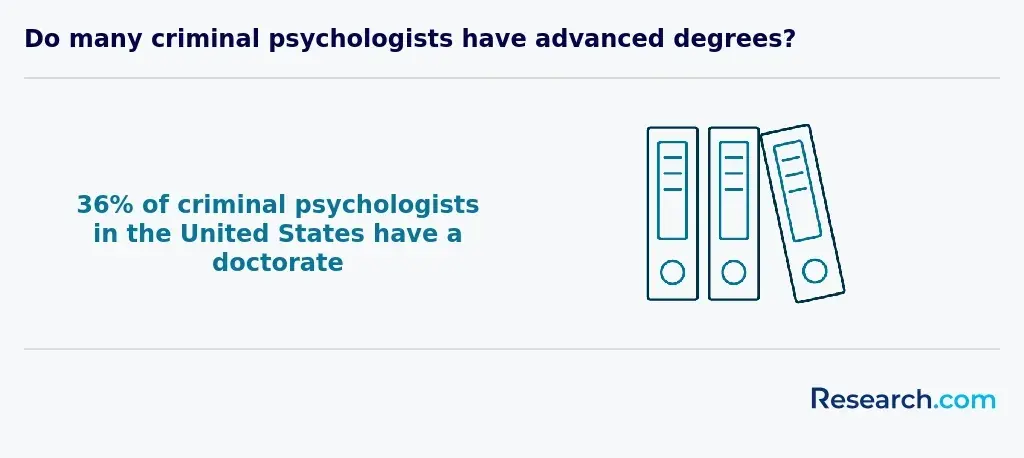
- Doctoral degree: Independent psychology practice in Oregon generally requires a doctoral degree, such as a PhD or PsyD in psychology. A PhD often emphasizes research and academic preparation, while a PsyD is commonly more practice-oriented. Students interested in criminal psychology should look for clinical, counseling, or forensic training opportunities, supervised placements, and dissertation or research options related to criminal behavior, assessment, trauma, competency, rehabilitation, or corrections. The University of Oregon offers an APA-accredited PhD program.
- Supervised practical training: Internships, practicums, and postdoctoral supervised experience are essential because criminal psychology requires more than classroom knowledge. Students need applied experience with assessment, diagnosis, ethical decision-making, documentation, and work with complex client populations.
APA data show that Oregon awarded 159 doctorates in psychology in 2023, along with 302 master’s degrees and 1,705 bachelor’s degrees. Those numbers point to a substantial training pipeline for psychology-related careers in the state, including roles connected to forensic and criminal justice work.
| Education stage | Purpose | How it supports criminal psychology |
| Bachelor’s degree | Builds a psychology and research foundation | Prepares students for graduate coursework in behavior, assessment, and mental health |
| Master’s degree | May deepen justice-system or forensic knowledge | Can improve readiness for doctoral study or related roles in criminal justice and behavioral health |
| Doctoral degree | Provides the degree typically needed for psychologist licensure | Supports advanced training in assessment, clinical practice, ethics, and research |
| Supervised experience | Develops applied professional competence | Gives students direct experience with clients, agencies, courts, or correctional populations |
One Oregon-based criminal psychologist described the academic path as demanding but clarifying: “My interest started with courses in abnormal psychology and criminology, but doctoral training showed me how much discipline this work requires. Clinical placements, research, and dissertation work were difficult, yet they taught me how to make decisions under pressure and serve people whose lives are tied to the justice system.”
What undergraduate majors are recommended for aspiring criminal psychologists in Oregon?
No single undergraduate major guarantees admission to a doctoral psychology program or a future criminal psychology career. The best major is the one that helps you build strong grades, research skills, writing ability, statistical literacy, and a clear understanding of human behavior and the justice system.
- Psychology: This is the most direct undergraduate option for students who plan to pursue graduate psychology training. Courses in abnormal psychology, personality, cognition, research methods, testing, statistics, and developmental psychology are especially useful. Willamette University is one Oregon institution known for psychology study that may support preparation for advanced work.
- Criminal justice: This major helps students understand policing, courts, corrections, victimology, criminal procedure, and crime prevention. Criminal psychologists often communicate with attorneys, judges, probation officers, correctional staff, and law enforcement, so familiarity with the legal system is valuable. Southern Oregon University offers criminal justice coursework that combines theory and applied learning.
- Sociology: Sociology helps students examine crime in relation to poverty, institutions, inequality, family systems, communities, and social norms. This perspective is useful when criminal psychologists evaluate behavior in context rather than treating crime as only an individual-level issue.
| Major | Best fit for students who want to... | Skills to prioritize |
| Psychology | Apply to doctoral psychology programs and build clinical or research preparation | Statistics, research methods, assessment basics, abnormal psychology, writing |
| Criminal justice | Understand legal systems, corrections, law enforcement, and rehabilitation programs | Legal analysis, policy writing, ethics, criminology, interviewing |
| Sociology | Study how social conditions influence behavior, crime, and justice outcomes | Data interpretation, social theory, qualitative research, systems thinking |
A professional who began with criminal justice training explained the value of a broad foundation: “My bachelor’s program helped me understand courts, corrections, profiling, and victimology before I entered doctoral clinical psychology training. Later, my dissertation on substance use among incarcerated people pushed me to connect research, mental health, and justice-system realities in a much deeper way.”
What should students look for in a criminal psychology program in Oregon?
Students should evaluate criminal psychology-related programs by asking one core question: Will this program move me closer to licensure, supervised experience, and the type of work I want to do? A program that sounds interesting but lacks accreditation, practicum access, faculty expertise, or licensure alignment may create problems later.
- Accreditation: Prioritize institutions and programs with recognized accreditation. For doctoral psychology training, APA accreditation is especially important to consider. Regional accreditation through organizations such as the Northwest Commission on Colleges and Universities (NWCCU) also matters because it affects academic quality, transferability, and eligibility for many forms of financial aid.
- Total cost, not only tuition: Oregon students may see annual tuition ranging from $10,000 to $30,000 depending on degree type, school, and program. However, students should also compare fees, books, commuting, relocation, health insurance, unpaid internship requirements, and lost income if they reduce work hours.
- Relevant specialization options: Look for coursework or research opportunities in forensic assessment, criminal behavior, juvenile justice, trauma, competency, risk assessment, corrections, substance use, or rehabilitation. A general psychology program can still be useful if it offers strong clinical training and allows forensic-focused placements or research.
- Internship and practicum connections: Programs with relationships in hospitals, correctional settings, courts, community mental health agencies, veterans’ services, universities, and research centers can help students gain supervised experience that matches their career goals.
- Faculty background: Faculty mentorship matters. Students should review faculty research, clinical experience, publications, supervision style, and availability. A strong mentor can help with research projects, doctoral applications, internships, and professional networking.
| Program factor | Why it matters | Question to ask before enrolling |
| Accreditation | Licensure and employment pathways may depend on it | Is the institution regionally accredited, and is the doctoral psychology program APA-accredited? |
| Field placement access | Criminal psychology requires applied experience | Where have students completed practicum, internship, or postdoctoral training? |
| Faculty expertise | Mentorship shapes research and clinical development | Who supervises forensic, correctional, or legal psychology work? |
| Licensure alignment | Requirements vary by state and role | Does the program clearly prepare graduates for Oregon psychologist licensure? |
| Cost and funding | Graduate psychology training can be expensive and lengthy | What assistantships, scholarships, stipends, or tuition support are available? |
One Oregon practitioner emphasized fit over prestige: “I chose a program where faculty knew students well, placements were accessible, and mentorship was not an afterthought. Small classes, strong community partnerships, and applied training mattered more to my development than a program name alone.”
This chart shows common psychologist specializations across the United States.
What are the steps for obtaining licensure as a criminal psychologist in Oregon?
Licensure is the legal gateway to independent psychology practice in Oregon. Because criminal psychology often involves high-stakes evaluations, legal questions, vulnerable clients, and public safety concerns, students should treat licensure planning as part of their education strategy from the beginning.
In Oregon, candidates generally move through these major steps:
- Complete the required graduate education for psychologist licensure, typically including a doctoral degree in psychology.
- Submit application materials to the Oregon Board of Psychology, the agency responsible for psychologist licensing in the state.
- Complete the required background check, including fingerprinting, to determine whether any disqualifying history is present.
- Document at least 1,500 hours of supervised practical experience, often through internship or postdoctoral residency training.
- Pass the Examination for Professional Practice in Psychology (EPPP).
- Pass the Oregon Jurisprudence Exam (OJE), which focuses on Oregon-specific laws, rules, and ethics.
- Maintain licensure through required professional standards and continuing education after approval.
Oregon’s process can require especially careful documentation, particularly for applicants whose training did not come from an APA-accredited program. Psychologists licensed in another state may be able to apply by endorsement, but they should confirm current requirements directly with the Oregon Board of Psychology before making career or relocation decisions.
Some forensic psychologists also pursue board certification through the American Board of Professional Psychology (ABPP). APA reporting by Page et al. (2024) indicates that 7% of psychologists are board-certified in forensic psychology, 4% in rehabilitation, and 2% in police and public safety. Board certification is not the same as state licensure, but it can signal advanced specialization.
Students who want a broader grounding in evidence and legal systems may also explore forensic science classes as a complement to psychology training.
Are there internship opportunities for criminal psychologists in Oregon?
Internships and supervised placements are where students begin turning academic knowledge into professional judgment. For criminal psychology, the strongest experiences usually involve assessment, treatment planning, documentation, multidisciplinary teamwork, and exposure to court-involved or high-need populations.
- Oregon State Hospital: This one-year, full-time internship includes rotations in areas such as competency restoration, forensic evaluation, and neuropsychological assessment. It is especially relevant for students interested in forensic mental health and legal-system evaluations.
- Child Development and Rehabilitation Center at Oregon Health & Science University: Interns gain experience with developmental, psychological, diagnostic, and behavioral concerns among children and adolescents. This setting can be useful for students interested in juvenile justice, risk factors, trauma, or developmental pathways related to behavior.
- University-based placements: George Fox University, the University of Oregon, Oregon State University, and Pacific University may offer clinical, counseling, research, and student-service environments where trainees can build assessment, intervention, and research skills under supervision.
- VA Southern Oregon Rehabilitation Center and Clinics: This setting can be valuable for trainees interested in trauma, substance use, rehabilitation, and mental health care for veterans. Experience with trauma and addiction is highly relevant to many justice-involved populations.
Students should not choose an internship only because it has a forensic label. A strong clinical placement with complex assessment, trauma care, crisis work, substance use treatment, or multidisciplinary collaboration may be highly relevant to future criminal psychology practice.
Students interested in related graduate pathways can also compare forensic science master’s programs distance learning options as part of a broader education plan.
What is the job outlook for criminal psychologists in Oregon?
The job outlook for criminal psychologists in Oregon is tied to demand for clinical assessment, behavioral health treatment, forensic evaluation, correctional rehabilitation, and mental health services in public systems. The Oregon Employment Department projects 24% employment growth for clinical psychologists and 9% growth for other psychologists from 2022 to 2032. Those projections are expected to translate into about 599 to 715 new job openings each year.
Several forces support demand in this field:
- Justice-system agencies increasingly recognize that mental health evaluation and treatment can affect safety, rehabilitation, and legal outcomes.
- Courts, correctional facilities, government agencies, and mental health organizations need qualified professionals who can assess complex psychological questions.
- Criminal cases may involve competency, risk, trauma, substance use, developmental history, and treatment needs that require specialized psychological expertise.
The field can still be competitive, especially for forensic-focused roles. Students who want stronger prospects should seek supervised experience in assessment, report writing, crisis intervention, correctional settings, substance use, trauma, or court-related work while still in training.
An Oregon criminal psychologist described the job market this way: “The first search was competitive, but local networking, agency partnerships, and community mental health experience helped me find openings. The work can be emotionally heavy, yet it is also meaningful because psychological input can change how cases, treatment plans, and rehabilitation decisions are handled.”
How much do criminal psychologists in Oregon make?
Criminal psychologist pay in Oregon varies by employer, license status, specialization, geography, experience, and whether the psychologist works in government, healthcare, corrections, academia, consulting, or private practice. ZipRecruiter reports an average annual salary of about $98,130 for criminal psychologists in Oregon. The Oregon Employment Department reports annual wages of $133,382 for clinical psychologists and $128,916 for all other psychologists.
Hourly pay also differs widely. The Oregon Employment Department reports that psychologists in the 10th percentile earn about $30 per hour, while those in the 90th percentile earn $95 to $105 per hour. Salary should not be treated as guaranteed; individual compensation depends on credentials, job duties, setting, and local labor conditions.
| Salary source or category | Reported Oregon figure | What students should understand |
| Criminal psychologists | About $98,130 annually | Reported by ZipRecruiter and may reflect job-posting and self-reported market data |
| Clinical psychologists | $133,382 annually | Reported by the Oregon Employment Department for the broader clinical psychologist category |
| All other psychologists | $128,916 annually | Reported by the Oregon Employment Department for psychologists outside the clinical category |
| 10th percentile hourly wage | About $30 per hour | May reflect early-career, lower-paid, or different psychology-related roles |
| 90th percentile hourly wage | $95 to $105 per hour | May reflect advanced experience, specialized roles, or higher-paying settings |
Portland and other urban areas may offer more opportunities because larger populations tend to support more courts, hospitals, agencies, and specialized practices. Government roles may offer steadier compensation structures, while private practice and consulting may provide higher upside but also more business risk. Students comparing education costs may want to review an affordable forensic psychology degree pathway before committing to expensive graduate training.
This chart presents average annual salaries for criminal psychologists.
What unique challenges do criminal psychologists encounter in Oregon?
Criminal psychologists in Oregon often work with high-risk decisions, complicated client histories, legal deadlines, confidentiality rules, and emotionally demanding cases. They may be asked to balance therapeutic care with objective assessment, especially when evaluations affect competency, custody, parole, sentencing, risk, or treatment placement.
Common challenges include heavy documentation, exposure to trauma narratives, ethical tension between client welfare and legal obligations, limited resources in public systems, and the need to stay current with forensic assessment methods. Students considering this path should develop stress-management habits, consultation networks, and strong supervision practices early. Reviewing training options at psychology colleges in Oregon can help prospective students identify programs with relevant support and preparation.
How can interdisciplinary collaboration advance criminal psychology in Oregon?
Criminal psychology is rarely a solo profession. Oregon practitioners may work with attorneys, judges, psychiatrists, social workers, probation officers, correctional staff, law enforcement, substance use counselors, victim advocates, and community providers. Collaboration helps psychologists understand the full context of a case and design recommendations that are clinically sound and practically usable.
Interdisciplinary practice can improve offender assessment, treatment planning, reentry support, crisis response, and rehabilitation. Students who are interested in adjacent mental health careers may also compare the path for how to become a marriage and family therapist in Oregon to understand how family systems training differs from psychology licensure.
Where do criminal psychologists in Oregon typically work?
Criminal psychologists in Oregon may work anywhere psychological expertise is needed to understand behavior, support legal decisions, treat justice-involved clients, or improve public safety systems. Common settings include law enforcement, corrections, hospitals, courts, universities, community agencies, and private consulting.
- Law enforcement agencies: Psychologists may assist with behavioral consultation, crisis response, investigative strategy, officer wellness, interview considerations, or threat assessment. Agencies such as the Oregon State Police may use psychological expertise to strengthen public safety work.
- Correctional facilities: Prisons, jails, and juvenile detention settings may employ psychologists to assess mental health, provide treatment, support crisis intervention, develop rehabilitation plans, and consult with staff. The Oregon Department of Corrections is a major setting for psychology work related to rehabilitation and behavioral health.
- Private practice and consulting: Licensed psychologists may provide forensic evaluations, expert testimony, therapy for court-involved clients, trauma-informed care, or consultation to attorneys and agencies. Private practice requires both clinical competence and business readiness.
- Academic and research institutions: Universities and research organizations may employ psychologists to study criminal behavior, teach students, evaluate interventions, and inform public policy. The University of Oregon is one example of an institution where research can influence practice and policy conversations.
According to the Prison Policy Initiative, about 29,000 people in Oregon are under probation supervision, 22,000 are under parole supervision, and 13,000 are incarcerated in state prisons. Several thousand more are in local jails, federal prisons, and other detention settings. These figures show why mental health, assessment, and rehabilitation expertise matters in Oregon’s justice system. Students evaluating broader options can also explore criminal justice degree jobs to compare roles that do not require psychologist licensure.
How are emerging technologies transforming criminal psychology practice in Oregon?
Technology is changing how criminal psychologists gather information, communicate findings, and support evidence-based decisions. Digital records, telehealth, risk assessment tools, digital forensics, behavioral analytics, and neuropsychological technologies can all affect practice. These tools can improve access and consistency, but they also raise ethical questions about bias, privacy, validity, informed consent, and overreliance on automated outputs.
Students should learn how to evaluate technology rather than assume it is inherently accurate. Forensic conclusions must still be grounded in validated methods, professional judgment, and transparent documentation. Those interested in the science and evidence side of legal work may also review the path to a forensic science degree in Oregon.
How can criminal psychologists influence policy reforms in Oregon?
Criminal psychologists can contribute to policy by translating research and clinical experience into practical recommendations for courts, correctional systems, diversion programs, community treatment, crisis response, and reentry services. Their work can help decision-makers understand how mental illness, trauma, substance use, developmental history, and treatment access affect justice outcomes.
Policy influence may come through research, testimony, advisory committees, professional associations, program evaluation, grant-funded projects, or collaboration with advocacy groups. Psychologists should stay within their competence and use data carefully, especially when recommendations may affect public funding or legal standards. For a different example of psychology specialization, readers may compare What are the best online sports psychology degree programs?
How can integrating behavior analysis enhance criminal psychology practice in Oregon?
Behavior analysis can strengthen criminal psychology by helping practitioners define target behaviors, identify environmental triggers, measure progress, and design structured intervention plans. In correctional and forensic settings, this can be useful for aggression reduction, treatment adherence, skill-building, relapse prevention, and behavior management.
Applied behavior analysis is not a replacement for forensic or clinical psychology training, but it can complement assessment and rehabilitation work when used ethically and within scope. Professionals who want to understand this credential pathway can read about how to become a board certified behavior analyst in Oregon.
How can integrating social work insights improve criminal psychology practice in Oregon?
Social work perspectives help criminal psychologists see the systems surrounding a client: housing, family stability, employment, community resources, trauma exposure, poverty, discrimination, health access, and reentry barriers. Those factors can shape risk, treatment engagement, and long-term outcomes.
Collaboration with social workers can lead to more realistic recommendations, especially when a treatment plan depends on community supports after release or diversion. Psychologists who understand social determinants may write stronger reports and coordinate better with agencies. Reviewing social worker education requirements in Oregon can help psychology students understand how the two professions differ and where they overlap.
How can criminal psychologists successfully launch a private practice in Oregon?
Private practice can give criminal psychologists more control over caseload, specialization, and consulting work, but it also adds business, legal, ethical, and financial responsibilities. Before opening a practice, psychologists should confirm licensure status, scope of practice, documentation standards, privacy obligations, billing systems, referral sources, and risk management procedures.
A strong launch plan should include malpractice and liability coverage, secure recordkeeping, clear informed consent documents, policies for subpoenas and court testimony, a fee structure, consultation resources, and a marketing plan that does not overpromise outcomes. Anyone preparing for independent practice should first review the Oregon psychology license requirements and verify current rules with the state board.
Can criminal psychologists integrate substance abuse counseling into their practice?
Substance use issues are common among justice-involved populations, so criminal psychologists often benefit from additional training in addiction assessment, motivational interviewing, relapse prevention, dual diagnosis, and evidence-based treatment planning. This training can help psychologists make more complete recommendations and coordinate care with addiction specialists.
Criminal psychologists should be careful not to practice outside their competence or misrepresent credentials. Those who want a dedicated addiction counseling pathway can examine how to become a substance abuse counselor in Oregon.
How Can Enhancing Counseling Skills Complement Criminal Psychology Practice in Oregon?
Counseling skills can improve a criminal psychologist’s ability to build rapport, manage resistance, conduct trauma-informed interviews, support behavior change, and communicate with clients who may distrust institutions. These skills are useful in correctional treatment, reentry planning, court-mandated services, and community mental health work.
However, counseling and forensic assessment require different professional boundaries. A psychologist serving as a neutral evaluator must avoid acting like a treating clinician in the same case unless the role is clearly defined. Students comparing mental health routes can review the fastest way to become a counselor in Oregon to understand how counseling pathways differ from psychologist licensure.
Can criminal psychologists apply their expertise in educational settings in Oregon?
Criminal psychology skills can be useful in schools, universities, juvenile programs, and prevention initiatives, particularly when the work involves behavioral assessment, threat assessment, trauma-informed intervention, early identification of risk factors, or support for students with complex needs.
This does not mean a criminal psychologist automatically qualifies as a school psychologist. Educational settings have their own credentialing expectations, laws, and practice standards. Professionals interested in school-based work should compare requirements for how to become a school psychologist in Oregon.
What types of advanced roles can criminal psychologists explore in Oregon?
As criminal psychologists gain licensure, supervised experience, specialized training, and professional credibility, they may move into more advanced or specialized roles. Advancement usually depends on demonstrated competence, ethical judgment, strong documentation, and the ability to work across legal and clinical systems.
- Forensic psychologist: Forensic psychologists apply psychological science to legal questions. They may evaluate competency, mental state, risk, trauma, credibility-related issues, treatment needs, or other court-relevant concerns. Typical forensic psychologist qualifications include doctoral psychology training, licensure, forensic experience, and strong report-writing and testimony skills.
- Staff psychologist: Staff psychologists in institutional settings, including correctional or federal environments such as the Bureau of Prisons, provide assessment, therapy, crisis response, treatment planning, and consultation for incarcerated individuals.
- Chief psychologist: This leadership role involves supervising psychological services, managing clinical teams, ensuring compliance, improving programs, and maintaining ethical and legal standards in institutions or agencies.
- Specialty program coordinator: Program coordinators may lead services focused on trauma, substance use, violence prevention, reentry, competency restoration, or other targeted needs within correctional or community settings.
- Advanced care level psychologist: These psychologists work with highly complex cases, often in secure or specialized environments where clients require intensive assessment, treatment, or behavioral support.
Students should not rush toward advanced titles before developing core competence. Strong fundamentals in ethics, assessment, diagnosis, treatment planning, cultural responsiveness, and legal documentation are what make specialization credible.

What additional certifications and training can boost your career?
Additional training can help criminal psychologists deepen expertise, but credentials should be chosen strategically. The most useful options are those that support the psychologist’s actual practice area, such as forensic assessment, trauma treatment, substance use, risk assessment, correctional mental health, neuropsychological screening, police and public safety psychology, or behavioral intervention.
Board certification through ABPP may be valuable for experienced psychologists seeking recognition in a specialty area. Training in applied behavior analysis can also support evidence-based intervention planning; some professionals explore online applied behavior analysis programs to strengthen this part of their skill set.
| Training area | When it can help | Career value |
| Forensic assessment | You want to conduct court-related evaluations | Improves evaluation quality, report writing, and testimony preparation |
| Substance use treatment | You work with correctional, reentry, or court-mandated populations | Supports integrated treatment planning for co-occurring concerns |
| Behavior analysis | You design behavior-focused interventions | Helps structure measurable goals and intervention plans |
| Trauma-informed care | You work with victims, offenders, veterans, or youth | Improves interviewing, treatment, and risk formulation |
| Ethics and jurisprudence | You practice in legal or correctional settings | Reduces role confusion and supports defensible decisions |
What professional resources are available to criminal psychologists in Oregon?
Professional resources help criminal psychologists stay current, find consultation, meet continuing education expectations, and avoid professional isolation. This is especially important in forensic and correctional work, where ethical questions and role conflicts can be complex.
- Oregon Psychological Association Annual Conference: This statewide event brings psychologists and mental health professionals together for workshops, research updates, ethics discussions, and networking.
- Continuing education seminars: Universities, associations, and professional organizations may offer training in forensic psychology, ethics, assessment, criminal behavior, trauma, and specialized treatment methods.
- Local networking and consultation groups: Regular contact with other psychologists, attorneys, social workers, counselors, and agency professionals can help practitioners solve problems, identify referrals, and stay connected to practice trends.
One Oregon psychologist summarized the value of professional community this way: “This work is too complex to do in isolation. Workshops, peer consultation, and professional groups helped me handle difficult cases, understand ethical issues, and find opportunities that I would not have discovered on my own.”
What Criminal Psychologists in Oregon Say About Their Careers
- “Criminal psychology in Oregon has given me a way to combine mental health practice with justice-system service. Working with law enforcement has shown me how important psychological training can be in public safety decisions. The work is demanding, but it feels purposeful.” Calvin
- “The most meaningful part of this career is seeing psychological assessment and treatment influence real change. I have worked with criminal behavior evaluation, therapy, and rehabilitation services, and the mix of intellectual challenge and human impact keeps me engaged.” Lorna
- “Training and practicing as a psychologist in Oregon changed how I understand both people and systems. A holistic approach has shaped my work, and the most rewarding moments come when clients begin to stabilize, grow, and move forward.” Noel
Common mistakes to avoid when planning this career
- Assuming “criminal psychologist” is a separate Oregon license: Plan for psychologist licensure first, then specialize through training and experience.
- Choosing a program without checking accreditation: Accreditation can affect licensure, internship competitiveness, transfer options, and employer confidence.
- Looking only at tuition: Compare total cost, funding, time to completion, internship requirements, and potential debt.
- Ignoring supervised experience: Coursework alone is not enough. Forensic, correctional, clinical, assessment, and crisis experience can shape career options.
- Overestimating salary certainty: Reported averages are useful, but actual pay depends on role, license status, employer, location, and experience.
- Waiting too long to build writing skills: Criminal psychology often requires clear, defensible reports that may be read by courts, attorneys, agencies, or treatment teams.
- Relying only on rankings: A well-ranked school is not automatically the best fit. Licensure alignment, mentorship, field placements, and funding may matter more.
Questions to ask before choosing a criminal psychology path in Oregon
- Does the program clearly prepare students for Oregon psychologist licensure?
- Is the doctoral program APA-accredited, and is the institution regionally accredited?
- What forensic, correctional, court-related, or high-risk clinical placements are available?
- Who supervises students interested in criminal behavior, forensic assessment, or correctional mental health?
- What percentage of students secure internships or postdoctoral placements relevant to their goals?
- How much will the full degree path cost, including unpaid or lower-paid training years?
- Will the program help me build assessment, diagnosis, research, ethics, testimony, and report-writing skills?
- Am I prepared for emotionally demanding work with trauma, violence, substance use, and legal consequences?
Related Articles for Nearby States
- 2027 How to Become a Criminal Psychologist in Washington
- 2027 How to Become a Criminal Psychologist in California
- 2027 How to Become a Criminal Psychologist in Idaho
- 2027 How to Become a Criminal Psychologist in Nevada
- 2027 How to Become a Criminal Psychologist in Montana
- 2027 How to Become a Criminal Psychologist in Utah
- 2027 How to Become a Criminal Psychologist in Wyoming
- 2027 How to Become a Criminal Psychologist in Arizona
- 2027 How to Become a Criminal Psychologist in Colorado
- 2027 How to Become a Criminal Psychologist in New Mexico
References:
- American Psychological Association. (2024). Degrees in Psychology [Interactive data tool]. Retrieved December 1, 2024, from https://www.apa.org/workforce/data-tools/degrees-psychology
- Oregon Board of Psychology. (n.d.). Apply for a License. Retrieved December 1, 2024, from https://www.oregon.gov/psychology/Pages/Apply.aspx
- Oregon Employment Department. (2022). Employment Projections. Quality Info. https://www.qualityinfo.org/projections
- Page, C., Stamm, K., Assefa, M., & Khaddouma, A. (2024, March 1). Datapoint: The most and least common specialty areas for licensed psychologists. American Psychological Association. https://www.apa.org/monitor/2024/03/top-psychology-specialties
- Prison Policy Initiative. (2023). Punishment Beyond Prisons 2023: Incarceration and Supervision by State, Appendix. https://www.prisonpolicy.org/reports/correctionalcontrol2023_data_appendix.html
- Prison Policy Initiative. (n.d.). Oregon Profile. Retrieved December 1, 2024, from https://www.prisonpolicy.org/profiles/OR.html
- ZipRecruiter. (2024, November 21). Criminal Psychologist Salary in Oregon. Retrieved December 1, 2024, from https://www.ziprecruiter.com/Salaries/Criminal-Psychologist-Salary--in-Oregon
Key Insights
- Criminal psychology in Oregon is best understood as a specialization within licensed psychology, not as a separate state license.
- The standard pathway is long: bachelor’s study, doctoral psychology training, supervised experience, EPPP, Oregon Jurisprudence Exam, and Oregon Board of Psychology approval.
- Accreditation, supervised placements, faculty expertise, and licensure alignment should carry more weight than program marketing language.
- Oregon’s correctional and supervision population creates meaningful demand for psychological assessment, treatment, rehabilitation, and consultation.
- Salary potential is strong, but it varies widely by setting, experience, licensure, and specialization; reported figures should guide planning, not be treated as guarantees.
- The most competitive students build forensic-relevant experience early through internships, research, correctional or clinical placements, substance use training, trauma-informed care, and strong report-writing skills.
- Before enrolling, ask whether the program will help you become licensed, gain the right supervised experience, manage cost, and enter the specific criminal psychology setting you want.
Other Things to Know About Being a Criminal Psychologist in Oregon
In 2027, criminal psychologists in Oregon must hold a state license by completing a doctoral degree in psychology, passing the Examination for Professional Practice in Psychology (EPPP), and fulfilling Oregon's specific postdoctoral experience requirements, which typically involve supervised practice hours.
To become a criminal psychologist in Oregon in 2027, you typically need a bachelor's degree in psychology, followed by a master's in psychology or forensic psychology. Then, you must complete a Doctorate in Psychology (PhD or PsyD) to meet state licensure requirements.