
2022 Best Female Scientists Online Ranking Highlights the University Work of 1000 Spectacular Women

Co-Founder and Chief Data Scientist
Research.com published the first edition of its annual ranking of the top female scientists in the world on October 20, 2022. The list was designed to make high-impact women researchers easier to find, give students and early-career scientists visible role models, and show where scientific influence is concentrated across countries, institutions, and disciplines.
This guide goes beyond the ranking itself. It explains how the 2022 list was assembled, what the results do and do not prove, why gender representation in research still matters, and how students, universities, funders, and policymakers can use the findings in a practical way. If you are deciding where to study, whom to follow as a mentor, or how to interpret a scientist ranking responsibly, this article is meant to help you do that with more context and less guesswork.
Quick Answer: What Does the 2022 Female Scientists Ranking Show?
The 2022 Research.com ranking highlights 1,000 leading female scientists worldwide using indicators such as h-index, discipline contribution, awards, and achievements. The United States had the largest share with 623 scholars, or 62.3% of the ranking. The United Kingdom followed with 96 scientists, and Germany came next with 42. Harvard University led all institutions with 40 affiliated female scholars, and Professor JoAnn E. Manson of Harvard Medical School ranked first overall.
Medicine was the most represented field, with 468 scholars, or 46.8% of the list. The main takeaway is not just that women are producing highly influential research. It is also that visibility at the top of science is shaped by long-term access to funding, institutional support, authorship credit, mentorship, and career stability.
| 2022 Ranking Snapshot | Key Result | Why It Matters |
| Top country by representation | United States: 623 scientists, 62.3% of the ranking | Shows how heavily elite female research visibility is concentrated in U.S.-based institutions |
| Next leading countries | United Kingdom: 96 scientists; Germany: 42 scientists | Reveals strong but much smaller representation outside the United States |
| Top institution | Harvard University: 40 female scientists | Points to the importance of research infrastructure, funding, and institutional reach |
| Top-ranked scientist | Professor JoAnn E. Manson, Harvard Medical School | Recognizes broad influence in epidemiology and women’s health research |
| Most represented discipline | Medicine: 468 scientists, or 46.8% | Suggests that women’s top-level visibility is especially strong in medical science |
| Average publications | 547 for ranked female scientists | Shows the scale of sustained scholarly output in the list |
What This Ranking Is Really For
A ranking of female scientists is not meant to separate women from the rest of science. Its purpose is to correct a visibility problem. Scientific recognition influences who gets invited to collaborate, who is asked to review grants, who receives keynote invitations, who becomes a leader, and who young researchers can imagine becoming.
Research careers are shaped by more than individual ability. They are influenced by institutional culture, access to senior mentors, publication credit, conference networks, family support, funding opportunities, and nomination practices. A ranking can therefore do two things at once: honor women whose work has had measurable impact and reveal how uneven recognition still is across regions, fields, and institutions.
Why Gender Representation in Science Still Matters
Women remain underrepresented in research worldwide. According to UNESCO, roughly 33% of persons employed in science research are female. The regional pattern is uneven: Central Asia has the highest share at 48.5%, while South and West Asia has the lowest at 23.1%.
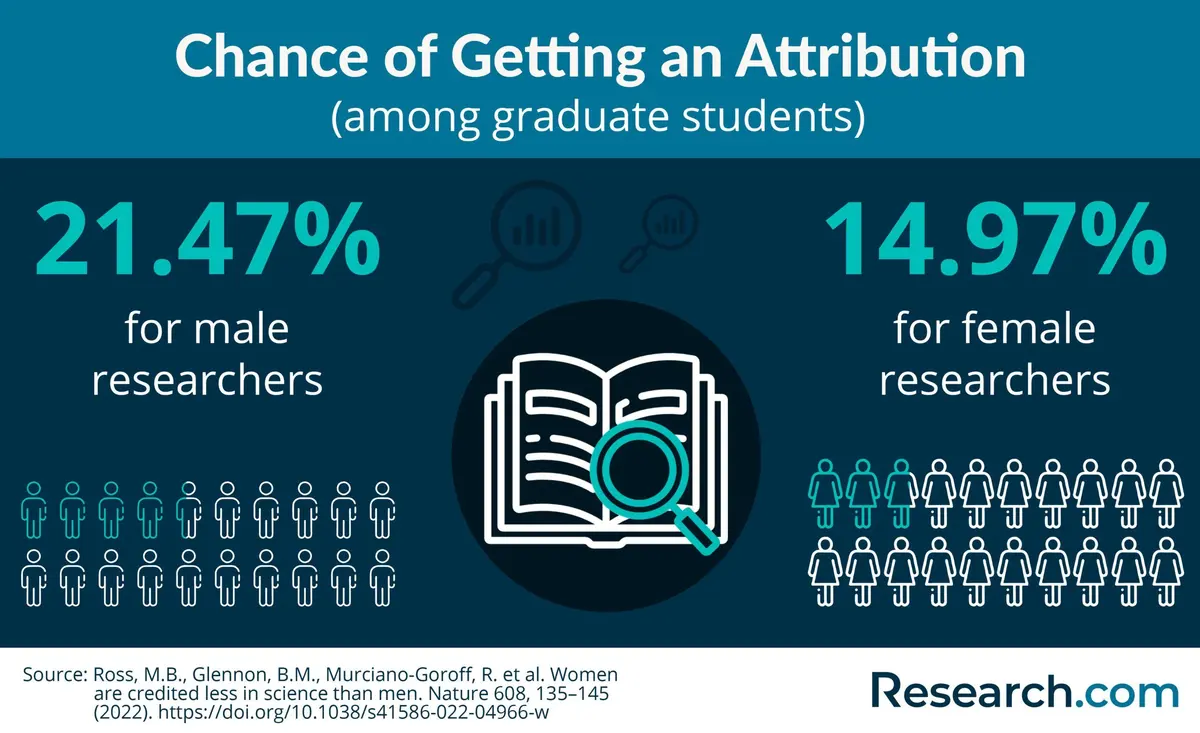
Representation gaps also show up in authorship and invention credit. A Nature study found that women researchers are credited less often than men for scientific work. Women are less likely than male colleagues to be named on a paper or patent, and among graduate students, female researchers have a 14.97% chance of receiving attribution compared with 21.47% for men.
Anthropologist Dr. Treena Orchard of Western University in London, Ontario, Canada, describes this as evidence of “the deep gender inequities within the male-driven industry of science that has traditionally excluded and devalued the contributions of women.” Her work focuses on sexuality, gender, and health politics among marginalized groups. She also points to academic pay gaps that can reach as much as 18% even when male and female academics have comparable expertise.
These patterns help explain why the public image of science has often lagged behind women’s real contributions. For much of history, many societies directed women into a narrower set of accepted roles, including conventional jobs for women, while treating scientific authority as male by default.
The Matilda Effect: When Women’s Discoveries Get Less Credit
The “Matilda Effect” refers to the tendency to minimize, overlook, or misattribute the scientific achievements of women. The term traces back to suffragist and abolitionist Matilda Joslyn Gage, who challenged the claim in Woman As An Inventor that women lacked inventive or mechanical ability. Historian Margaret Rossiter later used the phrase to describe the systematic denial of recognition to women scientists.
The idea is still relevant today. The history of the Matilda Effect helps explain why landmark discoveries can still be remembered through a male-centered story. The role of Rosalind Franklin in uncovering DNA’s structure remains one of the best-known examples. More recently, debates about the history and commercial use of CRISPR-Cas9 have raised questions about whether the contributions of Jennifer Doudna and Emmanuelle Charpentier receive full recognition.
Why Social Capital Matters in STEM
Scientific progress depends heavily on networks: who is invited into collaborations, who hears about grants, who gets informal sponsorship, and who is introduced to influential people. Studies have found that women in STEM have lower social capital, which can limit access to these career-building opportunities.
Dr. Alex Krawiec, an economist whose research focuses on leadership and organizational change with an emphasis on women in senior hierarchies, argues that bias is built into culture and institutions rather than isolated to individual choices. In her view, “when it comes to opportunities, women will always be at a disadvantage because of our biological wiring. We cannot completely eliminate all obstacles, but we can make some adjustments to the system to allow women to enter the opportunity fair.” She also points to bureaucracy and cultural rigidity as reasons the problem persists.
Institutional support matters because research careers are long, competitive, and vulnerable to interruption. Policies around parental leave, caregiving flexibility, promotion criteria, grant eligibility, and mentorship can affect whether women stay in academia long enough to build the record needed for senior recognition.
Huang et. al. (2019) studied the publishing histories of 1.5 million gender-identified authors and found that differences in publishing career lengths and dropout rates explain a large share of gender inequality in scientific careers. That shifts the discussion away from productivity alone and toward the conditions that determine whether researchers can remain active over time.
How the 2022 Research.com Ranking Was Built
For the 2022 edition, Research.com reviewed more than 166,880 scientist profiles across 24 research disciplines using Google Scholar and Microsoft Academic Graph. Scholars were evaluated with multiple indicators before inclusion in the ranking.
The h-index threshold varied by discipline and was generally set at 30 or 40. Selection depended on the scholar’s h-index, the share of contributions made within the relevant discipline, and the scientist’s awards and achievements. Readers can review the full list here: TOP FEMALE SCIENTISTS IN THE WORLD 2022.
| Methodology Element | How It Was Used | Important Limitation |
| Scientist profiles reviewed | More than 166,880 profiles across 24 disciplines | Coverage depends on available profile and publication data |
| Data sources | Google Scholar and Microsoft Academic Graph | Bibliometric databases can differ in coverage and attribution |
| H-index threshold | Usually 30 or 40, depending on discipline | H-index values are not directly comparable across all fields |
| Discipline contribution | Considered the proportion of work within a specific field | Interdisciplinary researchers may not fit neatly into one category |
| Awards and achievements | Used as part of the inclusion criteria | Awards can still reflect historic nomination and visibility gaps |
Most Important Findings from the 2022 Ranking
- The United States accounted for 623 ranked scientists, or 62.3% of the full list.
- The United Kingdom ranked second with 96 scientists, equal to 9.6% of the list.
- Germany ranked third with 42 scientists, or 4.2% of the ranking.
- Eight of the top 10 female scientists in the top 1% were affiliated with institutions in the United States.
- Medicine was the most represented field among ranked female scientists.
- Harvard University led all institutions with 40 affiliated female scholars.
- Professor JoAnn E. Manson of Harvard Medical School ranked first overall.
- American universities made up 90% of the top 10 institutions with the largest number of leading female scientists; Oxford University, ranked sixth, was the only non-U.S. institution in that group.
- The average number of publications among top female scientists was 547.
Countries with the Highest Representation of Leading Female Scientists
U.S.-based institutions dominated the 2022 ranking in absolute numbers. The United States had 623 ranked female scientists, equal to 62.3% of the full list. Eight of the 10 scientists in the top 1% were affiliated with U.S. institutions. The United Kingdom followed with 96 scientists, and Germany had 42.
Other well-represented countries included Australia with 36 scientists, France with 32, Canada with 31, the Netherlands with 24, and Italy with 19. When compared with a gender-agnostic ranking of leading scientists, the six leading countries remained the same. However, Japan moved from one scientist in the female ranking to 16 in the gender-agnostic ranking, placing ninth globally in that broader list. That difference suggests that highly visible academic leadership in Japan remains more male among top-ranked researchers.
The country assigned to each scientist reflects the affiliated research institution listed in Microsoft Academic Graph, not the scientist’s nationality.
| Country | Number of Ranked Female Scientists | Interpretation |
| United States | 623 | Largest concentration of ranked female scientists |
| United Kingdom | 96 | Second-highest representation |
| Germany | 42 | Third-highest representation |
| Australia | 36 | Strong representation relative to many countries |
| France | 32 | Among the leading European countries in the ranking |
| Canada | 31 | Notable representation among North American institutions |
| Netherlands | 24 | High visibility among European research institutions |
| Italy | 19 | Included among the leading countries by ranked scholars |
Institutions with the Strongest Representation
Harvard University led the 2022 ranking with 40 female scientists. The National Institutes of Health followed with 34, and Stanford University ranked third with 28. U.S. universities and research institutions made up 90% of the top 10 institutions, with Oxford University in sixth place as the only non-U.S. institution in that group.
Among the top 1% of ranked scientists, two of the 10 affiliated institutions were outside the United States: deCODE Genetics in Iceland, associated with the fifth-ranked scientist, and Vrije Universiteit Amsterdam in the Netherlands, associated with the sixth-ranked scientist.
Institutional representation should not be treated as a simple scoreboard. It also points to the conditions that help researchers build influential careers: funding, protected time, laboratory infrastructure, promotion transparency, paid leave, mentoring, and recognition pathways. Gender discrimination can appear through pay opacity, uneven parental support, service overload, and exclusion from informal networks, not only through obvious stereotyping.
Institutions influence the pipeline before students even reach graduate school. Research on diverse role models in science suggests that visible women scientists and extracurricular STEM programs can help girls connect with scientific fields earlier in their education.
How Online Learning and Digital Communities Expand Visibility
Online education, virtual events, and digital research communities give students more chances to meet women scientists as instructors, mentors, and leaders. That matters because representation is not only symbolic. Studies have found that female professors lead to substantial increases in STEM interest among female students.
Webinars, remote mentoring, and online laboratory tours can connect students with researchers they might never meet locally. These formats are especially useful for students outside major research hubs, first-generation students, and learners who want to test whether graduate research is realistic for them.
Dedicated groups can also turn visibility into support. Examples include the Georgia Tech Center for the Study of Women, Science, and Technolgy and the Women in Science and Technology Program at Argonne National Laboratory. When accomplished women scientists serve as speakers, lecturers, and mentors, these programs can improve recruitment, belonging, and retention in STEM.
Scientific Fields Most Represented in the Ranking
Medicine was the dominant field in the 2022 ranking. A total of 468 ranked female scientists, or 46.8%, had most of their publications in medicine. Other highly represented areas included physics at 10.4%, genetics and molecular biology at 8.7%, and biology and biochemistry at 8.2%.
Among the top 1% of ranked female scientists, five out of 10 published primarily in medicine. The remaining fields represented in the top 1% were genetics and molecular biology, psychology, physics, and neuroscience.
A study by an organization that promotes science to girls and women through social media found that female graduate and postdoctoral researchers were engaged in Biological Sciences at 42%, Earth, Space, and Ocean Sciences at 22%, and Physical Sciences at 8%. The same research notes that female earth and ocean scientists in the U.S. now earn more doctorates than their male peers.
The field mix in the ranking shows both progress and concentration. Women have achieved global influence in many disciplines, but representation is still uneven. For students choosing a path, the main lesson is not to pick a field just because it appears often in a ranking. A stronger decision weighs research fit, mentorship, funding stability, lab culture, and long-term career options.
| Discipline | Representation in the 2022 Ranking | What Readers Should Consider |
| Medicine | 468 scientists, or 46.8% | Strong visibility, extensive research infrastructure, and many subfields |
| Physics | 10.4% | High-impact field where institutional support and collaboration networks matter a great deal |
| Genetics and molecular biology | 8.7% | Research-intensive field with strong links to medicine, biotechnology, and laboratory science |
| Biology and biochemistry | 8.2% | Broad base with pathways into academia, health research, and industry |
H-Index Leaders, Averages, and Regional Standouts
The h-index is one measure of research influence. It combines publication output and citation impact, but it should be interpreted carefully because citation behavior varies by discipline, career length, collaboration size, and database coverage.
Professor JoAnn E. Manson of Harvard Medical School led North America and the full top 1000 list. Her h-index was 308, which placed her eighth in the gender-agnostic global ranking and made her the highest-ranking female scholar.
In Europe, Professor Unnur Thorsteinsdottir of deCODE Genetics in Iceland ranked first among female scientists in the region. She placed fifth worldwide with an h-index of 212 and was also the highest-ranking scientist from Iceland in the gender-agnostic global ranking.
Professor Louisa Degenhardt of the University of New South Wales in Australia led Oceania and ranked 89th worldwide. Professor Bin Liu of the National University of Singapore led Asia with an h-index of 152 and ranked 92nd globally. In Africa, Professor R. Cherkaoui El Moursli of Mohammed V University in Morocco ranked first in the region and 99th worldwide. In South America, Professor Maria-Teresa Dova of the National University of La Plata in Argentina led the region and ranked 171st globally.
| Region | Top Female Scientist Named in the Ranking | Institution | Ranking Detail |
| North America | Professor JoAnn E. Manson | Harvard Medical School | Ranked first overall; h-index 308 |
| Europe | Professor Unnur Thorsteinsdottir | deCODE Genetics | Ranked fifth worldwide; h-index 212 |
| Oceania | Professor Louisa Degenhardt | University of New South Wales | Ranked 89th worldwide |
| Asia | Professor Bin Liu | National University of Singapore | Ranked 92nd worldwide; h-index 152 |
| Africa | Professor R. Cherkaoui El Moursli | Mohammed V University | Ranked 99th worldwide |
| South America | Professor Maria-Teresa Dova | National University of La Plata | Ranked 171st worldwide |
The average h-index for the top 1% of ranked scientists was 221, compared with an average of 119 for the full group of 1,000 female scientists. The lowest h-index among scientists in the 2022 ranking was 97. The top 1% averaged 1075 published articles, while the full ranking averaged 547.
Citation counts also separated the top 1% from the rest of the list. The top 1% averaged 214,820 citations, compared with 66,280 for the full ranking. The most frequently cited female scientist was JoAnn E. Manson of Harvard Medical School, with 362,689 citations. More details on the ranking process are available in Research.com’s methodology.
How Students and Early-Career Researchers Should Use This Ranking
A scientist ranking can be helpful, but it should not be the only tool used to choose a field, graduate program, lab, or mentor. Rankings measure research impact; they do not fully show mentoring quality, lab culture, funding reliability, publication ethics, or personal fit.
| Decision | How the Ranking Can Help | What Else to Check |
| Choosing a research field | Shows where women have achieved global visibility | Course fit, research questions, funding, and industry or academic pathways |
| Identifying potential mentors | Highlights influential scholars and institutions | Mentoring record, current openings, publication practices, and student outcomes |
| Comparing universities | Shows where leading female scientists are concentrated | Department culture, assistantship funding, equity policies, and graduate completion support |
| Planning a PhD or postdoc | Reveals high-impact research environments | Advisor fit, grant support, authorship norms, and work-life policies |
| Building a professional network | Identifies role models and possible collaborators | Conference access, professional societies, online seminars, and peer communities |
Questions to Ask Before Choosing a Science Program or Research Environment
- Does the institution have strong output in my specific field, not just strong overall visibility?
- Are women represented among faculty, lab leaders, graduate advisors, speakers, and department leadership?
- What are the department’s authorship rules, and how are student contributions credited?
- How are assistantships, fellowships, travel funds, and emergency support distributed?
- Does the program offer mentoring beyond the primary advisor?
- Are there clear policies for parental leave, caregiving, and flexible research arrangements?
- What happens if the advisor relationship breaks down or a lab loses funding?
- Do graduates move into academic, industry, government, clinical, or nonprofit roles that match my goals?
Education Pathways for Future Female Scientists
Most research-focused scientific careers require a strong academic foundation, often including undergraduate research, graduate study, lab or field experience, and publication or conference participation. The best path depends on the field. A future medical researcher, physicist, computational biologist, environmental scientist, or psychology researcher may need different coursework, credentials, and training settings.
Students comparing undergraduate options should look beyond prestige. Programs with accessible faculty, research assistant roles, data analysis training, and internship pipelines can matter just as much as brand recognition. For learners also weighing financial outcomes, Research.com’s guide to degrees that pay well can help frame the relationship between major choice, career flexibility, and affordability.
Graduate school requires even more careful evaluation. Some students may benefit from flexible or online coursework, especially when balancing work, caregiving, or geographic limits. Adults returning to school can compare lower-cost options through Research.com’s guide to an online college for adults. Students considering doctoral study should examine time-to-degree, dissertation requirements, funding, and mentorship before looking at accelerated options such as 2 year doctoral programs.
Accreditation is essential when evaluating online or hybrid programs. It affects credit transfer, employer recognition, graduate admission, and financial aid eligibility. Prospective students can begin by reviewing resources on accredited nonprofit online universities and nationally accredited online colleges. No student should assume that every online program will satisfy licensure, laboratory, clinical, or doctoral admission expectations in their field.
| Education Option | When It Can Make Sense | Risks to Check Before Enrolling |
| Traditional campus bachelor’s degree | Best for students who need laboratory access, faculty contact, and structured research opportunities | Cost, limited flexibility, and uneven access to undergraduate research |
| Online or hybrid bachelor’s degree | Useful for working adults, caregivers, or students far from campus-based programs | Lab requirements, accreditation, transfer policies, and graduate school acceptance |
| Research master’s degree | Can strengthen preparation for doctoral study or specialized scientific roles | Funding availability, thesis requirements, and whether the degree improves career options |
| Doctoral program | Often required for independent research, faculty roles, and advanced scientific leadership | Advisor fit, funding stability, completion support, and publication expectations |
| Alternative health or science-adjacent pathway | May suit students who want applied scientific work with less time in school | Licensure rules, advancement limits, and whether the role matches long-term goals |
Not everyone interested in science needs a long academic research career. Some students may prefer applied health, laboratory, regulatory, data, technical, or clinical support roles. Research.com’s resource on medical jobs little schooling may help readers compare shorter education pathways, although these roles are very different from careers as independent research scientists.
Students looking for a faster or lower-cost graduate credential should be cautious about broad claims of “easy” programs. A quickest cheapest masters degree may fit some goals, but scientific careers usually demand rigorous research training, quantitative skill, and credible faculty supervision.
How Institutions Can Better Support Female Scientists
Improving representation is not only a pipeline issue. It is also a retention and advancement issue. Institutions that want more women to become senior scientists need to examine how they allocate resources, credit, leadership opportunities, and service work.
| Institutional Problem | Why It Hurts Female Scientists | Better Practice |
| Opaque pay and promotion systems | Makes inequities harder to detect and correct | Use transparent criteria, salary reviews, and accountable promotion processes |
| Unequal service burdens | Reduces time for research, grant writing, and publications | Track committee labor and distribute service work fairly |
| Weak parental and caregiving support | Creates interruptions that affect productivity metrics | Offer paid leave, flexible timelines, and grant or tenure-clock accommodations |
| Informal networking advantages | Leaves some researchers outside high-value collaborations | Create structured mentoring, sponsorship, and collaboration programs |
| Limited leadership pathways | Restricts influence over funding, hiring, publication norms, and policy | Include women in decision-making roles, review boards, and strategic committees |
Current Trends Affecting Women in Science
Several trends shape how female scientists are seen and supported today. Digital learning has made it easier for students to encounter women researchers outside their local area. At the same time, bibliometric rankings and citation metrics remain influential in hiring, promotion, and media visibility, which means researchers with strong networks and institutional backing often benefit more than equally talented peers without those advantages.
AI and automation are also changing research work. They can speed up literature review, data analysis, and lab workflows, but they do not remove the need for mentorship, credit, or fair evaluation. In fact, as institutions adopt more data-driven systems, transparent authorship, promotion, and workload policies become even more important.
Another trend is the growing expectation that universities prove their commitment to equity with measurable action rather than symbolic statements. Students, funders, and employers increasingly look for evidence of mentoring, retention, leadership diversity, and family-supportive policy. That makes rankings useful, but only when paired with deeper questions about how institutions actually operate.
How to Use a Scientist Ranking Wisely
Rankings are best treated as starting points. They help you identify names, institutions, and fields worth exploring. They do not tell you whether a lab is healthy, whether an advisor is supportive, or whether a degree path fits your circumstances.
- Start with your goal. Decide whether you want to become a research scientist, join applied science, work in health-related fields, or build a career outside academia.
- Check the field, not just the university. A school may be strong overall but weak in the exact discipline you want.
- Look at the mentor, not only the ranking. Review publication practices, student completion, and current lab openings.
- Verify support systems. Funding, leave policies, and transfer rules can matter as much as reputation.
- Compare costs and outcomes. A lower-cost program is not automatically better if it lacks the training or recognition you need.
- Use the ranking to widen your options. Add scientists and institutions you had not considered, then investigate them more deeply.
Common Mistakes When Interpreting Scientist Rankings
- Using h-index as the only quality measure. It is useful, but it favors longer careers and high-citation fields.
- Assuming prestige guarantees fit. A famous institution can still be a poor match for mentoring, funding, or culture.
- Ignoring discipline differences. Citation and publication patterns are not the same in medicine, physics, psychology, biology, and other fields.
- Overlooking authorship and credit rules. Students should understand how labs assign credit before committing.
- Skipping accreditation checks. This matters especially for online, hybrid, clinical, and licensure-related programs.
- Focusing only on tuition. Total cost also includes fees, travel, housing, materials, and lost work time.
- Assuming career outcomes are guaranteed. Research paths vary by field, location, funding, and publication record.
Female Scientists Defying Boundaries
The first edition of Research.com’s annual ranking sends a clear signal: women are shaping global science at the highest level, even while structural barriers remain. From 1993 to 2019, the number of women with a bachelor’s degree or higher working in Science and Engineering occupations almost tripled from 755 in 1993 to 2,193 in 2019.
That progress matters, but it has not erased stereotypes, unequal mentoring access, work-life pressure, or recognition gaps. Many women scientists keep advancing by building expertise, creating networks, and opening doors for others, yet individual persistence should not be treated as a substitute for institutional reform.
There are signs of change. Pew Research Center reports that women make up 40% of physical scientists in the U.S., 48% of life scientists, and 47% of mathematical workers. The share of women working as atmospheric and research scientists rose from 15% in 2016 to 24% in 2019.
Dr. Krawiec points to dedicated funding for women, maternity leave incentives, and satellite conference events as positive developments, but she also stresses that these steps are not enough by themselves. Dr. Orchard makes a similar point: equity is not achieved merely by increasing headcount. Women also need real authority in leadership, funding boards, government agencies, community organizations, the media, and the institutions that decide what research matters.
As Dr. Orchard explains, “The deeply-rooted male culture remains at the bedrock of many research and educational institutions.” She warns that equity initiatives can become symbolic when women are treated mainly as a target group for institutional goals. Dr. Krawiec agrees that representation alone is not enough; long-term change also depends on women supporting one another across scientific and community roles.
Dr. Krawiec invokes Ruth Bader Ginsburg’s statement that “women belong in all places where decisions are being made.” When asked why bias remains, she describes it as “an embarrassment to all of us. And my perspective on misrepresentation and bias against women is that of a disappointed citizen of the 21st-century world. By now, it should already be obvious to everyone, that discrimination of any kind is simply wrong. Every time women with merits and potential are discriminated against, societies are losing on multiple levels. This truth is universal across all scientific fields and in every social context.”
The number of women researchers starting their publishing careers in life sciences increased from 38.8% in 1991 to 55.7% in 2021. In physical and earth sciences, female research doctorate recipients rose from 19.2% to 35.1% over the same period. As of 2019, women accounted for 27% of STEM workers in the U.S., up from 8% in 1970. The direction is encouraging, but the real goal is equal opportunity, fair credit, and full authority in shaping science.
Key Insights
- The 2022 Research.com ranking identified 1,000 leading female scientists worldwide and showed a strong concentration in U.S.-based institutions.
- Professor JoAnn E. Manson of Harvard Medical School ranked first overall, with an h-index of 308 and 362,689 citations.
- Medicine was the most represented field, with 468 ranked scholars, or 46.8% of the list.
- Scientist rankings are useful for discovery, but they should be interpreted alongside mentorship quality, authorship norms, funding support, and institutional culture.
- Gender gaps in science are not only about entry into STEM; they also involve retention, credit, promotion, caregiving support, and leadership power.
- Students should use rankings as a starting point when choosing a field, program, advisor, or research institution, not as the final decision tool.
- Institutions that want more women scientists to reach senior levels need transparent promotion systems, fair funding, strong mentorship, equitable service expectations, and family-supportive policies.
About Research.com
All research was coordinated by Imed Bouchrika, Ph.D., a computer scientist with an established record of collaboration on international research projects with academic partners. His role was to ensure that the data remained unbiased, accurate, and up to date.
Research.com is a research portal for science and educational rankings. Its mission is to help professors, research fellows, and students advance their research and identify leading experts across scientific disciplines. Research.com also helps students compare colleges, academic opportunities, and career paths.


