World Online Ranking of Best Biology and Biochemistry Scientists – 2024 Report

Co-Founder and Chief Data Scientist
The 2024 Research.com ranking of leading biology and biochemistry scientists helps readers identify highly cited, influential researchers, major research institutions, and countries with strong representation in these fields. Released on May 29, 2024, this third edition is designed for students looking for mentors, researchers seeking collaborators, institutions benchmarking scientific strength, and organizations searching for subject-matter experts.
This guide explains what the ranking measures, what the main findings show, how to interpret D-index data, and how aspiring scientists can use the report when planning education, research training, or career development in biology and biochemistry.
Quick answer: Who leads the 2024 biology and biochemistry scientist ranking?
Guido Kroemer of Sorbonne University, France, holds the top position in the 2024 Research.com ranking of biology and biochemistry scientists with a D-index of 283. The United States has the strongest overall presence, with 629 of the top 1,000 ranked scientists affiliated with U.S. institutions. Harvard University has the largest institutional representation, with 66 scholars included in the top 1,000 list.
The full ranking is available here: best biology and biochemistry scientists ranking.
What this ranking measures and how to use it
The 2024 report was built to highlight researchers whose publication records, citation influence, field recognition, and career achievements show substantial impact in biology and biochemistry. Research.com analyzed nearly 19,500 scientist profiles using sources such as OpenAlex and CrossRef, along with other bibliometric databases.
Scientists considered for inclusion had a minimum D-index score of 40 and were primarily associated with publications in biology and biochemistry journals and related research outlets. The ranking should be used as a decision-support tool, not as the only measure of scientific quality. A high ranking can signal strong research influence, but students and collaborators should also review a scientist’s current projects, laboratory focus, publication recency, mentoring record, funding environment, and institutional fit.
| Reader goal | How the ranking can help | What to check beyond the ranking |
| Find potential research mentors | Identify scientists with strong publication and citation records in biology and biochemistry. | Review current lab openings, recent papers, advising style, and graduate student outcomes. |
| Evaluate research institutions | Compare where ranked scientists are concentrated across universities and research centers. | Look at facilities, funding, doctoral placement, collaboration networks, and program requirements. |
| Plan collaborations | Locate leading researchers by country, region, and institution. | Confirm current affiliation, active research interests, and whether the scholar is accepting external partnerships. |
| Understand field influence | Use D-index, publications, and citations as signals of research visibility. | Consider subfield differences, interdisciplinary work, and the limitations of citation-based metrics. |
Recent biology and biochemistry discoveries shaping the field
Biology and biochemistry are moving quickly, especially in areas that connect molecular mechanisms with evolution, disease, and therapeutic development. Two recent examples show why the field remains central to medicine, biotechnology, and basic science.
Asgard archaea and the origins of complex life
Research on Asgard archaea is helping scientists examine how complex cells may have emerged from simpler ancestors. Studies have identified genes in these microorganisms that resemble genes found in eukaryotes, including genes connected to cytoskeleton formation and membrane dynamics. These findings give researchers more evidence to investigate the evolutionary transition from prokaryotic cells to eukaryotic cells and, eventually, more complex life forms.
Epstein-Barr virus research and viral latency
Biochemistry research has also advanced understanding of Epstein-Barr virus, a herpes virus associated with several cancers and autoimmune diseases. New work on the molecular mechanisms by which EBV maintains latency has focused on viral proteins and host interactions that allow the virus to persist and reactivate. By studying proteins essential for viral replication, researchers are exploring ways to interfere with EBV activity and improve future strategies for EBV-related conditions.

Key findings from the 3rd edition of the Research.com biology and biochemistry ranking
- The United States has the largest representation in the ranking, with 629 of the top 1,000 scientists affiliated with U.S. institutions.
- Eight of the top 10 scientists are based at institutions in the United States; the other two are affiliated with institutions in France and Germany.
- Guido Kroemer from Sorbonne University, France, remains ranked first, with a D-index of 283.
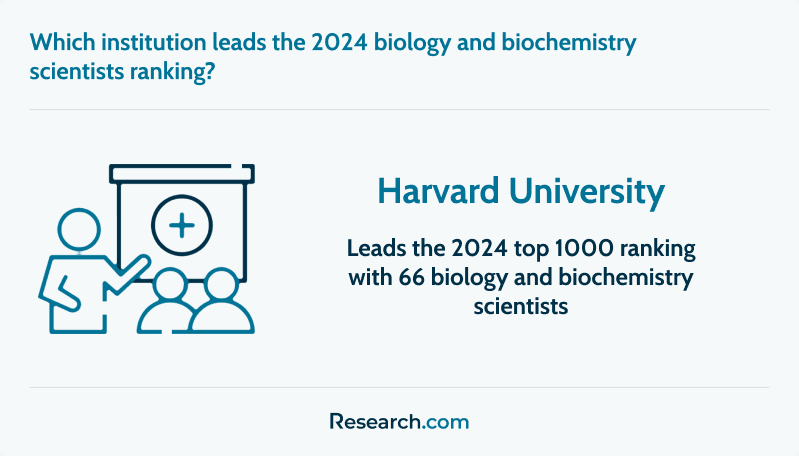
- Harvard University has the highest number of ranked scientists among institutions, with 66 scholars in the top 1,000.
- The average D-index for the top 1% of scientists is 246.5, compared with 127.7 across all 1,000 ranked scientists.
Countries with the highest number of leading biology and biochemistry scientists
The United States is the dominant country in this edition of the ranking, with 629 ranked scientists affiliated with U.S. institutions. That is eight more than in the previous year’s report.
Germany follows with 70 scientists, the United Kingdom has 55, Japan has 54, and Australia has 24. These four countries retained the same positions they held in the 2023 report.
Canada moved up to sixth place with 22 scientists. Switzerland follows with 20, while France and Sweden each have 18. China moved from sixth to tenth place this year, with 17 scientists, three fewer than last year.
Within the top 1% of ranked scientists, 8 are based in the United States. The remaining two are affiliated with institutions in France and Germany.
The country listed for each scientist reflects the affiliated research institution recorded according to MAG. It does not necessarily indicate the scientist’s nationality.
| Country | Number of ranked scientists | What the result suggests |
| United States | 629 | The U.S. has the broadest institutional concentration of highly ranked biology and biochemistry scientists in this report. |
| Germany | 70 | Germany remains the second-largest contributor among countries represented in the ranking. |
| United Kingdom | 55 | The United Kingdom continues to show strong representation among leading researchers. |
| Japan | 54 | Japan remains one of the most represented countries in Asia for this ranking. |
| Australia | 24 | Australia maintains a visible presence among top-ranked biology and biochemistry researchers. |
| Canada | 22 | Canada climbed to the sixth spot in this edition. |
| Switzerland | 20 | Switzerland remains strongly represented relative to its research system size. |
| France | 18 | France is represented in the country ranking and also has the global top-ranked scientist. |
| Sweden | 18 | Sweden is tied with France by number of ranked scientists in this report. |
| China | 17 | China moved to tenth place after a decrease of three scientists from last year. |
Institutions with the highest number of leading scientists
Harvard University has the largest number of affiliated scientists in the 2024 biology and biochemistry ranking. The university has 66 scholars in the top 1,000 list, up from 63 in the previous year.
The University of California-San Francisco ranks second with 30 scientists. It is followed by the National Institutes of Health with 26, the University of California-San Diego with 25, Stanford University with 23, and Scripps Research Institute with 19.
The rest of the top 10 includes the Max Planck Society with 19 scientists, the University of Texas Southwestern Medical Center with 18, MIT with 16, and the University of Washington with 15.
Among the top 20 leading institutions, American universities and institutions account for 85%. The remaining 15% are represented by institutions in Germany, Belgium, and Japan: Max Planck Society, KU Leuven, and the University of Tokyo.
| Institution | Ranked scientists in the top 1,000 | How readers can use this information |
| Harvard University | 66 | Useful for identifying a dense network of leading biology and biochemistry researchers. |
| University of California-San Francisco | 30 | Relevant for readers interested in biomedical and life science research environments. |
| National Institutes of Health | 26 | Important for those looking at government-based biomedical research settings. |
| University of California-San Diego | 25 | Helpful for comparing major U.S. research universities in the life sciences. |
| Stanford University | 23 | Relevant for students and collaborators evaluating high-impact research ecosystems. |
| Scripps Research Institute | 19 | Useful for readers focused on specialized biomedical and biochemical research institutions. |
| Max Planck Society | 19 | Important for readers evaluating leading European research organizations. |
| University of Texas Southwestern Medical Center | 18 | Relevant for biomedical science, medicine-adjacent research, and laboratory training. |
| MIT | 16 | Useful for readers interested in biology, biochemistry, engineering, and computational intersections. |
| University of Washington | 15 | Helpful for comparing major U.S. public research institutions. |
Career opportunities for aspiring biology and biochemistry scientists
Biology and biochemistry careers usually require progressive training: foundational coursework, laboratory experience, research methods, data analysis, and often graduate education for independent research roles. The right path depends on whether the goal is laboratory support, biotechnology work, academic research, clinical research, pharmaceutical development, teaching, or scientific leadership.
Students who are still exploring science careers may begin with introductory college-level study before committing to a longer program. Some learners compare flexible starting points, including easy 2 year degrees, to build academic momentum before transferring into biology, chemistry, biotechnology, or related bachelor’s programs.
| Career stage | Typical focus | Decision point |
| Early college or career exploration | General biology, chemistry, mathematics, writing, and introductory lab skills. | Decide whether to pursue a research-heavy science major or a broader health or technology pathway. |
| Bachelor’s-level preparation | Cell biology, genetics, organic chemistry, biochemistry, statistics, and laboratory methods. | Build research experience through labs, internships, undergraduate research, or industry placements. |
| Graduate or professional training | Specialized research, advanced instrumentation, experimental design, and publication work. | Choose between research graduate school, professional school, biotech, pharma, clinical research, or teaching. |
| Independent researcher or senior scientist | Grant writing, team leadership, publication strategy, collaboration, and research direction. | Evaluate institutional fit, funding access, mentorship responsibilities, and long-term research impact. |
How online graduate programs can support career advancement in science
Online graduate education can be useful for working scientists who need advanced coursework but cannot pause their careers for a full-time campus program. Strong programs may help learners deepen subject knowledge, improve quantitative and digital research skills, and connect academic theory with applied scientific work.
Cost matters, especially for students who are already paying for undergraduate debt, laboratory fees, relocation, or professional certification. Comparing options such as the most affordable online masters can help scientists evaluate whether a graduate credential fits their budget and career goals.
Online study is not the right choice for every science pathway. Programs that require intensive wet-lab training, specialized instrumentation, animal research, clinical placements, or closely supervised bench work may still require campus-based or hybrid components. Before enrolling, students should confirm how the program handles laboratory requirements, research supervision, and access to equipment.
How emerging technologies are changing biology and biochemistry research
Artificial intelligence, machine learning, advanced analytics, cloud-based collaboration, and digital laboratory systems are reshaping how scientists work with large datasets, model biological systems, and share findings. These tools can speed up analysis and improve collaboration, but they do not replace strong experimental design, careful validation, or domain expertise.
For students, this shift means that biology and biochemistry training increasingly benefits from skills in statistics, coding, data management, reproducible research, and responsible use of computational tools. Learners looking for flexible or lower-cost routes into higher education may also compare online colleges that accept FAFSA, especially when trying to reduce upfront cost barriers while building transferable academic skills.
How specialized online programs can contribute to scientific innovation
Specialized online programs can help scientists add knowledge in adjacent fields without leaving their current roles. For example, a biochemist may benefit from coursework in pharmacology, regulatory science, bioinformatics, clinical research, or translational medicine, depending on career goals.
Programs connected to health science fields, including options sometimes grouped with online pharmacy schools, may be especially relevant for learners interested in drug development, medication science, biochemical mechanisms, and applied biomedical research. Students should still verify accreditation, clinical or experiential requirements, and whether online delivery supports their intended license, credential, or research role.
Strengthening research through online universities and research partnerships
Research institutions and online universities can support biology and biochemistry by expanding access to coursework, enabling remote collaboration, and helping professionals continue training while remaining active in laboratories, industry roles, or research teams.
Partnerships between universities and research organizations may involve shared datasets, interdisciplinary coursework, research seminars, remote mentoring, or access to specialized expertise. In science fields, however, online learning is strongest when it is paired with appropriate hands-on experience, whether through campus residencies, employer laboratories, research institutes, or supervised local placements.
Digital collaboration tools have made it easier for researchers to exchange data, discuss findings, coordinate projects, and work across institutions. Cloud-based analysis platforms and communication systems can support global research teams, but successful collaboration still depends on data quality, ethical review, intellectual property agreements, and clear project leadership.
How affordable online education can widen access to science careers
Affordability is a major factor for students pursuing biology and biochemistry because the path to advanced research roles can involve multiple degrees, unpaid or modestly paid research experiences, relocation, and specialized training. Lower-cost online programs may help some learners complete prerequisites, earn graduate credits, or shift into science-adjacent careers without taking on unnecessary financial risk.
Students comparing affordable programs should look beyond tuition. Fees, laboratory requirements, technology costs, travel for residencies, transfer credit rules, and financial aid eligibility can change the real price of attendance. Resources on online colleges that accept FAFSA can be useful when evaluating whether a school participates in federal aid and whether the total cost is manageable.
When accelerated graduate programs make sense—and when they do not
Accelerated doctoral and master’s programs can appeal to working professionals who want to move quickly into advanced roles. Shorter formats may be useful when a student already has substantial preparation, a clear research direction, and the time to handle an intensive workload.
However, speed should not be the only priority in biology and biochemistry. Research training often depends on experimentation, failed trials, mentoring, peer review, and publication development. A fast program may not be appropriate if it limits meaningful research depth, laboratory access, or academic supervision. Students considering options such as a PhD online 1 year should carefully evaluate academic rigor, dissertation expectations, institutional accreditation, and whether the credential will be respected in their intended field.
The same caution applies to accelerated master’s programs. A 12 month master's degree online may help some professionals gain targeted knowledge quickly, but it is most useful when the curriculum aligns with a specific goal, such as data analysis, biotechnology management, clinical research coordination, or preparation for further doctoral study.
| Program format | Best fit | Potential drawback |
| Traditional campus program | Students who need intensive laboratory access, close faculty supervision, and in-person research culture. | May require relocation, a fixed schedule, or higher living costs. |
| Online graduate program | Working professionals seeking advanced coursework, flexibility, or career development. | May not provide enough wet-lab experience for some research tracks. |
| Hybrid program | Learners who need flexibility but still require residencies, labs, or supervised practical work. | Travel and scheduling requirements can still be significant. |
| Accelerated program | Highly prepared students with clear goals and the ability to manage compressed coursework. | May offer less time for deep research development if not carefully designed. |
D-index leaders, averages, and distribution
Research.com’s ranking uses D-index data as one of the central indicators for evaluating scientific impact in biology and biochemistry. Readers should interpret it alongside publications, citations, field specialization, and research relevance.
In Europe, Professor Guido Kroemer of Sorbonne University, France, ranks first regionally and first globally, with a D-index of 283.
In North America, Professor Solomon H. Snyder of Johns Hopkins University School of Medicine, United States, ranks first in the region and second overall in the report, with a D-index of 273.
In Oceania, Professor David Goldstein of the University of New South Wales, Australia, is the leading scientist. He ranks 82 in the global ranking and has a D-index of 164.
In Asia, Professor Shuh Narumiya of Kyoto University, Japan, leads the region. He ranks 80th globally and has a D-index of 165.
| Metric | Top 1% of the first 1,000 scientists | All 1,000 ranked scientists |
| Average D-index | 246.5 | 127.7 |
| Average number of published articles | 1040.2 | 537.67 |
| Average number of citations | 257,856.9 | 70257.09 |
How to evaluate a scientist, institution, or program using this ranking
A ranking can help narrow your search, but it should not replace careful review. Whether you are choosing a graduate advisor, identifying collaborators, or comparing institutions, use the ranking as the first filter and then investigate fit.
- Start with research alignment. Read recent papers to see whether the scientist’s current work matches your interests.
- Check institutional environment. Look for lab facilities, research centers, funding support, and interdisciplinary opportunities.
- Review mentorship and training fit. A top-ranked researcher may not always be the best advisor for every student.
- Compare program requirements. Confirm admissions expectations, lab components, dissertation structure, and residency requirements.
- Evaluate cost and aid. Include tuition, fees, relocation, equipment, travel, and time away from work.
- Confirm accreditation and recognition. This is especially important for online, hybrid, accelerated, or professional programs.
Common mistakes to avoid when using scientist rankings
| Mistake | Why it can hurt your decision | Better approach |
| Choosing a program only because it has ranked scientists | A strong faculty roster does not guarantee access to a specific mentor, lab, or project. | Contact departments, review lab pages, and ask whether faculty are accepting students or collaborators. |
| Assuming citation metrics tell the whole story | Citation patterns vary by subfield, publication age, and research area. | Combine ranking data with recent publications, grants, methods, and real project fit. |
| Ignoring hands-on requirements in online programs | Some biology and biochemistry roles require laboratory competencies that cannot be developed through coursework alone. | Ask how the program provides lab access, research supervision, or in-person components. |
| Focusing only on tuition | Total cost may include fees, technology, travel, residencies, materials, and lost work time. | Compare full cost of attendance and financial aid eligibility before enrolling. |
| Assuming accelerated means better | Shorter programs may not allow enough time for deep research, publication, or technical mastery. | Prioritize academic quality, faculty support, and career relevance over speed alone. |
Methodology and research coordination
You can read more about how Research.com develops its rankings and evaluates scientific influence on the methodology page.
About Research.com
All research for this report was coordinated by Imed Bouchrika, Ph.D., a computer scientist with extensive experience collaborating on international academic research projects. His role was to support unbiased, accurate, and current data handling throughout the ranking process.
Research.com is a research and education rankings portal that helps professors, research fellows, students, and academic decision-makers identify leading experts, compare institutions, and explore scientific disciplines. The platform also supports students as they evaluate colleges, academic pathways, and education opportunities.
Key insights
- Guido Kroemer of Sorbonne University leads the 2024 biology and biochemistry scientist ranking with a D-index of 283.
- The United States has the strongest representation, with 629 of the top 1,000 scientists and 8 of the top 10 scientists affiliated with U.S. institutions.
- Harvard University has the highest institutional concentration, with 66 ranked scholars in the top 1,000.
- The top 1% of ranked scientists show much higher averages for D-index, publications, and citations than the full top 1,000 group.
- Students should use the ranking as a starting point, then evaluate research fit, mentorship, laboratory access, funding, accreditation, and total education cost before making academic or career decisions.