2027 What Jobs Can You Get With an MLIS in Law Library Services?

Co-Founder and Chief Data Scientist
An MLIS can open several routes into legal research, but the right preparation depends on whether you want to work in a law school, court, firm, or public law library. The U.S. Bureau of Labor Statistics (BLS) reports a May 2025 median annual wage of $68,270 for librarians and media collections specialists; that broad figure is a starting point, not a law librarian salary. This guide connects specific jobs to their skills and credentials, then helps you weigh programs, costs, and experience before committing to a degree.
Key Things You Should Know
- MLIS graduates can pursue legal reference, research instruction, collection management, technical services, and law-firm knowledge management; job requirements differ by employer.
- A JD is not a universal requirement for law librarians, but some law school positions, particularly those combining advanced legal research and teaching, require or prefer one.
- BLS projects 2.6% employment growth for librarians and media collections specialists from 2025 to 2035. That occupation-wide projection does not measure law library openings separately.
What jobs can you get with an MLIS in law library services?
An MLIS can prepare you for professional roles that organize legal information and help people find and evaluate it. Titles overlap across employers, so read the duties and required qualifications, not just the job title, when assessing an opening.
The following roles differ most in whom they serve and how much subject expertise, teaching, or systems work they involve:
| Role | Typical work | Qualification to check |
| Legal reference or research librarian | Helps patrons locate statutes, cases, regulations, and secondary sources; develops research guides | MLIS requirement or preference; legal research experience |
| Academic law librarian | Supports faculty and students with research, collections, and sometimes legal research instruction | Whether the particular position requires or prefers a JD |
| Law-firm research librarian | Finds and evaluates legal and business information for attorneys and staff | Experience with the firm's research tools and practice areas |
| Technical services or digital collections librarian | Manages catalog records, electronic resources, access, and discoverability | Metadata, licensing, or systems skills |
| Knowledge management specialist | Organizes internal research products, precedents, and searchable practice resources | Whether the employer accepts an MLIS alongside other degrees or experience |
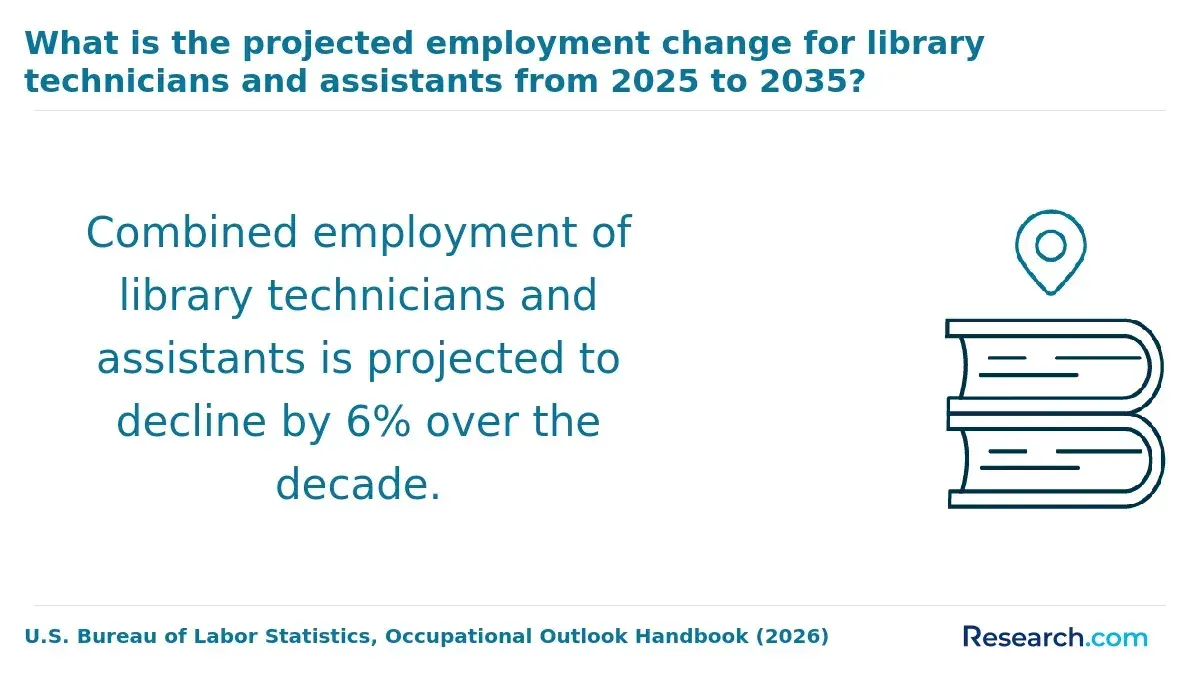
Some employers also hire library assistants or technicians to support circulation and collections. Those are valuable entry points, but their duties and degree requirements differ from professional librarian positions.
If systems or specialized research roles appeal to you, examine the experience behind library roles requiring technical skills before choosing electives. A project that demonstrates accurate legal research or usable metadata may help you show an employer what you can do.
Where do law librarians with an MLIS work?
Law schools employ librarians to support students, faculty scholarship, instruction, and collections. Courts and government agencies need access to authoritative legal materials for staff and, in some settings, the public.
Law firms and corporate legal departments emphasize timely research, database management, and knowledge sharing. Public law libraries often serve people navigating legal information without an attorney.
The setting changes the workday. A public-facing role calls for clear explanations and firm boundaries against giving legal advice. A firm may prioritize rapid responses and practice-specific sources; an academic employer may value teaching and faculty research support. Choose the setting first, then compare job postings for the tools, credentials, and experience it actually requests.
Do you need a JD to become a law librarian?
No. A Juris Doctor (JD) is not a universal credential for law librarianship. An MLIS and relevant legal research experience may qualify an applicant for positions in public, court, firm, technical services, or academic law libraries.
Some employers, especially law schools hiring for research instruction or faculty-facing work, require or prefer both an MLIS and a JD. The posting determines which credentials are necessary.
Before taking on the cost of two graduate degrees, identify positions you would actually pursue and separate their required credentials from preferred ones.
If your goal is to practice law rather than provide library services, an MLIS is not a substitute for a JD or applicable bar admission. Conversely, a JD alone may not meet an employer's requirement for a library and information science degree.
What does an MLIS law librarianship program teach?
Relevant MLIS preparation combines core library skills with legal-information practice. Core study may cover reference, information organization, collection development, research methods, and information technology.
Depending on the program, electives or supervised projects may address legal research, government information, instruction, electronic resources, or special-library management. A related elective is not necessarily a formally named law librarianship concentration.
Look for opportunities to work with cases, statutes, regulations, and legal secondary sources while learning how to evaluate authority and update research. For technical roles, useful projects include describing a digital legal collection or improving access to electronic resources.
For instruction roles, a research guide or short lesson can demonstrate how you teach a search process. Legal databases and AI-assisted research tools can speed discovery, but librarians still need to verify citations, check currency, respect licensing terms, and protect patron or client information.
How do you choose an accredited MLIS law library program?
Start by checking the specific master's program in the current American Library Association (ALA) directory of accredited programs. Institutional accreditation and ALA accreditation are different; neither establishes that a school offers a law librarianship concentration.
Programs may award an MLIS, MLS, or another named LIS master's degree, so compare the accredited program and its curriculum rather than the degree abbreviation alone.
Next, ask whether legal research courses are required or elective, when they are scheduled, and whether law library fieldwork is available in a setting you can reach. A catalog listing does not guarantee that a course will run during your enrollment, and an online degree does not guarantee a remote practicum.
Compare total required credits, tuition, mandatory fees, and employer-supported study as well as academic fit. A list of top library science masters options can help you build a shortlist, but confirm each candidate's current accreditation and law-related opportunities directly with the program.
What are the admission requirements for an MLIS program?
MLIS applicants generally need a bachelor's degree and must follow each school's published graduate admissions process. Programs may request transcripts, a statement of purpose, recommendations, a résumé, or evidence of English proficiency where applicable.
GPA thresholds, testing policies, deadlines, and prerequisite rules vary; prior legal employment does not automatically waive a formal requirement.
If you are changing careers, use your statement to connect previous research, teaching, legal, or information-management work to the jobs you want. If your academic record or circumstances do not match a stated criterion, ask admissions staff whether an individual review is available and what evidence would help.
Guidance on online librarian masters admission exceptions may help frame that conversation, but only the institution can confirm its policy or an admission decision.
How long does an MLIS law librarianship degree take?
Completion time depends on the program's required credits, your course load, and when relevant electives and field placements are offered.
Full-time study can be substantially quicker than part-time study, but a legal research elective offered infrequently or a placement with fixed hours may affect either schedule. Online delivery may reduce travel without making classes asynchronous.
If speed matters, compare an actual term-by-term course plan with the library science degree one year timeline. Ask the program whether your intended electives fit that schedule and whether you can complete the required experience while working.
The fastest route is not necessarily the best value if it prevents you from obtaining relevant law library experience.
How much does a law librarian with an MLIS earn?
The BLS reports a May 2025 median annual wage of $68,270 for librarians and media collections specialists. This is a national figure across library settings, not a law librarian pay rate or a prediction for new graduates. Location, employer type, responsibilities, and required credentials can change an individual offer.
Assess earnings alongside the cost of entering the field. For each program, multiply its published per-credit tuition by required credits, then add mandatory fees and likely expenses such as materials, travel, or fieldwork.
Distinguish that overall cost from what you would pay after confirmed employer assistance or other funding, and from any amount you would borrow. Listings of library science graduate schools south can provide cost leads, but verify current tuition, residency rules, and fees before comparing offers. A higher salary is not assured by a higher-priced degree.
What is the job outlook for law library careers?
BLS projects 2.6% growth in employment for librarians and media collections specialists from 2025 to 2035. Because this category includes many settings, it cannot tell you how many openings will arise specifically in law libraries or in your preferred city. Use it as broad context, then review current postings from the employers you hope to join.
Electronic collections, legal research platforms, and AI-assisted discovery make source evaluation and information management important parts of the work. They do not remove the need to establish whether a source is authoritative, current, and appropriate for a patron's question.
To improve your prospects, seek experience that matches a setting: public-service reference for a court or public law library, instruction for an academic role, or electronic-resource and knowledge-management work for a firm. A library assistant position or supervised placement can help you test that fit before pursuing a professional opening.
Do law librarians need a license or professional certification?
There is no general U.S. license required simply to work as a law librarian. Employers set qualifications for individual positions, which may include an MLIS, legal research experience, or a JD.
Professional development or voluntary credentials can demonstrate specialized knowledge, but do not assume a certificate replaces a degree named as required in a posting.
Licensing to practice law is a separate matter. A librarian helping someone find legal materials must stay within the service boundaries of the workplace and applicable rules on legal advice.
If a role includes attorney duties, check the relevant jurisdiction's bar requirements rather than treating librarianship credentials as authorization to practice law.
Other Things You Should Know About Library Science
Library staff can help patrons find and use legal information, but should not tell them what legal action to take unless they are separately authorized to provide legal advice. Workplace policies guide referrals when a question crosses that boundary.
Working in a courthouse library does not ordinarily mean representing clients or appearing in proceedings. The job typically centers on research support, collections, and access to information.
Do not assume so. Student access is governed by the school's subscriptions and license terms. Ask the program what access ends at graduation and what research tools a prospective employer provides.
Some research, instruction, metadata, and electronic-resource tasks can be performed remotely, but patron services, physical collections, and employer policies may require on-site work. Check the location and schedule stated in each opening.
References
- Resources for Exploring a Career as a Law Librarian | LibGuides at Drake University Law Library https://libguides.law.drake.edu/lawLibrarians
- The Profession of Law Librarianship - Introduction to Law Librarianship https://opentextbooks.library.arizona.edu/lawlibrarianship/chapter/introduction/
- Careers in Law Librarianship - UW Information School https://ischool.uw.edu/programs/mlis/law-librarianship/careers-mlis-law
- Where Will Your Legal Education Take You?: Law Librarian | uw.edu https://lib.law.uw.edu/c.php
- "What is a Law Librarian?" brochure - UKnowledge https://uknowledge.uky.edu/cgi/viewcontent.cgi
- Law Librarianship - SJSU - School of Information https://ischool.sjsu.edu/post/law-librarianship
- About the Profession | Legal Information Services to the Public SIS https://www.aallnet.org/careers/about-the-profession/
- Law librarianship: It's all about legal information | Canadian Bar Association https://cba.org/resources/cba-practicelink/law-librarianship-it-s-all-about-legal-information/
- What Do Law Librarians Earn? New AALL Salary Survey Provides Details | LawSites https://www.lawnext.com/2025/11/what-do-law-librarians-earn-new-aall-salary-survey-provides-details.html