2027 Online Geosciences Bachelor's Degree Completion Programs for Working Adults

Co-Founder and Chief Data Scientist
Many working adults with partial college credits face the challenge of balancing career demands while completing a bachelor's degree in geosciences. According to the National Center for Education Statistics, nearly 30% of undergraduate students enroll part-time, highlighting the need for flexible programs. These degree completion options offer tailored schedules, transfer credit evaluations, and online course delivery, addressing common barriers like time constraints and financial concerns. This article will systematically explore the structures, accreditation, tuition models, and career outcomes of top online geosciences bachelor's degree completion programs to help readers select a path aligned with their professional and personal goals.
Key Benefits of Online Geosciences Bachelor's Degree Completion Programs for Working Adults
- Online geosciences degree completion programs offer flexible scheduling, enabling working adults to balance education with professional and personal commitments effectively.
- Fully asynchronous coursework accommodates demanding work hours, allowing students to maintain income without pausing their careers.
- These programs typically have accelerated timelines, often reducing graduation time by up to two years compared to starting a traditional four-year degree anew.
What Are Online Geosciences Bachelor's Degree Completion Programs, and Who Are They Designed For?
Online geosciences bachelor's degree completion programs are designed specifically for adults who have already earned some college credits but have yet to finish their bachelor's degree. Unlike traditional four-year degrees that start from the beginning, these programs focus on helping students efficiently complete the remaining requirements. The primary audience includes working adults, military veterans, and community college transfer students who seek flexibility and the recognition of prior learning. According to data from the National Center for Education Statistics (NCES), over 36 million Americans have accumulated college credits without earning a formal credential. These accredited online bachelor's programs in geosciences for transfer students address this gap by offering tailored pathways to degree completion with flexibility in scheduling.
These programs are characterized by a few key features that distinguish them from traditional programs. They generally accept a high volume of transfer credits, reducing the time and cost to graduate. Delivery is predominantly online or hybrid, accommodating the complex schedules of professionals and families. Many programs also include prior learning assessments to credit relevant professional experience. Their accelerated format enables faster degree completion without sacrificing academic rigor. The growing popularity of online degree completion paths reflects a rising demand from employers who increasingly require bachelor's degrees for roles that historically did not have this prerequisite. For those interested in an accelerated associates degree online, these features make such geosciences programs a practical and effective choice.
- Accelerated Format: Programs use shortened semesters or intensive courses to help students graduate faster while maintaining quality.
- Transfer Credit Acceptance: Generous policies allow a high acceptance rate of previously earned credits, minimizing redundant coursework.
- Flexible Delivery: Online and hybrid models enable learners to balance education with professional and personal responsibilities.
- Growing Popularity: Increasing employer demands for bachelor's degrees drive more adults toward degree completion programs for career advancement.
How Do Online Geosciences Degree Completion Programs Differ From Traditional Four-Year Geosciences Bachelor's Degrees?
Online geosciences bachelor's degree completion programs are tailored for adults with 60 or more college credits who want to finish their degree efficiently. These programs differ significantly from traditional four-year geosciences degrees in structure and flexibility, catering to the needs of working adults by recognizing prior learning and offering accelerated pathways.
- Credit Requirements: Completion programs typically require fewer credits to graduate, often 60 to 65 credits, since they accept extensive transfer work. In contrast, traditional degrees generally mandate about 120 semester credits.
- Curriculum Sequencing: Completion programs prioritize advanced geosciences courses and electives, replacing many general education requirements with competency-based assessments, prior learning evaluations, or credit from standardized exams. This curriculum mapping helps adult learners avoid redundant coursework.
- Time to Completion: Students transferring 60 credits can often complete their degree in 1 to 2 years with online completion programs, whereas traditional programs usually require 4 years for full-time students. IPEDS data show that completion programs often offer reduced tuition rates per credit hour compared to traditional pathways within the same institutions.
- Adult Learner Focus: These programs accommodate busy schedules with asynchronous classes, streamlined degree plans, and credit for work experience, military training, or other competencies. This approach maximizes credit acceptance and minimizes barriers for community college transfer students, military veterans, and mid-career professionals.
- Accreditation and Transfer Policies: Both program types maintain accreditation to ensure educational quality, but completion programs have clearer policies that facilitate smoother credit transfers and degree progress.
When comparing online and traditional four-year geosciences degrees, recognizing these structural differences assists working adults in choosing the best pathway for their goals and timelines. Explore options among the best bachelor degrees to align your studies with career outcomes and affordability.
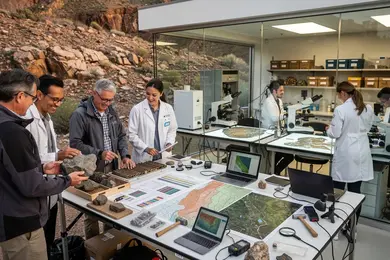
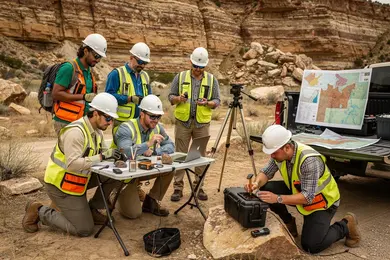
2026 Update: Fieldwork and Lab Requirements for Online Geosciences Students
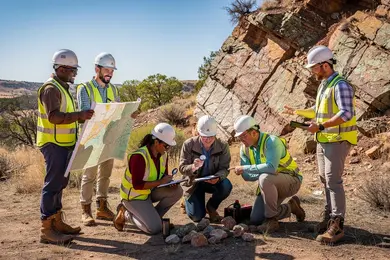
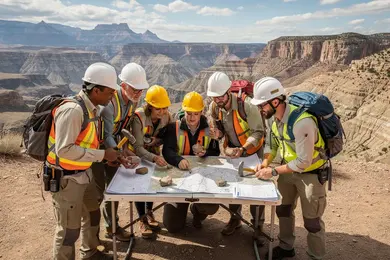
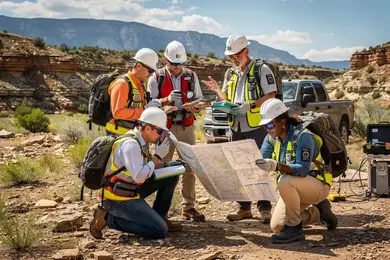
This 2026 update adds a closer look at the hands-on requirements that can affect working adults in online geosciences completion programs, especially courses involving field methods, mapping, lab analysis, or environmental sampling.
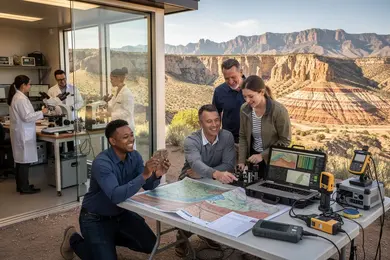
- Whether labs are fully online, mailed-kit based, campus-based, or completed through approved local sites
- Any required field trips, weekend intensives, or summer sessions that may involve travel
- How far in advance fieldwork dates are posted so students can plan around work shifts
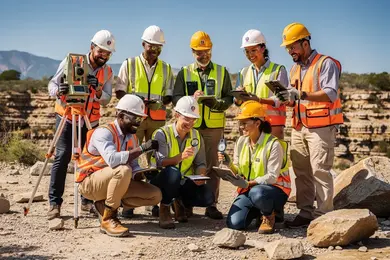
- Whether students need specific software, equipment, safety gear, or access to outdoor study sites
- How the program verifies field competencies for distance learners
- Whether employers, local agencies, or nearby colleges can support approved field experiences
Checking these requirements early helps students avoid schedule conflicts and choose a program that is truly realistic for their location, job demands, and graduation plan.
Which Accredited Universities Offer the Most Affordable Online Geosciences Bachelor's Degree Completion Programs?
Fort Hays State University: Charging a flat $226.67 per credit hour for all students, this Kansas-based school is accredited by the Higher Learning Commission (HLC). The program emphasizes competency-based learning and hands-on geological skills, appealing to professionals aiming to advance their careers within geosciences.
Southern Arkansas University: With in-state tuition at $244 and out-of-state at $485 per credit hour, SAU is accredited by the HLC. Its program highlights applied learning and welcomes transfers from community colleges and workforce-experienced students. Programmatic accreditation demonstrates strong ties to professional geological science organizations.
Mississippi State University: Offering rates of $280.50 for in-state and $625.50 for out-of-state students, this institution holds accreditation from the Southern Association of Colleges and Schools Commission on Colleges (SACSCOC). The curriculum prepares students for technical and research positions and features transfer-friendly policies alongside extensive online support.
Western Kentucky University: WKU charges a uniform online tuition of $364 per credit hour, regardless of residency, and is accredited by SACSCOC. It supports degree completion through generous transfer credit acceptance and prior learning assessments, maintaining rigorous academic standards in geosciences.
California State University, Monterey Bay: A flat rate of $396 per credit hour applies to all students, with accreditation from the WASC Senior College and University Commission (WSCUC). The program integrates environmental and sustainability concepts, offering flexible transfer options and a learner-focused approach suited to adults.
Programs with the most affordable tuition typically feature flat-rate online fees without residency distinctions, substantial transfer credit acceptance, and options for prior learning assessments. In contrast, mid-range priced programs often present specialized curricula or institutional prestige but may include higher rates for out-of-state learners.
When asked about his experience, a professional who completed an online geosciences bachelor's degree shared that balancing work, life, and studies demanded careful time management and persistence. He appreciated the flexibility of asynchronous courses and the ability to transfer credits from previous education and work-based learning. Although initially uncertain about re-entering academia, the structured support and competency-based modules helped him gain confidence. He noted, "It wasn't just about earning a degree, but proving practical skills that my employer recognized, which truly launched my career in the field." This blend of affordability, flexibility, and credential value was key to his successful transition into geosciences.
How Many Transfer Credits Can Working Adults Apply Toward an Online Geosciences Degree Completion Program?
Most degree completion programs in geosciences allow transfer credit between 60 and 90 semester hours, striking a balance between recognizing prior learning and ensuring students complete essential major coursework. Transfer credit evaluation involves matching previously earned credits to program requirements, which typically requires official transcripts and detailed course descriptions to confirm equivalency. This process helps clarify how many transfer credits count toward online geosciences degree completion.
- Credit Caps: Limiting transfer credits to about 60-90 semester hours maintains academic standards and supports accreditation requirements in geosciences programs.
- Credit Evaluation: Institutions analyze transferred coursework for equivalency to guarantee transferred credits fulfill specific degree components, aiding transfer credit policies for working adults in geosciences programs.
- Articulation Agreements: Collaborative agreements between community colleges and four-year universities streamline credit acceptance, reducing obstacles and credit loss during transfer.
- Credit Loss Risks: The U.S. Department of Education's transfer summit reports an average 40% credit loss in transfers; selecting programs with solid transfer pathways helps minimize this setback.
- Military and Certification Credits: Some transfer-friendly geosciences programs accept ACE-recommended military training and relevant professional certifications, crediting diverse experiences.
- Official Transcript Evaluation: Prospective students should secure a formal credit evaluation before enrollment to understand applicable credits and remaining requirements.
Working adults seeking to complete their online geosciences degree can benefit from exploring structured pathways and policies aligned with their previous education and experience. For guidance, researching tuition and program details can be helpful, such as exploring options like an online EdD program for flexible learning models.
What Are the Typical Admission Requirements for Online Geosciences Bachelor's Degree Completion Programs?
Transfer Credit Requirements: Enrollment typically requires applicants to have completed between 24 and 60 credit hours transferable from previous college coursework. The exact threshold depends on the portion of the degree program students plan to finish online, with fewer credits often necessitating additional coursework before transfer.
GPA Expectations: Most programs expect a minimum cumulative GPA ranging from 2.0 to 2.5 on a 4.0 scale, though more competitive programs may demand higher academic standings to ensure student preparedness and program quality.
Required Documentation: Applicants must submit official transcripts from all previously attended institutions. Some programs also ask for validation of prerequisite course completion or standardized test results to confirm readiness.
Prerequisite Coursework: Foundational study in geosciences-such as introductory geology or earth science-is commonly required to provide students with the essential background needed for advanced upper-division classes.
Admission Selectivity: Open-admission programs typically accept most students who meet minimal credit and GPA standards, offering wider accessibility but potentially with less personalized academic support. In contrast, selective programs apply competitive criteria and may provide enhanced resources, but admission can be more challenging.
Conditional Admission Options: Some institutions extend provisional acceptance to applicants marginally below standard admission criteria. These students often must complete remedial classes or maintain a specified GPA during early enrollment periods.
Application Enhancement Strategies: Prospective students can improve acceptance odds by finishing missing prerequisites at community colleges before applying. Additionally, emphasizing relevant professional experience or certifications in related areas can strengthen applications.
One professional who completed her bachelor's degree through an online geosciences completion program recalled the initial uncertainty when navigating varying credit transfer policies and gathering detailed transcripts. She appreciated the flexibility of conditional admission, which allowed her to start the program while completing a prerequisite course, easing the transition. Her approach included strategically completing foundational classes at a community college, which she described as "crucial for building confidence and meeting academic expectations." Reflecting on her experience, she noted that "the admissions process felt thorough but fair, and the support from advisors helped overcome early challenges." This preparation ultimately contributed to a successful career in her field.
How Long Does It Take to Complete an Online Geosciences Bachelor's Degree Completion Program as a Working Adult?
Completion time for an online geosciences bachelor's degree largely depends on transferred credits and the student's enrollment status. Those transferring around 90 credits, similar to an associate degree, can often finish within one to two years if attending full-time. With 60 credits, expect roughly two to three years, while 30 credits may extend the timeline to three to four years.
Program formats vary, including traditional semesters and accelerated eight-week terms, which facilitate faster progress. Part-time learners taking about six credits per semester typically balance work and studies but may need more than three years to finish. Conversely, full-time students enrolled in 12 or more credits per term-including summer sessions-can shorten their path considerably.
A working professional taking two courses per semester (around six credits) while employed full-time generally faces a three to four-year timeline, depending on previous credits. Accelerated eight-week courses can effectively double annual course completion compared to traditional 15-week terms. Additionally, competency-based models that reward demonstrated mastery allow some students to advance at their own pace, speeding up graduation.
It is essential to consider personal factors like job demands, family responsibilities, and employer tuition benefits, as they influence realistic timeframes. Notably, 60% of adult learners now prefer programs offering flexible, accelerated options to juggle education alongside their existing commitments.
- Transfer Credits: Students with 90 transferred credits often graduate in 1-2 years; 60 credits require 2-3 years, while 30 credits may mean 3-4 years.
- Part-Time Enrollment: Taking six credits per semester extends completion beyond three years for most working adults.
- Accelerated Terms: Eight-week courses double the number of classes completed yearly compared to standard semesters.
- Competency-Based Models: Progressing by demonstrating mastery can shorten degree timelines for experienced learners.
- Summer Sessions: Adding summer terms speeds up finishing the degree.
- Life Circumstances: Work, family, and employer support play vital roles in setting achievable completion goals.
What Financial Aid, Grants, and Employer Tuition Assistance Options Are Available for Online Geosciences Completion Students?
Working adults pursuing an online geosciences bachelor's degree completion program can access a variety of financial aid options tailored to meet their specific needs. Federal Pell Grants and Direct Loans remain available to eligible adult learners, providing foundational funding that helps lower out-of-pocket expenses. Additionally, some states offer grants aimed at adult returners, which can significantly reduce tuition costs depending on residency and eligibility.
Many institutions provide scholarships designed specifically for non-traditional students, including those completing degrees online. These scholarships often reward prior professional experience, military service, or study in high-demand fields such as geosciences. Prospective students should proactively contact schools to discover available institutional aid programs created for adult learners.
Employer tuition assistance is a major funding source for working adults. Under IRS Section 127, employers may offer up to $5,250 annually as a tax-free benefit toward undergraduate education expenses. Taking advantage of tuition reimbursement or direct payment agreements through an employer can be an effective strategy to finance a degree while advancing one's career.
There are also scholarships and fellowships targeted specifically at adult learners completing undergraduate geosciences degrees. These awards often come from professional associations, foundations, or government initiatives focused on STEM workforce development.
Before enrolling, students should follow these essential financial aid steps:
- File the FAFSA: Completing the Free Application for Federal Student Aid unlocks access to federal grants, loans, and many state and institutional aid programs.
- Research State Grants: Look into grants available for adult returners in your state to maximize funding opportunities.
- Contact Schools Directly: Reach out to admissions or financial aid offices to inquire about scholarships supporting non-traditional or online geosciences learners.
- Request Employer Benefits: Submit a tuition assistance agreement or reimbursement request to your employer early to secure funding before classes begin.
How Does Per-Credit-Hour Tuition for Online Geosciences Completion Programs Compare Across Accredited Institutions?
The national average tuition cost for online bachelor's completion programs in geosciences is about $400 per credit hour, according to NCES and IPEDS data. Accredited programs typically charge between $300 and $650 per credit, with total tuition varying significantly based on the remaining credits required after transfer and additional fees. For working adults with 60 or 90 transfer credits, this means program costs can range notably. For example, a 60-credit requirement at $350 per credit totals $21,000, while 75 credits at $300 per credit reach $22,500.
Beyond tuition, additional costs should be factored into budgeting for an online geosciences degree per credit hour tuition comparison. Technology fees ($200-$600 yearly), graduation fees ($100-$200), exam proctoring charges ($30-$50 each), and textbook expenses, which may exceed $1,500, substantially increase the total cost. These ancillary costs highlight why the lowest per-credit rate does not always lead to the most affordable program.
When evaluating tuition cost comparison for accredited online geosciences programs, it's vital to consider total credits required alongside fees. Programs with fewer credits needed might ultimately cost less, even if their per-credit price is higher. This total-cost perspective helps prospective students, including community college transfer students, military veterans, and mid-career professionals, find the best fit for schedules and budgets.
- Per-Credit Variability: Tuition rates vary widely, influenced by institution type and location, ranging from $300 to $650 per credit.
- Total Credit Requirements: Credit completion ranges from under 60 to over 75, heavily affecting total tuition cost.
- Additional Fees: Technology, graduation, and proctoring fees add significant costs beyond listed tuition.
- Textbook Costs: Expect textbook and material expenses to increase overall program costs by hundreds or more.
- Cost Versus Time: Fewer credits at a higher rate can be more economical than lower rates with longer programs.
For those exploring advanced education pathways, related options such as an online master's in organizational leadership may complement geosciences credentials and broaden career opportunities.
What Prior Learning Assessment and Credit-by-Exam Options Exist in Online Geosciences Degree Completion Programs?
Prior Learning Assessment (PLA) options enable working adults to leverage existing knowledge into academic credits, expediting degree completion. Programs often accept CLEP and DSST exams, portfolio assessments, and credits earned through military training evaluations by the American Council on Education (ACE). These pathways recognize competencies gained outside traditional classrooms, aligning well with credit-by-exam policies for geosciences bachelor's programs.
- Credit-by-Exam: Many online Geosciences completion programs recognize CLEP and DSST exams, allowing students to earn foundational credits through standardized testing, which reduces time and tuition costs.
- Portfolio Assessment: Institutions with flexible PLA policies accept detailed portfolios showcasing professional experience, certifications, and training. The types of evidence accepted vary but typically include work samples, project documentation, and reflective essays that demonstrate college-level mastery.
- Military Training Credits: Military veterans benefit from ACE evaluations, which translate service and corporate training into transferable credits. This system facilitates smoother transitions for veterans and active duty students pursuing online degrees.
- Maximum Credit Limits: Top-ranked programs allow up to 30-60 credits through PLA, with some offering even greater flexibility. Understanding each institution's caps ensures efficient application of prior learning toward degree requirements.
- Documentation and Submission: Success depends on preparing thorough evidence, adhering to institutional guidelines, and timely submission for credit evaluation. Working adults should consult academic advisors to optimize their PLA portfolios and exam strategies.
Whether you are a community college transfer student, a military veteran, or a mid-career professional, exploring prior learning assessment options for online geosciences degree completion can significantly shorten your path to graduation. For additional guidance on choosing from the best programs, consider researching masters degrees that are worth it.
How Do Asynchronous Schedules in Online Geosciences Programs Accommodate Full-Time Working Professionals?
- Flexible Scheduling: Fully asynchronous courses allow students to complete assignments, participate in discussions, and take exams at any time that fits their personal and professional commitments. This format is ideal for those working irregular shifts, traveling, or managing caregiving responsibilities across time zones.
- Structured Assignments: Course tasks are designed with clearly defined deadlines but no fixed meeting times, enabling learners to engage with material at their own pace while still maintaining a consistent weekly schedule to promote steady progress.
- Comparison with Other Formats: Unlike synchronous programs that require live attendance, or hybrid models combining in-person and online elements, asynchronous offerings provide unmatched flexibility but may lack real-time interaction, which some learners find valuable for networking and support.
- Eight-Week Terms: Several institutions employ compressed eight-week courses, letting students concentrate on fewer subjects simultaneously. This approach helps balance workload intensity with professional duties by focusing efforts in shorter bursts.
- Time Management Tips: Successful online students often rely on digital calendars, task management apps, and dedicated study blocks to organize coursework efficiently. Prioritizing tasks and setting reminders fosters accountability crucial to mastering asynchronous study demands.
What Concentrations and Career Tracks Are Available Within Online Geosciences Degree Completion Programs?
Online geosciences bachelor's degree completion programs typically embed concentrations within the standard 120-credit curriculum, allowing degree completion without additional coursework. This approach keeps tuition manageable and avoids extending time to graduation while offering specialized career pathways.
- Environmental Geosciences: Explores interactions among soil, water, and atmosphere to tackle environmental issues. Graduates often find roles as environmental consultants or specialists, with steady job growth projected by BLS. This track supports credentials such as the Certified Environmental Professional (CEP).
- Hydrogeology: Focuses on groundwater and water resource management. Career options include hydrogeologist and water resource analyst, roles noted by BLS for competitive salaries. This specialization can assist in meeting requirements for hydrogeology licensure.
- Mineralogy and Petrology: Centers on minerals and rock studies, preparing students for mining, oil and gas, or materials science careers. BLS reports consistent demand and promising salary increases, especially in energy sectors.
- Geospatial Science: Involves GIS and spatial data analysis applications. Graduates pursue work in land surveying, urban planning, or geospatial analysis, fields with expanding employment opportunities nationally according to BLS.
Selecting a concentration should balance your interests with market demand. While these tracks normally fit within existing credit requirements, some programs offer added certification prep that may influence cost and time. Align your choice with career goals and local job availability to maximize postgraduation success.
What Graduates Say About Online Geosciences Bachelor's Degree Completion Programs for Working Adults
- Ellie: "Choosing this online geosciences bachelor's program was crucial for me because of its strong accreditation standards, which gave me confidence in the education I was receiving. The program's clear transfer credit policies allowed me to apply most of my previous coursework, saving both time and money. I appreciated how flexible the tuition model was, making it manageable alongside my full-time job."
- Quentin: "Reflecting on my experience, the prior learning options provided by the program really stood out and accelerated my progress. The structure was thoughtfully designed to accommodate working professionals like me, with accessible course formats and relevant content. Since graduating, I've seen tangible improvements in my career opportunities, largely due to the program's emphasis on real-world employer expectations in the geosciences field."
- Jace: "As someone returning to complete a degree after several years, I valued the program's recognition of transfer credits and its transparent tuition approach. The program's accreditation reassured me that my degree would be respected by employers. Ultimately, the combination of rigorous academics and flexible learning options gave me the confidence to advance in my career and expand my professional network."
Other Things You Should Know About Geosciences Degrees
Online geosciences completion programs for working adults typically offer tailored academic advising, tutoring, and technical support to accommodate varying schedules. Career services often include virtual workshops, resume reviews, and networking opportunities specific to geosciences industries. These supports help students balance education with work commitments and prepare for professional advancement.
Completing an online geosciences bachelor's degree significantly increases earning potential and job stability compared to holding only some college credits. Degree holders often qualify for higher-level positions in fields like environmental consulting, geology, and natural resource management. The investment in completing the degree usually leads to better long-term career growth and opportunities.
References
- Scholarships in the Geosciences https://www.americangeosciences.org/workforce-excellence/scholarships/
- Choosing Your Degree https://www.geolsoc.org.uk/Geology-Career-Pathways/University/Choosing%20your%20degree.html
- Admission – Environmental Geosciences, Geohazards, and Geomatics – University of Oslo https://www.uio.no/english/studies/programmes/geosciences-master/programme-options/environment-geohazards-geomatics/admission/
- Grants and Scholarships https://nagt.org/nagt/grants/index.html
- Geoscience | University College Cork https://www.ucc.ie/en/ck404/geoscience/
- Prior Learning Assessment https://www.loyno.edu/loyola-online/admissions/prior-learning-assessment
- Financial Aid For Online Colleges https://www.affordablecollegesonline.org/financial-aid/financial-aid-for-online-colleges/
- Grants for Online College | Edvisors https://www.edvisors.com/plan-for-college/scholarships/college-grants/online-college-grants/
- Online Geosciences Degree https://www.snhu.edu/online-degrees/bachelors/bs-in-geosciences
- How to find your career path with a geoscience degree https://www.grow-geocareers.com/