2027 Self-Paced Online Geosciences Bachelor's Degree Programs

Co-Founder and Chief Data Scientist
Professionals aiming to transition into geosciences face a major obstacle: balancing career shifts with existing work and life commitments. Traditional programs often lack the flexibility needed for those without a science background yet eager to develop specialized expertise. Studies show that 68% of adult learners prefer self-paced online programs to accommodate irregular schedules. This demand highlights a critical need for accessible, accredited geosciences bachelor's degrees that allow learners to control timing and pace.
This article explores self-paced online geosciences bachelor's degree programs, detailing how they support career pivots by offering adaptable, industry-relevant education paths for working professionals.
Key Benefits of Self-Paced Online Geosciences Bachelor's Degree Programs
- Self-paced online geosciences programs offer flexibility for working professionals, allowing course completion anytime and anywhere without disrupting careers.
- Accelerated skill acquisition is enabled through competency-based models, letting students progress as they demonstrate mastery rather than waiting for fixed semesters.
- These programs provide cost-effective pathways by reducing tuition fees and enabling transfer credits or prior learning assessments, making accredited degrees more accessible.
What Are Self-Paced Online Geosciences Bachelor's Degree Programs, and How Do They Differ From Traditional Online Formats?
Self-paced learning in online higher education allows students to complete coursework independently, without fixed schedules or cohort restrictions. Unlike cohort-based or asynchronous-but-scheduled formats, self-paced online geosciences degree programs offer open enrollment and flexible timelines. Students can begin anytime and adjust their study pace to fit personal and professional commitments, ideal for those balancing work and family life.
These programs typically use milestone-based progression, requiring learners to demonstrate mastery of specific skills before advancing. This competency-based education model often incorporates transfer credit policies and prior learning assessments, enabling students to use previous experience to accelerate their degree completion. Financial aid eligibility is usually maintained, helping students access necessary funding resources.
Comparing the difference between self-paced and traditional online degrees:
- Time Management: Self-paced learners control their study schedules, allowing for intense periods of focus or breaks as needed, while traditional programs mandate weekly deadlines and fixed term dates.
- Faculty Interaction: Interaction in traditional online courses often includes scheduled live sessions and regular feedback, whereas self-paced formats provide targeted, on-demand faculty support aligned with milestone assessments.
- Student Accountability: Without cohort deadlines, self-paced students must stay motivated and self-disciplined, unlike cohort-based programs that offer peer support and structured pacing.
Self-paced geosciences bachelor's programs benefit working professionals, adult learners returning to school, and first-time students seeking flexible, personalized learning pathways. This model supports diverse learners aiming for career advancement without compromising existing commitments and fits well with current trends in competency-based education. For those exploring flexible options, these programs can offer some of the most easy degrees to get online that pay well.
Which Accredited Institutions Offer Self-Paced Online Geosciences Bachelor's Degree Programs?
Several regionally accredited institutions in the United States provide flexible, self-paced online geosciences bachelor's degree programs tailored for working professionals, non-traditional students, and those seeking adaptable academic paths. These programs commonly utilize competency-based education models that allow students to advance by demonstrating mastery rather than following fixed schedules, supporting varied learning speeds and lifestyles.
- Western Governors University: Accredited by the Northwest Commission on Colleges and Universities, WGU offers a competency-based Bachelor of Science in Earth Science. Its tuition is charged via a subscription model per six-month term, encouraging students to complete multiple courses within each period. The average time to degree completion is about three years, influenced by prior experience and study commitment.
- Capella University: Regionally accredited by the Higher Learning Commission, Capella features a FlexPath self-paced program for the Bachelor of Science in Environmental Science focused on geoscience. Tuition is assessed per course with no deadlines, allowing students to accelerate progress. Many complete their degrees in roughly three years, leveraging transfer credits and prior learning assessments.
- Southern New Hampshire University: Accredited by the New England Commission of Higher Education, SNHU offers a Bachelor of Science in Environmental Science with asynchronous online coursework and self-paced options. Although not fully competency-based, there is substantial flexibility. Tuition is per credit hour, with average completion ranging from three to four years depending on transfer credits.
- Excelsior College: Accredited by the Middle States Commission on Higher Education, Excelsior's Bachelor of Science in Environmental Science includes geosciences content in a self-paced format. Tuition is per credit, and generous transfer policies plus credit for prior learning often reduce degree completion time to around three years for driven students.
- Colorado State University Global: This institution, accredited by the Higher Learning Commission, offers a Bachelor of Science in Environmental and Natural Resources Management that includes geoscience coursework. The program features an accelerated term-based tuition model with eight-week sessions and some competency assessments enabling flexible pacing. Typical completion time is about three years.
These top flexible accredited universities for online Geosciences bachelor's degrees focus on affordability and student-centered learning through diverse tuition structures-subscription, per course, or per credit-with many granting transfer credits and recognizing prior learning to shorten degree duration. Their regional accreditation ensures adherence to rigorous quality standards, making them strong contenders for those seeking self-paced study in geosciences.
Prospective students should also explore related disciplines such as psychology-many universities offer affordable online options to broaden their academic and professional opportunities, as seen in this list of psychology degrees.
2026 Update: Lab, Fieldwork, and Technology Requirements to Verify
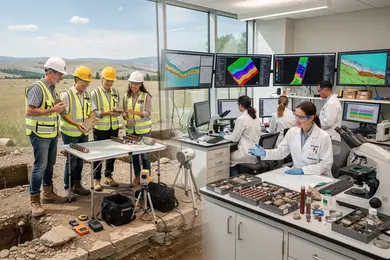
For 2026, this guide adds a closer look at the hands-on expectations that can affect whether a self-paced online geosciences bachelor’s program fits a working adult’s schedule, location, and equipment access.
- Whether required labs are fully online, kit-based, simulation-based, or completed through local partners.
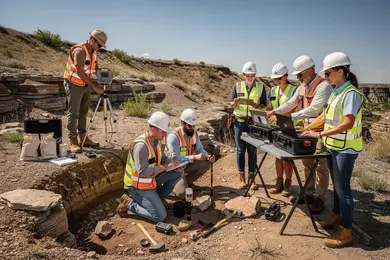
- If any fieldwork, mapping exercises, or campus residencies must be completed in person.
- What software is required for GIS, remote sensing, data analysis, or geological modeling coursework.
- Whether students need a higher-performance laptop, external storage, GPS tools, or specific operating systems.
- How flexible lab and field assignments are for students with full-time jobs or irregular schedules.
- Whether technical support is available outside standard business hours for self-paced learners.
Checking these details early helps students avoid unexpected travel, equipment, or scheduling barriers and choose a program that is realistically manageable from start to finish.
How Long Does It Take to Complete a Self-Paced Online Geosciences Bachelor's Degree?
Completion times for self-paced online geosciences bachelor's degrees can vary significantly, with some students finishing in under two years, while others follow a more traditional four- to six-year timeline. Data from the National Center for Education Statistics shows that the average duration for bachelor's degrees in science fields is about 4.5 years, but flexible programs often enable students to accelerate their progress.
- Prior Credits: Earned credits from community colleges or previous universities may exempt students from foundational courses, allowing them to reduce the number of semesters needed to graduate.
- Transfer Coursework: Programs with broad transfer policies accept a wide range of prior classes toward degree requirements, particularly general education and core science courses, speeding up completion.
- Weekly Time Commitment: The amount of time devoted to study each week impacts pacing; those balancing full-time jobs often progress slower than those who study full time.
- Prior Learning Assessments: Some schools grant credit for relevant work experience, military training, or certifications, enabling quicker advancement through degree milestones.
- Competency-Based Models: Students can move forward by demonstrating mastery rather than time spent in class, which benefits motivated learners seeking faster completion.
- Realistic Scheduling: Establishing a pace that fits professional and personal demands is crucial; academic advisors and coaches help students create attainable timelines.
- Support Services: Tutoring, advising, and technical assistance help students stay on track and manage challenges that could delay graduation.
A professional who enrolled in a self-paced online geosciences bachelor's program shared that juggling work and study was often challenging, especially during busy seasons at his job. He found that credit for prior military experience significantly reduced his coursework load, providing early momentum. He explained, "Having advisors who understood my unique schedule helped me set realistic goals without feeling overwhelmed." Despite occasional frustrations with balancing deadlines, he appreciated that the program's flexibility allowed him to maintain steady progress toward his career ambitions.
What Are the Admission Requirements for Self-Paced Online Geosciences Bachelor's Degree Programs?
High School or GED: Applicants typically need a high school diploma or an equivalent GED certificate. This requirement ensures candidates possess the foundational skills necessary for college-level geosciences studies and satisfies common online geosciences bachelor's degree admission criteria.
GPA Standards: While some programs expect a minimum GPA-often between 2.5 and 3.0 on a 4.0 scale-many self-paced offerings embrace open enrollment to increase accessibility. These flexible policies especially benefit non-traditional students balancing work or family commitments and reflect evolving requirements for self-paced geosciences degree enrollment.
Prerequisite Courses: Foundational knowledge in subjects like algebra, biology, or chemistry is frequently recommended or mandated. Completing these prerequisite classes helps ensure students are prepared for the technical content typical in geosciences curricula.
Open Enrollment and Rolling Admission: Numerous self-paced programs utilize rolling-admission models to lower barriers to entry. This system allows students to begin coursework throughout the year without conforming to strict deadlines, fostering greater flexibility for returning and part-time learners.
Selectivity and Support: More selective online geosciences bachelor's degree programs often provide enhanced academic advising, tutoring, and smaller class sizes, which can aid student success. In contrast, open-access programs offer convenience but may require stronger self-motivation and less personalized assistance.
Improving Your Application: Candidates who do not meet minimum criteria can strengthen their applications by taking community college courses to raise their GPA or fulfill prerequisites. Highlighting relevant work experience, submitting thoughtful personal statements, or providing recommendation letters also improves admission prospects.
For those exploring their options, reviewing financial considerations is essential-some turn to affordable programs, like the online ED offerings highlighted in reputable research databases, to find a good fit for cost and flexibility.
How Much Does a Self-Paced Online Geosciences Bachelor's Degree Cost, and What Affects Tuition?
Tuition for self-paced online geosciences bachelor's degrees typically falls into two main structures: per-credit costs or flat-rate subscriptions. Most programs charge between $300 and $700 per credit hour, making the full degree-usually around 120 credits-range from $36,000 to $84,000. Alternatively, some institutions use a flat monthly or quarterly fee that allows unlimited course enrollment during that time, encouraging quicker completion but potentially increasing overall costs if paced slowly.
- Per-Credit Tuition: Charges are based on the number of credits taken, so the total cost depends on how quickly a student progresses through the degree requirements.
- Flat-Rate Subscription: A fixed fee gives unlimited course access for a set period, benefiting students who can accelerate their studies.
- Additional Fees: Expenses for technology access, proctored exams, mandatory software, and course materials often add to the tuition and should be factored into budget planning.
- Pacing Effects: While slower enrollment can reduce monthly fees under subscription models, it may increase total costs due to extended program duration.
A professional who completed her self-paced online geosciences degree shared that managing the pace was one of the biggest challenges. "I had to balance work and studies, so some months I took fewer courses, which stretched out the time and increased costs," she explained. She appreciated the flexibility but emphasized reviewing all fees upfront, saying, "Unexpected tech and exam proctoring fees surprised me at first, so I recommend budgeting extra beyond tuition." Her experience highlights how personal pacing and understanding fee structures impact the true investment needed for these degrees.
What Financial Aid Options Are Available for Self-Paced Online Geosciences Bachelor's Programs?
Financial assistance for self-paced online geosciences bachelor's degrees includes a mix of federal, state, and institution-based resources. Competency-based education (CBE) programs often have unique credit-hour equivalency requirements that can impact FAFSA eligibility. Federal Student Aid guidelines specify that students must maintain certain enrollment and progress criteria to qualify for Pell Grants and Direct Loans, which are core components of typical funding packages. According to the College Board's Trends in Student Aid report, a growing number of non-traditional and online students depend on a combination of grants, loans, and work-study programs.
State aid programs usually require residency and enrollment at recognized institutions within the state, so candidates should consult their state education offices. Many colleges offering flexible geosciences degrees also extend scholarships or tuition reductions specifically for self-paced and adult learners, though these may depend on meeting program milestones.
Professional geosciences organizations provide targeted scholarships to reward academic achievement, research focus, or demographic qualifications. Notable groups such as the Geological Society of America and the American Geosciences Institute regularly offer awards to support students pursuing careers in this field.
Since self-paced program structures affect the timing of fund disbursement-often relying on competency mastery instead of traditional credits-it's crucial to communicate with financial aid offices before enrollment. Recent data show that about 40% of undergraduate CBE students receive Pell Grants, highlighting federal support growth for these alternative education pathways.
- Federal Aid Eligibility: FAFSA qualification depends on credit equivalencies and enrollment status, requiring verification with program officials prior to applying.
- State and Institutional Support: State grants require residency and official enrollment, while institutions may offer scholarships focused on online and self-paced learners.
- Geosciences Scholarships: Industry associations provide competitive awards based on merit, research interests, or demographics within the geosciences field.
- Disbursement Timing: Self-paced formats influence when aid funds are released, necessitating early contact with financial aid offices.
How Do Competency-Based Education (CBE) Models Work in Self-Paced Online Geosciences Programs?
Competency-based education (CBE) in self-paced online Geosciences bachelor's programs emphasizes mastery of skills and knowledge rather than traditional seat time. Students advance by demonstrating competence through assessments such as projects, exams, or practical tasks that mirror real-world Geosciences challenges. This approach allows learners to focus more on difficult topics while accelerating through familiar content, making education tailored and efficient.
For financial aid, CBE programs convert demonstrated mastery into credit hours either by aligning assessments with standard credit-hour equivalents or by using direct assessment, which measures learning outcomes without traditional credit hours. Direct assessment programs-often specifically approved by the U.S. Department of Education-offer more flexibility but have distinct financial aid implications compared to credit-hour-equivalent models, which are generally easier to evaluate for aid eligibility and credit transfers.
Notable institutions employing CBE in Geosciences include Western Governors University, which integrates regular performance tasks and faculty mentoring, and Southern New Hampshire University, which emphasizes clear learning outcomes and partnerships with employers. Both provide strong faculty support through virtual office hours and personalized feedback, with growing employer recognition of their diplomas, especially in applied Geosciences sectors.
Success in CBE requires considerable self-discipline and motivation. Prospective students should carefully assess their learning preferences to determine if a self-directed, assessment-driven environment aligns with their needs. According to recent data, CBE enrollment has grown by 25% over five years, reflecting increasing demand for flexible, skill-focused education.
- Mastery Over Time: Students demonstrate their knowledge through various assessments, enabling personalized pacing and targeted learning.
- Financial Aid Structures: Credit-hour equivalency versus direct assessment models impact aid eligibility and program design differently.
- Program Examples: Western Governors University and Southern New Hampshire University provide strong faculty support with employer-endorsed curricula.
- Self-Motivation Needed: A high level of discipline is crucial for thriving in CBE's self-paced, assessment-driven environment.
- Rising Enrollment: CBE programs have seen a 25% increase in enrollment over five years, indicating growing interest in flexible Geosciences education.
What Accreditation Should a Self-Paced Online Geosciences Bachelor's Program Hold?
Accreditation directly impacts the value of a self-paced online geosciences bachelor's degree in the United States, influencing credit transferability, financial aid eligibility, and employer recognition. Regional accreditation-acknowledged as the gold standard-carries more weight with employers and graduate schools in the geosciences field due to its rigorous academic standards and broad acceptance. National accreditation often applies to vocational or specialized schools but may present challenges for students seeking credit transfer or professional opportunities.
The U.S. Department of Education recognizes six regional accrediting bodies: the Middle States Commission on Higher Education (MSCHE), the New England Commission of Higher Education (NECHE), the Higher Learning Commission (HLC), the Southern Association of Colleges and Schools Commission on Colleges (SACSCOC), the Western Association of Schools and Colleges-Senior College and University Commission (WSCUC), and the Northwest Commission on Colleges and Universities (NWCCU). These agencies ensure academic quality assurance in online geosciences degree programs and maintain standards that employers rely on.
Some self-paced geosciences programs may hold programmatic accreditation from organizations like the Geological Society of America, which evaluates geology-specific curricula. However, this typically supplements rather than substitutes for institutional regional accreditation.
Enrolling in nationally accredited or non-accredited programs risks limited credit transfer, reduced financial aid, and fewer career advancement opportunities. Prospective students should verify accreditation status using the U.S. Department of Education's accreditation database and the Council for Higher Education Accreditation's (CHEA) directory before applying.
Working professionals might also explore related options such as MBA programs in operations management online for alternative pathways combining flexible learning and career growth.
- Regional Accreditation: Considered the gold standard, it assures rigorous academic quality and broad acceptance in geosciences careers and graduate studies.
- National Accreditation: Typically serves vocational or specialized schools; may restrict credit transfer and employer recognition in the geosciences field.
- Recognized Accrediting Bodies: Six regional agencies-MSCHE, NECHE, HLC, SACSCOC, WSCUC, NWCCU-are federally recognized to uphold academic quality across programs.
- Programmatic Accreditation: Available for some programs, these endorsements assess geology-specific curricula but do not replace institutional accreditation.
- Risks of Non-Accreditation: Credits may not transfer, financial aid options are limited, and career prospects can be hindered without proper accreditation.
- Verification Resources: Use the U.S. Department of Education's accreditation database and CHEA's directory to confirm the legitimacy of any self-paced online geosciences bachelor's degree program.
How Many Transfer Credits Can Be Applied Toward a Self-Paced Online Geosciences Bachelor's Degree?
Transfer credit policies for self-paced online geosciences bachelor's degree programs vary widely, but many institutions offer generous options to accelerate degree completion. Typically, these programs accept transfer credits from regionally accredited colleges, prior coursework, military training evaluated via American Council on Education (ACE) recommendations, and formal community college articulation agreements. Some institutions allow up to 90 transfer credits-covering a significant portion of degree requirements and reducing both time and cost for students.
Schools evaluate transfer credits primarily on course equivalency, relevance to geosciences degree requirements, and recency. Courses related to natural sciences, mathematics, and environmental studies tend to have higher acceptance rates. Military training credits often convert through ACE recommendations, giving veterans and active-duty personnel valuable academic credit. This flexibility is especially important for students exploring how many transfer credits are accepted for self-paced online geosciences degrees.
Because transfer credit policies differ among programs, it is essential to request an official transfer credit evaluation before enrolling. This evaluation clarifies how many credits will count toward graduation, offering a clearer picture of remaining coursework and tuition costs. Many colleges also publish articulation agreements online, detailing which community college courses are pre-approved for transfer. Working professionals or first-time students benefit from understanding these policies early and can also explore related programs, such as those focused on graphic arts, by visiting resources like the best 2 year graphic design degree online.
- Credit Limits: Many programs permit up to 90 transfer credits, allowing students to apply nearly two-thirds of their undergraduate requirements from prior coursework.
- Military Training Credits: ACE credit recommendations help veterans and active-duty military personnel convert relevant military training into academic credits.
- Course Relevance: Accreditation and content alignment with geosciences requirements-especially in science and math courses-determine acceptance of transfer credits.
- Articulation Agreements: Established partnerships with community colleges streamline transfer of prerequisite and general education courses toward degree completion.
- Transfer Evaluation: Early official assessments provide a clear understanding of remaining credits and cost obligations before enrollment, preventing unexpected financial or academic burdens.
Can Students Earn Credit Through Prior Learning Assessment in Self-Paced Online Geosciences Programs?
Prior Learning Assessment (PLA) enables self-paced geosciences students to convert professional experience, military training, industry certifications, and independent study into academic credit. This is typically done via portfolio reviews, challenge exams, or standardized tests such as CLEP and DSST. Institutions like Southern New Hampshire University and Thomas Edison State University are recognized for their flexible, affordable PLA policies, allowing students to earn up to 30 credit hours based on prior learning.
The American Council on Education (ACE) facilitates credit transfers by evaluating non-traditional learning experiences, greatly benefiting military personnel and working adults seeking to speed up degree completion. Using ACE's recommendations helps ensure credits are accepted across multiple institutions, supporting smoother progress through degree programs.
To maximize PLA credit, students should thoroughly document their knowledge with transcripts, certificates, detailed job descriptions, and competency evidence. Clear and organized submission packages aligned with ACE guidelines improve the likelihood of approval. A significant trend shows that over 60% of adult learners in online programs apply PLA to accelerate their studies, reflecting its growing importance in geosciences education.
- Portfolio Review: Detailed compilations of skills, coursework, and work-related achievements illustrating relevant competencies for geosciences curricula.
- Challenge Exams: Institution-specific tests that validate knowledge in geosciences subjects for direct credit awards.
- Standardized Testing: Nationally recognized options like CLEP and DSST offer alternative pathways to earn credits efficiently.
- Credit Limits: Many programs cap PLA credits at 30 hours to maintain academic balance while acknowledging prior learning.
- Documentation Standards: Well-prepared submissions with transcripts and competency proofs aligned to ACE recommendations enhance credit approval rates.
What Concentrations or Specializations Are Available in Self-Paced Online Geosciences Bachelor's Programs?
Self-paced online Geosciences bachelor's programs commonly feature several specialization tracks that align with distinct career objectives and labor market conditions. The choice of concentration not only shapes professional opportunities but can also impact how quickly a student completes their degree due to varying course requirements and external obligations such as internships or certifications.
- Environmental Geosciences: This track delves into earth system processes and human environmental impact. Graduates often enter environmental consulting or remediation fields, earning median wages between $47,000 and $70,000. Additional certifications in safety or regulatory compliance may be necessary for certain roles.
- Hydrogeology: Focused on groundwater and water resource management, this specialization prepares students for careers emphasizing sustainable water use. Licensure or state certification is typically required, with average salaries around $80,000 in key regions.
- Mineralogy and Petroleum Geology: Concentrating on natural resource extraction and exploration, this path can lead to employment in energy industries, offering salary ranges from $65,000 to $130,000. Completing internships with industry partners is often recommended or required.
- Natural Hazards and Risk Management: Preparing students for emergency planning and disaster response roles, this concentration features median earnings between $50,000 and $75,000. Some positions call for certifications in emergency management.
Prospective students should consider how a concentration's course intensity and external requirements may speed up or prolong degree completion. Aligning specialization choices with both personal interests and current job market demand supports timely graduation and maximizes career readiness in the Geosciences sector.
What Graduates Say About Self-Paced Online Geosciences Bachelor's Degree Programs
- Ellie: "I chose a self-paced online Geosciences bachelor's degree because I needed the flexibility to balance work and school on my own terms. The program was cost-effective compared to traditional options, allowing me to advance my education without financial strain. Since graduating, I've noticed a significant boost in my job prospects and the confidence to tackle complex environmental projects."
- Quentin: "Reflecting on my journey, the self-paced online Geosciences degree allowed me to study deeply at my own pace, which was crucial given my full-time job. The affordability of the program was a major deciding factor, making this path accessible and manageable. Professionally, this degree opened doors to specialized roles in mineral exploration, enriching my career beyond expectations."
- Jace: "From a professional standpoint, pursuing a self-paced online Geosciences bachelor's degree was the ideal choice to advance my expertise without disrupting my work life. The program's cost was reasonable, and the ability to learn flexibly kept me motivated throughout. Ultimately, earning this degree elevated my professional profile and prepared me for leadership positions within the environmental consulting industry."
Other Things You Should Know About Geosciences Degrees
Self-paced online geosciences bachelor's programs typically employ robust learning management systems (LMS) like Canvas, Blackboard, or D2L Brightspace. These platforms allow students to access lectures, assignments, and discussion forums on their own schedules. Additionally, many programs integrate virtual labs and GIS (Geographic Information Systems) software, such as ArcGIS, to facilitate hands-on geospatial analysis remotely.
Admission requirements for a self-paced online Geosciences bachelor's degree in 2027 typically include a high school diploma or equivalent, transcripts, and sometimes standardized test scores. Some programs may also require a personal statement or letters of recommendation, ensuring students are prepared for independent and flexible coursework in this scientific field.
When selecting a program, students should prioritize accreditation to ensure their degree's value. Examining transfer credit policies and prior learning assessment options can help shorten time to completion and reduce costs. Prospective students should also assess the availability of specialized courses-such as hydrogeology or remote sensing-and the strength of career services, including internships and employer connections relevant to geosciences.
References
- Find Accredited Programs https://accreditation.org/find-accredited-programs/university-search
- World's Largest platform as University Common Application https://www.planstudyabroad.uniagents.com/course-details.php
- What Is Competency Based Education: A New Way To Learn https://www.uopeople.edu/blog/competency-based-education/
- Helpful transfer resources https://collegetransfer.org/Search/Search-for-Courses/Course-Search-Results
- Eight benefits of choosing Self-Paced Online (SPO) College Courses - MSU Denver https://www.msudenver.edu/innovative-lifelong-learning/blog/eight-benefits-of-choosing-self-paced-online-college-courses/
- What Is Competency-Based Education? A Beginner’s Guide for Students | Rasmussen University https://www.rasmussen.edu/student-experience/college-life/what-is-competency-based-education/
- Home page - Docebo E-learning https://learning.sitecore.com/award/certification/103a4a32-8718-364e-bb9f-0bdf887d3c4b/view-ext
- Online Geosciences Degree https://www.snhu.edu/online-degrees/bachelors/bs-in-geosciences
- PLA: Earn Credit Through Prior Learning Assessment | UAGC https://www.uagc.edu/admissions/non-traditional/pla
- 2025 Best Online Bachelor's in Geoscience Degrees https://www.degreeplanet.com/geoscience-degree-online/