2027 What Requirements Do You Need for an Online Geosciences Bachelor's Degree? Admission Rules, Credits & Eligibility

Co-Founder and Chief Data Scientist
Many prospective students face uncertainty when transitioning to an online geosciences bachelor's degree, especially those with unrelated undergraduate backgrounds seeking career shifts. Meeting admission criteria and understanding credit transfers pose significant challenges.
Recent data shows that 42% of online geosciences students enroll through non-traditional pathways, underscoring the demand for flexible admission options. Additionally, the geosciences industry's 8% job growth projection emphasizes timely degree completion requirements for workforce entry. This article clarifies the necessary admission rules, credit policies, and eligibility standards, guiding applicants through the complexities so they can effectively plan and succeed in their online geosciences degree journey.
Key Benefits of Preparing for Online Geosciences Bachelor's Degree Requirements
- Choosing an accredited online geosciences program ensures alignment with industry standards and maximizes employment opportunities in a competitive job market growing at 6% annually.
- Maximizing transfer credits from prior coursework or experience can reduce time and tuition costs, often allowing up to 50% of credits to be applied toward degree completion.
- Completing degree requirements online provides flexible scheduling and access to career services, leading to in-demand roles in environmental consulting, energy, and research sectors.
What Are the Basic Eligibility Requirements to Apply for an Online Geosciences Bachelor's Degree?
Eligibility for an online geosciences bachelor's degree refers to the foundational criteria applicants must meet before submitting their application, distinct from acceptance or enrollment, which occur later in the admissions process. Most accredited programs in the United States require applicants to have completed secondary education, demonstrated by a high school diploma or GED equivalent.
The U.S. Department of Education confirms this as a baseline standard for federal financial aid eligibility. Age requirements typically set a minimum at 17 or 18 years old, although some schools allow younger students with adequate academic qualifications. Citizenship or residency status often requires proof of U.S. citizenship, permanent residency, or a valid visa, especially for access to financial aid and enrollment purposes.
Admission requirements and GPA standards for online geosciences bachelor's degrees can vary significantly by institution. Some programs may enforce minimum GPA thresholds, prerequisite courses, or standardized test scores. Because policies differ widely, prospective students should verify eligibility details directly with the geosciences programs they are interested in.
Collecting necessary documents and asking admissions offices about credit transfer rules, English language proficiency, and financial aid pathways will help position students for the most affordable, credit-efficient path to their degree. For those exploring related fields, exploring options like an online speech pathology masters may also be relevant.
- High School Diploma or Equivalent: Almost all online geosciences bachelor's degree programs require applicants to hold a valid high school diploma or GED, confirming adequate academic preparation for college-level work.
- Minimum Age Requirement: Most programs set a minimum age of 17 or 18, reflecting typical graduation ages, but some accept younger students who demonstrate comparable academic achievement.
- Citizenship and Residency Status: Applicants must usually provide proof of U.S. citizenship, permanent residency, or a valid student visa. These requirements impact enrollment eligibility and financial aid access.
- Additional Academic Standards: Some programs require minimum GPA scores or specific test results, especially where enrollment is competitive, so consulting each school's admissions criteria is important.
- Verification with Institutions: Due to variations and updates in admission policies, candidates should directly confirm eligibility rules on official school websites before applying.
What Is the Minimum GPA Required for Admission to an Online Geosciences Bachelor's Degree Program?
The minimum GPA requirement for online Geosciences bachelor's admission varies significantly by institution. Many programs accept applicants with a cumulative high school GPA as low as 2.0, while more selective ones often require a GPA of 2.5 or higher.
Admissions committees use GPA alongside other factors such as standardized test scores, class rank, and letters of recommendation in a holistic review process. This means a lower GPA might be offset by strong credentials in other areas, which is important to consider when applying.
Some schools evaluate candidates using weighted GPAs that consider course difficulty, while others use unweighted GPAs reflecting straightforward grade averages. For students with GPAs near the cutoff, conditional or probationary admissions may be offered, allowing applicants to prove their academic potential during initial college terms.
Prospective students should carefully calculate or self-report their GPA accurately on applications. Using official transcripts or consulting school counselors helps ensure the right GPA is submitted, avoiding possible delays or errors.
For those interested in accelerated study options, explore pathways such as an accelerated bachelor's degree online to reduce time and cost.
- Variable GPA Standards: Requirements range mainly from 2.0 to 2.5 depending on program selectivity and policies.
- Holistic Admissions Process: GPA is balanced with test scores, class rank, and recommendation letters.
- Weighted vs. Unweighted GPA: Different schools use different GPA calculations affecting eligibility.
- Conditional Admission Options: Borderline GPAs may gain admission under probation requiring satisfactory progress.
- Accurate GPA Reporting: Official transcripts and counselor advice ensure correct GPA submission.
2026 Update: Check Online Lab and Fieldwork Expectations Before Applying
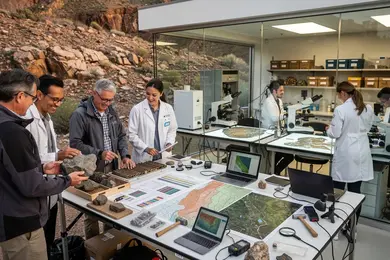
This 2026 update adds a practical review of hands-on requirements that may affect whether an online geosciences bachelor’s degree fits your schedule, location, and access to equipment.
- Whether courses include virtual labs, mailed lab kits, or required in-person lab sessions.
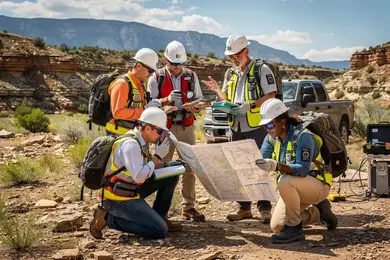
- If fieldwork can be completed locally or requires travel to a campus or approved site.
- Any required software, mapping tools, GPS access, or computer specifications.
- Safety training, liability forms, or supervision rules for outdoor field activities.
- How weather, location, or work schedules may affect required observations or field assignments.
- Whether lab or field components must be completed in a specific course sequence.
Checking these details early helps students avoid enrollment surprises and choose a program whose online format still supports the practical skills expected in geosciences.
Do Online Geosciences Bachelor's Degree Programs Require SAT or ACT Test Scores?
Many online bachelor's degree programs in geosciences, particularly those designed for adult learners or transfer students, have adopted test-optional or test-free admissions since 2020. This approach helps lower barriers related to standardized tests and broadens access to higher education.
Still, some programs request SAT or ACT scores, especially for specific purposes like awarding merit-based scholarships or placing students in honors tracks.
Selective geosciences programs often use test scores as part of a comprehensive review to evaluate academic readiness and to differentiate among applicants. Publicly available data from accredited institutions typically show competitive SAT scores in the 1200-1350 range or ACT composites between 25 and 29 for these cases.
Because admission policies have changed rapidly over recent years, it is important for applicants to check each school's website or contact admissions offices directly. Requirements can also vary based on whether you are a recent high school graduate or an adult learner returning to complete a degree.
- Test-Optional Policies: Many programs, especially those aimed at working adults, do not require test scores, easing the application process for those who have been out of school for some time.
- Scholarships and Honors: Test scores can help secure financial aid or placement in advanced coursework, so submitting them may be advantageous if you qualify.
- Selective Admissions: Competitive geosciences degrees may require scores to assess applicants holistically and ensure academic preparedness.
- Score Benchmarks: Typical expectations for strong applicants include SAT totals between 1200-1350 and ACT scores ranging from 25 to 29.
- Verify Individual Policies: Given the evolving landscape, always confirm testing requirements directly with your chosen programs to avoid surprises during application.
Since 2020, over two-thirds of four-year colleges in the U.S. have embraced test-optional admissions, reflecting a nationwide shift toward more flexible evaluation methods for undergraduate students.
A professional who enrolled in an online geosciences bachelor's program to change careers shared that navigating admissions without recent test scores was initially nerve-wracking. He recalled, "I worried whether not submitting SAT or ACT scores would hurt my chances, but the school's flexible policy lifted a big weight off my shoulders."
He mentioned that focusing on his prior college credits and relevant work experience during the application highlighted his readiness. He noted that reaching out to the admissions office early clarified which documents mattered most, making the process smoother and more manageable.
How Many Total Credit Hours Are Needed to Complete an Online Geosciences Bachelor's Degree?
Most accredited online geosciences bachelor's degree programs require about 120 total credit hours for graduation, though some specialized tracks may demand between 128 and 130 credits depending on the major. These credits are typically divided among general education, core major courses, electives, and capstone or practicum experiences that help students apply theoretical knowledge practically.
Knowing the difference between semester credit hours (SCH) and quarter credit hours is essential, as some schools operate on a quarter system where credits are roughly two-thirds of semester credits. Students should carefully verify how credits transfer between these systems to prevent gaps in degree progress.
Many programs accept prior learning credits such as AP scores or CLEP exam results, which can reduce the overall credit hours required, accelerating completion and lowering tuition costs. Transfer students benefit from early communication with admissions to confirm which credits apply toward their geosciences degree.
This planning is especially vital in making sure smooth transitions and proper credit evaluation.
Those exploring options should also consider how credit requirements impact their eligibility and affordability. For instance, you might compare credit load and costs with an online cyber security degree to assess the best investment in education relevant to your goals.
- Credit Hour Requirements: Most online geosciences degrees require around 120 credits, but specialized majors might need up to 130 credits depending on curriculum demands.
- Credit Distribution: Credits usually cover general education, major coursework, electives, and practical capstone or internship projects that enhance applied skills.
- Semester vs. Quarter Credits: Understanding whether your school uses semester or quarter hours is critical to accurately transfer and interpret your academic credits.
- Prior Learning Credits: AP, CLEP, or transfer credits can reduce total required hours, speeding up degree completion and reducing costs.
- Transfer Student Planning: Early engagement with admissions offices helps ensure transfer credits align with program requirements, avoiding delays.
What High School Courses or Prerequisites Are Required Before Enrolling in an Online Geosciences Bachelor's Degree?
High school preparation for online geosciences programs often hinges on completing certain core courses that lay the groundwork for college-level studies. Essential subjects usually include algebra and geometry, as math skills that are vital for data interpretation and scientific calculations.
Biology, chemistry, and earth science classes form the scientific basis necessary for understanding geoscientific concepts. English composition or language arts courses are required to help develop clear communication skills crucial for writing and presenting research findings.
While courses in social studies or geography are not strictly required, they can deepen a student's contextual knowledge of environmental systems and earth science topics. Students who take advantage of dual enrollment or community college classes during high school may fulfill some prerequisites early, accelerating their degree progress.
For those who haven't completed all necessary courses, many programs offer remedial or bridge classes, but these can extend the length of study.
- Core Math and Science: Completing algebra, geometry, biology, chemistry, and earth science establishes the critical foundation needed for geosciences coursework.
- English Skills: English composition or language arts classes develop essential writing and communication abilities required in the field.
- Optional Social Studies: Geography or environmental science classes are beneficial but generally not mandatory for admission.
- Early Credit Options: Dual enrollment and community college courses in high school can satisfy prerequisites and reduce time to degree.
- Bridge Courses Availability: Programs may offer remedial classes to cover missing prerequisites, which might lengthen your study plan.
One professional who built a career after completing an online geosciences bachelor's program shared how navigating prerequisite requirements was initially overwhelming. She recalled, "Not having all the recommended science courses at first felt like a setback, but the bridge courses were well-structured and helped fill those gaps."
The flexibility of online study allowed her to carefully plan her schedule, balancing coursework with work and family obligations. This experience taught her the importance of checking with admissions early to map out the most efficient path and avoid surprises during enrollment.
Can Transfer Credits Count Toward an Online Geosciences Bachelor's Degree, and How Many Are Accepted?
Most accredited institutions generally accept between 60 and 90 transfer credits toward a bachelor's degree, though exact limits depend on each school's policy. Schools with transfer-friendly approaches, such as those partnering with community colleges through 2+2 articulation agreements, often allow more transfer credits to facilitate an easier transition.
Conversely, some universities enforce tighter transfer credit restrictions, especially for specialized programs like geosciences, to preserve degree rigor and relevance.
The process of evaluating transfer credits involves several key considerations. Registrars review official transcripts to assess course content, academic level, and credit hours, determining whether previous coursework matches the requirements of the specific geosciences program.
Not all courses transfer equally. Only credits from courses closely related to geosciences are typically accepted, while general education classes often transfer more readily than those focused on technical or major-specific topics. These distinctions maintain consistency and standards within the degree program.
Prospective students are strongly advised to request an official transfer credit evaluation during admissions. This step clarifies how many credits will apply toward their degree, preventing surprises or the need for additional coursework later.
- Transcript Evaluation: The registrar examines official transcripts to verify course relevance, academic level, and credit hours, ensuring alignment with geosciences program criteria.
- Course Equivalency: Transfer credits must closely match the subject matter of geosciences courses; general education credits transfer more easily than specialized courses.
- Credit Limits: Most institutions cap transferable credits between 60 and 90 to maintain academic standards and degree integrity.
- Official Transfer Review: Requesting a formal evaluation prior to enrollment helps students understand credit applicability and avoid unexpected academic requirements.
Recent studies show that nearly 40% of undergraduate students in STEM fields transfer credits from other schools, emphasizing the importance of understanding transfer policies early in the enrollment process.
Does Accreditation Status Affect Admission Requirements for an Online Geosciences Bachelor's Degree?
Accreditation status is a critical factor in admission requirements for an online Geosciences bachelor's degree, impacting transfer credits, degree recognition, and career prospects.
- Institutional Accreditation: This involves regional or national accreditation by agencies recognized by the Council for Higher Education Accreditation (CHEA) or the U.S. Department of Education. Attending a regionally accredited institution is vital because it directly influences transfer credit acceptance and the degree's value in the job market.
- Programmatic Accreditation: Some Geosciences programs hold extra discipline-specific accreditation. These accreditors often enforce stricter admission criteria and curriculum standards to ensure specialized academic and industry expectations are met.
- Credit Transferability: Credits from regionally accredited schools are more widely accepted by other institutions, facilitating smoother transfers or graduate study pathways.
- Employer and Licensing Recognition: Degrees from accredited programs are typically necessary for employment in government or private sectors and for professional licensing in certain Geosciences fields. Without proper accreditation, graduate opportunities and licensure eligibility can be limited.
- Admission Criteria Impact: Accreditation status can affect minimum GPA requirements, prerequisite coursework, and standardized test policies. Programs with higher accreditation often have more competitive admissions.
- Research Importance: Prospective students should verify a school's accreditation before applying, since unaccredited degrees may not be recognized by graduate schools or qualify for financial aid.
About 87% of students enrolled in online bachelor's degree programs attend regionally accredited institutions, highlighting the strong preference for reputable and recognized online education in science fields like Geosciences.
What Documents Do You Need to Apply for an Online Geosciences Bachelor's Degree Program?
Applying to an online bachelor’s degree program usually requires submitting a standard set of documents that help schools evaluate your academic background and readiness. Prepare in advance to make the application process smoother and to stay organized.
- Official Transcripts: Most online geosciences bachelor's degree programs require official high school transcripts to verify your academic background. If you have college credits, official college transcripts will also be necessary. These documents must be sent directly from your school to the admissions office; unofficial copies are rarely accepted for final evaluation. Including these in your documents required for applying to an online geosciences bachelor's degree is critical for a successful application.
- Identification Documents: A valid government-issued photo ID, such as a passport or driver's license, is essential to confirm your identity. This requirement ensures compliance with enrollment policies and verifies that the applicant is the actual student seeking admission.
- Application Essays: Many programs ask for essays to understand your motivation and career goals in geosciences. These may include personal statements or responses to specific prompts. Essays provide admissions committees with important context about your suitability and commitment.
- Additional Requirements: Selective geosciences programs sometimes require a portfolio showcasing research projects or fieldwork. Letters of recommendation from instructors or employers and a résumé highlighting your academic and professional background can strengthen your application. Check detailed application checklist for online geosciences bachelor's programs early to avoid surprises.
- Official vs. Unofficial Documents: Official documents are certified by issuing institutions and sent directly to the university, while unofficial versions are scanned or photocopied. Though some schools accept unofficial copies for preliminary review, official ones are mandatory before enrollment. International students must provide certified English translations of transcripts and records from non-English-speaking countries.
- Timing and Preparation: Begin gathering all application materials 3 to 4 months before your intended start date. Many online programs offer rolling admissions, but others have fixed semester deadlines. Starting early allows time to request transcripts, secure recommendations, and translate documents if needed to prevent delays.
- Financial Aid and Affordability: Investigate financial aid options and plan the most cost-effective route to your degree. For guidance on affordable programs, reviewing ABA accredited paralegal programs can provide insight into credentialing and cost management strategies applicable across online degrees.
Are There English Language Proficiency Requirements for Non-Native Speakers Applying to an Online Geosciences Bachelor's Degree?
Most accredited U.S. online geosciences bachelor's degree programs require non-native English speakers to demonstrate English language proficiency. This ensures students can engage fully with course materials and communicate effectively in an academic setting, which is critical for success.
Tests commonly accepted include the TOEFL iBT, IELTS Academic, and the Duolingo English Test, each with minimum score requirements that vary by institution.
- TOEFL iBT Scores: Undergraduate applicants typically need scores between 61 and 80 on the internet-based TOEFL. These scores reflect sufficient skills in reading, writing, listening, and speaking necessary for college-level geosciences coursework.
- IELTS Bands: Programs generally require an overall band score ranging from 6.0 to 6.5 on the IELTS Academic exam, confirming students' ability to follow lectures, complete assignments, and participate actively in discussions.
- Duolingo English Test: Increasingly recognized, a minimum score near 90 is often accepted. This test offers a convenient online option that measures practical English abilities.
- Exemptions: Students from English-speaking countries such as the United States, Canada, the United Kingdom, Australia, and New Zealand are usually exempt from submitting test scores. Additionally, those who completed several years of secondary or postsecondary education in an English-language institution are often waived.
- Conditional Admission: Some online geosciences programs provide conditional acceptance combined with ESL bridge or language support programs. This allows students to improve proficiency before fully enrolling in degree coursework.
It is vital for prospective students to verify specific English language proficiency requirements within the chosen geosciences online program. Asking about available support services and conditional admission options helps ensure meeting admission standards and positions students for a smoother degree path.
This attention to detail, alongside understanding minimum GPA and test score policies, can support credit-efficient progress and affordable completion.
For those also considering creative fields, exploring the best online graphic design programs could provide additional flexible educational opportunities.
Do Online Geosciences Bachelor's Degree Programs Accept CLEP Exams or Prior Learning Credits?
The College-Level Examination Program (CLEP) offers a way to earn undergraduate credits by passing exams with a score of 50 or higher, as endorsed by the American Council on Education (ACE). Over 2,900 colleges accept CLEP credits, helping students accelerate their academic progress. Acceptance of CLEP credits in online geosciences bachelor's programs varies by institution-some apply these credits to major requirements, while others restrict them to general education only.
- Clep Acceptance Varies: Policies differ widely; some programs allow CLEP to cover core geosciences courses, whereas others limit it to elective or general education credits, affecting how much coursework can be waived.
- Alternative PLA Options: Besides CLEP, prior learning assessments include DANTES/DSST exams, portfolios, and credits for military service, certifications, or relevant professional experience, all aimed at proving college-level knowledge.
- Institutional Policies: Each university enforces specific limits on the amount and type of prior learning credits accepted. It's vital to consult the program catalog or admissions for details before applying.
- Early Communication: Contacting the registrar or academic advisors early helps clarify how prior credits may shorten your degree timeline and lower tuition expenses.
Are There Residency or In-State Tuition Requirements That Affect Enrollment in an Online Geosciences Bachelor's Degree?
Many public universities offer in-state tuition rates to online students regardless of where they live, often through participation in the State Authorization Reciprocity Agreement (SARA). This agreement enables institutions in member states to provide online programs to students across state lines without needing separate approval from each state's education authorities.
SARA simplifies access to affordable education for learners pursuing a geosciences bachelor's degree remotely.
Despite this, some schools still require out-of-state students to pay higher tuition for online courses. Checking each institution's tuition policy before enrolling is essential to avoid unexpected expenses. Students aiming to qualify for in-state tuition may need to submit documentation proving residency.
Typical proofs include recent utility bills, voter registration cards, and valid driver's licenses, all verifying a genuine connection to the state offering the program.
- State Authorization Reciprocity Agreement (SARA): SARA streamlines authorization by allowing member institutions to enroll out-of-state online students without additional state permissions.
- In-State Tuition Access: Many public universities extend in-state tuition through SARA, but policies differ, so students should verify costs upfront.
- Residency Documentation: To confirm eligibility for in-state rates, submitting utility bills, voter registration, or driver's licenses may be required to prove residency.
- Verify Tuition Policies: Contact admissions before enrollment to clarify whether out-of-state fees apply for online geosciences degree programs.
What Graduates Say About Preparing for the Online Geosciences Bachelor's Degree Requirements
- Andrea: "Pursuing my online geosciences bachelor's degree was a game-changer for me because I took the time to fully understand the admission requirements before applying. Knowing exactly what was expected allowed me to prepare my application without stress and get accepted smoothly. The clear credit policies also helped me transfer several credits from my previous studies, which accelerated my progress and motivated me to complete my degree on time."
- Christine: "Reflecting on my experience, one of the biggest takeaways was how crucial it is to grasp the eligibility criteria upfront. It ensured I chose the right online geosciences program that matched my academic background and career goals. This program significantly bolstered my professional opportunities by providing practical skills and knowledge I now apply daily in my environmental consulting job."
- Michael: "From a professional standpoint, understanding the exact admission criteria and credit transfer policies made all the difference. It allowed me to chart a clear path through my online geosciences bachelor's degree and avoid surprises that could have delayed my graduation. The degree not only expanded my expertise but also opened doors to leadership roles in the energy sector, confirming it was the right investment."
Other Things You Should Know About Geosciences Degrees
In 2027, students in online geosciences bachelor's programs typically have access to federal financial aid, scholarships, grants, and possibly employer tuition reimbursements. Prospective students are advised to fill out the FAFSA to explore federal aid eligibility and consult their institution's financial aid office for specific options.
Students typically need a reliable computer with internet access, a webcam, and updated web browsers. Software requirements often include GIS programs, statistical analysis tools, and access to digital mapping applications relevant to geosciences. Many schools recommend or require a computer that can run these specialized applications smoothly.
Adult learners and working professionals may face flexible admission standards such as accepting prior work experience or offering credit for prior learning assessments. Many programs have rolling admissions and do not require standardized test scores like the SAT or ACT. However, evidence of college readiness, such as a minimum GPA or completed prerequisites, is still typically necessary.
References
- Online BS in Geography and Environmental Science | Texas State https://online.txst.edu/degrees/undergraduate/bachelor-geography-environmental-studies/
- Admission requirements | Admission and application | Geo-information Science and Earth Observation https://www.itc.nl/education/study-finder/geo-information-science-earth-observation/admission-and-application/
- World's Largest platform as University Common Application https://www.planstudyabroad.uniagents.com/course-details.php
- Bs In Environmental Science Geology https://www.gotouniversity.com/programs/bachelors/united-states-of-america/environmental-studies-and-earth-sciences/environmental-sciences/kutztown-university-of-pennsylvania/bs-in-environmental-science-geology
- Education https://www.ohsu.edu/education/oregon-residency-state-tuition
- Bachelor of Geoscience - Study Abroad Updates https://studyabroadupdates.com/courses/bachelor-of-geoscience/
- ACT/SAT Optional List for Fall 2025 - Fairtest https://fairtest.org/test-optional-list/
- In-State Tuition and State Residency Requirements - Finaid https://finaid.org/otheraid/stateresidency/
- Curriculum Accreditation Needed: Commentary https://www.aapg.org/news-and-media/details/explorer/articleid/672/curriculum-accreditation-needed--
- Pikes Peak State College, PPSC https://www.pikespeak.edu/admissions/records/transcripts/cpl.php