2027 Online Geosciences Bachelor's Degree Programs With No Prerequisites

Co-Founder and Chief Data Scientist
Many aspiring professionals face barriers when shifting careers to geosciences due to prerequisite requirements, limiting access for those without a related background. This challenge especially affects working adults seeking flexible options to enter a fast-growing field. Employment projections indicate a 6% growth in geoscientist jobs through 2031, underscoring rising demand for skilled workers without traditional academic pathways. Online geosciences bachelor's degree programs with no prerequisites offer a practical solution by allowing students to start directly in geosciences coursework. This article explores these accessible programs, providing guidance for individuals aiming to transition smoothly and build credentials for geosciences careers.
Key Benefits of Online Geosciences Bachelor's Degree Programs With No Prerequisites
- Online geosciences bachelor's programs offer flexible scheduling, enabling working professionals to balance studies with careers and personal commitments efficiently.
- These programs facilitate accelerated skill acquisition, allowing students to rapidly build expertise through focused, competency-based coursework.
- No-prerequisite enrollment lowers barriers, helping learners earn valuable geosciences credentials within timelines and budgets tailored to their unique life circumstances.
What Does 'No Prerequisites' Mean for Online Geosciences Bachelor's Degree Programs, and Who Benefits Most?
The term "no prerequisites" in online bachelor's degree programs in geosciences means students can enroll without completing specific prior coursework or demonstrating knowledge in related fields. This is distinct from open admission, which generally allows anyone with a high school diploma or equivalent to apply, and low-barrier enrollment, which reduces but does not entirely remove prior requirements. No-prerequisite programs specifically waive foundational course demands, enabling faster entry into geosciences studies.
Those who gain the most from no prerequisite online geosciences bachelor's degree programs include career changers entering geosciences without previous science coursework, working adults balancing jobs and family who need flexible pathways, returning learners resuming education without repeating past requirements, and first-generation college students uncertain about prerequisite qualifications. The National Center for Education Statistics (NCES) notes increasing non-traditional student enrollment-older students, part-time attendance, and delayed starts-which heightens demand for such accessible programs.
Understanding no-prerequisite online geosciences degrees helps prospective students identify programs tailored to their unique backgrounds and schedules, minimizing delays in starting their academic journey. This article covers key topics vital to making informed decisions:
- Admission Flexibility: Waiving prerequisite courses broadens access for students with varied educational histories and life circumstances.
- Student Profiles: Highlights groups like career changers and first-generation students who benefit most from no-prerequisite pathways.
- Quality and Accreditation: Examines how programs maintain academic rigor and recognized standards despite waiving traditional entry requirements.
- Support Services: Discusses tutoring, advising, and resources designed specifically for non-traditional online geosciences students.
Additionally, students should explore financial aid options, credit transfer policies, and career outcomes when choosing no-prerequisite geosciences bachelor's degrees. For those also considering business education, programs like the cheapest mba online provide affordable alternatives to advance career prospects alongside their geosciences studies.
Which Accredited Online Geosciences Bachelor's Programs Accept Students With No Prior College Coursework?
Several regionally accredited institutions now offer online geosciences bachelor's degree programs designed specifically for students with no prior college coursework. These programs leverage open-admission policies or include foundational courses to bridge academic gaps, making them ideal for first-generation students, working adults, or career changers seeking new opportunities. This approach enables easy entry into geoscience fields without traditional prerequisites.
- Liberty University: Liberty offers a Bachelor of Science in Environmental and Earth Science that requires no strict prerequisite coursework, accepting students directly from high school or those without prior credits. The program supports over 95,000 enrolled students with comprehensive academic advising and 24/7 tutoring services to help new learners transition smoothly.
- Southern New Hampshire University (SNHU): SNHU's Bachelor of Science in Environmental Science admits students without prior college experience and provides optional bridge courses for foundational skills. Accredited regionally, it serves over 135,000 students and emphasizes financial aid support and credit transfer options to accelerate completion.
- University of Alaska Fairbanks (UAF): UAF's online Bachelor of Arts in Geosciences allows open admission without prior coursework, offering preparatory modules as alternatives to traditional prerequisites. With strong federal financial aid options and regional accreditation, the program caters well to adult learners and career changers.
- Fort Hays State University: This public university features an online Bachelor of Science in Environmental Geosciences tailored for students beginning fresh academically. It provides foundational courses for core scientific skills while prioritizing affordability and credit transfer flexibility within its regionally accredited framework.
- Missouri State University-West Plains: Offering a fully online Bachelor of Science in Geosciences, this institution accepts students with no college credits and provides bridge courses to build readiness. Regional accreditation and dedicated financial aid counseling ensure strong support for non-traditional students.
Programs that waive prerequisites typically emphasize open-admission policies paired with extensive academic support, while others incorporate bridge courses as structured pathways to develop necessary skills before advancing. All legitimate no-prerequisite online geosciences programs maintain regional accreditation, ensuring recognized quality and smooth credit transfer. When selecting an online geosciences bachelor's degree for students with no prior coursework, it is crucial to verify accreditation status, evaluate financial aid availability, assess student support services, and review credit transfer policies to find programs genuinely accommodating new learners yet meeting professional standards.
For those interested in related fields, exploring affordable online engineering programs can provide additional career pathways and flexible study options alongside geosciences.
2026 Update: Fieldwork and Lab Readiness for Online Geosciences Students
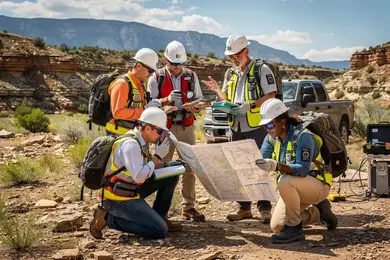
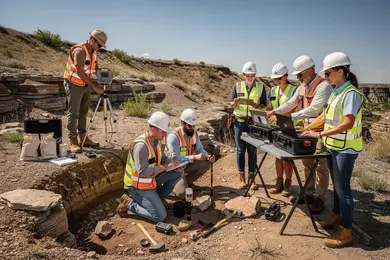
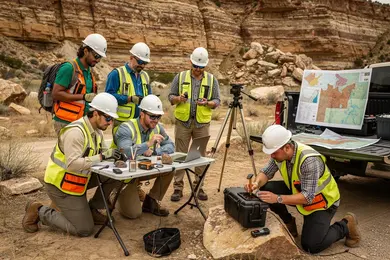
For 2026, this section adds a practical check on how no-prerequisite online geosciences programs handle the hands-on work that is often essential in earth science training.
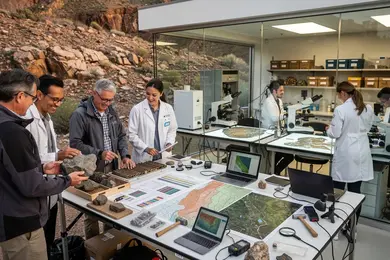
- Whether lab courses use mailed kits, virtual simulations, local site observations, or scheduled campus visits
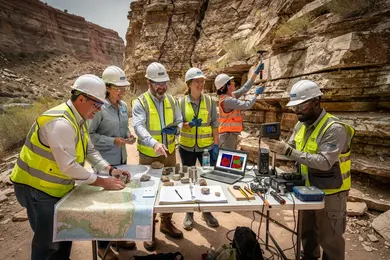
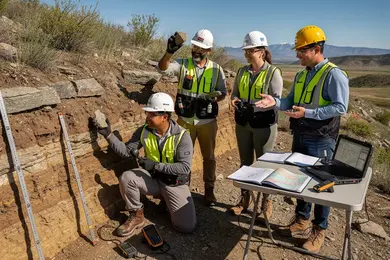
- Any required field experiences, including travel, weekend sessions, or supervised local field assignments
- Technology expectations, such as GIS software access, mapping tools, or computer performance requirements
- How beginners are introduced to rock, mineral, soil, water, or climate data analysis without prior coursework
- Whether lab and fieldwork costs are included in tuition or billed separately
- How working adults can complete hands-on requirements around job or family schedules
Checking these details helps students choose a no-prerequisite program that is not only accessible, but also realistic for their location, schedule, and career goals in geosciences.
How Do Open-Admission Policies in Online Geosciences Programs Differ From Traditional Selective Admissions?
Open-admission policies in online geosciences bachelor's degree programs allow enrollment for students without requiring prior coursework, minimum GPAs, or standardized test scores. This contrasts with selective admission models that evaluate applicants' academic history, prerequisite completion, or conditional acceptance based on specific criteria. Some institutions in the California State University system explicitly state their open-admission approach on admissions webpages and confirm their open-access status through IPEDS data, exemplifying transparent, low-barrier pathways.
- Admission Flexibility: Open admission eliminates many entry restrictions, welcoming a broader range of applicants who hold a high school diploma or equivalent, unlike rolling or conditional admissions that impose ongoing or contingent requirements.
- Varied Academic Preparedness: Students entering through open access often have diverse backgrounds and readiness levels. To address this, many schools provide developmental courses, placement tests, or orientation sessions to bolster foundational skills.
- Support Structures: Comprehensive advising, tutoring, and academic workshops are common, helping students adapt to the program's demands and improve retention.
- Alignment with Goals: While open admission expands accessibility, prospective students should evaluate if the program's pace and supports fit their professional goals and motivation, as self-discipline is critical for success.
Recent figures from the National Center for Education Statistics indicate nearly 30% of online bachelor's degree programs nationwide offer open or minimally selective admissions, highlighting growing emphasis on flexible educational access without lowering standards.
A professional who sought a career change through an online geosciences bachelor's degree with no prerequisites described the process as both liberating and challenging. He appreciated the ability to enroll without prior credits, but initially felt overwhelmed by the academic expectations and the need for self-driven learning. He noted that support services like tutoring and orientation were essential in building his confidence and bridging skills gaps. "It wasn't just about getting in," he explained, "it was about staying on track with the right help, since I didn't have a traditional college background." This experience reflects the trade-offs inherent in open-admission programs-accessibility paired with the necessity of commitment and available resources to succeed.
What Are the Typical Enrollment Requirements for No-Prerequisite Online Geosciences Bachelor's Programs?
Here are some of the enrollment requirements for online geosciences bachelor's degree programs with no prerequisites:
- Proof of High School Completion: Most programs require applicants to show evidence of a high school diploma or equivalent, such as a GED, confirming readiness to engage in college-level studies. This standard holds true even for schools with open admission policies for online geosciences bachelor's programs and is particularly common among public and nonprofit private institutions.
- English Proficiency: Since coursework is conducted in English, non-native speakers must verify their language skills through recognized tests like TOEFL or IELTS, or by demonstrating prior education completed in English. This requirement ensures students can successfully navigate program materials and assignments.
- Minimum Age Requirements: Generally, students must be at least 18 years old to enroll, aligning with legal and academic responsibilities. Some institutions offer dual-enrollment options that allow younger high school students to begin college studies early, often reducing total graduation time and easing enrollment criteria.
- Alternative Pathways: Applicants who do not meet standard high school completion requirements can pursue a GED or participate in dual-enrollment programs. These routes help expand access and accommodate those navigating no-prerequisite geosciences degrees online.
- Application Preparedness: Efficiently gathering transcripts, IDs, test scores, and required certificates streamlines admission. Engaging with admissions offices early clarifies program-specific criteria and deadlines, boosting chances for smooth entry. For working adults or career changers, reviewing options like an accelerated business management degree can also complement geosciences studies or career goals.
Are No-Prerequisite Online Geosciences Bachelor's Programs Available at Regionally Accredited Universities?
Regional accreditation guarantees that an online geosciences bachelor's program meets established academic standards, which impacts credit acceptance, employer credibility, and qualification for federal financial aid. Using the U.S. Department of Education's accreditation database and the Council for Higher Education Accreditation directory can help identify regionally accredited institutions offering accessible programs without formal prerequisites. Unlike national accreditation, which tends to focus on vocational training and may limit credit transfer, regional accreditation ensures a more respected and portable degree.
Many regionally accredited schools offer open admission or low-barrier enrollment in geosciences, permitting students without prior college coursework to start directly while benefiting from academic support and financial assistance.
- Accreditation Status: Confirm the institution's recognition by checking trusted government and CHEA sources to ensure program legitimacy.
- Prerequisite Policy: Verify that admission requirements explicitly allow entry without previous college classes.
- Credit Transfer: Assess whether earned credits can be transferred to other regionally accredited colleges or applied toward advanced degrees.
- Financial Aid Eligibility: Ensure the program qualifies for federal aid, generally tied to regional accreditation status.
A professional who completed an online geosciences bachelor's degree without prerequisites shared that despite initial doubts about taking a nontraditional route, the regionally accredited program offered her confidence in the quality of her education. She recalled the relief of accessing solid academic advising and financial aid that eased her transition back into college life. "It wasn't just about getting the degree," she reflected, "but about feeling supported every step of the way." This experience affirmed the value of choosing a program that balances accessibility with recognized academic standards.
How Do Students Without Academic Prerequisites Catch Up in Online Geosciences Bachelor's Courses?
Students entering online geosciences bachelor's programs without formal academic backgrounds can access a variety of support services designed to strengthen essential skills in mathematics, science, and critical thinking. These resources help prepare learners for success in advanced coursework by addressing foundational knowledge gaps.
- Developmental Courses: Accredited institutions often provide introductory or remedial classes covering key topics such as algebra, earth science, and statistics. For example, Southern New Hampshire University offers STEM foundational courses that prepare students to tackle core geosciences subjects effectively.
- Tutoring Services: Both individual and group tutoring sessions-frequently available online-aid students in mastering challenging concepts and cultivating productive study techniques. Oregon State University, for instance, delivers free virtual tutoring tailored to nontraditional student needs.
- Peer Mentoring: Connecting new learners with experienced students through mentoring programs fosters academic guidance and support in navigating digital learning environments. This interaction contributes significantly to increased engagement and retention.
- Bridge Programs: Designed especially for career changers and returning students, these targeted programs combine geoscience content with academic skill-building, such as research and writing. The University of Arizona's bridge courses exemplify this integrated approach.
- Self-Assessment Tools: Prospective enrollees are encouraged to complete readiness quizzes and orientations to evaluate their preparedness. Early engagement with such materials is linked to better academic performance and reduced attrition rates.
- NSSE Findings: Data from the National Survey of Student Engagement indicates that online cohorts benefiting from comprehensive academic support demonstrate notably higher retention and graduation rates, reinforcing the importance of these services.
- Enrollment Trends: A 2023 study revealed an 18% increase in enrollment for no-prerequisite online geosciences programs, reflecting a growing demand for accessible STEM education pathways.
What Support Services Help No-Prerequisite Students Succeed in Online Geosciences Bachelor's Programs?
Students pursuing online geosciences bachelor's degrees with no prerequisite requirements often benefit from comprehensive support services designed to boost academic success and retention. Many top-ranked programs, including those recognized by U.S. News Best Online Bachelor's Programs rankings and student satisfaction surveys, prioritize a strong infrastructure that addresses both educational and personal needs.
- Academic Advising: Personalized, accessible advising helps students select courses wisely, plan their degree path, and navigate transfer credits. Advisors meet virtually or communicate asynchronously to accommodate diverse schedules.
- Mental Health Resources: Confidential counseling through telehealth platforms supports students balancing school, work, and family responsibilities-promoting well-being and reducing stress.
- Disability Accommodations: Programs comply with ADA standards by providing adaptive technologies and specialized support without creating barriers, offering faculty training to assist students with varied learning needs.
- Career Counseling: Virtual workshops, resume reviews, and employer networking specific to geosciences help students transition confidently from education to employment.
These student success services are often offered asynchronously to fit the busy lives of working adults and first-generation students. Data shows institutions with strong virtual student supports can see retention rates increase by up to 20% compared to programs with fewer resources. Choosing an online geosciences program committed to robust support reduces dropout risks and strengthens the pathway to degree completion.
Can Transfer Credits or Prior Learning Assessments Replace Prerequisites in Online Geosciences Programs?
Online geosciences bachelor's programs often permit transfer credits and Prior Learning Assessments (PLAs), such as CLEP and DSST exams, to replace prerequisite coursework. These options allow students to bypass introductory classes, shortening degree completion times and reducing tuition costs. Many institutions apply the American Council on Education (ACE) credit recommendation framework, which evaluates military training, workplace education, and professional certifications relevant to geosciences. This framework standardizes credit acceptance and acknowledges experiential knowledge from diverse sources.
Those seeking programs with no prerequisite coursework can benefit from flexible transfer credit policies. Schools like Thomas Edison State University and the University of Maryland Global Campus accept up to 90 transfer or PLA credits, showcasing their flexibility for adult learners and career changers. For students exploring transfer credit policies for no prerequisite online geosciences programs, assembling thorough documentation-including transcripts, military records, and professional certificates-bolsters the chance of prerequisite waivers. Combining detailed portfolios with formal PLA exams often maximizes credit awarded.
According to the National Center for Education Statistics, nearly 48% of undergraduate students at public institutions successfully use transfer credits or PLAs to accelerate their degrees-a trend especially prominent among working adults returning to education. Working adults interested in a fast, affordable path might also consider a masters degree in 6 months to advance their qualifications promptly.
- Transfer Credit Options: Accredited community college courses and prior college-level credits can fulfill prerequisites, easing transitions for students entering geosciences from other fields.
- Prior Learning Assessment (PLA): Exams like CLEP and DSST assess external knowledge and grant credit that substitutes foundational coursework, valuable for those returning to school.
- ACE Credit Recommendations: This standardized system reviews military and workplace learning relevant to geosciences, facilitating smoother credit transfers.
- Flexible Institutional Policies: Universities allowing high credit acceptance limits empower students to leverage prior learning to waive prerequisites.
- Documentation Requirements: Well-organized transcripts, certificates, and portfolios improve outcomes in prerequisite credit evaluations.
- Cost and Time Efficiency: Using transfer credits and PLAs significantly shortens degree timelines and reduces tuition expenses for geosciences students.
What Is the Average Time to Completion for No-Prerequisite Online Geosciences Bachelor's Degree Programs?
The average completion time for no-prerequisite online Geosciences bachelor's degrees depends heavily on the standard 120-credit-hour framework common to most bachelor's programs. Enrollment pace, term length, and any prior college credits earned play key roles in determining the typical graduation timeline for online Geosciences bachelor's programs without prerequisites, either accelerating or extending time to degree.
- Standard Credit Framework: Most no-prerequisite Geosciences online degrees require about 120 credit hours. Full-time students often finish in four years, while part-time or accelerated options can shorten or lengthen this timeline.
- Enrollment Pace and Term Length: Accredited online programs frequently offer flexible enrollment, including full-time, part-time, and year-round options. Institutions such as Southern New Hampshire University and Liberty University use accelerated eight-week terms to help students complete degrees faster.
- Competency-Based Formats: Some universities provide competency-based programs where students progress by demonstrating mastery rather than adhering to fixed semesters, significantly cutting time to graduation.
- Open vs. Selective Admission: According to IPEDS data, open-admission online Geosciences programs tend to have longer average completion times than selective-admission schools due to differences in student support and preparedness. Open admission, however, enhances accessibility for those without prior coursework.
- Cost and Opportunity Impact: Time to completion affects total tuition and opportunity costs. Shorter programs reduce these expenses, making duration an essential consideration when comparing no-prerequisite Geosciences programs.
Prospective students with lower academic credentials or gaps in preparation can explore universities for low gpa that offer accessible pathways without sacrificing program quality, accreditation, or support services.
How Does Tuition Compare Between No-Prerequisite and Standard Online Geosciences Bachelor's Programs?
Students should evaluate total degree expenses-including all tuition, fees, and remedial coursework-rather than focusing solely on per-credit tuition when deciding between no-prerequisite and traditional online geosciences programs.
- Tuition Rates: Open-admission online geosciences bachelor's programs often have per-credit-hour tuition comparable to or slightly higher than selective programs, particularly at public universities with less restrictive enrollment. Private institutions with standard admissions typically charge more per credit but may not require extra coursework.
- Additional Fees: Students in no-prerequisite programs might face extra charges for foundational or developmental classes that selective programs waive. These courses extend the total credits beyond the usual 120, increasing overall expenses.
- Institutional Type: Public universities offering open enrollment usually have lower per-credit costs than private universities with selective admission criteria. Community colleges providing bachelor's pathways might offer affordable rates but require more time to finish due to additional requirements.
- Funding Models: Selective programs at research-driven universities may leverage endowments and grants to subsidize tuition or offer scholarships, reducing student costs. Open-access programs often depend more heavily on tuition revenue, which can influence price differences.
- Program Delivery Format: Costs may vary based on format-fully online, self-paced courses might cost differently from cohort-based or hybrid models, with institutional practices affecting pricing structures.
Which Online Geosciences Bachelor's Programs Allow Students To Start Without A High School Diploma Or GED?
Many accredited online geosciences bachelor's programs welcome applicants presenting a GED or HiSET in lieu of a conventional high school diploma. These institutions typically have open-admission policies designed to expand access to students balancing work or shifting careers. Regional accreditation ensures that these degrees hold value despite alternative academic backgrounds.
- Program Recognition: Numerous regionally accredited colleges provide online geosciences degrees accepting high school equivalency credentials, supporting diverse learning pathways.
- Application Requirements: GED applicants generally follow the same process as diploma holders but must supply official equivalency documentation, such as test scores or certificates.
- Conditional Admission: Some programs may require GED students to finish preparatory courses or assessments demonstrating academic readiness prior to starting core geosciences classes.
- International Credentials: Students with foreign secondary education need to submit credential evaluations from recognized agencies to confirm equivalency for admission.
- Financial Aid Access: Eligibility for federal and state grants, loans, and scholarships extends to GED holders when enrolled in accredited and qualifying geosciences programs.
- Support Services: Tutoring, academic advising, and career counseling are commonly offered to help nontraditional students succeed in challenging geosciences curricula.
- Credit Transfers: Previous college credits can often be transferred regardless of GED status, with evaluations based on course content and accreditation.
- Employment Prospects: Graduates with accredited geosciences degrees qualify for entry-level environmental and geological positions, with accreditation bolstering employer recognition.
What Graduates Say About Their Online Geosciences Bachelor's Degree Program With No Prerequisites
- Ellie: "Choosing an online geosciences bachelor's degree with no prerequisites was a game changer for me. I appreciated how affordable the program was compared to traditional degrees, making it easier to manage my finances while studying. Since graduating, I've noticed a significant boost in my job prospects and confidence in the field."
- Quentin: "Starting my career in geosciences without any prior coursework felt intimidating, but the online program's accessibility removed that barrier. The cost-effectiveness allowed me to invest in my education without loans hanging over me. Professionally, this degree opened doors I never imagined, and I now work in a role where I'm truly making an impact."
- Jace: "The flexibility of the online geosciences program was essential for balancing work and study, especially because there were no prerequisites to worry about. Considering the low tuition, it felt like the perfect opportunity to earn my degree without financial stress. Today, I'm proud to say this degree gave me the foundational skills and credentials to advance steadily in my career."
Other Things You Should Know About Geosciences Degrees
In 2027, students enrolling in no-prerequisite online geosciences programs can access various scholarships tailored for distance learning. Many universities offer merit-based, need-based, or program-specific scholarships. Additionally, external organizations and foundations actively support students pursuing science degrees, resulting in additional funding opportunities.
Graduates can pursue roles such as environmental consultants, geological technicians, or natural resource analysts. These programs prepare students for entry-level positions in government agencies, environmental firms, and energy companies. With experience or further study, students may advance to more specialized fields like hydrology, petroleum geology, or geospatial analysis.
Quality online geosciences programs are accredited by regional accrediting bodies recognized by the U.S. Department of Education. Some may also hold specialized accreditation from science or geology-focused organizations, indicating adherence to rigorous academic standards. Accreditation ensures the program's curriculum, faculty, and resources meet industry and educational benchmarks.
References
- World's Largest platform as University Common Application https://www.planstudyabroad.uniagents.com/course-details.php
- Open Admission Online Colleges: How Do They Work? https://www.accreditedschoolsonline.org/online-colleges/open-enrollment/
- Admission rules and selection procedure steps - Faculty of Geographic and Geological Sciences NOWA https://wngig.amu.edu.pl/en/enrollment/how-to-apply/Admission-rules-and-selection-procedure-steps
- Admission to Open Access Studies https://www.fernuni-hagen.de/english/study/admissions/open-access-studies.shtml
- No diploma? No problem! - Asher College https://asher.edu/no-diploma-no-problem/
- Selective Schools and Holistic Admissions | HESA https://higheredstrategy.com/selective-schools-and-holistic-admissions/
- Cost of Online Education vs. Traditional Education [2025]: Comparison https://educationdata.org/cost-of-online-education-vs-traditional-education
- Increasing Undergraduate Interest to Learn Geoscience with GPS-based Augmented Reality Field Trips on Students’ Own Smartphones https://www.academia.edu/110036919/Increasing_Undergraduate_Interest_to_Learn_Geoscience_with_GPS_based_Augmented_Reality_Field_Trips_on_Students_Own_Smartphones
- Online College Tuition Comparison: Online vs. In-Person https://www.uagrantham.edu/blog/online-college-tuition-comparison-online-vs-in-person/
- Checklist: Taking Support for Online Students to the Next Level - Academic Impressions https://www.academicimpressions.com/checklist-taking-support-for-online-students-to-the-next-level/