2027 Online Geography Degree Programs With No Application Fee and Rolling Admissions

Co-Founder and Chief Data Scientist
Choosing an online geography degree is partly about academic fit and partly about timing: application fees, start dates, transfer credits, and financial aid deadlines can change the real cost of enrolling. The U.S. Bureau of Labor Statistics projects geographer employment to grow 3% from 2023 to 2033, so students should compare programs for both flexibility and career value. This guide is for working adults, transfer students, military learners, and first-time applicants who want to understand which no-fee, rolling-admission options are worth considering and how to avoid choosing a program for convenience alone.
Key Things You Should Know
- No-application-fee geography options can save $30 to $90 per application, but the larger financial decision is total tuition, transfer-credit acceptance, technology fees, and aid eligibility.
- Rolling admissions usually means applications are reviewed continuously, not that every term, course, scholarship, or financial aid deadline stays open indefinitely.
- Federal Student Aid lists the maximum Pell Grant at $7,395 for the 2025-26 award year, which can matter more than a waived application fee for eligible undergraduates.
Which Online Geography Degree Programs Have No Application Fee and Rolling Admissions?
The short answer is that fully online geography degrees with both a $0 application fee and rolling admissions are uncommon. Some schools offer a direct geography major, while others offer closely related geoscience, GIS, environmental studies, or spatial-analysis programs that may fit similar career goals.
The table below highlights programs that are especially relevant to students searching for online geography study with low-friction admissions. Because application-fee waivers and start-date policies can change, students should verify the current admissions page before applying.
| School | Online program | Degree level | Application fee status | Admissions pattern | Best fit |
| American Public University | BA in Geography | Bachelor's | No application fee advertised | Frequent monthly course starts with rolling-style admission review | Students who want a direct geography major with flexibility for work, military service, or transfer credits |
| American Public University | MA in Geography | Master's | No application fee advertised | Frequent monthly course starts with rolling-style admission review | Students seeking graduate study in human geography, regional analysis, GIS-related work, or public-sector planning pathways |
| Southern New Hampshire University | BS in Geosciences | Bachelor's | No application fee advertised | Rolling admission with multiple online terms | Students interested in earth systems, environmental analysis, geospatial tools, or geography-adjacent careers rather than a pure geography major |
The strongest option depends on your goal. A direct geography degree is usually better if you want coursework in human geography, regional geography, spatial thinking, and GIS. A geosciences or environmental program may be better if you want earth systems, natural resources, sustainability, or environmental data work.
Students should also compare no-fee geography programs against other flexible online pathways. For example, someone considering a later graduate credential may want to evaluate whether a broader online master could provide faster career mobility than a second bachelor's or narrowly focused undergraduate major.
How Does Rolling Admission Work for Online Geography Degree Programs?
Rolling admission means a school reviews applications as they arrive instead of waiting for one fixed deadline. For online geography programs, this can be helpful because schools with multiple start dates may allow admitted students to begin in the next available term rather than waiting for a fall-only cycle.
Rolling admission does not mean unlimited time. Programs may still have transcript cutoffs, financial aid priority dates, course registration deadlines, orientation requirements, or capacity limits in specific online courses.
The table below compares rolling admissions with fixed-deadline admissions so students can understand the real trade-offs before choosing where to apply.
| Feature | Rolling admissions | Fixed-deadline admissions | What it means for students |
| Application review | Applications are reviewed continuously or in frequent batches | Applications are reviewed after a set deadline | Rolling admission can reduce waiting time, especially for working adults |
| Start dates | Often multiple starts per year | Often tied to fall, spring, or summer entry | More start dates can help students avoid delaying enrollment |
| Scholarships | May still have priority deadlines | Usually tied to application deadlines | Students should not assume rolling admission keeps aid open |
| Course availability | Varies by term | Often planned around a cohort or semester sequence | Some geography, GIS, or lab-based courses may not run every term |
A common mistake is waiting too long because the school says applications are accepted year-round. The safer approach is to work backward from your desired start date and build in time for transcripts, transfer-credit review, financial aid processing, and advising.
Follow this sequence if you want to use rolling admissions strategically rather than reactively:
- Choose a target start date and ask the school for the final date to submit all admissions materials.
- Request official transcripts early, especially if you attended more than one college.
- Ask when transfer credits will be evaluated and whether the evaluation happens before or after admission.
- Submit the FAFSA and any institutional aid forms before priority deadlines, even if admission remains open.
- Confirm whether required geography, GIS, statistics, or science courses are available in your first term.
How Much Can Students Save by Choosing an Online Geography Degree With No Application Fee?
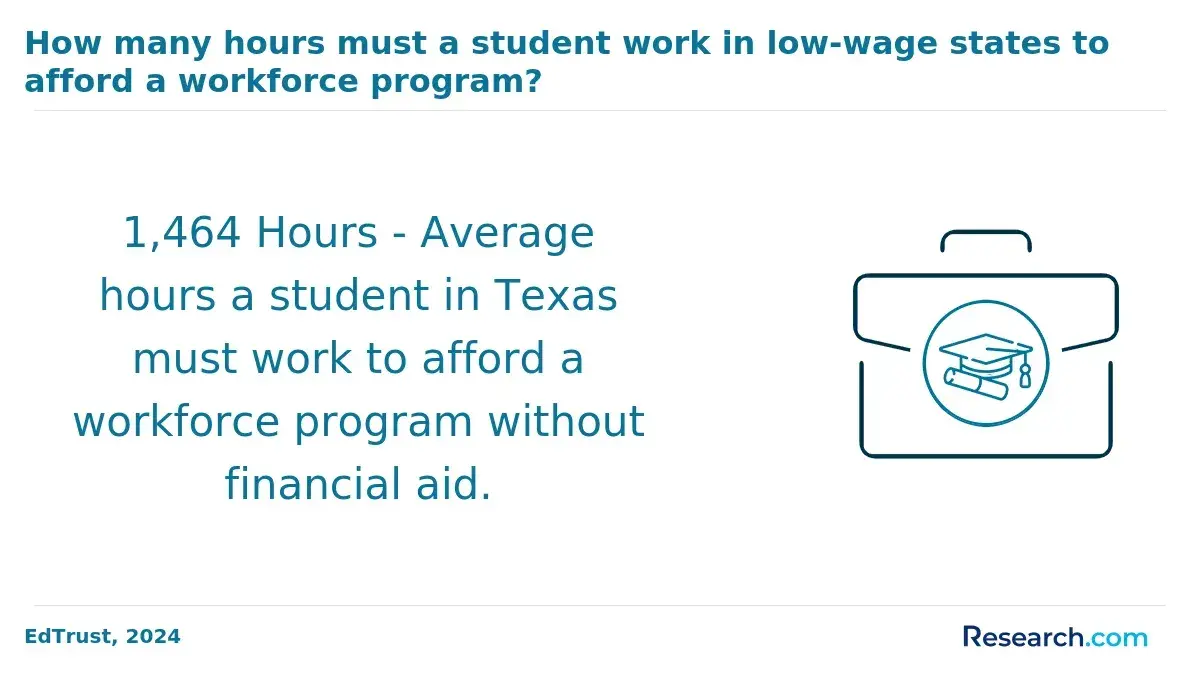
A no-fee application can help, especially if you are applying to several schools, but it rarely determines the overall affordability of a degree. Application fees at U.S. colleges commonly fall in the $30 to $90 range, so applying to four schools with $50 fees would cost $200 before you are even admitted.
That savings is useful, but it is small compared with tuition. The table below shows how application-fee savings compare with larger enrollment costs students often overlook.
| Cost category | Typical issue to check | Why it matters more than the application fee |
| Application fee | Whether the school charges $0 or waives the fee during promotions | Helpful upfront savings, but usually a one-time cost |
| Tuition per credit | Whether tuition is charged per credit, per term, or by enrollment status | The largest direct cost for most online geography students |
| Transfer credits | How many prior credits apply to the major, general education, or electives | Strong transfer acceptance can reduce both cost and time to graduation |
| Technology and course fees | Whether GIS software, labs, proctoring, or distance-learning fees apply | These costs can add up across multiple terms |
| Time to completion | Whether courses are available often enough to keep you on pace | Delays can increase living costs, opportunity costs, and loan borrowing |
A no-application-fee program is most valuable when it lets you compare multiple legitimate options without paying upfront. It is less valuable if the program has higher tuition, poor transfer-credit acceptance, weak advising, limited GIS coursework, or accreditation concerns.
The better question is not "Is the application free?" but "Will this program cost less to complete and support my career goal?" Students comparing different online majors should use the same logic they would apply to any flexible degree search, whether they are evaluating geography, business, technology, or an accelerated psychology bachelor's degree online.
What Are the Admission Requirements for No-Fee Online Geography Degree Programs?
Admissions requirements vary by school and degree level. No application fee does not mean no standards; it only means the school does not charge you to submit the application.
The table below summarizes common requirements for undergraduate and graduate online geography programs. Use it as a checklist, then confirm details with each admissions office.
| Requirement | Bachelor's programs | Master's programs | What to watch for |
| Application form | Usually required online | Usually required online | Some schools waive the fee automatically, while others require a fee-waiver code |
| Transcripts | High school, GED, and college transcripts if applicable | Official bachelor's degree transcript and possibly all prior college transcripts | Unofficial transcripts may speed review, but official copies are usually required before enrollment |
| Minimum GPA | Varies by institution | Often higher than undergraduate entry standards | Conditional admission may be available, but it can limit course load or aid timing |
| Prerequisites | Usually general education; some programs prefer math, science, or social science preparation | May expect prior geography, GIS, statistics, research methods, or related coursework | Missing prerequisites can extend the timeline |
| Recommendations or statement | Less common for open-access adult-focused programs | More common for graduate programs | A strong statement should connect geography interests to academic and career goals |
Students should pay close attention to GIS, statistics, and research-methods expectations. Geography programs increasingly overlap with data visualization, spatial analysis, remote sensing, sustainability, emergency management, and urban planning, so quantitative preparation can make the degree more useful.
Before applying, ask each school these practical questions:
- Is the application fee permanently $0, or is it a temporary waiver?
- Does rolling admission apply to the geography program specifically, or only to the university overall?
- How many start dates are available each year for the online program?
- Are GIS, cartography, remote sensing, or field methods courses fully online?
- Will transfer credits be evaluated before I commit to enrolling?
- Are there separate deadlines for scholarships, military benefits, employer tuition assistance, or federal aid?
When Should Students Apply to Online Geography Degree Programs With Rolling Admissions?
Students should apply earlier than the advertised final deadline, especially if they need financial aid, transfer-credit evaluation, military benefit processing, employer reimbursement approval, or disability accommodations. Rolling admission can shorten the admissions wait, but it does not eliminate administrative steps.
A practical timeline is to start preparing 8 to 12 weeks before your intended start date. Students with international transcripts, many transfer credits, or employer-funded tuition should allow more time.
Use this application timeline to avoid the most common rolling-admission mistake: submitting an application close to the start date and then discovering that transcripts, aid, or course registration cannot be completed in time.
- Eight to 12 weeks before start: compare programs, confirm $0 application policies, and request unofficial degree plans.
- Six to eight weeks before start: order transcripts and ask how transfer credits apply to the geography major.
- Four to six weeks before start: submit the application, FAFSA, and any required aid or benefit forms.
- Two to four weeks before start: complete orientation, advising, placement steps, and course registration.
- Before the first class: confirm technology requirements, GIS software access, textbook costs, and withdrawal deadlines.
Applying early may also give you more choice in first-term courses. This matters because some online geography programs rotate upper-level GIS, regional geography, environmental planning, or capstone courses on specific schedules rather than offering every course every term.
How Can Students Strengthen an Online Geography Degree Application?
A strong application shows that you understand what geography is and how the program connects to your goals. Geography is not only map memorization; it includes spatial analysis, human-environment interaction, GIS, regional systems, urban patterns, climate risk, logistics, public policy, and environmental planning.
If the program asks for a personal statement, resume, or graduate essay, use those materials to show readiness and direction. The following steps can help applicants stand out without overstating their experience:
- Explain which area of geography interests you, such as GIS, sustainability, urban planning, environmental risk, emergency management, population studies, or regional analysis.
- Highlight relevant coursework in statistics, earth science, environmental science, economics, sociology, computer applications, or research methods.
- Mention software exposure if you have used GIS platforms, spreadsheets, data visualization tools, coding basics, GPS data, or mapping applications.
- Connect work experience to geography, including logistics, public safety, military operations, real estate, conservation, transportation, community development, or education.
- For graduate programs, describe a focused academic or professional problem you want to study rather than giving a broad statement about liking maps or travel.
Students should also avoid submitting a rushed application just because the school has rolling admissions. Incomplete transcripts, generic statements, and unclear goals can slow review or lead to conditional admission.
Because online learners often compare programs across fields, it can help to study how other degree guides evaluate curriculum fit, admissions pacing, and outcomes. For example, resources on the architecture degree online pathway show why accreditation, portfolio expectations, and professional outcomes should be weighed alongside convenience.
Are Online Geography Degree Programs With No Application Fees Accredited and Legitimate?
Yes, a no-application-fee online geography program can be legitimate, but the fee policy itself proves nothing. Accreditation, institutional transparency, curriculum depth, faculty qualifications, student support, and transfer-credit policies are much better indicators of quality.
For U.S. students, the most important baseline is institutional accreditation from an accreditor recognized by the U.S. Department of Education or the Council for Higher Education Accreditation. Geography itself typically does not have the same kind of required programmatic accreditation that fields such as nursing, engineering, architecture, or counseling may have.
Use this checklist before applying to any online geography, geoscience, GIS, or environmental program:
- Verify institutional accreditation through an official federal or accreditor database, not only through marketing pages.
- Confirm that the exact online degree appears in the current academic catalog.
- Review the curriculum for geography-specific depth, including GIS, cartography, human geography, physical geography, methods, or capstone work.
- Check whether the school publishes tuition, fees, refund policies, transfer-credit rules, and student complaint procedures clearly.
- Ask whether any courses require campus visits, synchronous attendance, fieldwork, proctored exams, or specialized software.
- Be cautious if admissions pressure is high, graduation promises sound guaranteed, or job placement claims lack evidence.
Legitimacy also depends on your career target. A geography degree can support roles in GIS, planning support, environmental analysis, logistics, market research, education, or public agencies, but some careers may require additional certification, licensure, graduate study, or technical experience.
This is similar to other online professional-degree searches: convenience matters, but it should not outrank accreditation and outcomes. Students comparing education leadership pathways, for example, often evaluate accreditation and cost carefully when reviewing the best EdD programs online.
How Do Financial Aid and Total Costs Compare Among Online Geography Degree Programs?
Total cost depends on tuition, credits required, transfer credits accepted, fees, books, software, and the time it takes to finish. A $0 application fee is helpful, but eligible undergraduates may see a much larger impact from federal, state, institutional, military, employer, or transfer-credit savings.
Federal Student Aid lists the maximum Pell Grant at $7,395 for the 2025-26 award year. That figure is important because a student who qualifies for need-based aid may reduce net cost far more through financial aid planning than through application-fee savings alone.
The table below gives a decision-focused way to compare costs. It does not replace a school's official tuition calculator or financial aid offer.
| Cost factor | Questions to ask | Why it affects ROI |
| Tuition per credit | What is the current online tuition rate for my residency and degree level? | Small per-credit differences become large across 120 undergraduate credits or 30 to 36 graduate credits |
| Transfer credits | How many credits will apply directly to the degree? | Accepted credits can reduce both tuition and completion time |
| Fees | Are there technology, graduation, proctoring, lab, GIS software, or course-material fees? | Fees can change the real cost of a low-tuition program |
| Financial aid timing | Are there scholarship or aid priority deadlines separate from rolling admissions? | Late applicants may be admitted but miss limited aid opportunities |
| Career alignment | Does the curriculum match the jobs I plan to pursue? | GIS, data, statistics, and applied project work may improve practical value |
Career value should be assessed carefully. The BLS projects 3% employment growth for geographers from 2023 to 2033, which suggests steady rather than explosive demand. Students who combine geography with GIS, data analysis, environmental regulation, transportation, emergency management, or planning tools may have broader options than students who complete a general curriculum without applied skills.
Before enrolling, compare the official financial aid offer and degree plan from each school. A program with no application fee may still cost more if it accepts fewer transfer credits, requires more total credits, or delays graduation because required courses are not offered frequently.
Which Students Benefit Most From No-Fee, Rolling-Admission Online Geography Degrees?
No-fee, rolling-admission online geography degrees are most useful for students who need flexibility but still plan to compare quality and cost. They are not automatically the best choice for every applicant.
The following students often benefit the most from this admissions model:
- Working adults who cannot wait for one annual application cycle and need multiple start-date options.
- Transfer students who want to apply to several schools without paying multiple upfront fees.
- Military-affiliated learners who may need frequent starts, online access, and benefit-friendly enrollment processes.
- Students returning to college who want an admissions process that allows unofficial transcript review or conditional next steps.
- Applicants exploring geography alongside GIS, environmental science, planning, public administration, or data-focused careers.
Other students may be better served by a program with traditional deadlines. If a fixed-deadline university offers stronger faculty expertise, lower net cost, better GIS labs, more research opportunities, stronger transfer pathways, or better alignment with graduate school, the application fee may be worth paying.
Students should avoid choosing a program primarily because it is easy to enter. Easy application logistics are helpful only when the program also fits your academic goals, budget, schedule, and career plan.
How Should Students Choose Among No-Fee Online Geography Degree Programs?
The best choice is the program that combines admissions flexibility with credible academics, manageable total cost, useful skills, and realistic career alignment. A waived application fee should be treated as a comparison advantage, not as proof that the degree is affordable or high quality.
Use this step-by-step process to choose among online geography, geoscience, GIS, or environmental programs:
- Define your goal first: GIS analyst, planner, environmental specialist, teacher, emergency management worker, logistics analyst, public-sector employee, or graduate-school applicant.
- Match the curriculum to that goal by checking for GIS, spatial statistics, remote sensing, human geography, physical geography, environmental systems, research methods, and capstone projects.
- Verify that the application fee is currently $0 and ask whether a waiver code is required.
- Confirm that admissions are rolling for the specific program, not only for general university admission.
- Request a written transfer-credit estimate before committing, especially if you have prior college coursework.
- Compare net cost after aid, not only published tuition or application fees.
- Ask how often required courses are offered and whether your planned pace is realistic.
- Check accreditation, student support, online tutoring, library access, career services, and software support.
- Review withdrawal deadlines and refund policies before the first term begins.
A strong final comparison should include at least three items: the official degree plan, the estimated net cost, and the course schedule for the next several terms. These documents show whether the program can actually get you to graduation on time and within budget.
Students who are still deciding between geography and other applied online majors may also compare employer-facing skill sets. For instance, programs listed among the best colleges for social media marketing emphasize analytics, communication, and digital strategy, while geography programs typically emphasize spatial reasoning, GIS, environment, and place-based analysis.
Other Things You Should Know About Geography
Yes, a geography degree can support GIS-related work if the program includes hands-on GIS, cartography, spatial analysis, data management, and project-based coursework. Students aiming for GIS roles should build a portfolio and consider software-specific training or certificates.
It can be both. Physical geography focuses on earth systems, climate, landforms, and environmental processes, while human geography examines cities, population, culture, migration, economics, and political space.
Some do, but requirements vary. Online programs may use local field observations, remote datasets, virtual labs, GIS projects, or independent research instead of campus-based field courses.
Yes. AI can speed up mapping and data processing, but employers still need people who can ask spatial questions, judge data quality, interpret places and patterns, and explain findings for planning, policy, business, or environmental decisions.
References
- WU (Vienna University of Economics and Business) https://www.wu.ac.at/en/programs/application-and-admission/deadlines-rolling-admission
- Rolling Admissions Explained: How It Works and When You Should Apply https://riseglobaleducation.com/blogs/rolling-admissions-explained-how-it-works-and-when-you-should-apply
- Required application documents https://www.vu.lt/en/required-attachments
- Do Online Programs Have Rolling Admissions? Process, Benefits & Key Insights https://www.onlinecu.in/blog/cu/do-online-programs-have-rolling-admissions
- Online Colleges No Application Fee: Schools With No Fees to Apply https://www.top10onlinecolleges.org/with-no-application-fee/
- 2025 Best Online GIS Degrees https://www.onlineu.com/degrees/geographic-information-systems
- What Is Rolling Admission? How It Works and What to Expect | McMillan Education https://www.mcmillaneducation.com/blog/what-is-rolling-admission/
- Best Online Bachelor's Degrees in Geography - GISDegree.org https://www.gisdegree.org/online/bachelors-in-geography/
- Affordable Universities for International Students & Online Degrees 2026 https://northcypruseducation.com/blog/affordable-universities-for-international-students-a-guide-to-online-degrees/
- Cost of College by Country [2025]: Average Tuition Fees https://educationdata.org/average-cost-of-college-by-country