2027 Best Accredited Online Geography Degree Programs: Compare Tuition, Admissions, and Career Outcomes

Co-Founder and Chief Data Scientist
Choosing an online geography degree is really a question of value: which accredited program gives you credible training, manageable costs, and career-relevant skills in GIS, mapping, planning, and spatial analysis? Cost pressure makes that decision more important; College Board's 2024 Trends in College Pricing reported average published tuition and fees of $11,610 for in-state public four-year students and $30,780 for out-of-state students.
This guide helps working adults, transfer students, and first-time undergraduates compare accreditation, tuition, admissions, formats, support, aid, and career outcomes before enrolling.
Key Things You Should Know
- The best accredited online geography degree value usually comes from a regionally accredited public university with transparent per-credit tuition, strong transfer policies, and coursework in GIS, remote sensing, spatial data, environmental systems, and human geography.
- College Board's 2024 data placed average published tuition and fees at $11,610 for in-state public four-year students versus $30,780 for out-of-state students, so residency rules and online tuition models can materially change total cost.
- Career ROI depends more on applied skills than the degree title alone; BLS employment projections released in 2024 show modest growth for geographers, while GIS, planning, environmental analysis, and data-heavy roles may offer broader entry points.
Which Accredited Online Geography Degree Programs Offer the Best Overall Value?
The best overall value is not automatically the cheapest program. For an online geography degree, value means the program is institutionally accredited, affordable after transfer credits and aid, flexible enough to finish, and strong in job-relevant areas such as GIS, cartography, spatial statistics, environmental geography, urban planning, and geospatial technology.
Students commonly compare the following types of accredited online geography or geography-adjacent bachelor's programs. The table focuses on decision factors rather than ranking schools on a single metric, because the strongest option depends on residency, transfer credits, career goals, and preferred learning format.
| Program type or example | Best fit | Value strengths | Trade-offs to check |
| University of Florida Online, BA in Geography | Florida residents and students seeking a public research university option | Strong potential value for eligible in-state students, broad geography curriculum, recognized public university brand | Out-of-state cost, lab or technology requirements, transfer applicability |
| Oregon State University Ecampus, geography and geospatial science pathway | Students who want a fully online public university with strong earth, environment, and geospatial course options | Well-developed online infrastructure, science-oriented curriculum, clear online student services | Per-credit cost, course sequencing, required upper-division availability |
| Arizona State University Online, BA in Geography | Working adults who want a large-scale online platform and broad student support | Flexible online delivery, recognizable university, interdisciplinary course options | Higher online tuition than some public in-state options, fees, pace expectations |
| University of Arizona Online, geography-related bachelor's options | Transfer students seeking a public university with environmental and regional geography strengths | Public university credibility, online advising, interdisciplinary fit for environment and society interests | Major availability, transfer-credit mapping, total program cost |
| GIS-focused online bachelor's or completion program | Students targeting technical mapping, spatial database, remote sensing, or municipal GIS jobs | Direct alignment with applied geospatial skills and portfolio projects | May be narrower than a traditional geography major; verify general education and bachelor's completion requirements |
The strongest value for a Florida resident may be very different from the strongest value for an out-of-state student with 60 transferable credits. A cheaper program can become expensive if it accepts fewer credits, requires extra prerequisites, or offers required courses only once per year.
A practical way to judge value is to compare net cost, completion probability, and career fit together. If you are already working in planning, logistics, government, environmental services, or education, a program with flexible scheduling and applied GIS projects may be worth more than a lower-priced program with limited technical coursework.
What Accreditation Should Students Look for in an Online Geography Degree Program?
For online geography degrees in the United States, the most important credential is institutional accreditation from an agency recognized by the U.S. Department of Education or the Council for Higher Education Accreditation. This is often called regional accreditation, although accreditor terminology has evolved. Institutional accreditation affects federal financial aid eligibility, transfer credit, graduate school admission, and employer confidence.
Geography bachelor's programs typically do not require a specialized programmatic accreditor in the way nursing, engineering, or teacher preparation programs might. That means students should focus on the institution's accreditation, the curriculum, faculty expertise, online learning quality, and whether the program includes the technical tools employers expect.
Use this checklist before applying, especially if a school markets itself heavily but provides limited academic detail:
- Confirm the institution appears in the U.S. Department of Education's Database of Accredited Postsecondary Institutions and Programs.
- Check that the online program is offered by the same accredited institution that grants the diploma, not by an unrelated third-party vendor.
- Review whether online students have access to the same academic policies, library resources, tutoring, and career services as campus students.
- Verify whether GIS, remote sensing, cartography, spatial analysis, and statistics courses are part of the major or only available as electives.
- Ask whether credits will transfer to graduate programs in geography, GIS, urban planning, environmental science, education, or public administration.
A red flag is a program that advertises "accredited" without naming the accrediting agency or that emphasizes speed while saying little about curriculum, faculty, or student outcomes. Accreditation does not guarantee quality, but lack of recognized accreditation can limit aid, transfer options, and employment value.
How Do Tuition Costs Compare Across Accredited Online Geography Degree Programs?
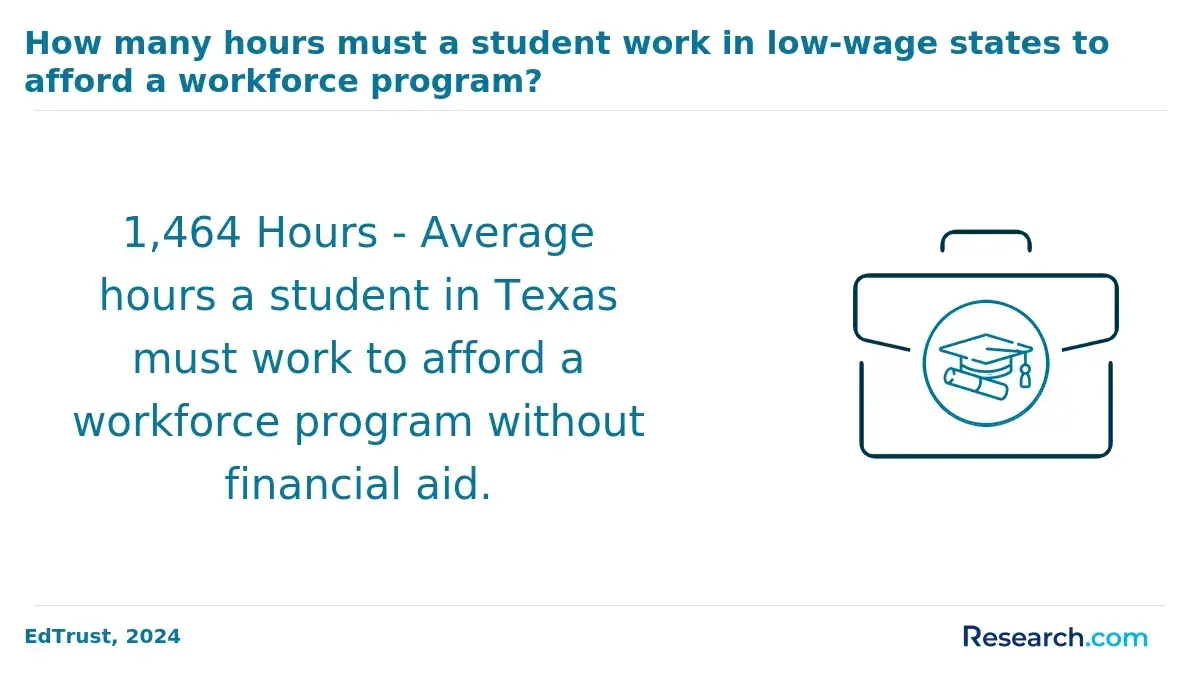
Tuition comparisons should start with total estimated cost, not a single per-credit number. Geography students may also pay technology fees, online course fees, GIS software costs, textbook expenses, graduation fees, and, in some cases, travel costs for optional field or internship experiences.
College Board's 2024 pricing data provides useful context: average published tuition and fees were $11,610 for in-state public four-year students, $30,780 for out-of-state public four-year students, and $43,350 for private nonprofit four-year students. These averages are not geography-specific, but they show why public residency status and online tuition policies can be decisive.
The table below shows how major cost models usually compare for accredited online geography students. Use it to identify which pricing structure is most likely to fit your situation before requesting a formal tuition quote.
| Cost model | Typical value profile | Who benefits most | Main cost risk |
| In-state public online tuition | Often the lowest published tuition when the student qualifies for residency rates | Residents who can use state university pricing and grants | Out-of-state students may pay significantly more |
| Flat-rate online public tuition | Same or similar online rate regardless of residency | Out-of-state students comparing public universities nationally | May be higher than an in-state option at a home-state school |
| Private nonprofit online tuition | Can be competitive after institutional aid, employer benefits, or transfer credits | Students receiving strong scholarships or needing specific scheduling flexibility | Sticker price may be high without grants or discounts |
| Degree-completion model | Lower remaining cost if many credits transfer into the major | Community college graduates and returning adults | Lost credits can erase expected savings |
| GIS certificate plus bachelor's pathway | Can add career-relevant technical training without changing majors | Students who already have credits in geography, environment, computer science, or planning | Certificate courses may not all count toward degree requirements |
Students planning graduate study should also compare undergraduate cost with the cost of a later certificate or master's degree. For example, a student who already holds a bachelor's degree may find that an online master or graduate certificate is a more direct route than completing a second bachelor's degree.
Common cost mistakes include comparing only tuition, ignoring fees, assuming all transfer credits apply to the major, and overlooking the price difference between full-time and part-time enrollment. Before choosing a program, ask for a degree audit showing remaining credits, required upper-division courses, estimated fees, and expected time to completion.
How Competitive Is Admission to Accredited Online Geography Degree Programs?
Most online bachelor's programs in geography are moderately accessible rather than highly selective, especially when offered through public online divisions or degree-completion pathways. However, admission flexibility does not mean the program lacks rigor. Geography majors still need college-level writing, quantitative reasoning, research skills, and comfort with data and maps.
Admissions requirements vary by school and student type. First-time college students, transfer students, second-degree students, and returning adults are often reviewed under different criteria.
| Applicant type | Common requirements | What to compare | Potential advantage |
| First-time undergraduate | High school transcript, GPA review, possible test-optional policy, application essay or short responses | Minimum GPA, general education structure, math placement | Can complete the full major sequence at one institution |
| Transfer student | College transcripts, minimum transferable credits, minimum college GPA, good academic standing | Transfer equivalency, upper-division residency requirements, major prerequisites | May reduce cost and completion time substantially |
| Adult learner or returning student | Prior college transcript review, resume or experience statement at some schools, academic renewal policies | Part-time options, credit for prior learning, reentry support | Work experience may align well with applied geography projects |
| Second-degree student | Completed bachelor's degree, transcript review, major prerequisite review | Whether a certificate or graduate option would be more efficient | May need fewer general education credits |
Students comparing admissions flexibility across online fields may notice similar patterns in programs such as an accelerated psychology bachelor's degree online: the key is not simply getting admitted, but confirming that the format, pace, and course sequence match your schedule and academic readiness.
Before applying, request a preliminary transfer review if you have prior credits. A program with a slightly higher admission bar may still be a better choice if it accepts more applicable transfer credits, offers better advising, or has stronger GIS coursework.
Which Learning Formats Offer the Greatest Flexibility in Online Geography Degree Programs?
The most flexible online geography programs use asynchronous coursework, multiple start dates, part-time enrollment, and predictable course rotations. However, flexibility should not come at the expense of access to faculty, feedback, field-based learning alternatives, or hands-on GIS training.
Online geography students should understand the main format differences before enrolling. The right format depends on work hours, family responsibilities, learning style, and whether you can commit to live class sessions.
| Format | How it works | Best for | Watch for |
| Asynchronous online | Students complete weekly modules, readings, labs, and assignments without required live meetings | Working adults, military students, caregivers, students in different time zones | Requires strong time management and self-direction |
| Synchronous online | Courses include scheduled live sessions, discussions, or presentations | Students who want real-time interaction and structure | May conflict with work shifts or family obligations |
| Hybrid or low-residency | Most coursework is online, but some fieldwork, labs, or meetings may occur in person | Students near campus or those wanting field experience | Travel costs and scheduling constraints |
| Accelerated terms | Courses run in shorter sessions, often 7 or 8 weeks | Motivated students taking one or two courses at a time | Heavy weekly workload and less recovery time |
| Traditional semester online | Courses follow a standard 15- or 16-week academic calendar | Students who prefer steady pacing and more time for projects | Fewer start dates and slower progress if courses are missed |
For geography specifically, ask how the program handles labs, mapping software, group projects, and field methods online. Strong programs may use cloud-based GIS tools, virtual mapping exercises, local field observations, remote-sensing datasets, and portfolio assignments that students can complete from their own communities.
A common mistake is choosing the fastest format without calculating weekly workload. A short-term GIS course can require substantial time for software practice, troubleshooting, data cleaning, and map design. If you work full time, a part-time schedule may produce better grades and a stronger portfolio than an overloaded accelerated plan.
What Student Support Services Improve Success in Online Geography Degree Programs?
Support services can strongly affect whether an online student finishes on time. This matters in geography because students often need help with software, quantitative assignments, research projects, and career translation: turning geography coursework into a resume that employers understand.
The most useful services are the ones tied directly to persistence, academic performance, and career readiness. Look for services that are available remotely and during hours that match your schedule.
- Dedicated online academic advising that maps required geography, general education, elective, and transfer courses across multiple terms.
- GIS and technology support for software installation, cloud access, spatial databases, troubleshooting, and file management.
- Online tutoring or writing support for statistics, research papers, environmental analysis, and technical reports.
- Career services that help students describe geography skills in employer language, such as spatial analysis, data visualization, land-use research, and policy analysis.
- Internship coordination with local governments, planning agencies, environmental firms, nonprofits, utilities, logistics companies, or remote geospatial employers.
- Library access to academic journals, map collections, government datasets, citation tools, and research consultations.
Ask whether support is proactive or student-initiated. A proactive program may flag missing prerequisites, alert students when required courses are offered, and connect students with career resources before the final semester.
Red flags include limited advising access, unclear course rotations, no technical support for GIS tools, and career services that are available only to campus students. Online students should not have to piece together degree planning alone.
Which Financial Aid Options Are Available for Accredited Online Geography Degree Students?
Accredited online geography students may qualify for many of the same financial aid options as campus students, provided the institution participates in federal student aid programs and the student meets eligibility rules. Aid can include grants, scholarships, work-study, federal loans, state aid, employer tuition benefits, veterans benefits, and institutional awards.
The first step is usually completing the FAFSA, then comparing aid offers from each school. Do not assume the program with the lowest published tuition will have the lowest net price after grants and scholarships.
- File the FAFSA early and list every school you are seriously considering.
- Ask each institution for a net cost estimate that includes tuition, mandatory fees, books, technology costs, and expected remaining credits.
- Search for geography, GIS, environmental science, planning, public service, and state-residency scholarships.
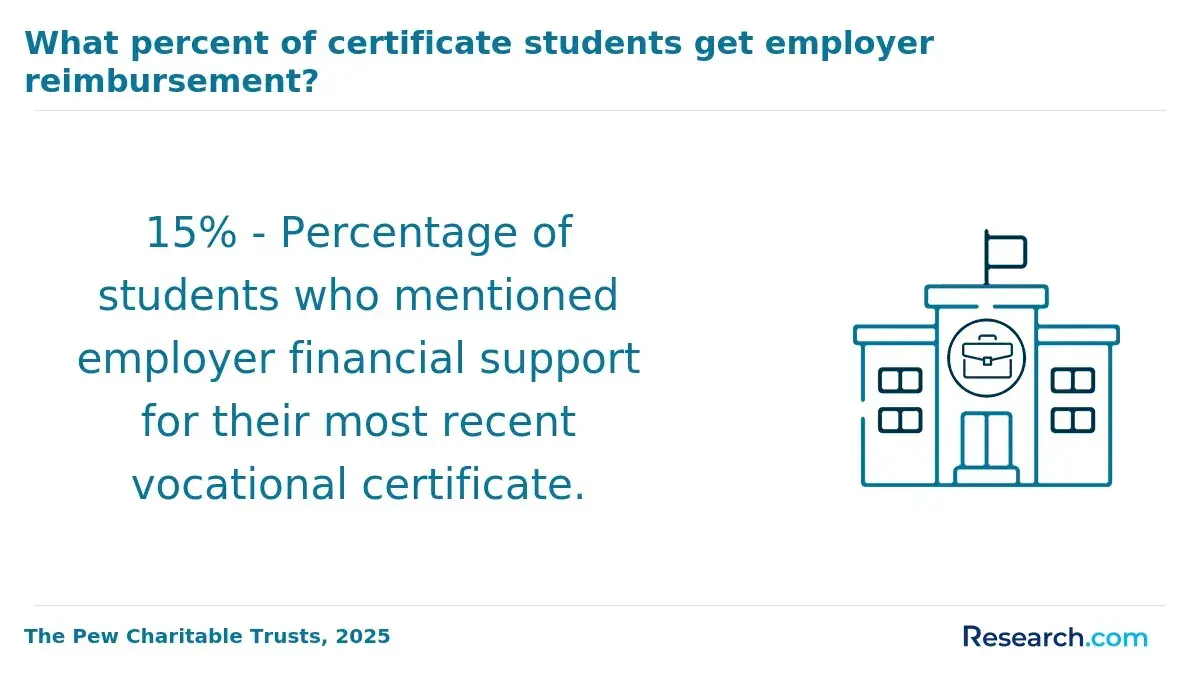
- Check whether your employer reimburses tuition for job-relevant coursework in data, mapping, logistics, sustainability, emergency management, or public administration.
- Compare loan amounts carefully and avoid borrowing for courses that may not count toward the degree.
- Request a written explanation of satisfactory academic progress rules, because falling below required completion or GPA standards can affect future aid.
Students considering longer academic pathways should compare debt across each credential, not one degree at a time. For example, someone who may later pursue leadership roles in education or public administration can learn from affordability comparisons used for the best EdD programs online, where total program cost and completion planning are just as important as tuition per credit.
A common financial aid mistake is accepting the full loan amount offered without calculating the minimum needed. Another is missing department-level scholarships because they are not always displayed prominently on the main financial aid page.
Which Career Outcomes Are Associated With Accredited Online Geography Degree Programs?
An accredited online geography degree can support careers in geospatial analysis, cartography, environmental planning, urban and regional planning support, transportation analysis, emergency management, market analysis, conservation, public policy, education, and government research. The degree is broad, so outcomes depend heavily on electives, internships, technical skills, and the student's ability to build a portfolio.
BLS wage data released for May 2024 shows why specialization matters: geography-adjacent careers span from technician-level mapping roles to higher-paid analytical and planning roles. These figures are national medians, not guarantees, and local wages vary by employer, region, experience, and technical skill level.
| Career pathway | Typical geography connection | Useful coursework or experience | Outcome considerations |
| GIS analyst or geospatial technician | Uses spatial data to create maps, analyze locations, and support planning or operations | GIS, cartography, spatial databases, Python or scripting, remote sensing | Portfolio quality and software skills often matter as much as the major name |
| Cartography and mapping | Designs maps and visualizes geographic data for public, private, or research use | Cartography, design, GIS, remote sensing, data visualization | Strong map samples can improve competitiveness |
| Environmental or sustainability analyst | Studies land use, climate risk, water, conservation, hazards, or human-environment relationships | Physical geography, environmental science, statistics, field methods | Some roles may prefer additional science coursework or graduate study |
| Urban and regional planning support | Applies spatial analysis to housing, transportation, zoning, land use, and community development | Human geography, urban geography, planning, GIS, policy analysis | Professional planner roles may require a planning master's degree or experience |
| Emergency management or hazard analysis | Maps risk, vulnerability, evacuation zones, and disaster impacts | Hazards geography, GIS, public administration, data analysis | Local government and public safety experience can be valuable |
| Education or outreach | Teaches geographic concepts or supports museum, nonprofit, public lands, or community programs | Regional geography, communication, education electives, public speaking | Teaching in public schools may require state-specific licensure |
Students who want the strongest career mobility should graduate with evidence of applied skill. That may include web maps, spatial analysis projects, remote-sensing exercises, policy briefs, research posters, internship deliverables, or a capstone project connected to a real community or employer problem.
This degree may not be the best fit for students who want a tightly licensed career with a single required credential. Geography is more flexible, but that flexibility means students must intentionally shape the degree toward a marketable direction.
How Do Online and Campus-Based Geography Degree Programs Compare?
Online and campus-based geography programs can lead to the same degree when offered by the same accredited institution, but the learning experience may differ. Online programs usually offer better scheduling flexibility, while campus programs may provide easier access to field trips, labs, research assistantships, and in-person networking.
The best choice depends on whether you need flexibility or immersion. Geography can be taught effectively online when programs use strong GIS platforms, local field assignments, remote datasets, and active faculty feedback.
| Comparison point | Online geography degree | Campus-based geography degree | Best choice when |
| Schedule | Often asynchronous or part-time friendly | Class times are usually fixed | Online is better for working adults or caregivers |
| Field learning | May use local observations, virtual tools, or optional fieldwork | May offer structured field trips and lab access | Campus is better if field immersion is central to your goals |
| GIS access | Often cloud-based or remote software access | May include computer labs and in-person help | Online works well if technical support is strong |
| Peer interaction | Discussion boards, group projects, virtual meetings | In-person study groups and department events | Campus is stronger for students who thrive on face-to-face collaboration |
| Cost | May reduce commuting and relocation costs | May provide access to campus jobs or local internships | Compare net price, not format alone |
Some fields require physical studio, lab, or field-intensive training more than geography does. Students comparing program formats across disciplines can see this contrast when reviewing an architecture degree online, where design studio expectations may shape online delivery differently.
The main mistake is assuming online means easier. A rigorous online geography program still requires research, data analysis, writing, software practice, and deadlines. The advantage is access and flexibility, not reduced academic expectations.
How Should Students Choose the Best Accredited Online Geography Degree Program?
To choose the best accredited online geography degree program, start with your goal and work backward. A student aiming for GIS analysis should prioritize technical coursework and portfolio projects, while a student interested in planning should look for urban geography, policy, statistics, and internship opportunities.
The following process helps compare programs without relying only on rankings, advertising language, or tuition:
- Define your target outcome, such as GIS analyst, environmental specialist, planning assistant, educator, public-sector researcher, or graduate school applicant.
- Verify institutional accreditation through a recognized accreditor and confirm that the online degree is awarded by the university itself.
- Request a degree audit showing accepted transfer credits, remaining major courses, general education requirements, and estimated graduation timeline.
- Compare total cost, including tuition, online fees, software, books, graduation fees, and the cost of extra semesters if courses are not offered frequently.
- Review the curriculum for GIS, cartography, remote sensing, spatial analysis, statistics, research methods, and a capstone or applied project.
- Ask how online students access advising, GIS support, library databases, career services, internships, and faculty office hours.
- Compare course format with your real schedule, especially if you work full time or need asynchronous classes.
- Look for evidence of career preparation, such as portfolio assignments, internship options, employer partnerships, alumni examples, or career coaching.
It can also help to compare how career-focused online degrees package applied skills. For instance, students reviewing the best colleges for social media marketing will see a similar principle: the most valuable programs connect coursework to demonstrable work samples, tools, analytics, and employer needs.
The best program is the one you can afford, finish, and translate into your next step. Prioritize net price over sticker price, accreditation over marketing claims, curriculum depth over broad promises, and fit over a generic ranking position.
Other Things You Should Know About Geography
No. Geography studies places, spatial relationships, human-environment interactions, maps, regions, and location-based patterns. Geology focuses more directly on Earth materials, rocks, minerals, tectonics, and physical Earth processes.
Most programs require quantitative reasoning, statistics, or data analysis, especially if you choose GIS or spatial analytics courses. You do not usually need advanced calculus for every geography path, but comfort with data is increasingly valuable.
Yes, many students pair geography with a GIS certificate to strengthen technical skills. Before adding one, confirm whether certificate courses count toward the major, electives, or graduation requirements.
Not always. Entry-level GIS, mapping, government, nonprofit, and environmental support roles may be accessible with a bachelor's degree and strong applied skills. Graduate study can help for research, planning, teaching, leadership, or specialized technical roles.
References
- Geography and Geography Education: Two Faces of the Same Coin | Universitas Muhammadiyah Surakarta https://www.ums.ac.id/en/news/our-stories/geography-and-geography-education-two-faces-of-the-same-coin
- Jobs you can pursue with a geography degree https://www.openstudycollege.com/blog/jobs-you-can-pursue-geography-degree
- 2025 Most Affordable Online Bachelor's Degrees https://www.onlineu.com/most-affordable-colleges/bachelors-degrees
- Top 10 Low-Cost Online Bachelor's in Geography https://www.greatvaluecolleges.net/rankings/online-bachelors-geography/
- The Guide - AAG https://www.aag.org/guide-to-geography-programs-and-opportunities/
- Data on geography at university | RGS https://www.rgs.org/research/higher-education-resources/data-on-geography-at-university
- Best Online Bachelor's Degrees in Geography - GISDegree.org https://www.gisdegree.org/online/bachelors-in-geography/