2027 Cheapest Accredited Online Geography Degree Programs That Accept FAFSA

Co-Founder and Chief Data Scientist
Choosing an online geography degree is really a cost-and-credibility decision: the program must be affordable, accredited, and eligible for federal student aid. College Board's 2024 pricing data shows average published tuition and fees at public four-year colleges are far lower for in-state students than for out-of-state or private nonprofit students, so the right school choice can change your total cost dramatically.
This guide is for students comparing FAFSA-eligible online geography programs, transfer options, and career value so they can avoid overborrowing and choose a degree that fits their goals.
Key Things You Should Know
- The cheapest FAFSA-eligible online geography degrees are usually public university programs with low online or in-state tuition; UF Online is especially low for Florida residents at $129.18 per credit before aid.
- FAFSA eligibility means the institution participates in federal student aid, but it does not guarantee a Pell Grant, scholarships, or full coverage of tuition and fees.
- Career ROI depends heavily on debt: BLS 2024 wage data places geographers above many entry-level GIS roles, but many graduates start in technician, planning, environmental, or geospatial analyst positions before moving into higher-paying roles.
Which Are the Cheapest Accredited Online Geography Degree Programs That Accept FAFSA?
The cheapest accredited online geography degree programs that accept FAFSA are typically offered by public universities with institutional accreditation and Title IV participation. The table below focuses on online bachelor's-level geography or closely related geography/geospatial programs because a bachelor's degree is the most common entry point for GIS, planning, environmental analysis, and public-sector geography roles.
| School | Online geography-related degree | Accreditation | Typical credits | Published tuition signal | Best fit |
| University of Florida Online | BA in Geography | Institutionally accredited by SACSCOC | 120 semester credits | $129.18 per credit for Florida residents; $552.62 per credit for nonresidents | Florida residents seeking the lowest published tuition from a major public university |
| Fort Hays State University | Online geosciences degree with geography-focused study options | Institutionally accredited by HLC | About 120 semester credits | Low flat online undergraduate tuition, commonly among the lower-cost public options | Students who want a broad geoscience and geography pathway with low online pricing |
| Oregon State University Ecampus | Geography and geospatial science-related online study options | Institutionally accredited by NWCCU | Quarter-credit structure | Published Ecampus undergraduate tuition is generally higher than the lowest public options but still below many private programs | Students prioritizing geospatial science, environmental systems, and strong online infrastructure |
| University of Arizona Online | BA in Geography or closely related online geography pathways | Institutionally accredited by WSCUC | 120 semester credits | Flat online tuition model, often simpler to estimate than campus-based pricing | Students who want a large research university with an online format and broad electives |
| Arizona State University Online | Online geography, geographic information science, or related spatial-science pathways | Institutionally accredited by HLC | About 120 semester credits | Higher published online tuition range than the lowest-cost public options | Students who value scale, frequent start dates, and a large online course catalog |
The lowest sticker price is not always the lowest real cost. A program with higher tuition may cost less if it accepts more transfer credits, offers better grants, or allows you to finish faster while working.
Students comparing geography with other online pathways should also think about degree level. For example, someone who already has a bachelor's degree and wants a fast graduate credential may compare a geography-related GIS study with an online master instead of starting another bachelor's program.
How Does FAFSA Eligibility Work for Online Geography Degree Programs?
Before choosing a program, confirm these points directly with the school's financial aid office because online programs can differ from campus programs at the same university:
- Confirm the institution participates in Title IV federal student aid programs and has a valid federal school code.
- Ask whether the specific online geography degree is aid-eligible, not just whether the university accepts FAFSA.
- Verify that you will be admitted as a degree-seeking student because nondegree, certificate-only, and continuing education enrollment may have different aid rules.
- Check minimum enrollment requirements; federal loans usually require at least half-time enrollment, while Pell Grant amounts vary by enrollment intensity and eligibility.
- Ask whether summer courses, accelerated sessions, internships, or field requirements are covered by the same aid package.
A common mistake is assuming that "accepts FAFSA" means the full program will be paid for. FAFSA may produce a mix of grants, loans, work-study eligibility, or no grant aid at all, depending on the student's financial situation and federal formulas.
How Much Does an Online Geography Degree Cost After Financial Aid?
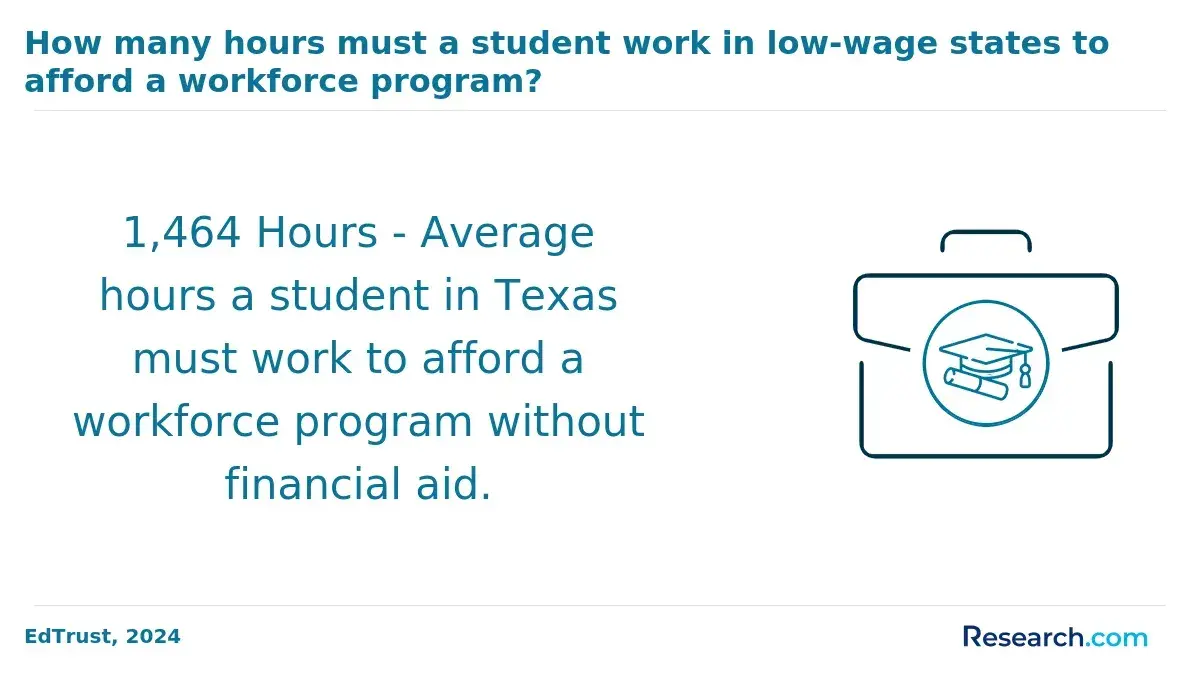
The cost of an online geography degree after financial aid is the net price: tuition, required fees, books, software, technology costs, and other education expenses minus grants and scholarships. Loans reduce what you pay immediately, but they do not reduce the price of the degree because they must be repaid with interest.
College Board's 2024 data places average published tuition and fees for public four-year in-state students at $11,610 for an academic year. That benchmark matters because many affordable online geography programs are public options; if your online tuition is far above that level, you should ask what additional value or aid justifies the difference.
| Cost item | Why it matters for online geography students | How to compare schools |
| Tuition per credit | This is usually the largest published cost and determines the baseline price. | Multiply the per-credit rate by remaining credits after transfer evaluation. |
| Online program fees | Some schools charge distance learning, technology, proctoring, or platform fees. | Ask for a full cost sheet, not only the tuition rate. |
| GIS software and lab materials | Geography programs may require mapping, spatial analysis, statistics, or remote-sensing tools. | Ask whether software licenses are included in tuition or billed separately. |
| Books and digital materials | Online courses may use paid access codes or digital textbooks. | Compare estimated annual materials costs across schools. |
| Transfer credit loss | Credits that do not apply to the major can extend time and cost. | Request a degree audit before enrolling whenever possible. |
| Borrowing | Loans can make a program affordable now but raise long-term cost. | Compare total estimated debt at graduation, not only monthly tuition. |
For a realistic estimate, build two numbers: the "cash price" before aid and the "net price" after grants and scholarships. Then calculate a separate "borrowed price" that includes the federal loans you plan to accept.
Which Affordable Online Geography Degree Programs Offer the Best Value?
The best-value affordable online geography program is not automatically the one with the lowest tuition. Value comes from the relationship between total net cost, time to completion, academic fit, transfer acceptance, student support, and career relevance.
Use the following comparison lens when deciding whether a low-cost program is truly a good value:
- Choose the lowest-tuition option when it is accredited, FAFSA-eligible, accepts your credits, and offers the geography or GIS coursework needed for your target roles.
- Choose a slightly higher-cost option when it accepts substantially more transfer credits, has stronger GIS or remote-sensing coursework, or offers better advising for internships and portfolios.
- Be cautious with any low-cost option that has unclear accreditation, limited upper-division geography courses, weak student support, or poor transparency about total fees.
- Do not overpay for prestige alone if your goal is an entry-level GIS, planning, environmental, or public-sector analyst role where skills, software experience, and applied projects matter heavily.
Online learning trends also affect value. Employers increasingly expect graduates in spatial fields to demonstrate software fluency, data interpretation, and project-based experience, so a cheap program that lacks GIS labs or portfolio assignments may not be the strongest career investment.
If you are still deciding among fields, compare geography against other low-cost online majors with different labor markets. A student drawn to human behavior, for instance, may evaluate an accelerated psychology bachelor's degree online before committing to geography.
Are the Cheapest Online Geography Degree Programs Properly Accredited?
The cheapest online geography degree should be institutionally accredited by an accreditor recognized by the U.S. Department of Education or the Council for Higher Education Accreditation. Accreditation matters because it affects federal aid eligibility, credit transfer, graduate school admission, and employer confidence.
Geography itself does not usually require the same kind of programmatic accreditation seen in nursing, counseling, or engineering. For most students, the key credential check is institutional accreditation plus evidence that the curriculum covers relevant geography, geospatial analysis, environmental systems, human geography, statistics, and research methods.
Use this verification sequence before submitting a deposit:
- Search the school in the U.S. Department of Education's accreditation database and confirm the institution name matches the school offering the online degree.
- Check the school's financial aid page for Title IV participation and the federal school code used on the FAFSA.
- Ask the department whether the online geography degree appears on the same official transcript as the campus program, if a campus version exists.
- Review the course catalog to confirm the major requirements, upper-division geography courses, and any fieldwork or residency expectations.
- Contact graduate programs or employers in your target field if you plan to use the degree for GIS, planning, environmental consulting, teaching, or public-sector work.
Red flags include schools that avoid naming their accreditor, pressure you to enroll before giving a written cost estimate, advertise federal aid without explaining eligibility, or offer unusually short bachelor's degrees without a clear transfer-credit basis.
What FAFSA Grants and Federal Aid Can Pay for an Online Geography Degree?
Federal aid for an online geography degree can include grants, loans, and work-study, but the exact mix depends on your FAFSA results, school cost of attendance, enrollment level, dependency status, and annual federal limits. Grants and scholarships lower the real price; loans only shift payment to the future.
The most important federal aid types to understand are the following:
- Federal Pell Grant: Need-based grant aid for eligible undergraduates; the maximum award is $7,395 for the 2025-2026 award year, though many students receive less depending on eligibility and enrollment intensity.
- Federal Supplemental Educational Opportunity Grant: Campus-based grant aid for students with exceptional financial need, available only at participating schools with limited funds.
- Direct Subsidized Loan: Need-based federal loan for eligible undergraduates where the government pays interest during certain periods.
- Direct Unsubsidized Loan: Federal loan available to eligible students regardless of financial need, with interest accruing after disbursement.
- Federal Work-Study: Part-time employment funding through participating schools, which may be harder to use if a student is fully remote and the school has limited online-friendly positions.
Students sometimes confuse annual aid limits with total program affordability. If your remaining degree requires many credits, one year of Pell Grant funding may help substantially but may not cover the full cost of a bachelor's degree.
Aid planning also changes by degree level. Students considering graduate education later should understand that undergraduate Pell Grants do not apply to most graduate programs, even when the school accepts FAFSA; this distinction also appears in comparisons of the best EdD programs online.
How Do Transfer Credits Lower the Cost of an Online Geography Degree?
Transfer credits can be the biggest cost reducer in an online geography degree because they lower the number of credits you must buy from the new school. This is especially important for adult learners, community college graduates, military students, and students who previously changed majors.
Ask for a preliminary transfer evaluation before you enroll, then compare how many credits apply to the degree itself rather than merely appearing on your transcript. The most useful transfer questions are:
- How many total credits will transfer into the university?
- How many transferred credits will apply to general education, major requirements, and electives?
- Is there a maximum number of community college, military, AP, IB, CLEP, or prior-learning credits accepted?
- Will geography, geology, environmental science, statistics, computer science, or GIS courses satisfy major requirements?
- How many upper-division credits must be completed at the degree-granting institution?
- Will transfer credits affect scholarship eligibility, class standing, or time-to-degree planning?
A higher-tuition program can sometimes cost less overall if it accepts more credits. For example, paying a higher per-credit rate for 45 remaining credits may be cheaper than paying a lower rate for 75 remaining credits.
| Scenario | Published tuition per credit | Credits remaining | Tuition before aid | Decision lesson |
| Lower tuition, fewer credits accepted | $250 | 75 | $18,750 | Low tuition can still be costly if many credits do not apply. |
| Higher tuition, more credits accepted | $350 | 45 | $15,750 | Transfer efficiency can beat the lowest per-credit rate. |
Do not rely only on an admissions estimate. The safest document is a degree audit showing remaining courses, remaining credits, and expected completion terms.
Which Students Benefit Most From a Low-Cost Online Geography Degree With FAFSA?
A low-cost online geography degree with FAFSA can be a strong fit for students who need flexibility, want to limit debt, and are aiming for careers connected to maps, place-based data, cities, climate, environment, transportation, public policy, or geospatial technology.
The students who usually benefit most include:
- Community college transfer students who can apply most lower-division credits toward a bachelor's degree.
- Working adults who need asynchronous online courses and cannot relocate for a campus geography program.
- Florida or in-state public university students who can access very low resident tuition online.
- Students targeting GIS technician, planning assistant, environmental data, emergency management, transportation, or public-sector analyst roles.
- Military-affiliated students who can combine FAFSA, GI Bill benefits, tuition assistance, or evaluated military credits.
Students should avoid choosing primarily on low cost if the program lacks the technical courses required for their target job. Geography can be broad, so someone who wants a data-heavy GIS career should prioritize coursework in spatial analysis, cartography, databases, Python or scripting exposure, remote sensing, and applied projects.
Students comparing online majors for career flexibility may also look beyond geography. For example, those drawn to digital communication and analytics may compare geography with the best colleges for social media marketing to decide which field better matches their strengths.
How Does the Cost of an Online Geography Degree Affect Career ROI?
The cost of an online geography degree affects ROI because geography-related careers can vary widely in pay, required experience, and technical expectations. A low-debt degree gives graduates more flexibility to start in entry-level roles, pursue internships, relocate for public-sector jobs, or continue into graduate study.
BLS 2024 wage data places the median annual wage for geographers at more than $90,000, but that figure should be interpreted carefully. Many geography bachelor's graduates do not immediately become "geographers" by occupational title; they may start as GIS technicians, mapping assistants, environmental specialists, planning aides, or research assistants before moving into higher-responsibility roles.
| Career direction | Typical relevance of a geography degree | Cost sensitivity | What improves ROI? |
| GIS and geospatial analysis | Strong fit when the program includes GIS, spatial statistics, cartography, and data projects | High, because entry roles may require experience before higher pay | Portfolio maps, internships, GIS software skills, and database exposure |
| Urban and regional planning | Good foundation, but some planner roles prefer or require graduate study | Moderate to high if graduate school is likely | Low undergraduate debt, planning electives, and public-sector internship experience |
| Environmental and sustainability work | Good fit when paired with physical geography, climate, hydrology, or environmental science coursework | Moderate, depending on employer and location | Field methods, data analysis, and environmental regulation knowledge |
| Education or teaching | May require separate teacher certification depending on state and grade level | High, because licensure may add cost and time | Confirming state requirements before enrolling |
| Graduate school preparation | Useful for geography, GIS, planning, environmental studies, or policy graduate programs | High, because future tuition may add debt | Choosing an affordable bachelor's program and building research experience |
A more expensive program may be worth it when it offers unusually strong GIS training, research access, internship pipelines, transfer efficiency, or employer-recognized geospatial coursework. It is less likely to be worth it if the higher cost mainly reflects branding while the curriculum is similar to a lower-cost accredited option.
Some students weighing built-environment careers may compare geography with an architecture degree online, but these paths differ sharply: architecture can involve licensure and studio requirements, while geography usually emphasizes spatial systems, human-environment relationships, and data-driven analysis.
How Should Students Choose the Cheapest FAFSA-Eligible Online Geography Degree?
To choose the cheapest FAFSA-eligible online geography degree, compare programs by net price, not just advertised tuition. The strongest choice is usually the accredited program that lets you graduate with the lowest reasonable debt while still giving you the coursework and support needed for your target career.
Use this step-by-step process before applying or enrolling:
- Confirm institutional accreditation and Title IV participation for each school.
- Verify that the specific online geography degree is eligible for federal student aid.
- Request a written tuition and fee estimate for your residency status and enrollment plan.
- Submit the FAFSA early and compare financial aid offers from multiple schools.
- Ask for a transfer-credit evaluation and degree audit before committing.
- Calculate remaining tuition by multiplying the school's per-credit price by the credits still required after transfer.
- Separate grants and scholarships from loans so you know your true net cost and likely debt.
- Review the curriculum for GIS, statistics, remote sensing, human geography, physical geography, and applied capstone or portfolio work.
- Ask about online advising, career services, internship support, tutoring, and software access.
- Choose the lowest net-cost program that meets your academic and career requirements without unnecessary borrowing.
Before committing, ask schools direct questions that force clear answers. How much will the degree cost if you attend part-time? Are online students eligible for the same scholarships as campus students? What happens to aid if you drop below half time? Are summer courses covered? What fees are not included in the advertised tuition?
The final decision should balance affordability with outcomes. If geography is only one of several online degree options you are considering, compare total cost, transfer fit, and career pathway across all programs rather than assuming the lowest sticker price is the best investment.
Other Things You Should Know About Geography
Many online geography degrees can be completed fully online, but requirements vary. Some programs may include internships, field methods, proctored exams, or optional campus experiences, so confirm the delivery format before enrolling.
Most geography degrees require some quantitative work, especially statistics, GIS, remote sensing, or spatial analysis. Students who dislike math may still succeed, but they should expect data interpretation and technical mapping assignments.
GIS skills often make a geography degree more job-ready because many employers need mapping, spatial data, and visualization abilities. A broad geography degree can still be valuable, but students seeking technical roles should choose programs with substantial GIS coursework.
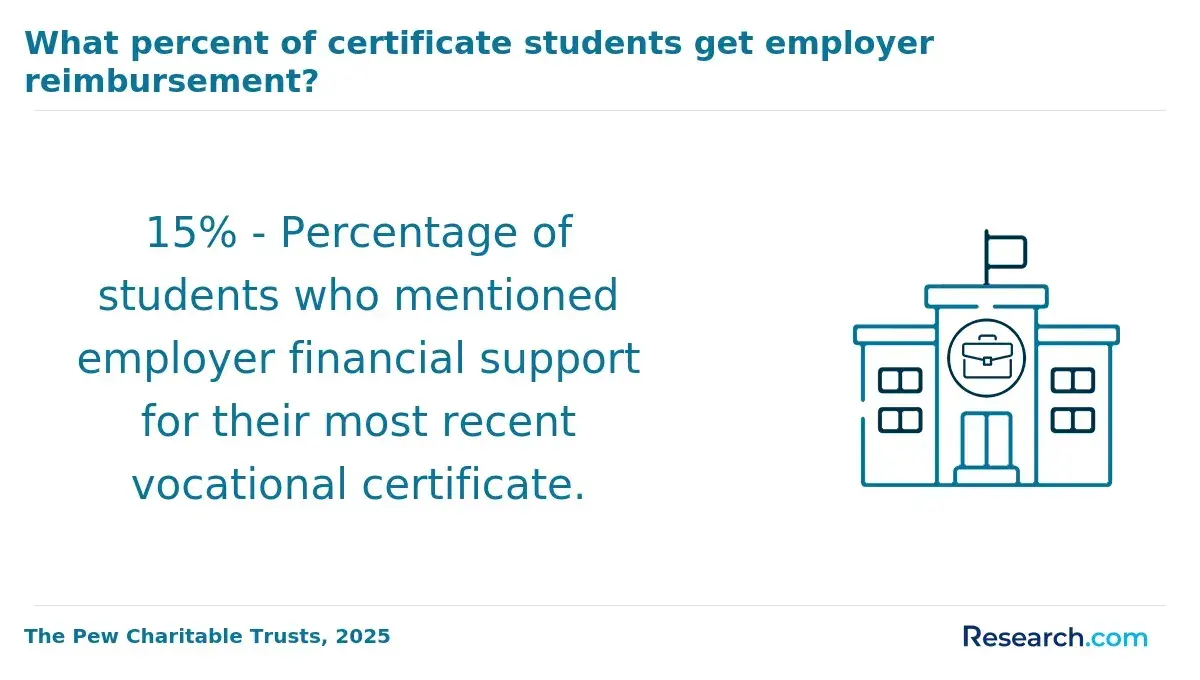
Often, yes. Employer tuition assistance can sometimes be combined with federal aid, but the school may factor outside assistance into your aid package. Ask the financial aid office how employer benefits affect grants, loans, and billing.
References
- Admissions : Online Tuition | Full Sail University https://www.fullsail.edu/admissions/tuition-online
- The 4 Best Online Colleges that Accept FAFSA https://joinjuno.com/financial-literacy/financial-aid/online-colleges-accept-fafsa
- 2025 Best Online GIS Degrees https://www.onlineu.com/degrees/geographic-information-systems
- Cost of College by Country [2025]: Average Tuition Fees https://educationdata.org/average-cost-of-college-by-country
- 9 Online Schools That Accept FAFSA (and How to Get Financial Aid) https://www.studentloanplanner.com/financial-aid-online-colleges/
- Types of Financial Aid for Online Colleges https://www.umassglobal.edu/blog-news/types-financial-aid-online-colleges
- Best Online Bachelor's Degrees in Geography - GISDegree.org https://www.gisdegree.org/online/bachelors-in-geography/
- The State of Geography: Data and Trends in Higher Education - AAG https://www.aag.org/the-state-of-geography-data-and-trends-in-higher-education/
- Geography and Geography Education: Two Faces of the Same Coin | Universitas Muhammadiyah Surakarta https://www.ums.ac.id/en/news/our-stories/geography-and-geography-education-two-faces-of-the-same-coin
- Financial Aid For Online Colleges https://www.affordablecollegesonline.org/financial-aid/financial-aid-for-online-colleges/