2027 Fastest Accredited Online Geography Degree Programs That Accept Transfer Credits

Co-Founder and Chief Data Scientist
Finishing an accredited online geography degree faster depends less on the advertised program length and more on how many prior credits actually apply to the major. NCES distance education data published in 2024 shows that more than half of U. S. undergraduates took at least one online course, making online degree completion a mainstream option.
This guide is for transfer students, returning adults, military learners, and degree completers who want the fastest legitimate path to graduation. You will learn how to compare accredited programs, transfer-credit limits, residency rules, costs, and realistic completion timelines before enrolling.
Key Things You Should Know
- The fastest realistic route is usually a regionally accredited online geography bachelor's program that accepts about 75 to 90 applicable transfer credits and requires only 30 to 45 credits in residence, which can make graduation possible in roughly 9 to 18 months for well-prepared transfer students.
- Transfer-friendly options to compare include Fort Hays State University, Old Dominion University, Arizona State University Online, Oregon State University Ecampus, University of Florida Online, and University of Arizona Online, but the fastest choice depends on how your general education, upper-division, GIS, statistics, and geography credits map to the degree plan.
- The key number is not the maximum credits a school accepts; it is the number of credits that satisfy the geography degree audit after accreditation, residency, upper-division, grade, age-of-credit, and major-specific requirements are applied.
What Are the Fastest Accredited Online Geography Degree Programs That Accept Transfer Credits?
The fastest accredited online geography degree programs are usually bachelor's completion pathways at regionally accredited universities that combine online delivery, generous transfer evaluation, and a manageable residency requirement. Geography programs may be offered as a BA, BS, or geography and geospatial science degree, and some emphasize GIS, environmental systems, planning, human geography, or physical geography.
The table below is a practical comparison of accredited online geography options that are commonly relevant for transfer students. Policies can change, so use this as a shortlist and request an official transfer evaluation before committing.
| School | Online geography-related degree | Accreditation type to verify | Why it may be fast for transfer students | Best fit |
| Fort Hays State University | BA or BS in Geography | Regional institutional accreditation | Known for online degree completion pathways and a transfer-friendly structure; students with substantial lower-division and general education credits may be able to focus on remaining major and residency courses. | Students seeking a flexible, affordable geography major with broad transfer potential. |
| Old Dominion University Online | BS in Geography | Regional institutional accreditation | Designed for online learners and transfer students; degree-completion planning can work well for students who already hold an associate degree or extensive college credit. | Students with previous college coursework who want a structured online completion route. |
| Arizona State University Online | BA in Geography | Regional institutional accreditation | Uses short online terms and clear course sequencing; students with strong transfer alignment may move quickly through remaining upper-division requirements. | Students comfortable with accelerated sessions and frequent start dates. |
| Oregon State University Ecampus | BS in Geography and Geospatial Science | Regional institutional accreditation | Strong online science and geospatial course availability; transfer students may benefit from structured advising, though quarter-credit conversion must be reviewed carefully. | Students interested in GIS, environmental analysis, and geospatial applications. |
| University of Florida Online | BA in Geography | Regional institutional accreditation | Can be efficient for Florida transfer students with the right associate degree and prerequisites, but major and upper-division requirements still control speed. | Students with strong academic preparation who want a public research university option. |
| University of Arizona Online | BA in Geography | Regional institutional accreditation | Online format and transfer pathways can support degree completion, especially when prior credits match general education and major electives. | Students who want a broad geography degree with policy, environment, or global systems interests. |
The best program is not automatically the one with the highest transfer-credit ceiling. A student with 90 accepted credits may still need two years if too many credits are free electives, while a student with 72 well-matched credits may finish faster because their prior coursework satisfies general education, statistics, GIS, and lower-division geography requirements.
Use this comparison process before choosing a program:
- Ask for an official or preliminary degree audit that shows how every transfer course applies to the geography degree, not just to university admission.
- Confirm the minimum number of credits you must complete at the new school, including any upper-division geography credits.
- Check whether required geography courses are offered every term, once per year, or only in a fixed sequence.
- Compare accelerated term length with your work schedule, because 7-week or 8-week courses can be faster but more intensive.
- Ask whether GIS labs, field methods, statistics, or capstone courses have software, synchronous meeting, or proctored exam requirements.
If you are comparing geography with other fast online bachelor's options, the same transfer-credit logic applies to fields such as an accelerated psychology bachelor's degree online: the fastest program is the one that applies the most credits to the actual degree plan.
How Fast Can You Complete an Online Geography Degree With Transfer Credits?
A bachelor's degree in geography usually requires about 120 semester credits, though some universities use quarter credits. Transfer credits shorten the timeline only when they satisfy degree requirements, and the remaining time depends on course availability, enrollment intensity, term length, and whether you can handle multiple accelerated courses at once.
The table below shows realistic completion ranges for students entering an online geography program with different amounts of applicable transfer credit. These are planning estimates, not guarantees, because each school controls degree audits and course sequencing.
| Applicable transfer credits | Approximate credits remaining | Realistic online completion time | What usually determines the timeline |
| 0 to 30 | 90 to 120 | 3 to 4 years | General education, introductory geography, math or statistics, and full major sequence remain. |
| 45 to 60 | 60 to 75 | 18 to 30 months | Students may have lower-division work complete but still need upper-division geography, GIS, and electives. |
| 75 to 90 | 30 to 45 | 9 to 18 months | This is often the fastest legitimate path if residency and upper-division requirements align. |
| 90 accepted but only 60 applicable | 60 or more | About 2 years or longer | Credits may transfer as electives but fail to satisfy the geography curriculum. |
Accelerated schedules work best for students who already have strong writing, research, mapping, and data-analysis skills. Geography courses often require projects rather than simple exams, so a short term can be demanding even when the degree is fully online.
Before you choose the fastest schedule, test whether the workload is realistic:
- One 7-week or 8-week course can feel like two traditional courses because readings, labs, mapping assignments, and discussion deadlines are compressed.
- Full-time accelerated enrollment may be practical if you are not working full time, but many adult learners move faster by taking two courses per term consistently rather than overloading.
- Sequential courses, such as GIS I before GIS II or research methods before a capstone, can extend the timeline even when you have enough transfer credits.
- Summer enrollment can shorten the calendar, but only if required courses are available during summer terms.
Some students finish the bachelor's quickly because they plan to continue into graduate study. If that is your goal, compare whether a geography bachelor's can feed into an online master in GIS, urban planning, environmental policy, data analytics, or education.
How Many Transfer Credits Can You Apply Toward an Online Geography Degree?
Many online bachelor's programs allow a large block of transfer credit, often up to about three-fourths of the degree, but the applied total is determined by the degree audit. The practical ceiling is usually shaped by three rules: maximum transferable credits, minimum residency credits, and major-specific credits that must be completed at the degree-granting institution.
The table below explains the difference between common transfer-credit numbers that schools use. This distinction matters because a generous admission policy can still leave you with many required geography courses to complete.
| Policy number | What it means | Why it matters for speed |
| Maximum transfer credits | The largest number of outside credits the university may accept toward a bachelor's degree. | A high maximum helps only if those credits satisfy required categories. |
| Residency requirement | The minimum number of credits you must complete through the new university. | This often creates a hard floor of about 30 credits before graduation. |
| Upper-division requirement | The number of advanced credits required in the major or overall degree. | Community college credits may not satisfy upper-division geography requirements. |
| Major residency rule | The number of geography major credits that must be taken at the institution awarding the degree. | This can prevent a student from transferring the entire major. |
| Free elective credit | Transfer credit accepted by the university but not matched to general education or major requirements. | It counts toward total credits but may not reduce time as much as expected. |
A common mistake is sending transcripts to admissions, receiving a large accepted-credit estimate, and assuming the degree is nearly complete. Admissions transferability and degree applicability are not the same.
To protect your timeline, request answers to these questions in writing:
- How many of my credits apply to general education, geography major requirements, upper-division requirements, and electives?
- Which required courses remain after the transfer evaluation?
- Are any of my science, statistics, GIS, environmental studies, planning, or social science courses too old to count?
- Will quarter credits, military credits, AP, CLEP, or international credits convert differently?
- Can I appeal a course equivalency if the catalog description or syllabus shows a close match?
How Can You Verify Accreditation for Fast Online Geography Degree Programs?
For online geography degrees, the most important accreditation check is institutional accreditation from an agency recognized by the U.S. Department of Education or CHEA. Geography usually does not require a specialized programmatic accreditor in the way some professional fields do, so institutional accreditation is the baseline for transferability, federal financial aid, graduate-school recognition, and employer acceptance.
NCES and federal student-aid tools published and updated in recent years make accreditation easier to verify, but students should still check the school's official accreditation page and the accreditor's directory. A program that advertises "fast" completion is not worth the risk if credits will not transfer later or if graduate schools question the institution.
Use this accreditation checklist before enrolling:
- Confirm the university appears in the U.S. Department of Education's Database of Accredited Postsecondary Institutions and Programs.
- Verify that the accreditor listed by the school matches the accreditor's own directory.
- Check that the online geography degree is offered by the same accredited institution, not by an unaccredited partner using similar branding.
- Ask whether the online transcript and diploma differ from the campus version; many reputable universities do not label the delivery mode on the diploma.
- Review warning signs such as no federal financial aid eligibility, pressure to enroll immediately, vague accreditation language, or promises that every prior credit will count.
Accreditation expectations vary by field. For example, students researching an architecture degree online often need to think about professional accreditation and licensure pathways, while geography students usually focus on institutional accreditation, transferability, and graduate-school prerequisites.
Which Types of Transfer Credits Can Count Toward an Online Geography Degree?
Online geography programs may accept several types of prior credit, but each type is evaluated differently. The strongest credits are usually regionally accredited college courses with clear matches to general education, geography, geoscience, GIS, statistics, environmental studies, economics, anthropology, sociology, political science, or planning requirements.
The table below summarizes common credit sources and how they may affect time to graduation. It is especially useful if your transcript includes a mix of community college, university, exam, military, or professional learning.
| Credit source | How it may apply | Common limitation |
| Community college courses | Often satisfy general education, introductory geography, social science, math, and electives. | Usually lower-division, so they may not replace upper-division geography requirements. |
| Four-year university courses | May satisfy upper-division geography, GIS, environmental science, or research requirements if closely matched. | Course titles alone may not be enough; syllabi may be needed. |
| Associate degree | Can satisfy large parts of general education through articulation agreements. | Major prerequisites may still remain if the associate degree was unrelated. |
| AP, IB, or CLEP exams | May reduce general education or elective requirements. | Minimum scores and course equivalencies vary by school. |
| Military training | May count through ACE credit recommendations, often as electives or technical credit. | May not satisfy geography major requirements unless content aligns. |
| Professional certifications | May support elective or prior-learning credit at some institutions. | Many geography departments require academic coursework for major credits. |
Geography is interdisciplinary, which can help transfer students. Courses in data analysis, earth science, environmental policy, demography, remote sensing, urban studies, and regional studies may apply if the program allows flexible major electives.
Prepare a transfer packet before requesting an evaluation:
- Unofficial transcripts for early advising and official transcripts for final evaluation.
- Course descriptions from the catalog year in which you took each course.
- Syllabi for GIS, statistics, research methods, environmental science, and upper-division geography courses.
- Exam score reports for AP, IB, CLEP, DSST, or other standardized credit.
- ACE or military transcripts if you want training reviewed for credit.
How Do Residency and Major Requirements Affect Transfer Credits for an Online Geography Degree?
Residency requirements are the credits you must complete through the university awarding the degree. In fast online geography programs, residency is often the rule that determines the minimum remaining time, even when a school accepts many transfer credits.
The table below shows how residency and major rules can change the fastest possible graduation date. These rules are more important than the headline transfer-credit maximum.
| Requirement | Typical effect on transfer students | Decision impact |
| Institutional residency | Requires a minimum block of credits from the degree-granting school. | Creates the shortest possible remaining credit load. |
| Major residency | Requires some geography major courses to be completed at the school. | May prevent students from transferring all upper-division geography work. |
| Upper-division credits | Requires advanced coursework, often at the junior or senior level. | Community college-heavy transcripts may still leave many advanced courses. |
| Capstone or senior seminar | Usually must be completed at the institution. | Can delay graduation if offered only certain terms. |
| Minimum grade rules | May require a C or better for major courses. | Older or low-grade credits may transfer only as electives or not at all. |
Residency rules are not necessarily bad. They help the university ensure that graduates complete enough advanced geography coursework under its faculty, which supports degree credibility with employers and graduate schools.
Avoid these common transfer mistakes:
- Choosing a program because it accepts 90 credits without checking whether 30 credits must still be taken in a fixed sequence.
- Assuming an associate degree automatically completes all lower-division geography prerequisites.
- Ignoring upper-division credit requirements until late in the admissions process.
- Taking extra courses at a previous college after admission without confirming they will apply to the new degree.
- Missing a capstone deadline because the course is not offered every term.
Students who eventually want doctoral study in education, planning, public policy, or leadership should also consider how undergraduate residency and research preparation affect future admissions; related comparisons, such as the best EdD programs online, show how important accredited prior coursework can be for advanced degrees.
Can Prior Learning, CLEP, Military Training, or Certifications Help You Finish an Online Geography Degree Faster?
Yes, nontraditional credit can help, but it usually speeds up a geography degree by reducing general education or elective requirements rather than replacing upper-division major courses. Prior learning is most useful for students who are short a few credits after transfer evaluation or who need to clear lower-division requirements quickly.
Credit for prior learning has become more visible as adult learners seek faster and lower-cost degree completion. The important limitation is that each university decides whether prior learning counts toward the degree, where it fits, and how many such credits may be used.
Use nontraditional credit strategically:
- Ask the geography department, not only admissions, whether prior-learning credit can satisfy major electives.
- Use CLEP or DSST mainly for general education subjects if your school publishes clear score equivalencies.
- Submit military Joint Services Transcript or Community College of the Air Force records early because evaluation can take time.
- Do not pay for a certification expecting automatic credit unless the university has a written policy or articulation agreement.
- Prioritize credits that remove graduation blockers, such as math, statistics, writing, science, or social science requirements.
GIS-related professional experience may strengthen your academic profile even when it does not generate credit. For example, experience with ArcGIS, QGIS, remote sensing tools, Python, SQL, or spatial data visualization can make upper-division geography coursework faster to complete because you spend less time learning software basics.
A red flag is any school that promises large amounts of credit for life experience without a documented evaluation process. Legitimate prior-learning credit usually requires portfolios, exams, ACE recommendations, faculty review, or published equivalency rules.
How Much Does a Fast Online Geography Degree Cost After Transfer Credits and Financial Aid?
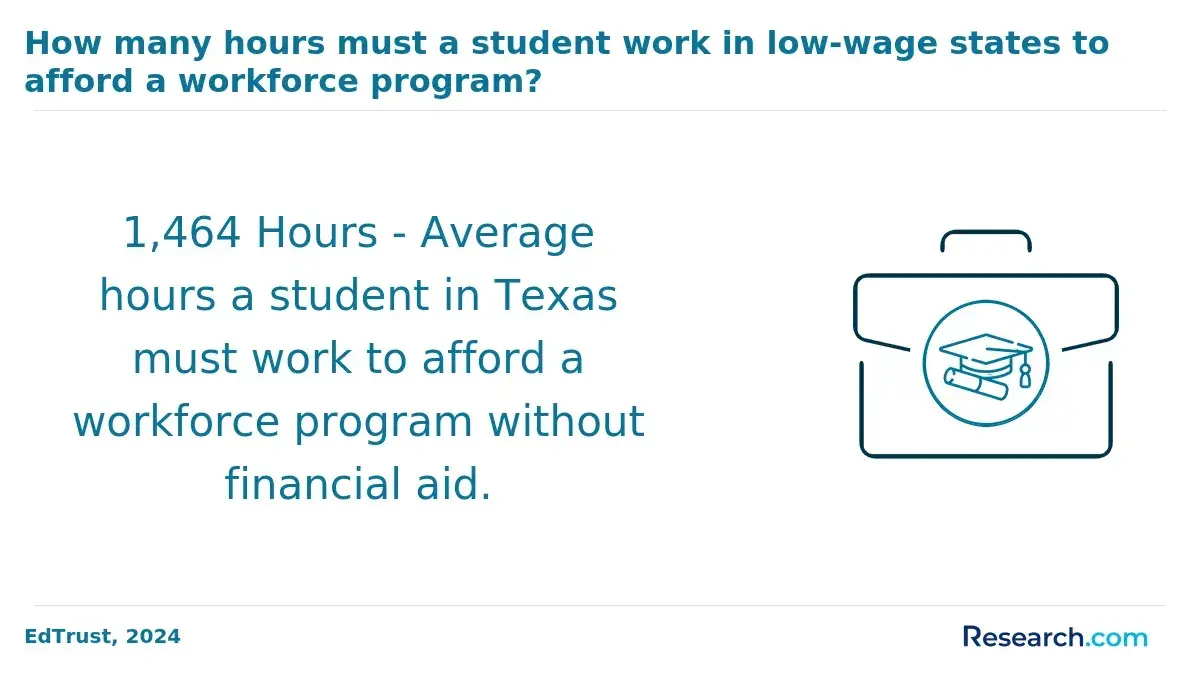
The cost of a fast online geography degree depends on remaining credits, tuition per credit, online fees, books, GIS software, transfer-evaluation fees, and financial aid eligibility. Transfer credits can reduce total tuition dramatically, but only if they replace required coursework instead of landing as unused electives.
College Board's 2024 pricing data reported average published tuition and fees of $11,610 for in-state students at public four-year institutions and $43,350 at private nonprofit four-year institutions for the 2024-25 academic year. For geography transfer students, that gap makes public online programs especially important to compare, but the lowest annual tuition is not always the lowest total cost if the degree takes longer.
The table below shows how remaining credits can change tuition exposure. Use your target school's per-credit price for a more exact estimate.
| Remaining credits after transfer | Cost implication | What to check |
| 30 credits | Often the lowest-cost and fastest completion scenario. | Whether all 30 credits can be completed online within one academic year. |
| 45 credits | Moderate cost; common when students need upper-division major courses. | Whether accelerated terms and summer courses are available. |
| 60 credits | May still be faster than starting over, but savings depend on tuition rate. | Whether a lower-cost public or in-state online option applies. |
| 75 or more credits | Can reduce the value of a "fast" program if many prior credits do not apply. | Whether a different school would apply more of your previous coursework. |
Financial aid can apply to accredited online geography degrees if the student and program meet federal eligibility rules. However, aid does not make an inefficient transfer plan harmless; borrowed funds still have to be repaid, and extra terms can add fees and opportunity costs.
To compare true cost, calculate the following before enrolling:
- Tuition for remaining required credits, not tuition for the full 120-credit degree.
- Mandatory online, technology, proctoring, graduation, transcript, and lab fees.
- Software, hardware, or data costs for GIS, remote sensing, or statistics courses.
- Lost income or reduced work hours if you enroll full time to finish faster.
- Scholarships, employer tuition assistance, military education benefits, and Pell Grant eligibility if applicable.
Geography students who are also weighing communication, analytics, or digital mapping careers may compare costs with adjacent online majors, including programs listed among the best colleges for social media marketing, but the best value still depends on transfer fit and career goals.
How Do Accelerated, Competency-Based, and Self-Paced Online Geography Degree Programs Compare?
Accelerated, competency-based, and self-paced formats are often marketed as fast, but they work differently. For geography, the most common fast format is accelerated online terms; fully competency-based geography bachelor's programs are less common than competency-based business, IT, or general studies degrees.
The table below compares common online formats from a transfer student's perspective. The fastest option depends on how much structure you need and whether required geography courses are available in that format.
| Format | How it works | Speed advantage | Main risk |
| Accelerated terms | Courses run in short sessions, often 7 or 8 weeks. | Students can complete more course cycles per year. | Compressed workload can be intense, especially for GIS labs and research projects. |
| Traditional online semesters | Courses follow standard 15- or 16-week terms. | More manageable for working adults. | Fewer start dates may slow completion. |
| Self-paced courses | Students progress through material with flexible deadlines. | Strong independent learners may move quickly. | Not all major requirements may be self-paced, and procrastination can delay graduation. |
| Competency-based education | Students advance by demonstrating mastery. | Can be very fast in fields where students already have expertise. | Geography-specific competency-based options may be limited, and graduate schools may review transcripts carefully. |
For most geography transfer students, the best balance is a regionally accredited online program with accelerated terms, predictable course rotations, strong advising, and a written transfer plan. Self-paced formats can help with electives or general education, but a geography major often still requires scheduled upper-division courses.
Choose the format based on your learning style:
- Choose accelerated terms if you can meet weekly deadlines and want the shortest calendar time.
- Choose traditional online semesters if you work full time, have caregiving responsibilities, or need a steadier pace.
- Choose self-paced options only if the school confirms that the credits apply directly to remaining requirements.
- Be cautious with competency-based alternatives if you plan to apply to selective graduate programs that expect graded upper-division geography coursework.
Are Fast Accredited Online Geography Degrees Respected by Employers and Graduate Schools?
Fast accredited online geography degrees can be respected when they come from a properly accredited institution and include rigorous coursework in spatial thinking, research, data analysis, environmental systems, and human geography. Employers and graduate schools generally care more about institution legitimacy, skills, transcript quality, projects, internships, and relevant experience than whether courses were completed online.
Labor-market outcomes depend on the role. Geography graduates may pursue GIS technician, geospatial analyst, environmental planner, community development, transportation planning, emergency management, market research, location intelligence, or graduate study.
BLS data published in 2024 shows that geography-related roles are specialized and often small in employment size, which means students should build practical GIS, statistics, coding, and portfolio skills rather than relying on the degree title alone.
The table below connects geography degree preparation with common career directions. Use it to evaluate whether a fast program still gives you enough skill depth for your goals.
| Career direction | Useful geography preparation | Extra experience that helps |
| GIS or geospatial analyst | GIS, cartography, remote sensing, spatial statistics, database concepts. | Portfolio maps, internships, Python, SQL, ArcGIS Pro, QGIS. |
| Urban or regional planning support | Human geography, transportation, demographics, land use, policy analysis. | Planning internships, public-meeting experience, graduate planning prerequisites. |
| Environmental analysis | Physical geography, climate, water, soils, environmental systems. | Fieldwork, environmental regulations, data collection, remote sensing. |
| Emergency management | Hazards geography, spatial modeling, population vulnerability, mapping. | Emergency operations training, FEMA coursework, scenario planning. |
| Graduate school | Research methods, statistics, advanced geography seminars, writing-intensive courses. | Faculty references, strong GPA, research project, thesis-style writing sample. |
A fast program may be a poor choice if it skips advanced methods, offers too few GIS courses, lacks faculty interaction, or leaves you without portfolio-ready projects. Speed should not come at the expense of the skills that make the degree useful.
Before enrolling, ask these outcome-focused questions:
- Will I complete portfolio projects that demonstrate mapping, spatial analysis, and research skills?
- Are GIS and geospatial technology courses available online often enough to graduate on time?
- Do faculty advise online students on internships, graduate school, or career pathways?
- Can I add a GIS certificate, statistics course, data analytics course, or internship without delaying graduation?
- Do graduates pursue roles or graduate programs similar to the ones I want?
Other Things You Should Know About Geography
It can be either. A BA often emphasizes human geography, global systems, policy, culture, and regional studies, while a BS may include more science, GIS, statistics, environmental systems, and technical coursework. The better option depends on whether your goal is planning, policy, geospatial analysis, environmental work, or graduate study.
Some programs include field methods, labs, or applied projects, but many online programs adapt these requirements through local data collection, virtual labs, GIS assignments, or remote research projects. Ask whether any course requires travel, synchronous meetings, specialized software, or proctored exams.
Yes, but an unrelated associate degree may mainly satisfy general education and elective requirements. You may still need introductory geography, statistics, GIS, physical geography, human geography, and upper-division major courses before graduating.
Choose geography if you want a broad spatial view of people, places, environments, and data. Choose GIS if you want a more technical mapping and spatial analytics path, environmental science if you want more lab or natural science preparation, and urban planning if your goal is land use, transportation, housing, or public policy.
References
- How to Pay for Graduate School Outside of the U.S. (+39 Scholarship Resources) https://www.collegeessayguy.com/blog/financial-aid-non-us-graduate-school
- Transfer Credit & Residency Policy https://catalog.baypath.edu/academic-policies-and-procedures/transfer-credit/
- Most Affordable Online Colleges Of 2025 https://www.affordablecollegesonline.org/cheap-online-colleges/
- Transferology https://www.transferology.com/
- Top Online Schools That Accept Transfer Credits https://www.edvisorly.com/student-guides/online-schools-that-accept-transfer-credits
- Best Online Bachelor's Degrees in Geography - GISDegree.org https://www.gisdegree.org/online/bachelors-in-geography/
- Study: Online learning improves retention, graduation rates https://www.highereddive.com/news/study-online-learning-improves-retention-graduation-rates/521271/
- 2025 Best Online GIS Degrees https://www.onlineu.com/degrees/geographic-information-systems
- Admissions Requirements https://claremontlincoln.edu/transfer-credit-policies/