2027 Accredited Online Geography Degree Programs for Working Adults: Flexible, Part-Time, and Self-Paced Options

Co-Founder and Chief Data Scientist
Choosing an online geography degree while working full time means comparing more than tuition; format, accreditation, transfer credit, and weekly workload can determine whether you finish. NCES reported in 2024 that nearly 5.2 million U.S. college students took at least one distance education course, showing how mainstream online study has become.
This guide is for adults seeking accredited online Geography degree programs with flexible, part-time, or self-paced options. You will learn how to evaluate formats, costs, timelines, support services, and career fit before committing.
Key Things You Should Know
- Choose a U.S. institution recognized by an accreditor listed by the U.S. Department of Education, because it affects federal aid, transfer credit, graduate admission, and employer recognition.
- Most online bachelor's degrees require about 120 credits; full-time students often finish in about 4 years, while part-time working adults commonly need 5 to 6 years unless transfer credits, prior learning credit, or accelerated terms shorten the timeline.
- Expect roughly 9 to 12 hours of weekly work for a 3-credit course in a standard term, and compare total cost carefully because public 4-year in-state tuition and fees averaged $11,610 in 2024-25 while private nonprofit averages were much higher.
What Is an Accredited Online Geography Degree Program and Why Does Accreditation Matter?
An accredited online geography degree is a college program delivered fully or mostly online by an institution that has been reviewed by a recognized accrediting agency. Geography programs study places, people, environments, spatial data, maps, geographic information systems, climate, urban development, natural resources, and human-environment relationships.
For working adults, accreditation matters because it protects the practical value of the degree. Federal student aid, many employer tuition benefits, transfer credit, graduate school admission, and some public-sector hiring processes usually depend on attending an accredited institution. Geography itself does not typically require a single national programmatic accreditation the way nursing or engineering may, so institutional accreditation is the key baseline to verify.
The table below explains the accreditation checks that matter most when comparing online geography programs. Use it to separate legitimate flexible programs from schools that may be convenient but risky.
| Accreditation factor | Why it matters for working adults | What to verify |
| Institutional accreditation | Helps determine eligibility for federal aid, transfer credit, and employer recognition. | Confirm the school is accredited by a U.S. Department of Education-recognized institutional accreditor. |
| Program location and authorization | Online students may live outside the school's home state. | Ask whether the school is authorized to enroll students in your state. |
| Transfer-credit acceptance | Prior college work can lower cost and shorten time to graduation. | Request an unofficial or preliminary transfer evaluation before enrolling. |
| Employer and graduate-school acceptance | Some career paths require a graduate degree or specialized GIS training. | Ask about alumni outcomes, graduate placements, and career services for online learners. |
Be cautious if a school avoids naming its accreditor, pressures you to enroll immediately, promises unrealistic completion times, or claims that "life experience" alone can replace most of a bachelor's degree. A flexible schedule is valuable only if the credential remains portable and credible.
Which Flexible Geography Degree Formats Are Best for Working Adults: Part-Time, Full-Time, or Self-Paced?
The best format depends on your work schedule, family responsibilities, financial aid status, and tolerance for deadlines. "Online" does not always mean self-paced; many accredited programs use weekly due dates, group discussions, proctored exams, or occasional live sessions.
The comparison below shows how common online formats differ for working adults. It is especially useful if you are deciding whether to prioritize speed, predictability, or maximum scheduling control.
| Format | Best fit | Typical trade-off | Working-adult considerations |
| Part-time asynchronous | Adults with full-time jobs or caregiving responsibilities | Slower completion | Often the most sustainable option because you can study evenings or weekends while still meeting weekly deadlines. |
| Full-time online | Students who can reduce work hours or use employer support | Higher weekly workload | Can shorten time to graduation but may be difficult with a demanding job. |
| Self-paced or competency-based | Highly organized adults with prior knowledge or transfer credits | Less external structure | Can be efficient, but you must confirm term limits, subscription costs, instructor access, and whether geography or GIS courses are available in that model. |
| Synchronous online | Students who want live interaction and a fixed schedule | Less schedule flexibility | Works best if class times do not conflict with shifts, travel, or childcare. |
| Hybrid or low-residency | Students who want fieldwork, labs, or local networking | May require travel | Check whether campus visits, field trips, or lab intensives are mandatory. |
A practical way to choose is to match the format to your weekly capacity rather than your ideal graduation date. Before enrolling, compare these decision points carefully:
- Choose part-time asynchronous study if your work schedule changes, you need predictable weekly due dates, or you want to avoid overload.
- Choose full-time online study only if you can consistently protect study blocks during the week and handle multiple reading, mapping, data, and writing assignments at once.
- Choose self-paced study if you are disciplined, comfortable learning independently, and have confirmed that the school offers the geography, GIS, or environmental coursework you need.
- Avoid assuming that accelerated terms are easier; shorter courses usually compress the same credit requirements into fewer weeks.
Adults comparing unrelated flexible degree models may also find it useful to review how accelerated programs are structured in other fields, such as an accelerated psychology bachelor's degree online, because the same trade-offs around pace, workload, and transfer credit often apply.
What Are the Admission Requirements for Accredited Online Geography Degree Programs?
Admission requirements vary by school and degree level, but online geography bachelor's programs usually follow standard undergraduate admissions processes. Adults with prior college credits may apply as transfer students, while first-time college students typically submit high school records or GED documentation.
Most programs ask for a combination of academic records and basic enrollment documents. Before applying, gather the items below so admissions staff can evaluate you quickly and accurately:
- Official transcripts from high school, GED programs, community colleges, military education, and previous universities.
- A completed application and any required application fee or fee waiver request.
- Proof of English proficiency if required by the institution.
- A personal statement or short essay if the school uses holistic review.
- Placement information for math or writing if the program requires statistics, quantitative methods, GIS, or research courses.
- Transfer-credit documentation, including course descriptions or syllabi for geography, environmental science, statistics, or mapping courses.
Some online geography programs are open to all admitted university students, while others require you to complete prerequisites before declaring the major. If the degree includes GIS, remote sensing, or spatial analysis, ask whether you need prior statistics, computer literacy, or access to a computer that can run specialized software.
Working adults should also ask about rolling admissions, multiple start dates, and readmission policies. A program with spring, summer, and fall starts may be easier to enter around a work calendar than a cohort program that admits once per year.
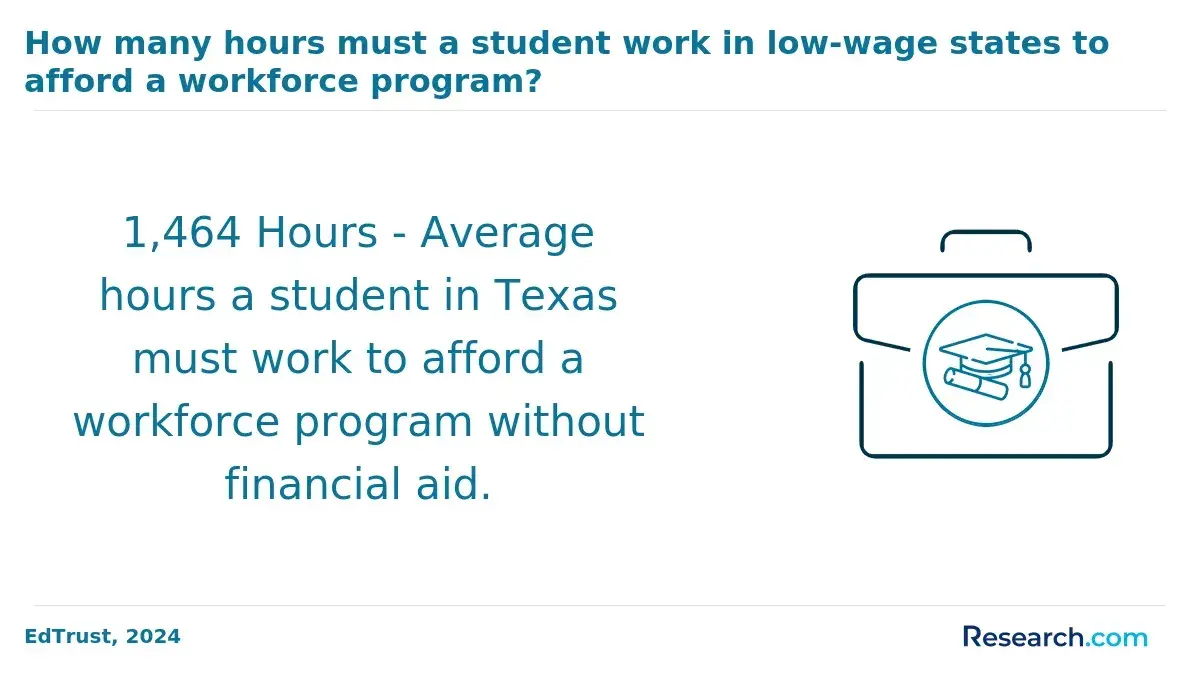
How Much Does an Online Geography Degree Cost, and What Financial Aid Options Are Available?
The cost of an online geography degree depends on tuition, fees, residency rules, transfer credits, technology requirements, and course load. College Board's 2024 Trends in College Pricing reported average published tuition and fees of $11,610 for in-state students at public 4-year institutions in 2024-25, which gives working adults a useful benchmark when judging whether an online program is priced competitively.
When comparing costs, look beyond the per-credit price. These are the common charges that can affect the real amount you pay:
- Tuition per credit or per term
- Online learning or distance education fees
- GIS software, lab, proctoring, or technology fees
- Textbooks, digital course materials, and mapping data subscriptions
- Residency-based tuition differences for out-of-state online students
- Graduation, transcript, and portfolio assessment fees
Financial aid can make an accredited online program more affordable, but only if the school and your enrollment status qualify. The maximum federal Pell Grant for the 2024-25 award year was $7,395, which matters because many working adults attend part time and need to understand how aid may be prorated by credit load.
Use the following options as a checklist when estimating net cost rather than sticker price:
- Submit the FAFSA if you are attending an eligible accredited institution and want to be considered for federal grants, loans, or work-study.
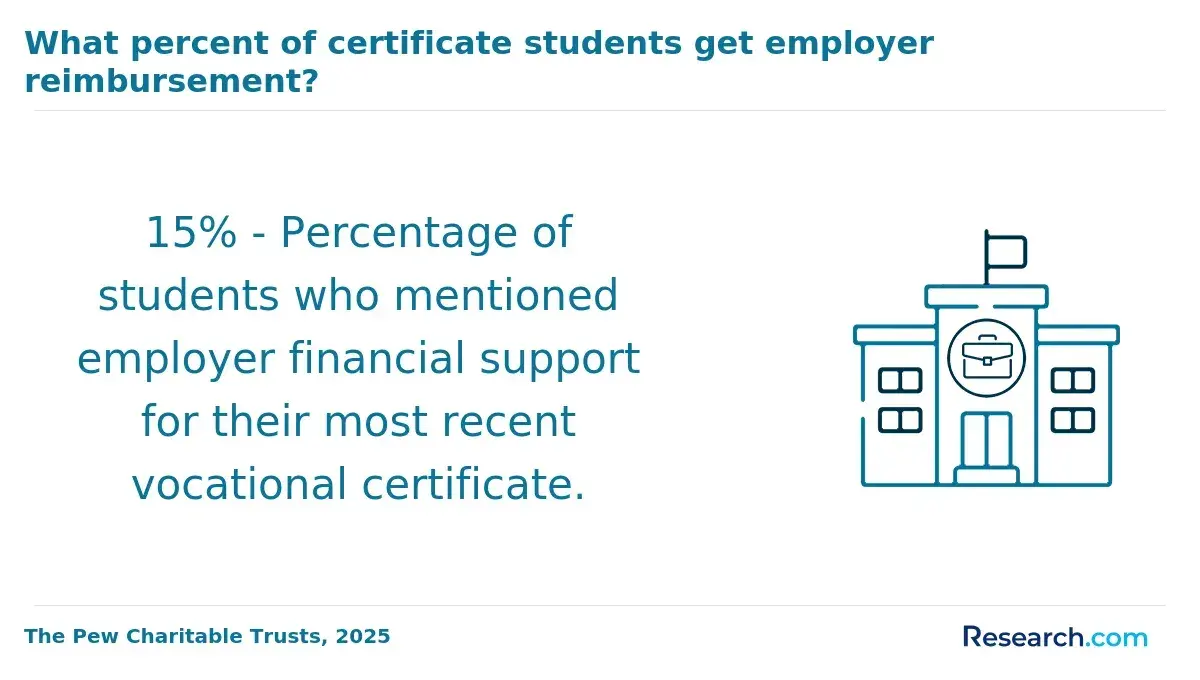
- Ask your employer about tuition assistance, tuition reimbursement, public-sector education benefits, or workforce development funds.
- Check whether the school offers adult learner scholarships, transfer scholarships, military benefits, or completion grants.
- Compare subscription-based self-paced tuition with per-credit tuition, especially if you may need more than one term to complete courses.
- Ask whether transfer credits are evaluated before you pay an enrollment deposit.
A common mistake is choosing the lowest advertised tuition without calculating fees and the number of credits left to finish. A school that accepts more of your prior credits may cost less overall even if its per-credit rate is higher.
How Long Does It Take to Complete an Online Geography Degree, and Can Transfer Credits Help You Graduate Faster?
Most bachelor's degrees require about 120 credits, including general education, major courses, electives, and sometimes a capstone. For a working adult, the most important timeline question is not the catalog length but how many credits you can realistically complete each term without hurting your job performance or family life.
The table below summarizes common completion patterns. It helps you estimate a realistic path based on course load, not just the school's advertised graduation timeline.
| Enrollment pattern | Typical course load | Approximate bachelor's timeline | Best for |
| Full-time | 12 to 15 credits per term | About 4 years with no transfer credit | Students who can reduce outside obligations or study as a primary commitment. |
| Part-time | 6 to 9 credits per term | Often 5 to 6 years with no transfer credit | Adults working full time who need a manageable pace. |
| Transfer-heavy completion | Varies by remaining credits | Potentially 1 to 3 years after an associate degree or substantial prior credit | Adults returning to finish a degree after community college, military training, or previous university study. |
| Self-paced or competency-based | Progress-based rather than weekly credit load | Varies widely by motivation, prior knowledge, and course availability | Independent learners who can complete assessments quickly and consistently. |
Transfer credit can be one of the biggest advantages for adult learners. To avoid surprises, follow this sequence before committing to a program:
- Request an official or preliminary transfer-credit evaluation from each school you are seriously considering.
- Ask how many credits must be completed at the institution to earn the degree.
- Confirm whether older credits, military education, professional training, or prior learning assessments can apply.
- Ask which transferred courses count toward the geography major rather than only electives.
- Build a term-by-term degree plan that reflects your work schedule and financial aid requirements.
If you plan to move from a bachelor's degree into graduate study, compare whether your online geography coursework includes research methods, statistics, GIS, and writing-intensive classes. Adults considering a faster graduate pathway can also review online master options, but admission requirements and workload expectations can differ significantly from undergraduate study.
What Should You Look for When Comparing Accredited Online Geography Degree Programs?
A strong online geography program should combine credible accreditation, flexible delivery, relevant coursework, career preparation, and realistic support for adult learners. The best choice is not always the cheapest or fastest program; it is the one that fits your schedule, accepts appropriate credits, and teaches skills aligned with your goals.
The table below highlights the most important comparison factors. Use it to build a shortlist of programs before speaking with admissions counselors.
| Comparison factor | Why it matters | What a strong program shows |
| Geography curriculum | Determines whether the degree fits human geography, physical geography, environmental, planning, or GIS interests. | Clear course maps with electives tied to career pathways. |
| GIS and spatial analysis | Many geography-related jobs value technical mapping and data skills. | Courses using current GIS tools, spatial data, cartography, and remote sensing where available. |
| Online format | Flexibility depends on deadlines, live meetings, and term structure. | Transparent information about synchronous sessions, proctored exams, and weekly expectations. |
| Adult learner policies | Working students benefit from transfer credit, stop-out options, and advising access. | Transfer evaluations, part-time plans, evening support, and clear leave policies. |
| Career alignment | Geography degrees can lead to several different fields. | Internship support, portfolio projects, career coaching, and alumni examples. |
When you contact schools, ask direct questions that reveal how flexible the program really is. These questions are more useful than asking whether the program is "online":
- Are courses asynchronous, synchronous, self-paced, or a mix?
- How many hours per week do successful part-time students usually spend per course?
- Are GIS labs, field methods, exams, or presentations scheduled at fixed times?
- Can I pause for a term without losing admission status, scholarships, or catalog rights?
- How many of my credits will apply to the major, not just the total degree?
- What career services are available to online students in my state or region?
Also think about adjacent career interests. If you are drawn to geographic storytelling, place-based branding, tourism, or location-based digital strategy, comparing geography coursework with resources on the best colleges for social media marketing can help you decide whether you want a technical spatial-data path, a communication path, or a combination of both.
What Career Opportunities and Salary Potential Can You Expect With a Geography Degree?
A geography degree can support careers in GIS, planning, environmental analysis, mapping, transportation, sustainability, emergency management, market analysis, and public policy. It is most valuable when paired with practical skills such as GIS software, statistics, spatial data management, writing, visualization, and field or internship experience.
BLS reported a median annual wage of $92,580 for geographers in May 2024, but that figure should be interpreted carefully because "geographer" is a relatively specialized occupation. Many graduates work under different job titles, and pay varies by industry, location, technical skill level, and whether the role requires graduate education.
The table below shows common career directions for geography graduates. It is not a guarantee of employment, but it can help you connect coursework choices with likely job functions.
| Career path | Typical responsibilities | Helpful coursework or skills |
| GIS analyst or technician | Create maps, manage spatial databases, analyze location data, and support planning or operations teams. | GIS, cartography, remote sensing, database basics, Python or scripting where available. |
| Urban or regional planning assistant | Support land-use studies, transportation plans, zoning analysis, and community development projects. | Urban geography, planning, statistics, public policy, demographic analysis. |
| Environmental analyst | Study land, water, climate, hazards, or resource-use patterns for agencies, nonprofits, or consultants. | Physical geography, environmental science, spatial modeling, field methods. |
| Market or location analyst | Use geographic and demographic data to guide site selection, logistics, or customer analysis. | Economic geography, data visualization, statistics, business analytics. |
| Emergency management or hazard specialist | Map risk, analyze vulnerability, and support disaster planning or response. | Hazards geography, GIS, climate, public administration, communication. |
Some geography careers are accessible with a bachelor's degree, while others favor a master's degree, certification, or specialized technical portfolio. If your long-term goal is education leadership, university administration, or applied research management rather than geography practice itself, reviewing pathways such as the best EdD programs online may help you compare how graduate credentials differ in purpose and career outcomes.
How Can Working Adults Balance a Geography Degree With Full-Time Work and Family Responsibilities?
Balancing a geography degree with full-time work is possible, but it requires a realistic course load and a clear plan for weekly study time. Geography courses may include reading, discussion posts, map projects, data exercises, field observations, and writing assignments, so the workload is not always limited to watching lectures.
A standard planning rule used by many colleges is that a 3-credit course may require about 9 hours of total work per week in a traditional term, including class time and independent study. For a full-time employee, that means two courses can feel like a serious part-time job.
Use the steps below to build a schedule before your first term begins:
- Choose one course in your first term if you have been out of school for several years or have unpredictable work hours.
- Block study time on your calendar before the term starts, including one longer weekend session for mapping or writing assignments.
- Tell your advisor about work travel, shift changes, caregiving duties, or military obligations that may affect deadlines.
- Use school breaks to complete transfer paperwork, financial aid tasks, software setup, and advising appointments.
- Prioritize required sequential courses, especially GIS or research methods, because they may not be offered every term.
- Reassess your load after the first major assignment rather than waiting until midterm.
Common mistakes include taking too many accelerated courses at once, assuming asynchronous courses have no deadlines, ignoring software setup until an assignment is due, and not telling family members when study time is nonnegotiable. A sustainable plan usually beats an aggressive one that causes stop-outs or repeated courses.
What Student Support Services and Online Learning Resources Should You Expect From a Geography Degree Program?
Online students should receive more than course access. For working adults, support services can determine whether small problems become major barriers, especially when classes require GIS software, data files, proctored exams, or research help.
Before enrolling, confirm that online students have access to the same essential resources as campus students. The services below are especially important in geography programs:
- Academic advising that can build part-time degree plans and explain course sequencing.
- Transfer-credit advising before or early in enrollment.
- Technical support during evenings or weekends if assignments are due outside business hours.
- Library access to journals, maps, datasets, citation tools, and research consultations.
- GIS software access, cloud labs, virtual desktops, or clear hardware requirements.
- Writing support for research papers, policy briefs, and capstone projects.
- Career services for resumes, portfolios, internships, government applications, and graduate school planning.
- Accessibility services for approved accommodations in online courses and exams.
Ask whether support is available in your time zone and whether online learners can meet advisors by video, phone, or chat. A program that looks flexible on paper may be frustrating if advising, tutoring, or technical help is only available while you are at work.
Do Online Geography Degree Programs Include Internships, Practicums, or Other Hands-On Learning Requirements?
Many online geography programs include applied learning, but the format varies. Some require a capstone project, internship, GIS lab sequence, field methods course, research paper, or community-based project. Others offer internships as optional electives, which can be useful for career changers who need experience.
Hands-on requirements are worth investigating early because they can affect your schedule and location. Ask these questions before you enroll:
- Is an internship, practicum, field course, lab, or capstone required for graduation?
- Can internship hours be completed near my home or workplace?
- Are evening, remote, or project-based internship options available?
- Does the school help online students find placements, or am I responsible for arranging one?
- Are there background checks, travel costs, liability forms, or supervisor requirements?
- Can current employment count if the work involves mapping, planning, environmental analysis, or spatial data?
Geography's applied side overlaps with fields such as planning, design, environmental work, and the built environment. If your interests lean toward site design, buildings, or urban form, comparing a geography pathway with an architecture degree online can clarify whether you want a spatial analysis degree, a design-focused professional path, or a planning-related graduate route.
Do not assume online means no hands-on work. A strong program should explain how remote students complete applied projects and how those projects can become portfolio evidence for employers.
Other Things You Should Know About Geography
It can be either, depending on the program. Geography includes human geography, physical geography, GIS, cartography, climate, urban systems, population, transportation, and environmental change. Review the required courses and electives to see which side of the field the program emphasizes.
You do not usually need advanced calculus for a general geography degree, but statistics, data interpretation, and spatial analysis are common. If you choose a GIS-heavy path, comfort with databases, quantitative reasoning, and technical software becomes more important.
Many schools offer GIS certificates, minors, or course sequences that can be completed with a geography major. Ask whether certificate credits overlap with degree requirements so you do not add unnecessary time or cost.
It can be, especially if you build GIS, data visualization, research, or analysis skills. Remote opportunities depend more on the role and employer than the degree title, so look for programs that help you create a portfolio of maps, reports, and spatial-data projects.
References
- Geography Programs Abroad: Study Options & Benefits - AEC https://www.aecoverseas.com/geography/
- Self-Paced Online Degree Programs https://www.umassglobal.edu/why-umassglobal/flexible-ways-to-learn/self-paced
- Data shows breadth of career destinations for geography graduates | RGS https://www.rgs.org/about-us/our-work/latest-news/data-shows-breadth-of-career-destinations-for-geography-graduates
- The Guide - AAG https://www.aag.org/guide-to-geography-programs-and-opportunities/
- Remote Learning - Flexible for Global Students | Sora https://soraschools.com/blog/remote-learning-embracing-flexibility-global-students
- Best Online Bachelor's Degrees in Geography - GISDegree.org https://www.gisdegree.org/online/bachelors-in-geography/
- Jobs for a Geography Major | Key Skills to Succeed in Geography https://bootcampgis.com/geography-major-gis-jobs/