2027 Community Health Center Nurse Orientation: Training, Competency Reviews, and Support to Compare
Audited and Verified:
Our Editorial and Data Verification Process
Research.com uses government datasets, official education statistics and primary institutional information to support its career and degree guides. Our review process checks factual accuracy, occupational definitions, source dates and the requirements associated with the credentials discussed.
How This Article Was Fact-Checked
Our editorial team verifies salary estimates, employment projections, education requirements and program information against original data providers and official organizations. Salary figures are checked against the relevant occupational definitions and reporting periods. Information about licensure, accreditation and required in-person training is reviewed separately.
Fact-checked and verified on:

Co-Founder and Chief Data Scientist
A nursing license qualifies you to enter practice, but it does not prepare you for every workflow at a community health center. New graduates and experienced nurses alike need to learn how the center handles triage, chronic disease follow-up, referrals, documentation, and escalation. This guide explains what effective orientation includes, how employers should verify competence, and which questions reveal whether a job offers enough support. It also separates employer onboarding from the education, licensure, and specialty preparation required for different roles.
Key Things You Should Know
- Compare orientation in three parts: role-specific training, observed competency checks, and support after initial sign-off.
- An RN license, an LPN/LVN license, and an advanced practice credential authorize different responsibilities; none replaces a health center's local onboarding.
- Ask for the expected orientation schedule, assigned preceptor, patient-assignment progression, and written evaluation criteria before accepting an offer.
What Is Community Health Center Nurse Orientation?
Community health center nurse orientation is an employer-led transition into a specific ambulatory care role. It combines organizational onboarding with supervised practice in the center's patient population, staffing model, electronic health record (EHR), referral network, and clinical policies. An RN moving from inpatient care may bring strong assessment skills yet still need supervised experience with telephone triage and follow-up between visits. A new graduate may need a more gradual progression across those same tasks.
Orientation is not a nursing degree, an academic clinical placement, or a license. For someone who has not entered nursing, exploring nursing study without previous nursing training is a separate decision; employer onboarding cannot substitute for initial nursing education and licensure.
What Training Do Community Health Center Nurses Complete?
Training should match the nurse's assigned duties rather than rely on a generic checklist. Common components include EHR documentation, privacy, infection prevention, medication and vaccine workflows where applicable, chronic disease education, care coordination, telephone or in-person triage, and responding when a patient needs a higher level of care. Nurses may also learn how the center works with interpreters, social services, behavioral health staff, and outside specialists.
Behavioral health training, for example, may cover recognizing concerns, documenting them, and connecting patients with the appropriate clinician. It does not prepare an RN to practice as a psychiatric-mental health nurse practitioner. Accelerated mental health NP master's coursework is an educational pathway for a different role, with its own clinical and credentialing requirements.
When comparing employers, ask which tasks are taught through observation, simulation, supervised patient care, or independent study. The mix matters: completing an online module alone does not demonstrate safe performance in a live triage encounter.
How Are Community Health Center Nurse Competencies Evaluated?
A useful competency review checks whether the nurse can perform assigned work safely under the conditions in which it will occur. Depending on the task, evidence may include a preceptor's direct observation, a case-based discussion, a documented simulation, an EHR chart review, or a review of escalation decisions. The evaluator should record what was assessed, the result, any practice needed, and when reassessment will occur.
Competencies should progress with responsibility. A nurse might first observe a workflow, then perform it with a preceptor, and only then receive a defined independent assignment. The employer should state who can sign off each skill and who remains available when a case falls outside the nurse's experience or authorized scope. Initial sign-off is not a promise that every future case can be handled without consultation.
Ask how the center responds to an unmet competency: Is there additional supervised practice, a revised assignment, and a reassessment date? This is more informative than asking whether orientation simply ends after a set number of weeks. Likewise, planning an accelerated PMHNP certificate concerns formal advanced practice preparation, not an employer's validation of RN-level behavioral health workflows.
Education depends on the job. A community health center RN needs an educational route that supports RN licensure and must hold the license required for the position and jurisdiction. An ADN/ASN or BSN may provide that initial route, subject to the applicable program and state board requirements; individual employers may prefer a BSN for particular positions. An LPN/LVN position has a different educational and licensed scope. Nurse practitioner jobs require qualifying advanced practice preparation and authorization, not RN orientation alone.
For a career changer with a non-nursing degree, prior coursework may help with admissions, but it does not confer an RN license. Compare prelicensure options against prerequisites, supervised clinical access, and the credential each awards. Accelerated direct-entry nursing master's pathways are one option to investigate; confirm whether a specific program provides initial RN preparation and what additional qualifications, if any, its graduates can pursue.
The position's duties determine the necessary credential. RNs and LPNs/LVNs must have the appropriate active nursing license for their work; the employer must also verify any applicable practice authorization. A nurse practitioner position requires the relevant graduate preparation, national certification where required, and state APRN authorization or recognition. Employers may additionally require training or credentials for particular assignments, such as resuscitation or immunization workflows.
A specialty credential can demonstrate preparation, but it does not expand a nurse's legal scope or replace observed orientation. A post-master's nurse considering an NP position should evaluate the appropriate population focus: comparing post-master's FNP study options is relevant to family nurse practitioner preparation, not to qualifying an RN for routine health center onboarding.
General nursing education supplies foundations in assessment, pharmacology, clinical judgment, patient education, and supervised care. Public or community health coursework may add population health, health promotion, prevention, and the effects of access barriers on care. Those subjects help nurses understand a health center's mission, but the employer must still teach its actual referral routes, documentation standards, standing orders, and escalation process.
Coursework should be judged against the intended role. For example, RN preparation in recognizing and escalating a behavioral health concern differs from doctoral nursing application requirements compared for an advanced degree. Neither academic credential alone verifies that a nurse can safely use a particular center's triage protocol. Ask employers how classroom knowledge is translated into observed practice during orientation.
Online coursework can suit a future community health nurse if the complete program - not just its lectures - supports the intended license and provides required labs, simulation, and approved supervised clinical experiences. An advertised online format does not mean clinical work can be completed remotely or scheduled around every job. A practicing RN in a postlicensure program should instead check how coursework and required field experiences fit existing shifts.
Separate format from admission. Comparing nursing admission test policies may help an applicant shortlist schools, but a test policy says nothing by itself about clinical placement, state eligibility, or preparation for community practice. Confirm those details with each program before enrolling.
There is no separate degree required solely to complete community health center orientation, and employers set their own onboarding schedules. For someone entering RN practice, an associate-degree route is commonly planned around two years of nursing study and a traditional BSN around four years; prerequisites, program sequence, prior credit, and clinical availability can change the total. A licensed RN considering further study faces a different timeline - and may not need another degree for the health center job sought.
Compare total costs, not tuition alone: required fees, supplies, clinical travel, licensing expenses, and income lost when work hours must change can materially affect an education decision. An employer may cover orientation while offering little or no tuition assistance. Affordable master's progression for bachelor's-prepared RNs is worth examining only if a defined future role calls for graduate education; it is not a prerequisite for routine RN onboarding.
Health centers may employ RNs for triage, patient education, care coordination, or nursing team leadership; LPNs/LVNs for duties within their licensed scope; and nurse practitioners for advanced clinical roles. Actual assignments depend on state law, employer policy, staffing, and supervision. An applicant should compare the posted title with the daily caseload, escalation coverage, and responsibility for follow-up rather than assume that similar titles describe identical jobs.
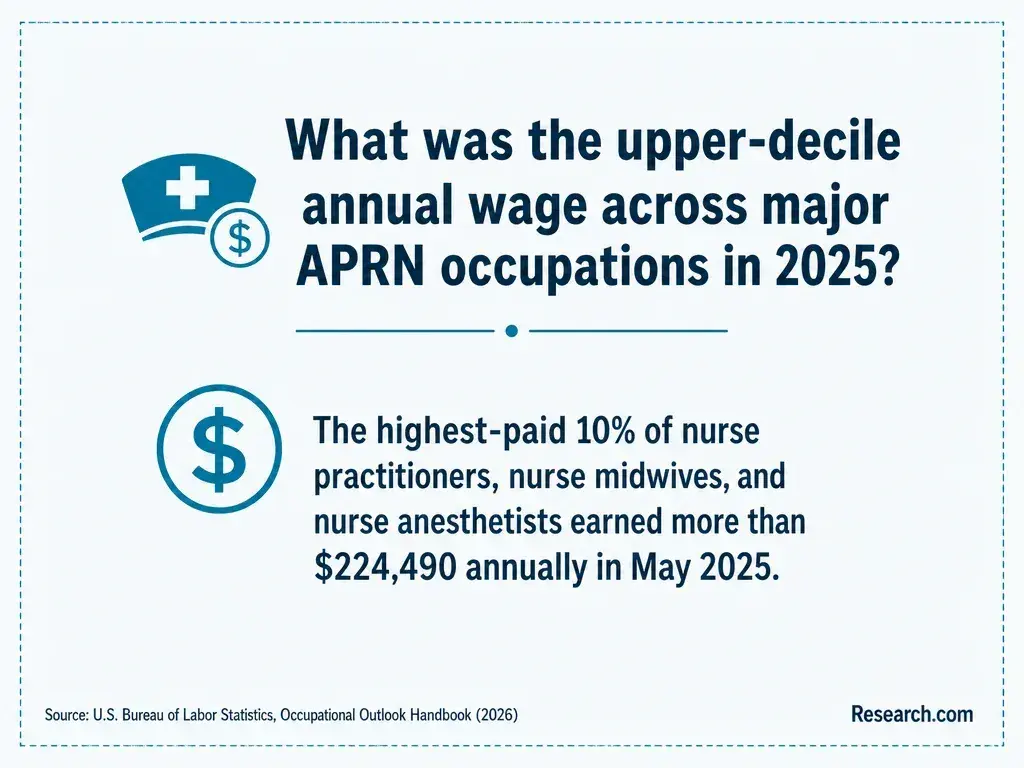
For pay context, use the U.S. Bureau of Labor Statistics occupation that matches the offer - such as registered nurse, licensed practical or vocational nurse, or nurse practitioner. Its national median and employment projection cover an occupation across settings; they are not a community health center offer or a guaranteed return on a degree. Compare actual offers by wages, benefits, schedule, patient workload, and funded training. Lower-cost options for future nurse practitioners address a distinct advanced practice career decision, not an assumed salary increase for an RN.
How Can You Compare Accredited Nursing Programs Effectively?
If you still need nursing education, first confirm that a program prepares you for the intended credential. Institutional accreditation, nursing program accreditation, state board approval, and authorization to enroll students in your location answer different questions. Obtain the applicable board's and program's confirmation of initial licensure eligibility rather than relying on an accreditation label alone.
The table separates school selection from employer selection. Both affect readiness, but neither can do the other's job.
| Decision | Evidence to compare | What it cannot establish |
| Nursing program | Exact award, regulatory status, clinical placement arrangements, total cost, and relevant outcomes | Competence in a specific employer's workflows |
| Health center offer | Preceptor access, supervised progression, competency criteria, staffing, and escalation coverage | Initial licensure eligibility or an academic credential |
Request a written program cost and clinical plan if you are applying to school; request the orientation plan and an opportunity to discuss it with a prospective preceptor if you are comparing jobs. An already-licensed ADN-prepared RN can consider ADN-to-MSN bridge programs for a specific longer-term goal, but should first check whether employer training or targeted continuing education meets the immediate need.
Other Things You Should Know About Nursing
Yes. Ask how nurses obtain qualified interpreter services, document their use, and provide understandable follow-up instructions. Do not assume a bilingual coworker is an appropriate substitute under every policy.
Not necessarily. Some positions include outreach or work at multiple sites. Confirm travel, equipment, documentation access, and the supervision available away from the primary clinic.
Some roles include remote calls or care coordination, but on-site patient care may remain central. Clarify the actual schedule and how remote triage, privacy, and escalation are managed.
Raise the specific concern promptly with the preceptor or designated supervisor, follow the employer's escalation policy, and document the issue through approved channels. Orientation should provide a way to obtain help before taking on work beyond demonstrated competence.
- Competency assessment for community health nurses - PMC https://pmc.ncbi.nlm.nih.gov/articles/PMC9150315/
- Educating Nurses for the Future - NCBI - NIH https://www.ncbi.nlm.nih.gov/books/NBK573912/
- community health nursing education - IRIS https://iris.who.int/bitstreams/bcacbe8e-e9be-4966-8ac6-8c4163ca41c4/download
- Overview - Culturally and Linguistically Appropriate Services (CLAS) in Nursing | Think Cultural Health https://thinkculturalhealth.hhs.gov/nursing/
- 42 CFR Part 491 -- Certification of Certain Health Facilities | ecfr.gov https://www.ecfr.gov/current/title-42/chapter-IV/subchapter-G/part-491
- Preceptorship - an overview https://www.sciencedirect.com/topics/social-sciences/preceptorship
- THE BENEFITS OF PRECEPTORSHIP by Amber Rose Means | montana.edu https://scholarworks.montana.edu/bitstreams/a3796a8d-b90e-4f7d-b10a-0d5b4696b508/download
- Components of an Effective Nurse Orientation Pathway | American Association of Critical-Care Nurses https://solutions.aacn.org/blog/components-of-an-effective-nurse-orientation-pathway
- Developing a Standardized Nursing Orientation for Clinical Employees in the Ambulatory Setting https://library.aaacn.org/p/s/developing-a-standardized-nursing-orientation-for-clinical-employees-in-the-ambulatory-setting-7573
- 30.3 Role of the Community Health Nurse | OpenStax https://openstax.org/books/population-health/pages/30-3-role-of-the-community-health-nurse