
2027 Junior Accountant Careers: Skills, Education, Salary & Job Outlook

Co-Founder and Chief Data Scientist
Choosing a junior accountant career is a practical decision about education, skills, and long-term mobility. The role is often one of the first professional steps into accounting, finance, audit, tax, payroll, or corporate reporting. It suits people who are comfortable with numbers, deadlines, documentation, and detail-oriented work.
The main questions are straightforward: Do you need a degree? What skills do employers expect? How much can you earn? Where can the role lead? This guide explains what junior accountants do, the qualifications that matter, the salary and job outlook figures currently cited for the role, and how to decide whether this path fits your strengths and goals.
Reported pay figures vary by source, employer, and location. In this guide, entry salaries are cited as ranging from $44,000 to $69,000 in 2024, while later salary benchmarks include 2025 figures for median, entry-level, and higher-end earnings. Use these numbers as planning references rather than guarantees.
Key Things You Should Know About Junior Accountant Career
- The typical earning potential for a junior accountant in the United States is around $50,949 annually, with entry-level salaries usually ranging from $45,000 to $60,000.
- This field is stable and growing, with job opportunities expected to increase by 5% from through 2034, which is faster than the average for all occupations.
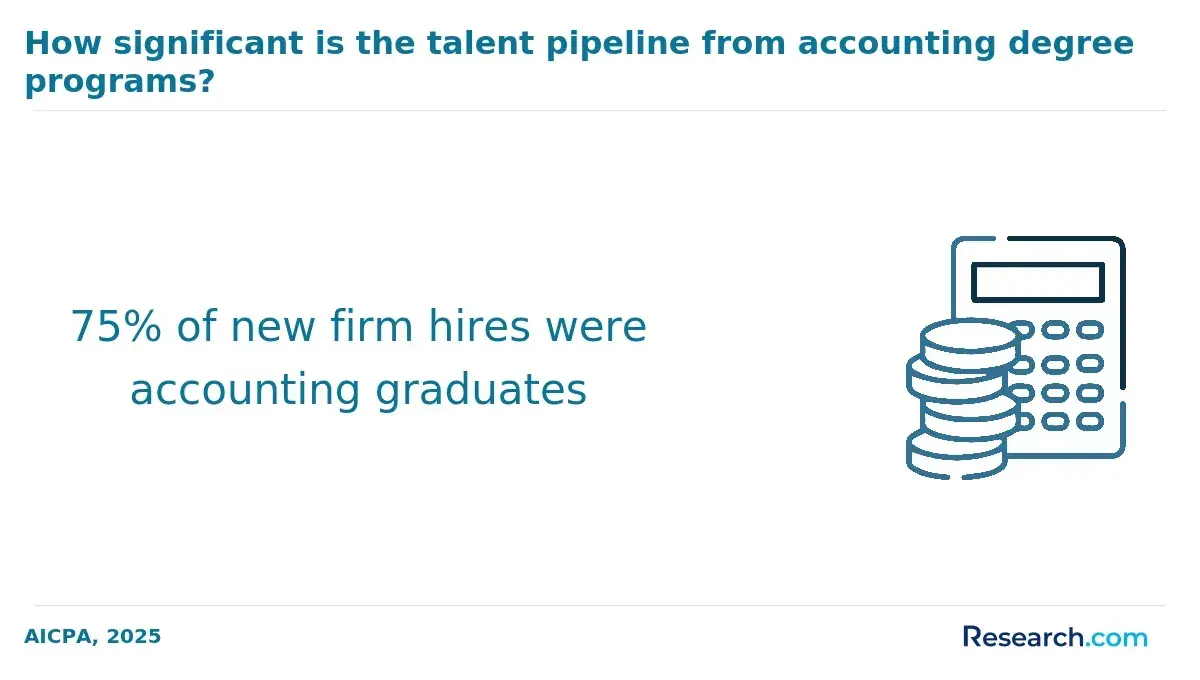
- A bachelor's degree in accounting or a related field is generally required to start a career as a junior accountant.
- Success depends on proficiency in accounting software, attention to detail, analytical thinking, strong communication, organizational skills, and maintaining confidentiality with sensitive data.
- Career advancement typically leads from junior accountant to senior accountant, then to roles such as accounting supervisor, accounting manager, or controller, often supported by certifications like the CPA and additional experience.
What do junior accountants do?
Junior accountants help maintain accurate financial records. They record transactions, organize supporting documents, reconcile accounts, assist with reports, and help senior accounting staff confirm that financial information is complete and reliable.
The role is not usually strategic at first. Most junior accountants spend much of their time on structured, repeatable tasks that support month-end close, audits, budgeting, payroll, accounts payable, accounts receivable, and internal reporting. Accuracy matters because small errors can affect financial statements, tax records, vendor payments, and management decisions.
A day in the life of junior accountants
A typical day may include reviewing invoices, entering journal entries, checking bank activity against internal records, following up on missing documentation, preparing spreadsheets, and responding to questions from managers or other departments. Work may be onsite, remote, or hybrid depending on the employer and the systems used.
Junior accountants often work independently for long stretches, but they are rarely isolated. They coordinate with senior accountants, controllers, payroll teams, department heads, vendors, or clients. The best performers are not only careful with numbers; they also ask clear questions, document their work, and flag discrepancies before they become larger problems.
What are the key responsibilities of junior accountants?
Junior accountants are responsible for keeping routine financial processes accurate and on schedule. Their duties vary by employer, but most entry-level accounting roles involve transaction recording, account reconciliation, report preparation, and support for month-end or year-end close.
- Record financial transactions: Enter daily activity into accounting systems, including invoices, payments, receipts, expenses, and journal entries.
- Support accounts payable and accounts receivable: Track outgoing payments, incoming payments, vendor balances, customer balances, and aging reports.
- Assist with financial statements: Help prepare balance sheets, income statements, schedules, and supporting documentation for management review.
- Perform reconciliations: Compare cash, check, credit card, bank, and ledger records to identify errors, missing entries, or timing differences.
- Help with budgets and reports: Support quarterly budgets, monthly financial reports, variance explanations, and internal reporting requests.
The most challenging vs. the most rewarding tasks
The hardest part of the job is often reconciliation. Finding why two records do not match can require patience, strong documentation habits, and the ability to trace a transaction across several systems. A missed error may affect reporting accuracy, audit readiness, or compliance.
The most rewarding part is seeing how careful accounting work improves decisions. When financial records are clean, leaders can understand spending, cash flow, profitability, and operational problems more quickly. For readers who want a faster academic route into entry-level business or accounting roles, Research.com also explains associate degrees in 6 months online.
What are the key skills for junior accountants?
Junior accountants need a mix of technical accounting skills and workplace judgment. Employers typically look for candidates who understand basic accounting principles, can work accurately in spreadsheets or accounting software, and can meet deadlines without sacrificing precision.
Key hard skills
- Financial reporting: Prepare schedules, summaries, and draft financial statements for review by senior staff.
- Account reconciliation: Compare ledger balances with bank statements, card activity, subledgers, and supporting documents.
- Data entry and management: Enter transactions accurately and maintain clean records in accounting systems.
- Knowledge of GAAP: Apply accepted accounting standards when recording transactions and preparing reports.
- Spreadsheet proficiency: Use formulas, filters, pivot tables, and organized workbooks to analyze and check financial data.
- Accounting software familiarity: Navigate systems used for billing, payables, payroll, reporting, and general ledger work.
Key soft skills
- Attention to detail: Catch small errors before they affect reports, payments, or reconciliations.
- Analytical thinking: Identify unusual balances, trends, missing support, or transactions that need review.
- Time management: Balance recurring tasks with deadlines for close, audits, reports, and payment cycles.
- Active listening: Understand instructions, ask clarifying questions, and communicate issues clearly.
- Integrity: Handle financial information responsibly and escalate concerns when something appears incorrect.
The one often overlooked skill that distinguishes top performers
Software fluency is increasingly important. A junior accountant who can use accounting platforms, spreadsheets, automation features, and reporting dashboards can work faster and reduce manual errors. This does not replace accounting judgment; it strengthens it.
For example, a junior accountant who understands automated reports may identify a recurring billing error more quickly than someone relying only on manual review. Employers value this especially in settings with high transaction volume, including Management of Companies and Enterprises, cited as the highest-paying industry for this role.
Education choices should support both accounting fundamentals and software readiness. Readers comparing undergraduate options can use Research.com's guide to which is the easiest bachelor degree as one reference point when weighing difficulty, fit, and career relevance.
The path into junior accounting is usually clear: build the academic foundation, get practical exposure, apply for entry-level roles, and keep improving your technical skills. You do not need to have your entire accounting career planned on day one, but you should understand how each step affects employability.
- Complete foundational education: Study accounting principles, financial reporting, business math, economics, taxation basics, and business communication.
- Gain practical experience: Look for internships, part-time bookkeeping work, campus finance roles, volunteer tax assistance, or cooperative programs.
- Build software and spreadsheet skills: Practice with spreadsheets and common accounting workflows so you can show employers you are ready for real records, not just theory.
- Apply for entry-level positions: Target junior accountant, accounting assistant, accounts payable clerk, accounts receivable clerk, bookkeeper, or staff accountant trainee roles.
- Pursue professional credentialing: Consider certifications when they match your goals, especially if you plan to move into public accounting, management accounting, audit, or leadership.
- Develop and diversify skills for advancement: Add reporting, analysis, communication, compliance, and process-improvement skills as your responsibilities expand.
A common mistake is waiting until after graduation to build experience. Even a short internship or part-time bookkeeping role can make applications stronger because it shows you have handled deadlines, documentation, and real financial data.
The most common qualification for a junior accountant is a Bachelor of Science (B.S.) in Accounting. Employers may also consider candidates with degrees in finance or business administration, though an accounting degree is usually the more direct preparation. An Associate of Applied Science (A.A.S.) in Accounting may qualify candidates for junior, clerk, bookkeeping, or accounting assistant positions, depending on the employer.
Certifications are usually not mandatory for entry-level junior accountant jobs. However, they can matter later. The Certified Public Accountant (CPA), issued by state boards such as New York's, is strongly preferred for many advancement paths. The Certified Management Accountant (CMA) is optional but valuable for candidates interested in management accounting, budgeting, forecasting, and internal decision support.
Most employers provide on-the-job training for several weeks to months. This training typically covers company-specific accounting systems, approval workflows, chart of accounts, documentation rules, internal controls, and reporting calendars. There are generally no formal supervised-hour requirements just to begin as a junior accountant.
How to compare education options
- Associate degree: Can support faster entry into bookkeeping, accounting clerk, or junior support roles, but may limit advancement without further education.
- Bachelor's degree in accounting: The strongest standard option for entry-level professional accounting roles and future CPA preparation.
- Finance or business degree: May work for some employers, especially if paired with accounting coursework, internships, and software skills.
- Master's degree: More useful for CPA eligibility, specialization, or advancement than for simply getting a first junior accountant job.
Are advanced degrees or niche certifications worth the investment?
A Master of Science in Accounting or an MBA with an accounting focus can be worthwhile for candidates pursuing specialized, senior, or leadership roles. A CPA license requires substantial education, exam preparation, and experience, but it can improve access to higher-responsibility roles in public accounting, audit, tax, and financial leadership.
For a beginner, advanced credentials are not always the first priority. The immediate goal is usually to become employable through accounting coursework, internships, software skills, and strong references. Once you know whether you prefer tax, audit, corporate accounting, nonprofit accounting, government, or management accounting, it becomes easier to judge the return on further education.
Start with the credential that gets you into the field, then invest in additional credentials when they support a specific next step. For a broader look at degree-to-career planning, see Research.com's college majors list and careers.
Junior accountant pay depends on location, employer size, industry, education, experience, software skills, and whether the role includes broader reporting responsibilities. The MedianSalary for a junior accountant stands at $50,949 per year in 2025, which provides a useful midpoint for planning.
The Junior accountant average salary 2025 is approximately $41,000 per year for entry-level positions. Higher earnings are possible as responsibilities expand. Senior-level junior accountants or those in high-demand urban areas can earn as much as $64,000 annually.
Salary figures should be read in context. A lower-paying job may still be worthwhile if it provides strong training, exposure to month-end close, audit support, and modern accounting software. A higher-paying job may be less attractive if it offers little mentorship or limited advancement. For early-career candidates, the best offer is often the one that combines fair pay with marketable experience.
Employment for junior accountants is projected to grow 5 percent from 2024 to 2034, which is faster than the average for all occupations. That indicates continued demand for entry-level accounting talent, especially for candidates who can combine accounting fundamentals with technology skills.
The role also offers stability because organizations need accurate financial records regardless of industry. Businesses, governments, nonprofits, schools, healthcare organizations, and professional services firms all rely on accounting staff to support reporting, payments, compliance, and financial controls.
The key factors shaping the future outlook
Technology is changing the work, not eliminating the need for accounting judgment. Automation, AI, and accounting software are reducing some manual data entry, but they are increasing the need for employees who can review exceptions, verify data quality, understand controls, and explain financial results.
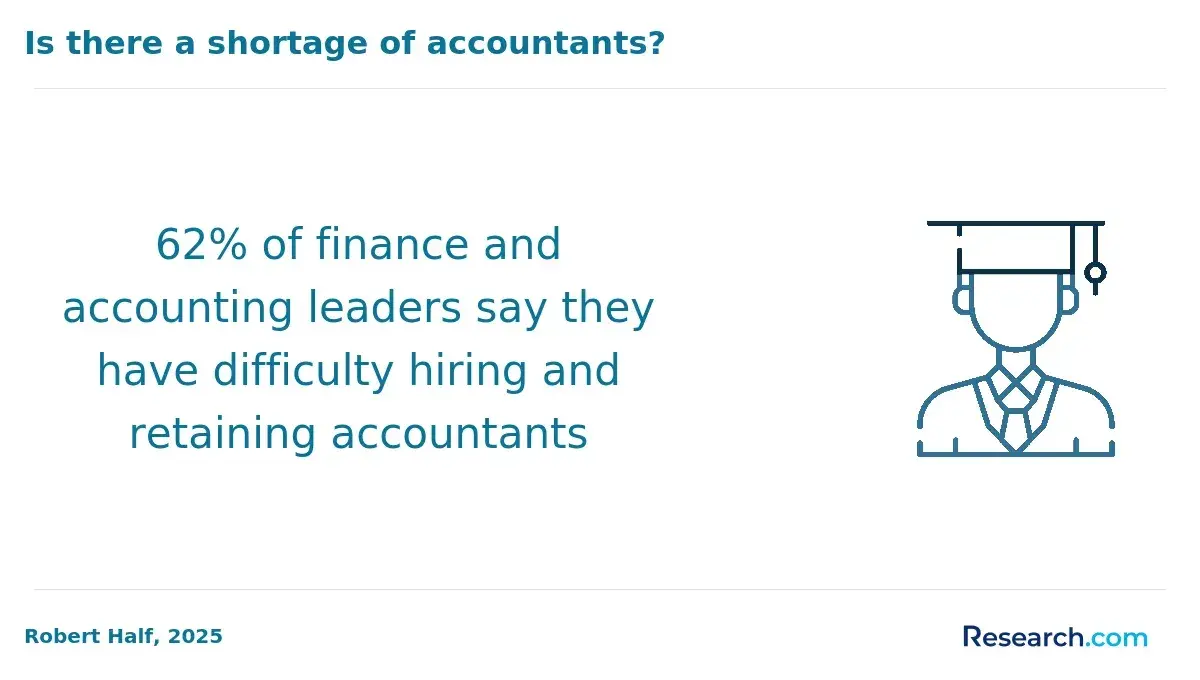
Retirements are also contributing to demand for new accountants. As experienced professionals leave the workforce, employers need junior staff who can grow into staff accountant, senior accountant, manager, and controller roles. Regulatory complexity and expectations for transparent financial reporting further support demand across sectors.
Students considering online education as a route into accounting can compare options through Research.com's list of the best ranked online colleges.
Junior accountants usually work in office-based environments such as corporate finance departments, accounting firms, government offices, and professional services organizations. Nearly a quarter of junior accountants are employed in accounting, tax preparation, bookkeeping, and payroll services, while others work in finance, insurance, government, and private companies.
The standard schedule is often around 40 hours per week. However, overtime can occur during month-end close, quarter-end close, year-end reporting, audits, budget cycles, and tax season. Candidates should expect the workload to rise around recurring financial deadlines.
A typical workday combines independent concentration with regular communication. Junior accountants may spend hours reviewing transactions or reconciling accounts, then meet with senior accountants or managers to resolve issues. Remote and hybrid options are more common as accounting systems move online, but some employers still require onsite work for training, controls, document handling, or collaboration.
A junior accountant career offers a stable entry point into finance, but it is not the right fit for everyone. The work rewards accuracy, consistency, and patience. It can also feel repetitive and deadline-heavy, especially during close periods.
Pros
- Clear career path: Junior accounting can lead to staff accountant, senior accountant, manager, controller, or specialized roles.
- Transferable skills: Financial reporting, reconciliation, spreadsheet analysis, and compliance knowledge apply across many industries.
- Stable demand: Organizations consistently need reliable financial records and accounting support.
- Measurable progress: You can see your skills improve as you handle more complex accounts, reports, and close responsibilities.
- Professional credibility: The role can support future CPA, CMA, audit, tax, or corporate finance goals.
Cons
- Repetitive tasks: Data entry, invoice review, and recurring reconciliations can become monotonous.
- Deadline pressure: Month-end, year-end, audit, and tax deadlines can create stressful work periods.
- Low autonomy at first: Junior accountants often work under close review until they prove accuracy and judgment.
- Error sensitivity: Small mistakes can affect reports, payments, or compliance, so the work requires sustained focus.
- Technology learning curve: Candidates must keep up with accounting systems, automation, and data tools.
This career is a strong fit if you like structured work, problem-solving, documentation, and steady advancement. It is less ideal if you dislike routine, close review, or deadline-driven work. For related credentials that may complement accounting skills, Research.com covers lucrative certifications.
Junior accountant roles can lead to several advancement paths. The most common route is from junior accountant to staff accountant, senior accountant, accounting manager, controller, and potentially CFO. Other professionals move into tax, audit, payroll, compliance, financial analysis, or advisory roles.
Typical advancement path
- Junior Accountant → Staff Accountant: Take on more complex reconciliations, journal entries, account ownership, and reporting duties.
- Staff Accountant → Senior Accountant: Lead close processes, review junior work, prepare analysis, and handle higher-risk accounts.
- Senior Accountant → Accounting Manager: Supervise staff, manage deadlines, improve processes, and coordinate reporting.
- Accounting Manager → Controller/CFO: Oversee accounting operations, internal controls, financial strategy, and executive-level decisions.
Specialization areas to enhance growth
- Corporate accounting: Focus on internal reporting, budgeting, forecasting, cost tracking, and operational finance.
- Public accounting: Work with external clients on audits, tax services, reporting, and advisory projects.
- Taxation: Build expertise in tax preparation, planning, compliance, and research.
- Auditing: Review financial records, test controls, and assess compliance as an internal or external auditor.
- Management accounting: Support business decisions through budgeting, performance analysis, and cost management.
Advancement usually requires more than time in the role. Employers promote junior accountants who produce accurate work, understand the business context, communicate clearly, and improve processes. Credentials such as CPA or CMA can also become important for higher-level roles.
If you are interested in accounting but unsure whether junior accountant is the best fit, compare related careers that use similar strengths. The right alternative depends on whether you prefer reporting, analysis, client service, banking, operations, or personal financial planning.
- Financial Analyst: Uses financial statements, trends, forecasts, and business data to support investment or operating decisions.
- Corporate Banker: Applies financial reporting knowledge, risk assessment, and client relationship skills in banking environments.
- Business Analyst: Focuses on process improvement, data interpretation, systems, and operational problem-solving.
- Financial Advisor: Uses budgeting, planning, and financial knowledge to guide individuals or organizations in managing money.
- Corporate Accountant / Finance Department Staff: Works inside an organization to prepare records, support reporting, and maintain accounting standards.
Choose junior accounting if you want a structured entry point into the accounting profession. Consider financial analysis if you prefer forecasting and decision support. Consider business analysis if you enjoy systems and process improvement. Consider financial advising if you want more client-facing work. The best choice is the one that matches both your strengths and the daily work you are willing to do consistently.
- Rhoda: "I chose to start my career at a smaller firm because I wanted to dive straight into hands-on work without waiting years to get involved. The team was looking for enthusiasm and dedication rather than just formal qualifications, which suited me perfectly since I didn't attend university. Every day, I handle spreadsheets and assist with client reports, and the support from colleagues keeps pushing me to improve. It's rewarding to see my confidence grow as I learn on the job and prepare for future certifications."
- Dimple: "When I joined as a Junior Accountant, I was honestly nervous about balancing work with the independent study required to qualify professionally. But I found that being self-motivated and communicating clearly made all the difference, and those skills quickly became part of my routine. The variety of clients I work with means no two days are the same, which keeps me engaged and constantly learning. I'm proud of how far I've come, and I'm excited to take on more responsibility soon."
- Ivy: "At first, I started in a support role but was promoted to Junior Accountant because my managers noticed my dedication and effort. The company culture really values hard work, and that has helped me develop skills in accounting software and client interaction much faster than I expected. I appreciate the flexible hours, which have given me more control over work-life balance while still allowing me to grow professionally. This role feels like a solid stepping stone in my accounting career."
Key Findings
- Junior accountants maintain accurate financial records by recording transactions, reconciling accounts, supporting reports, and assisting senior accounting staff.
- A Bachelor of Science (B.S.) in Accounting is the most common entry-level qualification, while an Associate of Applied Science (A.A.S.) in Accounting may support junior or clerk-level roles.
- Certifications are not usually required for entry, but CPA and CMA credentials can improve advancement options depending on the career path.
- The MedianSalary for a junior accountant stands at $50,949 per year in 2025, while the Junior accountant average salary 2025 is approximately $41,000 per year for entry-level positions.
- Senior-level junior accountants or those in high-demand urban areas can earn as much as $64,000 annually.
- Employment for junior accountants is projected to grow 5 percent from 2024 to 2034, supported by technology change, retirements, and ongoing demand for accurate financial reporting.
- The role is a strong fit for detail-oriented candidates who can handle deadlines, repetitive tasks, accounting software, and careful documentation.
- Common advancement paths include staff accountant, senior accountant, accounting manager, controller, CFO, tax specialist, auditor, and financial analyst roles.
Other Things You Should Know About Junior Accountant
Junior accountants should know Excel, accounting software such as QuickBooks or SAP, basic data analysis, and double-entry bookkeeping. Many employers also expect comfort with cloud-based systems and AI-assisted tools for invoice processing, reconciliations, and reporting, because routine tasks are increasingly automated.
In 2027, the typical entry-level salary for a junior accountant ranges from $45,000 to $55,000 annually, depending on factors like geographical location, company size, and specific industry. Salaries may be higher in larger cities due to increased living costs and demand for skilled professionals.
In 2027, junior accountants leverage AI and automation to enhance efficiency. These technologies streamline tasks like data entry, allowing accountants to focus on analysis and decision-making. Proficiency in digital tools becomes crucial, as technology integration reshapes traditional accounting roles, emphasizing analytical and strategic skills.
- Gen Z gives accounting careers a closer look https://joinhandshake.com/blog/network-trends/gen-z-accounting-careers/
- Five Must-Have Hard Skills for Accountants | INAA https://www.inaa.org/five-must-have-hard-skills-for-accountants/
- 0 Must-Know Pros and Cons of an Accounting Career https://www.globalfpo.com/blog/10-must-know-pros-and-cons-of-an-accounting-career
- Growing in Your Accounting Career Path https://www.wgu.edu/blog/how-to-grow-your-accounting-career1909.html
- From Junior Accountant to CFO: How to Grow Your Career https://www.cps4jobs.com/2024/11/27/from-junior-accountant-to-cfo-how-to-grow-your-career/
- Junior Accountant | Explore Job Roles | ACCA Careers https://jobs.accaglobal.com/cp/role/fb317af1-a844-2a63-d4c4-6ea0cbde1a1b/junior-accountant
- 2025 Career Goals for Junior Accountants - 12+ Goal Examples (Full Guide) https://www.tealhq.com/professional-goals/junior-accountant
- Career Path Chart: From Junior Accountant to CFO - TaxRobot https://taxrobot.com/career-path-chart-from-junior-accountant-to-cfo/
- Junior Accountant Job Description https://www.betterteam.com/junior-accountant-job-description
- Payscale. (2024). Junior accountant salary. https://www.payscale.com/research/US/Job=Junior_Accountant/Salary
- Glassdoor. (2024). Junior accountant salaries. https://www.glassdoor.com/Salaries/junior-accountant-salary-SRCH_KO0,17.htm


