
2027 Chief Compliance Officer Careers: Skills, Education, Salary & Job Outlook

Co-Founder and Chief Data Scientist
Choosing a chief compliance officer career means deciding whether you want to operate at the intersection of regulation, ethics, business strategy, and executive leadership. The role is demanding: organizations expect chief compliance officers to understand complex laws, build practical controls, advise senior leaders, and respond calmly when regulatory or ethical problems arise.
The payoff can be significant for professionals who build the right mix of education, compliance experience, industry knowledge, and leadership credibility. Salary sources show strong earning potential, with reported figures varying by source, employer size, industry, location, and seniority. Demand also remains steady as organizations face more scrutiny in areas such as privacy, cybersecurity, financial controls, healthcare rules, anti-money laundering, and corporate ethics.
This guide explains what chief compliance officers do, the skills and credentials employers value, how the career path typically develops, what pay and job outlook data suggest, and how to decide whether this leadership track fits your strengths.
Key Things You Should Know About Chief Compliance Officer Career
- A chief compliance officer in the United States typically earns around $255,401 annually, with most salaries ranging between $215,401 and $300,101.
- The field remains stable with strong demand, especially in finance, healthcare, and technology, offering steady opportunities despite the senior-level specialization.
- A bachelor's degree in business, finance, law, or a related area is required, while advanced degrees like an MBA or JD and certifications such as CCEP enhance entry and career growth.
- Success depends on expertise in regulatory compliance, risk management, ethics, leadership, communication, analytical thinking, and decision-making within complex regulatory settings.
- Career paths often advance from compliance analyst or manager roles to director of compliance, then chief compliance officer, with further growth possible into chief risk officer, chief legal officer, or other executive positions.
What do chief compliance officers do?
A chief compliance officer, often called a CCO, leads an organization’s compliance strategy. The job is to help the company follow applicable laws, regulations, internal policies, and ethical standards while still allowing the business to operate effectively.
In practice, the CCO turns legal and regulatory requirements into workable systems: policies, employee training, monitoring, reporting, audits, investigations, and corrective action plans. The role is not only about preventing penalties. It is also about protecting customers, employees, investors, patients, communities, and the organization’s reputation.
A day in the life of chief compliance officers
A typical day may include meeting with executives about risk exposure, reviewing audit findings, assessing a new regulation, approving policy updates, responding to a regulator, or advising business leaders on whether a proposed activity creates compliance risk.
The work is usually strategic and cross-functional. Chief compliance officers regularly coordinate with legal, finance, human resources, information security, operations, internal audit, and the board. During routine periods, the focus may be planning and prevention. During audits, investigations, enforcement actions, or major regulatory changes, the role can become urgent, confidential, and high-pressure.
What are the key responsibilities of chief compliance officers?
Chief compliance officers are responsible for designing, managing, and improving the systems that keep an organization aligned with legal and ethical obligations. Their authority varies by organization, but the core responsibility is consistent: identify compliance risk early, reduce exposure, and ensure leaders have accurate information for decision-making.
Key responsibilities commonly include:
- Developing and maintaining compliance programs: Create policies, procedures, controls, reporting channels, and escalation processes that match current regulatory requirements.
- Conducting risk assessments: Identify where the organization is most exposed to legal, financial, operational, or reputational risk, then prioritize mitigation efforts.
- Managing audits and investigations: Oversee internal reviews, document findings, coordinate with legal counsel, and ensure corrective actions are completed.
- Reporting to leadership and regulators: Prepare clear updates for senior executives, boards, committees, and regulatory bodies when required.
- Leading employee training: Ensure employees understand their compliance obligations, reporting responsibilities, and ethical standards.
- Responding to compliance issues: Investigate suspected violations, recommend remedies, strengthen controls, and prevent repeat problems.
The most challenging vs. the most rewarding tasks
The hardest part of the job is often balancing independence, confidentiality, and business pressure. A chief compliance officer may need to challenge senior leaders, pause a business initiative, or investigate a sensitive allegation while protecting the organization’s legal position and reputation.
The most rewarding part is seeing compliance become part of the organization’s decision-making culture. When employees report concerns early, leaders ask the right questions before acting, and audits show meaningful improvement, the CCO’s work has moved beyond paperwork and into real risk prevention.
If you are still building the educational foundation for this field, accelerated degrees may help you complete a relevant credential more efficiently.
What are the key skills for chief compliance officers?
Chief compliance officers need more than technical knowledge. They must understand regulations, interpret risk, communicate with authority, and influence people who may not report directly to them. The strongest candidates combine subject-matter expertise with executive judgment.
Technical skills
- Regulatory knowledge: CCOs must understand laws and standards relevant to their industry, such as SOX, GDPR, and sector-specific rules.
- Risk assessment: They need to identify high-risk activities, evaluate control gaps, and prioritize resources where the consequences are greatest.
- Data analysis: Compliance leaders use data to spot trends, test controls, monitor incidents, and support reports to leadership or regulators.
- Technology proficiency: Many programs rely on compliance management systems, case management tools, databases, dashboards, and document repositories.
- Auditing and compliance testing: CCOs must know how to evaluate whether policies are being followed and whether controls are working as intended.
- Policy development: The role requires translating complex requirements into clear rules employees can understand and follow.
Soft skills
- Critical thinking: Compliance decisions often involve incomplete facts, competing priorities, and uncertain regulatory interpretation.
- Complex problem solving: CCOs must resolve issues without creating unnecessary disruption or ignoring material risk.
- Active listening: Investigations, employee reports, and executive conversations require careful attention to detail and context.
- Judgment and decision-making: The role demands sound calls on escalation, disclosure, remediation, and enforcement.
- Communication: A CCO must explain risk clearly to employees, executives, boards, auditors, and regulators.
- Credibility and independence: Compliance leaders must be trusted enough to influence decisions and independent enough to raise uncomfortable issues.
The one overlooked skill that separates the good from the great
Strategic vision is often the difference between a capable compliance manager and an effective chief compliance officer. A strong CCO does not treat compliance as a checklist. They connect regulatory obligations to business strategy, product decisions, market expansion, technology adoption, and reputation management.
For example, a CCO who sees a regulatory change early can help the organization adjust policies, training, vendor practices, and reporting before the issue becomes urgent. That kind of foresight can reduce penalties, avoid operational disruption, and build confidence with regulators and stakeholders.
Professionals who want to strengthen targeted skills may consider easy certifications to get online that pay well as one way to add practical knowledge, though certifications should be chosen based on relevance to the industry and role you want.
Chief Compliance Officer Careers: A Step-by-Step Guide to Getting Started
The path to becoming a chief compliance officer is usually gradual. Most CCOs do not enter the role directly after college. They build credibility through compliance, legal, audit, risk, finance, operations, or regulatory experience, then move into broader leadership roles.
- Earn a relevant bachelor’s degree. Common fields include business, finance, accounting, legal studies, management, economics, or another area connected to the industry you want to enter.
- Start in a compliance-adjacent role. Entry-level titles may include Compliance Analyst, Junior Compliance Specialist, internal audit associate, risk analyst, or regulatory operations associate.
- Learn the industry’s rules and risk profile. Finance, healthcare, technology, government, insurance, and manufacturing all have different regulatory priorities.
- Take on investigations, audits, policy work, and reporting. These experiences show that you can handle the practical responsibilities of compliance leadership.
- Add certifications or advanced education when they support your goals. Credentials are most valuable when they match your industry, employer expectations, and target role.
- Move into management. Supervising staff, owning program areas, and presenting to executives are important steps toward CCO-level responsibility.
- Build executive presence and independence. A future CCO must be able to advise senior leaders, escalate problems, and defend recommendations with evidence.
The most successful candidates treat each stage as evidence-building. Employers want to see not only knowledge of regulations, but also judgment, leadership, discretion, and a record of improving compliance outcomes.
What education, training, or certifications are required?
Most chief compliance officer roles require at least a bachelor’s degree. Common majors include business, finance, accounting, legal studies, management, or economics. Relevant degree types include the Bachelor of Business Administration (BBA), Bachelor of Science in Finance, and Bachelor of Laws (LLB) in certain regions.
Professional certifications can strengthen a candidate’s profile, especially when they match the employer’s industry. Examples include the Certified Compliance and Ethics Professional (CCEP) from the Compliance Certification Board and the Certified Regulatory Compliance Manager (CRCM) from the American Bankers Association.
On-the-job training is essential. Many professionals begin as Compliance Analysts or Junior Compliance Specialists, then gain broader experience through audits, investigations, risk assessments, policy development, and regulatory reporting. Although no formal supervised hours are required, gaining 3-4 years of progressive experience in compliance or related areas is typical before moving into senior leadership roles.
Are advanced degrees or niche certifications worth the investment?
Advanced degrees such as an MBA, Master of Legal Studies, or Juris Doctor can be valuable for senior compliance roles, especially in highly regulated industries or organizations that expect executive-level legal, financial, or strategic expertise. They can also help candidates move from technical compliance work into broader leadership.
They are not always mandatory. Many successful chief compliance officers advance with a bachelor’s degree, strong experience, and targeted certifications. Because advanced programs can be costly and time-consuming, often requiring two years or more of study, the decision should be based on expected career benefit, employer expectations, cost, schedule, and opportunity cost.
If graduate education fits your plan but time is a concern, reviewing shortest masters degree options may help you compare more efficient pathways.
A practical credential strategy is to choose education that solves a specific career gap. If you lack management experience, leadership-focused graduate study may help. If you work in banking, a banking compliance credential may be more useful than a general certificate. If you plan to move into privacy, cybersecurity, healthcare, or financial crime compliance, niche training may carry more weight.
What is the earning potential for chief compliance officers?
Chief compliance officer pay can be strong, but salary estimates vary by data source and methodology. The chief compliance officer average salary 2025 is $144,822 according to PayScale. Salary.com's March 2025 data places median annual pay at around $255,401.
Reported pay also varies by career stage. Entry-level salaries typically start at about $215,401, while senior-level professionals can command upwards of $300,101. Other salary discussions note top salaries reaching $231,000 or more and median compensation rising by 2.7% in 2025.
Because these figures come from different sources, they should be read as salary benchmarks rather than guarantees. Actual compensation depends on several factors:
- Industry: Finance, insurance, healthcare, technology, and other heavily regulated sectors often place a premium on experienced compliance leadership.
- Organization size: Larger employers may offer higher salaries because the regulatory exposure, staff size, and reporting obligations are greater.
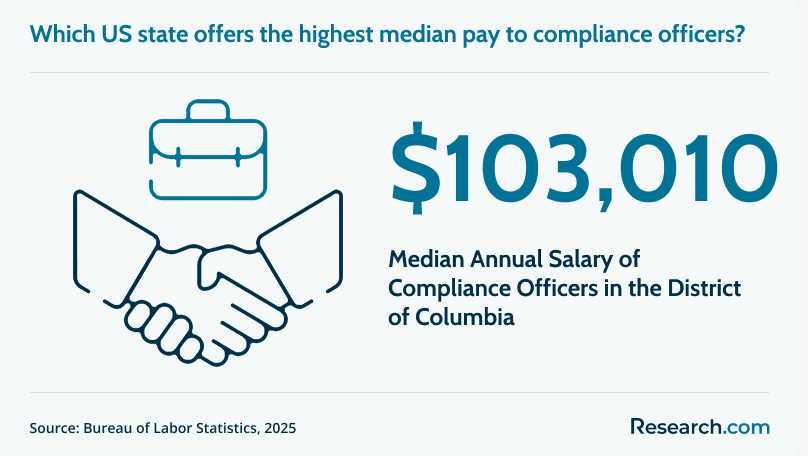
- Location: Geographic market, cost of living, and local demand influence pay.
- Experience level: Candidates with executive reporting experience, board exposure, investigation leadership, and regulator-facing experience may command more.
- Specialization: Expertise in areas such as privacy, anti-money laundering, cybersecurity, healthcare compliance, or financial controls can increase market value.
When evaluating an offer, look beyond base salary. Bonuses, equity, retirement benefits, remote-work flexibility, severance terms, liability protection, and reporting independence can all affect the real value and risk of a CCO position.
What is the job outlook for chief compliance officers?
The U.S. Bureau of Labor Statistics projects a 4 percent growth rate for compliance officers, including chief compliance officers, until 2032. This is about as fast as the average for all occupations.
The outlook is steady because compliance is not optional for regulated organizations. Even when companies reduce costs, they still need people who can manage regulatory obligations, monitor internal controls, respond to audits, and reduce reputational risk.
The key factors shaping the future outlook
Several trends continue to support demand for experienced compliance leaders. Regulatory complexity is increasing in areas such as data privacy, anti-money laundering, ESG, and cybersecurity. Organizations also face higher expectations from regulators, investors, customers, employees, and the public.
Technology is changing the role rather than eliminating it. AI and automation can help monitor transactions, flag suspicious activity, manage documentation, and analyze risk patterns. However, organizations still need qualified leaders to interpret results, design governance, make escalation decisions, and ensure tools are used responsibly.
Professionals preparing for this field should prioritize accredited, relevant education. Programs at top accredited non-profit online universities can be one option for building credentials while maintaining professional flexibility.
What is the typical work environment for chief compliance officers?
Chief compliance officers usually work in professional office environments, corporate headquarters, government offices, financial institutions, healthcare organizations, technology companies, or other regulated settings. Much of the work involves meetings, reporting, policy review, document analysis, internal communication, and coordination with legal, audit, risk, and executive teams.
The typical chief compliance officer work schedule follows standard business hours, Monday through Friday. However, the role often requires flexibility during audits, regulatory examinations, investigations, enforcement deadlines, major incidents, or board reporting cycles. Evenings or weekends may be necessary when issues are urgent or confidential.
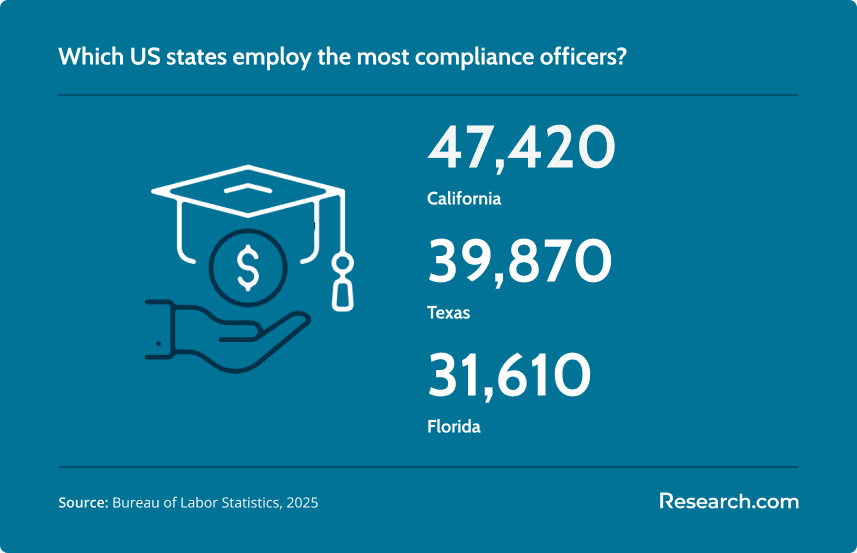
Employment is most common in the federal government (15%), finance and insurance (13%), and state and local government sectors (13%). These settings reflect the importance of compliance leadership in organizations that face formal oversight, public accountability, and complex rules.
Remote and hybrid work may be possible for some compliance functions, especially policy, reporting, training, and monitoring tasks. Still, senior compliance leaders often need direct access to executives, legal counsel, business units, auditors, and regulators. The higher the role, the more important relationship-building and executive presence become.
What are the pros and cons of chief compliance officer careers?
A chief compliance officer career can be influential, well-compensated, and intellectually engaging. It can also be stressful because the role carries high accountability and often requires making difficult recommendations under pressure.
Pros
- Meaningful organizational impact: CCOs help protect the organization’s integrity, reputation, and stakeholders from legal and financial harm.
- Executive influence: The role often advises senior leadership and the board on ethics, risk, regulation, and governance.
- Intellectually challenging work: Compliance leadership requires legal interpretation, business judgment, investigation skills, and strategic thinking.
- Strong earning potential: Salary data show that experienced CCOs can reach high compensation levels, particularly in complex or highly regulated sectors.
- Transferable expertise: Compliance skills can apply across finance, healthcare, insurance, technology, government, and other regulated industries.
Cons
- Constant regulatory change: CCOs must keep up with evolving rules across jurisdictions, agencies, and industry standards.
- Internal resistance: Employees or business leaders may see compliance as slowing growth, increasing paperwork, or limiting flexibility.
- High-pressure investigations: Sensitive allegations, breaches, audits, or enforcement matters can be stressful and confidential.
- Resource constraints: Compliance teams may be expected to manage broad risk areas with limited staff, budget, or technology.
- Personal accountability: Senior compliance leaders may face scrutiny when controls fail, even if they previously raised concerns.
This career is best suited for professionals who are comfortable with responsibility, ambiguity, documentation, ethical decision-making, and difficult conversations. If you want preparation that blends legal, business, and technical knowledge, programs at a dual degree university may be worth exploring.
What are the opportunities for advancement for chief compliance officers?
Chief compliance officer roles are already senior positions, but advancement can still happen through broader authority, larger organizations, board-level visibility, or specialization in high-demand risk areas.
Advancement pathways
- Entry-level or junior compliance roles: Professionals typically begin by researching regulations, supporting audits, maintaining documentation, and helping implement policies.
- Mid-level compliance manager roles: At this stage, responsibilities expand to supervising staff, managing program areas, leading testing, and coordinating with business units.
- Director or head of compliance roles: These positions involve enterprise-level program design, executive reporting, and ownership of major risk areas.
- Chief compliance officer: The CCO leads the organization’s compliance strategy, advises senior leadership, and often interacts with the board or regulators.
- Broader executive roles: Some CCOs move into chief risk officer, chief legal officer, general counsel, chief ethics officer, or governance leadership roles depending on background and credentials.
Specialization opportunities
Specialization can increase a compliance leader’s value, especially as new technologies and regulations create complex oversight needs.
- AI Ethics & Algorithmic Compliance: Focuses on governance, fairness, transparency, and responsible use of artificial intelligence.
- Digital Asset & Blockchain Compliance: Addresses regulatory obligations related to digital currencies, blockchain platforms, and related financial activity.
- ESG & Sustainable Finance Compliance: Supports environmental, social, and governance reporting, responsible investment practices, and related disclosures.
- Cybersecurity & Data Privacy Compliance: Covers privacy laws, security controls, breach response, data governance, and digital risk.
- Healthcare compliance: Focuses on patient privacy, billing rules, fraud prevention, clinical operations, and regulatory oversight.
- Anti-money laundering: Involves transaction monitoring, customer due diligence, sanctions, suspicious activity reporting, and financial crime prevention.
- Global compliance: Requires managing rules across countries, subsidiaries, vendors, and cross-border operations.
Advancement depends on more than tenure. The strongest candidates can show measurable program improvements, successful audit outcomes, effective remediation, clear executive communication, and the ability to manage risk without losing sight of business realities.
What other careers should you consider?
If you are interested in compliance leadership but not sure the chief compliance officer path is the right fit, several adjacent careers use similar skills. Comparing these options can help you choose a role that better matches your interests in law, risk, ethics, auditing, operations, or regulation.
- Director of Risk Management: Focuses on identifying, assessing, and mitigating enterprise risks. This path may be a better fit if you prefer broad operational and financial risk work over detailed regulatory program management.
- General Counsel or Legal Counsel: Provides legal advice on contracts, litigation, regulatory obligations, corporate governance, and risk. This route typically requires legal training and is more law-centered than compliance operations.
- Regulatory Affairs Specialist: Interprets and applies industry regulations, often in sectors such as healthcare, pharmaceuticals, finance, or technology. This can suit professionals who prefer technical regulatory expertise over executive leadership.
- Lead Auditor: Evaluates controls, processes, documentation, and compliance systems. This career may appeal to detail-oriented professionals who enjoy evidence testing, reporting, and process improvement.
- Ethics Officer: Develops and supports ethical standards, reporting channels, training, and culture initiatives. This role may fit professionals who are especially interested in workplace integrity and values-based governance.
The right choice depends on the type of responsibility you want. If you enjoy advising executives, managing ambiguity, and owning enterprise-wide risk, the CCO path may fit. If you prefer legal interpretation, audit testing, technical regulation, or organizational culture, one of these related careers may be a better match.
Here's What Professionals Say About Their Chief Compliance Officer Careers
- : "Being a chief compliance officer means I am constantly reminded that my role extends far beyond policy manuals and checklists. It is deeply fulfilling to ensure that every decision and action taken within the company aligns with our core ethical values. I take pride in fostering an environment where accountability is not just expected but lived by every employee. Knowing that my work helps shield our clients and community from risks gives me a strong sense of purpose every day. — Anika"
- : "Handling the relentless stream of new regulations while balancing the demands from the board and various teams can be exhausting. There are moments, especially during intense audit preparations or when addressing compliance breaches, that test my resilience like never before. What has kept me steady is a disciplined approach to clear communication and staying meticulously organized. Those habits allow me to meet challenges head-on, even when the pressure feels unmanageable. — Thomas"
- : "One of the proudest moments in my career came after guiding my company through a rigorous regulatory audit. Months of detailed preparation paid off when the auditors reported zero major findings. Seeing that outcome affirmed the importance of every late night spent refining protocols and training staff. It is incredibly rewarding to know those efforts directly protected the company's reputation and secured its future. — Lila"
Key Findings
- Chief compliance officers lead the systems that help organizations follow laws, regulations, policies, and ethical standards.
- The role usually requires a bachelor’s degree, progressive compliance or related experience, and often industry-relevant certifications such as CCEP or CRCM.
- Advanced degrees such as an MBA, Master of Legal Studies, or Juris Doctor can help in some senior or specialized roles, but they are not always required.
- Salary estimates vary by source: PayScale reports a chief compliance officer average salary 2025 of $144,822, while Salary.com's March 2025 data reports median annual pay around $255,401.
- The U.S. Bureau of Labor Statistics projects a 4 percent growth rate for compliance officers, including chief compliance officers, until 2032.
- The best candidates combine regulatory knowledge, risk assessment, data analysis, communication, judgment, independence, and executive-level strategic thinking.
- This career offers influence and strong earning potential, but it also brings pressure, confidentiality demands, resource constraints, and responsibility for difficult decisions.
Other Things You Should Know About Chief Compliance Officer
In 2027, the salary range for a Chief Compliance Officer typically falls between $150,000 and $300,000 annually, depending on the industry, size of the organization, and geographical location. Larger corporations in major metropolitan areas generally offer higher salaries to attract experienced candidates.
The most recognized certifications are the Certified Compliance & Ethics Professional (CCEP), Certified Regulatory Compliance Manager (CRCM), and Certified Information Privacy Professional (CIPP). Employers often value them for banking, healthcare, and data privacy roles, and many candidates earn them after several years of compliance or legal experience.
References
- Roles Similar to Compliance Officer https://www.careerbuilder.com/colab/career-path/compliance-officer/washington
- Chief Compliance Officer Salary in Netherlands (2025) - ERI SalaryExpert https://www.salaryexpert.com/salary/job/chief-compliance-officer/netherlands
- Ultimate Guide On How To Become A Chief Compliance Officer (CCO) https://medium.com/popl/ultimate-guide-on-how-to-become-a-chief-compliance-officer-cco-fdcffa52cf4d
- Chief Compliance Officers: What the role of CCO entails https://www.careersinaudit.com/careers/2019/10/chief-compliance-officers-what-the-role-of-cco-entails/
- Chief Compliance Officer (CCO): Role, Responsibilities & Future Outlook https://www.protechtgroup.com/en-us/blog/chief-compliance-officer-cco-role-responsibilities-future-outlook
- 5 Chief Compliance Officer Job Description Templates and Examples | Himalayas https://himalayas.app/job-descriptions/chief-compliance-officer
- How Do I Make the Case for Appointing a Chief Compliance Officer? https://ethisphere.com/making-the-case-for-chief-compliance-officer/
- The Compliance Officer profession | emlyon business school https://em-lyon.com/en/student/guides/jobs/compliance-officer
- The Case for Having a Chief Compliance Officer | Access https://www.accesscorp.com/blog/case-chief-compliance-officer/
- Chief Compliance Officer Job Description https://www.rutherfordsearch.com/chief-compliance-officer-job-description


