2027 Clinical Research Coordinator Careers: Skills, Education, Salary & Job Outlook

Co-Founder and Chief Data Scientist
Becoming a clinical research coordinator is a practical career goal for people who want to work close to patients, research teams, and new medical treatments without becoming a physician or laboratory scientist. The role sits at the center of clinical trials: coordinators help recruit participants, track study visits, maintain regulatory records, protect patient safety, and keep research sites aligned with strict protocols.
The path can feel difficult because employers often expect a relevant bachelor’s degree, familiarity with clinical research methods, careful documentation habits, and working knowledge of compliance standards. It is not usually a “learn everything in a weekend” career. Still, it is accessible for candidates who build the right mix of education, supervised experience, communication skills, and regulatory awareness.
This guide explains what clinical research coordinators do, what skills and credentials matter, how much the role can pay, where jobs are commonly found, and how to decide whether this career fits your strengths. Salary sources vary, but reported earnings include median figures around $63,925, while later sections detail additional salary data by experience level. Use the guide to map your next step, compare alternatives, and avoid common mistakes when entering the field.
Key Things You Should Know About Clinical Research Coordinator Career
- The typical earning potential for a clinical research coordinator in the United States ranges from $55,000 to $75,000 annually, with an average around $71,500, and top earners in major research hubs can exceed $80,000.
- The demand for clinical research coordinators is rapidly increasing due to expanding clinical trials and a shortage of qualified professionals, ensuring strong job growth through 2035.
- A bachelor's degree in life sciences, nursing, or health sciences is the standard entry requirement, while professional certifications can enhance employability and salary prospects.
- Success in this role depends on attention to detail, organizational skills, knowledge of Good Clinical Practice, communication, teamwork, regulatory compliance, and proficiency in data management and patient interaction.
- Career advancement can lead to senior positions such as senior clinical research coordinator, clinical research associate, clinical trial manager, or project manager, with advanced degrees and certifications accelerating progress.
What do Clinical Research Coordinators do?
Clinical research coordinators, often called CRCs, manage the day-to-day operations of clinical studies at research sites. They help turn a study protocol into an organized, compliant workflow that patients, investigators, sponsors, and site staff can follow. Their work supports both scientific accuracy and participant safety.
A CRC does not usually design the entire trial or make final medical decisions. Instead, the coordinator makes sure study visits happen correctly, required forms are completed, participants understand what they are agreeing to, and data are recorded in a way that can withstand sponsor, institutional, and regulatory review.
A day in the life of Clinical Research Coordinators
A typical day may include screening patient charts, contacting potential participants, preparing consent documents, scheduling study visits, collecting data, updating electronic systems, responding to sponsor queries, and coordinating with nurses, physicians, labs, pharmacies, and institutional review boards. The work often shifts quickly when a participant has a safety concern, a protocol changes, or a deadline approaches.
The job is best suited for people who can be precise without becoming rigid. CRCs must follow protocols closely, but they also need to communicate clearly with patients, adapt to unexpected problems, and keep multiple studies moving at once. The most visible outcome of their work is a well-run study site; the larger impact is reliable research that may contribute to better treatments and patient care.
What are the key responsibilities of Clinical Research Coordinators?
The core responsibility of a clinical research coordinator is to keep a study compliant, organized, and participant-centered. In practice, that means managing details that affect ethics, safety, timelines, and data quality.
- Recruit and screen participants: Identify potential candidates, compare eligibility against inclusion and exclusion criteria, and coordinate next steps with the study team.
- Support informed consent: Explain study procedures in understandable language, answer process-related questions, and document consent according to protocol and institutional requirements.
- Schedule and coordinate study visits: Arrange appointments, labs, imaging, questionnaires, medication dispensing, and follow-up activities so protocol windows are met.
- Collect and enter study data: Maintain accurate source documents, case report forms, and database entries while resolving missing or inconsistent information.
- Maintain regulatory files: Track approvals, delegation logs, training records, protocol amendments, consent versions, correspondence, and other required documentation.
- Monitor participant safety: Track symptoms, outcomes, adverse events, and protocol deviations, then escalate concerns to investigators and sponsors when required.
- Serve as the communication hub: Coordinate among principal investigators, sponsors, monitors, pharmacists, nurses, laboratory staff, participants, and regulatory offices.
- Protect study quality: Prepare for monitoring visits, respond to queries, support audits, and help ensure the site follows Good Clinical Practice expectations.
The most challenging vs. the most rewarding tasks
The hardest part of the job is often the constant need for accuracy under pressure. A coordinator may be juggling several protocols, each with different visit windows, consent forms, reporting rules, and sponsor expectations. A missed signature, late adverse event report, or incorrect data entry can create compliance problems and may affect participant safety or study validity.
The most rewarding part is seeing how careful coordination supports real medical progress. CRCs often work directly with participants who are hoping for better treatment options. They may not be the public face of a breakthrough, but their documentation, scheduling, follow-up, and ethical oversight help make trustworthy research possible.
If you are still choosing an academic direction, reviewing popular college majors related to health science, biology, nursing, public health, or research administration can help you build a stronger foundation for this field.
What are the key skills for Clinical Research Coordinators?
Strong clinical research coordinators combine technical competence with the judgment and communication skills needed to work with patients and multidisciplinary teams. Employers usually look for candidates who can learn protocols quickly, document carefully, and stay calm when priorities change.
Hard skills
- Regulatory knowledge: Familiarity with Good Clinical Practice, FDA expectations, HIPAA requirements, informed consent standards, and institutional review board processes.
- Clinical trial documentation: Ability to maintain source documents, case report forms, regulatory binders, delegation logs, training records, and protocol amendment files.
- Data management: Skill in entering, reviewing, correcting, and protecting clinical trial data in electronic data capture systems and study databases.
- Protocol interpretation: Ability to understand study objectives, eligibility criteria, visit schedules, safety procedures, and required assessments.
- Administrative coordination: Competence in scheduling visits, tracking deadlines, preparing for monitoring visits, and coordinating services across departments.
- Basic scientific literacy: Understanding of medical terminology, lab values, disease areas, and research methods sufficient to support study operations.
Soft skills
Clinical research coordinator soft skills matter because the role depends on trust, follow-through, and clear communication. Technical knowledge can be undermined quickly if participants feel confused, investigators are not updated, or deadlines are not communicated early.
- Active listening: Helps coordinators understand participant concerns, clarify instructions, and identify issues that may need escalation.
- Critical thinking: Supports sound decisions when protocol requirements, participant needs, and operational constraints conflict.
- Time management: Keeps visit windows, documentation deadlines, monitoring requests, and follow-up tasks from slipping.
- Professional communication: Ensures sponsors, investigators, clinical staff, and participants receive accurate information at the right time.
- Attention to detail: Reduces errors in consent forms, eligibility checks, adverse event reporting, and data entry.
- Emotional steadiness: Helps coordinators support participants while maintaining boundaries and following protocol.
The one overlooked skill that separates the good from the great
Adaptability is one of the most valuable but underappreciated skills in this career. Clinical trials rarely run exactly as planned. Participants miss visits, sponsors issue protocol updates, electronic systems change, and regulatory expectations may shift during a study.
A strong coordinator does not simply react. They update workflows, communicate changes, document decisions, and protect compliance without creating confusion for participants or staff. For example, if a trial receives a mid-study regulatory update, an adaptable CRC can revise checklists, confirm team training, track consent version changes, and prevent avoidable delays or data gaps.
Professionals who want targeted training in research operations, compliance, data tools, or project management may benefit from exploring quick certifications that pay well, especially when the credential matches specific employer requirements.
Clinical Research Coordinator Careers: A Step-by-Step Guide to Getting Started
The clinical research coordinator career path is easier to navigate when you treat it as a sequence of skill-building steps rather than a single leap into clinical trials. Most candidates enter through education, healthcare exposure, research support work, or administrative roles tied to hospitals, universities, or life sciences organizations.
- Build the academic foundation. Complete relevant coursework in biology, health science, nursing, public health, psychology, clinical research administration, or a related field. Focus on medical terminology, research methods, ethics, statistics, and human subjects protection.
- Get exposure to healthcare or research settings. Look for internships, volunteer research assistant roles, patient-facing healthcare work, laboratory support positions, or administrative jobs in academic medical centers. Employers value candidates who understand real clinical workflows.
- Learn the rules that govern clinical trials. Study informed consent, Good Clinical Practice, HIPAA, adverse event reporting, protocol deviations, and institutional review board processes. Even entry-level candidates stand out when they understand why documentation matters.
- Develop job-ready tools and habits. Practice organized recordkeeping, professional email communication, scheduling, spreadsheet use, and careful note-taking. CRC work rewards people who can track many moving parts without losing accuracy.
- Apply for entry-level research roles. Search for titles such as clinical research assistant, research coordinator assistant, data coordinator, regulatory assistant, study assistant, or entry-level clinical research coordinator.
- Pursue certification when eligible. Many respected credentials require a combination of education and professional experience. Review eligibility rules before paying for exam preparation.
- Keep learning after your first role. Clinical research changes through new technologies, decentralized trial models, sponsor systems, and evolving compliance expectations. Ongoing training helps you move into senior CRC, clinical research associate, trial manager, or regulatory roles.
A common mistake is applying only to full CRC roles with no research or healthcare background. If you are not getting interviews, widen your search to support roles that let you learn protocols, data systems, and site operations from the inside.
What education, training, or certifications are required?
Most clinical research coordinator roles require at least a relevant bachelor’s degree. Common degree paths include a Bachelor of Science in Clinical Research Administration, Nursing, Public Health, or Biology. A Nursing Diploma paired with a Registered Nurse license may also qualify candidates for some entry-level roles, especially in studies that involve direct clinical assessment or patient education.
Coursework that is especially useful includes human anatomy and physiology, medical terminology, biostatistics, research methods, epidemiology, ethics, pharmacology, healthcare law, and data management. Candidates with nonclinical degrees can still compete if they add research experience, healthcare exposure, or formal training in clinical trial operations.
Training employers commonly value
- Human subjects protection training: Helps candidates understand participant rights, consent, privacy, and ethical research conduct.
- Good Clinical Practice training: Provides a foundation for documentation, protocol adherence, investigator responsibilities, and trial quality.
- Electronic data capture experience: Shows readiness to enter, review, and correct trial data in sponsor or site systems.
- On-the-job supervised experience: Internships, research assistant roles, and trainee coordinator positions are often where candidates learn the practical side of trial management.
Important certifications include the Certified Clinical Research Coordinator (CCRC) from the Association of Clinical Research Professionals and the Certified Clinical Research Professional (CCRP) from the Society of Clinical Research Associates. These credentials can strengthen a resume, but they are not a substitute for hands-on experience. Review each organization’s eligibility requirements carefully because many certifications expect direct clinical research experience before exam registration.
Are advanced degrees or niche certifications worth the investment?
Advanced degrees such as a Master of Science in Clinical Research Management or Regulatory Science can be useful for professionals aiming for leadership, regulatory affairs, project management, or sponsor-side roles. They may also help candidates who want to move beyond site coordination into broader trial strategy, operations, quality, or compliance work.
That said, a master’s degree is not always required for CRC jobs. Before investing, compare the cost and time commitment against job postings in your target market. If most postings ask for experience and certification rather than graduate education, a graduate certificate or employer-sponsored training may be the more efficient next step.
Students comparing undergraduate options can review bachelor degrees that make the most money while also considering whether the degree builds relevant skills for clinical research, healthcare, data quality, and regulatory work.
What is the earning potential for Clinical Research Coordinators?
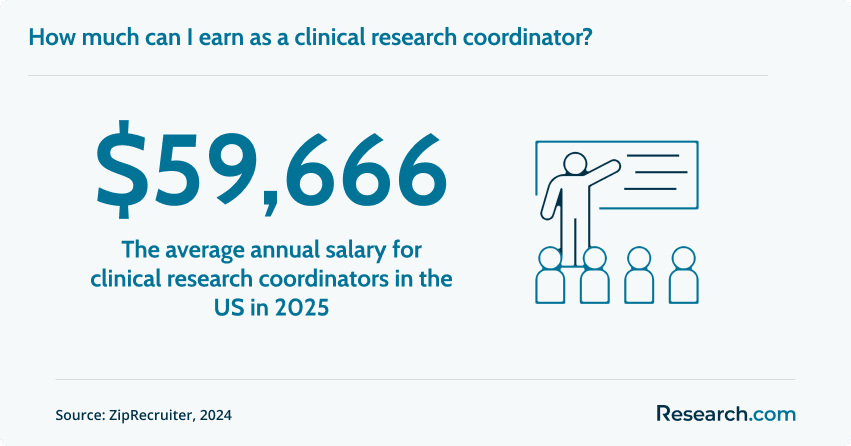
Clinical research coordinator pay depends on experience, location, employer type, therapeutic area, certification, and the complexity of the studies managed. Entry level clinical research coordinator pay is typically around $44,000 per year, reflecting the 10th percentile according to recent data. This is a realistic starting point for candidates who are still building direct trial experience.
The clinical research coordinator salary 2025 median stands at approximately $71,500 per year. At the senior level, salaries rise to about $74,000 per year. These figures suggest a career with room for financial growth, especially for professionals who develop strong regulatory knowledge, therapeutic specialization, and experience managing multiple studies.
Location can significantly affect compensation. Research-heavy markets such as Boston, San Francisco, and New York typically offer higher pay, but they may also come with higher living costs and more competitive hiring. Employer type also matters: top research hospitals, academic medical centers, biotech firms, pharmaceutical companies, and specialized research organizations may pay differently for similar titles.
Credentials and specialization can improve earning potential, but only when they align with job requirements. Certifications such as the CCRPS CRC Certification may help signal readiness, while experience in complex areas such as oncology, cardiology, neurology, device trials, or rare disease research can make a coordinator more competitive. The strongest salary growth usually comes from combining experience, reliable performance, certification, and advancement into senior coordinator, clinical research associate, trial manager, regulatory, or project management roles.
What is the job outlook for Clinical Research Coordinators?
The projected 10-year growth rate for clinical research coordinator jobs in the U.S. is 4.9% from 2022 to 2032, which is slightly below the national average for all occupations. That points to steady, not explosive, growth. Candidates should expect opportunities, but they should also build specific skills that make them competitive in their region and therapeutic area.
The key factors shaping the future outlook
One driver is continued clinical trial activity. As medical research expands across drugs, devices, behavioral interventions, diagnostics, and digital health tools, research sites need coordinators who can manage protocols and protect participant welfare.
Regulatory complexity also supports demand. Clinical studies require accurate documentation, proper consent, privacy protection, adverse event reporting, and audit readiness. These responsibilities are difficult to automate fully because they require judgment, communication, and real-time coordination with people.
Technology is changing the role rather than eliminating it. Decentralized trials, remote monitoring, eConsent platforms, wearable devices, telehealth visits, and electronic data capture systems mean CRCs increasingly need digital fluency. Coordinators who can combine patient-centered communication with comfort using trial technology will be better positioned.
For students who need flexible education options, affordable online universities that accept financial aid may provide a practical route to relevant coursework, especially for working adults building toward research or healthcare roles.
What is the typical work environment for Clinical Research Coordinators?
Clinical research coordinators commonly work in hospital research departments, outpatient clinics, academic medical centers, cancer centers, private research sites, and university-affiliated programs. Their day may move between offices, exam rooms, patient care areas, laboratories, pharmacies, and remote communication platforms.
The clinical research coordinator work environment is closely tied to hospitals (35%), ambulatory healthcare services (20%), and educational institutions (15%). This mix means some CRCs work in highly clinical environments with frequent patient contact, while others spend more time on documentation, regulatory files, sponsor communication, and data systems.
Most CRCs collaborate constantly. They may report to a principal investigator, research manager, or clinical trials office while communicating with sponsors, contract research organizations, monitors, nurses, pharmacists, laboratory staff, institutional review boards, and participants. The coordinator often becomes the person who knows where each study stands operationally.
The clinical research coordinator work schedule generally follows standard business hours, Monday through Friday. However, some studies require early mornings, evenings, weekends, or urgent follow-up to meet participant needs, protocol windows, or safety reporting timelines. Remote work may be possible for documentation, data entry, sponsor meetings, or query resolution, but participant visits and source data collection often require on-site presence.
Before choosing this career, consider whether you are comfortable with a hybrid rhythm: part patient-facing, part administrative, part compliance-focused, and part problem-solving under deadlines.
What are the pros and cons of Clinical Research Coordinator careers?
Clinical research coordination can be meaningful and stable, but it is not a low-stress administrative job. The same factors that make the work important—patient safety, regulatory oversight, scientific accuracy, and tight timelines—also make it demanding.
Pros
- Meaningful contribution to medical progress: CRCs help studies produce reliable evidence that may improve future treatments and care standards.
- Direct participant interaction: Many coordinators value building trust with participants and helping them navigate a complex research process.
- Varied daily work: The role blends scheduling, data, ethics, communication, clinical workflows, and sponsor coordination.
- Transferable skills: Experience in compliance, documentation, project coordination, and clinical operations can support advancement into related research careers.
- Exposure to healthcare innovation: Coordinators often work with emerging treatments, devices, technologies, or study designs before they become widely available.
Cons
- Heavy documentation burden: Paperwork, data entry, corrections, and regulatory files can consume a large part of the week.
- High attention-to-detail pressure: Small errors can create audit findings, protocol deviations, or participant safety concerns.
- Competing deadlines: Coordinators may manage several studies, sponsor requests, visit windows, and reporting requirements at once.
- Emotional strain: Some studies involve seriously ill participants, adverse events, or families facing difficult decisions.
- Limited flexibility in some settings: Patient visits, lab collections, and clinical procedures often require on-site availability.
This career is a strong fit for people who want mission-driven work and can tolerate structure, scrutiny, and frequent interruptions. It is a weaker fit for those who dislike documentation, prefer predictable routines, or become frustrated by regulatory detail. If you want to deepen your qualifications across healthcare, science, or administration, reviewing what schools offer dual degree programs may help you compare broader academic pathways.
What are the opportunities for advancement for Clinical Research Coordinators?
Clinical research coordinator career advancement can move in two directions: upward into leadership or outward into specialized functions. The best path depends on whether you prefer managing people and budgets, monitoring sites, improving quality systems, handling regulatory submissions, or becoming an expert in a therapeutic area.
Clear advancement pathways
- Entry-Level: Clinical Research Coordinator (CRC) — Coordinates study visits, recruitment, consent documentation, source records, data entry, and site-level compliance.
- Mid-Level: Senior Clinical Research Coordinator or Clinical Trial Manager — Oversees more complex studies, mentors junior staff, manages timelines, supports budgets, and coordinates across teams.
- Mid-Level Alternative: Clinical Research Associate (CRA) — Moves toward site monitoring, sponsor or contract research organization work, source data review, and broader trial oversight.
- Senior/Leadership: Principal Investigator, Clinical Project Manager, or Research Director — Leads research strategy, study design, operational planning, budget management, staff supervision, and compliance across programs or departments.
Specialization opportunities
- Therapeutic area specialization: Focus on oncology, cardiology, neurology, infectious disease, pediatrics, psychiatry, or another field where protocol knowledge and patient population experience are highly valued.
- Regulatory affairs and compliance: Work with submissions, approvals, inspection readiness, policy interpretation, and documentation standards.
- Clinical data management and informatics: Move deeper into database quality, query management, data cleaning, electronic systems, and reporting.
- Quality assurance and auditing: Review study processes, identify compliance risks, prepare for inspections, and improve site or sponsor procedures.
- Project and trial management: Manage timelines, vendors, budgets, enrollment targets, study milestones, and cross-functional communication.
To advance, document your accomplishments. Track the number and type of studies you support, therapeutic areas, enrollment results, monitoring outcomes, systems used, audits supported, and process improvements completed. Specific evidence of performance is more persuasive than a general claim that you are organized or experienced.
What other careers should you consider?
If you like clinical research but are unsure whether the coordinator role is the best long-term fit, compare nearby careers. Many use similar knowledge but emphasize different strengths, such as travel, data quality, regulatory strategy, or project leadership.
- Clinical Research Associate (CRA): A strong option for CRCs who want to monitor study sites, review documentation, verify compliance with Good Clinical Practice, and work more closely with sponsors or contract research organizations.
- Clinical Trial Manager: Fits professionals who enjoy operations leadership, timeline management, site performance, vendor coordination, and cross-functional problem-solving.
- Clinical Research Project Manager: Emphasizes project scope, budgets, resources, milestones, risk management, and stakeholder communication across clinical research programs.
- Regulatory Affairs Specialist: Uses knowledge of FDA regulations, institutional review board processes, submissions, approvals, and compliance documentation.
- Clinical Data Manager: Focuses on data quality, database review, query resolution, data cleaning, coding, and ensuring study results are supported by accurate records.
- Research Nurse: May be a fit for licensed nurses who want direct clinical involvement in study assessments, participant education, investigational product administration, and safety monitoring.
- Quality Assurance Specialist: Suits detail-oriented professionals who want to audit processes, identify compliance gaps, and strengthen research systems.
Choose based on the work you want to do every week, not just the title. If you prefer patient interaction and site logistics, CRC work may fit well. If you want travel and monitoring, consider CRA roles. If you prefer policy and submissions, regulatory affairs may be stronger. If you like systems and accuracy, clinical data management may be the better match.
Here's What Professionals Say About Their Clinical Research Coordinator Careers
- : "Every day as a Clinical Research Coordinator, I'm reminded how vital my role is in connecting patients to new possibilities. Being the main contact for participants allows me to see the real impact clinical trials have on someone's life, especially when they've run out of options elsewhere. Knowing my meticulous care in following protocols directly supports ethical research and advances medical knowledge gives me a strong sense of purpose and pride. — Javier"
- : "This job pushes me to stay organized and flexible like nothing else I've done before. Managing recruitment schedules, ensuring data accuracy, and adapting to protocol updates often feel overwhelming, but leaning on my team's support makes all the difference. Over time, I've learned that communication is key, and being ready for surprises keeps me grounded even on the busiest days. — Amina"
- : "One of the most fulfilling moments happens when a participant finishes a challenging trial, and I see the gratitude in their eyes. Knowing that my efforts-handling complex paperwork and guiding them through each step-could contribute to a future treatment makes every late night worth it. It's a rare feeling to be part of something bigger, where my work truly resonates beyond the office walls. — Darius"
Other Things You Should Know About Clinical Research Coordinator
The Certified Clinical Research Coordinator (CCRC) from ACRP and the Clinical Research Coordinator Certification (CCRC) from SOCRA are the main credentials. Both require documented work experience in clinical research, an application, and an exam, and they are widely recognized by employers in hospitals, universities, and contract research organizations.
In 2027, salaries for Clinical Research Coordinators remain competitive, influenced by experience, location, and workplace. Median salaries typically range from $55,000 to $75,000 annually. Those in large cities or with specialized expertise may earn more.
References
- 2025 Clinical Research Workforce Report https://ccrps.org/clinical-research-blog/2025-clinical-research-workforce-report
- Clinical Research Associate vs. Clinical Research Coordinator: Which Career Path is Right for You? https://futureinstemtraining.com/clinical-research-associate-vs-clinical-research-coordinator-which-career-path-is-right-for-you/
- 10 Clinical Research Career Paths and Progression Opportunities – R&D Partners https://www.r-dpartners.com/2023/10/30/10-clinical-research-career-paths-and-progression-opportunities/
- Essential Skills for Clinical Research Coordinators https://www.hirecruiting.com/newsroom/essential-skills-for-clinical-research-coordinators/
- Typical Career Progression in Clinical Research Industry - Clueo Clinical https://www.clueoclinical.com/typical-career-progression-in-clinical-research-industry/
- 5 reasons why you should consider a career in Clinical Research https://careers.iconplc.com/blogs/2025-1/5-reasons-why-you-should-consider-a-career-in-clinical-research-blog-73531917137
- Research Coordinator - Alternative Careers and Similar Jobs (Updated for 2025) https://resumeworded.com/career-profiles/research-coordinator-career-profile
- Clinical Research Coordinator Salary: How Much Can You Earn? - clinogenesisresearchinstitute https://clinogenesis.com/clinical-research-coordinator-salary/
- Occupation Profile for Clinical Research Coordinators | CareerOneStop https://www.careeronestop.org/Toolkit/Careers/Occupations/occupation-profile.aspx
- What a Clinical Research Coordinator Do | 5 Valuable Things to Know https://clinilaunchresearch.in/clinical-research-coordinator-roles-responsibilities/