2027 Is an Online Astronomy & Space Studies Bachelor's Degree Respected by Employers?

Co-Founder and Chief Data Scientist
Considering an online astronomy & space studies bachelor's degree can feel daunting for those juggling careers and education-especially when evaluating its tangible benefits. With remote learning rising, these programs report a 15% enrollment increase over five years, reflecting growing trust in their quality and flexibility.
Yet prospective students often question whether this path leads to meaningful employment or academic progression in a competitive STEM landscape. This article examines current trends, career outcomes, and program credibility to help readers determine if pursuing an online astronomy & space studies bachelor's degree aligns with their professional goals and life circumstances.
Key Things to Know About Employer Perception of Online Astronomy & Space Studies Bachelor's Degree
- Employer respect heavily relies on program accreditation and institutional reputation-regional accreditation and affiliations with recognized space research bodies increase credibility significantly.
- Industry norms favor candidates from programs with practical research opportunities and partnerships with aerospace organizations, influencing hiring decisions beyond degree delivery mode.
- Geographic labor markets affect recognition, with urban centers and tech hubs more accepting of online degrees due to higher demand for STEM expertise and remote work prevalence.
Is an Online Astronomy & Space Studies Bachelor's Degree Respected by Employers in Today's Job Market?
Recent employer surveys from the Society for Human Resource Management (SHRM) and Northeastern University show growing acceptance of online degrees, though perceptions vary widely by industry and institution. Employer respect for an online astronomy & space studies bachelor's degree in the US depends significantly on program accreditation, the institution's reputation, and the graduate's ability to demonstrate applied skills. These factors often weigh more heavily than the mode of delivery when employers evaluate candidates.
Prospective students considering an online astronomy and space studies degree employer perception in the US should pay close attention to accreditation, since accredited programs provide assurances of quality and rigor. Employers are increasingly acknowledging that the program's academic standards carry more weight than whether coursework was completed online or in person.
Other variables shaping respect for online astronomy and space studies bachelor's degree among US employers include program rigor, geographic labor market differences, and industry-specific expectations. For instance, some technical areas within space studies may prioritize hands-on experience gained through internships or research projects rather than formal classroom time. Similarly, urban and high-tech job markets may hold online degrees in higher regard compared to more traditional regions.
- Accreditation Matters: Employers prioritize degrees from accredited institutions, which assures program quality and adherence to national educational standards, reducing concerns about online program legitimacy.
- Institution Reputation: Degrees from well-known universities or colleges often carry more weight, so candidates should consider the standing of the school offering the online program.
- Applied Skills: Practical experience and demonstrated mastery through internships, research, or projects enhance employer confidence beyond the degree's delivery method.
- Industry Variation: Some sectors within astronomy and space studies may be more accepting of online degrees, especially those emphasizing technical skills over traditional classroom attendance.
- Geographic Factors: Employer perceptions vary by region; urban or high-tech job markets may be more open to online credentials compared to others.
Students exploring their options may also benefit from reviewing programs beyond space studies. For example, those seeking flexible, affordable pathways might find insight in the cheapest online MBA programs. Awareness of overall trends in online education can help frame what to expect from employer attitudes toward online degrees more generally.
How Have Employer Perceptions of Online Astronomy & Space Studies Degrees Shifted Over the Past Decade?
Employer perceptions of online astronomy & space studies degrees in the United States have shifted significantly since the early 2000s. Initially, skepticism prevailed due to concerns about academic rigor, lack of in-person interaction, and limited hands-on experience. Employers often viewed online degrees as less credible than traditional campus programs, especially in specialized scientific fields. However, advances in technology and growing accreditation reforms gradually improved employer acceptance throughout the 2010s, reflecting broader trends in acceptance of accredited online astronomy & space studies bachelor's programs by employers.
Data from the Online Learning Consortium's Babson Survey and the Society for Human Resource Management (SHRM) demonstrate this evolution. Employer willingness to hire candidates with online degrees rose from under 30% in the early 2010s to over 60% by 2019. The COVID-19 pandemic then accelerated this trend dramatically. Forced remote learning led to increased familiarity with, and trust in, online education's legitimacy.
By 2022, studies from Gallup and SHRM reported that over 75% of hiring managers regarded online degrees as equivalent to traditional ones, particularly when earned from accredited, well-established universities. For careers in astronomy & space studies, employers now emphasize portfolios, internships, and practical skills rather than the education format alone. Geographic labor market differences remain but the stigma surrounding these degrees has substantially diminished.
Prospective students should consider multiple factors such as accreditation and reputation when choosing programs. Working adults and transfer students exploring accelerated pathways can find a growing array of reputable options. For related programs on affordable pathways, those interested may also explore the cheapest online LPC programs.
- Early Skepticism: Online degrees faced doubts about quality and credibility, especially in science fields, limiting employer acceptance.
- Gradual Growth: Employer willingness grew steadily due to improved technology and accreditation reforms through the 2010s.
- Pandemic Impact: COVID-19 normalized online learning, significantly boosting employer trust across industries, including astronomy & space studies.
- Focus on Skills: Employers prioritize demonstrated skills and practical experience over the degree delivery method.
- Current Favorability: Recent data show most employers now respect online astronomy & space studies degrees earned from accredited institutions.
Which Industries and Employers Are Most Likely to Respect an Online Astronomy & Space Studies Bachelor's Degree?
Employer respect for an online astronomy & space studies bachelor's degree varies by industry and depends on accreditation, institutional prestige, and job requirements. Data from Burning Glass and LinkedIn Workforce Insights show growing acceptance of online degrees in sectors valuing practical skills over campus attendance.
- Technology: Employers prioritize skills like data analysis and programming common to astronomy graduates. Companies such as Lockheed Martin and Northrop Grumman hire online degree holders, especially those with internship or project experience.
- Healthcare Administration: Roles involving research coordination or data analytics increasingly accept online credentials. Organizations like Kaiser Permanente show openness when the skills match job needs.
- Business and Finance: Firms seek strong analytical abilities typical of astronomy curricula. Deloitte and PwC have posted positions that accept online science degrees focused on applied math and statistics.
- Public Sector and Government: Agencies including NASA and NOAA are more frequently recognizing online degrees from accredited programs. However, some research-focused jobs still favor on-campus graduates.
- Education and Research: Traditional expectations for lab work and mentorship keep this field more reliant on conventional degrees, making competition tougher for online graduates without advanced qualifications.
Geographic factors influence acceptance too-urban regions with dense tech and government employers tend to be more receptive. Prospective students should assess industry standards alongside program accreditation to determine employer perspectives accurately.
A professional who completed an online astronomy & space studies bachelor's degree shared the journey of balancing coursework with a full-time job and family responsibilities. He described the initial uncertainty about how employers would view his degree but emphasized the importance of gaining hands-on experience through virtual labs and internships. "It wasn't just about the diploma," he explained, "but demonstrating practical skills and staying proactive in networking." His story highlights that while the degree opened doors, actively showcasing competencies was key to employer recognition in competitive markets.
Employers in the United States tend to prioritize degrees from regionally accredited institutions, considering them the benchmark for academic quality. Regional accreditors such as the Higher Learning Commission (HLC), Southern Association of Colleges and Schools Commission on Colleges (SACSCOC), and New England Commission of Higher Education (NECHE) ensure that online astronomy & space studies programs meet rigorous standards comparable to traditional campus offerings. This accreditation significantly influences employer perceptions and hiring decisions.
By contrast, national accreditation often applies to vocational or specialized schools and may be viewed less favorably in STEM fields like astronomy & space studies, where employer recognition is crucial. Programmatic accreditation, which focuses on specific programs rather than institutions, adds value primarily if it directly relates to the discipline. Many employers conduct thorough verification of accreditation status when screening candidates, underscoring the importance of choosing a properly accredited program.
Unaccredited degrees or those from diploma mills can damage career prospects, as employers increasingly rely on formal checks to validate educational credentials. Students should confirm accreditation via the U.S. Department of Education's Database of Accredited Postsecondary Institutions and Programs before enrolling. For those considering related fields, options such as the game development online degree also require careful assessment of accreditation to ensure credibility.
- Regional Accreditation Impact: Recognized widely by employers, this accreditation assures the quality and legitimacy of online astronomy & space studies degrees.
- National and Programmatic Differences: National accreditation holds less weight in STEM, while programmatic accreditation benefits only relevant specialized programs.
- Employer Verification: Candidate degrees are frequently screened for proper accreditation, influencing hiring outcomes.
- Risks of Unaccredited Programs: Degrees from unaccredited or diploma mills can severely limit job opportunities and credibility in the scientific job market.
- Verification Resource: The U.S. Department of Education's accreditation database is essential for confirming the legitimacy of educational institutions.
Research indicates that employer respect for an online astronomy & space studies degree often depends on the prominence of the awarding institution in addition to its accreditation. Studies from the Society for Human Resource Management and the Online Learning Consortium reveal that graduates from recognizable universities offering online options-such as Penn State World Campus and Arizona State Online-typically experience fewer hiring challenges than those from lesser-known schools. This advantage stems largely from the "halo effect," where reputable institutions lend credibility that mitigates skepticism about online education formats.
The combination of accreditation and institutional prestige creates the strongest positive impression on employers, especially in competitive fields. Geographic and industry-specific factors also influence how much importance is placed on brand recognition versus accreditation alone. Candidates in highly contested job markets might find that investing in a well-regarded program can improve employment outcomes, offsetting potentially higher tuition costs.
- Institutional Recognition: Well-known universities boost graduates' credibility, reducing hiring hesitations linked to online degrees.
- Halo Effect: Prestigious institutions provide a reputational buffer that helps overcome doubts about online learning.
- Accreditation Matters: Although essential, accreditation combined with brand strength has the greatest impact on employer perceptions.
- Market Variability: Regional and sector differences affect how much weight employers place on institutional reputation.
- Cost and Return: Higher tuition for prestigious programs may be justified by improved job prospects in competitive industries.
When asked about how her institution's reputation influenced employer reactions, a professional who established her career after earning an online astronomy & space studies degree shared that the initial interview stages were challenging. Despite strong credentials, she sometimes sensed hesitation about the online format until she highlighted her university's recognized name and rigorous curriculum. She explained that once potential employers connected her degree to a respected institution, conversations became more focused on her skills and experience rather than the delivery method. Reflecting on her journey, she emphasized that the institution's prominence opened doors and reduced bias, which ultimately gave her confidence to compete effectively in the job market.
Research from SHRM and NACE reveals that hiring professionals typically do not differentiate between online and on-campus astronomy & space studies degrees when evaluating resumes. The primary consideration for employers is whether the degree comes from an accredited institution, not the mode of delivery. Most reputable online programs do not advise graduates to label their degrees as online on job applications.
Applicant tracking systems (ATS), commonly used by HR teams, usually treat all degrees from the same accredited university as equivalent. These systems prioritize the institution's name and accreditation status over whether coursework was completed remotely or in person. This reflects a broader acceptance of quality online education driven by technological advances and increased remote learning opportunities.
Employer preferences may vary depending on geographic labor markets and industry-specific demands. Roles requiring extensive lab work or collaborative hands-on experience might lead some employers to favor traditional, in-person education. Still, in fields like astronomy & space studies, where analytical skills and technical knowledge dominate, well-recognized online degrees remain competitive.
- Omit Online Label: Avoid specifying the degree was earned online unless explicitly asked; simply list the degree and institution as you would for any campus-based program.
- Emphasize Accreditation: Clearly indicate the institution's regional or national accreditation to affirm the program's legitimacy.
- Highlight Relevant Skills: Showcase coursework, internships, and projects directly related to astronomy & space studies to demonstrate expertise.
- Include Practical Experience: Detail any laboratory, research, or internship work to convey applied competencies.
- Optimize LinkedIn Profile: Maintain a professional profile featuring endorsements, recommendations, and certifications that bolster your credentials.
Employers typically assess candidates based on a comprehensive profile rather than focusing solely on the format of their degree. Internships, professional certifications, portfolios, and references offer tangible evidence of skills and work readiness that often carry more weight than whether a degree was earned online or on campus. For students pursuing an online Astronomy & Space Studies bachelor's degree, demonstrating practical, real-world experiences helps bridge the perception gap and underscores their professional potential.
Building a competitive network is critical for these students. Engaging in virtual career fairs, maintaining an active LinkedIn presence, participating in alumni groups, and joining specialized organizations in astronomy or space science connect students to mentors, industry professionals, and potential employers. Such involvement can lead to internships, job placements, and collaborative projects that enhance career prospects.
Many online programs emphasize applied learning through capstone projects, practicums, or partnerships with employers-the kind of experiences that enable students to apply theoretical knowledge in authentic settings. According to a report by the Online Learning Consortium, 72% of employers value applied learning equally, regardless of whether it occurred in online or traditional environments, reinforcing the growing acceptance of experiential learning for online graduates.
- Holistic Candidate Evaluation: Employers prioritize internships, certifications, and portfolios over degree format, viewing these as key indicators of professional potential.
- Networking Opportunities: Online students can build competitive networks through virtual events, LinkedIn, and professional organizations that connect them to industry insiders.
- Applied Learning Integration: Programs offering practicums or capstone projects provide crucial hands-on experience that enhances employability.
- Real-World Validation: Partnerships with employers during study create trusted pathways to demonstrate skills and reduce employer skepticism.
- Industry Trends: Recent data shows over 70% of employers regard online learning's experiential components as equal to traditional on-campus experiences.
Certain astronomy & space studies career paths and state licensure requirements in the United States do not typically mandate an on-campus degree or residency component. Across major states like California, Texas, Florida, New York, and Illinois, licensing boards and professional societies generally do not enforce strict in-person clinical hours for these roles. However, specialized certifications in related STEM fields, such as aerospace engineering or laboratory instrumentation, may require hands-on practicum experience that fully online programs often cannot provide.
Students aiming for careers in observatories, government research labs, or space agencies should carefully verify whether their chosen program meets both accreditation standards and practical training requirements. Many accredited online astronomy & space studies programs address these demands by offering hybrid models that combine virtual coursework with optional on-campus labs or summer workshops. This hybrid approach allows students to fulfill practical experience requirements while enjoying flexible online study.
It is crucial for prospective students to consult relevant professional bodies, including the American Astronomical Society and accrediting organizations like the Higher Learning Commission, to confirm their program's licensure eligibility. Employers in academia and aerospace industries value degrees from accredited institutions and generally respect online formats when the student has demonstrated the necessary hands-on skills. This due diligence helps avoid enrolling in online programs that may not qualify graduates for particular career goals due to format limitations.
Those seeking pathways without the GMAT or GRE might also explore options like an MBA online no GMAT for broader educational advancement. For individuals considering licensure requirements for astronomy & space studies degrees in the United States, understanding geographic and industry-specific demands is essential.
- No Universal Residency Mandate: Most astronomy & space studies careers focus on theoretical knowledge and research skills obtainable through online programs without requiring on-campus attendance.
- Practical Experience Needed: Some technical roles and certifications require laboratory practicums or in-person components that purely online degrees may lack.
- Hybrid Program Availability: Many programs offer blended formats, combining virtual classes with optional on-site labs or workshops to meet hands-on training demands.
- Accreditation Is Essential: Ensuring the program's accreditation by recognized bodies protects degree value for employment and further education.
- Consult Professional Bodies: Verifying licensure or certification requirements with relevant organizations helps align online degree choices with career objectives.
Employers use a thorough process to verify the legitimacy of an online astronomy & space studies bachelor's degree during hiring. Typically, they start with trusted national databases such as the National Student Clearinghouse, which tracks enrollment and degree records for many accredited U.S. institutions. In addition, direct contact with the issuing institution may take place-either by the employer or a third-party screening vendor-to confirm the degree's authenticity and issuance details. This verification process reflects how US employers assess legitimacy of online astronomy and space studies bachelor's degrees in modern hiring practices.
Accredited online degrees from reputable schools undergo the same verification checks as traditional on-campus programs. This equivalence arises because accredited institutions meet rigorous standards for curriculum quality and faculty qualifications, ensuring employer confidence. Therefore, online astronomy & space studies degrees from legitimate programs carry equal weight with their on-campus counterparts during background screening.
Employers are trained to identify red flags including degrees from non-accredited schools, diploma mills that sell fake credentials, or unverifiable transcripts. Legitimate online astronomy & space studies programs maintain clear accreditation and provide official documentation on request, helping graduates avoid these pitfalls. Students are advised to request an official transcript and a degree verification letter early and keep copies accessible to streamline the hiring process.
For those considering affordable study options, consulting resources such as cheap online degrees fast can provide insight into cost-effective accredited pathways. Geographic labor market differences and employer industry standards also shape respect for these degrees, emphasizing accreditation and institutional reputation over the program delivery format.
- Verification Methods: Employers rely on national databases, direct institutional verification, and third-party screening vendors to thoroughly confirm degree authenticity.
- Accreditation Importance: Accredited online degrees hold the same regard as traditional degrees, ensuring consistent employer trust.
- Red Flags Awareness: Hiring managers watch for non-accreditation, diploma mills, and unverifiable credentials to avoid fraudulent hires.
- Documentation Preparedness: Early access to official transcripts and verification letters helps expedite background checks and improve hiring chances.
- Industry Standards: Labor market norms prioritize institutional reputation and accreditation regardless of whether degrees are earned online or on-campus.
Misconceptions about educational pathways can influence how certain credentials are perceived in the job market. As alternative learning formats continue to grow, it’s important to separate common myths from the realities of how programs are designed and evaluated. Understanding these perceptions can help provide a more balanced view of their credibility and acceptance.
- Lower Academic Standards: Many employers assume online Astronomy & Space Studies degrees are less challenging. In truth, accredited online programs maintain identical standards to their campus-based counterparts. Data from sources such as the National Center for Education Statistics show similar GPA ranges and course completion rates for online and traditional students.
- Lack of Peer Interaction: Some hiring managers worry that virtual learning reduces collaboration and networking opportunities. However, modern online courses use interactive tools like live discussions, virtual labs, and group projects, ensuring students engage deeply with peers. Research from the Online Learning Consortium supports that well-structured online programs deliver meaningful social and academic interaction.
- Easier Grading and Assessment: There's a misconception that grading in online astronomy & space studies programs is more lenient. Contrarily, rigorous assessment-including proctored exams and comprehensive assignments-is standard. Institutional research consistently reports comparable student performance outcomes in both online and face-to-face formats.
Industry Bias and Regional Skepticism: Some sectors and geographic areas may still view online credentials cautiously, especially among older or non-HR managers unfamiliar with evolving standards. This hesitation is diminishing but can influence hiring decisions.
Job candidates should proactively highlight their program's accreditation, quality metrics, and academic rigor during interviews. Providing clear, confident evidence can help turn perceived doubts into advantages and distinguish applicants in competitive job markets.
Building strong credentials involves more than just completing a degree program. Students can take additional steps to enhance their skills, demonstrate their abilities, and stand out in a competitive job market. Focusing on these efforts can help improve how their qualifications are perceived by potential employers.
- Certifications: Obtaining industry-recognized certifications or micro-credentials enhances your credentials beyond academic coursework. Certificates from the American Astronomical Society or specialized programs in data analysis, telescope operation, and space-related software increase your marketability. Badge programs focusing on space science skills are also gaining employer recognition.
- Internships and Volunteer Work: Gaining hands-on experience through internships at observatories, research labs, or space companies-whether remote or onsite-builds practical skills and professional connections. Volunteer roles at planetariums, science centers, or field data projects further demonstrate your commitment and experience.
- Professional Portfolio: Curate a collection of research papers, project summaries, and developed tools that reflect your applied knowledge. A well-organized portfolio provides tangible evidence of your expertise to potential employers.
- Association Memberships: Joining groups like the American Astronomical Society or the Planetary Society grants access to events, journals, and networking platforms that bolster your professional standing and industry insight.
- Part-Time and Freelance Work: Taking on astronomy-related freelance or part-time positions in data analysis, science outreach, or communication cultivates valuable skills while simultaneously producing a documented work history-qualities highly regarded by employers.
Effective Documentation: Clearly and strategically presenting certifications, internships, portfolio highlights, and memberships on your resume and LinkedIn is vital. During interviews, discussing these credentials with concrete examples significantly enhances your perceived competence and dedication.
According to the 2023 SHRM report, 68% of employers prioritize verified practical experience and micro-credentials, underscoring the importance of these strategies for students in Astronomy & Space Studies.
What Do Graduates Say About Employer Reactions to Their Online Bachelor's Degrees?
- Dante: "My online Astronomy & Space Studies degree was completely seamless when it came to employer perception-many of them didn't even ask about the format because my skills and practical knowledge were evident from the start. I appreciated how focusing on real-world applications during the program prepared me well for industry demands. It was a great reminder that what you know truly outweighs how you learned it."
- Collin: "During several interviews, I was initially questioned about earning my Astronomy & Space Studies degree online, which made me reflect on the lingering skepticism some employers still hold. However, once I demonstrated my technical proficiency and problem-solving capabilities, the doubts quickly faded. This experience showed me that perseverance and evidence of skill are essential to overcoming preconceived notions regarding online education."
- Dylan: "Employers consistently emphasized my skill set and cultural fit rather than the delivery format of my Astronomy & Space Studies bachelor's degree. Reflecting on this, I found that highlighting my hands-on project experience and adaptability helped shift the focus away from the online nature of my studies. It's validating to know that many companies value competence and attitude above all else."
Other Things You Should Know About Astronomy & Space Studies Degrees
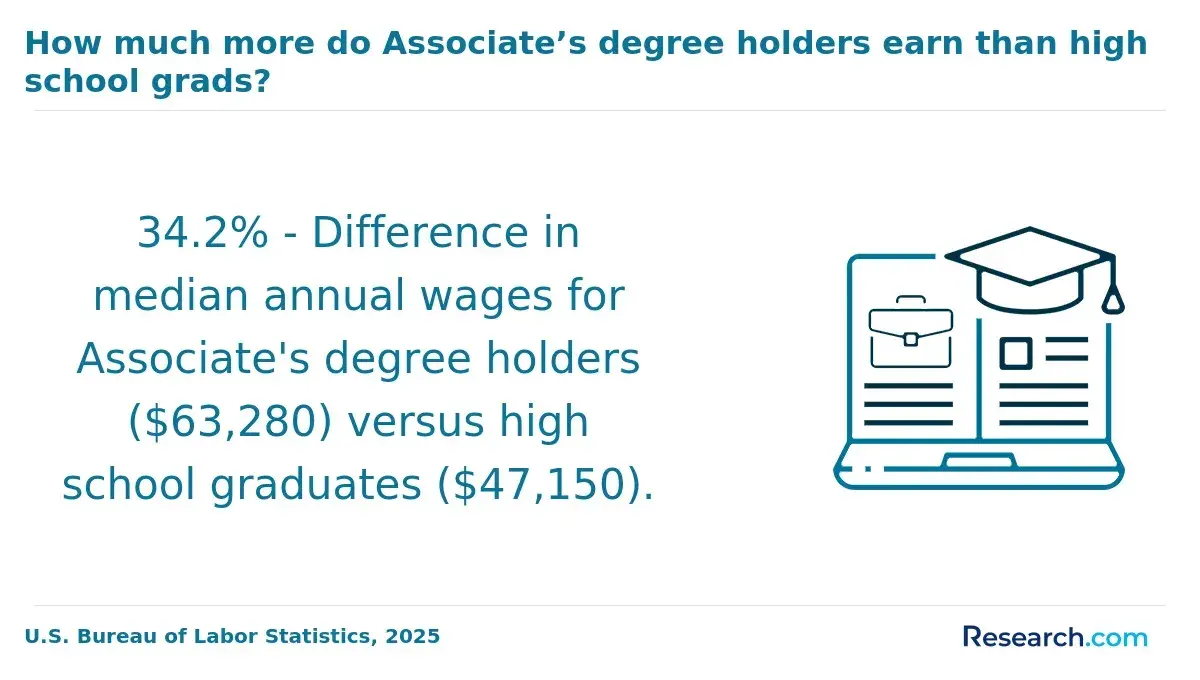
Employers generally view an online astronomy & space studies bachelor's degree as more advanced and specialized than an associate degree, which is often considered more foundational. However, a master's degree typically holds greater weight for technical and research roles, signaling more in-depth knowledge and experience. Many employers expect a bachelor's degree as the minimum qualification, but for competitive positions, advanced degrees can be a decisive factor.
It should come from a regionally accredited college or university; that is the standard employers and graduate schools check first. For astronomy-related content, look for math and physics coursework, and for certain careers, program recognition by the institution’s engineering or science accreditor matters.
Students should evaluate the program's accreditation, faculty expertise, curriculum rigor, and career support services. It's important to consider the institution's standing in the astronomy and space science community and how well the program prepares graduates for industry demands. Balancing cost and flexibility with program quality and employer recognition will help ensure the degree holds value in the job market.
- A Pilot Study from A Course-Based Undergraduate Research Experience for Online Degree-Seeking Astronomy Students https://astroedjournal.org/index.php/ijae/article/view/87
- What are the Most Common Space Industry Jobs? https://www.spacefoundation.org/2023/02/24/what-are-the-most-common-space-industry-jobs/
- Astronomy Online http://astronomyonline.org/Posts/PassionJob.asp
- Improving Undergraduate Astronomy Students’ Skills with Research Literature via Accessible Summaries: An Exploratory Case Study with Astrobites-based Reading Assignments https://arxiv.org/html/2309.05822v3
- This website is not available in your country https://www.space-careers.com/article/963/how-to-achieve-a-career-in-space-studies
- How Do Organizations Verify Education Before Making a Hire? - Verification Screening Solutions https://www.verificationscreening.com/blog/how-do-organizations-verify-education-before-making-a-hire/
- Bias against online degrees "a PR issue", stakeholders suggest https://thepienews.com/bias-against-online-degrees-a-pr-issue-stakeholders-suggest/
- Interested in space? Here are the degrees you can get in astronomy https://www.astronomy.com/science/interested-in-space-here-are-the-degrees-you-can-get-in-astronomy/
- Are Online Degrees Respected by Employers? https://www.collegetransitions.com/blog/are-online-degrees-respected-by-employers/
- Debunking 8 Common Myths About Online Degrees - University of the Potomac https://potomac.edu/debunking-common-myths-about-online-degrees/