2027 How to Finish an Online Astronomy & Space Studies Bachelor's Degree Faster

Co-Founder and Chief Data Scientist
Many students pursuing an online astronomy & space studies bachelor's degree struggle to balance demanding coursework with full-time jobs or family duties.
This challenge often prolongs graduation timelines, with nearly 60% of online students taking more than six years to complete their degree. The complexity of science-heavy curricula, combined with limited availability of accelerated classes, adds to the delays.
This article explores proven strategies to help students shorten their path to graduation, examining transfer credit options, prior learning assessments, intensive course formats, and financial aid planning to enable efficient, timely completion of an online astronomy & space studies bachelor's degree.
Key Things to Know About Finishing an Online Astronomy & Space Studies Bachelor's Degree Faster
- Leverage transfer credits and prior learning assessments to bypass introductory courses. Up to 30% of degree requirements may be waived this way.
- Enroll in accelerated course formats such as 8-week terms instead of 16-week semesters to complete credits more quickly and intensively.
- Utilize military and employer tuition assistance programs alongside federal aid to reduce financial barriers and enable continuous enrollment without breaks.
What Are the Fastest Astronomy & Space Studies Online Bachelor's Degree Programs Available Today?
Several key factors contribute to what makes an online astronomy & space studies bachelor's degree program fast.
- Credit Load: Programs that permit heavier course loads per term or provide year-round enrollment, including summer and winter sessions, allow students to finish more quickly. Some schools let qualified students take up to 18 or more credits per semester.
- Transfer Policies: Flexible transfer credit options enable students to apply prior college credits or military training toward their degree requirements, significantly reducing the total time to graduate.
- Self-Paced Formats: Asynchronous, self-paced online courses give learners the freedom to advance on their own schedules, accelerating progress without fixed deadlines.
- Accelerated Schedules: Condensed courses lasting 5-8 weeks instead of traditional 15-week semesters help students complete more classes annually by focusing intensively on fewer subjects at a time.
- Fixed-Term Accelerated Program: Universities like Indiana University and Southern New Hampshire University offer structured accelerated 3-year pathways with several eight-week sessions per year, allowing students to finish sooner than the usual four years.
- Flexible Self-Paced Program: Western Governors University exemplifies this model, letting students move through astronomy & space studies coursework entirely at their own pace with mastery-based progress.
- Hybrid Transfer-Focused Program: Institutions such as Arizona State University emphasize generous transfer credit evaluation, sometimes accepting up to 90 credits from prior studies or military experience, thereby reducing time to degree while maintaining a typical semester schedule.
Program length varies greatly, from about 2.5 years in the fastest self-paced or transfer-heavy programs to four years with traditional pacing. While accreditation typically does not speed up program completion directly, it ensures educational quality and impacts transferability and financial aid options, which indirectly influence degree timelines.
Those pursuing the fastest online astronomy & space studies bachelor's degree programs should verify specific offerings and policies with schools, as formats and credit transfer rules evolve. To aid further in educational planning, consider researching the cheapest online masters in artificial intelligence, which can also be pursued with accelerated and flexible options for STEM fields.
How Does Transfer Credit Acceptance Accelerate Your Astronomy & Space Studies Degree Timeline?
Transfer credit acceptance plays a crucial role in accelerating the completion of an Astronomy & Space Studies bachelor's degree by recognizing prior coursework from accredited institutions, allowing students to skip introductory courses and focus on advanced studies.
This process often depends on evaluations by a university's admissions or registrar office and varies by institution.
- Articulation Agreements: Many colleges enter formal partnerships called articulation agreements, which specify which courses from community colleges or other universities transfer directly toward degree requirements. For instance, foundational courses in astronomy or physics taken at a community college with an articulation agreement typically apply seamlessly, saving valuable semesters and reducing the time to degree.
- Credit Equivalency Reviews: When formal agreements are absent, institutions conduct credit equivalency reviews that carefully compare course content, credit hours, and academic rigor. This ensures that transferred credits align with the program's standards and maintain academic integrity, an essential step in transfer credit policies for astronomy and space studies bachelor's degrees.
- Maximum Transfer Credits Allowed: Institutions often cap transferable credits, commonly up to 60 semester hours, toward the bachelor's degree. Knowing these limits helps students make strategic decisions to maximize transferred credits without exceeding policies, effectively shortening astronomy and space studies degree completion time.
- Concrete Examples: Community college general education courses, like introductory astronomy or physics, generally transfer well and fulfill prerequisite requirements. College-level courses in related sciences, such as calculus or chemistry, often count toward degree segments, accelerating progress.
Students should always consult their institution's registrar or admissions office for specific credit transfer evaluations to ensure accurate planning. Combining transfer credit strategies with options like accelerated course formats and financial aid optimization can create a powerful pathway for working adults and career changers.
Those exploring graduate options may also find insights into affordable EMBA programs helpful as they plan their academic journeys.
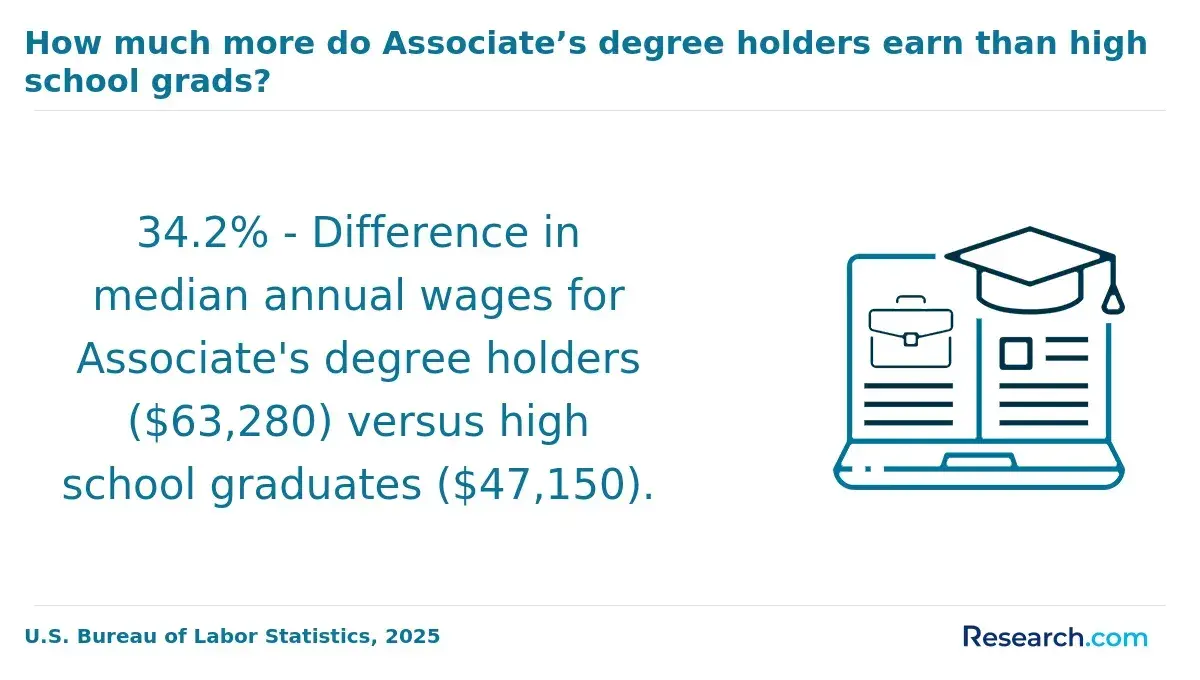
Can Prior Learning Assessment (PLA) Help You Finish Your Astronomy & Space Studies Degree Sooner?
Prior learning assessment (PLA) allows students to convert existing college-level knowledge into academic credits, potentially speeding up completion of an online astronomy & space studies degree. This process credits learning gained outside traditional classrooms, such as through work, military experience, or self-directed study.
- Portfolio Assessment: Students assemble a comprehensive collection of evidence, like reflective essays and documented experiences, that demonstrate mastery of astronomy-related topics aligned with course goals.
- CLEP Exams: The College Level Examination Program tests proficiency in various subjects. While no CLEP exams cover astronomy directly, related subjects like college algebra or natural sciences may count toward degree requirements.
- DSST Exams: These cover a range of academic and technical topics useful for fulfilling general education or electives within the program.
- Military Credit: Credits can be awarded for military training, especially if it pertains to aerospace or technical skills relevant to astronomy and space studies.
- Challenge Exams: Some colleges allow students to take institution-specific exams to prove competency and bypass certain courses.
PLA credit is most often granted for foundational scientific knowledge and technical skills like physics, calculus, or programming that align with core astronomy & space studies requirements. Relevant practical experience, including internships in observatories or participation in space-related research, strengthens portfolio submissions.
To find out if a program accepts PLA, students should examine official school resources or contact academic advisors. Policies, accepted methods, and credit limits vary greatly, so clarifying these details early is essential.
When preparing a portfolio, candidates should explicitly connect prior learning to course objectives, provide authentic and well-organized documentation, and adhere closely to institutional guidelines. Seeking feedback from faculty can improve the quality and credibility of the submission.
A professional who enrolled in an online astronomy & space studies bachelor's degree shared that navigating PLA was initially daunting. He recalled, "It wasn't just about listing what I'd done. It required showing how those experiences matched academic standards."
The process involved compiling detailed reflections and gathering supporting documents, which demanded persistence and patience. Yet, he found that engaging with advisors and revising his portfolio based on their input significantly improved his outcomes. "PLA really made a difference," he said, "helping me shorten my path without compromising the depth of my education."
CLEP (College-Level Examination Program) and DSST (DANTES Subject Standardized Tests) offer valuable credit-by-exam options for online Astronomy & Space Studies bachelor's degree acceleration. These exams allow students to bypass certain courses by demonstrating college-level knowledge, particularly in core general education areas.
Common CLEP and DSST subjects applicable to Astronomy & Space Studies include College Algebra, Natural Sciences, and Introductory Sociology. These often satisfy general education or elective requirements, helping reduce time to degree completion.
- Registration Process: Exams are scheduled through authorized testing centers such as colleges, military facilities, and PSI sites, providing flexible timing to accommodate working adults and military personnel.
- Exam Fees: Typically range from $85 to $115 per test, with some centers charging additional administrative fees; active military members may qualify for reduced or waived fees through DANTES.
- Score Requirements: Institutions generally require a minimum passing score, commonly between 50 and 60 on the CLEP scale or an equivalent DSST score, to grant credit.
- Credit Awarding: Upon meeting score thresholds, students earn credit hours that often replace introductory courses or general education classes in their degree plans.
- ACE Credit Recommendation: The American Council on Education evaluates these exams and suggests credit equivalencies, so consulting the ACE Credit Transfer Guide can ensure exam choices align with program goals.
- Institutional Acceptance: Because each college sets its own policies, it's crucial to verify which CLEP and DSST exams are accepted and how credits apply before registering.
For students considering accelerated pathways, this approach complements other strategies like transfer credits from associates degrees and prior learning assessments, maximizing flexibility and affordability.
Accelerated course formats in astronomy & space studies condense traditional semester content into 5-, 6-, or 8-week sessions, intensifying the learning experience. This rapid pace demands heightened focus and efficient time management to absorb complex scientific concepts effectively.
Students must maintain consistent engagement and adapt quickly to frequent assessments, which differs markedly from the more gradual pace of 15-week semesters. Before enrolling, it's essential to evaluate personal circumstances such as work hours and family commitments to ensure the ability to sustain this accelerated rhythm.
Those balancing full-time employment or caregiving roles might find shorter terms overwhelming without supportive structures or flexible schedules. Self-assessment helps prevent burnout and enhances success in a high-intensity learning environment.
One advantage of these compressed courses is the ability to enroll in multiple consecutive terms throughout the year, effectively creating a continuous study schedule. This approach can reduce overall time to degree completion and potentially lower tuition costs by shortening enrollment periods.
A 2023 survey found nearly 40% of online learners prefer shorter course formats to better integrate education with their busy lives.
A professional who earned her astronomy & space studies degree online shared that balancing work and family with 6-week courses was "both challenging and rewarding." She described how she learned to "prioritize critical tasks and block out focused study hours" while leaning on peer discussion forums to stay motivated.
Despite moments of stress, she emphasized that the accelerated format "offered a clear path to finish faster without sacrificing understanding," ultimately helping her transition smoothly into a career in aerospace technology.
The length of time required to complete a bachelor’s degree in astronomy and space studies often depends on whether a student pursues full-time or part-time enrollment. Full-time study typically supports steady advancement, while part-time enrollment offers flexibility but extends the overall timeline.
Understanding how each pathway affects academic pacing can help students choose an approach that fits their schedule and long-term interests.
- Full-Time: Enrolling full-time, typically taking 12 to 15 credits per semester, can accelerate degree completion in astronomy & space studies, allowing you to finish in fewer semesters. For instance, if you have 60 credits left, enrolling in 12 credits each semester could enable graduation in about 2.5 years or five semesters. This option suits those ready to commit significant time and energy, but balancing it alongside work or family may increase stress and require strong time management.
- Part-Time: Taking 6 to 9 credits per semester extends the path but offers greater scheduling flexibility. With 60 credits remaining, carrying 6 credits per semester would stretch your timeline to roughly five years or ten semesters. This approach is ideal for students juggling jobs or personal responsibilities, helping maintain consistent academic performance without overwhelming pressure.
- Financial Aid: Enrollment status directly influences financial aid eligibility. Many grants, scholarships, and loans require at least half-time status, generally six credits per semester. Falling below this threshold could reduce or eliminate access to crucial funding. Additionally, students must uphold satisfactory academic progress standards, such as minimum GPA and credit completion rates, which often prove more challenging when taking fewer credits over a longer period.
- Balancing Speed and Sustainability: Accelerated study shortens the journey but can intensify workload and stress. Slower pacing offers balance but prolongs graduation. Weigh job demands, family needs, and personal energy levels carefully when choosing your semester credit load. Programs often provide accelerated courses or recognize prior learning credits to help streamline your degree without overwhelming your schedule.
Self-paced astronomy & space studies degree programs with competency-based education (CBE) models allow students to advance by demonstrating mastery of specific skills rather than spending fixed time in classes.
This mastery-based progression lets learners test out of courses or lessons on material they already understand, significantly accelerating degree completion. Such programs benefit motivated students with prior science and math backgrounds seeking flexible, efficient pathways to a bachelor's degree.
While CBE offers great advantages, it demands strong self-discipline and time management. Without scheduled classes or rigid deadlines, students must create structured study plans and maintain consistent effort to stay on track. Those lacking clear goals or personal accountability risk falling behind or losing motivation.
Currently, not all institutions offering astronomy & space studies degrees provide CBE options. Prospective students should inquire specifically about self-paced or competency-based formats during admissions, as availability varies widely.
Successfully completing an online astronomy & space studies bachelor's degree on time relies on effectively using academic support services for online astronomy & space studies students throughout the program.
Leveraging these resources proactively helps avoid setbacks such as course failures or withdrawals that can delay graduation.
- Academic Advisors: Regular communication with academic advisors is vital. They guide students in understanding degree requirements, selecting courses each term, and mapping a clear path to on-time completion. Advisors also assist with transfer credits and prerequisites to align course selections with degree goals.
- Tutoring Services: Many programs offer tutoring in challenging subjects like physics, mathematics, and astronomy. Engaging tutoring services promptly can enhance comprehension, improving grades and maintaining steady progression.
- Writing Centers: Writing centers provide personalized help for papers, lab reports, and assignments, bolstering communication skills necessary for success in many astronomy & space studies courses.
- Library Access and Digital Resources: Taking full advantage of institutional digital libraries and research databases is key. Access to scholarly articles, e-books, and journals supports coursework completion with academic rigor and efficiency.
- Orientation Programs: Orientation sessions familiarize students with online learning platforms, available resources, and academic expectations-laying the groundwork for effective time management tools for astronomy & space studies degree completion.
Consistently using these resources encourages early identification and resolution of challenges, facilitating steady academic progression. Such strategies prove especially beneficial for working adults, military-affiliated learners, and transfer students aiming to finish their degree as planned.
Students searching for additional guidance might explore related fields like MBA in operations management programs to compare academic support frameworks and best practices.
Choosing the right astronomy & space studies program curriculum significantly impacts how quickly you can complete your degree.
Programs with many mandatory core requirements often leave less flexibility for electives that could align with your prior experience, limiting opportunities to accelerate progress-especially important for working adults and career changers seeking the best curriculum structures for faster astronomy & space studies degree completion.
- Core Requirements: A high number of compulsory core courses can extend your timeline to graduation by reducing the chance to apply transfer credits or prior learning. While these courses build essential knowledge, they leave limited room for customization.
- Prerequisite Chains: Sequential course structures requiring completion of one class before another can create bottlenecks. If required courses are offered only once a year, even accelerated formats cannot fully address delays inherent in these prerequisite chains.
- General Education Clusters: Programs that allow flexible general education clusters enable students to select courses fitting their schedules or previously completed credits. Conversely, rigid clusters restrict options and can prolong degree completion.
Prospective students should carefully map out their entire degree plan before enrolling. Using official catalogs or degree audit tools helps identify all core requirements, prerequisites, and course sequences. Staying informed on curriculum changes by consulting academic advisors ensures your accelerated path remains feasible as you move forward.
Additionally, exploring options like transfer credits or alternative learning assessments can optimize your schedule. Students combining astronomy & space studies with fields such as an applied artificial intelligence bachelor may find interdisciplinary pathways that enhance career flexibility and shorten timeframes.
Summer and winter terms offer a way for students to increase their credit load each year, potentially shortening the time needed to earn a bachelor's degree in astronomy & space studies. These inter-sessions let students take additional courses outside the traditional fall and spring semesters, adding flexibility and pace to their academic progress.
Typically, institutions limit credit enrollment in these shorter terms to between 3 and 6 credits due to the condensed schedule.
Tuition structures may differ. Some charge per credit, which can make inter-session courses more affordable, while others apply flat fees or slight premiums. Financial aid availability for these sessions is inconsistent, so verifying whether current aid covers summer and winter terms is essential to avoid unexpected costs.
Selecting appropriate courses is important when enrolling in compressed terms. Electives and general education classes are usually better suited to this format since they often require less lab work or group collaboration. Core astronomy & space studies classes with intensive labs or projects might be less practical during these fast-paced sessions.
Policies and course availability vary widely among colleges and universities. It is wise to review each institution's current academic catalog to confirm which inter-session courses are offered before planning.
Financial challenges often cause delays in completing an online astronomy & space studies bachelor's degree. Various aid options can help students stay on track without interruptions.
- Federal Grants: These need-based funds from the government require no repayment. Students must submit the FAFSA (Free Application for Federal Student Aid) annually to maximize eligibility and secure aid promptly.
- Institutional Scholarships: Many colleges offer merit-based scholarships tailored for astronomy & space studies or STEM students. Searching institutional, professional association, and private scholarship databases is essential to uncover all opportunities.
- Employer Tuition Assistance: Working students might benefit from their employer's tuition reimbursement or direct payment programs, which often require course completion verification and may limit eligible credits or programs.
- Military Benefits: Veterans, active service members, and their families may use GI Bill funds or military tuition assistance programs, which frequently cover significant tuition costs but demand timely documentation and maintaining minimum enrollment.
Maintaining at least half-time enrollment or a minimum credit load is commonly required to retain financial aid, making enrollment decisions critical for uninterrupted funding.
Timely FAFSA filing each year is crucial, as delays can reduce or eliminate aid eligibility. Prioritizing financial aid applications alongside academic planning helps avoid financial obstacles that could postpone degree completion.
What Graduates Say About How to Finish an Online Astronomy & Space Studies Bachelor's Degree Faster
- Dani: "What really stood out to me was the acceptance of transfer credits and the option to use CLEP and DSST exams, which made it possible to fast-track my degree. The accelerated course formats allowed me to stay on top of my studies despite a busy work schedule. Graduating with an online astronomy & space studies bachelor's degree felt both efficient and rewarding, and I highly recommend this flexible approach."
- Sarah: "Choosing a self-paced program was a game-changer for me because it gave me the freedom to learn when I was most focused. I also appreciated the ability to tailor my curriculum to fit my specific interests within astronomy & space studies, which kept me engaged throughout. The available financial support options made pursuing my degree much less stressful, allowing me to concentrate fully on my education."
- Dylan: "After earning my degree, I transitioned into a professional career in aerospace research, and I owe much of my success to the well-structured online astronomy & space studies program. The learning assessments challenged me to truly grasp complex concepts, and the support from instructors was invaluable. This degree gave me the credentials and confidence needed to advance in a highly competitive field."
Other Things You Should Know About Astronomy & Space Studies Degrees
Yes. Many accredited programs accept up to 90 transfer credits toward a 120-credit bachelor’s degree, leaving as few as 30 credits to complete. Schools usually require official transcripts and may limit how many upper-division astronomy or physics courses can transfer in.
A strong GPA often grants access to honors courses, accelerated classes, and additional academic advising that supports quicker degree completion. High academic standing can also increase eligibility for scholarships and financial aid, reducing the need to pause studies for financial reasons. Furthermore, maintaining good grades may enable easier transfer of credits from community colleges or other programs, streamlining your course load.
Certifications in fields like data analysis, remote sensing, or even aerospace technology can overlap with astronomy & space studies curricula, allowing you to earn credit through prior learning assessments. Acquiring relevant certifications may reduce the number of required courses or accelerate progression through technical subjects. These credentials can also enhance career prospects while you complete your degree.
- The scoop on full and part-time status | Student Hub - Concordia University https://www.concordia.ca/students/registration/advising/full-part-status.html
- CLEP vs. DSST vs. ECE: Which Credit-by-Exam Option Is Right for You? https://straighterline.com/blog/test-comparison-clep-vs-dsst-vs-ece
- The value of space studies programs in higher education https://www.thespacereview.com/article/5031/1
- CAEL | Why Credit for Prior Learning (CPL) or Prior Learning Assessment (PLA) Matters https://www.cael.org/lp/cpl-pla
- Astronomy Online http://astronomyonline.org/Posts/6BestResourcesAstro.asp
- Online Astronomy Degrees - EDsmart https://www.edsmart.org/online-astronomy-degrees/