2027 Evaluating an MPH Practicum in A Tobacco Control Policy Program

Co-Founder and Chief Data Scientist
A tobacco control policy practicum can put an MPH student close to real decisions about smoke-free rules, tobacco retail environments, and access to cessation support. But a recognizable host organization is not enough: the placement must offer approved, supervised work that produces useful evidence of your skills.
This guide is for students comparing field sites and MPH programs. It explains what to verify with the school and host, how to judge a proposed project's feasibility and ethics, and when the time and expense of a placement are likely to serve your career goals.
Key Things You Should Know
- For a CEPH-accredited MPH, the applied practice experience must demonstrate at least five competencies, including at least three foundational competencies, through at least two products; the school decides whether a proposed tobacco policy placement meets its requirements.
- Prefer a placement with a named supervisor, permission to perform substantive policy work, achievable deliverables, and a realistic plan for data access and review - not one offering observation alone.
- Compare the full cost of participation, including unpaid time, travel, and schedule disruption. An online MPH may allow a local placement, but it does not guarantee remote fieldwork or flexible hours.
What Is an MPH Practicum in a Tobacco Control Policy Program?
An MPH practicum - often called an applied practice experience (APE) - is supervised work in which a student applies public health competencies to a practice setting. In tobacco control policy, the setting might be a health department, community organization, advocacy group, or health system. The work could inform a decision about smoke-free environments, retailer licensing, flavored tobacco restrictions, cessation-service access, or policy implementation.
A strong project has a decision-maker and a bounded output. For example, a student might review publicly available local ordinances and prepare a comparison brief for a health department. That is more assessable than a vague assignment to "help with policy." Policy analysis also differs from lobbying: students should confirm what activities their school and host permit, especially when public funds or organizational advocacy rules apply.
Students still choosing a degree focus can compare public health master's fields of study, but the placement's actual tasks matter more than its concentration label.
What Are the Accreditation Requirements for an MPH Tobacco Control Practicum?
The Council on Education for Public Health (CEPH) accredits eligible public health schools and programs, not individual tobacco control placements. Under its MPH criteria, an APE must demonstrate at least five competencies, including at least three foundational competencies, through at least two products. Those are assessment requirements, not a promise that any host or project will qualify. Check the current criteria and your school's implementation before committing.
Ask the academic coordinator which competencies your proposed work can demonstrate and what counts as a product. A policy brief and an implementation or evaluation tool could be distinct products if the school approves them; attendance records alone are unlikely to show applied competence. Confirm the exact degree's CEPH coverage rather than relying on university-wide accreditation or a school's general description. A guide to CEPH-accredited MPH program selection can help frame that check, but the accreditor's listing and the program remain the authorities.
Approval has several parts: the school accepts the experience, the host agrees to supervise it, and the student has permission to use any needed information. None of those approvals automatically grants permission to disclose records, publish a brief, or conduct human-subjects research.
What Skills and Coursework Prepare Students for Tobacco Control Policy Work?
Useful preparation combines policy analysis with epidemiology, introductory biostatistics, program evaluation, and clear writing for nontechnical audiences. Students should be able to interpret a surveillance measure, distinguish association from a policy's demonstrated effect, identify who is affected by a proposal, and explain implementation constraints. Coursework in public health law, health communication, or community engagement can deepen that work, but course titles alone do not establish proficiency.
Match preparation to the deliverable. An ordinance comparison needs legal and policy research skills; a retailer-environment assessment needs a defensible collection protocol and attention to safety; an evaluation plan needs realistic indicators and an identified data owner. Community partners should have a chance to identify priorities and correct impractical assumptions rather than merely review a finished student report.
If you do not yet hold a bachelor's degree, comparing accelerated public health undergraduate schedules may help with the earlier education decision. An accelerated schedule does not replace the methods preparation or site approvals needed for a later MPH practicum.
Delivery format primarily changes how students reach coursework, advising, and potential partners. It does not, by itself, determine whether fieldwork can be done remotely. The comparison below separates common opportunities from obligations that require program-specific confirmation.
| Format | Potential advantage | Practicum question to verify |
| Online MPH | May allow a placement near home or an existing employer | Who finds and approves the site, and which activities require on-site hours? |
| Campus-based MPH | May offer access to nearby faculty and established partners | Are suitable tobacco policy placements available when needed? |
| Either format | Can support a substantive policy project | When must the student, supervisor, and faculty member meet, and who reviews the products? |
For a student balancing work or caregiving, ask about daytime hearings, community meetings, travel, and fixed supervisor check-ins. A remote document-review project may be feasible, while interviewing partners or observing implementation may require scheduled local work. When comparing affordable public health programs with faster schedules, check whether an accelerated academic calendar leaves enough time for host onboarding and revisions.
Admission is to a particular MPH program, not to a universal "tobacco control policy MPH" category. Schools set their own rules for prior degrees, transcripts, quantitative preparation, recommendations, statements, tests, and deadlines. A relevant job or volunteer history can strengthen an application, but it is not a substitute for a stated requirement unless the school allows it.
Applicants can use a proposed practicum interest to make a more credible application: identify the policy problem, explain transferable experience, and name skills they still need to learn. Before applying, ask whether the program actually offers relevant policy coursework and who helps secure placements. A proposed host's interest is useful evidence of fit, not advance school approval. For a broader comparison of selectivity and requirements, see building a realistic online MPH application list; verify every condition directly with each program.
There is no single practicum length or price across MPH programs. Schools set credit, hour, sequencing, and completion rules, while hosts determine onboarding and the availability of supervision. A project that depends on a legislative calendar, public meeting, or delayed dataset can take longer than its planned fieldwork period. Ask what happens if the policy decision occurs after the academic term ends.
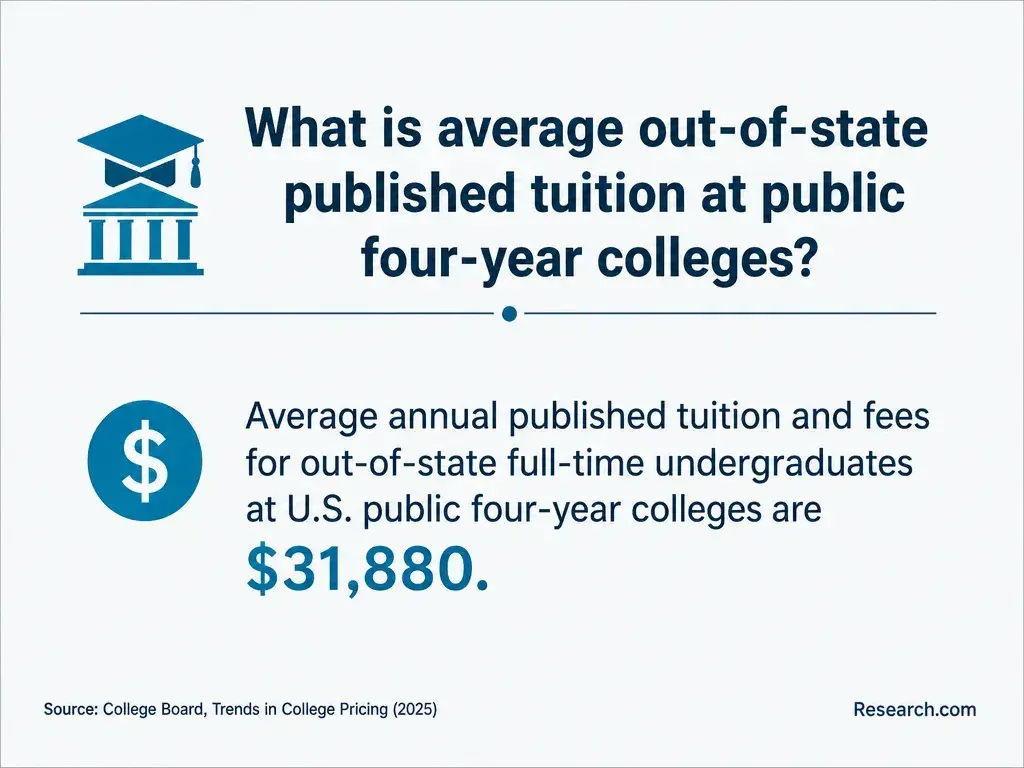
For an accurate budget, obtain the program's tuition and fee schedule, then account for placement-related travel, required screening or training, unpaid work time, and any additional term needed to finish. Do not assume a local or remote project is cost-free. Compare the complete degree commitment, not just its advertised tuition; cost-conscious online MPH program choices can be a starting point for identifying schools whose fieldwork policies merit closer review.
A well-scoped placement can provide work samples for policy assistant, program coordinator, health education, community engagement, or evaluation-support applications. Duties might include tracking proposed rules, summarizing evidence, helping partners plan implementation, or monitoring whether a program reaches its intended population. Government, nonprofit, and research employers may value different examples from the same project.
For an early-career applicant, the strongest evidence is a clear account of what they personally produced, how a supervisor reviewed it, and what limits they recognized. A practicum does not automatically qualify someone to direct policy, serve as an epidemiologist, or practice law. Experienced professionals seeking research leadership or senior practice roles may later consider a doctorate; a public health doctoral degree comparison guide can clarify that separate decision. It is not a prerequisite for most entry-level tobacco control work.
"Tobacco control specialist" is not one standardized Bureau of Labor Statistics occupation. Pay depends on the position's duties, employer, location, seniority, and funding. A community education position, a government policy analyst role, and a research job should not be assigned the same occupational wage merely because all address tobacco use.
For a defensible comparison, match a job posting's duties to the closest published occupation - such as health education specialist - then check the posting's own pay range and qualifications. An occupation-wide median is not the expected starting salary of an MPH graduate or the return on a particular practicum. Compare likely earnings with the full cost of the degree and any unpaid placement time; public health graduate program costs versus salaries offers context, but local job postings are more useful for a personal budget.
No single national employment projection covers everyone called a tobacco control specialist. Health education, epidemiology, evaluation, and policy jobs have different occupational definitions and growth projections. Review the outlook for the occupation that matches your intended tasks, then examine actual openings in the agencies and locations where you could work. A national projection cannot show whether a particular health department has a funded position.
For research-intensive roles, distinguish an MPH-level evaluation or surveillance position from a job requiring advanced methods training. Students considering doctoral epidemiology should examine research fit and funding separately; scholarship options for epidemiology doctoral students address that longer pathway, not the immediate job prospects created by a tobacco policy practicum.
How Can You Evaluate a Reputable Tobacco Control MPH Program?
Evaluate the program and a possible site together. A credible program can explain its accreditation scope, practicum approval process, faculty assessment, placement support, and what happens when a host or project falls through. A credible host can name a supervisor with time to review work and identify a decision that the student's products could realistically inform.
Before accepting a placement, ask the academic coordinator and proposed supervisor the following questions. Their answers should be specific enough to put into a written learning agreement.
- Which policy task will I own, which competencies will it demonstrate, and what products will the school assess?
- Who supervises my work, how often will we meet, and who approves changes if the project stalls?
- What data and documents may I access, and what separate permissions are required for interviews, disclosure, or publication?
- What on-site hours, travel, safety procedures, and unpaid expenses should I expect?
- Can I show a redacted version of each product to employers, and who must approve that version?
Choose the option with the clearest feasible work plan, not necessarily the most prominent host or fastest advertised degree. If a program steers you toward a doctorate for a goal that requires supervised entry-level practice, check the degree's added time and expense first; affordable public health doctorates by study duration concerns a different investment decision.
Other Things You Should Know About Public Health
Yes, if the school approves the project and its competencies. Define the product and policy question precisely - for example, how an existing rule addresses electronic smoking devices - rather than treating all nicotine products as interchangeable.
Possibly. The school may require new responsibilities, distinct supervision, or work beyond your ordinary duties. Obtain approval before counting employment tasks toward the experience.
Ownership and reuse depend on school policy, the host's agreement, and any data restrictions. Set expectations before starting, including whether you may share a redacted sample with prospective employers.
Discuss it with the program before accepting. Funding relationships can create conflicts with a project's public health purpose or the host's policies; ask for disclosure rules and an independent alternative if needed.
- Recommendations to Advance Equity in Tobacco Control - PMC https://pmc.ncbi.nlm.nih.gov/articles/PMC10277310/
- What Is Ethics in Research & Why Is It Important? | National Institute of Environmental Health Sciences https://www.niehs.nih.gov/research/resources/bioethics/whatis
- The New York State Tobacco Control Program | ny.gov https://www.health.ny.gov/prevention/tobacco_control/program_components.htm
- National and State Tobacco Control Program | cdc.gov https://www.cdc.gov/tobacco/php/tobacco-control-programs/index.html
- How long is the Practicum? - Education Programs Handbook https://open.baypath.edu/eduprogram/chapter/how-long-is-the-practicum/
- Guidelines for Political Activity and Public Advocacy on Campus | Free Expression at UW-Madison https://free-expression.wisc.edu/policies-and-guidelines/political-activity-and-public-advocacy-on-campus-guidelines/
- California Tobacco Control Evaluation Guide | ucdavis.edu https://tobaccoeval.ucdavis.edu/evaluation-guide
- MPH Foundational Competencies | UW School of Public Health https://sph.washington.edu/mph-practicum/competencies
- Top student questions regarding practicum and internships | Xavier University https://www.xavier.edu/counseling/clinical-mental-health/top-student-questions-regarding-practicum-and-internships
- Section 2. MPH Practicum - Master of Public Health Practicum Manual - Academic Guides at Walden University https://academicguides.waldenu.edu/masters-public-health-practicum-manual/practicum-overview