2027 Choosing a BS in Business Administration for Business Roles in Restaurant Groups
Audited and Verified:
Our Editorial and Data Verification Process
Research.com uses government datasets, official education statistics and primary institutional information to support its career and degree guides. Our review process checks factual accuracy, occupational definitions, source dates and the requirements associated with the credentials discussed.
How This Article Was Fact-Checked
Our editorial team verifies salary estimates, employment projections, education requirements and program information against original data providers and official organizations. Salary figures are checked against the relevant occupational definitions and reporting periods. Information about licensure, accreditation and required in-person training is reviewed separately.
Fact-checked and verified on:

Co-Founder and Chief Data Scientist
A restaurant group needs more than strong individual locations: it needs people who can compare performance across sites, support managers, control costs, and coordinate growth. If you have restaurant experience - or want a business role in the industry - a BS in Business Administration may help you build those skills. The degree is not a substitute for operating experience, however, and some roles call for more specialized preparation. This guide shows how to match a program's coursework, schedule, applied learning, and cost to the job you actually want.
Key Things You Should Know
- A BS in Business Administration is most useful when its accounting, operations, analytics, and people-management work connects to restaurant-group decisions - not merely because a program mentions hospitality.
- Plan for an entry route that matches your experience: a degree can support coordinator or analyst applications, while multi-location leadership usually requires demonstrated restaurant results.
- The BLS reports a May 2025 median annual wage of $78,760 for market research analysts; that occupation-wide figure is not a starting-salary estimate for restaurant-group graduates.
What is a BS in Business Administration for restaurant-group careers?
A BS in Business Administration is an undergraduate degree covering how organizations manage money, people, customers, and operations. In a restaurant group, those functions extend beyond one dining room: a central team may support several company-owned locations or franchisees, each with different staffing, purchasing, sales, and service needs.
The degree can provide broad preparation for that cross-functional work, but "restaurant-focused" is not a standard degree designation. One school may offer a formal hospitality concentration; another may offer relevant operations electives or an approved restaurant-based project. Check the catalog rather than assuming the degree title tells you what you will study.
Choose broad business administration if you want room to move among operations support, marketing, finance, and workforce functions. A hospitality degree may offer more restaurant-specific instruction; a specialized accounting or supply chain degree may be stronger for a narrowly defined function. If your aim is primarily to supervise people, compare the actual courses and completion requirements of undergraduate leadership programs with shorter timelines before treating a faster route as an equivalent fit for restaurant operations.
What restaurant roles can you pursue with a business administration degree?
Start with the responsibilities you already have. A shift leader who has tracked labor, trained staff, or resolved service problems may be closer to an operations-support role than an applicant with coursework alone. Someone changing industries may instead need a restaurant job, internship, or supervised project to learn how locations actually operate.
The table distinguishes plausible pathways; titles and hiring standards vary among restaurant groups, and none is awarded automatically with a degree.
| Target role | Typical work | Evidence to build |
| Operations coordinator | Tracks location reports, follows up on procedures, and supports openings or process changes | Spreadsheet reporting, clear communication, and documented restaurant operations experience |
| Marketing coordinator | Supports local promotions, customer communications, and campaign measurement | Campaign samples and an explanation of how results would be measured |
| People-operations or HR assistant | Supports recruiting, onboarding, records, and training administration | Accurate documentation, discretion, and knowledge of HR processes |
| Multi-location manager | Coaches location leaders and takes responsibility for operational performance | Substantial supervisory experience and verified results across locations |
If recruiting or employee relations is your intended function, compare business coursework with what to expect from an HR degree. For an aspiring district or regional manager, prioritize a credible route to restaurant responsibility; a general business degree alone will not replace it.
How do you choose an accredited business administration program?
First, verify that the institution holds recognized institutional accreditation and that the specific BS, delivery format, and location you want are offered. Then check whether any claimed AACSB, ACBSP, or IACBE accreditation covers the relevant business school or program. Institutional and business-specific accreditation have different scopes; neither proves that graduates secure restaurant-group jobs.
Request the current catalog and ask an adviser which courses are required, how often they run, and whether restaurant-based internships or capstones are permitted. Ask career services for evidence of employer connections and outcomes, including which graduates were surveyed and how many responded. If you compare low-cost online business degree programs, apply these same checks before comparing advertised prices.
A useful final test is to match the degree audit to a job posting from a restaurant group: identify the courses and experiences that could produce evidence for its stated tasks. If important gaps remain - such as multi-site reporting or purchasing - ask whether electives, work experience, or another program can fill them.
The strongest curriculum connects business fundamentals to decisions restaurant groups make repeatedly. Managerial accounting can help a student distinguish sales from operating margin; operations coursework can examine scheduling, purchasing, and process consistency; marketing can address local demand; and statistics or analytics can support careful comparisons among locations. Employment law and organizational behavior matter when supporting managers and staff.
Look beyond course titles to assignments. A useful project might analyze a hypothetical location-level operating budget, explain assumptions, and show how a change in labor or ingredient costs affects the result. Another might map an approved ordering process and identify measures to monitor. Real employer records require permission; customer and employee information, recipes, and pricing agreements may be confidential.
For a purchasing-heavy goal, compare the general BS with online colleges with accelerated supply chain bachelor's study. The specialized route may offer more depth, but check its actual restaurant relevance, prerequisites, and remaining credits. An elective or student project does not become a formal concentration unless the school awards one.
Online study may suit restaurant employees whose shifts change, especially if classes are asynchronous. It is not necessarily self-paced: weekly deadlines, live presentations, group work, proctored exams, and internship hours can still conflict with peak service periods. Campus study may make it easier to build local employer relationships, but commuting and fixed meeting times can be costly for a working student.
Before enrolling, obtain sample course schedules and ask whether required classes, not just electives, are available in your preferred format. Confirm any campus visits, technology requirements, group-project expectations, and policies for changing enrollment pace. Compare accelerated online pathways for business students against the hours you can reliably study; a shorter calendar does not mean less coursework.
Requirements depend on the institution and whether you apply as a first-year or transfer student. Schools generally evaluate prior education and may request transcripts; admission to the university, admission to its business major, and application of previous credits to degree requirements can be separate decisions. Some programs require preparatory math or introductory business courses before upper-division work.
If you have restaurant-management training or previous college study, request an official evaluation and a degree audit showing where each accepted credit applies. Ask specifically about accounting and statistics equivalents, major prerequisites, residency rules, and the next term each remaining course is offered. Restaurant experience can strengthen an application without automatically earning academic credit. Students comparing a project-focused alternative can also review how to use prior college credits in a project management bachelor's, then obtain a separate official evaluation from each school.
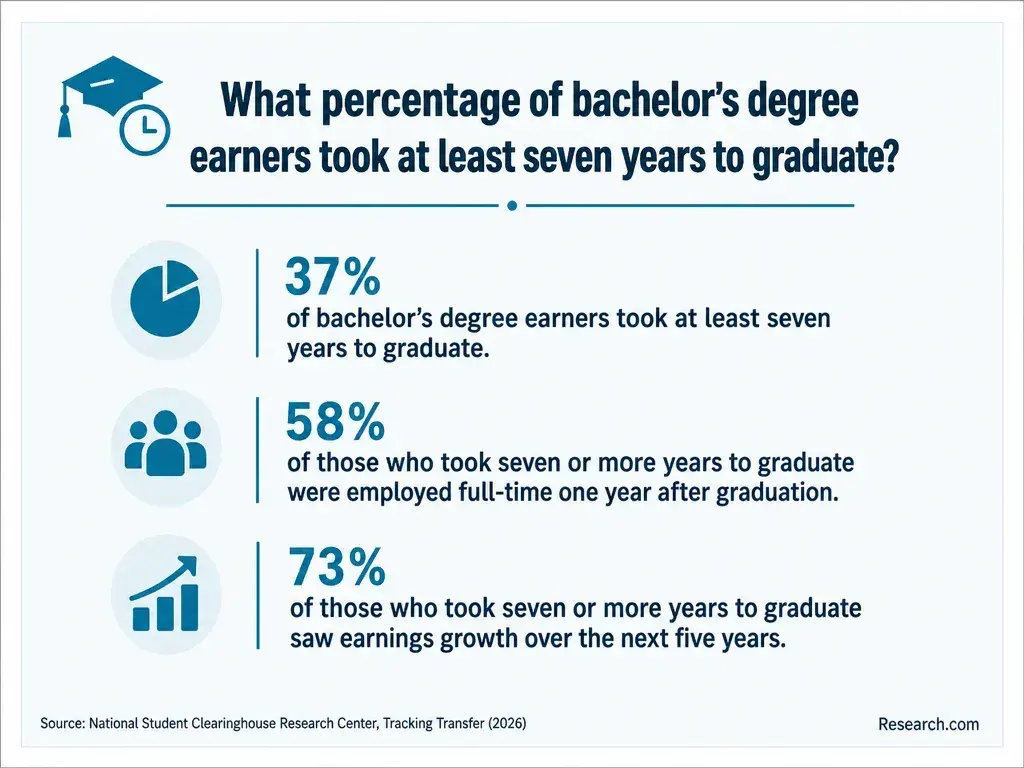
A student entering without college credit should expect a conventional bachelor's-degree course of study; a transfer student's remaining time depends on the official degree audit, required-course availability, and enrollment pace. Working through changing restaurant shifts may make part-time study more sustainable even if it extends the calendar.
Compare cost to finish, not tuition per credit alone. Obtain written estimates for remaining tuition and mandatory fees, books and software, travel or proctoring, and any internship-related expense. Include the income you would give up by reducing work hours, and check when employer tuition reimbursement is paid and what conditions apply. The business administration degree tuition savings guide can help frame a comparison, but your own audit and aid offer determine the meaningful total.
If borrowing is necessary, compare likely borrowing under each feasible schedule rather than assuming the fastest advertised program is cheapest. An extra required term or a course that does not transfer can change the comparison.
Pay depends more directly on the occupation, responsibility, location, and experience than on the degree title. For context, the U.S. Bureau of Labor Statistics reports a $78,760 median annual wage in May 2025 for market research analysts. A restaurant-group marketing analyst might perform related work, but the national figure covers the occupation across industries and career stages; it is not an expected offer for a new graduate or a marketing coordinator.
Before paying for a degree to increase earnings, compare actual postings for your target role with your present qualifications. Note which require a bachelor's degree, which prioritize restaurant experience, and which call for specialist tools. Then weigh that evidence against remaining education costs. Lists of economical business administration degrees with quicker study routes can identify options to investigate, but neither speed nor an occupation-wide salary establishes your personal return.
A BS in Business Administration does not itself grant a restaurant license or professional certification. Food-safety training or a certified food-protection manager credential may matter for a location role under applicable state or local rules and employer policies. Requirements can differ from those for a central-office marketing, finance, or HR position, so check the jurisdiction and the specific job description.
Optional project-management or HR credentials may be useful for particular functions, but each certifying body sets its own eligibility rules. Do not confuse a project-management degree with a certification. If openings and rollouts are your main goal, compare relevant coursework and total degree expense using an accredited online project management tuition guide, then check credential requirements separately. For many restaurant-group roles, documented work on a rollout or training initiative will be more immediately persuasive than an unrelated certificate.
What is the job outlook for restaurant-group careers?
There is no single federal outlook category for "restaurant-group business professional." Projections describe occupations across industries, not vacancies at restaurant headquarters. For example, BLS projects 18% U.S. employment growth for logisticians from 2025 to 2035. That suggests opportunities in supply-chain work broadly, but it does not measure restaurant-group purchasing openings or establish that a general business graduate qualifies for them.
Use occupation forecasts to identify functions worth investigating, then review current restaurant-group postings in your preferred market for required tools, travel, and experience. If those postings consistently seek specialized supply-chain preparation, compare that route with a general BS before committing. Students pursuing a different, project-focused role should evaluate its separate hiring evidence and financing; guidance on paying for project management bachelor's study with grants is relevant only if that alternative fits the work they want.
Other Things You Should Know About Business Administration
Not necessarily. A franchisee may independently hire for its locations, while a franchisor's central office may focus on brand standards and franchise support. Check which organization employs the role before tailoring your application.
Culinary education is usually the more direct route for developing kitchen-production skills. A business degree is generally more relevant to financial, operational, marketing, or administrative work across locations.
Often not. Compare your skill gaps with the target job: relevant restaurant experience, individual business courses, or employer training may be more direct. An MBA is a different, graduate-level option and should be assessed against its cost and admissions requirements.
Possibly, if a school offers an applicable prior-learning assessment or approved work-based learning option. Ask what evidence is required, which degree requirement any awarded credit would satisfy, and whether there are fees or credit limits.
- 13 High-Paying Jobs with a Bachelor's in Business Administration | PBA https://www.pba.edu/academics/outcomes/articles/degree-outcomes/13-high-paying-jobs-with-a-bachelors-in-business-administration/
- Internships and Experiential Learning | Undergraduate Admission https://admission.ucla.edu/explore/internships
- What Do Restaurant Managers Do? Pay & Career Path | CIA https://www.ciachef.edu/blog/restaurant-manager-career/
- 6 Jobs For Business Administration Majors | ASU Online https://asuonline.asu.edu/newsroom/online-learning-tips/jobs-business-administration-degree/
- Why Is Accreditation Important? | ACE Blog https://ace.edu/blog/why-is-accreditation-important/
- Explore Rewarding Careers in the Restaurant Industry | Les Roches https://lesroches.edu/blog/careers-in-the-restaurant-industry/
- Business School Internships: Gaining Practical Experience | Pepperdine Graziadio Business School https://bschool.pepperdine.edu/personal-growth/article/business-school-internships-gaining-practical-experience.htm
- Food Business Management (BS) | CFAES Knowledge Hub https://cfaes.osu.edu/academics/department-food-science-and-technology-fst/major/food-business-management-bs
- Everything you need to know before choosing an undergraduate business degree - Penn State World Campus https://www.worldcampus.psu.edu/about-us/news-and-features/choosing-a-business-degree-program
- What Jobs Can You Get With a Business Degree? | snhu.edu https://www.snhu.edu/about-us/newsroom/business/what-jobs-can-you-get-with-a-business-degree