2027 BS in Business Administration Curriculum: How to Evaluate Preparation in Change Management
Audited and Verified:
Our Editorial and Data Verification Process
Research.com uses government datasets, official education statistics and primary institutional information to support its career and degree guides. Our review process checks factual accuracy, occupational definitions, source dates and the requirements associated with the credentials discussed.
How This Article Was Fact-Checked
Our editorial team verifies salary estimates, employment projections, education requirements and program information against original data providers and official organizations. Salary figures are checked against the relevant occupational definitions and reporting periods. Information about licensure, accreditation and required in-person training is reviewed separately.
Fact-checked and verified on:

Co-Founder and Chief Data Scientist
A business administration degree may teach organizational behavior without giving students much practice planning an actual workplace change. That distinction matters if you want to help teams adopt new processes, systems, or ways of working.
This guide is for prospective and returning undergraduates comparing BS programs. It shows which courses and assignments build useful change management skills, what online and campus formats can offer, and how to weigh the degree against more targeted training. You will leave with concrete questions to ask before enrolling.
Key Things You Should Know
- Look beyond a course titled "change management": a strong curriculum connects organizational behavior, communication, project planning, and measurement through an assessed change plan or comparable applied assignment.
- Check the catalog and sample assignments. An elective, simulation, or workplace project does not automatically establish a formal concentration or provide approved access to employer data.
- The BS can support entry into change-related work, but experience matters. The U.S. median annual wage for management analysts was $101,860 in May 2025; that occupation-wide figure is not a starting salary for new graduates.
What Is Change Management in a Business Administration Degree?
Change management is the structured work of helping an organization move from a current way of operating to a proposed one. It involves identifying affected people, explaining the purpose of a change, preparing training and support, addressing concerns, and checking whether the new approach is adopted. A new scheduling system, for example, needs more than a technical launch: employees need clear responsibilities, workable training, and a way to report problems.
In a BS in Business Administration, change management is usually an application of several business subjects rather than a standalone profession taught in one course. Organizational behavior explains group dynamics; operations and project management address implementation; accounting and analytics help assess costs and results. HR coursework adds insight into employee communication and training, but managing change is broader than HR. If your primary goal is employee relations or HR practice, compare human resources degree pathways rather than assuming a general business degree offers the same depth.
How Does a Business Administration Curriculum Prepare Students for Change Management?
Preparation depends less on the degree title than on whether students repeatedly connect analysis with implementation. An introductory management course might explain why employees resist a change. A stronger sequence then asks students to estimate its operational effects, design communication for different stakeholders, and decide how they would measure adoption.
For a meaningful curriculum review, trace one potential change project across the following stages. Ask for syllabi or assignment descriptions when the catalog gives only broad course titles:
- Diagnose the problem: Use process maps, stakeholder interviews, or permitted operational data to separate the underlying issue from a proposed solution.
- Design the change: Define responsibilities, a timeline, resources, communication, training, and risks.
- Evaluate adoption: Choose measures such as training completion, process use, error rates, or employee feedback, while distinguishing activity from improved outcomes.
- Revise the plan: Explain what the evidence does and does not show, and propose adjustments.
A case study can teach sound judgment, but it is not the same as implementing a change at an employer. Students who already work may gain more if faculty permit an appropriately scoped workplace assignment; employer permission and rules for confidential information still apply. If you need to keep your job while studying, examine business administration study alongside full-time employment in light of the actual project and meeting requirements.
What Change Management Courses Should a Bachelor's Degree Include?
No universal set of course titles defines change management preparation. Start with the required business core, then check whether electives let you build depth without delaying graduation. The most useful combination covers organizational behavior or leadership, operations or project management, business communication, and statistics or business analytics. HR management or training and development can add depth when employee adoption is central to your goal.
Look for assessed work, not just topic coverage. A communication course should require an audience-specific message or presentation; a project course should address dependencies and risk; an analytics course should make students question data quality and interpret results. A capstone that combines those tasks is especially useful, provided the program confirms its topic and supervision rules.
Ask an adviser which courses are required, which rotate infrequently, and whether prerequisites affect your sequence. An elective cluster is not an official concentration unless the institution designates it as one. If your aim is primarily organizational leadership rather than the broader business core, compare completion times for organizational leadership degrees alongside their actual course content; a shorter advertised route is useful only if your credits apply and the curriculum fits your goal.
Either format can teach rigorous change management. The difference is often how students practice collaboration and receive feedback. The table summarizes common delivery possibilities, not guarantees about any particular program.
| Learning activity | Online program | Campus program |
| Stakeholder discussion | May use live meetings, discussion boards, or recorded presentations | May use in-class discussion, role-play, or presentations |
| Team change plan | Requires remote coordination and shared documents; meeting times may still be fixed | Allows in-person collaboration but may require travel for scheduled meetings |
| Applied project | May use a simulation or an approved local workplace | May use a simulation, campus partner, or approved workplace |
For either format, request the syllabus for an advanced management course and ask about live attendance, group-work scheduling, presentation requirements, and campus visits. Online does not necessarily mean self-paced. US rankings of online business degree programs can help you assemble options, but the course-level requirements should determine whether a program fits your schedule and learning needs.
First, verify that the institution holds recognized institutional accreditation. Then check whether AACSB, ACBSP, or IACBE accredits the relevant business school or program, and confirm that the specific BS you are considering falls within its stated scope. Institutional and business-program accreditation are different; neither establishes that a school offers substantial change management coursework.
Compare the current catalog, course sequence, faculty access, and applied-assignment rules as well. When comparing lower-cost business degree options, keep accreditation checks separate from price comparisons: a low advertised tuition rate does not tell you which courses you still need or whether the program has the assignments you want.
Requirements vary by institution and by whether you apply as a first-year or transfer student. Schools commonly request prior academic transcripts and may set general admission standards; entry to the business major can have separate requirements. Some programs require particular mathematics, statistics, accounting, or economics courses before upper-level business study. Confirm the published rules for your intended entry term rather than treating typical requirements as universal.
If you have college credit, request an official evaluation showing where each accepted course applies: general education, business core, electives, or other requirements. Accepted credit does not necessarily replace a required management or analytics course. For a returning student considering shorter routes to an online bachelor's, the decisive document is the school's degree audit and course plan - not an estimated transfer total. Ask admissions and an academic adviser when any missing prerequisites must be completed.
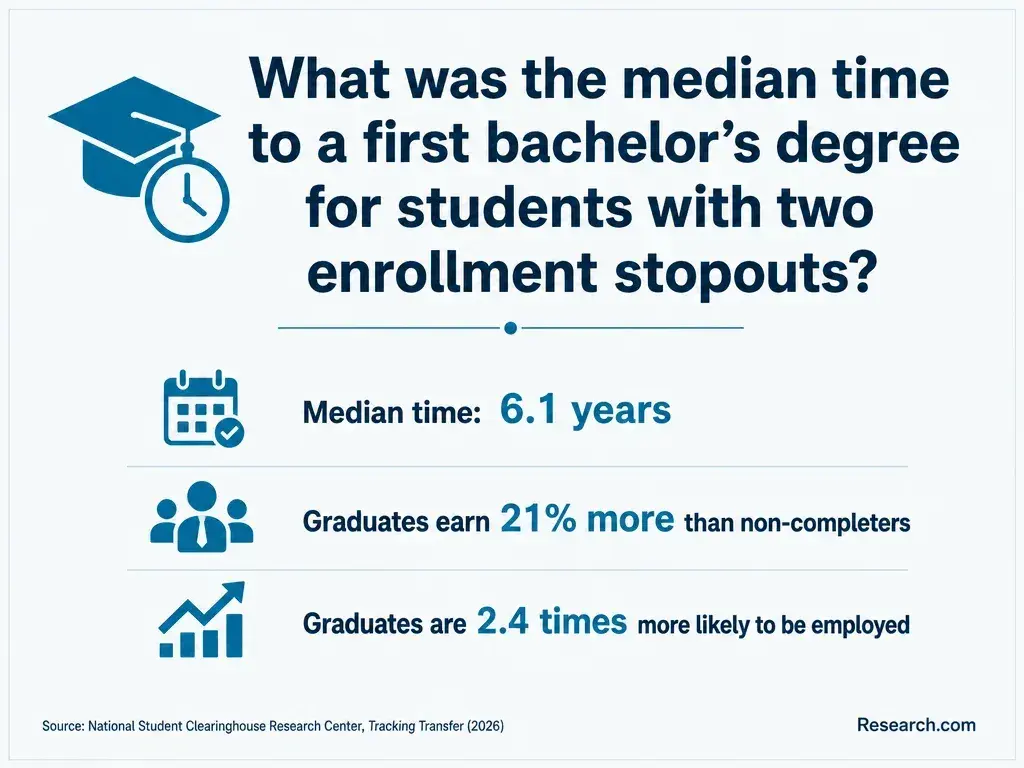
A traditional bachelor's plan is commonly designed around four years of full-time study, but an individual completion date depends on applicable transfer credit, enrollment pace, prerequisites, and when required courses are offered. Change-focused electives can extend the timeline if they require extra credits or run infrequently. Confirm whether your preferred capstone or concentration fits within the degree requirements.
Compare costs using the remaining courses in your official plan, not a program's headline tuition alone. Include mandatory fees, books or software, possible travel, and the income or time you may give up for coursework. If an employer offers tuition assistance, verify eligible courses, payment timing, and continued-employment conditions before relying on it. A broader discussion of business administration tuition time commitment and career value can inform the comparison, but your own remaining-credit audit is the basis for a realistic estimate.
Change management is often a responsibility within a role rather than a graduate's first job title. Entry routes may include project coordinator, operations coordinator, HR or training support, and process-improvement support. In those positions, a new graduate might maintain an implementation schedule, prepare communications, organize training, or track adoption measures under supervision. Leading an organization-wide change generally calls for additional functional knowledge, credibility, and implementation experience.
Match the role to the setting. An HR-focused transition may favor HR coursework and experience; a warehouse process change may favor operations and supply chain knowledge. If the latter is your goal, shorter completion timelines for supply chain bachelor's students are worth comparing, but curriculum fit and transferable credits matter more than speed alone. Internships, relevant employment, or a permitted project can supply work samples that a transcript cannot.
The Bureau of Labor Statistics does not publish a single salary or growth projection for "change manager." Its management analyst occupation is one relevant comparison: the U.S. median annual wage was $101,860 in May 2025, and employment is projected to grow 10% from 2025 to 2035. Management analysts study organizational problems and recommend improvements, but many positions expect related experience. Those occupation-wide figures should not be used as a new BS graduate's expected pay or a forecast for every change-focused role.
Pay and hiring prospects depend on the actual job, industry, location, and your prior work. Before paying for more education, compare local postings with your skills and identify whether employers ask for change-planning experience, project delivery, or a specialized degree. For a project-centered path, project management degree tuition comparisons are relevant only after you establish that a separate degree would address a gap that courses or supervised experience cannot.
Which Certifications Strengthen a Change Management Career After Graduation?
A change-management certification can provide a structured method and a recognizable credential, but it does not replace evidence that you helped plan or support a change. Compare each provider's curriculum, assessment, renewal rules, and employer recognition before enrolling. Project-management certifications may be more relevant when the target job centers on schedules, budgets, and delivery; eligibility rules differ by credential and must be checked with the issuing organization.
If you are already employed, a supervised change assignment, employer training, or a focused course may be a more direct next step than another degree. Conversely, a graduate seeking project-specific academic depth should compare the full cost and content of that route, including project management program fees explained. Choose the credential for a documented skill gap and target role, not simply to add letters after your name.
Other Things You Should Know About Business Administration
No. A named model can provide useful structure, but the stronger test is whether students can justify their approach, adapt it to stakeholders, and evaluate its limits.
Possibly. Obtain faculty approval for the academic work and employer permission for any workplace participation or data use. A classroom proposal is not authorization to implement a change.
Treat it as evidence to investigate, not an obstacle to dismiss. Clarify the concern, check whether the plan creates unintended burdens, and revise your recommendation where warranted.
Ask who owns the work and what may be disclosed. With permission, use a redacted or reconstructed example that explains your method and contribution without exposing employees, customers, or proprietary records.
- Organizational readiness for change: A systematic review of the healthcare literature - PMC https://pmc.ncbi.nlm.nih.gov/articles/PMC12084713/
- CDC Approach to Program Evaluation https://www.cdc.gov/evaluation/php/about/index.html
- Section 5. Developing an Evaluation Plan - Community Tool Box https://ctb.ku.edu/en/table-of-contents/evaluate/evaluation/evaluation-plan/main
- What Is Change Management and How Does It Work? | Mitch Daniels School of Business https://business.purdue.edu/graduate-programs/blog/posts/what-is-change-management.php
- Evidence-based change management | sciencedirect.com https://www.sciencedirect.com/science/article/pii/S0090261622000067
- 10 Change Management Best Practices for Business Leaders - Leavey School of Business - SCU https://www.scu.edu/business/blog/leadership-ethics/change-management-best-practices/
- What Is Change Management in Business? | GCU Blog https://www.gcu.edu/blog/business-management/what-is-change-management
- How to Communicate Organizational Change: 4 Steps | Harvard Business School https://online.hbs.edu/blog/post/how-to-communicate-organizational-change
- Course learning outcomes - Division of Academic Affairs | Accreditation https://provost.wayne.edu/news/course-learning-outcomes-34624
- Bachelor of Science in Business Administration, Management | UNLV https://www.unlv.edu/degree/bsba-management