2027 Choosing a BS in Business Administration When Your Prior Degree Makes You Ineligible for Some Grants
Audited and Verified:
Our Editorial and Data Verification Process
Research.com uses government datasets, official education statistics and primary institutional information to support its career and degree guides. Our review process checks factual accuracy, occupational definitions, source dates and the requirements associated with the credentials discussed.
How This Article Was Fact-Checked
Our editorial team verifies salary estimates, employment projections, education requirements and program information against original data providers and official organizations. Salary figures are checked against the relevant occupational definitions and reporting periods. Information about licensure, accreditation and required in-person training is reviewed separately.
Fact-checked and verified on:

Co-Founder and Chief Data Scientist
A previous degree can change the price of a BS in Business Administration before you take a single class. If you already hold a bachelor's degree, some grants that helped fund your first one may no longer be available. Yet your earlier coursework might shorten the new degree, and a certificate, targeted courses, or employer training might meet your career goal for less.
This guide explains which aid to investigate, how to compare programs using a degree audit and financial-aid offer, and when a second bachelor's is worth the cost.
Key Things You Should Know
- A prior bachelor's degree generally makes you ineligible for a Federal Pell Grant for a second BS, even if you have not used the full 600% Pell lifetime limit; an associate degree alone does not have the same effect.
- Federal student loans, school scholarships, employer benefits, and some state aid may still be possible, but each has separate eligibility rules.
- Compare the remaining required credits and written aid offer at each school, not advertised tuition alone, before committing to a second degree.
What financial aid options exist for a business administration degree after a prior degree?
Start by identifying your highest completed credential. An associate degree and a bachelor's degree have different consequences for federal undergraduate grants. In either case, submit the Free Application for Federal Student Aid (FAFSA) if the schools you are considering use it to determine aid; do not assume that losing one grant makes you ineligible for everything else.
The options below differ in whether they reduce your cost or postpone payment. Ask each school which options apply specifically to a student entering with your credential.
| Funding source | What to check after a prior degree | Financial trade-off |
| School or private scholarships | Second-degree eligibility, transfer-student rules, renewal conditions, and whether awards can be combined | Usually does not require repayment, but may cover only selected terms or expenses |
| State grants | Residency, prior-degree restrictions, approved programs, and application deadlines | Can lower net cost if you qualify; rules vary by state |
| Employer education benefits | Covered programs, grade requirements, payment timing, and any obligation to remain employed | Reimbursement may leave you paying tuition upfront |
| Federal Direct Loans | Enrollment and other eligibility requirements, existing debt, and annual and aggregate limits | Must be repaid with interest |
Ask about departmental awards and payment plans as well, but distinguish a payment plan from financial aid: it changes when you pay, not the total charged. You can compare cost-effective paths to a business degree to identify schools worth contacting, then request an individualized estimate.
Can you receive grants for a second bachelor's degree in business administration?
Usually not a Federal Pell Grant. A student who has already earned a bachelor's degree is generally ineligible for Pell funding toward a second bachelor's, regardless of unused lifetime Pell eligibility. A narrow exception exists for certain postbaccalaureate teacher-certification programs; it should not be assumed to cover a business administration BS. Federal Supplemental Educational Opportunity Grants are likewise intended for eligible undergraduates who have not earned a bachelor's degree.
Other grants are not governed by one universal second-degree rule. A state agency or college may fund some second-degree students, restrict awards to first-time bachelor's students, or prioritize particular fields. Get the rule for your specific program and enrollment term in writing before treating an advertised grant as part of your budget.
If you hold an associate degree but no bachelor's, ask the aid office to evaluate you under first-bachelor's rules rather than assuming you are a second-degree applicant. If a second BS would require substantial borrowing, compare lower-priced accredited business administration study options against a shorter route to the skills you need.
How does a prior degree affect federal, state, and college financial aid?
A prior bachelor's changes federal grant eligibility, but it does not automatically rule out Federal Direct Loans for eligible undergraduate study. Your existing borrowing can limit what remains available under loan limits. The school must also determine whether your enrollment and academic progress meet aid rules. Ask the financial-aid office to assess your actual record rather than estimating loan eligibility from tuition.
State and institutional aid may classify students differently: a transfer applicant seeking a first bachelor's, a student pursuing a second bachelor's, and a nondegree student can face different rules. This distinction matters if you are considering a shorter alternative. For example, before choosing affordable pathways to study project management instead of a general business BS, confirm whether the particular degree or certificate qualifies for the aid and employer benefits you expect.
Also ask how the school applies satisfactory academic progress requirements to transferred work and your planned program. Aid eligibility and admission are separate decisions: acceptance into a BS does not establish that every remaining course or term will be fundable.
Confirm that the institution has recognized accreditation and is eligible to participate in the federal aid programs you intend to use. Then check whether any advertised business accreditation, such as AACSB, ACBSP, or IACBE, actually covers the school or program in question. Business accreditation and institutional accreditation are not interchangeable, and neither proves that a second-degree student will receive a grant.
For this decision, the most useful program document is an official evaluation showing which prior credits satisfy general education, business core, concentration, elective, and residency requirements. An accepted transfer credit might count only as an elective. Compare that evaluation with required course availability, career support, and the financial-aid office's second-degree policies.
If your goal is specifically procurement or logistics, a specialized degree may be more relevant than general business study. Comparing supply chain degrees by cost and length is useful only after each school explains how your prior credits apply to its requirements.
Choose the format that lets you complete required courses reliably at the lowest manageable total cost. Online study may reduce commuting or relocation expenses, but it can still require live meetings, group presentations, proctored exams, internships, or fixed deadlines. Campus study may offer easier access to local recruiting and in-person support, while adding travel and scheduling costs.
Ask for a sample term schedule, including required upper-level business courses - rather than relying on an "online" or "flexible" label. A working student should check whether courses can be taken part time and whether slowing down affects scholarship renewal or employer reimbursement. Resources on flexible online study for business administration career growth can help frame those questions, but the school's current course schedule controls the decision.
A BS in Business Administration commonly combines accounting, economics, finance, marketing, management, operations, business law, statistics or analytics, and a strategy or capstone course. Exact requirements differ. Someone coming from a non-business degree may have completed general education already but still need a substantial sequence of business courses, including prerequisites for upper-level work.
Match the curriculum to the role you want. For an operations role, examine process analysis, supply chain, spreadsheets, and applied projects; for an HR role, examine employment practices and organizational behavior. A concentration is meaningful only if the school formally offers it and its courses fit your remaining degree plan. If supply chain is the primary goal, compare the business curriculum with accelerated supply chain management bachelor's schools; an advertised shorter timeline is not your personal completion timeline.
Schools typically request prior college transcripts and may set separate standards for admission to the institution and to the business major. Some require particular mathematics, accounting, economics, or introductory business courses before upper-level enrollment. A non-business prior degree does not, by itself, bar admission.
Send transcripts from every institution attended and request a degree-specific transfer evaluation. Ask admissions which prerequisites can be completed after entry, then ask the registrar or business adviser which previous courses actually satisfy requirements. Finally, have financial aid confirm your classification and eligibility. These offices answer different questions; an admissions acceptance is not a degree audit or an aid award.
Where application costs matter, accredited colleges offering free online applications may be worth reviewing. An application fee waiver saves money, but it should not outweigh a poor transfer evaluation or an unaffordable completion plan.
There is no dependable second-degree price or timeline without a school-approved audit. Prior credits can reduce requirements, but business prerequisites, upper-level course sequences, and minimum credits earned at the new institution can still extend the program. A faster advertised format may also cost more per term or require a workload you cannot sustain.
Use the same cost categories for every school. The table separates amounts you can request now from costs that depend on your final schedule.
| Cost component | What to obtain for a comparable estimate |
| Tuition and mandatory fees | Current charges per credit or term and the credits remaining on your audit |
| Course-related expenses | Books, software, technology, proctoring, and any required travel |
| Funding | A written, second-degree-specific aid offer and employer benefit terms |
| Time and cash flow | Required course sequence, likely enrollment pace, payment deadlines, and reimbursement timing |
Compare net cost after confirmed nonrepayable aid, cash needed before reimbursement, and borrowing to be repaid separately. Then consider lost work hours. Guides to business administration degrees compared by cost, duration, and outlook can narrow your search, but only a personalized audit and aid offer can support a final budget.
A business administration BS may support applications for roles in operations, HR, marketing, sales support, or project coordination, depending on your experience and coursework. It does not automatically qualify you for a management position. If you already have a bachelor's degree, identify the specific hiring requirement the second BS would satisfy; an applied project, relevant work experience, or a specialized course may address a narrower gap.
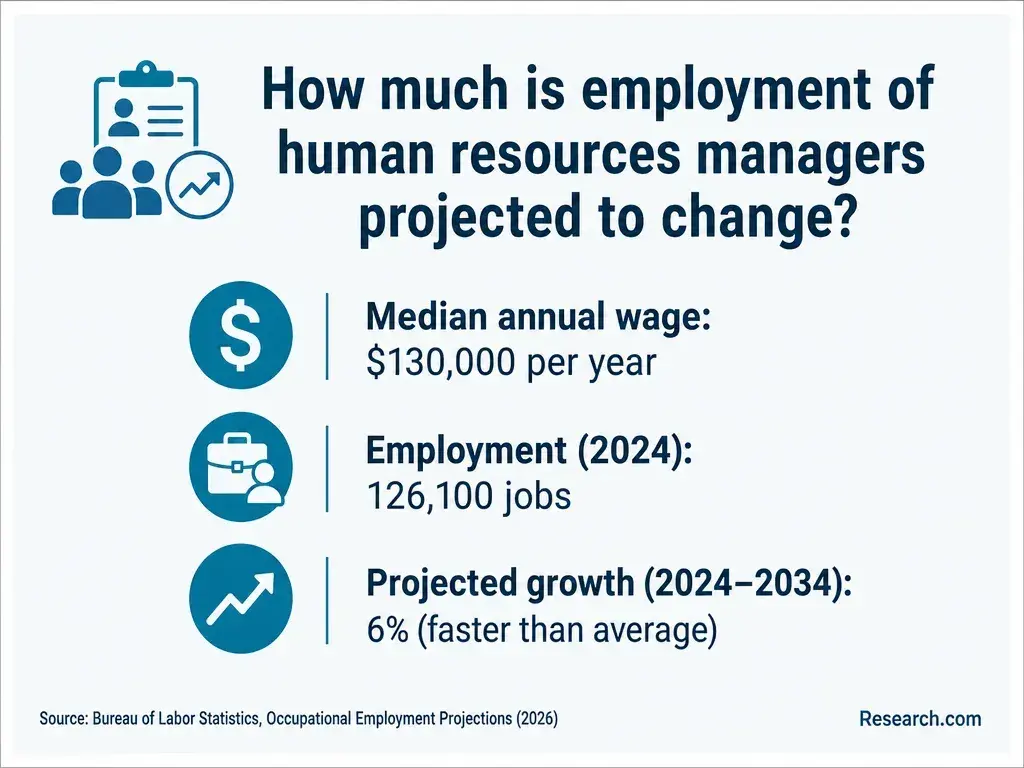
For context, the U.S. Bureau of Labor Statistics reports a $75,940 median annual wage for human resources specialists in May 2025 and projects 6% employment growth from 2025 to 2035. Those are occupation-wide figures, not starting salaries or predicted outcomes for business administration graduates. An applicant targeting HR should compare the second BS with experience and transfer pathways into online human resources programs, then review actual job postings for required skills.
Which certifications strengthen a business administration career pathway?
A certification is most useful when it matches a target role and you meet the issuing organization's eligibility rules. HR, project management, and accounting pathways each have different credentials; a business administration degree alone does not award one or establish eligibility for professional licensure.
Before paying for exam preparation, compare the credential's required experience, exam and renewal costs, employer recognition, and overlap with skills you already have. For someone seeking project-coordination work, an employer-supported project and targeted training may be more direct than another bachelor's degree. Compare project management study costs beyond tuition if formal study remains under consideration, and check certification requirements directly with the issuer.
Other Things You Should Know About Business Administration
Yes. Report your education accurately. The school needs your prior record to evaluate admission, credit, and financial-aid eligibility.
It may make each term's bill smaller, but it can extend living expenses and delay completion. Ask how your planned enrollment level affects each aid award and loan eligibility.
Some employers offer direct payment; others reimburse after grades are posted. Ask your benefits office about its payment method, deadlines, covered expenses, and any repayment agreement.
It can be if you need a defined skill and target employers accept it. It is not a substitute when a job specifically requires a bachelor's degree in a relevant field or when the certificate omits essential preparation.
- School-Determined Requirements - FSA Partner Connect https://fsapartners.ed.gov/knowledge-center/fsa-handbook/2026-2027/vol1/ch1-school-determined-requirements
- Staying Eligible | Federal Student Aid https://studentaid.gov/understand-aid/eligibility/staying-eligible
- Student Residency - WSAC - WA.gov https://wsac.wa.gov/student-residency
- Types of Aid - Student Financial Aid - Wake Forest University https://financialaid.wfu.edu/types-of-aid/
- Go Blue Guarantee Eligibility - Financial Aid https://finaid.umich.edu/apply-aid/new-undergraduates/michigan-residents/go-blue-guarantee-eligibility
- What kind of aid am I eligible for as a second-degree student? | unc.edu https://studentaid.unc.edu/faq/what-kind-of-aid-am-i-eligible-for-as-a-second-degree-student/
- Federal Pell Grant | Georgia Student Finance Commission https://www.gafutures.org/federal-aid-scholarships/federal-student-grants/federal-pell-grant/