2027 Can Enrolled Agent Status Strengthen a BS in Business Administration Plan? Credit and Career Questions
Audited and Verified:
Our Editorial and Data Verification Process
Research.com uses government datasets, official education statistics and primary institutional information to support its career and degree guides. Our review process checks factual accuracy, occupational definitions, source dates and the requirements associated with the credentials discussed.
How This Article Was Fact-Checked
Our editorial team verifies salary estimates, employment projections, education requirements and program information against original data providers and official organizations. Salary figures are checked against the relevant occupational definitions and reporting periods. Information about licensure, accreditation and required in-person training is reviewed separately.
Fact-checked and verified on:

Co-Founder and Chief Data Scientist
Enrolled agent status can give a business administration student a clear tax specialty, but it does not automatically shorten a bachelor's degree or qualify its holder for every accounting job. If you are already an enrolled agent - or are considering the credential while earning a BS - two decisions matter most: whether your college will apply it toward graduation requirements and whether the degree adds skills your target role needs.
This guide explains the credit rules, preparation demands, costs, and career trade-offs so you can build a plan before committing to more coursework.
Key Things You Should Know
- Enrolled agent status provides federal tax representation rights; a BS in Business Administration adds broader business preparation but does not confer those rights.
- College credit for the credential is school-specific. Ask for a written degree audit showing whether any award satisfies a requirement, counts only as an elective, or earns no credit.
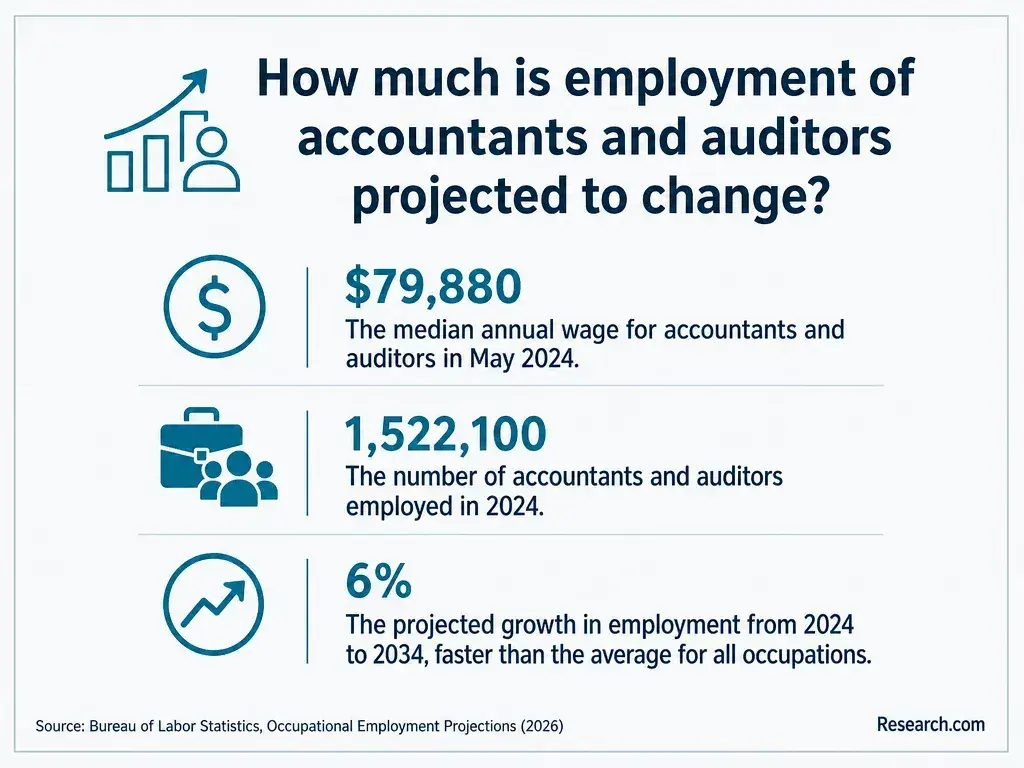
- The U.S. Bureau of Labor Statistics reports an $83,680 median annual wage for accountants and auditors in May 2025, but that occupation-wide figure is not an enrolled agent salary or a new graduate's expected pay.
What Is an Enrolled Agent, and How Does It Complement a Business Administration Degree?
An enrolled agent, or EA, is a federally authorized tax practitioner who can represent taxpayers before the Internal Revenue Service. The credential centers on federal taxation and representation. A BS in Business Administration is an academic degree that typically covers several business functions, such as accounting, finance, management, and operations. Neither credential replaces the other.
The pairing is strongest when you want to advise tax clients while understanding how businesses budget, keep records, price services, and make decisions. For example, an EA serving small businesses may benefit from managerial accounting and operations coursework. If your goal is personnel management rather than tax practice, compare human resources degree requirements instead of assuming a tax credential will provide the needed preparation.
An EA is not a CPA. EA status does not itself grant state accountancy licensure or qualify someone for every audit, financial reporting, or accounting position.
Does Enrolled Agent Status Count for College Credit in a Business Administration Program?
Possibly, but never automatically. A college may consider EA-related learning through a prior-learning assessment, examination, portfolio, or institutional credit policy. Another college may award nothing. Even when credit is accepted, it may fill a free elective rather than a required accounting or business-core course.
Before choosing a school on the assumption that EA status will accelerate graduation, get an evaluation that answers these questions:
- Ask the registrar or prior-learning office whether it evaluates EA status, the Special Enrollment Examination, or documented tax work, and what evidence it requires.
- Ask the business department whether an approved award can replace a named course or only count as elective credit.
- Request an updated degree audit showing remaining general education, business-core, concentration, and residency requirements.
Keep the EA credential, exam documentation, training records, and relevant course descriptions available for review. A preliminary estimate is not a graduation guarantee. Transfer rules also differ across business-related majors; colleges accepting coursework toward project management bachelor's study offer a comparison point, not evidence that those schools - or any business administration program - will award EA credit.
What Are the Requirements to Become an Enrolled Agent While Earning a Bachelor's Degree?
The IRS does not require a bachelor's degree to become an EA. The usual route involves obtaining an IRS preparer tax identification number, passing all three parts of the Special Enrollment Examination, applying for enrollment, and passing an IRS suitability check. Qualifying former IRS employees may have a different route. Check current IRS instructions before scheduling because exam administration, application procedures, and fees can change.
Once enrolled, EAs must meet IRS continuing-education and renewal requirements. That makes the credential an ongoing commitment, not a one-time substitute for a tax course. If you work during filing season, schedule demanding classes and exam preparation around your actual client workload. For a returning student, business administration degree return and completion planning should account for both remaining required courses and time needed to maintain the credential.
The EA exam covers individual taxation, business taxation, and representation, practices, and procedures. A business degree may support the financial reasoning behind that work, but a general business core is unlikely to teach every federal tax rule tested on the exam. The distinction matters when selecting electives.
This comparison shows where coursework may help and where separate EA study remains necessary.
| Business coursework | Potential connection to EA preparation | Important limit |
| Financial and managerial accounting | Interpreting records, income, expenses, and business decisions | Accounting principles do not replace federal tax law study. |
| Business law and ethics | Understanding business structures and professional obligations | IRS representation rules require focused preparation. |
| Finance and operations | Discussing cash flow and practical business constraints with clients | These courses may have little direct overlap with exam questions. |
If tax practice is the goal, inspect the catalog for actual tax courses, prerequisites, and their availability - not merely an "accounting" label. If your preferred work is logistics rather than tax, shorter bachelor's pathways in supply chain management may be a more relevant comparison than adding tax electives to a general business degree.
Yes, an online program can let you study business while preparing for the EA exam or serving clients, but "online" does not mean self-paced. Check live attendance, weekly deadlines, group assignments, proctored exams, required internships, and whether tax electives run in terms that work with filing season. The EA exam and a college tax course also have different purposes; confirm each separately.
When reviewing online business school comparisons across the United States, narrow the choices using the current course schedule and assessment policies. A useful test is whether you could meet a typical term's commitments during your busiest month at work without relying on an advertised flexibility claim.
Verify the institution's accreditation and confirm that it applies to the school awarding your degree. Then check whether any claimed business-school accreditation - such as AACSB, ACBSP, or IACBE - covers the particular business program. Institutional and business-program accreditation have different scopes; neither determines whether the college will award credit for EA status.
Use accreditation as one screening factor alongside the curriculum, written credit evaluation, course access, and total completion cost. For example, lower-priced accredited business administration study options may help start a comparison, but confirm each school's present accreditation scope and degree requirements directly before enrolling.
Requirements vary by school and by whether you apply as a first-year or transfer student. Expect to document prior education and check any GPA, mathematics, accounting, or other prerequisites that the specific program sets. A college may admit you before you qualify to enter its business major or take an upper-level course. EA status can strengthen your explanation of your goals, but it does not automatically waive admissions requirements.
If you already hold college credit, send official transcripts and request both an admissions decision and a degree-applicability review. Policies can change by major: compare HR bachelor's transfer policies only if HR is a serious alternative, and ask each business administration school how your own courses apply to its requirements.
A conventional full-time bachelor's path commonly spans four academic years, but an EA's remaining time depends on prior college credit, the official degree audit, course sequencing, and enrollment pace. The credential itself may or may not reduce required credits. Obtain a term-by-term plan before treating an accelerated completion date as realistic.
Compare costs using the courses you still need, not the advertised price of an entire degree. Include tuition and required fees, books or software, any prior-learning assessment charge, and EA exam, application, and continuing-education expenses. Also consider income lost if study reduces client work. Colleges offering economical online business study can provide candidates to investigate, but request school-specific estimates based on your evaluated credits.
The most direct combination is tax-focused work: preparing returns, helping clients respond to IRS matters, or supporting tax operations in a firm or business. A BS may add useful preparation for client service, budgeting, and business decisions. Progression into supervisory work depends on demonstrated responsibility and employer requirements, not on holding both credentials alone.
Some EA holders also pursue accounting roles, but job descriptions may require an accounting degree, particular coursework, or a CPA license. The Bureau of Labor Statistics reports a May 2025 median annual wage of $83,680 for accountants and auditors. That figure covers an occupation with varied experience and qualifications; it is neither an EA-specific wage nor a starting salary. If finishing a bachelor's degree promptly matters for a particular opening, accelerated business bachelor's school comparisons are useful only after checking whether the program supplies the accounting depth that opening requires.
What Is the Job Outlook for Tax and Business Professionals With Enrolled Agent Credentials?
There is no single federal job-growth projection for "EA careers": enrolled agents work under different occupational titles. As one relevant benchmark, the Bureau of Labor Statistics projects 5% employment growth for accountants and auditors from 2025 to 2035. This describes the broader occupation, not demand for EAs specifically, and it does not establish that a general business degree meets every accounting vacancy's requirements.
Use local postings to test demand for the work you actually want: tax preparation, tax representation, accounting support, or tax-team leadership. Record required credentials, software, experience, and salary ranges before selecting electives. If those postings instead point you toward project roles with little tax work, compare that different education path and its financing separately; financial aid at low-cost project management schools should not be treated as evidence of a return on an EA-focused degree plan.
Other Things You Should Know About Business Administration
EA status alone does not authorize Tax Court practice. Check the court's separate admission rules and consider whether an attorney or another admitted practitioner is needed.
No. An EA can operate a tax practice without being a CPA, subject to applicable federal, state, and local business and professional rules. Do not advertise services that require a license you do not hold.
EA enrollment is federal, so IRS representation rights are not confined to one state. State rules governing other services, business registration, and tax practice can still differ.
Only if the school approves the project and you have permission to use the information. A hypothetical or properly de-identified case may be safer than exposing a client's confidential records.
- Enrolled agents: Frequently asked questions | Internal Revenue Service https://www.irs.gov/tax-professionals/enrolled-agents/enrolled-agents-frequently-asked-questions
- Credit for Prior Learning | Transfer Credit Ohio https://transfercredit.ohio.gov/students/student-programs/Prior-Learning-Assessments
- Sec. 10a-34-16. Credit for prior learning | ct.gov https://eregulations.ct.gov/eRegsPortal/Browse/RCSA/Title_10aSubtitle_10a-34Section_10a-34-16/
- Credit for Prior Learning - The City University of New York https://www.cuny.edu/academics/academic-policy/credit-prior-learning/
- What Jobs Can You Get With a Business Degree? | snhu.edu https://www.snhu.edu/about-us/newsroom/business/what-jobs-can-you-get-with-a-business-degree
- Enrolled Agent: IRS Credential & Requirements | Surgent https://www.surgent.com/exam-review/ea-review/blog/what-is-an-enrolled-agent-3/
- Glossary of Higher Ed Terms | Recognition of Prior Learning | AcademyOne https://academyone.com/glossary/
- Enrolled Agent vs. CPA: Which Certification is Better for You? | Gleim Exam Prep https://www.gleim.com/enrolled-agent-review/blog/enrolled-agent-vs-cpa/
- The Definitive Guide to Becoming an Enrolled Agent | National Association of Enrolled Agents https://www.naea.org/education-events/the-definitive-guide-to-becoming-an-enrolled-agent/
- How to Become an Enrolled Agent | accounting.com https://www.accounting.com/certifications/enrolled-agent/